The Mechanics of Plate Heat Exchanger Fouling
In the UK's commercial HVAC sector, efficiency is often compromised by the gradual accumulation of magnetite, limescale, and biological film on heat transfer surfaces. Every millimetre of fouling acts as an insulator, forcing primary pumps to work harder and reducing the Delta T (ΔT) across the plates. Understanding when to clean plate heat exchanger units is not merely a matter of scheduled maintenance; it is a critical response to observed physical changes in hydraulic resistance. When debris restricts the narrow channels between stainless steel plates, the velocity of the fluid changes, leading to increased turbulence in some areas and stagnant zones in others, further accelerating the deposition of system solids.
Building services consultants and facilities managers must recognise that waiting for a total loss of heating or cooling is a reactive and costly strategy. According to BSRIA BG50 guidelines, monitoring water quality and physical performance parameters is essential for system longevity. A significant indicator of internal fouling is a measurable rise in the differential pressure across the flow and return ports. As the free area for fluid flow decreases due to scaling or particulate buildup, the pressure required to drive the design flow rate increases exponentially. This makes the pressure-drop test the most reliable diagnostic tool for determining the exact moment intervention is required to maintain system integrity.
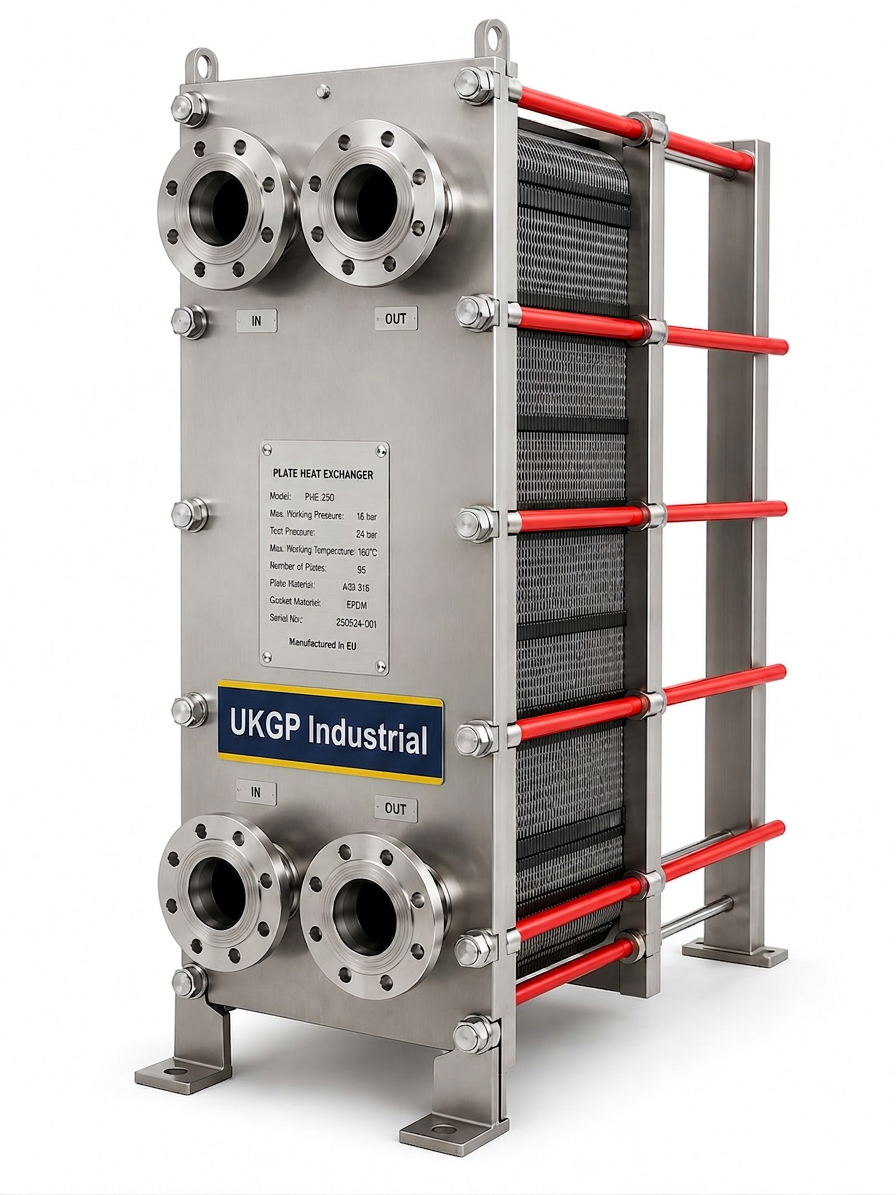
UKGP Industrial provides a range of high-performance plate heat exchangers designed for easy maintenance access. However, even the most robust units require a proactive cleaning regime to combat the effects of poor water chemistry. By establishing a baseline pressure drop during the commissioning phase, engineers can set clear thresholds for maintenance. This proactive approach ensures that the heating or cooling load of the building remains satisfied without domestic gas or electricity consumption spiralling out of control. Effective monitoring prevents the hardened 'bake-on' of contaminants that can make professional chemical cleaning or manual plate scrubbing far more difficult and time-consuming during scheduled shutdowns.
- Monitor Delta T regularly to identify falling thermal efficiency.
- Reference BSRIA BG50 for acceptable water quality parameters.
- Establish design-specific baseline pressure drops at commissioning.
- Check for external leaks as indicators of gasket fatigue.
Conducting the Pressure-Drop Test for Accurate Diagnostics
To accurately determine when to clean plate heat exchanger assemblies, engineers must utilise calibrated differential pressure gauges or 'U' tube manometers. The test involves measuring the pressure at the inlet and outlet of both the primary and secondary circuits while the system is operating at its design flow rate. If the measured pressure drop exceeds the manufacturer’s original 'clean' specification by more than 15-20%, it is a definitive signal that fouling has reached a critical level. This method is far superior to visual inspections, which involve draining the system and opening the plate pack, potentially compromising the integrity of the EPDM or Nitrile gaskets unnecessarily.
For UK facilities managers, the pressure-drop test serves as a cost-benefit analysis tool. Operating a fouled heat exchanger results in a higher 'Pump Power' requirement, which can be quantified in kilowatt-hours. In many cases, the cost of the additional electricity required to overcome the internal resistance of a dirty plate pack exceeds the cost of a professional service within just a few months. Therefore, the question of when to clean plate heat exchanger units becomes a commercial decision as much as a technical one. Utilising BS 8552 protocols for sampling can also help confirm if the pressure rise is due to suspended solids that could be mitigated with better side stream filtration.
It is also important to consider the primary versus secondary side differentials. Often, the secondary side (building load) is more prone to fouling due to older pipework and higher volumes of suspended solids. If the pressure drop is only rising on one side of the exchanger, the cleaning effort can be targeted more effectively. UKGP recommends installing dedicated pressure test points on all four ports of a plate heat exchanger to ensure that these diagnostics can be performed safely and rapidly without interrupting building services. This level of granular data allows for the transition from reactive to predictive maintenance, which is highly preferred by modern asset management frameworks.
- Ensure gauges are calibrated to within 1% of the full scale.
- Compare live readings against the original commissioning data sheets.
- Account for pump curve variations when measuring at partial loads.
- Document all Dp readings to track the rate of fouling over time.
Mitigating Fouling with Side Stream Filtration
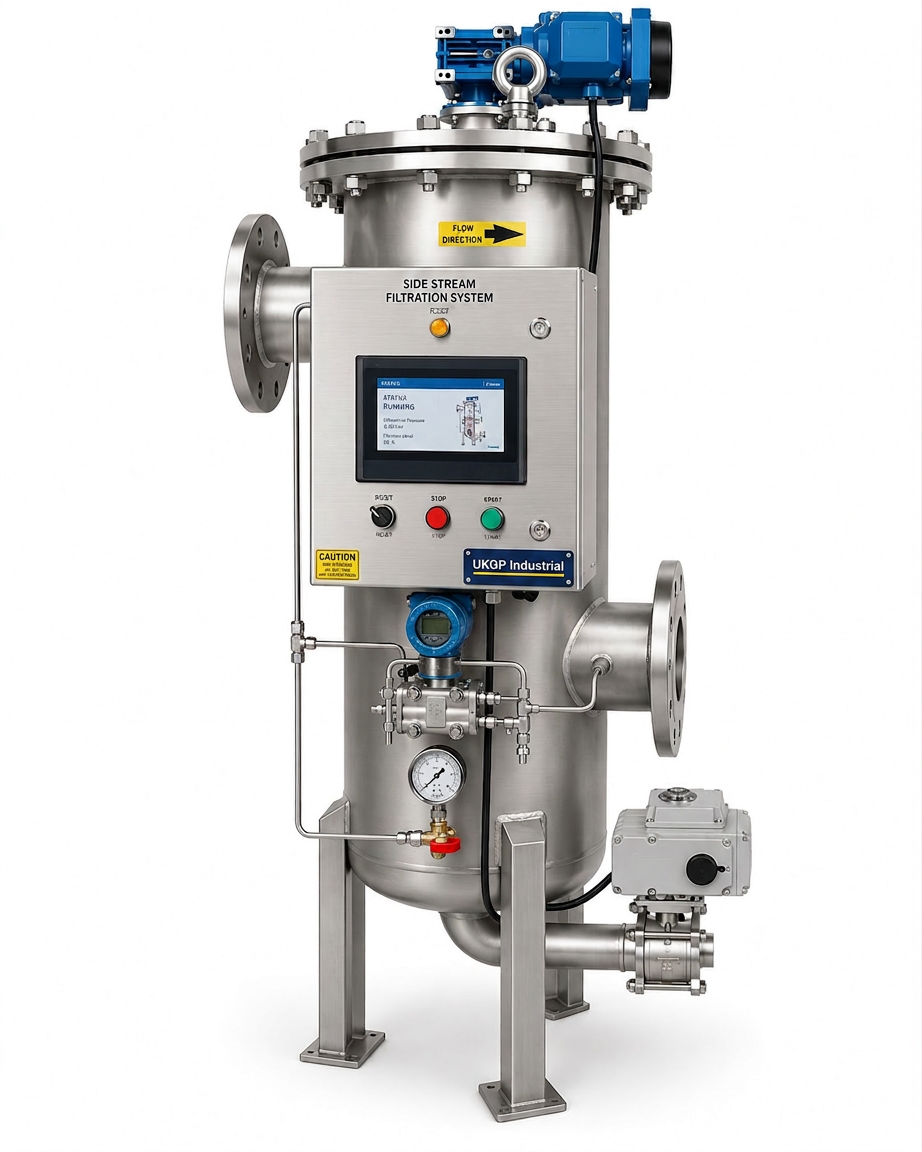
While knowing when to clean plate heat exchanger units is vital, preventing the need for frequent cleaning is the mark of a well-engineered system. The inclusion of high-quality side stream filtration is the most effective way to manage the suspended solids that cause pressure drops in the first place. By continuously diverting a portion of the system flow through a high-efficiency filter, you can maintain water clarity and protect sensitive heat transfer surfaces. This is particularly relevant in systems where BSRIA BG29 pre-commission cleaning has been performed but ongoing maintenance of water quality is required to prevent the re-emergence of magnetite and iron oxides.
UKGP Industrial specialises in the manufacture of side stream filtration skids that are specifically designed for the UK market. Our units, available from DN50 to DN100 sizes, provide a robust solution for commercial and industrial plant rooms. Starting from £6,800 + VAT, these skids are made to order with a typical lead time of 6 to 8 weeks. Each unit comes with a comprehensive 2-year warranty, reflecting our confidence in UK manufacturing quality. By removing particles down to 5 microns, our filtration technology significantly extends the intervals between heat exchanger cleans, thereby reducing operational downtime and protecting your capital investment in plate technology.
Investing in a UKGP side stream filtration skid ensures your system remains compliant with the spirit of CIBSE CP1 and other best-practice guidelines. When consultants specify our DN50 or DN80 units, they are opting for a British-made solution that manages the very contaminants that lead to heat exchanger failure. Rather than constantly asking when to clean plate heat exchanger plates, you can focus on maintaining a clean loop where the pressure drop remains stable for years. Request a quote today to see how our skids can be integrated into your next project or retrofit to solve recurring fouling issues in existing plant rooms.
- Reduces the frequency of costly plate heat exchanger teardowns.
- UKGP skids range from DN50 to DN100 with 2-year warranties.
- Pricing starting from £6,800 + VAT for made-to-order UK units.
- Maintains system water clarity in line with BSRIA BG50 standards.
Chemical Dosing and Water Treatment Synergy
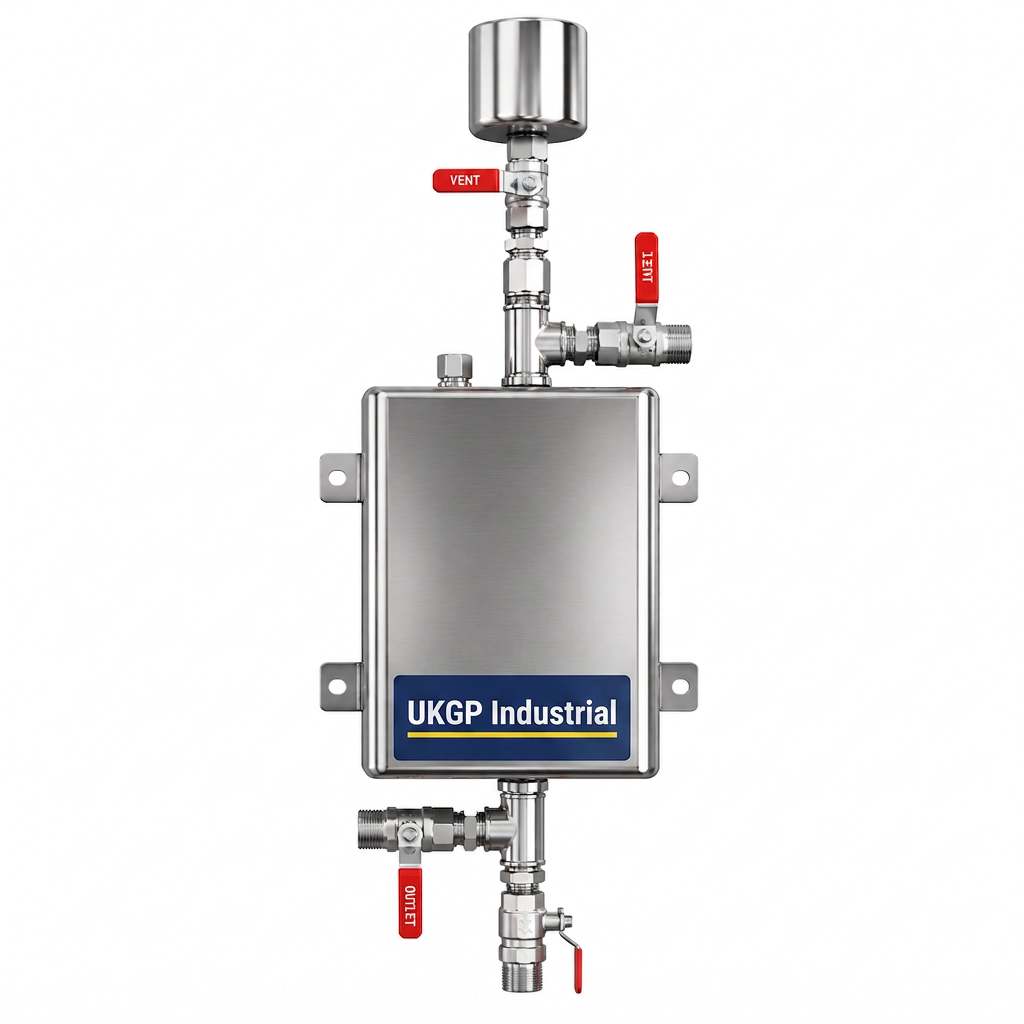
Even with the best filtration, chemical control remains a pillar of heat exchanger health. Proper inhibition prevents the corrosion of internal pipework and the subsequent migration of metal oxides to the heat exchanger plates. A dosing pot is a standard yet essential component in any UK plant room, allowing for the controlled introduction of corrosion inhibitors and biocides. If your pressure-drop test indicates that organic growth is the primary cause of fouling, an adjusted biocidal dosing regime may be required alongside a physical clean. The synergy between mechanical filtration and chemical treatment is what defines a resilient HVAC system.
When determining when to clean plate heat exchanger units, engineers should also check the concentration of inhibitors using standard test kits. Low inhibitor levels often correlate with increased scaling on the heat transfer surfaces, especially in hard water areas like London and the Southeast. If the system has been topped up frequently with raw water due to leaks, the resulting mineral buildup will cause a rapid spike in the differential pressure. Using a UKGP dosing pot ensures that these chemicals can be introduced safely and effectively, maintaining the protective film required on the stainless steel plates to resist particulate adhesion.
It is best practice to perform a water analysis concurrently with a pressure-drop test. This provides a holistic view of the system's health. For instance, if the iron levels are high and the pressure drop is rising, it is a clear indicator that the side stream filtration system may be undersized or that the filter media requires replacement. UKGP’s technical team can assist in selecting the right ancillary equipment to complement your heat exchangers, ensuring that your maintenance interventions are based on comprehensive data rather than guesswork. All our dosing pots are built to last, providing a reliable point of entry for the chemicals mandated by your water treatment specialist.
- Use dosing pots to maintain inhibitor levels and prevent scaling.
- Combine chemical analysis with physical pressure-drop monitoring.
- Ensure water treatment regimes follow BS 8552 recommendations.
- Correct chemical balance extends the life of plate gaskets.
The Impact of Air and Dirt on Heat Transfer
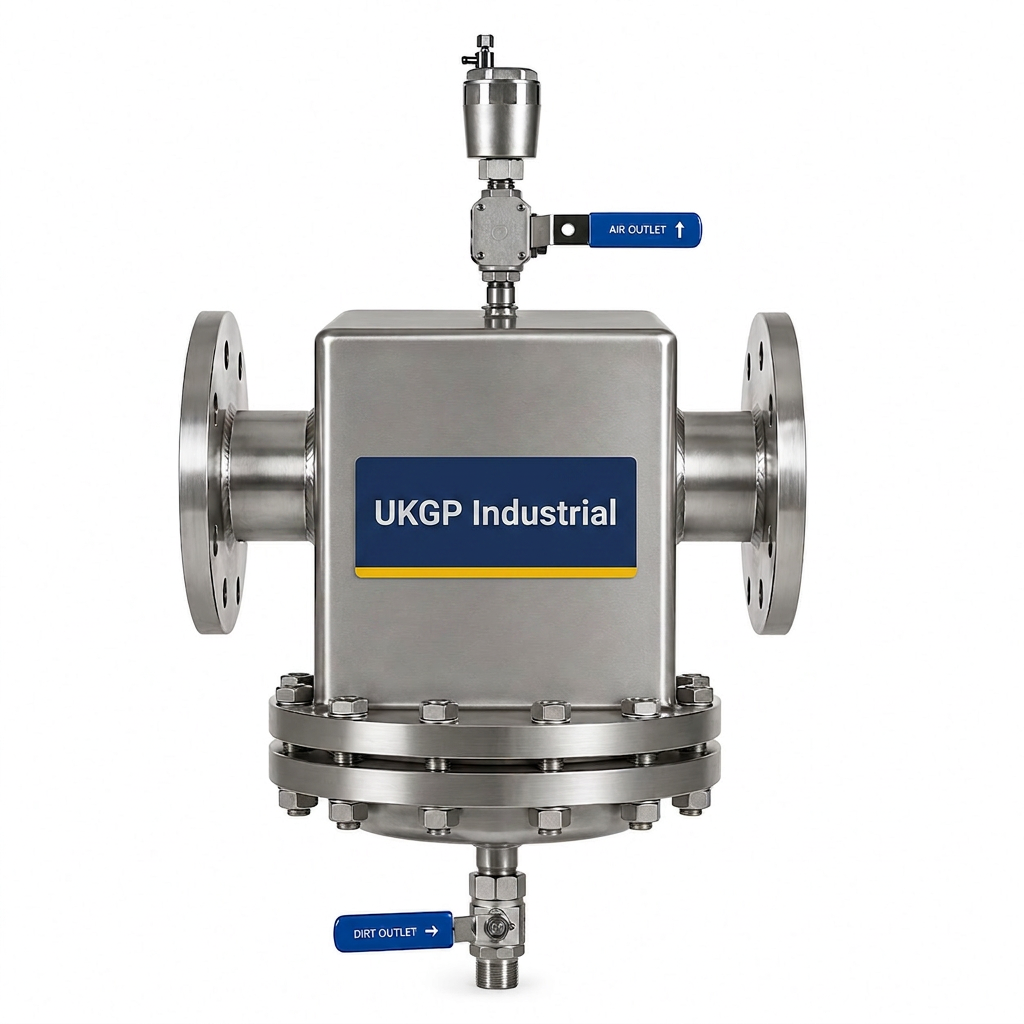
In many UK plant rooms, the presence of microbubbles and entrained air significantly exacerbates the fouling of plate heat exchangers. High levels of oxygen in the water accelerate the corrosion of ferrous components, creating the very magnetite that clogs the narrow gaps between plates. This is why air and dirt separators are non-negotiable for system health. By removing air at the point of highest temperature and lowest pressure, you reduce the oxidative potential of the fluid, which in turn slows the rate of scale formation and sediment accumulation on the exchanger surfaces.
A separator works in tandem with the pressure-drop monitoring process. If an engineer finds they are frequently wondering when to clean plate heat exchanger units due to sediment, it is likely that the air and dirt separation is inadequate. Our UKGP separators are designed to capture and vent these contaminants before they ever reach the heat exchanger. This preventive measure is far more cost-effective than the labour-intensive process of dismantling a plate pack, which often requires a full set of replacement gaskets and professional re-tensioning to ensure a leak-free seal after the cleaning is complete.
Furthermore, the presence of air can cause incorrect pressure-drop readings, as air pockets can create an artificial resistance or 'air lock' within the plate channels. This can lead to false positives where an engineer might assume a unit is fouled when it is actually just gas-bound. Ensuring that the system is properly de-aerated via high-quality separation equipment is a prerequisite for accurate diagnostic testing. By maintaining a debris-free and air-free environment, the pressure drop across your heat exchanger will remain closer to the design parameters for a significantly longer period, saving both energy and maintenance spend.
- Air and dirt separators prevent the 'air locks' that skew Dp tests.
- Reduction in oxygen levels slows the formation of magnetite.
- Essential for protecting high-efficiency stainless steel plates.
- Reduces the abrasive wear on pump seals and heat exchanger gaskets.
Practical Steps for the Cleaning Process
Once the pressure-drop test has confirmed when to clean plate heat exchanger units, the execution of the clean must be handled with care. There are two primary methods: Cleaning-In-Place (CIP) and manual mechanical cleaning. CIP involves circulating a mild acidic or alkaline solution through the exchanger to dissolve scale and dislodge debris without opening the unit. This is often the preferred first step for UK engineers as it minimises the risk of gasket damage and significantly reduces the downtime of the heating or cooling branch. CIP is most effective when the fouling is caught early, highlighting the importance of regular monitoring.
If the pressure drop remains high after a CIP, a manual clean is standard. This involves isolating the unit, loosening the tie-bolts, and sliding the plates back for individual inspection. Each plate must be cleaned using a soft brush and a suitable cleaning agent—wire brushes must never be used as they can scratch the stainless steel and create sites for localized corrosion. During this stage, it is wise to inspect the condition of the gaskets carefully. If the heat exchanger has been in service for several years, a full gasket replacement is often recommended to ensure the unit can handle the operational pressures once it is put back into service.
After cleaning and reassembling the unit, it is crucial to perform a new pressure-drop test to establish a 'post-clean' baseline. This reading should be very close to the original design specification. If the Dp is still higher than expected, it may indicate that internal channels are still restricted or that there is an issue with the system's flow control valves. UKGP Industrial recommends that all large-scale commercial cleaning works be documented in the building's maintenance log, including the volume of debris removed and the resulting improvement in pressure drop, to provide a clear audit trail for FMs and energy managers.
- Choose CIP for minor fouling to protect gasket integrity.
- Only use non-metallic brushes to clean stainless steel plates.
- Always replace gaskets if they show signs of compression set.
- Log post-clean pressure drops to verify the success of the work.
Frequently asked questions
What is the maximum acceptable pressure drop for a plate heat exchanger?
- While it varies by design, a general rule is that when the pressure drop exceeds the design value by 15-20%, it is time to clean the unit. For example, if the design Dp is 30kPa and current readings are 36kPa, maintenance is required.
How often should I perform a pressure-drop test?
- In accordance with BSRIA BG50, quarterly testing is recommended for most commercial systems. However, if water quality is known to be poor, monthly monitoring will provide better trend data for predictive maintenance.
Can I use side stream filtration to reduce heat exchanger cleaning frequency?
- Yes. UKGP side stream filtration skids (available DN50-DN100) are designed specifically to remove the magnetite and debris that foul heat exchangers, significantly extending the time between manual cleans.
Is mechanical cleaning better than Cleaning-In-Place (CIP)?
- CIP is faster and safer for gaskets, but mechanical cleaning is more thorough for heavily fouled units. The choice depends on the severity of the pressure drop and the nature of the fouling (e.g., hard scale vs. loose debris).
What is the typical lead time for a UKGP plate heat exchanger or filter skid?
- Our units are typically made to order with a lead time of 6-8 weeks, ensuring you receive a specialist solution tailored to your exact plant-room requirements, backed by a 2-year warranty.