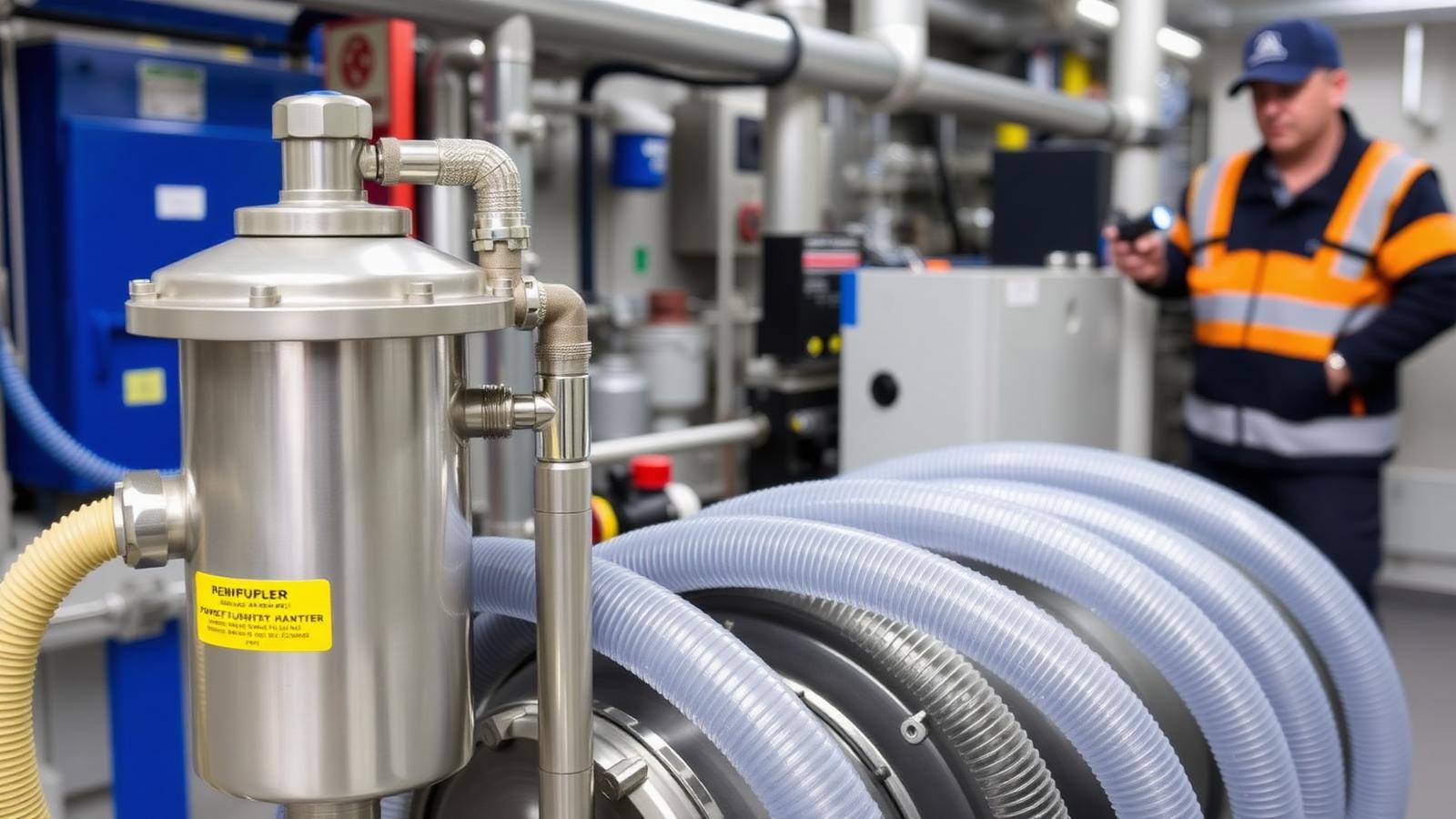
The Limitation of Reactive Power Flushing
In the UK building services sector, the term 'power flush' is often treated as a panacea for poor heat transfer and cold spots in commercial circuits. However, the reality for M&E contractors is that this process only provides a 'snapshot' of cleanliness. By forcing high-velocity water through the pipework, you mobilize settled debris, but you do nothing to prevent the electrochemical reactions that cause corrosion from restarting the moment the pumps are turned back on. Consequently, power flush returns become a recurring maintenance headache, often leading to emergency call-outs that disrupt building operations and inflate annual service budgets significantly.
The fundamental flaw with the reactive approach is that it ignores the guidelines laid out in BSRIA BG50, which emphasizes continuous water quality management rather than periodic intervention. When a system is heavily fouled, a flush is necessary, but without a permanent barrier to capture microscopic magnetic particles, the high oxygen levels introduced during the flushing process can actually accelerate metal loss in black iron pipework. This creates a vicious cycle where the flushing itself contributes to the next round of particulate build-up, ensuring that the efficiency gains observed immediately after the service are lost within a single heating season.
For procurement leads and plant-room engineers, the investment in a one-off flush often ranges from hundreds to thousands of pounds depending on system volume, yet offers no long-term asset protection. If you are experiencing frequent flow issues or heat exchanger blockages, it is time to move beyond the temporary fix. Instead of planning for the next flush, professional engineers should look towards a robust, engineered solution that provides 24/7 protection. By integrating permanent side stream filtration, you shift from a reactive maintenance posture to a proactive one, safeguarding expensive central plant assets like boilers and plate heat exchangers from the inevitable return of magnetite.
- Power flushing creates a high-oxygen environment that can trigger fresh corrosion cycles.
- Reactive cleaning fails to address the sub-10 micron particles that cause the most damage.
- BSRIA BG50 encourages continuous filtration over periodic high-pressure flushing.
- The labour costs of repeated flushes often exceed the capital cost of a permanent skid.
The Role of BSRIA BG50 in Modern HVAC Maintenance
Adhering to BSRIA BG50 'Water Treatment for Closed Heating and Cooling Systems' is the gold standard for UK facility managers looking to prevent power flush returns. This guidance highlights the necessity of maintaining water quality to prevent the accumulation of suspended solids, which can lead to localized under-deposit corrosion and microbiological growth. Traditional full-flow strainers are often insufficient, as they carry a high pressure drop and typically only catch large debris. A permanent side stream installation allows for the continuous removal of fine particles without affecting the main system flow or pressure, ensuring compliance with the stringent requirements of contemporary building insurance and warranties.
CIBSE and BSRIA both highlight that the cost of poor water quality is not just in the cleaning, but in the energy consumption. As magnetite coats the internal surfaces of heat emitters and boiler primary exchangers, the heat transfer efficiency plummets. A layer of magnetite as thin as 1mm can increase energy costs by up to 7%. When you consider the scale of commercial plant rooms in London or Birmingham, these percentages translate into thousands of pounds in wasted fuel. Permanent filtration prevents this scale from forming, ensuring that the system operates at the design efficiency specified by the mechanical consultant, rather than the degraded state that necessitates a power flush.
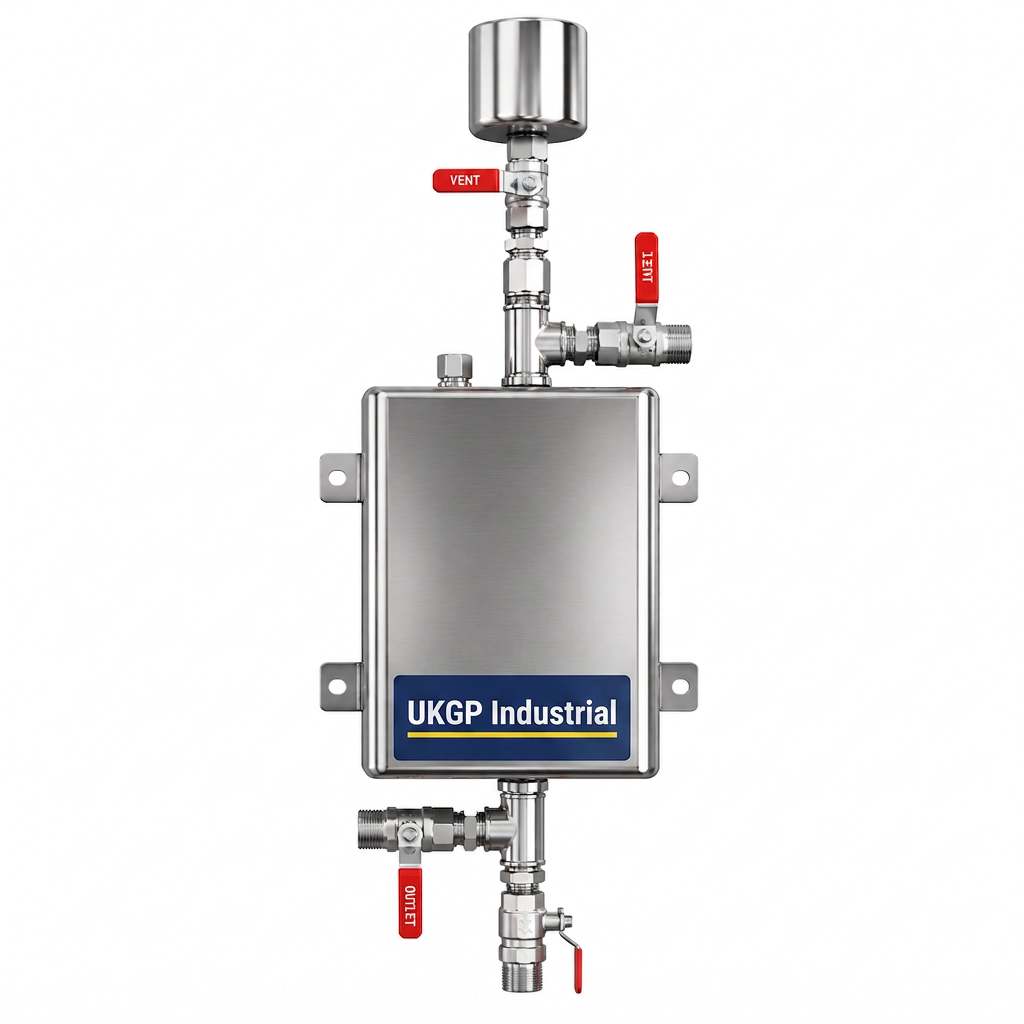
The introduction of BS 8552 for sampling and monitoring further reinforces the need for consistent hardware solutions. If your quarterly water test results show high iron counts or high turbidity despite a recent flush, it is clear that the system is producing more debris than it can handle. Manual dosing via chemical dosing pots is part of the solution, but without a physical filtration mechanism to remove the existing solids, the inhibitor chemicals cannot effectively coat the pipe surfaces. A side stream filtration unit works in tandem with chemical treatment to provide a comprehensive defence against the systemic issues that cause power flush returns.
- BSRIA BG50 provides the framework for long-term HVAC asset protection and efficiency.
- Continuous filtration reduces the frequency of manual sampling and chemical top-ups.
- Side stream units capture the fine magnetite that bypasses standard Y-strainers.
- Adherence to standards is critical for validating manufacturer warranties on new boilers.
Side Stream Filtration: The Permanent Solution
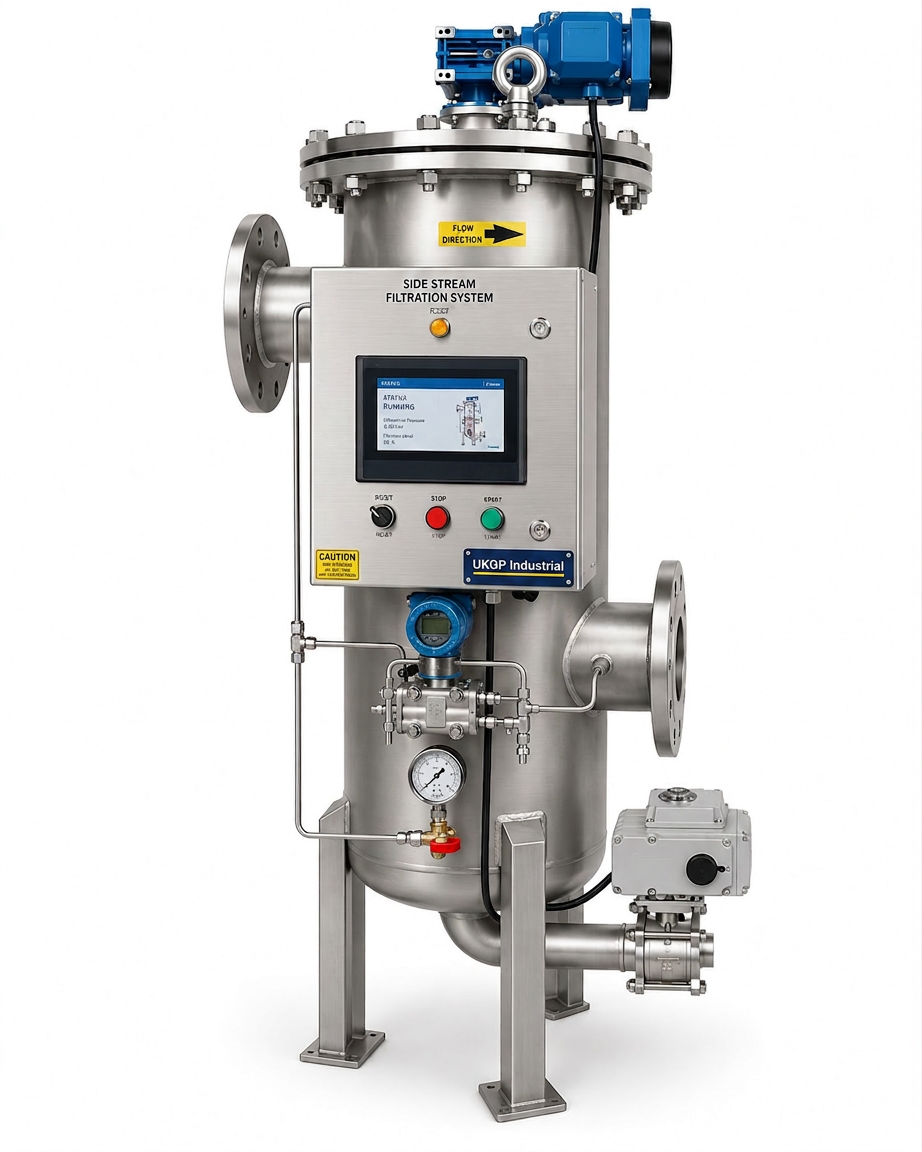
To break the cycle of power flush returns, UKGP Industrial recommends the installation of high-efficiency side stream filtration skids. Our units are engineered specifically for the UK commercial market, designed to treat approximately 5% to 15% of the total system flow. This method is highly effective because it treats the entire volume of water multiple times per day via a secondary loop. By using a combination of powerful neodymium magnets and high-capacity bag filters, our skids remove both magnetic and non-magnetic debris down to 1 micron, which is far beyond the capability of any standard flushing rig or primary strainer.
Our side stream filtration skids are made to order in the UK, typically delivered within a 6-8 week lead time to suit your project schedule. Starting from £6,800 + VAT, these units represent a significant ROI when compared to the multi-day downtime and labour costs associated with repeating a power flush every two years. Available in sizes from DN50 to DN100, these skids are robustly constructed and come with a 2-year warranty as standard, giving plant-room engineers and FMs peace of mind. Investing in a UKGP skid ensures that the system cleanliness achieved on day one is maintained for the entire life of the building.
Installation of these units is straightforward and avoids the risks associated with the high pressures used during a power flush, which can occasionally cause leaks in older, thinner-walled pipework. The UKGP skid operates independently of the main circulation pumps, meaning it can continue to clean the system even during periods of low demand or partial shutdown. Given that power flush returns are often triggered by debris being disturbed during pump start-ups, having a constant filtration presence ensures that these particles are captured before they can settle in plate heat exchangers or control valves, where they do the most damage.
- Available in DN50 to DN100 connections with bespoke configurations available on request.
- Starting from £6,800 + VAT with a 2-year warranty for commercial-grade reliability.
- Remove particulates down to 1 micron, preventing the 'sludge' that causes system failure.
- Short 6-8 week lead time for UK-made units, enabling rapid system remediation.
Protecting Expensive Plant: Plate Heat Exchangers
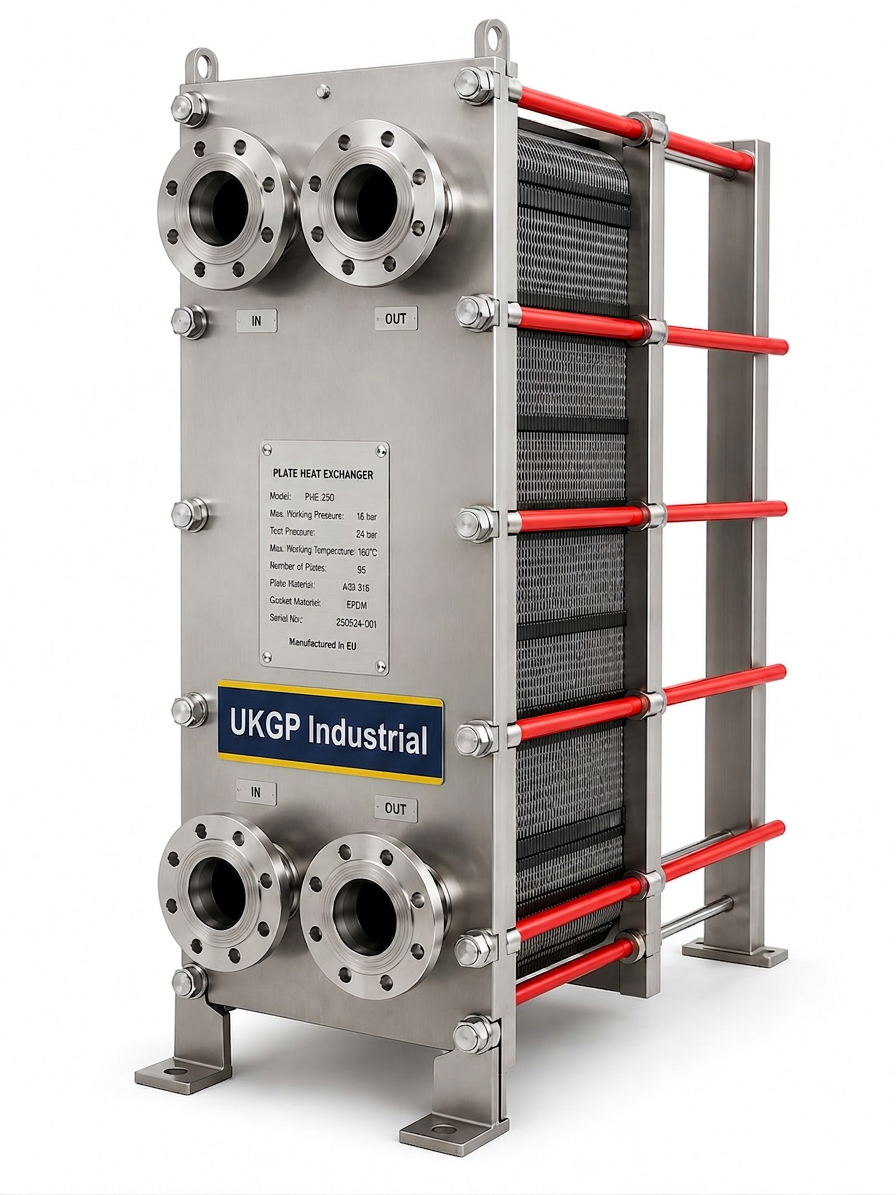
One of the primary victims of power flush returns is the plate heat exchanger (PHE). In modern UK district heating or commercial HVAC systems, PHEs feature extremely narrow channels designed for turbulent flow and high thermal efficiency. However, these narrow gaps act as a sieve for magnetite and grit. Once a PHE becomes fouled, the pressure drop across the unit rises, and the approach temperature widens, forcing the primary heat source to work harder. If you are regularly stripping and cleaning your heat exchangers, it is a clear sign that your water treatment strategy is failing and that permanent filtration is required.
By installing a side stream filtration unit alongside your heat exchangers, you provide a dedicated 'kidney loop' that scrubs the water before it reaches the sensitive plates. This is particularly vital in retrofit scenarios where new, high-efficiency boilers or heat pumps are being connected to old, dirty pipework. In such cases, a simple power flush is rarely enough to protect the new assets. The debris loosened from the old radiators and risers will inevitably migrate to the new heat exchangers, leading to performance degradation and potentially invalidating the asset warranty provided by the manufacturer.
Using UKGP side stream filtration units ensures that your PHEs remain clean, maintaining the efficiency of your hot water or heating delivery. Our skids are designed to be easily serviced; bag changes can be performed in minutes without shutting down the entire HVAC system. This accessibility is a major advantage over the disruptive nature of a full system flush. When you factor in the cost of PHE gaskets and the labour required for manual plate cleaning, the commercial case for permanent filtration alongside the PHE becomes undeniable. Request a quote from our Surrey-based team to protect your central plant effectively.
- Narrow PHE channels are highly susceptible to blockage from magnetite and scale.
- Permanent filtration maintains design temperature differentials and reduces pump energy.
- Protects new high-efficiency boilers when connected to legacy heating systems.
- Reduces the need for chemical descaling and manual plate separation.
Economic Comparison: Flushing vs. Permanent Filtration
When evaluating the budget for HVAC maintenance, it is easy to focus on the immediate cost of a power flush compared to the capital expenditure of a UKGP side stream skid. A professional power flush for a large commercial building may cost upwards of £3,000 to £5,000 in labour and chemicals. However, if power flush returns occur every 24 to 36 months, the total cost of ownership over a ten-year period quickly exceeds £15,000, excluding the costs of energy inefficiency and component wear. In contrast, a permanent skid starting from £6,800 + VAT is a one-time capital investment that drastically reduces ongoing maintenance costs.
Beyond the direct financial outlay, the hidden costs of system downtime must be considered. In a commercial office or healthcare environment, losing heating or cooling for several days while a flush is performed is often unacceptable. A side stream filtration unit works silently in the background, requiring only minimal routine maintenance that can be performed by an on-site engineer without any system interruption. This operational continuity is a key driver for FMs who are measured on building uptime and tenant satisfaction. By eliminating the causes of power flush returns, you ensure the system remains 'business as usual'.
Furthermore, our made-to-order units are built for the long term. With a 2-year warranty and a UK-based support team in Surrey, the risk associated with the investment is minimal. Procurement leads should look at the lifecycle value: reduced chemical usage, lower energy bills, extended life for boilers and pumps, and the elimination of emergency flushing. When you calculate the Net Present Value (NPV) of a side stream filtration unit over 15 years, it consistently outperforms reactive maintenance across every metric, making it the preferred choice for sophisticated UK estates and M&E contractors.
- One-time capital cost vs. recurring labour and chemical expenses every few years.
- Zero downtime for filtration maintenance compared to 2-3 days for a full flush.
- Improved energy efficiency provides a measurable return on investment via utility bills.
- Asset life extension for boilers, pumps, and valves reduces long-term CAPEX.
Best Practices for System Remediation
To effectively prevent power flush returns, a structured approach to system remediation is necessary. First, the current state of the system must be assessed through total suspended solids (TSS) and iron testing as per BS 8552. If the levels are excessively high, a targeted clean may be needed, but this should be immediately followed by the commissioning of a side stream filtration skid. This ensures that any remaining debris disturbed during the cleaning process is rapidly captured by the skid's magnets and bag filters, rather than being allowed to resettle in the low-velocity areas of the circuit.
Ongoing monitoring is equally important. Many FMs make the mistake of assuming that once a filter is installed, the job is done. However, for the first few weeks after installation in a dirty system, bag filters may need frequent changing as they capture years of accumulated sludge. UKGP skids feature clear differential pressure gauges to notify engineers exactly when a filter change is required. This data-driven approach allows for more efficient plant room management and provides proof of the unit's effectiveness in cleaning the system and preventing the conditions that lead to power flush returns.
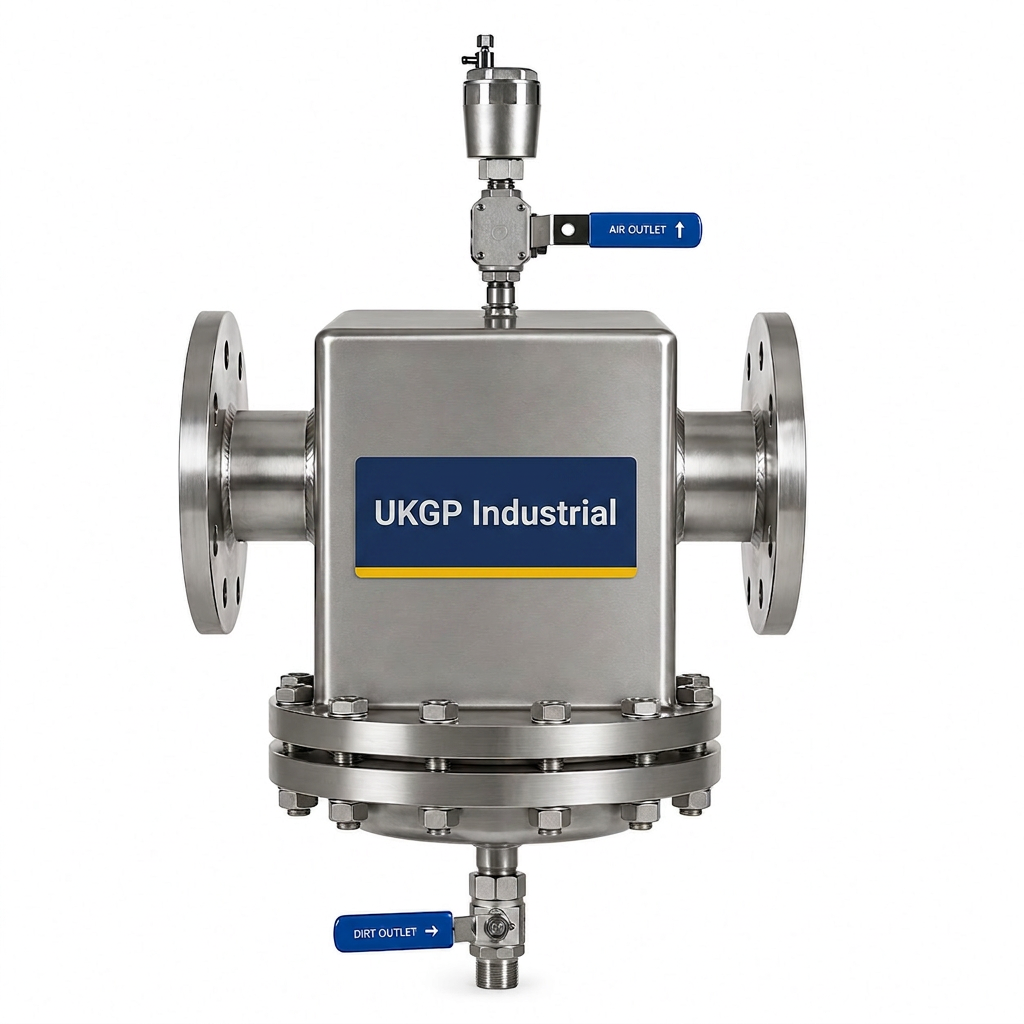
Finally, ensure that all air and dirt separators are functioning correctly. While side stream filtration handles the fine particles, primary separators handle the larger debris and micro-bubbles that contribute to the corrosion process. By combining these technologies, you create a robust environment that complies with BSRIA BG29 and BG50. Our Surrey-based technical team is available to help you specify the correct DN50 to DN100 unit for your specific system volume and pump head requirements. Contact UKGP Industrial today to discuss your project requirements and receive a detailed quote for a custom-built solution.
- Combine side stream filtration with high-quality air and dirt separators for best results.
- Regular monitoring of differential pressure gauges identifies high-capture periods.
- Ensure chemical levels are balanced using dosing pots alongside physical filtration.
- Training on-site staff to change filter bags ensures the system remains clean indefinitely.
Frequently asked questions
Why does magnetite keep returning after a power flush?
- Power flushing is a temporary cleaning measure that doesn't stop the internal corrosion process. Magnetite returns because the underlying chemical reactions and high oxygen levels often introduced during flushing continue to produce new debris, which then settles back into the system's low-flow areas.
What is the lead time for a UKGP side stream filtration skid?
- Our side stream filtration skids are made to order in the UK with a typical lead time of 6-8 weeks. This allows us to ensure every unit meets our high standards of quality and is configured correctly for your specific plant room requirements.
Do these units come with a warranty?
- Yes, all UKGP side stream filtration units come with a 2-year warranty as standard, covering parts and manufacturing. This reflects our confidence in the build quality and engineering that goes into our Surrey-manufactured products.
What sizes are available for commercial systems?
- We offer standard commercial sizes ranging from DN50 to DN100. Our technical team can assist you in selecting the correct size based on your total system volume and the flow rate required to meet BSRIA BG50 recommendations.
Can a side stream filter prevent the need for any future power flushing?
- While no system is entirely maintenance-free, a correctly sized and maintained side stream filtration skid can virtually eliminate the need for heavy-duty power flushing by continuously removing debris as it is generated, keeping the water quality consistently high.