The Fundamentals of Plate Frame Heat Exchanger Sizing
In the UK commercial sector, plate frame heat exchanger sizing is a critical exercise that bridges the gap between primary heat generation and secondary heat distribution. When sizing these units, engineers must look beyond simple kW ratings and instead focus on the Logarithmic Mean Temperature Difference (LMTD) and the specific physical properties of the fluids involved. A poorly sized unit will result in either insufficient heat transfer or excessive pressure drops, both of which compromise the operational efficiency of the system. By accurately defining the mass flow rates and temperature approaches, designers can specify a solution that provides the exact thermal duty required while maintaining a manageable footprint within the plant room environment.
Precision in plate frame heat exchanger sizing ensures that the thermal length of the plate pack is appropriately matched to the application. For standard heating systems, a gasketed design is often preferred for its ease of maintenance and scalability. However, the calculation must account for the fouling factors specified in CIBSE guides to ensure that the heat exchanger continues to perform as the system ages and accumulates minor debris. UKGP provides technical support to help engineering teams translate their raw thermal data into a robust specification that meets the high standards expected by modern BSRIA-aligned facilities management teams across the United Kingdom.
Our approach to sizing involves a meticulous review of DN20 to DN300 connection sizes, ensuring that velocity limits are respected to prevent erosion and noise. We work closely with M&E contractors to ensure that every unit is sized from a full thermal spec, taking into account the primary side temperature from leading commercial boiler OEMs and the required secondary flow and return temperatures. This level of detail is essential for achieving the narrow temperature approaches often required in modern district heating and heat pump applications where every degree of temperature transfer efficiency is vital for the overall SCOP of the installation.
- Accurate calculation of LMTD for specific thermal profiles
- Verification of pressure drops against pump head capacities
- Consideration of fluid velocities to prevent plate scouring
- Validation of thermal duty against peak winter heating loads
Aligning with BSRIA BG50 and Water Quality Standards
When performing plate frame heat exchanger sizing, it is impossible to ignore the impact of water quality on long-term thermal performance. BSRIA BG50 and BG29 highlight the necessity of maintaining system cleanliness to prevent the build-up of magnetite and scale on heat transfer surfaces. Even the most accurately sized heat exchanger will fail to deliver its rated kW output if the plate surfaces become fouled. Therefore, the sizing process must always assume a realistic fouling factor that reflects the likely operating conditions of the building's closed-loop circuit. This ensures that even after several years of operation, the unit remains capable of meeting the building's peak demand.
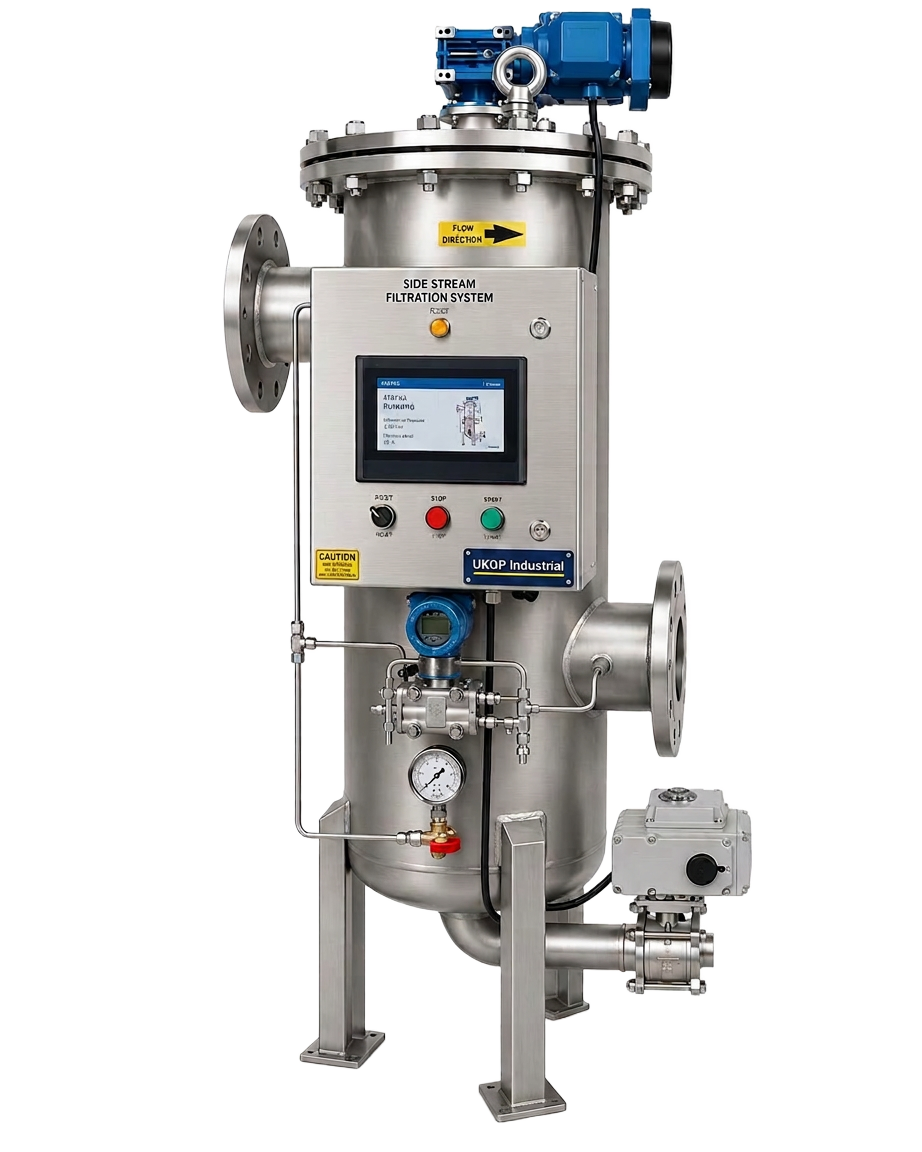
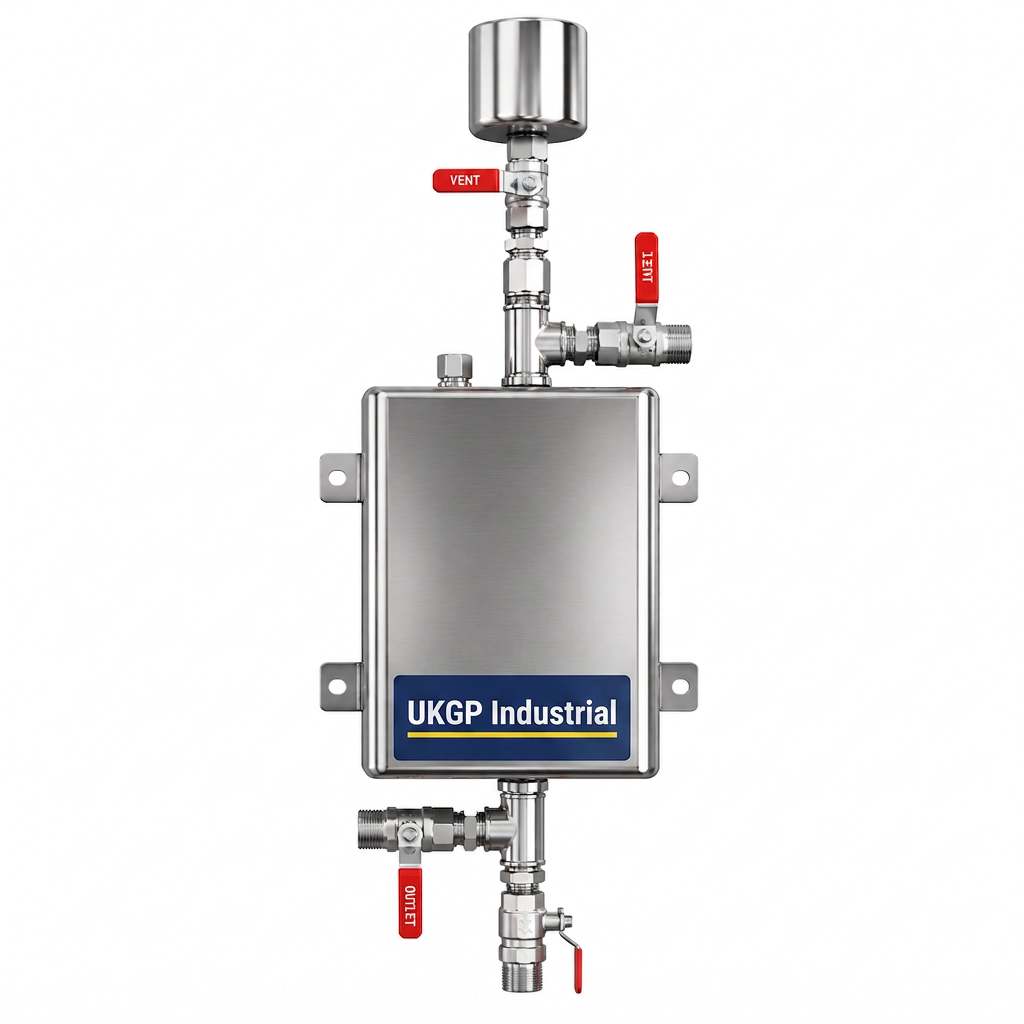
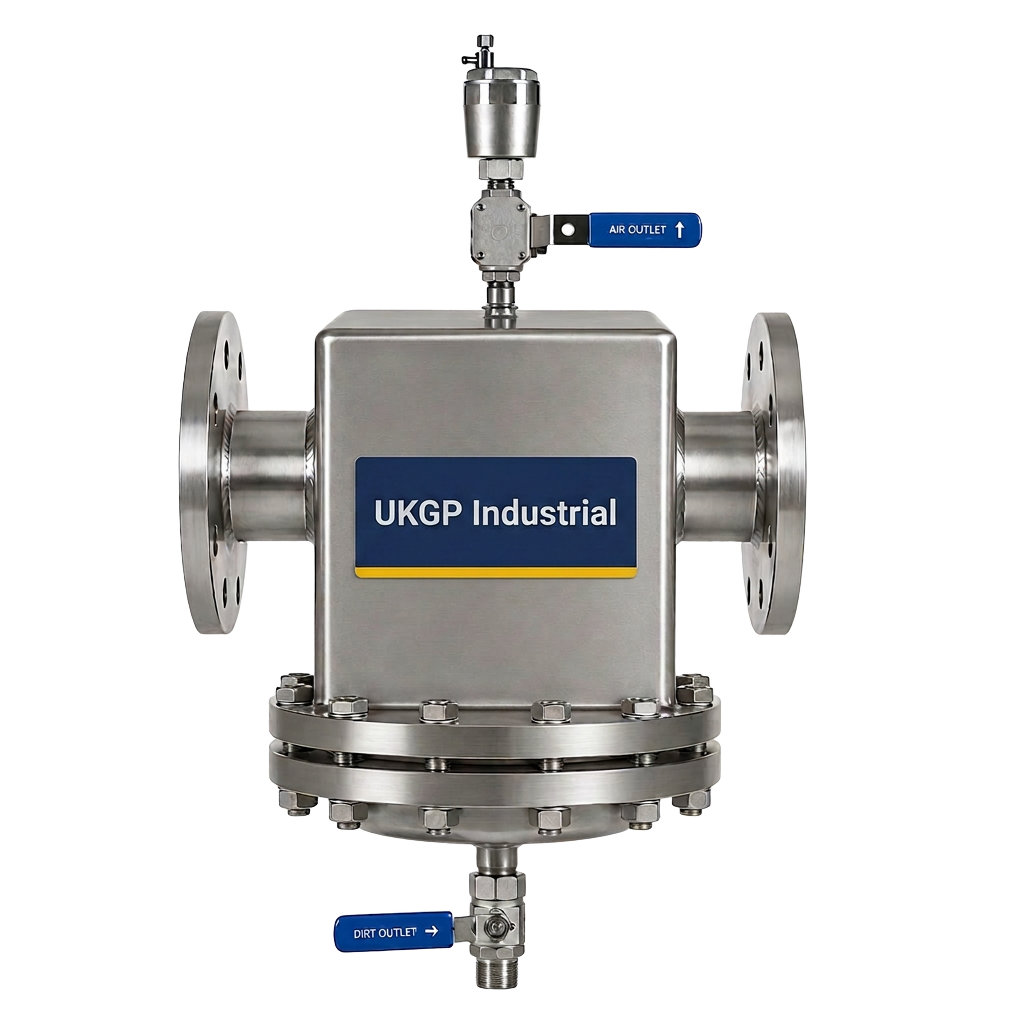
Integrating robust secondary filtration is a standard recommendation for any high-specification plant room. By removing suspended solids before they can settle in the narrow channels of a plate pack, engineers can prolong the intervals between maintenance and maintain the efficiency calculated during the plate frame heat exchanger sizing phase. In many commercial settings, combining high-efficiency heat transfer with effective air and dirt separation is the only way to ensure the system meets the lifespan requirements of BS EN 14917 and other relevant British Standards. This holistic view of the plant room ensures that components work in harmony rather than in isolation.
UKGP offers a comprehensive range of equipment designed to protect the integrity of your heat transfer surfaces. From heavy-duty separators to advanced filtration skids, we understand that the longevity of a plate heat exchanger is directly linked to the environment in which it operates. Contractors who specify UKGP units benefit from our deep understanding of BSRIA guidelines, ensuring that the final installation is not only thermally efficient but also resilient against the common causes of system degradation found in ageing UK building stock. Our technical team is always available to discuss how our complementary products can support your specific sizing requirements.
- Integration of air and dirt separation to protect plate packs
- Adherence to BSRIA BG50 water chemistry recommendations
- Provision of cleaning-in-place (CIP) connections for maintenance
- Selection of plate materials compatible with system additives
Technical Parameters for Gasketed and Brazed Units
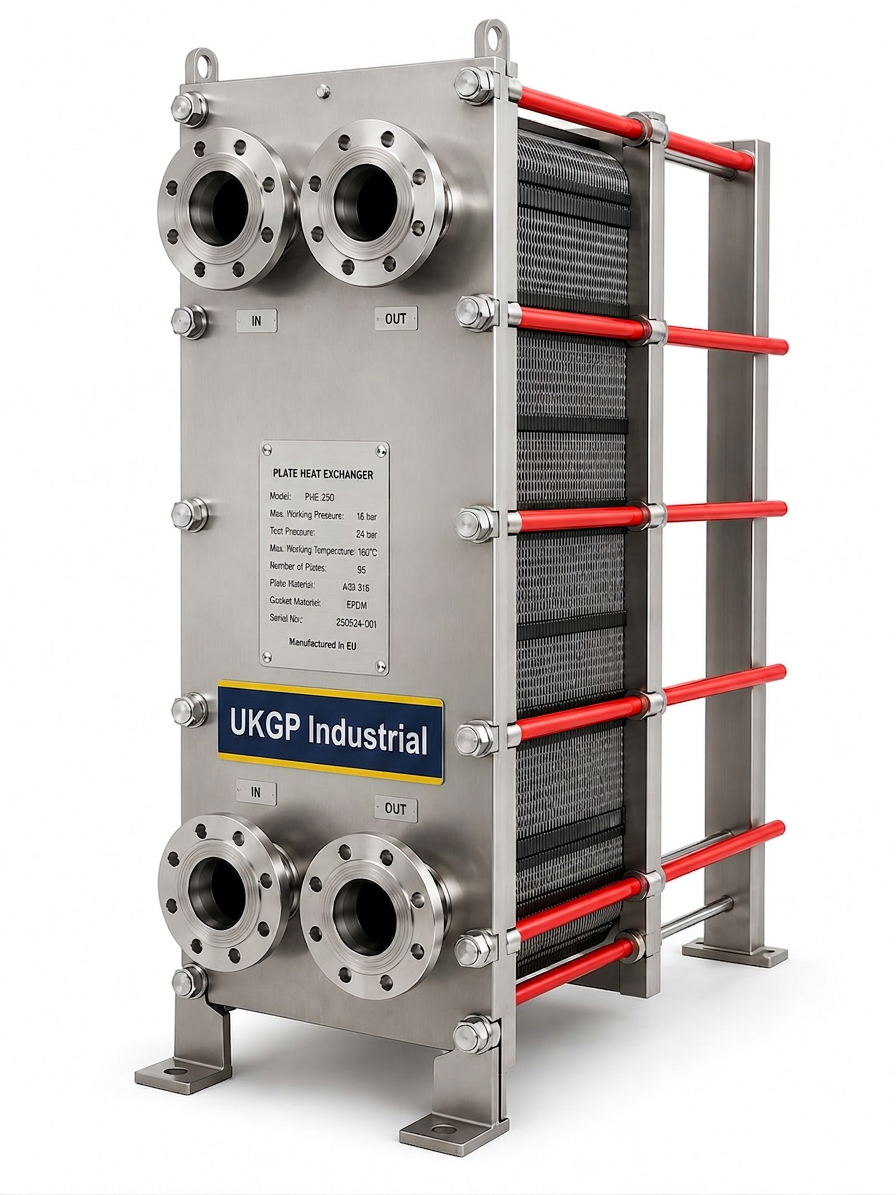
The choice between gasketed and brazed units is a major decision point in plate frame heat exchanger sizing. Gasketed units (GPHE) offer the advantage of being serviceable and expandable, making them ideal for large-scale commercial developments where loads may evolve over time. These units are available with DN20 to DN300 connections and can be sized to manage significant thermal duties. Conversely, brazed units (BPHE) are often selected for smaller, high-pressure applications where a compact footprint is the priority. Understanding the nuances of each design allows engineers to select the most cost-effective and durable solution for their specific project needs.
During the sizing process, the shear stress and flow distribution across the plates must be analyzed. High-quality plate geometry encourages turbulent flow even at lower velocities, which maximizes the heat transfer coefficient while minimizing fouling. However, this must be balanced against the allowable pressure drop across the unit. When you request a quote for a UKGP plate heat exchanger, our engineers verify these parameters against your full thermal spec, ensuring that the resulting selection is perfectly balanced for the hydraulic characteristics of your primary and secondary circuits. We provide a 2-year warranty on all sized units to give you peace of mind regarding build quality.
Lead times are also a critical factor in modern procurement cycles for M&E contractors. At UKGP, we maintain a lead time of 4-6 weeks for most gasketed and brazed units, allowing projects to stay on track even when design changes occur late in the programme. Our ability to provide accurate plate frame heat exchanger sizing quickly means that you can move from specification to installation with minimal friction. Whether you are replacing an existing unit in a refurbishment project or designing a new plant room from scratch, our UK-based team provides the commercial and technical responsiveness required in today's fast-paced construction industry.
- DN20 to DN300 connection ranges for versatile installation
- Gasketed designs for ease of future plate pack expansion
- Brazed options for high-pressure or space-constrained sites
- Standard 4-6 week lead times for project-specific builds
Calculating the Logarithmic Mean Temperature Difference
A core component of professional plate frame heat exchanger sizing is the calculation of the Logarithmic Mean Temperature Difference, or LMTD. This value represents the effective temperature driving force for heat transfer. For cross-flow or counter-current flow patterns typically used in plate heat exchangers, the LMTD is essential for determining the required heat transfer area. If the temperature approach—the difference between the leaving temperature of the secondary and the entering temperature of the primary—is very small, the required plate area increases significantly. This is common in modern condensing boiler applications where low return temperatures are necessary for efficiency.
Properly managing the LMTD allows for more compact and efficient plate frame heat exchanger sizing. In commercial heating, we often see a move toward lower flow temperatures to accommodate renewable heat sources. This shift requires a more sophisticated approach to sizing, as the traditional rules of thumb for high-temperature systems no longer apply. Engineers must ensure that the plate pack configuration provides sufficient surface area to achieve the desired secondary temperature without requiring an oversized and unnecessarily expensive frame. UKGP's sizing software uses actual fluid properties to ensure the most accurate results for every UK project.
Furthermore, we must consider the viscosity and thermal conductivity of the fluids. In glycol-mixed systems, for example, the heat transfer efficiency is reduced compared to pure water, necessitating a larger surface area. When we provide a quote for a UKGP plate heat exchanger, we account for these variables to ensure the unit performs exactly as expected on-site. By providing us with a full thermal spec, including fluid types and concentrations, you ensure that the plate frame heat exchanger sizing is robust enough to handle the varying demands of the heating season while maintaining compliance with CIBSE design guides.
- Adjustment for glycol concentrations in chilled water systems
- Detailed analysis of temperature approach for high efficiency
- Optimization of plate area versus frame cost
- Verification of thermal length to match system temperature profiles
Hydraulic Balance and Expansion Requirements
Achieving hydraulic balance is just as important as the thermal aspect of plate frame heat exchanger sizing. Once the heat exchanger is sized and selected, it must be integrated into a system that can manage the expansion and contraction of fluids. Rapid changes in temperature can lead to pressure spikes that stress the gaskets and connections of the heat exchanger. It is therefore vital to specify appropriate expansion bellows and vessels alongside the heat transfer equipment. This protects the integrity of the heat exchanger and the wider pipework grid, ensuring a long operational life and reducing the risk of leaks in the plant room.
In many commercial installations, a low loss header is used in conjunction with the heat exchanger to decouple the primary and secondary circuits. This ensures that the flow through the heat exchanger remains constant regardless of the variable flow requirements on the building side. When performing plate frame heat exchanger sizing, the presence of such hydraulic separation must be accounted for to ensure the primary pumps can maintain the design flow rate across the plate pack. This integrated approach to design is recommended by CIBSE and BSRIA to ensure stable control and energy-efficient operation of the entire HVAC system.
Choosing UKGP for your plate heat exchanger needs means you are working with a supplier that understands the complete hydraulic circuit. Our units are designed to withstand the rigours of commercial operation, and when combined with our expertise in expansion bellows and separators, we provide a single source for plant room durability. We encourage consultants and engineers to consult with us during the early design stages to ensure that the plate frame heat exchanger sizing is perfectly aligned with the hydraulic and thermal characteristics of the intended system, resulting in a more reliable and easier-to-maintain installation.
- Compatibility with expansion bellows to mitigate thermal stress
- Coordination with low loss headers for hydraulic decoupling
- Ensuring consistent primary flow for stable thermal transfer
- Strategic placement of air and dirt separators for protection
Procurement and Installation Best Practices
The procurement phase for heat transfer equipment often occurs under tight deadlines. However, rushing the plate frame heat exchanger sizing process can lead to long-term operational issues. It is standard practice to provide a dedicated technical submittal for each sized unit, detailing the materials used for both plates and gaskets. For most commercial heating applications, EPDM gaskets and 316-grade stainless steel plates provide the best balance of cost and corrosion resistance. Our team ensures that every unit we supply is built to these high standards, backed by a comprehensive 2-year warranty to protect the investment of the end-user or facility owner.
On-site, the installation of a sized plate heat exchanger must allow for sufficient clearance for maintenance. For gasketed units, space must be provided on one side of the frame to allow for the removal of plates during servicing. This is a key consideration that should be identified during the initial plate frame heat exchanger sizing and plant room layout phase. Ensuring that the unit is accessible for inspection according to BS EN 14917 helps in maintaining the performance levels calculated during the design stage. UKGP provides detailed dimensional drawings for all units, from DN20 to DN300, to assist in spatial coordination and BIM modeling.
In summary, successful plant room design hinges on accurate plate frame heat exchanger sizing and the selection of high-quality components. By working with UKGP, you gain access to expert technical support, reliable sizing software, and a range of products that meet the highest UK engineering standards. Whether you require a compact brazed unit for a modular plant room or a large gasketed frame for a district heating scheme, we offer the thermal expertise and commercial reliability you need. Contact us today with your full thermal spec to receive a competitive quote and a 4-6 week lead time for your next project.
- Provision of detailed 2D and 3D drawings for plant room planning
- Choice of high-grade 316 stainless steel for maximum durability
- Comprehensive technical submittals for consultant approval
- Support for site commissioning and performance verification
Frequently asked questions
What information is needed for plate frame heat exchanger sizing?
- To accurately size a unit, we require the total thermal duty (kW), the primary and secondary flow and return temperatures, the maximum allowable pressure drop for each side, and the fluid types (e.g., water or glycol percentage). A full thermal spec ensures we provide the most efficient DN20 to DN300 solution.
How does BSRIA BG50 affect heat exchanger selection?
- BSRIA BG50 focuses on water quality in closed systems. For plate heat exchangers, this means ensuring that sizing accounts for fouling factors and that the design facilitates cleaning. It also highlights the need for secondary dirt separation to prevent the narrow plate channels from clogging.
What is the typical lead time for a sized commercial unit?
- UKGP typically offers a lead time of 4-6 weeks for both gasketed and brazed plate heat exchangers. This includes the time required for precise sizing, manufacturing, and pressure testing to ensure compliance with our 2-year warranty standards.
Are UKGP heat exchangers suitable for low-temperature heating systems?
- Yes, our plate frame heat exchanger sizing covers the latest low-temperature heating and heat pump applications. We specialize in designing units with narrow temperature approaches, ensuring maximum heat transfer efficiency even when working with lower primary flow temperatures.
Do you provide a warranty on your sized heat exchangers?
- All UKGP plate heat exchangers, whether gasketed or brazed, come with a 2-year warranty as standard. This covers manufacturing defects and ensures the unit meets the thermal performance specified during the sizing phase.