Technical Specifications of a Plate For Heat Exchanger
When engineering a high-performance HVAC system, the selection of an individual plate for heat exchanger use is driven primarily by the required heat transfer coefficient and the specific chemistry of the fluid being processed. In commercial UK plant rooms, the plate for heat exchanger design must account for turbulence generation, which is essential for maintaining high efficiency and reducing the footprint of the plant. High-grade stainless steel such as 316L is the standard for most secondary heating loops, but specialised environments may require titanium or advanced alloys to resist corrosion from aggressive water chemistry. BSRIA BG50 guidelines highlight that the mechanical integrity of these internal components is the first line of defence against system downtime and performance degradation in pressurised circuits.
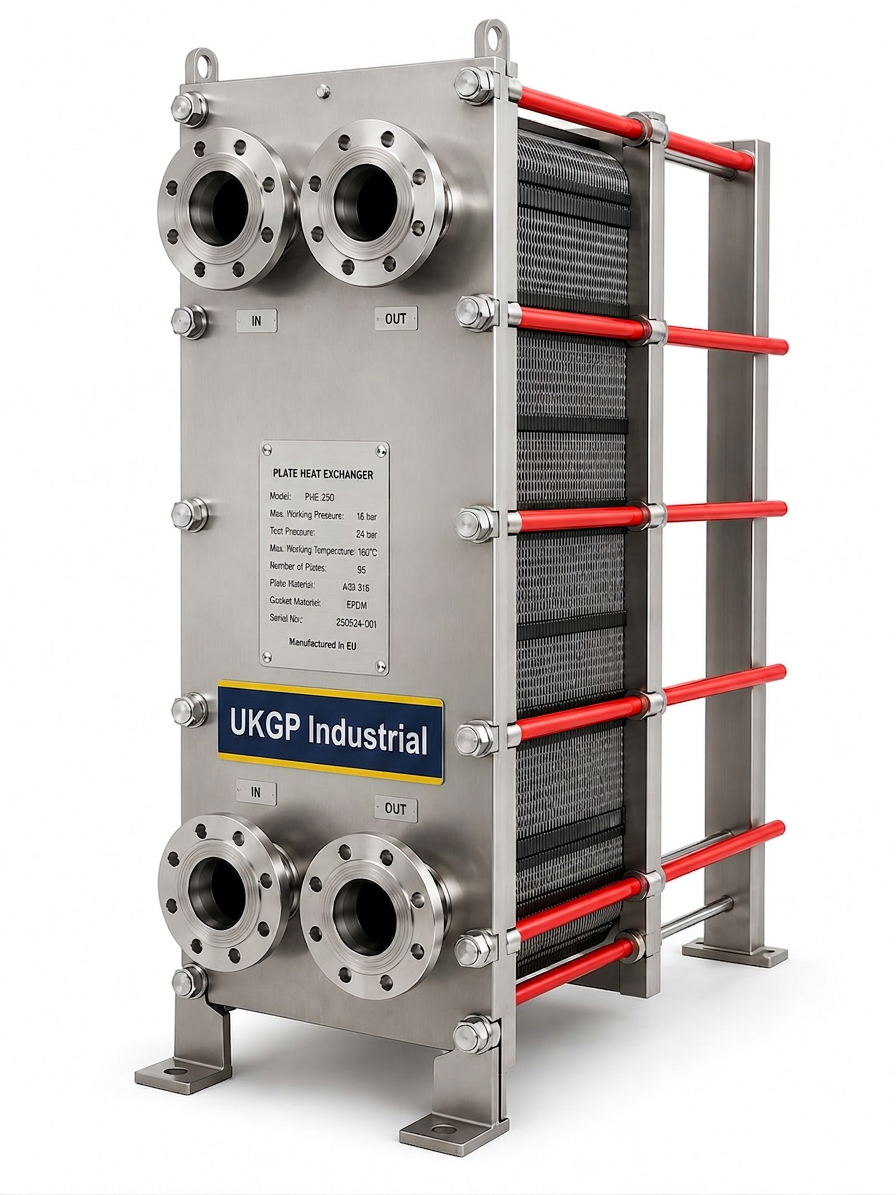
Precision engineering ensures that the corrugation pattern on every plate for heat exchanger unit is optimised for the specific viscosity and flow rate of the installation. This chevron pattern, often referred to as the 'herringbone' design, creates the vital turbulence needed to maximise the Surface Area to Volume ratio. By selecting a plate for heat exchanger with the correct theta rating—either high or low—consultants can balance the pressure drop against thermal efficiency to match the exact pump head available in the system. This level of granular detail prevents the common issue of oversizing, which often leads to poor control logic performance and premature component wear in commercial plant designs.
Thermal performance is not the only consideration; the structural integrity of the plate for heat exchanger must be validated against BS EN 14487 and PED requirements. Every plate for heat exchanger within a UKGP assembly is designed to withstand the cyclic pressures inherent in modern modulated heating systems. Our technical department provides comprehensive sizing from a full thermal spec, ensuring that the DN20 to DN300 connections are appropriately matched to the plate pack capacity. This rigorous approach to design ensures that the heat exchanger delivers stable temperature deltas across its entire lifespan in demanding commercial environments.
- AISI 316L Stainless Steel as standard for superior corrosion resistance
- Variable chevron angles (High and Low Theta) for bespoke pressure drop management
- Compliance with BSRIA BG50 water quality guidelines to preserve plate longevity
- Precision-moulded gaskets for high-integrity sealing in gasketed variants
- Validated thermal sizing models supporting DN20 to DN300 configurations
Material Selection for Plate For Heat Exchanger Longevity
The longevity of a plate for heat exchanger is largely determined by its resistance to chloride-induced pitting and scale accumulation. In many UK regions with hard water, the accumulation of limescale can significantly reduce the efficiency of a plate for heat exchanger by acting as an insulating layer between the primary and secondary fluids. By adhering to BS 8552 for water sampling, facilities managers can monitor the conditions that might lead to the degradation of a plate for heat exchanger. It is vital to specify materials that can withstand periodic chemical cleaning as mandated by BSRIA BG29 pre-commissioning cleaning protocols to keep the system operating at peak efficiency.
Beyond standard stainless steel, the gaskets used to seal each plate for heat exchanger play a critical role in system reliability. Common materials like EPDM are suitable for standard heating and DHW applications, while Nitrile (NBR) may be required for oil-based or low-temperature cooling loops. The interaction between the plate for heat exchanger and its gasket must be secure enough to prevent cross-contamination between circuits, particularly in applications involving domestic hot water where separation is a critical health and safety requirement. Our UKGP plate heat exchangers offer both gasketed and brazed options, ensuring the right sealing method for every commercial project.
Choosing between a gasketed and a brazed plate for heat exchanger involves evaluating the maintenance requirements of the building. Gasketed units allow for the individual plate for heat exchanger to be cleaned or replaced, providing a scalable solution if building loads increase in the future. Brazed units offer a compact, more cost-effective footprint for smaller plant rooms where space is at a premium and the load is stable. Both options from UKGP come with a 2-year warranty and a typical lead time of 4-6 weeks, providing M&E contractors with the reliability and speed needed for rigorous project timelines across the UK.
- Chlorine and mineral resistance profiles for 316L and Titanium materials
- Selection of EPDM vs Nitrile gaskets based on fluid temperature and chemistry
- Scalability options through the addition of plates in gasketed frames
- Thermal shock resistance for systems with rapid modulation cycles
- Integration with BSRIA BG29 flushing and cleaning standards
Integrating Side Stream Filtration with Your Heat Exchanger
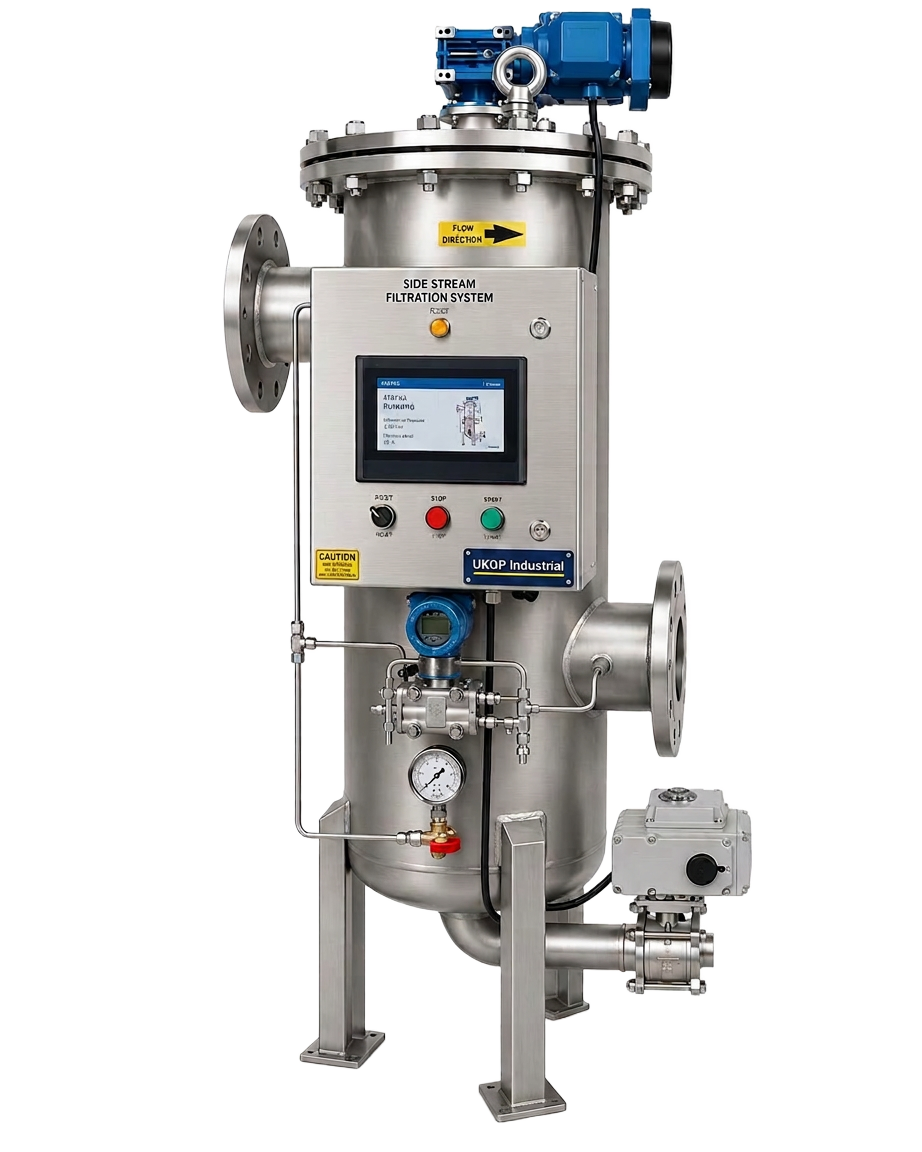
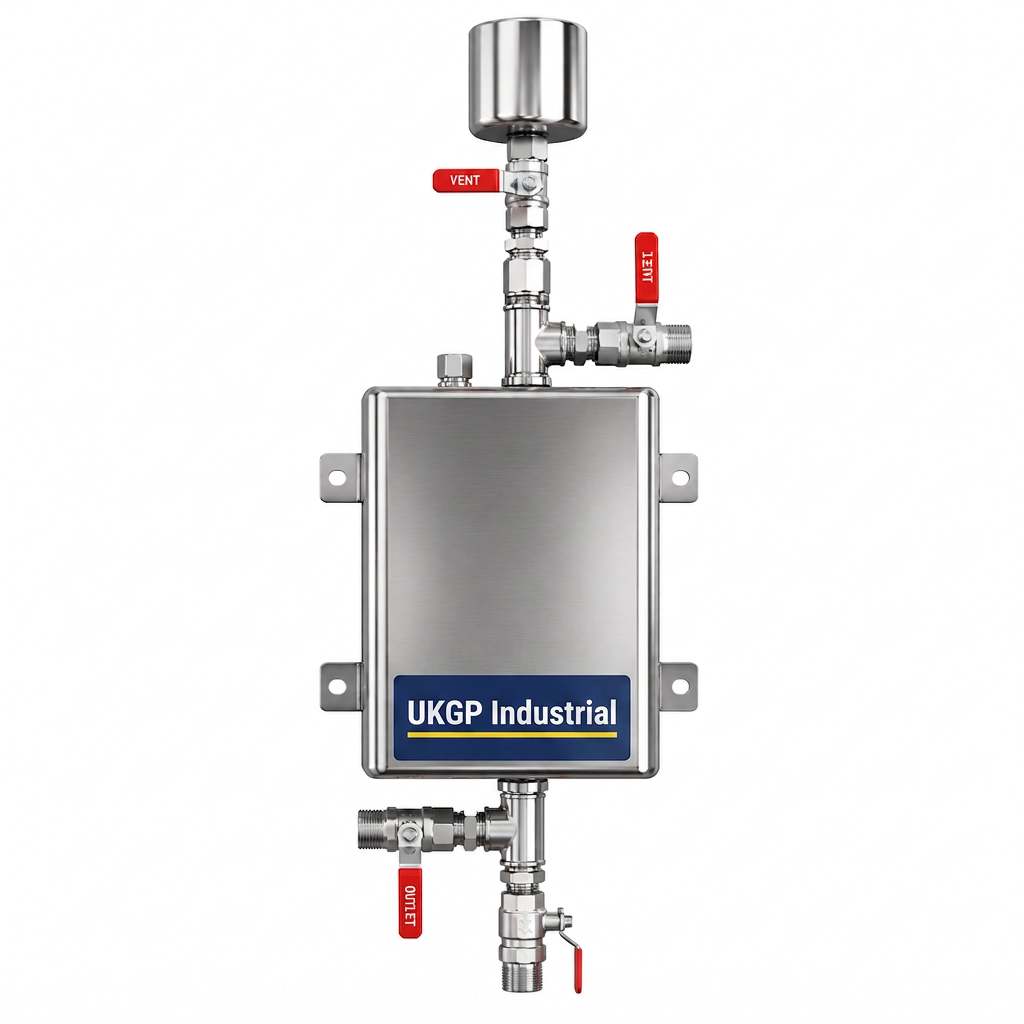
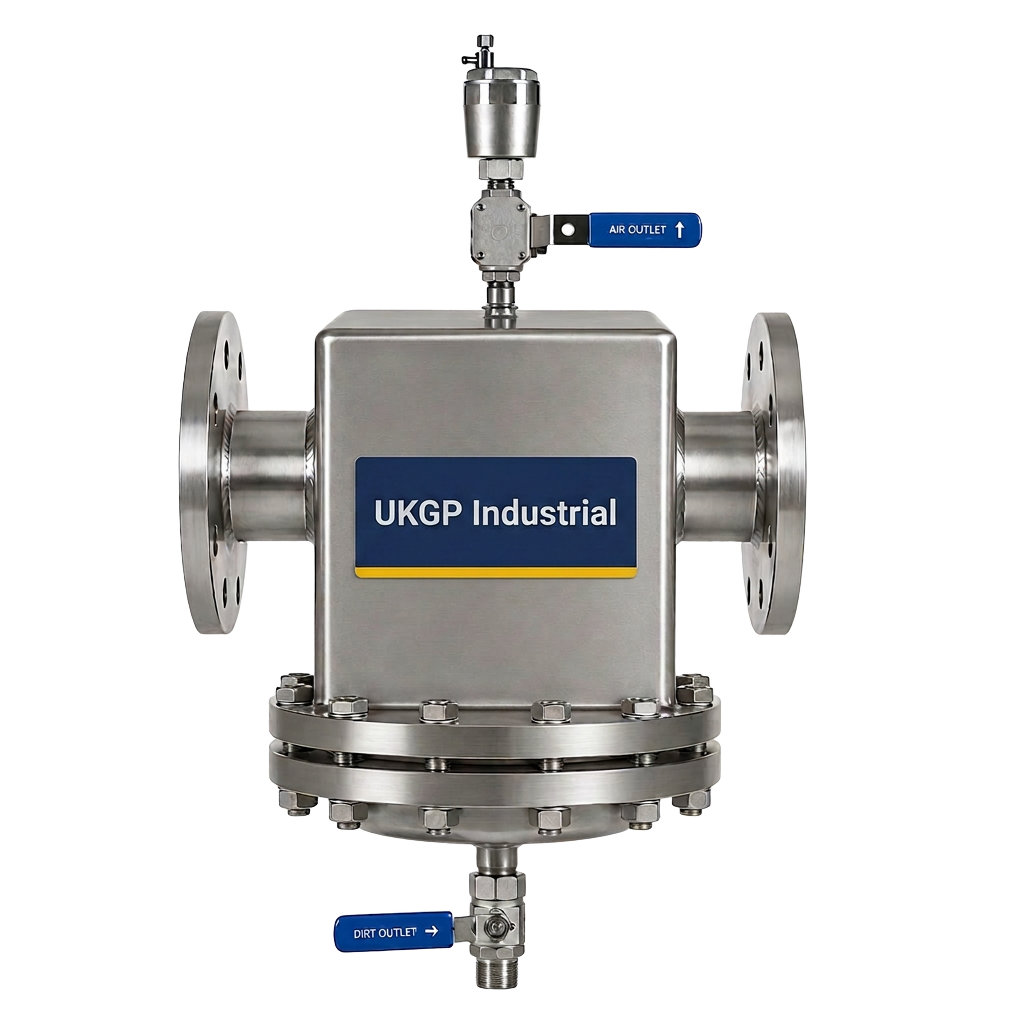
To protect the delicate surfaces of a plate for heat exchanger, the integration of side stream filtration is highly recommended by BSRIA BG50. Suspended solids and magnetite can lodge within the narrow channels of a plate for heat exchanger, leading to localized hot spots and increased risk of erosion-corrosion. By removing particles down to 5 microns, a side stream filtration skid ensures that the plate for heat exchanger remains clear of debris, maintaining the designed flow rates and heat transfer efficiency. This is particularly important when retrofitting new heat exchangers into old pipework systems where iron oxide transit is common.
A well-maintained plate for heat exchanger supported by filtration reduces the frequency of manual tear-downs and chemical flushes. The side stream filtration system works continuously to clean the primary or secondary loop without interrupting the main flow. When a plate for heat exchanger is kept clean, the pressure drop remains stable, reducing the energy consumption of the circulating pumps. This holistic approach to system health is a hallmark of high-quality UK commercial plant room design, where long-term operational expenditure is as important as the initial capital cost.
UKGP provides side stream filtration skids that complement our heat exchanger range perfectly. By treating the water that passes through every plate for heat exchanger, you extend the service life of the entire thermal package. For procurement leads, this means lower lifecycle costs and higher reliability for the end-user. Whether you are installing a DN20 or a DN300 unit, ensuring the water quality meets the standards required for a plate for heat exchanger is essential for a successful handover and long-term performance.
- Magnaclean and filtration skids to remove thermal-insulating magnetite
- Protection of narrow plate channels from blockage and erosion
- Reduced maintenance intervals for gasketed plate heat exchangers
- Continuous cleaning without system shutdown
- Optimization of pump energy usage by maintaining low pressure drops
Installation and Commissioning of the Plate For Heat Exchanger
Correct installation of a plate for heat exchanger is vital for achieving the design intent and ensuring full 2-year warranty coverage. The unit must be installed with sufficient clearance to allow for plate pack compression and the potential removal of an individual plate for heat exchanger during maintenance. It is standard practice in the UK to install a plate for heat exchanger in a counter-current flow configuration, which maximises the log mean temperature difference (LMTD) and achieves the highest possible thermal efficiency. Failure to adhere to these flow directions can result in a significant drop in heat transfer capacity, often necessitating a larger footprint than is actually required.
During the commissioning phase, the secondary and primary loop pressures must be balanced to avoid plate deformation. Although a plate for heat exchanger is designed to be robust, sudden hydraulic shocks can compromise the integrity of the gaskets or the plates themselves. Following CIBSE guidelines for commissioning water systems ensures that air is fully purged from the plate for heat exchanger before it is brought up to operating temperature. This prevents air pockets from forming, which can lead to uneven cooling and thermal stress within the plate pack, potentially shortening the component’s operational life.
Regular monitoring thereafter should include checking the temperature across the plate for heat exchanger and comparing it to the original design specification. A narrowing of the approach temperature often indicates that the plate for heat exchanger is fouling and requires cleaning. UKGP's support team can provide technical guidance on selecting the appropriate replacement plate for heat exchanger components if the water chemistry has changed over time. With a focus on commercial reliability, our 4-6 week lead time ensures that critical replacement parts or new units reach the site exactly when needed by the engineering team.
- Counter-current flow installation for maximum thermal efficiency
- Adequate maintenance spacing for plate removal and inspection
- Gradual pressurization to protect plates from hydraulic shock
- Comparison of 'actual vs design' approach temperatures during commissioning
- Integration with BMS for real-time performance monitoring
Thermal Sizing and Energy Efficiency Constraints
Sizing a plate for heat exchanger is a process that requires precise data, including flow rates, fluid properties, and the required temperature approach. Over-sizing a plate for heat exchanger leads to low velocities through the channels, which actually promotes fouling as there is insufficient shear force to keep the surfaces clean. Conversely, under-sizing results in high pressure drops and excessive pump energy consumption. UKGP technical specialists size every plate for heat exchanger from a full thermal spec, ensuring that we provide the most efficient solution for the specific heat load of the building, whether it is a small DN20 residential block or a DN300 industrial process.
Energy efficiency in modern UK commercial buildings is heavily influenced by the performance of the plate for heat exchanger. By achieving a close approach temperature—sometimes as low as 1°C or 2°C—a well-designed plate for heat exchanger allows the primary heat source to operate at its most efficient condense-mode temperatures. This is particularly relevant when integrating with heat pumps or low-temperature district heating schemes. Selecting a plate for heat exchanger with the correct corrugation depth is essential to balancing these thermal requirements with the hydraulic limitations of the existing system pipework.
Furthermore, the use of a plate for heat exchanger facilitates hydraulic separation, protecting expensive primary equipment from the potential contaminants in the secondary building circuits. This boundary is a critical design feature recommended by major UK commercial boiler OEMs and heat pump manufacturers to ensure the primary plant remains within its specified water quality tolerances. By investing in a high-quality plate for heat exchanger from UKGP, you are not just buying a component, but rather a protection layer for the entire building's energy infrastructure, backed by a comprehensive 2-year warranty.
- Precise thermal sizing to avoid efficiency-sapping over-sizing
- Achieving close approach temperatures for heat pump compatibility
- Hydraulic separation to protect primary heating and cooling plant
- Custom plate patterns to fit specific pressure drop envelopes
- Full support for design consultants during the thermal spec phase
Procurement and Lead Times for UK Plant Rooms
For UK procurement leads, the lead time on a plate for heat exchanger is often as critical as the technical specification. With a standard lead time of 4-6 weeks, UKGP ensures that project timelines are maintained without compromising on the precision of the plate for heat exchanger sizing. In the fast-paced M&E sector, waiting months for a bespoke heat exchanger is often not an option. Our ability to provide both gasketed and brazed solutions means we can cater to both high-turnover residential projects and complex industrial cooling applications where a specific plate for heat exchanger configuration is mandatory for compliance.
The commercial viability of a plate for heat exchanger also hinges on its long-term support and warranty. All UKGP heat exchangers come with a 2-year warranty, providing peace of mind to facilities managers and building owners. When you specify a plate for heat exchanger through us, you receive a product that has been rigorously tested for UK conditions. This includes ensuring all connections from DN20 to DN300 are ready for immediate integration with standard British pipework, reducing the need for costly on-site modifications and ensuring a smooth installation process for the plant room engineers.
Ultimately, the choice of a plate for heat exchanger should be based on a combination of thermal accuracy, material quality, and after-sales support. By providing a full thermal spec for every quote, UKGP removes the guesswork from heat exchanger selection. Whether your focus is on BSRIA compliance, CIBSE efficiency targets, or simple commercial reliability, our range of plate for heat exchanger products offers the flexibility and performance required for the modern UK built environment. Contact our Surrey-based technical team today to discuss your specific project requirements and receive a detailed thermal sizing and quote.
- Reliable 4-6 week lead times for project-critical components
- Full 2-year warranty cover for all plate heat exchanger units
- DN20 to DN300 connection sizes to suit all commercial scales
- Surrey-based technical support for rapid thermal sizing enquiries
- Flexible options for gasketed and brazed construction types
Frequently asked questions
What is the typical lead time for a UKGP plate for heat exchanger?
- Our standard lead time for both gasketed and brazed plate heat exchangers is 4 to 6 weeks, ensuring timely delivery for UK construction and maintenance schedules.
Can I get a custom-sized plate for heat exchanger based on my specific temperatures?
- Yes, we provide sizing from a full thermal spec provided by the client. We calculate the exact number of plates and the chevron angle required to meet your specific heat load and pressure drop requirements.
What connection sizes are available for your plate heat exchangers?
- We offer a wide range of connection sizes from DN20 up to DN300, allowing our units to be integrated into everything from small commercial residential blocks to large-scale industrial heating and cooling systems.
Which materials are used in a UKGP plate for heat exchanger?
- Our standard plates are manufactured from 316L stainless steel for excellent corrosion resistance, with EPDM or Nitrile gaskets. For more aggressive environments, we can provide plates in alternative materials like Titanium.
Is a warranty provided with the plate for heat exchanger?
- Yes, all UKGP plate heat exchangers are supplied with a 2-year warranty as standard, covering manufacturing defects and ensuring long-term reliability in commercial plant rooms.