Defining the Plate And Frame Heat Exchanger Price in Major Systems
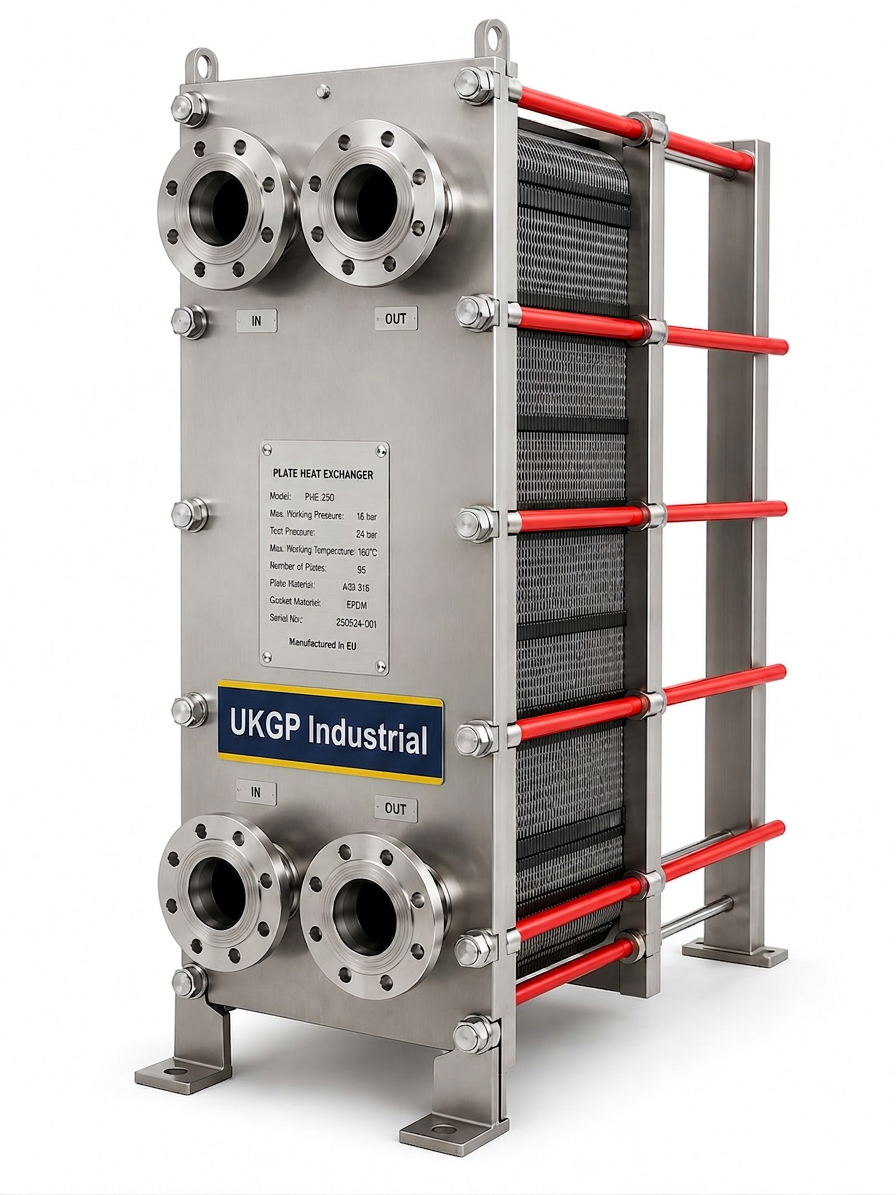
The plate and frame heat exchanger price is rarely a static figure because it depends heavily on the specific thermal duty requirements of the individual building. For UK building services consultants, the core challenge lies in mapping the exact kilowatt output against the physical footprint available in the plant room. A gasketed unit offers the distinct advantage of serviceability and future expansion, which typically necessitates a higher initial investment compared to smaller brazed alternatives. However, when evaluating the total cost of ownership, the ability to disassemble and manually clean the plates in accordance with BS 8552 water quality standards provides a significant return on investment over a ten-year cycle. This modularity means that if system requirements change, additional plates can often be added without replacing the entire frame, protecting your capital works budget.
When procurement leads request a quote, they often focus solely on the hardware cost, but the plate and frame heat exchanger price should be viewed through the lens of long-term operational expenditure. High-grade stainless steel plates (304 or 316) and robust EPDM gaskets are non-negotiable for commercial domestic hot water (DHW) or heating-primary isolation circuits. Selecting cheaper, inferior materials can lead to premature failure and system downtime, which far outweighs the initial savings found in a budget-oriented quote. Modern UKGP units provide the thermal precision required to integrate seamlessly with low-temperature heating regimes, such as those powered by commercial heat pumps or high-efficiency condensing boiler arrays from leading commercial boiler manufacturers.
Furthermore, the pricing structure is influenced by the technical documentation and certification required for UK projects. Compliance with the Pressure Equipment Directive (PED) and relevant British Standards ensures that the unit can withstand the rigorous demands of a primary district heating network or a high-rise residential riser. At UKGP, we provide comprehensive thermal specs to ensure you are not over-paying for capacity you do not need, nor under-specifying and risking system inefficiency. Our gasketed and brazed units range from DN20 to DN300, tailored specifically to the hydraulic requirements of your project. By securing a fixed lead time of 4-6 weeks, contractors can avoid the costly delays associated with international supply chain volatility.
- Influence of plate material (SS304 vs SS316) on the final price.
- Impact of gasket selection on maintenance intervals and lifecycle costs.
- Comparison between gasketed frames and brazed unit price points.
- Role of frame thickness and pressure ratings (PN10, PN16, PN25).
Factors Influencing Thermal Efficiency and Procurement Costs
Several engineering variables directly dictate the plate and frame heat exchanger price, primarily the Log Mean Temperature Difference (LMTD) and the permissible pressure drop across the unit. A tight temperature approach, where the cold-side outlet is very close to the hot-side inlet temperature, requires significantly more surface area. This increase in surface area translates to more plates and a larger frame, which naturally pushes the price upward. Engineers must weigh the benefits of higher efficiency against the increased capital cost. In many UK commercial applications, targeting an LMTD of 2 to 5 degrees Celsius provides the best balance between plate count and thermal performance, ensuring the system meets CIBSE guidelines for energy conservation without inflating the plant-room budget unnecessarily.
Pressure drop is another critical factor often overlooked during the initial procurement phase. A lower allowable pressure drop requires more parallel channels for the fluid to pass through, which again increases the number of plates required. While this may increase the quoted plate and frame heat exchanger price, it significantly reduces the pumping power required over the lifetime of the installation. In an era of rising energy costs and strict ESG reporting for facilities managers, investing more upfront in a low-pressure-drop heat exchanger is a commercially astute decision. UKGP technical experts work closely with M&E contractors to size units from a full thermal spec, ensuring that the selected model delivers the exact performance profile required for the specific hydraulic circuit.
We also must consider the logistics and lead times as part of the commercial reality of UK construction. While overseas manufacturers might offer a lower baseline plate and frame heat exchanger price, the risk of extended lead times and lack of technical support can be a major liability. UKGP provides a 2-year warranty as standard, reflecting our confidence in the build quality of our units. Our standard lead times of 4-6 weeks allow projects to remain on schedule, avoiding the liquidated damages that can accrue when plant equipment arrives late to the site. Having a local Surrey-based supply partner ensures that technical queries are resolved quickly and site visits can be conducted if required during the commissioning phase.
- Heat transfer coefficient and its relationship to plate geometry.
- How allowable pressure drop determines the physical size of the frame.
- Correlation between temperature approach and total plate surface area.
- Importance of local technical support and UK-based warranty service.
The Role of Water Quality and Side Stream Filtration
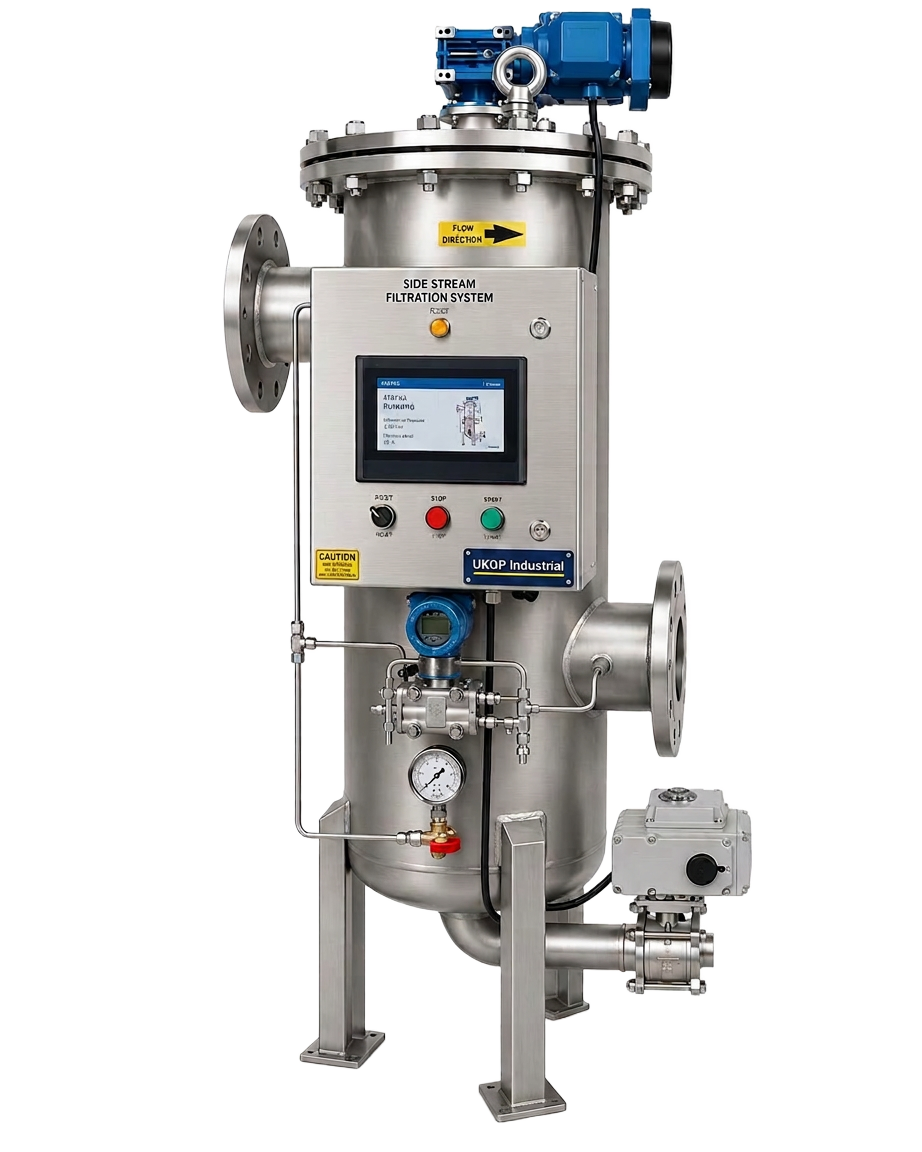
In any system where the plate and frame heat exchanger price is a major part of the budget, protecting that investment from fouling is paramount. BSRIA BG29 and BG50 emphasise the necessity of maintaining water quality to prevent the accumulation of magnetite and scale within the narrow channels of the heat exchanger plates. Fouling increases thermal resistance, forcing the system to work harder and eventually leading to a complete blockage or plate corrosion. To mitigate this risk, we highly recommend the installation of side stream filtration skids. These units continuously remove suspended solids and debris from the circulating water, ensuring the heat exchanger operates at peak efficiency for years to come, thereby protecting the lifecycle value of the equipment.
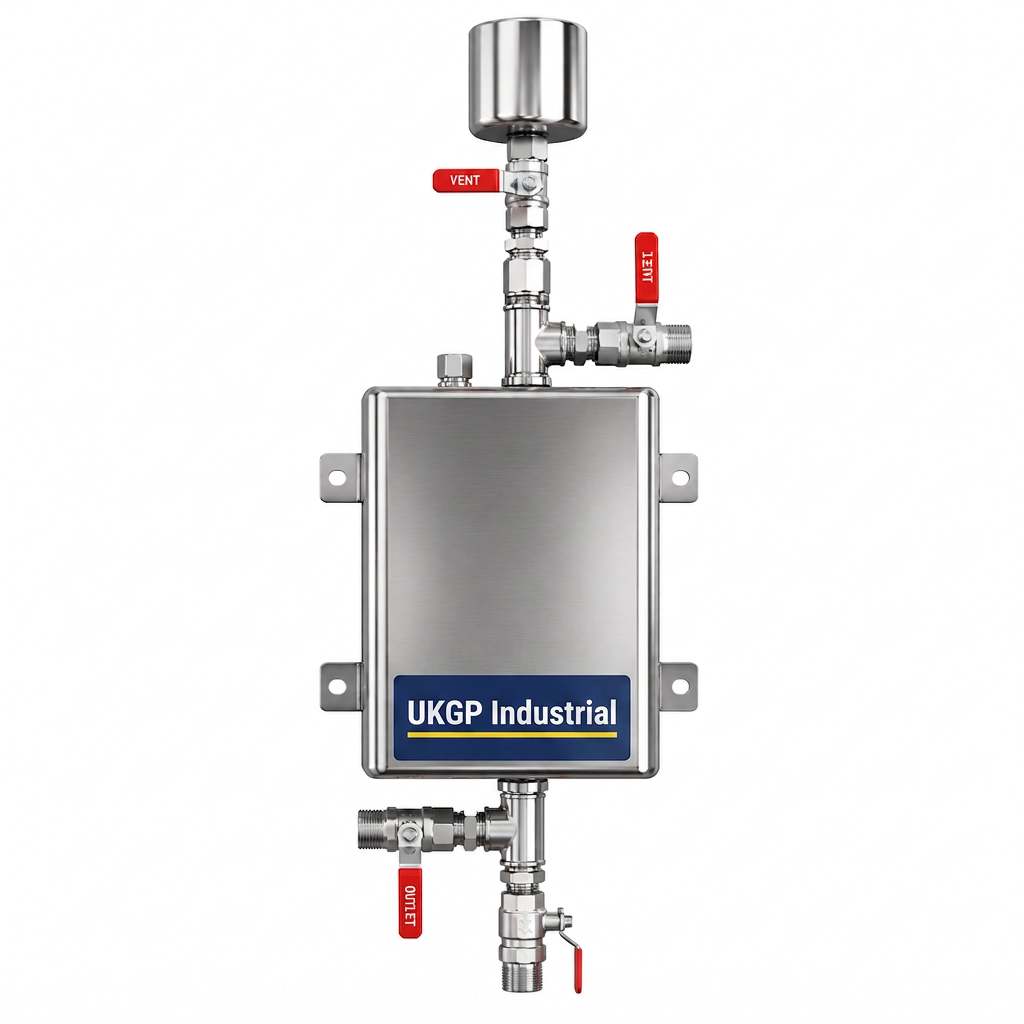
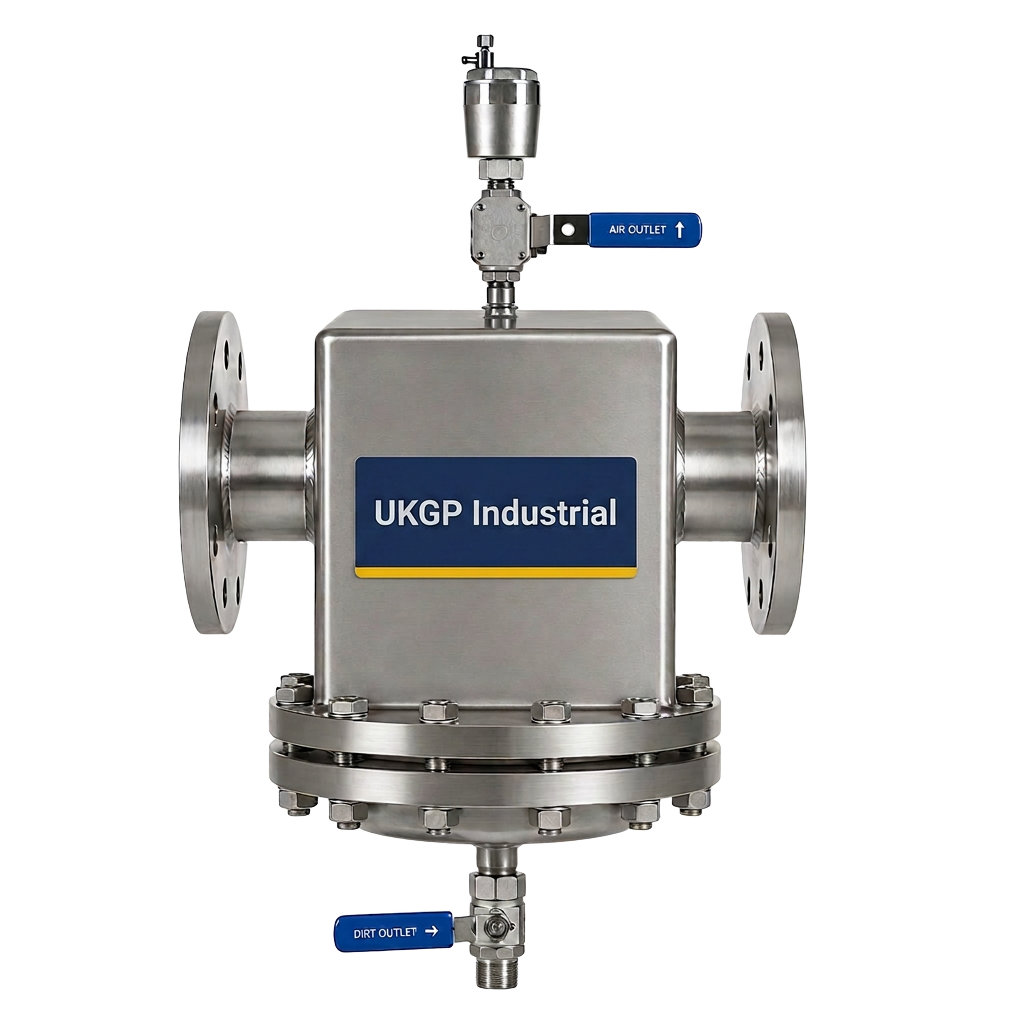
Integrating filtration and chemical dosing early in the design phase is far more cost-effective than attempting to chemically clean a fouled heat exchanger later. When we look at the plate and frame heat exchanger price in the context of a total system, the addition of a dosing pot and an air and dirt separator is a minor expense that provides massive operational security. At UKGP, we manufacture a range of high-quality plant-room ancillaries that complement our plate heat exchangers. By managing the water chemistry in accordance with BS 8552, contractors can ensure that the 2-year warranty remains valid and that the building's heating or cooling performance does not degrade shortly after handover to the FM team.
Furthermore, monitoring the health of the system via pH sensors and transmitters allows for proactive maintenance rather than reactive repairs. Reactive cleaning of a gasketed heat exchanger involves labor-intensive strip-downs and potential gasket replacements, which adds a hidden cost to the initial plate and frame heat exchanger price. By maintaining a clean system, you extend the period between service intervals and ensure that the heat transfer rates remain as specified during the design phase. This holistic approach to plant-room design is what sets leading UK M&E contractors apart, moving from a 'lowest-bid' mentality to a 'best-value' philosophy that benefits the end-user throughout the building's life.
- Prevention of plate fouling through BSRIA-compliant water treatment.
- Using side stream filtration to maintain design heat transfer rates.
- Integration of dosing pots for effective corrosion inhibitor delivery.
- Monitoring system health with pH sensors to prevent acidic corrosion.
Sizing and Selection: Getting the Best Plate And Frame Heat Exchanger Price
To obtain an accurate plate and frame heat exchanger price, it is vital to provide a comprehensive thermal specification. This includes the fluid types, flow rates, inlet and outlet temperatures for both sides, and the maximum allowable pressure drop. Without this data, suppliers are forced to make assumptions that can lead to over-engineering. At UKGP, we pride ourselves on our DN20 to DN300 range, which allows us to cater to everything from small commercial units to major industrial processes. Our engineering team utilizes advanced software to optimize the plate configuration, ensuring we provide a competitive quote that doesn't compromise on the required heat load. This precision engineering means you only pay for the material and performance you actually need.
Lead times are often the second most critical factor after the plate and frame heat exchanger price. In the current UK market, waiting 12-16 weeks for a bespoke heat exchanger is often unacceptable for fast-track fit-out projects. UKGP’s commitment to a 4-6 week lead time is achieved through localized assembly and a robust supply chain of premium components. Our gasketed and brazed solutions are designed for ease of installation, with standard flange connections that simplify the task for site engineers. When comparing quotes, always verify the delivery date and the warranty terms; a slightly lower price from a supplier with no UK footprint can quickly become a liability if a site issue occurs and there is no local support available.
Finally, consider the future-proofing aspects of the frame design. A 'tight' frame that cannot accept additional plates might be cheaper today, but a 'lazy' frame with expansion capacity offers far better value if the building occupancy or usage patterns change. We often consult with FM leads who regret not having this flexibility. When you request a quote for a UKGP plate heat exchanger, we can provide options for future expansion within the same frame footprint. This forward-thinking approach to procurement ensures that the initial price you pay provides maximum utility and resilience for the heating network, keeping you compliant with the evolving demands of commercial building operation.
- Requirement of full thermal specs for accurate competitive quoting.
- The advantage of UK-based assembly for 4-6 week lead times.
- Flexibility of gasketed frames for future capacity increases.
- Standardized DN20 to DN300 connections for simplified M&E installation.
Compliance with British Standards and Industry Best Practice
Adhering to British Standards is a commercial necessity in the UK B2B sector. For expansion components, BS EN 14917 provides the framework for bellows, but for heat exchangers, the focus is on pressure vessel safety and water quality. When assessing a plate and frame heat exchanger price, ensure the equipment meets all Pressure Equipment Directive requirements. A unit that lacks proper certification may be cheaper but poses a significant safety and insurance risk. Our UKGP units are built to withstand the rigorous pressure testing required for commercial plant rooms, providing peace of mind to the principal contractor and the client alike. This commitment to quality is backed by our standard 2-year warranty on all heat exchanger products.
Water quality standards such as BS 8552 are also intrinsically linked to the performance of the heat exchanger. High oxygen levels can lead to rapid corrosion of the stainless steel plates, while poor filtration can lead to erosion at the plate ports. Including air and dirt separators in your specification helps maintain the integrity of the heat exchanger surfaces. When talking to procurement leads, we emphasize that the plate and frame heat exchanger price is just one component of the mechanical package. A well-designed system that includes proper air separation and expansion control via high-quality bellows will always outperform a disjointed system of cheap components, leading to fewer call-outs and lower energy bills for the building owner.
Lastly, CIBSE CP1 (2020) heat network standards have placed a greater emphasis on low return temperatures to maximize the efficiency of modern heat sources. Our plate heat exchangers are specifically designed to help achieve these low return temperatures through high-efficiency plate patterns that promote turbulence and maximize heat transfer. By selecting a UKGP unit, you are investing in a product that supports the decarbonization goals of the UK built environment. We provide all the necessary technical data sheets to support your design submissions, ensuring that the process from specification to installation is as smooth as possible for all stakeholders involved in the project.
- Adherence to PED and British Standards for pressure vessel safety.
- Aligning heat exchanger selection with CIBSE CP1 efficiency standards.
- The importance of 2-year warranties in UK procurement cycles.
- How proper air and dirt separation protects the plate surfaces.
Final Considerations for Procurement and System Integration
In conclusion, the plate and frame heat exchanger price should be evaluated as a combination of hardware cost, delivery speed, and thermal reliability. By choosing a UK-based supplier like UKGP, you benefit from expert sizing from a full thermal spec and a reliable 4-6 week lead time. Whether you require a compact brazed unit for a plant-room skid or a large DN300 gasketed frame for a primary heat network, our range is designed to meet the demands of modern UK building services. We invite contractors and engineers to reach out for a technical consultation to ensure their next project is equipped with the most efficient heat transfer technology available.
Protecting your heat exchanger from the start with side stream filtration and air separation is a proven method to reduce lifetime costs. Our technical sales team can bundle these components into a single project quote, simplifying your procurement process and ensuring technical compatibility between all items. This holistic approach ensures that the heat exchanger price isn't just a number on a page, but a reflected value of a high-performing heating or cooling system. With over two years of warranty protection and locally available spare parts, UKGP provides the security and performance that professional M&E teams require for high-stakes commercial developments.
To get a firm plate and frame heat exchanger price for your current project, please contact us with your primary and secondary circuit temperatures, flow rates, and desired pressure drops. Our engineers will provide a detailed selection report and a competitive quote within 24-48 hours. Let UKGP be your partner in delivering high-efficiency plant room solutions that stand the test of time and meet the highest standards of the UK engineering industry. From low loss headers to sophisticated chemical dosing systems, we provide everything needed to support your plate heat exchanger installation and ensure long-term operational success across your entire building portfolio.
- Requesting a quote with full primary and secondary circuit data.
- Benefits of bundling heat exchangers with filtration ancillaries.
- Utilizing 24-48 hour turnaround for technical selection reports.
- Ensuring long-term value through local UK technical support.
Frequently asked questions
What is the typical plate and frame heat exchanger price for a commercial project?
- The price varies significantly based on flow rates and pressure drop requirements, but for a standard gasketed commercial unit, expect costs to scale with the plate count and frame size (DN20-DN300). UKGP provides specific quotes based on a full thermal spec.
How does the plate and frame heat exchanger price compare to a brazed unit?
- Brazed units generally have a lower initial price point due to their compact, non-serviceable design. Gasketed units have a higher price but offer the benefit of being able to be opened for cleaning and expanded with more plates later.
What factors cause the plate and frame heat exchanger price to increase?
- The primary drivers are the use of high-grade materials like 316 stainless steel, a very tight temperature approach (LMTD), and requirements for very low pressure drops, all of which increase the surface area and number of plates required.
What is the lead time for a UKGP plate heat exchanger?
- Our standard lead time for both gasketed and brazed plate heat exchangers is 4-6 weeks, allowing for bespoke sizing and testing before dispatch to the site.
Are UKGP heat exchangers covered by a warranty?
- Yes, all our plate heat exchangers come with a 2-year warranty as standard, covering manufacturing defects and ensuring peace of mind for M&E contractors and FM teams.