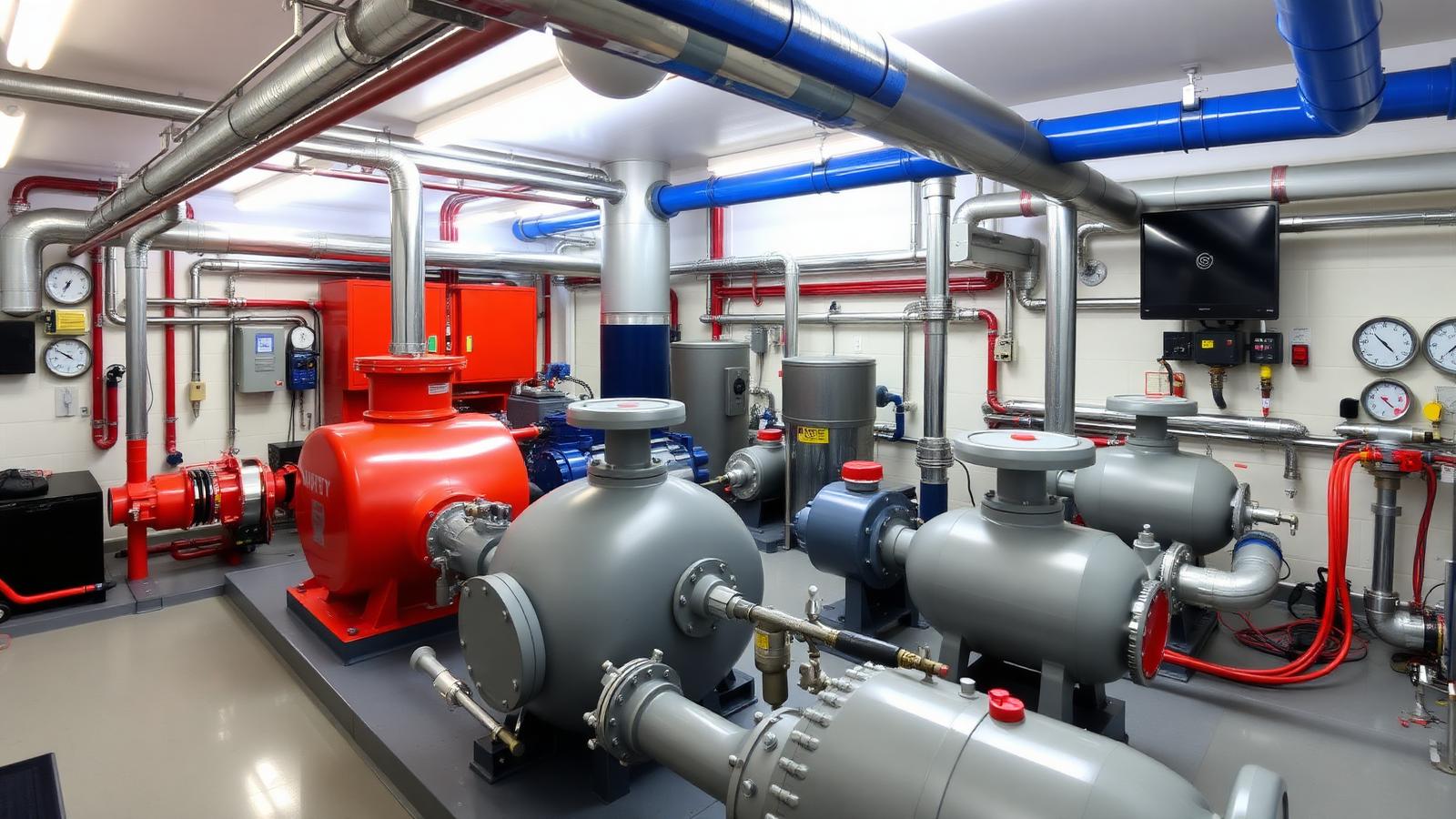
The Critical Role of Manufacturing Heating Water Cleanup
In a modern manufacturing environment, the reliability of the secondary heating loop or process water circuit is non-negotiable. Manufacturing heating water cleanup is not merely a cosmetic maintenance task; it is a fundamental requirement for preventing the accumulation of magnetite, haematite, and other suspended solids that compromise heat transfer. Without a robust strategy for water quality management, high-output boilers and sensitive heat exchangers are susceptible to fouling, which significantly increases fuel consumption and carbon output. By focusing on a systematic approach to water cleanliness, plant managers can ensure that their infrastructure remains resilient against the corrosive effects of dissolved oxygen and electrochemical reactions occurring within the pipework.
The financial implications of neglected water systems in UK manufacturing plants are substantial. When debris settles in low-velocity areas of the system, it creates a breeding ground for under-deposit corrosion, leading to premature pipework failure and expensive emergency shutdowns. Implementing a comprehensive manufacturing heating water cleanup programme, facilitated by high-performance filtration technology, allows for the continuous removal of these contaminants without interrupting production. This proactive stance aligns with the expectations of facilities management teams who are increasingly tasked with achieving higher uptime and lower operational expenditure across complex mechanical and electrical installations. Our Surrey-based team understands these pressures and designs solutions that deliver measurable performance improvements.
Furthermore, maintaining water quality is about more than just energy efficiency; it is about compliance and risk mitigation. British manufacturing sites must adhere to specific mechanical guidelines to ensure that their insurance and warranty conditions remain valid. A bespoke cleanup strategy focuses on keeping the iron levels and total suspended solids within the tight tolerances required by modern condensing boilers and plate heat exchangers. By reducing the overall sludge burden within the circuit, you are effectively extending the service life of every component, from the smallest valve to the primary heat source, ensuring that your capital investment is protected for the long term.
- Reduction in fuel consumption by up to 10% through improved heat transfer.
- Protection of sensitive valves, sensors, and variable speed pump seals.
- Minimisation of unplanned downtime caused by system blockages or leaks.
- Enhanced longevity of primary heating assets and industrial process plant.
Aligning with BSRIA BG50 and BG29 Standards
For UK building services consultants and plant-room engineers, compliance with BSRIA BG29 (Pre-commission Cleaning of Pipework Systems) and BSRIA BG50 (Water Treatment for Closed Heating and Cooling Systems) is the benchmark for excellence. Effective manufacturing heating water cleanup hinges on adhering to these standards, which provide the framework for monitoring and maintaining water chemistry. BG50, in particular, emphasizes the need for continuous side stream filtration to manage the ongoing build-up of corrosion products. By implementing these best practices, UK manufacturing sites can move away from reactive 'flush and fill' cycles—which are often wasteful and ineffective—towards a more sustainable, controlled environment that manages water quality in real-time.
Regular sampling and analysis, as prescribed by BS 8552, should accompany any hardware installation to ensure the effectiveness of the manufacturing heating water cleanup process. This data-driven approach allows engineers to identify trends in iron levels or microbiological activity before they escalate into systemic failures. UKGP Industrial provides the equipment necessary to facilitate this high level of control, ensuring that your system water remains clear and chemically balanced. It is critical to understand that even the most advanced chemical inhibitors cannot perform correctly if the system is laden with existing debris; therefore, mechanical filtration and chemical dosing must work in tandem to achieve the optimal water condition required for high-efficiency plant operation.
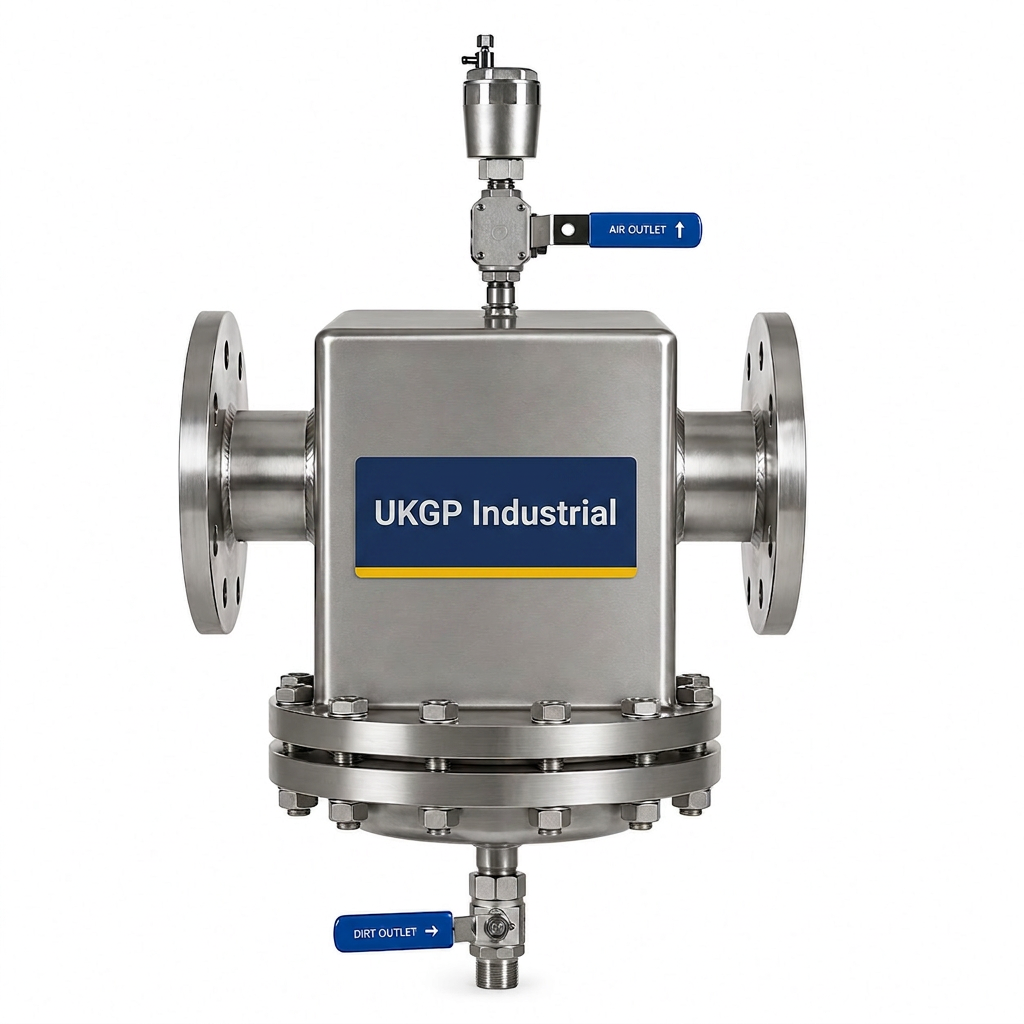
When consulting on large-scale industrial projects, CIBSE guidelines also reinforce the importance of protecting the integrity of the heat transfer fluid. A failure to manage the cleanup of manufacturing heating water can lead to thermal stratification and hotspots within heat exchangers, which can cause physical damage to the equipment. Our systems are engineered to facilitate the removal of particles down to sub-micron levels, surpassing basic strainer capabilities. This ensures that the water quality meets the stringent requirements of the latest high-performance boiler technologies, which often have very narrow waterways that are highly susceptible to blockage from even small amounts of suspended magnetite or silt.
- Adherence to BSRIA BG50 for life-cycle water treatment management.
- Compliance with BG29 standards for new system commissioning and retrofits.
- Implementation of BS 8552 for accurate and regular water sampling protocols.
- Support for CIBSE performance targets regarding energy-efficient HVAC operation.
Implementing Side Stream Filtration for Superior Cleanup
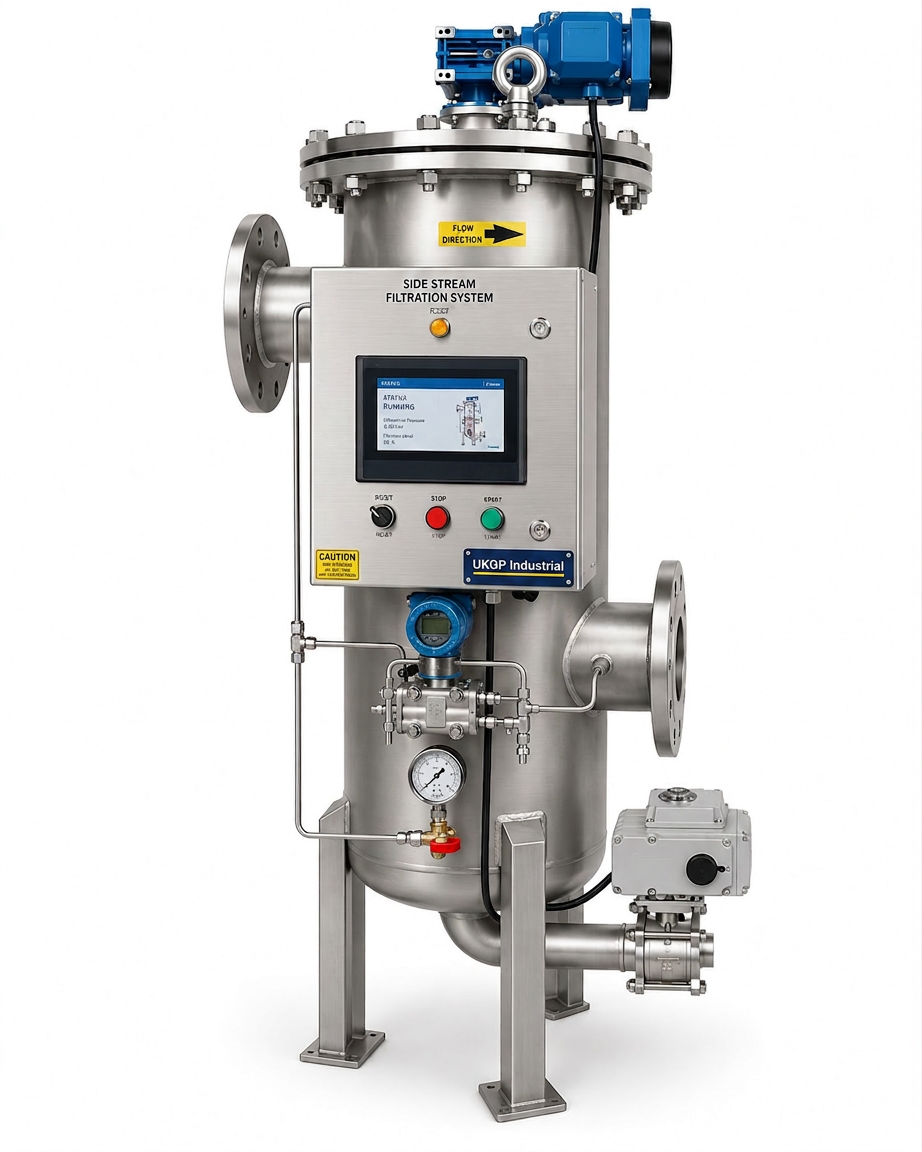
The cornerstone of any modern manufacturing heating water cleanup strategy is the installation of a high-quality side stream filtration skid. Unlike traditional full-flow strainers that only catch large debris, side stream filtration redirects a portion of the system flow through a secondary loop equipped with fine cartridge filters or high-intensity magnets. At UKGP Industrial, we manufacture these skids to order with a lead time of 6-8 weeks, ensuring they are perfectly tailored to the specific DN50 to DN100 pipework requirements of your plant. With prices starting from £6,800 + VAT, these units represent a cost-effective insurance policy against the systemic degradation of your heating infrastructure and are backed by a robust 2-year warranty.
Utilising side stream filtration as part of your manufacturing heating water cleanup process allows for the removal of fine suspended solids without causing a significant pressure drop across the main circuit. This is particularly advantageous in manufacturing sites where process stability is paramount and any fluctuation in flow rate could impact production quality. Our UKGP skids are designed for ease of maintenance, featuring clear pressure differential indicators that signal when a filter change is required. Because they are made to order in our UK facility, we can ensure that every unit meets the specific pressure and temperature ratings required for industrial process heating, providing a reliable and durable solution for even the most demanding environments.
When you invest in a UKGP side stream filtration skid, you are choosing a product designed for the long haul. The cleanup of manufacturing heating water is an ongoing process, and our skids facilitate this by providing a continuous, low-maintenance method for stripping contaminants out of the loop. Each unit is constructed from premium materials to withstand industrial use, and our engineering team is available to assist with technical specifications to ensure the flow rates and filtration media are perfectly matched to your system's volume and debris profile. Request a quote today to see how our bespoke skids, starting from £6,800 + VAT, can transform your facility's water quality and operational reliability.
- Continuous removal of magnetite and non-magnetic debris down to 5 microns.
- Typical 6-8 week lead time for bespoke, made-to-order UK manufacturing.
- Competitively priced from £6,800 + VAT with a full 2-year warranty.
- Available in various sizes (DN50 to DN100) to suit specific plant requirements.
Chemical Dosing and Microbiological Control
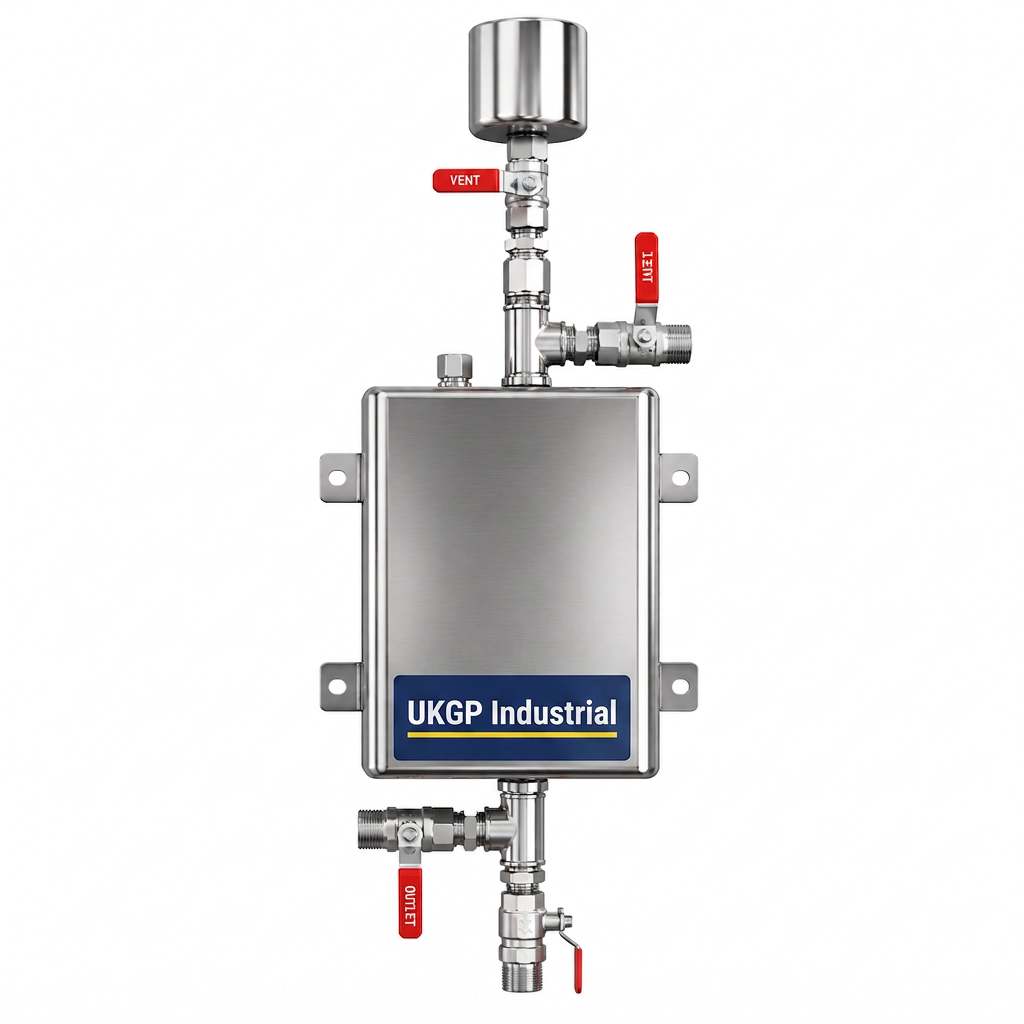
While mechanical filtration is vital for manufacturing heating water cleanup, it must be complemented by precise chemical dosing. Chemical dosing pots allow for the controlled introduction of inhibitors, glycol, and biocides into the system without the need for a total drain-down. In manufacturing environments where water may be stagnant in certain loops or where low temperatures are maintained, the risk of Microbiologically Influenced Corrosion (MIC) is elevated. By using a dosing pot to maintain correct biocide levels, engineers can prevent the formation of biofilms that otherwise insulate pipes and reduce heat transfer efficiency. Our dosing pots are robustly constructed to ensure they can withstand the typical pressures found in heavy industrial heating networks.
Proper chemical treatment also plays a primary role in the passivation of metal surfaces. After the initial manufacturing heating water cleanup has removed the bulk of the debris, the introduction of high-quality corrosion inhibitors creates a protective film on the internal pipework. This significantly slows the rate of new magnetite formation, ensuring that the load on your side stream filters is manageable over the long term. It is important to monitor these chemical levels monthly, as dilution from system leaks or top-ups can leave the plant vulnerable to rapid corrosion. UKGP Industrial offers a range of dosing solutions that integrate seamlessly into existing plant rooms, providing a simple yet effective way to maintain chemical equilibrium.
A holistic approach to cleanup involves understanding the chemical-mechanical synergy within the heating circuit. For instance, if the pH level of the water drifts outside the recommended range of 8.2 to 9.5 for steel systems, the integrity of the protective magnetite layer is compromised. By combining fine filtration with regular chemical monitoring and dosing via UKGP-supplied equipment, manufacturing facilities can achieve a 'clean' status that satisfies the most stringent audit requirements. This not only preserves the hardware but also ensures that the energy being consumed by the plant is actually being delivered to the end process, rather than being wasted by overcoming the resistance of sludge and scale.
- Heavy-duty chemical dosing pots for safe inhibitor and biocide introduction.
- Prevention of Microbiologically Influenced Corrosion (MIC) in cold-spots.
- Maintenance of protective passivating layers on internal metal surfaces.
- Easy integration into DN50-DN100 pipework configurations.
Maintaining Heat Exchanger Performance
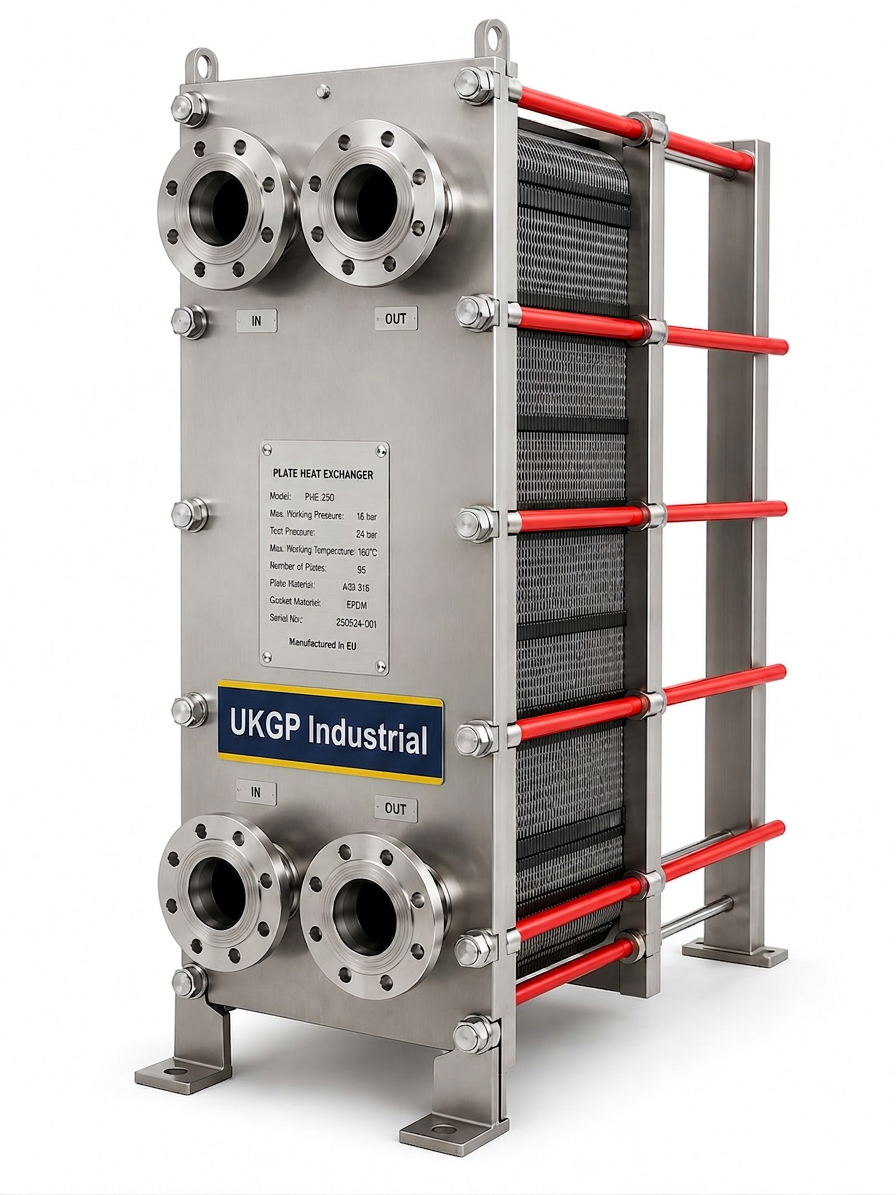
Plate heat exchangers (PHEs) are often the most sensitive components in a manufacturing heating circuit. The narrow channels within the plates provide a massive surface area for heat transfer, but they also act as a filter for any debris not caught by the manufacturing heating water cleanup system. Once a PHE becomes fouled with magnetite or calcium deposits, its efficiency drops sharply, and the pressure drop across the unit increases, forcing pumps to work harder and consume more electricity. In severe cases, the thermal stress caused by uneven heating can lead to plate warping or gasket failure, resulting in cross-contamination of fluids and expensive repairs that can halt a production line for days.
By prioritising manufacturing heating water cleanup, you directly extend the intervals between plate heat exchanger cleans and services. Using high-efficiency side stream filtration to target fine particles ensures that the PHE remains clear, maintaining the close approach temperatures required for precision manufacturing processes. UKGP Industrial supplies both replacement plates and complete heat exchanger units, but our primary goal is to help you protect your current assets through superior water quality management. Our solutions ensure that even in high-load scenarios, the heat transfer surfaces remain pristine, allowing your plant to operate at its design capacity without the constant threat of thermal degradation.
Procurement leads and FMs should consider the total cost of ownership when evaluating water treatment hardware. A small investment in UKGP's filtration and cleanup technology can save tens of thousands of pounds in avoided heat exchanger refurbishments and decreased energy bills. Our systems are assembled in the UK to withstand the rigours of industrial environments, ensuring that you receive a product that is both commercially viable and technically superior. Whether you are dealing with a legacy system that requires a major remediation effort or a new build that needs protection from day one, our team is ready to provide the technical expertise and high-quality hardware required to keep your heat exchangers performing as intended.
- Prevention of fouling in narrow plate heat exchanger channels.
- Reduction in pumping costs by maintaining low pressure drops.
- Extended gasket life through reduced thermal and mechanical stress.
- Support for high-precision temperature control in manufacturing processes.
The Long-Term ROI of Clean Heating Systems
The commercial argument for investing in manufacturing heating water cleanup is undeniable. With the current volatility of energy prices in the UK, any measure that improves boiler efficiency and reduces gas consumption has a very short payback period. A system that is maintained in accordance with BSRIA BG50 guidelines typically sees a 5% to 15% improvement in thermal efficiency compared to a system that is heavily fouled. For a large manufacturing site, this translates to thousands of pounds in annual energy savings, far outweighing the initial capital expenditure of a side stream filtration unit. Furthermore, the reduction in chemical usage and water waste associated with fewer system flushes contributes to corporate sustainability goals.
Beyond energy savings, the reduction in maintenance labour and replacement parts provides additional financial benefits. When your heating water is clean, components such as control valves, heat meters, and circulating pumps last significantly longer. This shifts the focus of your engineering team from reactive 'fire-fighting' repairs to planned, value-added maintenance activities. UKGP Industrial's bespoke solutions, including our made-to-order side stream filtration skids (DN50-DN100), are engineered specifically to provide this long-term reliability. By choosing a UK manufacturer with a 2-year warranty and localized support, you are ensuring that your investment is backed by experts who understand the unique requirements of the British industrial sector.
In conclusion, manufacturing heating water cleanup is a strategic necessity for any facility looking to optimise its HVAC and process heating performance. Proper filtration, coupled with diligent chemical management and adherence to BSRIA standards, creates a stable and efficient environment for your plant to thrive. UKGP Industrial remains at the forefront of this sector, providing Surrey and the wider UK market with the high-specification hardware needed to achieve these results. Contact our technical sales team today to discuss your project requirements, obtain a quote for a bespoke filtration skid starting from £6,800 + VAT, and take the first step toward a cleaner, more efficient, and more reliable manufacturing heating system.
- Rapid ROI through significant energy and fuel cost reductions.
- Decreased environmental impact through lower carbon emissions.
- Stabilised operational budget with fewer emergency repair call-outs.
- Professional peace of mind with a 2-year warranty on UKGP hardware.
Frequently asked questions
What is the typical lead time for a UKGP side stream filtration skid?
- Our industrial side stream filtration skids are made to order at our Surrey facility. The typical lead time is 6-8 weeks from order placement to delivery.
Do you offer warranties on your manufacturing water cleanup equipment?
- Yes, we provide a comprehensive 2-year warranty on our side stream filtration skids and other core products, reflecting our confidence in UK manufacturing quality.
What size systems can your side stream filtration units handle?
- We offer standard bespoke units ranging from DN50 to DN100 pipe sizes, designed to accommodate the flow rates typically found in mid-to-large scale manufacturing heating circuits.
How does side stream filtration help with BSRIA BG50 compliance?
- BSRIA BG50 recommends continuous filtration to manage suspended solids in closed loops. Our skids remove magnetite and debris down to 5 microns, ensuring your system meets these professional standards.
What is the starting price for an industrial side stream filtration unit?
- Prices for our bespoke, UK-manufactured side stream filtration skids start from approximately £6,800 + VAT, depending on the specific flow requirements and features.