The engineering rationale for expansion joints
The primary driver for installing bellows at the pump interface is the mitigation of mechanical vibration. Without a flexible interface, the constant micro-oscillations from the pump are transmitted into the rigid pipework, leading to fastener loosening, bracket fatigue, and acoustic issues in occupied spaces. In the context of British Standards and CIBSE guidelines, the decoupling of the plant is essential for long-term system integrity.
Thermal management is equally critical. In a typical LTHW system operating at 80°C, a 20-metre run of carbon steel pipework will expand by approximately 18mm. If this expansion is allowed to exert force directly onto the pump discharge flange, it can lead to casing distortion, shaft misalignment, and eventual bearing or mechanical seal failure. Expansion bellows act as the 'weak link' by design, absorbing this movement before it reaches the sensitive rotating equipment.
Furthermore, bellows provide a degree of protection against 'water hammer' and hydraulic shock, although they should never be the sole method of surge protection. By introducing a flexible membrane—be it EPDM rubber or stainless steel—the system can accommodate the transient pressure spikes associated with pump starts and valve closures more effectively than a fully rigid installation.
- Isolation of high-frequency vibration from the pump motor and impeller.
- Compensation for thermal expansion and contraction in LTHW, MTHW, and chilled water lines.
- Protection of pump casings from flange-loading stresses.
- Reduction of noise transmission through the building’s structural elements.
Material selection: Rubber vs. Stainless Steel
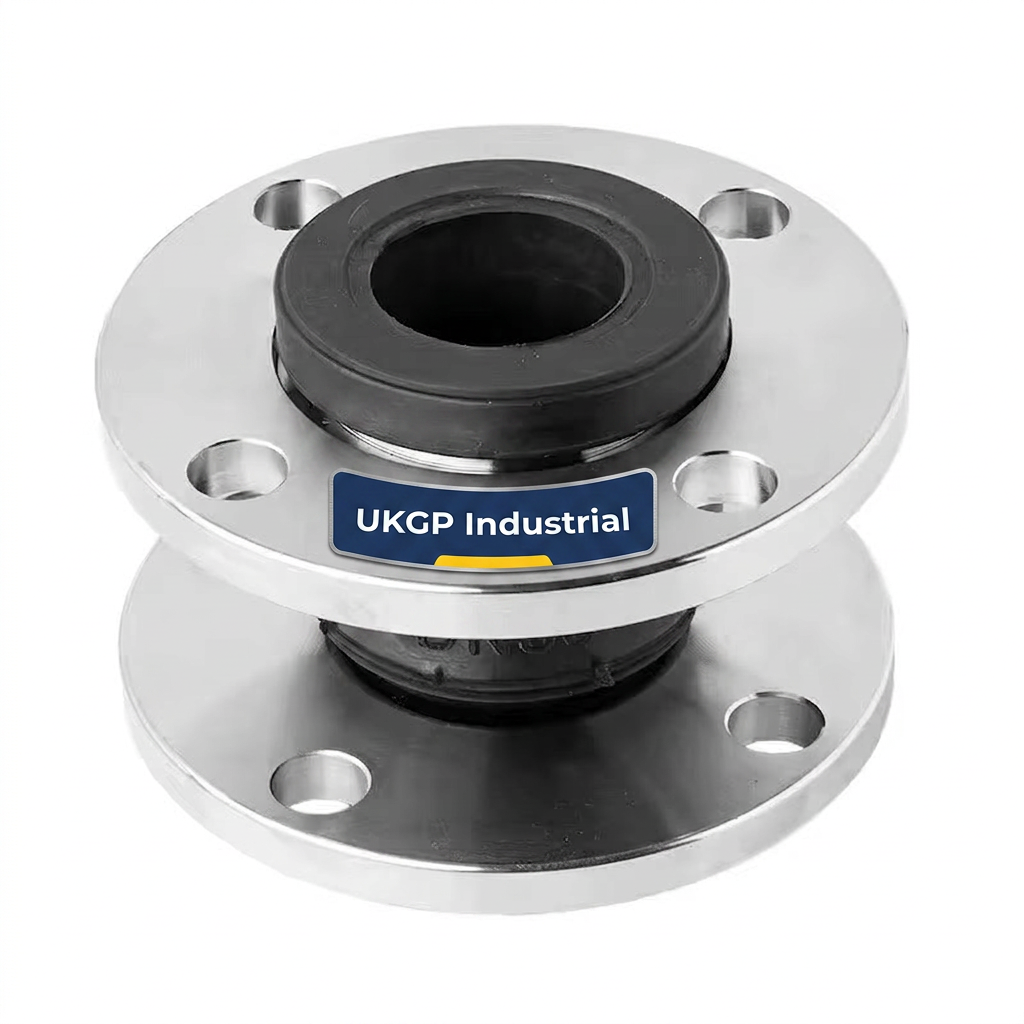
Most commercial HVAC applications in the UK utilize EPDM rubber bellows. These are preferred for their superior vibration damping and noise attenuation properties. Rubber bellows, such as those in the UKGP Industrial range, are typically rated for 10 bar or 16 bar at 70°C, but engineers must be wary of 'de-rating' at higher temperatures. For example, a bellows rated 16 bar at ambient may only be suitable for 6 bar at 90°C.
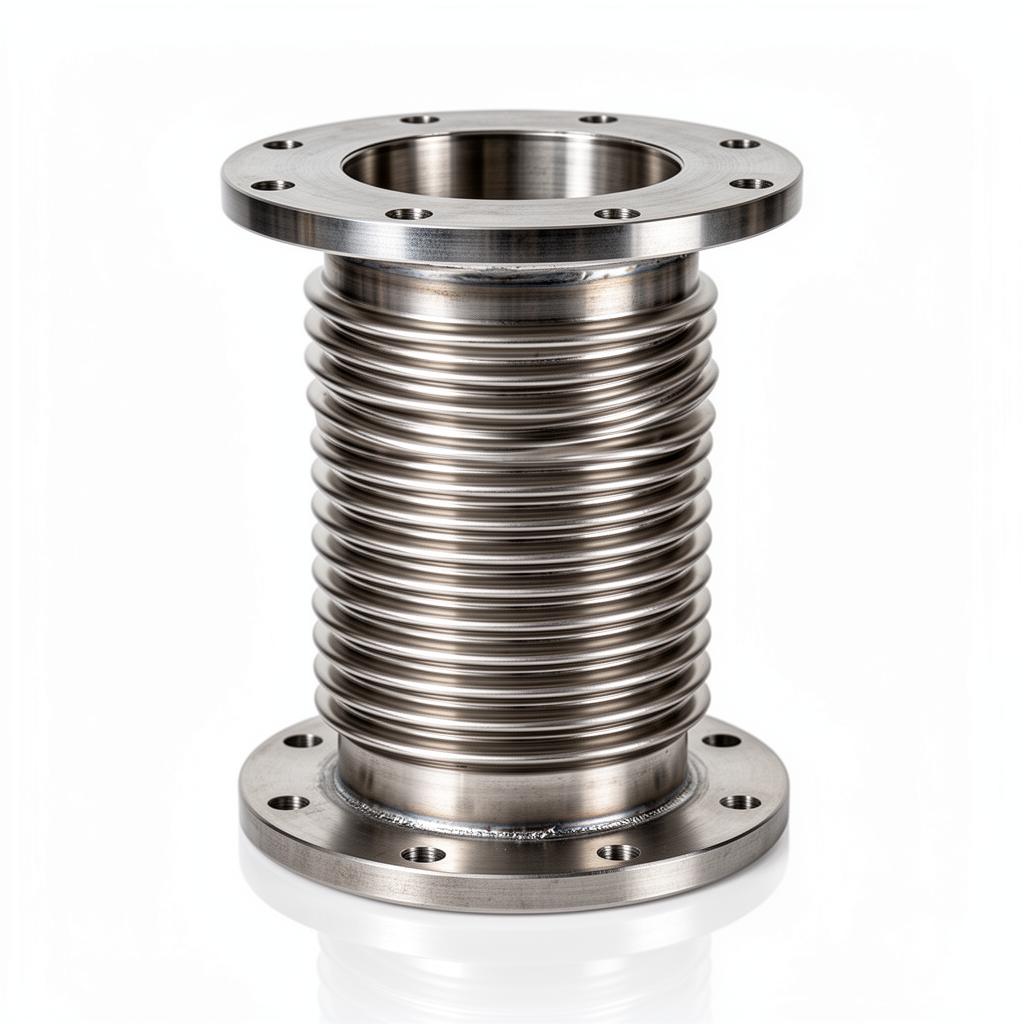
Stainless steel bellows (conforming to EN 14917) are mandatory when temperatures exceed 100°C or pressures surpass the limits of reinforced rubber. In District Heating applications or high-pressure steam sets, metal bellows provide the necessary robust containment. Unlike rubber, metal bellows do not have an inherent damping effect; they are primarily used for thermal movement and require meticulous anchoring.
Compatibility with system additives is a frequent point of failure. BSRIA BG29/21 guidelines for pre-commissioning cleaning often involve aggressive chemicals. If rubber bellows are installed prior to flushing, the engineering specification must ensure the elastomer is compatible with the cleaning agents, or temporary 'spool pieces' must be used during the flushing process to prevent degradation of the bellows membrane.
- EPDM: Suitable for heating and chilled water, typically up to 100°C.
- Nitril (NBR): Required for systems containing oils, fats, or fuels.
- Butyl: Excellent for high-temperature potable water or chemical resistance.
Frequently asked questions
Can I use the pump casing as a main anchor point?
- No. Tying down a pump to its plinth does not constitute a rigid anchor for the purposes of expansion joint operation. Anchors must be designed to withstand the full pressure thrust and spring rate of the bellows.
Should I use tied or untied rubber bellows on pump sets?
- While rubber bellows offer excellent vibration isolation, un-tied units can exert significant pressure thrust on the pump flange. In high-pressure systems or where anchors are distant, tied units prevent the joint from over-extending, even if they transfer slightly more mechanical noise.
How do I handle vacuum conditions on pump suction?
- The suction side is prone to vacuum conditions during startup or pump cavitation. Standard rubber bellows can collapse under vacuum; always specify a vacuum support ring (internal wire or sleeve) for suction-side installations.
What is the maximum allowable misalignment during installation?
- The allowable misalignment for a standard 100mm EPDM bellows is typically +/- 3mm. Exceeding this during installation causes pre-stressing and catastrophic fatigue failure. Never use a bellows to correct for poor pipe alignment.