The Engineering Reality of Industrial Heat Exchanger Cleaning
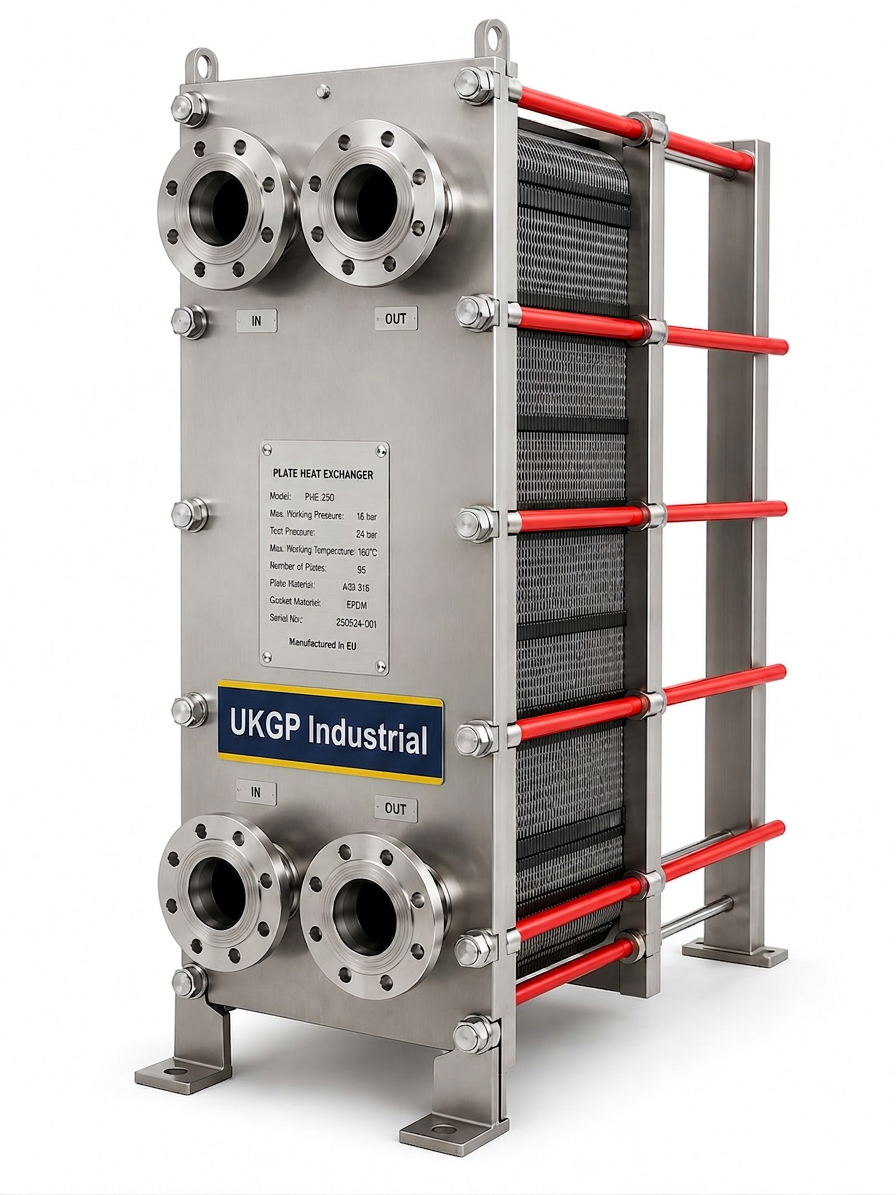
In the UK's commercial heating and cooling landscape, industrial heat exchanger cleaning is often viewed as a reactive emergency measure rather than a proactive maintenance pillar. When plate heat exchangers (PHEs) become choked with limescale, magnetite, or bio-films, the thermal transfer rate drops significantly, forcing pumps to work harder and increasing energy consumption. For M&E contractors and facility managers, the challenge is not just the physical removal of these deposits, but ensuring that the internal surfaces remain clean for the long term. This requires an understanding of the Reynolds number and how flow velocity impacts the self-cleaning nature of plate turbulent flow, which is often compromised when debris accumulates in the narrow channels.
A standard clean typically involves either Mechanical Cleaning (MC) through plate pack stripping or Cleaning-In-Place (CIP) using chemical circulation. While CIP is less invasive, its effectiveness is dictated by the chemical's ability to penetrate complex fouling layers without damaging the gasket materials or the 316L stainless steel plates. If the system water remains untreated, the clean is merely a temporary fix. Professionals must look at the root cause of the contamination. Often, this is a result of poor initial commissioning or a failure to adhere to the rigid water quality guidelines set out in BSRIA BG50. If you are experiencing repeated efficiency drops, it may be time to consult with an expert for a full thermal audit.
UKGP Industrial provides bespoke plate heat exchangers designed for high-demand environments where thermal recovery is critical. However, supplying the hardware is only half the battle; ensuring that industrial heat exchanger cleaning is minimised through superior system design is our primary goal. By integrating high-quality components and maintaining strict fluid velocities, we help our clients achieve longer intervals between service outages. Our technical team works alongside UK consultants to specify heat transfer solutions that are not only efficient at the point of installation but remain manageable throughout their operational lifecycle, reducing the total cost of ownership for building owners and occupiers across Surrey and the wider UK.
- Restoration of design-specified Delta T across the primary and secondary circuits.
- Reduction in carbon footprint by optimising boiler or chiller load requirements.
- Prevention of localized overheating and potential plate deformation under pressure.
- Extension of gasket lifespan by removing abrasive particulate matter from the pack.
Integrating Side Stream Filtration for Longer Cycles
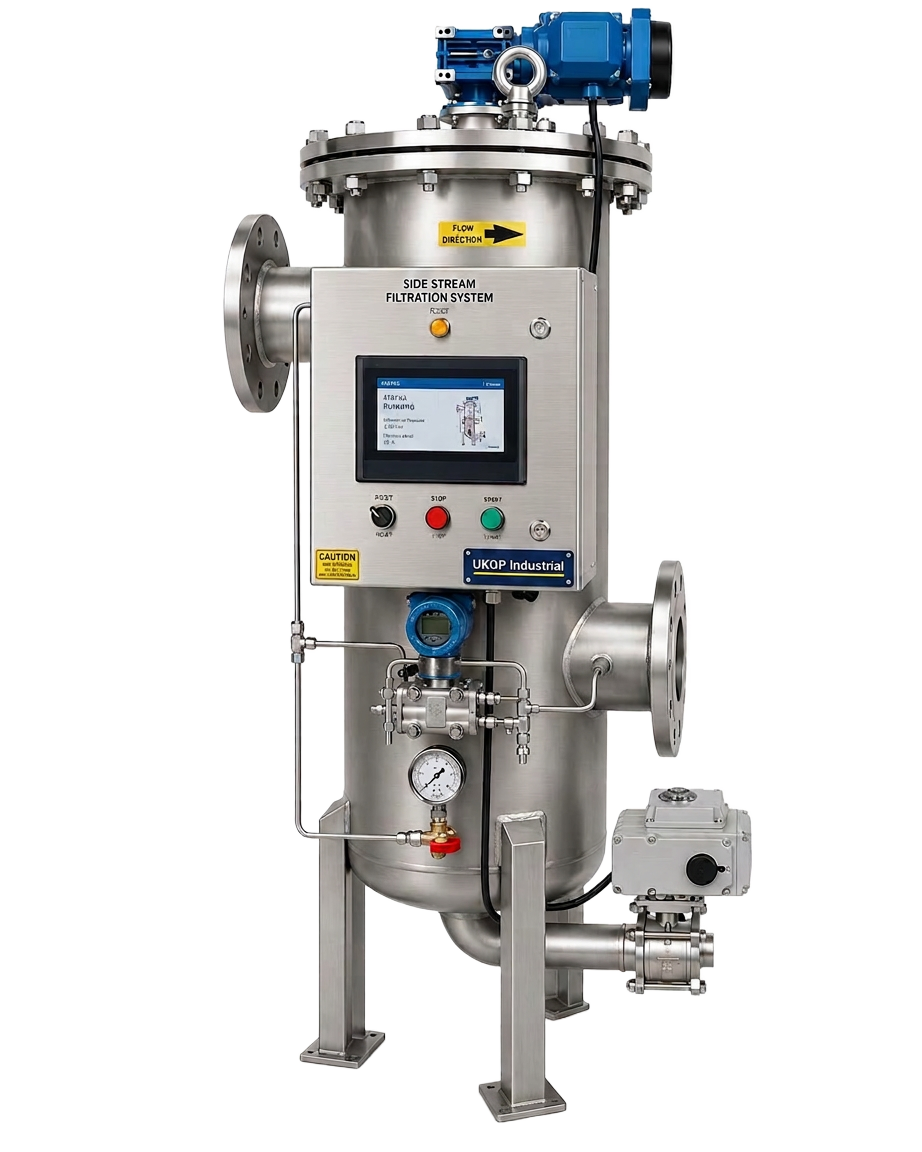
The most effective way to ensure industrial heat exchanger cleaning results actually last is to prevent the ingress of suspended solids in the first place. This is where side stream filtration becomes an indispensable asset for any modern plant-room. Unlike full-flow filters that can create significant pressure drops, a side stream skid continuously divert a portion of the system water through a high-efficiency filter housing. This progressively removes magnetite and non-magnetic debris down to sub-micron levels. By keeping the circulating fluid clean, you drastically reduce the rate of fouling on heat transfer surfaces, meaning that your cleaning intervals can be extended from months to years, saving thousands in labor and chemical costs.
Our UK-manufactured side stream filtration skids are engineered to meet the demanding requirements of BSRIA BG29 and BG50 standards. For a typical commercial installation, we offer DN50 to DN100 skids starting from £6,800+VAT. These units are made to order with a lead time of 6-8 weeks and come backed by a 2-year warranty for total peace of mind. By installing a UKGP skid, you are investing in an automated solution that monitors its own pressure differentials and alerts maintenance staff when a bag change is required. This proactive approach to debris management is the only way to ensure that any industrial heat exchanger cleaning performed on-site delivers a return on investment through sustained energy savings.
Choosing the right filtration rate is vital for the protection of sensitive plate heat exchangers. Consultants frequently specify our skids because they are built for the rigors of UK industrial applications, using robust components and intuitive control interfaces. When you integrate side stream filtration alongside your heat transfer equipment, you create a closed-loop environment that is far less susceptible to the 'clean and fail' cycle common in older buildings. If you are currently planning a plant-room refurbishment or a new build, requesting a quote for a UKGP side stream filtration skid should be a priority to ensure your heat exchangers remain at peak performance for the duration of their service life.
- Continuous removal of suspended solids down to 5 or 1 micron levels.
- Minimal impact on system hydraulics compared to full-flow alternatives.
- Significant reduction in the frequency of manual plate heat exchanger cleaning.
- Compliance with CIBSE and BSRIA water quality recommendations for UK buildings.
BSRIA Standards and Water Chemistry Management
Navigating the complexities of water chemistry is fundamental to ensuring that industrial heat exchanger cleaning produces lasting outcomes. BSRIA BG50: Water Treatment for Closed Heating and Cooling Systems provides the definitive framework for UK engineers. It highlights that cleaning the hardware is secondary to maintaining the correct chemical balance within the water. Without proper dosing of inhibitors and biocides, the fresh metal surfaces exposed during a cleaning cycle are highly vulnerable to flash corrosion. This leads to a rapid build-up of corrosion products, which will settle in the lower-velocity areas of the heat exchanger, negating the benefits of the clean almost immediately.
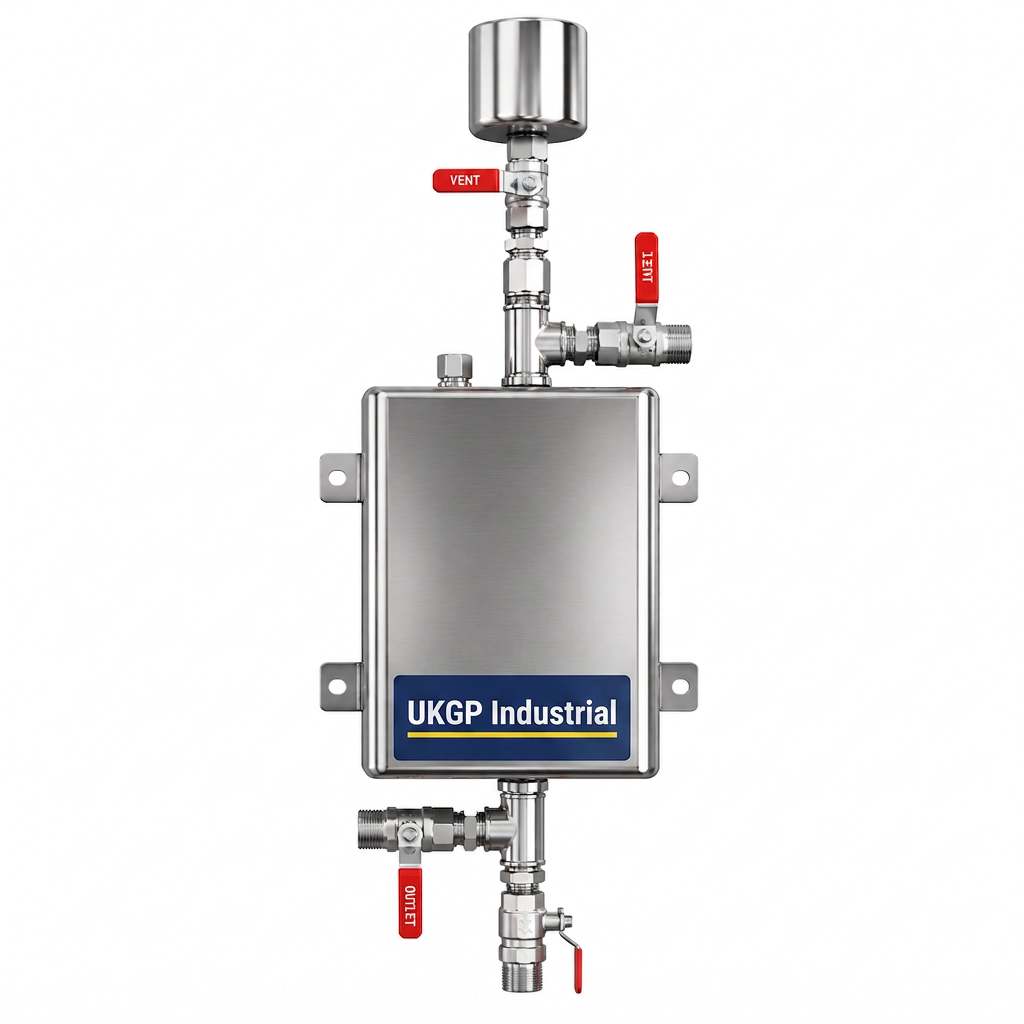
To manage this, the installation of robust chemical dosing pots is highly recommended. These provide a reliable and safe method for introducing treatment chemicals into the system without the need to shut down the main pumps. At UKGP Industrial, we supply manufactured dosing pots that facilitate the precise chemical control required to meet BS 8552 sampling standards. When industrial heat exchanger cleaning is performed, it should always be followed by a thorough flush and a documented re-dosing of the system. This dual approach of mechanical filtration and chemical stability is what separates a professional maintenance regime from a superficial fix that will likely fail within a single heating season.
Furthermore, monitoring the microbial activity within the system is crucial. Bio-fouling is particularly aggressive in cooling systems and can form an insulating slime layer on plates that is even more resistant to heat transfer than scale. Regular testing and the use of targeted biocides ensure that these biological films do not take hold. When combined with mechanical industrial heat exchanger cleaning, this chemical vigilance ensures that the thermal efficiency of the plant is protected. Our team can advise on the best pairing of dosing equipment and filtration to support your specific site requirements, ensuring your system remains compliant with all relevant UK health and safety and engineering standards.
- Adherence to BSRIA BG50 ensures long-term system integrity and warranty compliance.
- Proper dosing prevents the 'corrosion-cleaning-corrosion' cycle in closed loops.
- Dosing pots allow for safe and easy introduction of corrosion inhibitors and biocides.
- Regular sampling in accordance with BS 8552 identifies issues before failure occurs.
The Role of Air and Dirt Separators in Longevity
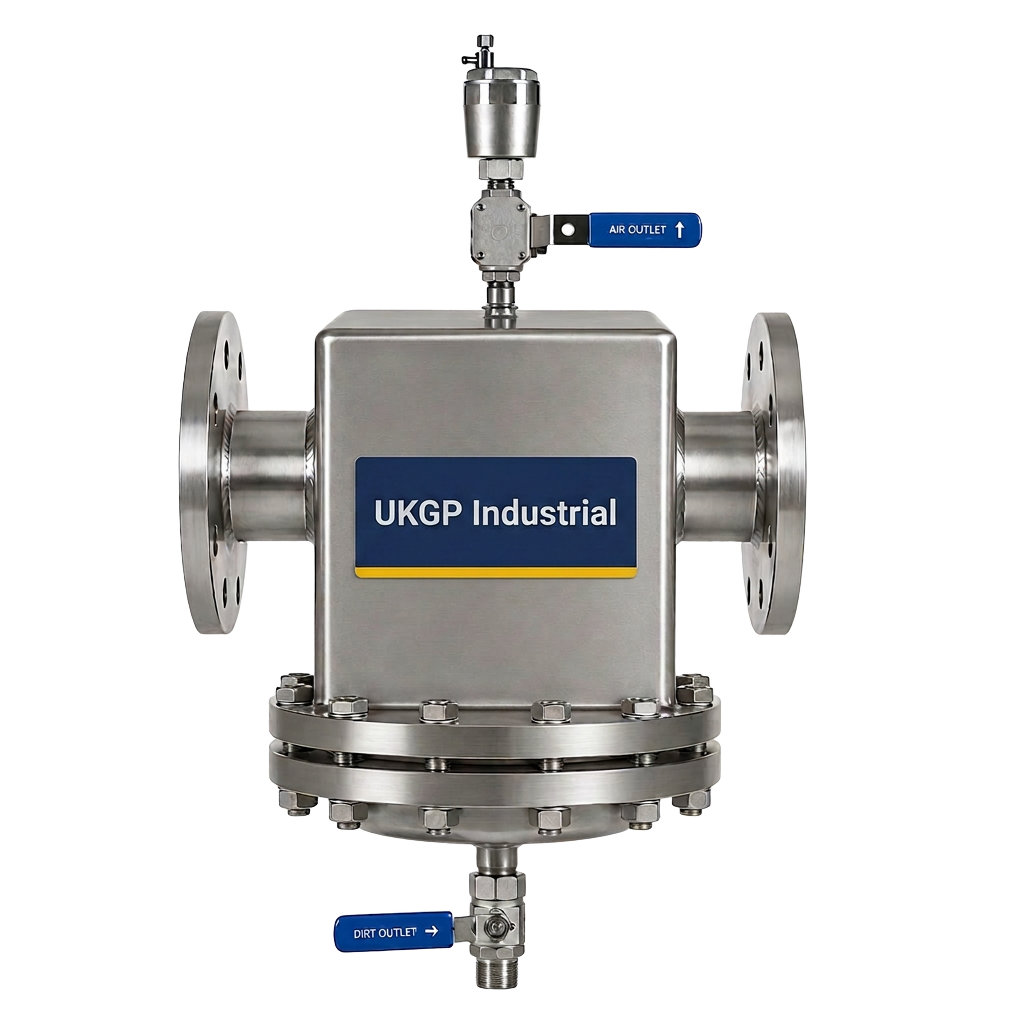
Microbubbles and entrained air are often overlooked contributors to the fouling that necessitates industrial heat exchanger cleaning. Air in a closed-loop system promotes oxidation, leading to the formation of magnetite. Furthermore, air pockets can cause localized 'dry spots' on heat exchanger plates, leading to thermal stress and the baking of minerals onto the surface. High-quality air and dirt separators are the first line of defense in a plant-room. By removing these gases and heavier particulate matter at the point of highest temperature and lowest velocity, you protect your most sensitive heat transfer equipment from the primary drivers of inefficiency and corrosion.
For plant-room engineers, the installation of a combined air and dirt separator near the boiler or chiller intake is a standard best practice. While these units are excellent for removing larger debris, they work most effectively when paired with a side stream filtration unit. The separator handles the 'bulk' air and dirt, while the side stream skid focuses on the finer suspended solids that cause the most significant fouling in plate heat exchangers. When your industrial heat exchanger cleaning schedule is part of a wider strategy that includes these protective components, the life expectancy of your gaskets and plates increases significantly, reducing the frequency of hazardous and time-consuming manual interventions.
UKGP Industrial offers a range of separators and expansion bellows designed to accommodate the thermal expansion and hydraulic cleaning requirements of UK commercial systems. Ensuring that your pipework is correctly supported and that air is effectively managed reduces the mechanical load on your heat exchangers. When we talk about industrial heat exchanger cleaning that lasts, we are talking about a holistic system design that minimizes the creation and circulation of contaminants. If you are struggling with air-locked circuits or high levels of system debris, our technical team is available to help you specify the right combination of separators and filters to restore stability and efficiency to your site.
- Elimination of microbubbles to prevent internal oxidation and corrosion.
- Protection of pump seals and heat exchanger surfaces from abrasive grit.
- Reduction in system noise and improved overall hydraulic balance.
- Seamless integration with side stream filtration for comprehensive water quality.
Financial Impact of Neglecting Heat Exchanger Cleanliness
The commercial implications of deferred industrial heat exchanger cleaning are profound. In the UK, where energy prices remain a significant overhead for industrial and commercial operators, a drop in heat exchanger efficiency directly correlates to increased fuel bills. A mere 1mm layer of scale can reduce heat transfer efficiency by up to 10%, leading to a substantial increase in the delta between energy paid for and energy delivered. Procurement leads must weigh the cost of a proactive maintenance contract against the parasitic costs of running fouled equipment, which often includes the higher likelihood of total component failure and emergency replacement costs.
Investment in high-specification equipment, such as a UKGP side stream filtration skid (starting from £6,800+VAT), represents a capital expenditure that typically pays for itself through energy savings and reduced maintenance labor within 18 to 24 months. When industrial heat exchanger cleaning is required, the downtime can shutter production lines or leave commercial tenants without heating or hot water, leading to potential compensation claims or loss of revenue. By installing gear that is built to last with a 2-year warranty, you are not just buying a product; you are securing the operational continuity of your facility and hedging against future energy price volatility.
Contractors should also consider the environmental impact. As the UK moves toward Net Zero, maintaining the efficiency of existing plant-room assets is a key metric. Fouled heat exchangers require more energy to achieve the same set-point, increasing the building's carbon footprint. A documented regime of industrial heat exchanger cleaning, supported by continuous filtration and chemical monitoring, provides the data needed for ESG reporting and building performance certificates. It is no longer enough to just clean when things break; the modern facility manager must demonstrate that they are employing best-in-class technology to maintain peak efficiency throughout the year.
- Direct energy cost reduction by maintaining optimal thermal conductivity.
- Avoidance of emergency call-out fees and premium-priced replacement parts.
- Extended life of capital assets, deferring the need for expensive system upgrades.
- Improved ESG metrics through lower carbon emissions and efficient energy use.
Technical Specifications for Lasting Performance
When specifying the equipment required to support industrial heat exchanger cleaning, the technical details matter. For instance, the use of EPDM or NBR gaskets in a plate heat exchanger must be matched to the system's chemical profile and temperature. If a system has been cleaned with harsh acidic descalers without proper neutralisation, the gaskets can perish, leading to leaks and cross-contamination. This is why UKGP Industrial emphasises the importance of technical compatibility. Our heat exchangers and filtration skids are built to withstand the rigorous cleaning protocols used in UK industry, ensuring that the hardware doesn't fail due to the very maintenance intended to save it.
Lead times are also a critical factor in maintenance planning. Our side stream filtration skids are made to order with a 6-8 week lead time, allowing facility managers to plan their industrial heat exchanger cleaning during the shoulder seasons (Spring and Autumn) when the heating or cooling load is at its lowest. This planned approach avoids the rush of the winter peak or the high demand of summer cooling, ensuring that the best technicians and equipment are available. By ordering bespoke DN50 to DN100 skids, you ensure that the filtration capacity is perfectly matched to your system volume, providing the most effective protection against the re-accumulation of magnetite and scale.
Ultimately, the goal is to create a 'self-healing' system where the water quality is so high that the need for intensive industrial heat exchanger cleaning is virtually eliminated. This is achieved through a combination of high-grade 316L stainless steel plates, precision-engineered separators, and the market-leading filtration technology provided by UKGP. We encourage all M&E contractors and consultants to review their current specifications against BSRIA BG29/50 standards and contact us for a quote on a integrated filtration solution. With our 2-year warranty and UK-based support, we provide the technical confidence needed to manage complex thermal systems in the most demanding UK B2B environments.
- High-grade materials (316L Stainless Steel) for maximum corrosion resistance.
- Bespoke sizing from DN50 to DN100 to match specific system flow rates.
- 6-8 week lead time for made-to-order UK manufacturing excellence.
- 2-year warranty on filtration skids for guaranteed long-term reliability.
Frequently asked questions
How often should industrial heat exchanger cleaning be performed?
- The frequency depends on water quality. In systems without side stream filtration, annual cleaning is often required. However, with a UKGP side stream skid and BSRIA-compliant water treatment, this can often be extended to every 3-5 years.
Can chemical cleaning damage my heat exchanger plates?
- Yes, if the wrong concentrations or chemicals are used. Always ensure the cleaning agent is compatible with 316L stainless steel and your specific gasket material (EPDM/NBR). Following industrial heat exchanger cleaning, the system must be neutralised and re-passivated.
What is the cost of a side stream filtration skid?
- For a standard DN50 to DN100 unit, prices typically start from £6,800+VAT. These are made to order in the UK with a 6-8 week lead time and provide the best protection against re-fouling after a cleaning service.
Is mechanical cleaning better than CIP?
- Mechanical cleaning allows for a full visual inspection of the plates and gaskets, making it more thorough for heavily fouled units. CIP (Cleaning-In-Place) is faster and less disruptive for routine maintenance, provided the fouling is not solid stone-scale.
Does your equipment come with a warranty?
- Yes, our side stream filtration skids and plate heat exchangers come with a 2-year warranty, reflecting our confidence in UK manufacturing and engineering standards.