Fundamental Principles of Industrial Heat Exchanger Design
Selecting an industrial heat exchanger requires a robust understanding of thermodynamic principles and fluid dynamics. In a commercial setting, these units serve as the thermal bridge between primary energy sources and building heat emitters. Whether you are dealing with low-temperature hot water or chilled water circuits, the efficiency of heat transfer is governed by the Logarithmic Mean Temperature Difference (LMTD) and the overall heat transfer coefficient. UK building services consultants must account for the specific gravity and viscosity of the secondary fluids, especially when glycol is introduced for frost protection, as this significantly alters the thermal duty required from the unit to maintain design temperatures.
Mechanical and electrical contractors often face the challenge of balancing immediate thermal output with long-term operational resilience. An industrial heat exchanger must be resilient enough to withstand pressure surges and thermal cycling common in district heating schemes or large-scale commercial developments. Following CIBSE AM12 guidelines on combined heat and power integration can assist engineers in understanding how these units buffer different temperature regimes. The choice between a gasketed or brazed plate configuration is typically the first major decision point, influenced by the required maintenance access and the specific pressure ratings of the secondary system, ensuring the plant room remains within safe operating limits.
Modern plant room design increasingly focuses on the 'delta T' (ΔT) to maximise the efficiency of condensing heat sources. A high-efficiency industrial heat exchanger allows for a tight temperature approach, which is vital for keeping return temperatures low. This not only improves the seasonal efficiency of the central plant but also reduces the pumping power required across the distribution network. By working with a specialist manufacturer like UKGP, engineers can ensure that the selected unit is precisely tailored to these thermal gradients, moving away from 'off-the-shelf' solutions that often lead to oversized pumps and inefficient heat transfer across the plate pack.
- Assessment of LMTD and approach temperatures for maximum efficiency
- Integration with CIBSE AM12 and AM15 design principles
- Consideration of fluid properties including viscosity and glycol concentrations
- Analysis of pressure drop constraints vs thermal performance
Sizing an Industrial Heat Exchanger for Peak Performance
Accuracy in sizing an industrial heat exchanger is the cornerstone of a successful plant room installation. Over-sizing can lead to low fluid velocities, which encourages the settlement of suspended solids and increases the risk of bio-fouling, particularly in older systems. Conversely, under-sizing results in high pressure drops and a failure to meet the peak thermal demand of the building. To provide a precise quote, UKGP requires a full thermal spec including the primary and secondary inlet/outlet temperatures, the required mass flow rates, and the maximum allowable pressure drop. Our technical team then uses advanced software to model the plate geometry to meet these specific site requirements.
When specifying an industrial heat exchanger for UK commercial projects, engineers should allow for a sufficient fouling factor to account for expected water quality degradation over time. While BSRIA BG29 provides the framework for pre-commissioning cleaning, and BSRIA BG50 details ongoing water treatment, the physical design of the exchanger must include a margin for performance. This ensures that even if scaling occurs, the unit can still deliver the required kW output. We provide brazed and gasketed options ranging from DN20 to DN300, ensuring we can accommodate everything from small commercial units to heavy industrial process heat transfer applications with ease and technical precision.
The selection process also involves determining the material compatibility of the plates and gaskets based on the primary and secondary media. For most HVAC applications, 316-grade stainless steel plates provide the necessary corrosion resistance, while EPDM gaskets are the industry standard for hot water services. However, in environments with high chloride levels or specific chemical process requirements, alternative materials may be necessary. UKGP offers comprehensive technical support to ensure your industrial heat exchanger is not only sized for the thermal load but also specified for chemical compatibility, providing a 2-year warranty for peace of mind and long-term asset protection in demanding environments.
- Full thermal specification analysis for bespoke unit sizing
- Maintenance margins and fouling factor considerations
- Material compatibility for plates (e.g., 316 Stainless Steel)
- Gasket selection based on temperature and chemical profile
Compliance and Standards: BSRIA and BS EN 14917
Compliance with UK standards is non-negotiable for high-specification building services projects. An industrial heat exchanger must be designed and manufactured in accordance with the Pressure Equipment Directive (PED) and relevant British Standards. Furthermore, when integrating these units into large-leaf distribution systems, the thermal expansion of the pipework becomes a critical factor. BS EN 14917 provides the framework for expansion bellows, which are often required adjacent to the exchanger to prevent mechanical stress on the nozzle connections. Ignoring these standards can lead to catastrophic joint failure or stress-induced cracking in the plate pack, significantly shortening the lifespan of the thermal equipment and the wider system.
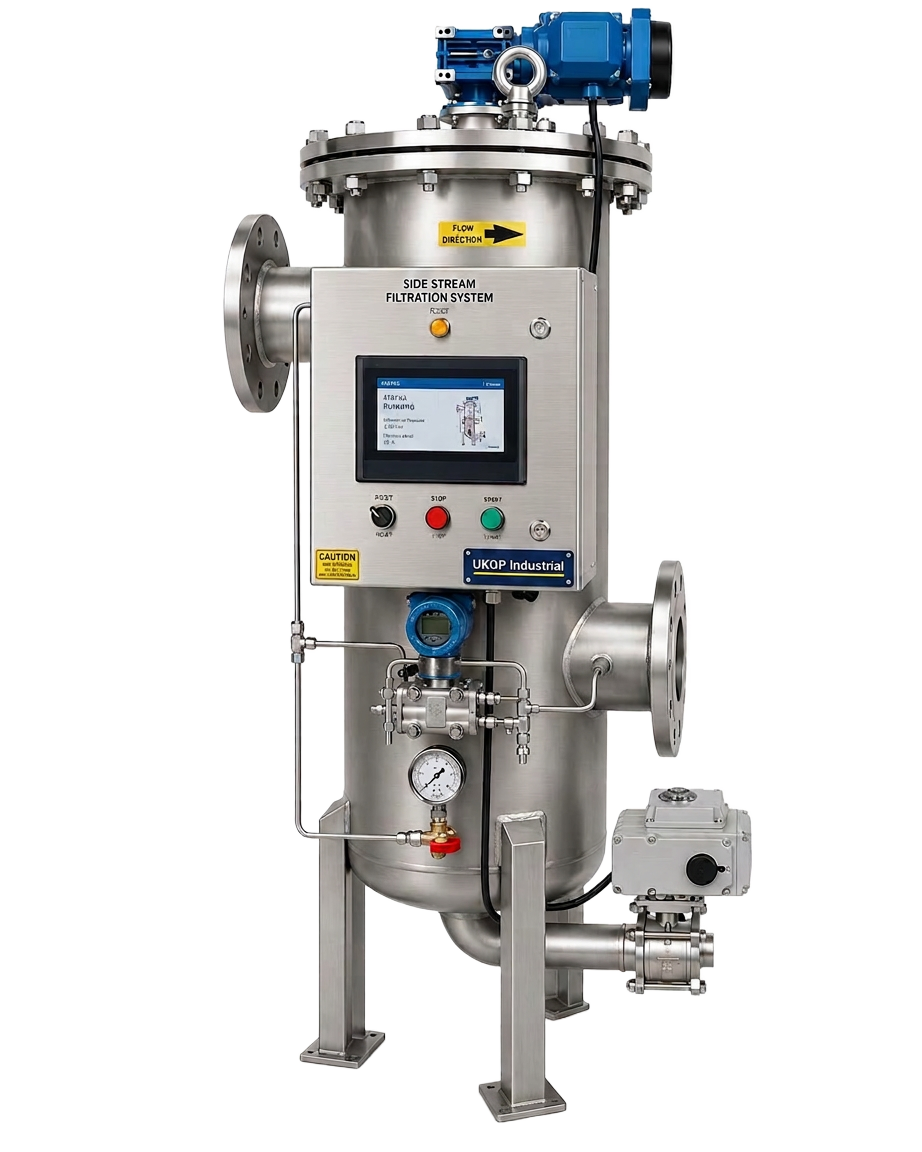
Water quality is the primary driver of industrial heat exchanger longevity. BSRIA BG50 2021 highlights the need for continuous monitoring and maintenance of water chemistry to prevent corrosion and scaling within the heat transfer surfaces. Even the most efficiently sized industrial heat exchanger will fail prematurely if the system is plagued by high levels of dissolved oxygen or suspended solids. We recommend the inclusion of side stream filtration to maintain water clarity and protect the narrow channels between the plates. This approach is much more effective than relying on chemical dosing alone, as it physically removes the contaminants that lead to abrasive wear on the stainless steel surfaces.
Facility managers and M&E contractors must ensure that the commissioning process follows BSRIA BG29 guidelines. This includes a thorough flush and clean of the system before the industrial heat exchanger is online. Debris from the installation process, such as soldering flux or metal swarf, can easily become trapped within a plate heat exchanger, causing localized hotspots and reduced flow capacities. By adhering to these rigorous standards and utilizing UKGP's 4-6 week lead time for custom-built units, project leads can align their installation schedules with best-practice engineering standards, ensuring a smooth handover and reliable operation for the end-user throughout the warranty period.
- Adherence to BSRIA BG29 and BG50 for water quality management
- Mechanical stress mitigation via BS EN 14917 compliant expansion joints
- PED certification for pressurized thermal vessels
- Pre-commissioning cleaning protocols to protect plate surfaces
The Role of Side Stream Filtration in Protecting Heat Assets
A critical component of any system featuring an industrial heat exchanger is the filtration strategy. High-efficiency plate heat exchangers have very narrow passages to maximise the surface area for heat transfer, which unfortunately makes them prone to blockages from magnetite and non-magnetic debris. Side stream filtration skids are engineered to process a portion of the system volume continuously, removing particulates down to 5 microns in many cases. This protection is vital for maintaining the thermal efficiency of the plate pack, as even a thin layer of sediment can act as an insulator, forcing the primary side to work harder and increasing energy costs across the building.
By integrating side stream filtration, FM teams can extend the service intervals for an industrial heat exchanger. Instead of frequent manual cleaning or chemical descaling—which can be invasive and time-consuming—the filtration unit handles the heavy lifting of debris removal. This ensures that the pressure drop across the heat exchanger remains within the design parameters specified during the procurement phase. At UKGP, we advocate for a holistic view of the plant room where the heat exchanger, filtration unit, and dosing pots work in harmony to maintain BSRIA-compliant water conditions, thereby safeguarding the 2-year warranty and enhancing the total cost of ownership.
Furthermore, the removal of suspended solids reduces the erosion-corrosion phenomena often seen at the entry ports of an industrial heat exchanger. When high-velocity water carrying abrasive particulates hits the leading edge of the plates, it can strip away the passive oxide layer of the stainless steel, leading to premature pitting. A well-designed filtration system prevents this by keeping the circulating water clean. When contractors order from UKGP, they are not just buying a component; they are investing in a system-wide solution designed to thrive in the harsh realities of UK commercial heating and cooling networks, backed by expert technical advice and rapid lead times.
- Continuous removal of magnetite and scale-forming particulates
- Reduction in abrasive wear on plate entry ports
- Maintenance of design pressure drops across the heat exchanger
- Extended lifespan of the plate pack and gaskets
Optimising System Efficiency with Low Loss Headers
Integrating an industrial heat exchanger into a system also requires careful management of flow rates between the primary boiler circuit and the secondary distribution circuit. A low loss header can be used to decouple these circuits, ensuring that the variable flow of the secondary side does not disrupt the constant flow often required by leading commercial boiler manufacturers. This hydraulic separation is essential for the steady-state operation of the industrial heat exchanger. Without proper separation, flow imbalances can lead to temperature fluctuations and 'hunting' within the control valves, which negatively impacts the precision of the heat transfer process and can lead to thermal shock within the plate pack.
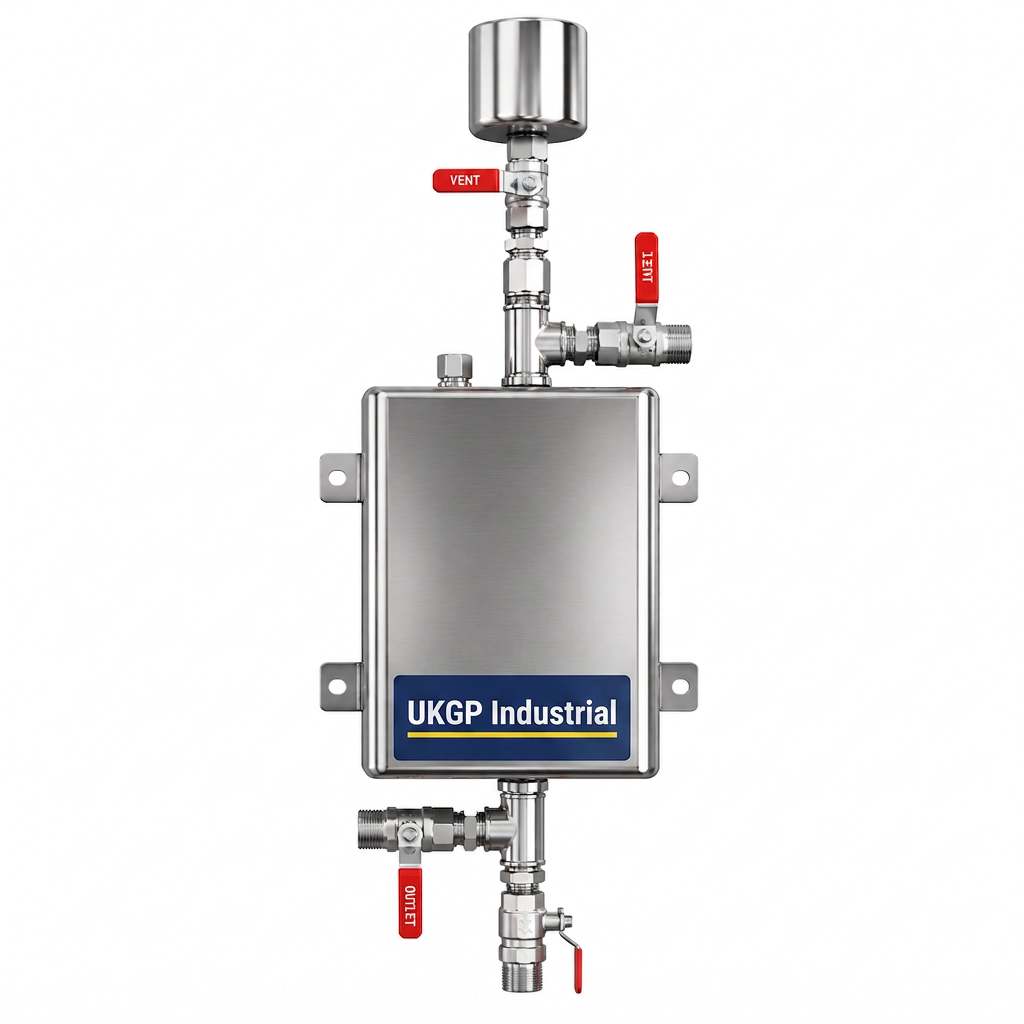
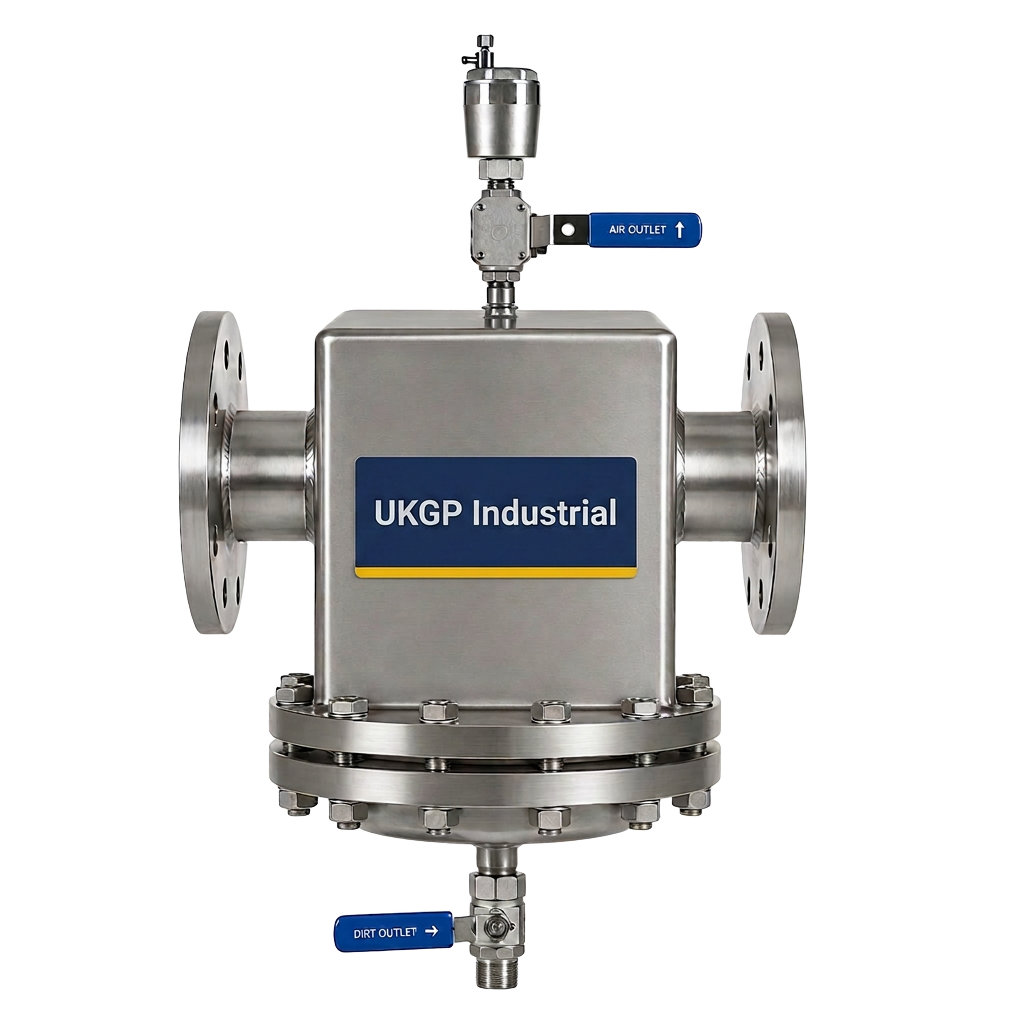
The use of low loss headers also provides a secondary benefit by acting as a point of low velocity where air can be vented and dirt can settle. However, when used in conjunction with a high-performance industrial heat exchanger, the primary goal remains hydraulic stability. This allows the heat exchanger to operate at its optimum thermal efficiency point, as the flow rates on both sides of the plates can be balanced to match the design temperature delta. UKGP provides technical sizing for both low loss headers and plate heat exchangers, ensuring that the entire hydraulic interface in the plant room is designed for maximum efficiency and ease of installation for the M&E contractor on site.
Procurement leads should look for a supplier that can provide all these interconnected plant components to ensure compatibility. Whether you require a gasketed unit for easy cleaning and future expansion, or a compact brazed industrial heat exchanger for a space-constrained plant room, the supporting infrastructure like air and dirt separators or chemical dosing pots must be correctly matched. UKGP’s ability to size equipment from a full thermal spec means that every component, from the DN300 industrial heat exchanger to the simplest air vent, is optimized for the specific project requirements, reducing the risk of commissioning delays and ensuring long-term thermal performance.
- Hydraulic decoupling for stable heat transfer
- Protection of primary heat sources from secondary flow fluctuations
- Enhanced control over secondary circuit temperature regimes
- Centralised air and dirt separation in the plant room
Maintenance Protocols for Gasketed and Brazed Units
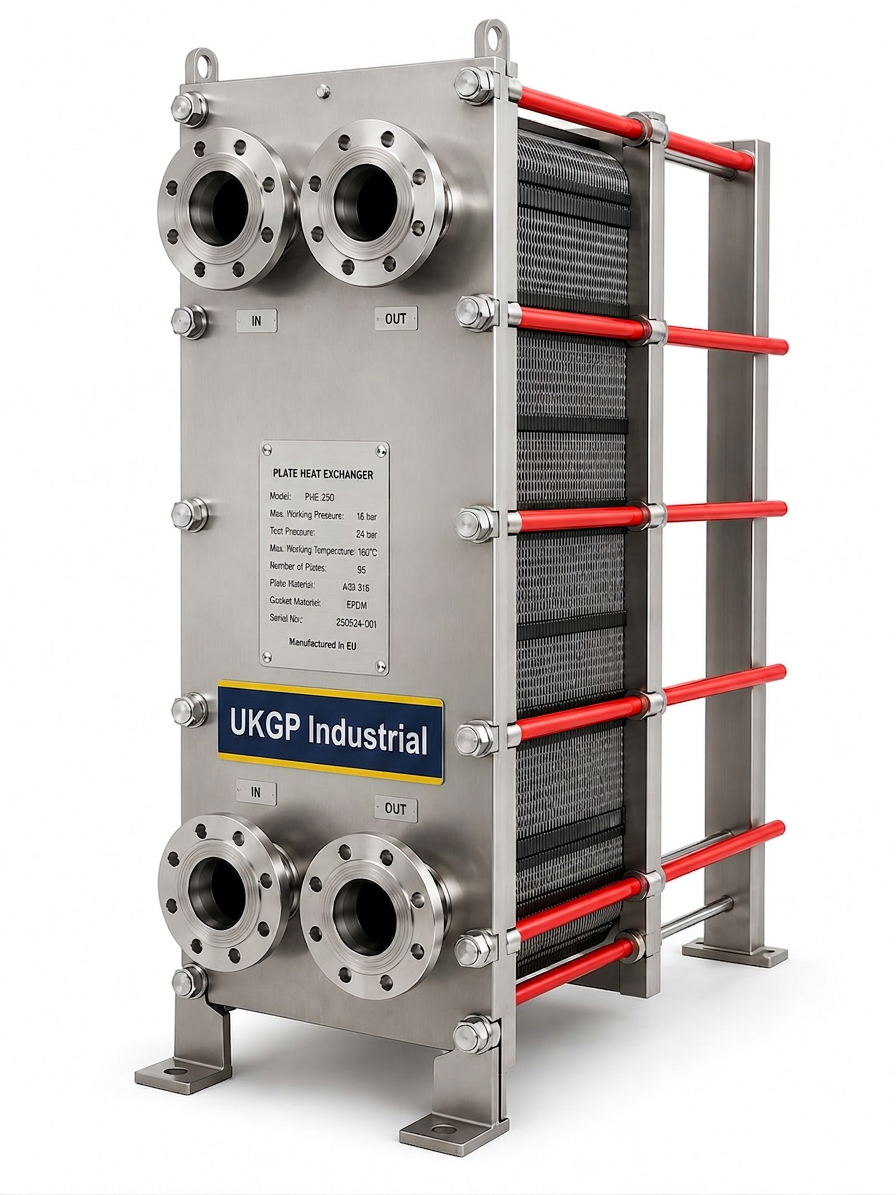
The maintenance requirements for an industrial heat exchanger vary significantly between gasketed and brazed designs. Gasketed plate heat exchangers (GPHE) offer the advantage of being fully serviceable; they can be dismantled for manual cleaning of the plates or to add more plates if the building's thermal load increases. This makes them ideal for systems where higher levels of fouling are anticipated or where future-proofing is a priority. For these units, checking the compression dimension of the plate pack is a critical maintenance task, as over-tightening can damage the gaskets and plates, while under-tightening can lead to external leaks in the plant room.
In contrast, a brazed industrial heat exchanger is a sealed unit that is smaller and more cost-effective for high-pressure applications where maintenance access is not a primary concern. Cleaning these units typically involves a Clean-In-Place (CIP) procedure using mild descaling chemicals, as they cannot be physically opened. To ensure the success of a CIP, it is essential to follow BS 8552 for water sampling and analysis, ensuring the chemical cleaners do not damage the copper brazing material. Regardless of the type chosen, regular monitoring of the temperature and pressure across the industrial heat exchanger provides the earliest warning of internal fouling or performance degradation, allowing for proactive maintenance before system failure occurs.
UKGP’s range of industrial heat exchanger solutions is designed with the contractor in mind, providing easy access to port connections and robust mounting options. With a 2-year warranty and a typical lead time of just 4-6 weeks, we support UK engineers in delivering high-quality, reliable thermal systems. For any project requiring precise thermal separation—whether it's for solar thermal integration, district heating, or industrial process cooling—requesting a quote with a full thermal specification is the first step toward ensuring your plant room meets the rigorous demands of modern building services standards and operational efficiency targets.
- Gasketed units for serviceability and thermal expansion
- Brazed units for compact, high-pressure plant room footprints
- CIP (Clean-In-Place) protocols for non-accessible units
- Regular monitoring of delta P and delta T for fouling detection
Frequently asked questions
What information is needed to size an industrial heat exchanger?
- To provide an accurate thermal calculation, we require the inlet and outlet temperatures for both the primary and secondary sides, the required heat load (kW), the fluid types (e.g., water or glycol %), and the maximum allowable pressure drop.
What is the standard lead time for a UKGP industrial heat exchanger?
- Our typical lead time for custom-sized plate heat exchangers, both gasketed and brazed, is 4-6 weeks from the point of technical approval.
Are UKGP heat exchangers covered by a warranty?
- Yes, all our plate heat exchangers come with a 2-year warranty against manufacturing defects, provided they are installed and maintained according to BSRIA and industry guidelines.
Should I choose a gasketed or brazed industrial heat exchanger?
- Gasketed units are preferred if you need the ability to clean or expand the plate pack. Brazed units are more compact and suited for higher pressures but cannot be opened for manual cleaning.
Does UKGP provide units for high-flow commercial applications?
- Yes, we specify and supply gasketed and brazed units from DN20 up to DN300, capable of handling significant thermal loads across various industrial and commercial sectors.