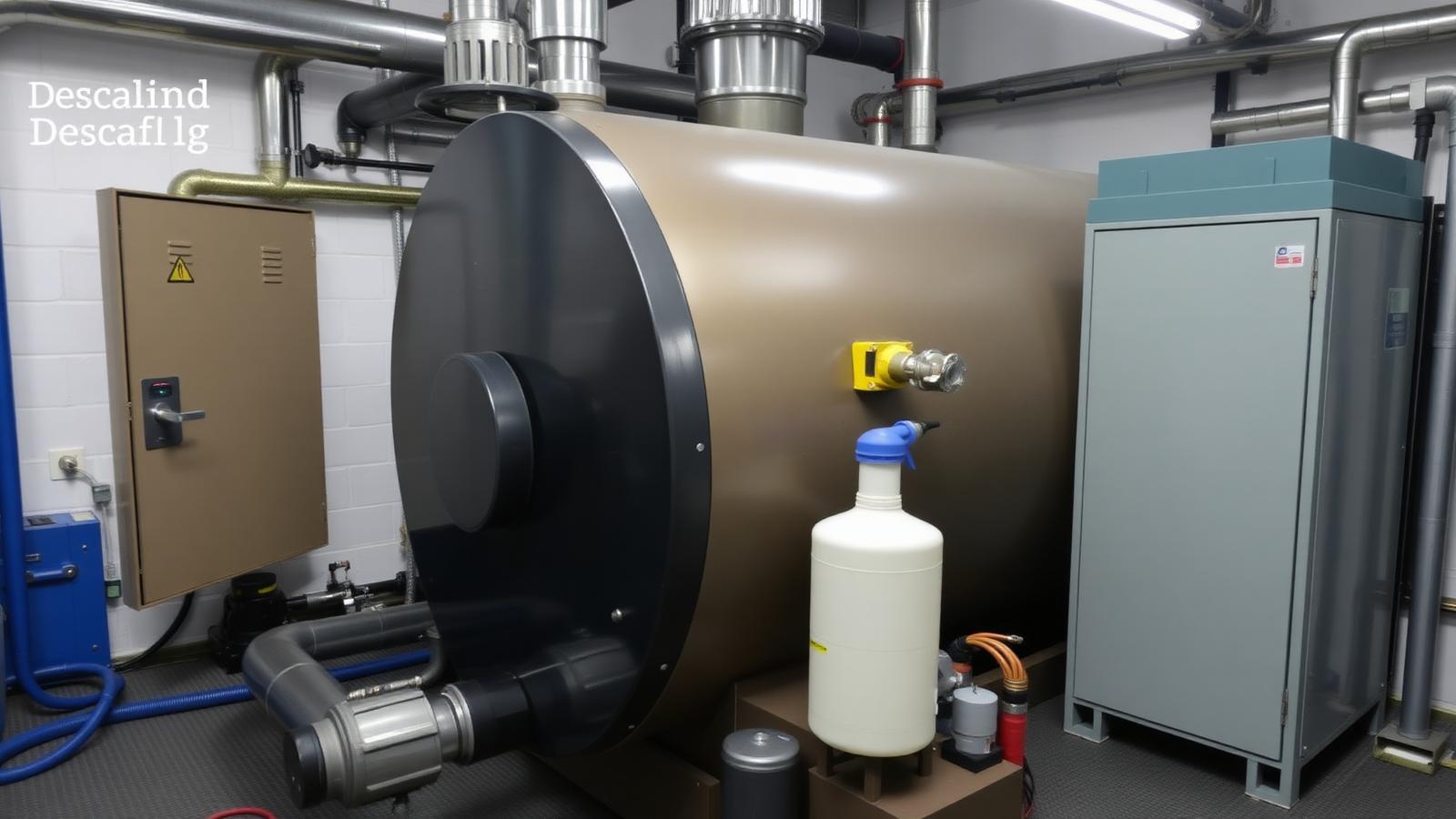
Establishing the Interval: How Often Descale Commercial Boiler Systems?
Determining how often descale commercial boiler units depends heavily on your local water hardness and the existing water treatment strategy within your closed-loop system. In hard water areas like London and the South East, a standard annual inspection is the bare minimum, though many high-output systems may require descaling every six to twelve months if chemical dosing is inconsistent. When the internal heat exchanger surfaces become coated in just 1mm of scale, fuel consumption can increase by up to 7%, representing a massive financial drain for large-scale commercial buildings. Proactive monitoring via pressure differentials across the heat exchanger will often signal the need for intervention before a full system shutdown becomes unavoidable.
In accordance with BSRIA BG50 and BS 8552, regular sampling and analysis are the gold standard for determining your specific maintenance schedule. For most UK facilities, we recommend a deep visual inspection of the primary sensors and heat transfer surfaces during the summer months when heating demand is lower. This allows for scheduled downtime without impacting building occupants. If your system relies on frequent water top-ups due to leaks, the introduction of fresh calcium-rich water will dramatically accelerate the scaling process, necessitating more frequent descaling. Modern condensing boilers with tight-tolerance waterways are particularly susceptible to blockage, making a strict descaling regime not just a recommendation, but a necessity for operational continuity.
Ultimately, the answer to how often descale commercial boiler equipment involves a balance of water chemistry reports and equipment performance data. If you notice a steady rise in flue gas temperatures or a decrease in delta T across the flow and return, these are primary indicators that scale is insulating the heat transfer surfaces. Rather than waiting for a complete failure, UKGP recommends integrating side stream filtration and high-quality chemical dosing to extend these intervals. A well-maintained system where water quality is kept within BSRIA parameters may only require a full chemical descale once every three to five years, provided the preventive infrastructure is robust and modern filtration technologies are employed.
- Annual inspections for systems in soft water areas.
- Bi-annual checks for high-demand hard water locations.
- Continuous monitoring of flue gas temperatures.
- Review of water make-up volumes via water meters.
- Analysis of pressure drops across heat exchanger plates.
The Impact of BSRIA BG50 Guidelines on Boiler Longevity
BSRIA BG50 'Water Treatment for Closed Heating and Cooling Systems' provides the definitive framework for maintaining UK commercial plant rooms. Adhering to these guidelines is the most effective way to reduce the frequency of invasive descaling procedures. The manual emphasises that scale prevention is far more cost-effective than remedial cleaning. By controlling the pH levels, conductivity, and dissolved solids within the circulating water, engineers can ensure that minerals remain in suspension rather than precipitating onto hot metal surfaces. Neglecting these standards often leads to 'kettling' noises, where localised boiling occurs beneath scale deposits, eventually causing the heat exchanger to crack due to thermal stress.
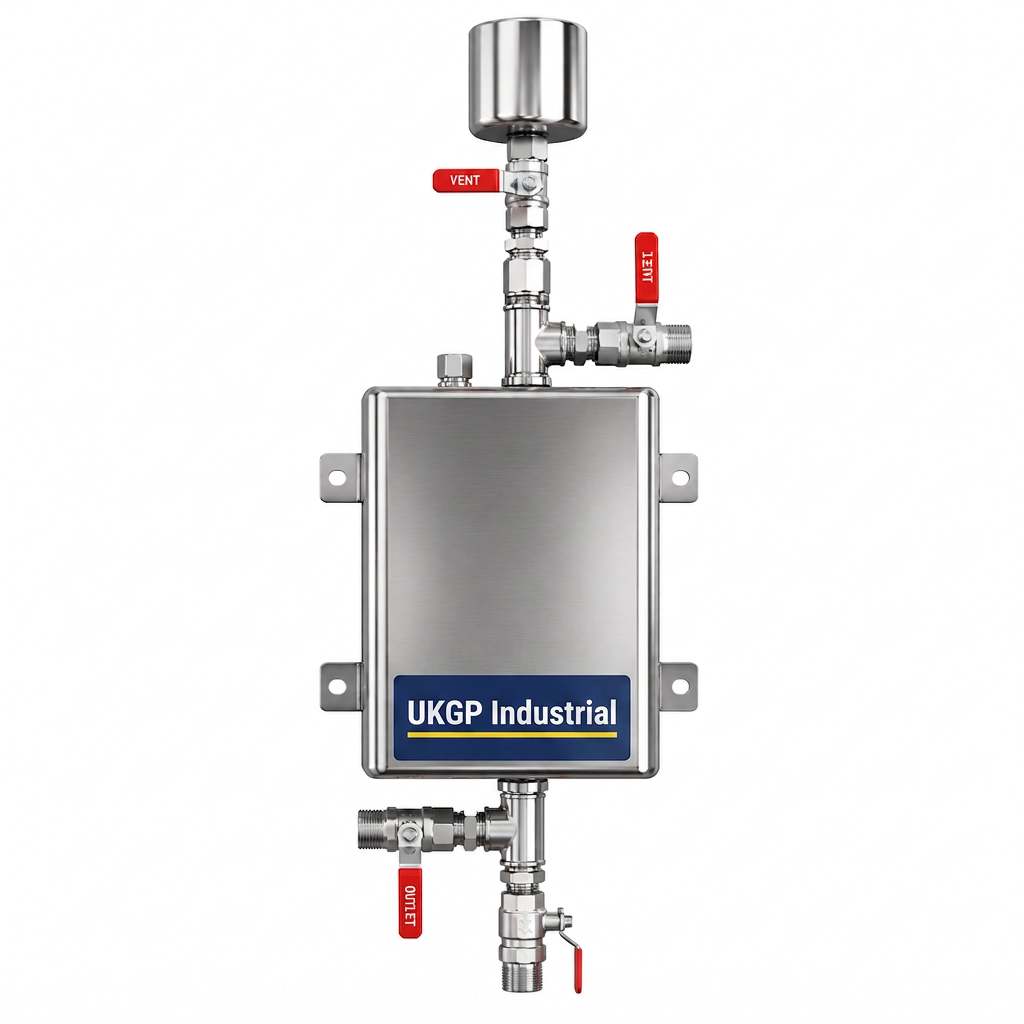
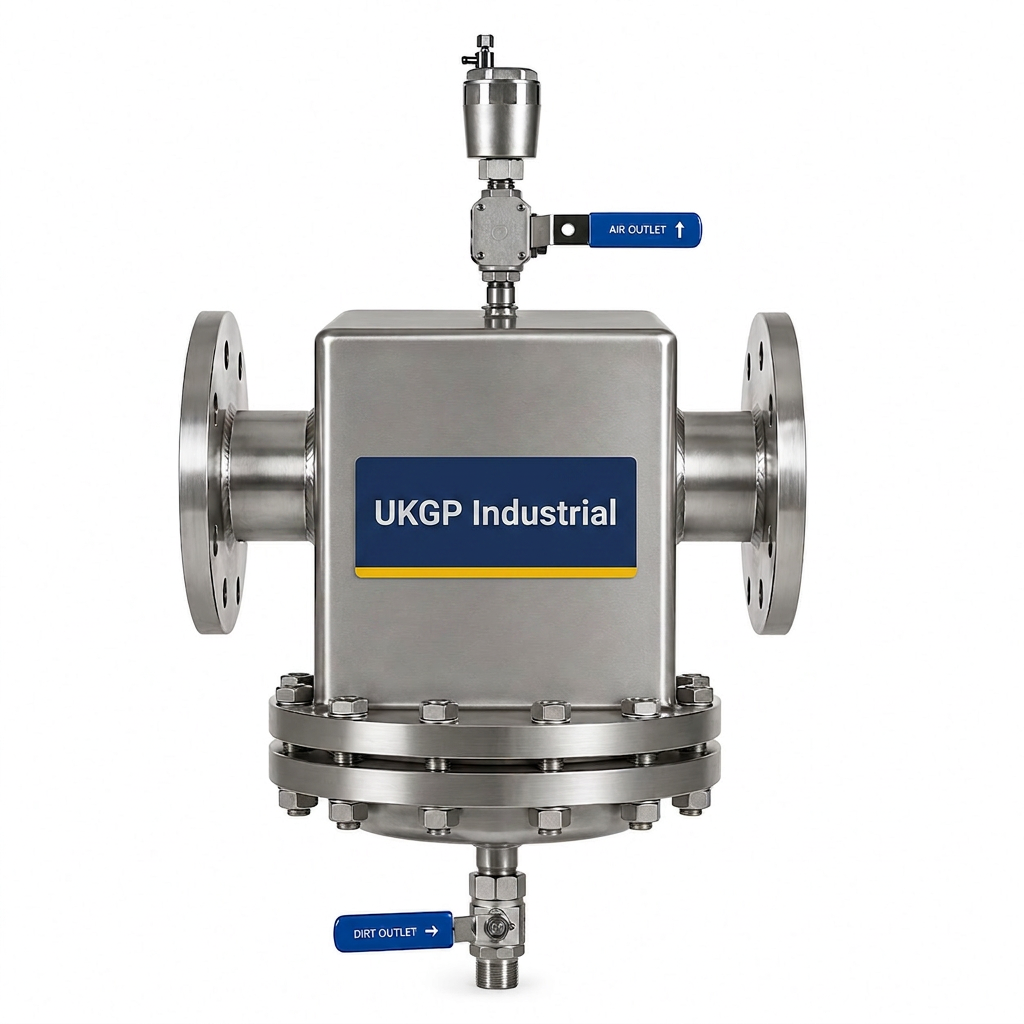
For M&E contractors, following the BG50 roadmap means implementing a multi-stage water quality strategy. This starts with correct system flushing during commissioning as per BG29, followed by the installation of air and dirt separators and chemical dosing pots to maintain the chemical balance. When these systems are in place, the question of how often descale commercial boiler units changes from an emergency response to a planned, long-term asset management strategy. Modern UK procurement leads are increasingly looking for evidence of such compliance to protect their investment and ensure the 2-year warranties typically provided by manufacturers like UKGP remain valid and uncontested due to poor water quality management.
It is also worth noting that CIBSE Guide M highlights the importance of keeping detailed logs of all water treatment activities. When an engineer asks how often descale commercial boiler components, they should be able to refer to a logbook that tracks chemical concentrations and previous descaling dates. This data-driven approach allows for bespoke maintenance cycles rather than relying on generic industry averages. By investing in high-quality UK-manufactured components such as heavy-duty dosing pots and separators, you create an environment where scale formation is inhibited, significantly reducing the OpEx associated with chemical descaling and temporary boiler hire during major overhauls.
- BG50 compliance reduces the risk of thermal stress and localized boiling.
- Maintains manufacturer warranty validity through documented water quality.
- Ensures thermal efficiency remains close to the design specification.
- Minimizes the need for aggressive acid-based cleaning chemicals.
- Supports long-term asset management and sustainable building operation.
Implementing Side Stream Filtration to Minimise Scale Risk
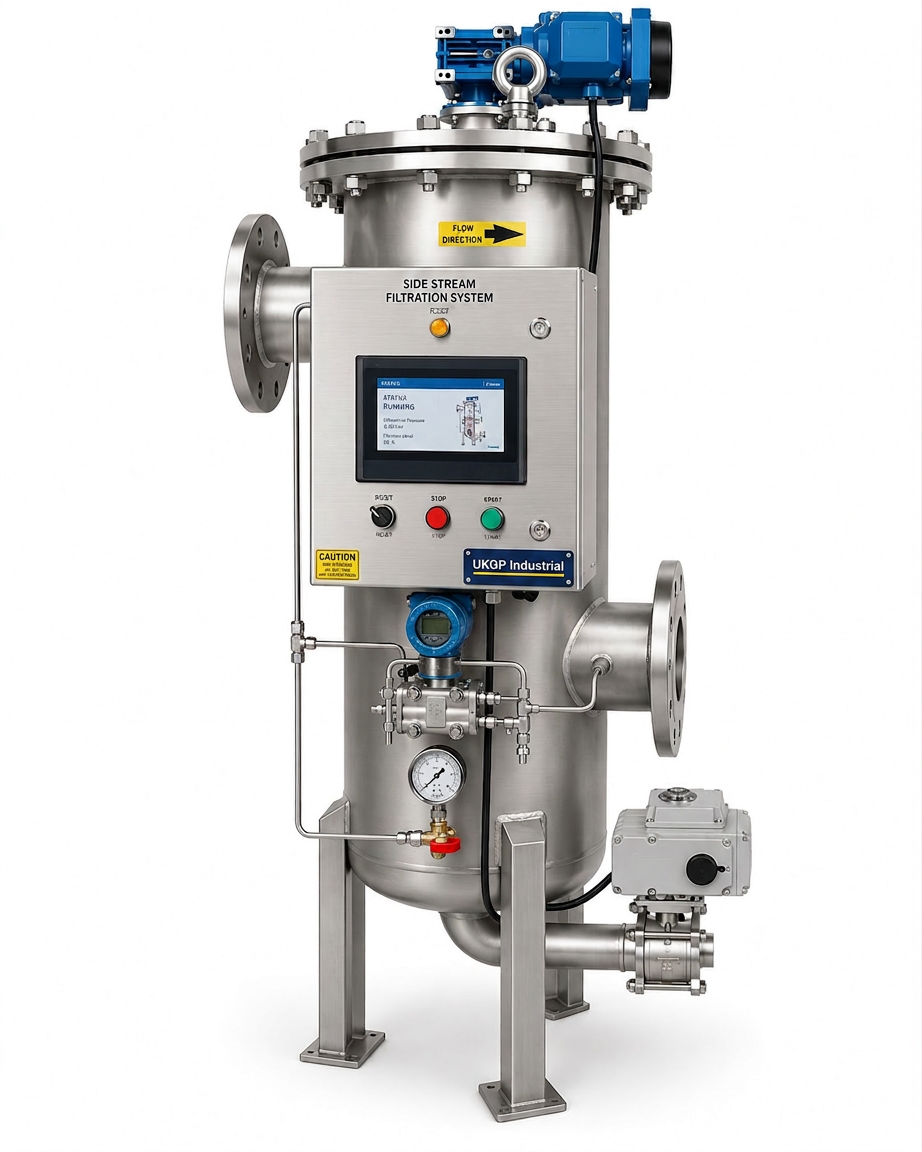
While traditional descaling involves harsh chemicals and downtime, the installation of a side stream filtration skid offers a continuous method of protecting your commercial boiler. These units work by filtering a portion of the system volume—typically 5% to 15% of the total flow—on a continuous basis. By removing the suspended solids and mineral precipitates that act as catalysts for scale formation, side stream filtration ensures that the water remains within the strict parameters required for modern high-efficiency plant. For those wondering how often descale commercial boiler units with such a system installed, the answer is significantly less often than those relying on chemical treatment alone.
UKGP Industrial manufactures premium side stream filtration skids in Surrey, specifically designed for the demanding requirements of UK commercial heating networks. Our units are available in sizes from DN50 to DN100 and typically start from £6,800+VAT. These systems are made to order with a standard lead time of 6-8 weeks and come with a comprehensive 2-year warranty. By choosing a UK-made skid, you ensure that the internal pump, bag filter, and control logic are perfectly matched to the system pressure and flow requirements of your specific plant room, providing a level of protection that generic off-the-shelf imports simply cannot match.
The commercial logic for side stream filtration is undeniable for any FM or procurement lead. If a manual descale of a 500kW boiler costs £2,000 in labour and chemicals, and you have to do it every two years, the ROI on a UKGP filtration skid is achieved rapidly through reduced maintenance and lower fuel consumption. Furthermore, avoiding the use of aggressive descaling acids extends the life of the secondary components like valves, pumps, and expansion bellows. To receive a bespoke quote for a filtration skid tailored to your system's flow rate, contact our Surrey-based technical team today for a solution that simplifies your boiler maintenance strategy.
- Continuous 24/7 removal of suspended solids and precipitates.
- Available in DN50 to DN100 sizes for all commercial plant rooms.
- UK manufactured with a reliable 6-8 week lead time.
- Priced competitively from £6,800+VAT with a 2-year warranty.
- Reduces the frequency of invasive and costly chemical descaling.
Warning Signs Your Boiler Requires Immediate Descaling
Waiting for a scheduled date is not always possible if your system is showing signs of distress. One of the most common indicators that it is time to descale your commercial boiler is a noticeable 'kettling' or banging noise coming from the heat exchanger. This occurs when a layer of scale traps water against the hot surface, causing it to flash into steam. This localized boiling creates high-pressure bubbles that collapse violently, creating the characteristic noise. If your site team reports these symptoms, you must act fast to prevent the metal from fatiguing or cracking, which would necessitate a much more expensive boiler replacement rather than a simple descale.
Another vital metric to watch is the temperature differential (Delta T). Scale acts as an exceptional insulator; if you find that the burner is firing at 100% capacity but the flow temperature is struggling to reach its setpoint while return temperatures remain high, energy is being wasted at an alarming rate. Monitoring these trends via your Building Management System (BMS) can provide an early warning of scale accumulation. For UK facilities managers, this data is invaluable for justifying the procurement of additional water treatment equipment or bringing forward a maintenance window that was originally scheduled for later in the year.
Finally, check the status of your system's circulation. If scale has migrated from the boiler into the wider network, it often settles in areas of low velocity, such as radiator valves or the secondary side of plate heat exchangers. If you find yourself frequently cleaning out strainers or seeing reduced flow to certain zones, the source of the debris is often the calcium deposits breaking away from the boiler internals. At this stage, a full system flush and descale are likely required. To avoid reaching this point, ensure your plant room is equipped with high-performance air and dirt separators to catch internal debris before it causes a major circulation failure.
- Loud kettling or knocking sounds from the boiler body.
- Inability to reach design flow temperatures despite full burner modulation.
- Increased flue gas temperatures indicating low heat transfer efficiency.
- Frequent blockage of secondary system strainers and valves.
- Visible lime flakes in water samples drawn from the drain down points.
Chemical vs. Mechanical Descaling: Which Is Better?
When it comes to the actual process of descaling, engineers generally choose between chemical flushing and mechanical cleaning. Chemical descaling involves circulating a diluted acid—typically phosphoric or citric based—through the heat exchanger to dissolve the calcium carbonate. This is the most common method for modern compact boilers where internal access is restricted. However, the chemicals used must be compatible with all system metals, particularly if your boiler contains aluminium components. Over-frequent chemical cleaning can lead to thinning of the metal walls, so it is a process that must be carried out by specialists who understand the specific metallurgy of your plant.
Mechanical descaling is often reserved for larger, older 'shell and tube' style boilers or high-capacity plate heat exchangers where the plates can be physically dismantled and scrubbed. This is a very effective way to restore efficiency to 100%, but it is labour-intensive and requires the replacement of gaskets and seals during reassembly. For most modern M&E contracts, the focus remains on 'preventive cleaning'—using milder chemicals during a site-wide flush to keep surfaces bright. If your facility manager is asking how often descale commercial boiler units, the strategy should always be to use the least aggressive method possible while still achieving the required cleanliness.
Regardless of the method chosen, the disposal of the effluent must be handled according to UK environmental regulations. The acidic waste neutralized with scale must not be poured directly into the sewers without proper treatment. This adds to the cost of the descaling process, making a one-time investment in a UKGP side stream filtration skid even more attractive. By keeping the water clean enough that you only need a mild chemical wash every five years instead of a deep acid clean every two years, you protect both your equipment and the environment, while drastically reducing the lifecycle cost of the installation.
- Chemical descaling is faster for compact heat exchanger designs.
- Mechanical cleaning offers the most thorough results for plate-style units.
- Environmental compliance for waste disposal adds to the service cost.
- Aggressive acids can shorten the life of sensitive boiler components.
- Preventive maintenance is always cheaper than reactive deep cleaning.
The Role of Plate Heat Exchangers in Scale Management
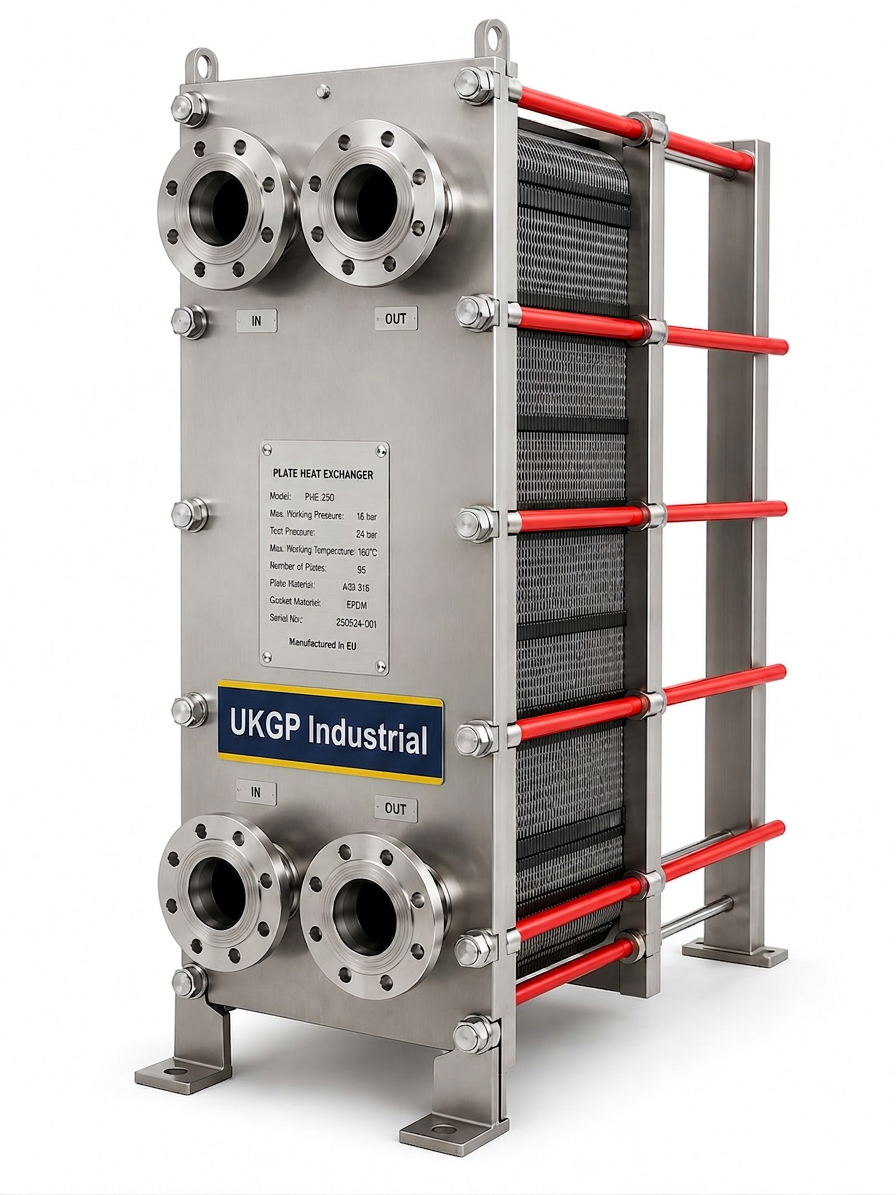
In many modern UK commercial heating designs, the boiler is hydraulically separated from the building's heating circuit using a plate heat exchanger (PHE). This strategy is becoming standard practice because it limits the volume of water the boiler is exposed to, thereby reducing the amount of fresh scale-forming minerals that can enter the boiler itself. However, this simply moves the scaling problem from the boiler to the PHE. Therefore, you must still consider how often descale commercial boiler secondary circuits. If the PHE becomes fouled, the boiler will short-cycle, leading to increased wear and tear and a significant drop in seasonal efficiency.
Maintaining a plate heat exchanger is often simpler than descaling a combustion chamber, as the plates can be removed and cleaned or even replaced individually if the scaling is severe. UKGP provides high-efficiency plate heat exchangers that are designed for easy maintenance and longevity. By protecting your primary boiler loop with a high-quality PHE and supporting it with a side stream filtration unit, you create a tiered defence system. This setup is particularly effective in high-rise residential blocks and commercial office towers where the static head of the system is high and water loss could lead to significant mineral ingress.
When planning your plant room upgrade, consider the total cost of ownership. A system that includes a UKGP side stream filtration skid (available for DN50-DN100 pipes), a dosing pot, and a robust plate heat exchanger will outlast a basic 'boiler-only' installation by a decade or more. Our Surrey-based factory can assist you with the design stage to ensure your filtration and heat exchange components are sized correctly for your building's load. Investing in the right hardware today from a reliable UK manufacturer means you spend less time worrying about how often descale commercial boiler units and more time focusing on other critical facility management tasks.
- Hydraulic separation isolates the boiler from secondary system scale.
- PHEs prevent the entire system from needing a deep chemical descale.
- Plate heat exchangers are easier to service than internal boiler jackets.
- Improved system reliability in large-scale commercial developments.
- UKGP components offer a reliable, Surrey-manufactured solution.
Frequently asked questions
What is the typical cost to descale a commercial boiler in the UK?
- The cost varies by size and location, but for a typical 250kW-500kW commercial gas boiler, a professional chemical descale usually ranges from £800 to £2,500 per unit. This includes the cost of specialized chemicals, labor, and the safe disposal of waste. Investing in a persistent side stream filtration skid from £6,800+VAT can significantly reduce the frequency of these costs.
Can I descale a commercial boiler myself?
- Descaling should only be performed by qualified HVAC engineers or water treatment specialists. Using the wrong concentration of acid or an incompatible chemical can permanently damage the heat exchanger, voiding your warranty and potentially leading to dangerous gas leaks if the metal becomes compromised. Always insist on a specialist who follows BSRIA BG50 standards.
How do I know if the scale is significant enough to warrant cleaning?
- Monitor your flue gas temperature (FGT). If the FGT is consistently 20-30°C higher than it was at the time of commissioning for the same load, it is a clear sign that scale exists. Additionally, if the boiler is 'kettling' or showing frequent overheating faults (locking out), a descale is urgently required.
Does soft water mean I never have to descale?
- Soft water does reduce the risk of calcium scale, but it does not eliminate the need for maintenance. Soft water can be more corrosive to certain metals, leading to magnetite (sludge) formation. You still need to follow BSRIA guidelines for filtration and dosing to ensure that neither scale nor corrosion products impede your boiler's performance.
What is the lead time for a UKGP side stream filtration skid?
- UKGP filtration skids are made to order at our Surrey facility. Our typical lead time is 6 to 8 weeks from order placement to delivery. All units come with a 2-year warranty and are designed for long-term protection of UK commercial heating systems.