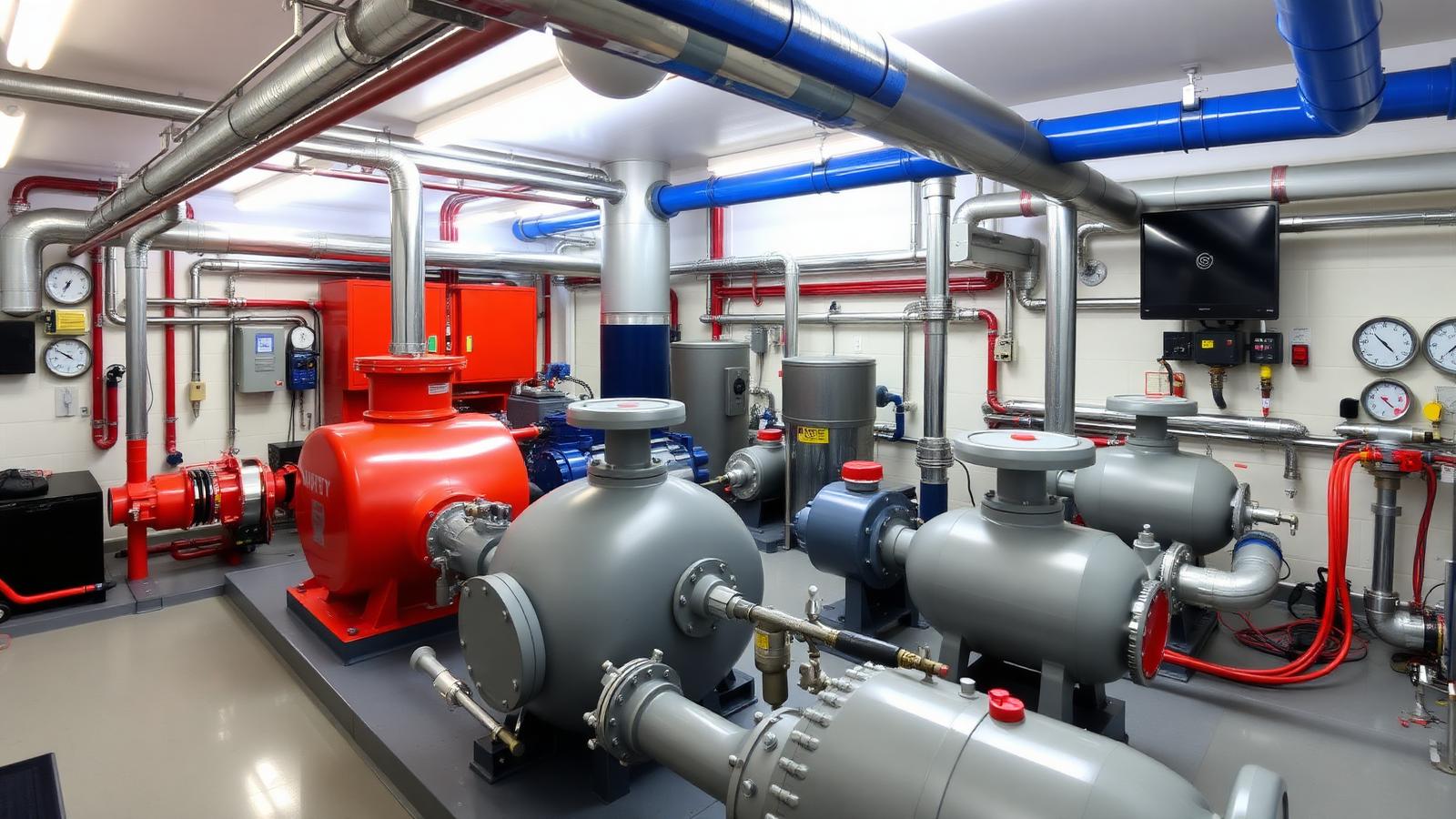
The Critical Role of Hospital Water Treatment and System Integrity
In a healthcare environment, the infrastructure supporting heating and cooling networks is more than just a utility; it is a critical asset that directly impacts patient safety and operational continuity. Effective hospital water treatment is essential to prevent the accumulation of scale, corrosion, and microbiological growth within complex pipework systems. Failure to maintain water quality can lead to premature component failure, reduced heat transfer efficiency in plate heat exchangers, and potential health risks. For M&E contractors and facility managers, the challenge lies in balancing rigorous compliance with the practicalities of plant room maintenance while ensuring that the primary heating and cooling loops are protected from the detrimental effects of suspended solids and chemical imbalances.
Adhering to British Standards and industry best practices is not optional in the healthcare sector. BSRIA BG29 (Pre-commission Cleaning of Pipework Systems) and BSRIA BG50 (Water Treatment for Closed Heating and Cooling Systems) provide the foundational framework for maintaining system health from day one. A well-designed hospital water treatment program focuses on a multi-stage approach, combining mechanical filtration, chemical dosing, and continuous monitoring. This ensures that the water quality remains within parameters that inhibit corrosion and prevent the bio-fouling that can lead to Legionella risks. By investing in high-quality UK-manufactured equipment, such as dosing pots and expansion bellows, procurement leads can ensure long-term reliability and reduce the total cost of ownership by avoiding emergency repairs and unscheduled downtime.
When specifying equipment for a hospital environment, engineers must consider the specific demands of high-traffic buildings where system downtime is not an option. This requires products that are built to withstand heavy-duty operation and provide ease of maintenance for on-site engineers. At UKGP Industrial, we understand these pressures. Our range of plant room solutions, including UK-manufactured side stream filtration skids and plate heat exchangers, is designed specifically for the UK market. Our equipment helps maintain the high standards required for hospital water treatment, offering a 2-year warranty and a typical 6-to-8-week lead time for made-to-order units. This ensures that your facility remains compliant with CIBSE guidelines and local NHS trust requirements, providing peace of mind for both consultants and FM providers alike.
- Compliance with BSRIA BG50 and BG29 is critical for healthcare infrastructure longevity.
- Effective filtration reduces the risk of microbiological growth and system-wide corrosion.
- High-performance plant room equipment minimises the risk of service disruption in clinical settings.
- Strategic chemical dosing maintains optimal pH and inhibitor levels within closed loops.
Secondary Heat Protection with Plate Heat Exchangers
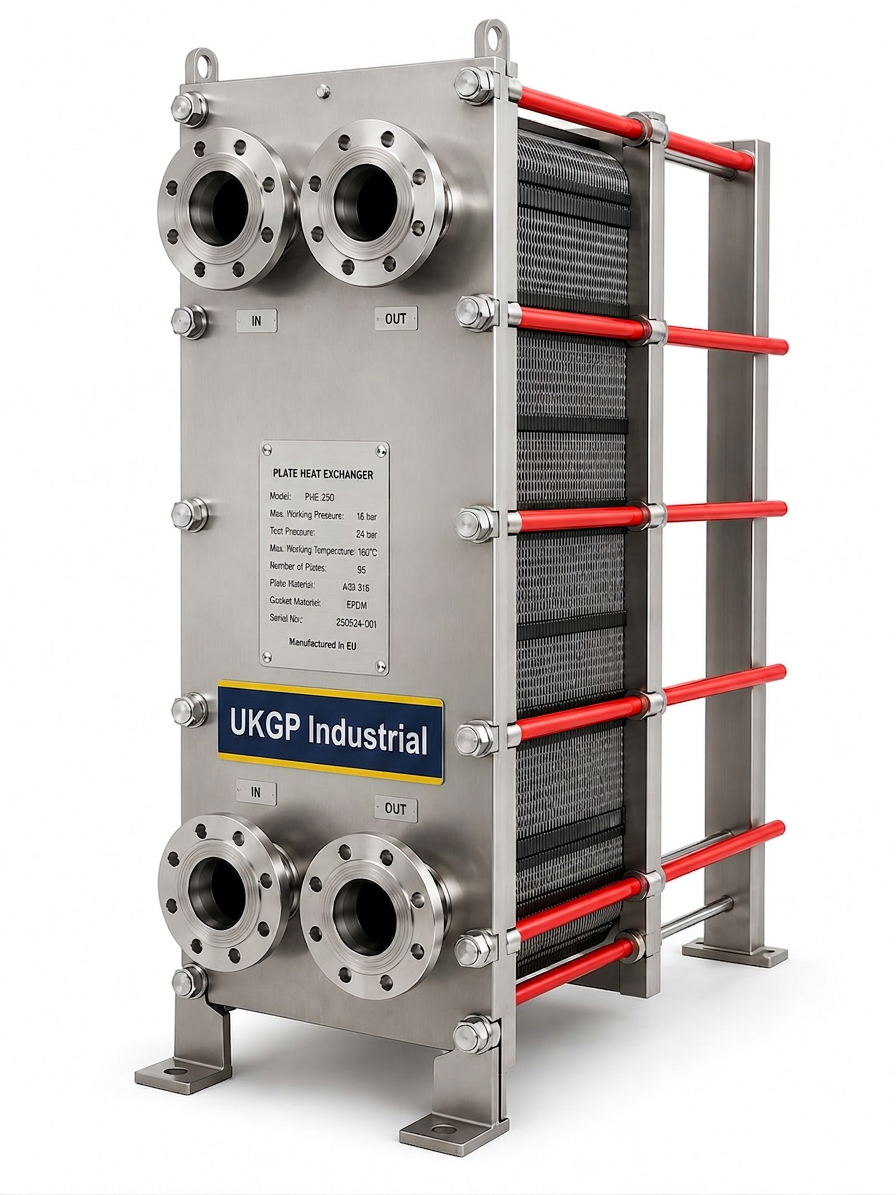
Plate heat exchangers (PHEs) play a pivotal role in hospital water treatment architectures by providing a thermal interface between different systems, such as primary boilers and secondary domestic hot water or heating circuits. Because these units feature narrow channels to maximise thermal efficiency, they are particularly susceptible to fouling. If the water treatment regime is inadequate, suspended solids and calcium carbonate deposits can quickly block the plates, leading to a significant drop in heat transfer and causing the plant to run inefficiently. This not only increases energy costs for the NHS trust but also puts additional strain on primary plant equipment like pumps and boilers, potentially leading to cascading failures across the system.
To mitigate these risks, it is essential to incorporate high-quality PHEs that are sized correctly for the specific hospital application. UKGP Industrial offers a range of plate heat exchangers designed to work in tandem with our filtration and dosing solutions, ensuring that the entire thermal chain is protected. Proper sizing and selection are vital; an undersized unit will work under excessive stress, while an oversized unit may lack the fluid velocity required to maintain a self-cleaning effect on the plates. When combined with a robust side stream filtration strategy, our heat exchangers can operate for extended periods with minimal maintenance, ensuring that temperatures are maintained accurately for sterilization processes and patient comfort, adhering to the strict requirements of BS 8552 for water sampling.
Maintenance accessibility is another critical factor in hospital plant room design. Our plate heat exchangers are designed for ease of cleaning and inspection, allowing FM teams to perform regular checks without extensive downtime. In the context of a hospital water treatment strategy, the PHE acts as a sentinel; monitoring the performance of the heat exchanger can provide early warnings about deteriorating water quality elsewhere in the system. By selecting UK-manufactured units from UKGP Industrial, you are investing in a product backed by technical expertise and a clear understanding of the UK’s regulatory landscape. We provide bespoke solutions that meet the exact thermal demands of your facility, ensuring that your domestic hot water and heating systems remain resilient against the threats of scale and corrosion.
- Plate heat exchangers provide efficient thermal separation but require clean system water to function.
- Fouling in PHEs significantly impacts energy efficiency and system temperatures in hospitals.
- Correct sizing and selection are essential for maintaining velocity and preventing sediment buildup.
- UKGP Industrial provides bespoke PHE solutions tailored to UK healthcare infrastructure needs.
Implementing Effective Side Stream Filtration in Hospitals
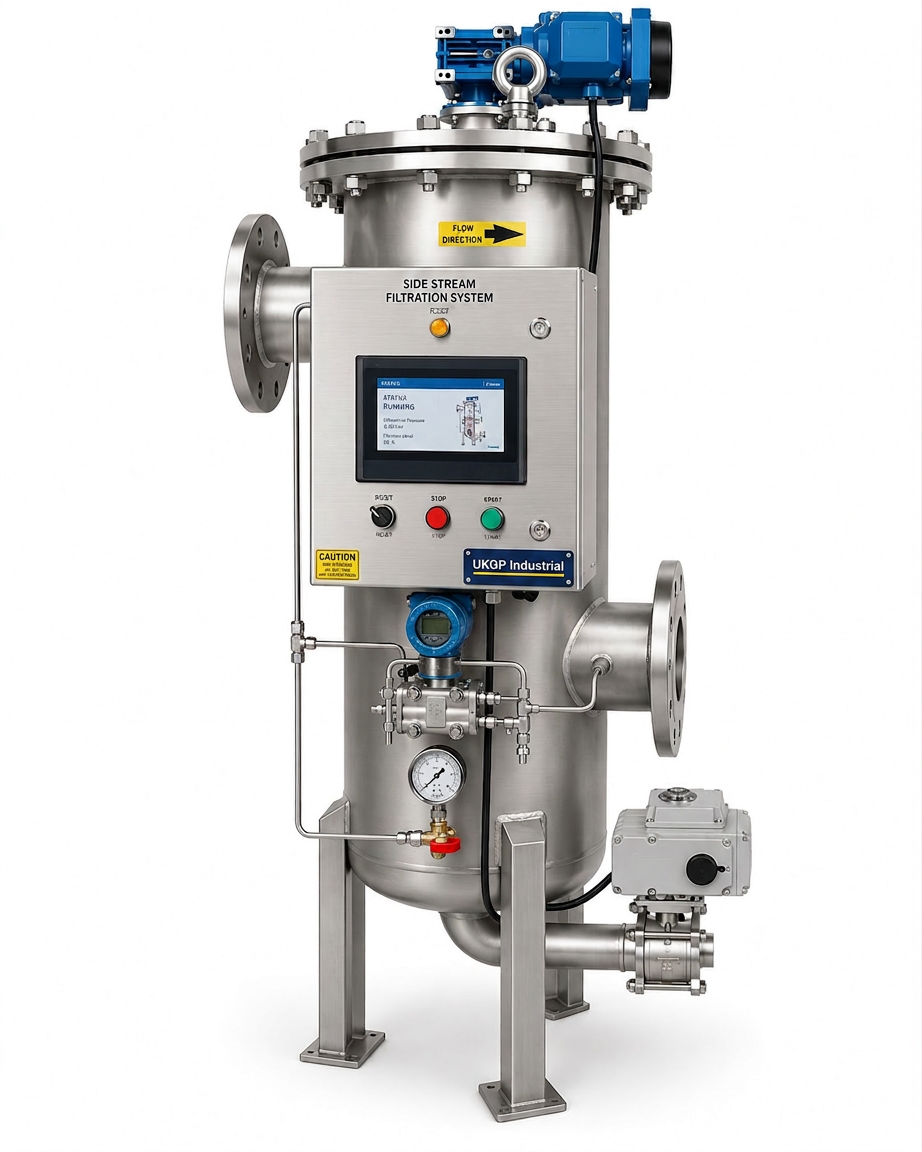
Side stream filtration is a cornerstone of modern hospital water treatment, providing a continuous cleaning mechanism for closed-loop systems without needing a full-flow filter that could restrict system pressure. For healthcare facilities, where 24/7 operation is essential, a side stream filtration skid allows for the removal of magnetite, scale, and other suspended solids down to sub-micron levels. This process is vital for protecting sensitive control valves and high-efficiency boilers from abrasive particles. Without adequate filtration, these contaminants circulate through the system, acting like sandpaper on internal components and eventually settling in low-velocity areas like radiators and underfloor heating manifolds, causing cold spots and reduced efficiency throughout the entire building.
Our UKGP Industrial side stream filtration skids are engineered specifically for the rigours of hospital applications. Available in sizes from DN50 to DN100, these units are made to order with a typical 6-to-8-week lead time and reflect the high standards of UK manufacturing. Starting from £6,800 + VAT, these skids offer an exceptional return on investment by significantly extending the intervals between system flushes and protecting expensive plant assets. Each unit comes with a 2-year warranty, reflecting our confidence in their durability. For a hospital water treatment plan, the installation of a side stream filter is a proactive step that ensures long-term compliance with BSRIA BG50 recommendations regarding suspended solids management in closed circuits.
When specifying a side stream filtration unit for a hospital project, it is important to consider the skid's flow rate—typically 5% to 15% of the total system flow—to ensure effective turnover. Our units are designed to be user-friendly, featuring clear pressure differential gauges that indicate when filter changes are required, which simplifies the workload for busy facilities management teams. Integrating a UKGP skid into your plant room design not only protects your mechanical infrastructure but also supports the wider sustainability goals of the facility by maintaining peak thermal performance. For those managing complex NHS estates or private healthcare facilities, our technical team is available to help specify the correct unit size and configuration to match your system’s exact requirements, ensuring reliable hospital water treatment for the long term.
- Side stream filtration skids continuously remove magnetite and debris without affecting main flow.
- UKGP units are available from DN50 to DN100, priced from £6,800 + VAT with a 2-year warranty.
- Essential for BSRIA BG50 compliance and maintaining efficient thermal transfer in healthcare.
- Made to order in the UK with a 6-to-8-week lead time for rapid plant room integration.
The Importance of Chemical Dosing and Air/Dirt Separation
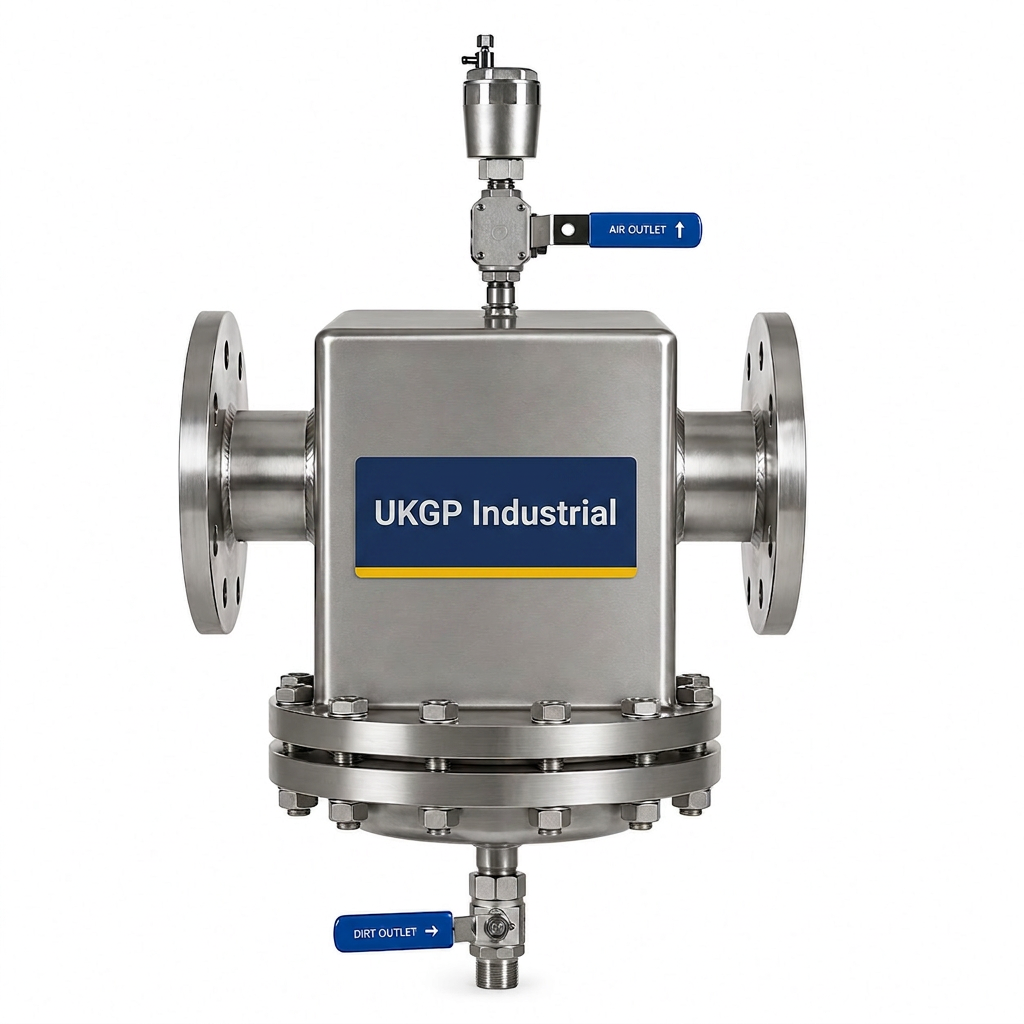
A holistic approach to hospital water treatment must include high-quality chemical dosing pots and effective air and dirt separators. Air in a closed-loop system is one of the primary catalysts for corrosion; oxygen ingress leads to the formation of iron oxide, which then settles as sludge throughout the pipework. Air and dirt separators are designed to remove both microbubbles and suspended particles, ensuring that the fluid remains inert and clean. In a hospital setting, where pipework runs can be incredibly long and complex, ensuring that air is removed at the earliest opportunity is critical to preventing air locks and maintaining consistent temperatures in patient wards and surgical suites.
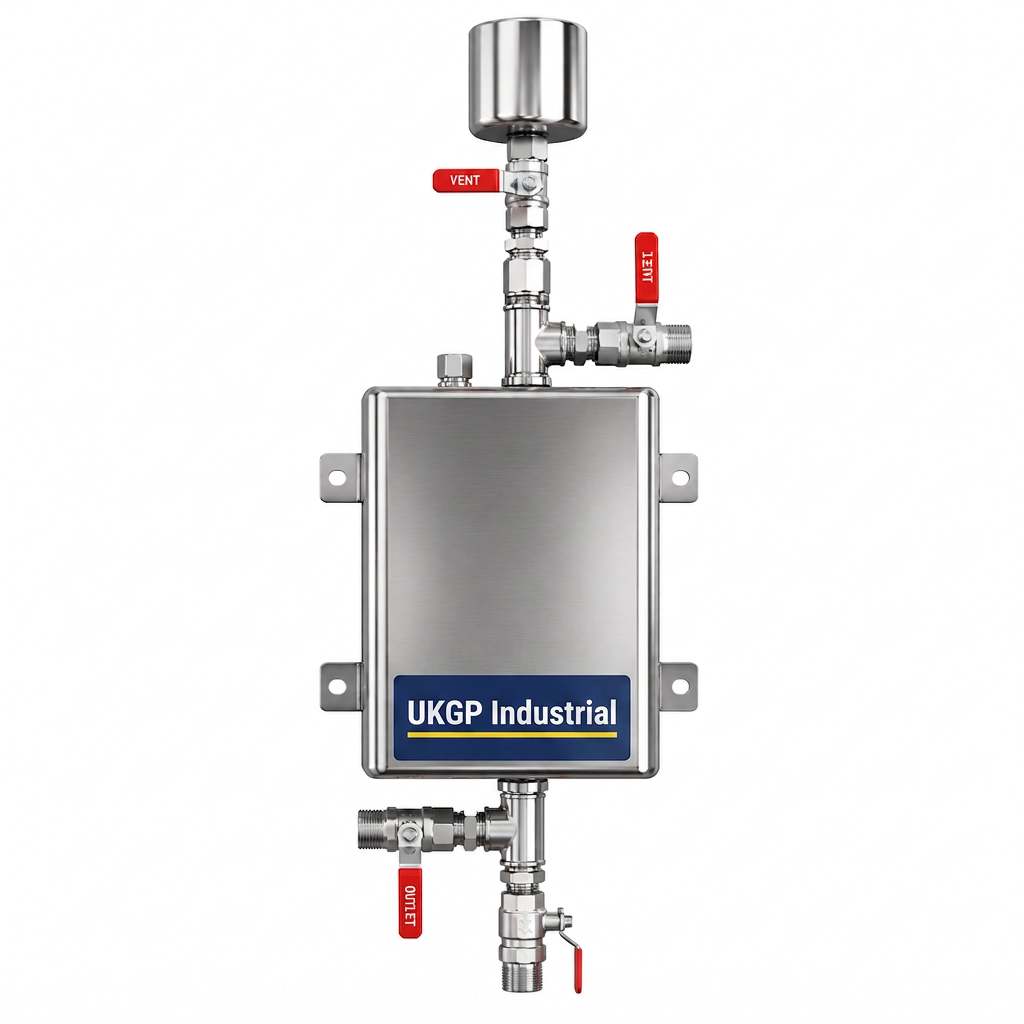
Chemical dosing pots provide a reliable method for introducing inhibitors and biocides into the system water. These chemicals are essential for maintaining the protective film on metal surfaces and controlling the growth of sulfate-reducing bacteria (SRB) and other harmful microbes. Our dosing pots are manufactured to high standards, ensuring they can withstand the typical pressures found in large-scale hospital plant rooms. When used alongside a comprehensive hospital water treatment strategy, these tools ensure that the chemical balance is maintained with precision. For FM teams, having a dedicated, easy-to-use dosing point makes the application of water treatment chemicals safer and more efficient, reducing the risk of manual handling errors or chemical spillages within the plant room space.
Choosing the right combination of separators and dosing equipment is key to meeting the technical requirements set out in CIBSE guides and BSRIA BG50. At UKGP Industrial, we provide the full suite of plant room ancillaries needed to secure your system's future. From air and dirt separators that capture fine debris to stainless steel dosing pots that offer longevity in harsh environments, our products are designed with the specific needs of the UK building services industry in mind. When you specify UKGP for your hospital water treatment needs, you are choosing equipment that has been tested for resilience and performance. Our technical sales team can provide quotes and lead times for these essential components, helping you deliver a project that is both technically sound and commercially viable within the constraints of healthcare budgets.
- Dosing pots allow for the safe and precise introduction of corrosion inhibitors and biocides.
- Air and dirt separators prevent oxygen-led corrosion and the buildup of magnetite sludge.
- Integrated solutions are required to meet long-term BSRIA and CIBSE performance standards.
- High-quality ancillaries reduce the frequency of manual interventions by maintenance staff.
Navigating Lead Times and Specification for Hospital Upgrades
In the fast-paced world of healthcare construction and refurbishment, managing lead times is often as critical as the technical specification itself. When a hospital's heating or cooling system fails due to poor hospital water treatment, the pressure to restore service is immense. Specialist equipment, such as our side stream filtration skids (DN50 to DN100), is typically made to order with a lead time of 6 to 8 weeks. Planning for these timelines during the design and procurement phases is essential to avoid delays in commissioning. Our team at UKGP Industrial works closely with M&E contractors and procurement leads to provide accurate quotes and realistic delivery schedules, ensuring that project milestones are met without compromising on the quality of the water treatment components.
A key part of the procurement process is ensuring that all equipment is backed by a solid warranty and technical support. We offer a 2-year warranty on our filtration skids and other primary plant equipment, providing long-term security for the investment. In a hospital environment, where budgets are under constant scrutiny, the ability to specify a UK-manufactured product with a clear pricing structure (e.g., filtration skids from £6,800 + VAT) is a significant advantage. This transparency allows for more accurate project costing and ensures that the specified hospital water treatment system meets the performance requirements of the NHS estate managers while remaining competitively priced compared to imported alternatives that may lack the same level of local support.
Specification should never be a 'set and forget' task. Consultants and engineers must consider the lifecycle of the water treatment equipment. For example, ensuring that the chosen side stream filter and dosing pots are adequately sized for the future expansion of the hospital's HVAC system is a common requirement in healthcare master-planning. By choosing UKGP Industrial, you gain access to expert technical advice tailored to the UK market. We can help you navigate the complexities of BS 8552 for water sampling and ensure your design facilitates easy compliance. Whether you are working on a new-build hospital or upgrading an aging plant room, our practical, commercially-aware approach ensures you get the right kit at the right time to maintain system integrity and patient safety.
- Early engagement with suppliers is vital to manage 6-to-8-week lead times for bespoke skids.
- Transparent pricing and UK manufacturing support the commercial needs of NHS projects.
- A 2-year warranty provides essential security for critical healthcare infrastructure investments.
- Technical support from UKGP ensures that systems are sized for both current and future loads.
Monitoring and Maintenance: Ensuring Continuous Compliance
The installation of high-quality hospital water treatment equipment is only the beginning of maintaining a healthy system. Continuous monitoring and regular maintenance are required to ensure that the parameters set in BSRIA BG50 are consistently met. This involves regular water sampling and analysis to check for dissolved oxygen levels, conductivity, pH, and the concentration of inhibitors. For hospital FM teams, having equipment that is easy to sample from and maintain is a major benefit. Our filtration skids and dosing pots are designed with this in mind, featuring accessible ports and clear indicators that facilitate routine checks. By making maintenance easy, the likelihood of the system remaining in peak condition increases significantly, thereby protecting the hospital's investment.
Data-driven maintenance is becoming the standard in modern healthcare facilities. By tracking the pressure drop across a side stream filtration unit or monitoring the frequency of chemical dosing, engineers can identify trends that suggest a potential issue before it leads to a breakdown. For instance, a sudden increase in the rate of filter blockage could indicate a new corrosion event or a change in water chemistry that needs immediate attention. This proactive approach to hospital water treatment reduces the risk of expensive 'big fix' interventions and ensures that the heating and cooling systems remain energy-efficient. In the context of the NHS's Net Zero targets, maintaining the thermal efficiency of HVAC systems through clean water is a simple yet effective strategy.
Finally, the human element of system maintenance cannot be overlooked. Training for plant room staff on the operation of filtration skids and dosing pots is essential for the long-term success of any hospital water treatment strategy. At UKGP Industrial, we pride ourselves on providing clear documentation and technical support to assist site teams. When a facility manager understands how to correctly operate the DN50 to DN100 skids or how to check the integrity of expansion bellows, the entire reliability of the plant room is enhanced. Secure your facility's future by choosing UKGP as your partner for high-performance water treatment solutions, backed by UK expertise and a commitment to quality that healthcare environments demand.
- Regular water sampling according to BS 8552 is essential for verifying system health.
- Proactive maintenance of filtration skids prevents costly emergency repairs and downtime.
- Monitoring thermal efficiency helps healthcare facilities reach their carbon reduction goals.
- Comprehensive technical documentation from UKGP supports effective on-site FM operations.
Frequently asked questions
What is the typical lead time for a hospital-grade filtration skid?
- For our made-to-order UKGP side stream filtration skids (DN50-DN100), the lead time is typically 6 to 8 weeks. This allows for precision manufacturing to meet the specific requirements of your hospital plant room.
How much does a side stream filtration unit cost?
- Our side stream filtration skids start from £6,800 + VAT. The final price depends on the required size (from DN50 upwards) and any specific bespoke features required for the healthcare project.
Which standards govern hospital water treatment in the UK?
- The primary standards are BSRIA BG29 for pre-commission cleaning and BSRIA BG50 for the ongoing water treatment of closed heating and cooling systems. CIBSE guides and BS 8552 for water sampling are also critical references.
What warranty is provided on UKGP water treatment equipment?
- We provide a 2-year warranty on our side stream filtration skids and other primary equipment, ensuring peace of mind for hospital procurement leads and facility managers regarding the longevity of their investment.
Why is side stream filtration preferred over full-flow filtration in hospitals?
- Side stream filtration allows for the continuous removal of fine particles without risking the main system's flow rate or pressure. This is essential in hospitals where constant supply to critical wards must be maintained even during filter maintenance.