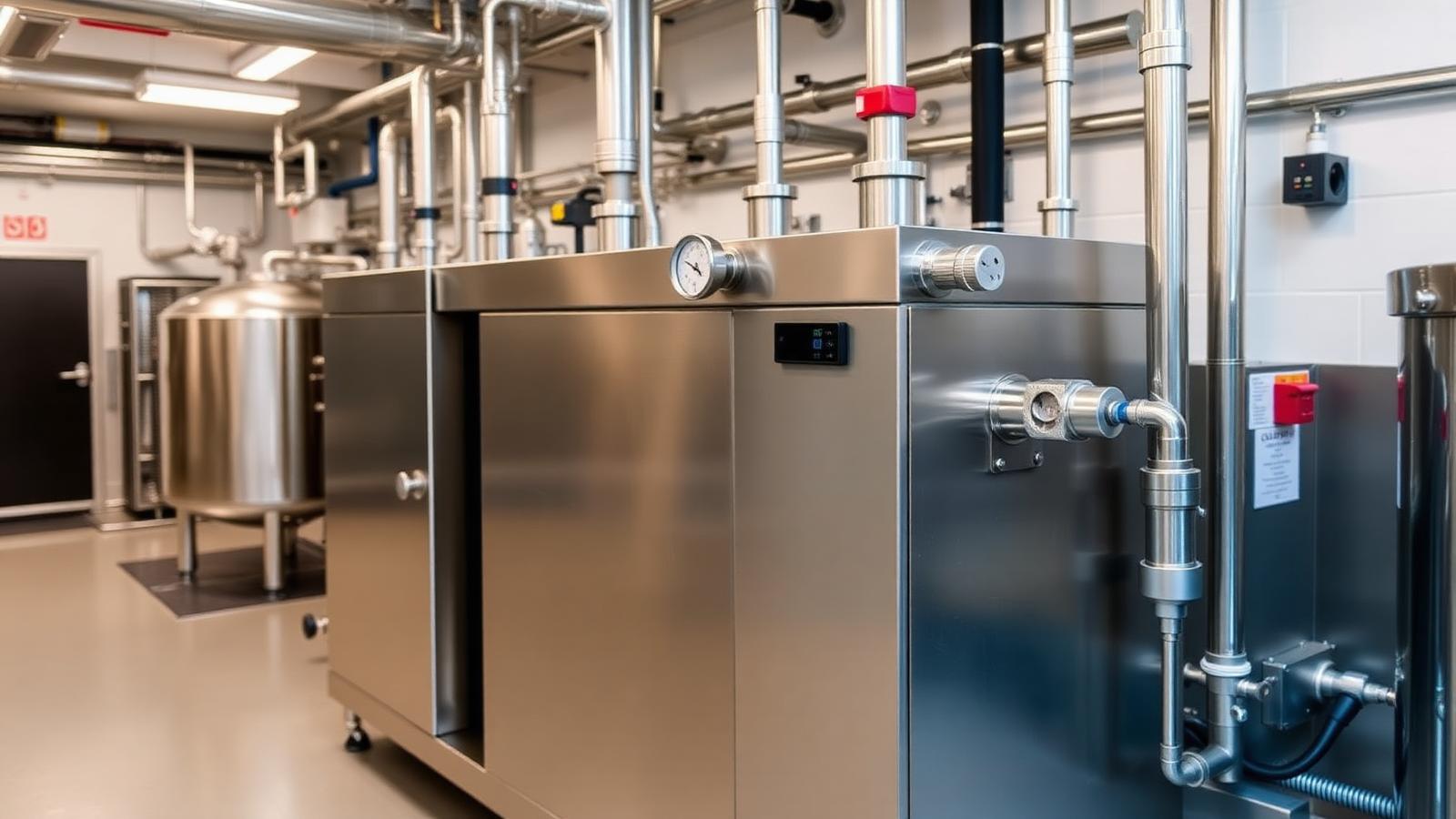
Understanding the Need for a Professional Cleaning Service
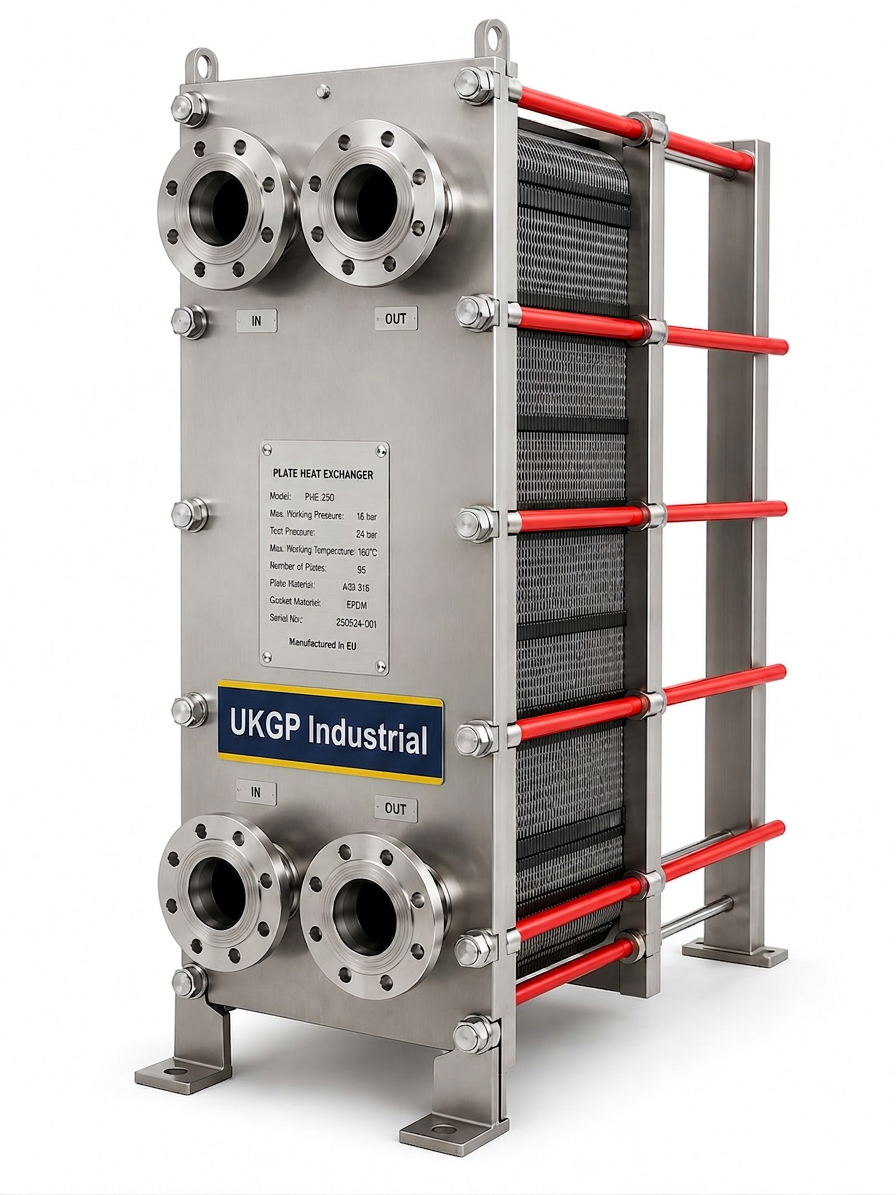
In the UK's commercial landscape, the efficiency of a plate heat exchanger (PHE) is fundamental to managing operational expenditure. Over time, calcium carbonate deposits, magnetite, and biological fouling settle on the heat transfer surfaces, creating a thermal barrier that forces boilers and chillers to work significantly harder. Engaging a professional heat exchanger cleaning service UK wide ensures that these contaminants are safely removed using industry-approved chemical solutions. Without such intervention, the pressure drop across the plates increases, leading to higher pumping costs and, eventually, a total system shutdown which can be catastrophic for facility managers and building owners alike.
From an engineering perspective, the gradual decline in Delta T (the temperature difference between primary and secondary circuits) is the first indicator that your energy efficiency is bleeding away. BSRIA BG50 highlights that debris accumulation is the primary cause of premature component failure in closed-loop systems. By scheduling a recurring cleaning service, UK engineers can prevent the irreversible pitting corrosion that often occurs beneath fixed deposits. This proactive approach is not just about cleaning; it is about extending the lifecycle of your primary plant assets and ensuring that your heating or cooling system meets the design intent specified during the initial building commissioning phase.
Choosing UKGP Industrial for your maintenance needs provides peace of mind through technical expertise. Our team understands that every plant room has unique challenges, from restricted access in London basements to high-capacity requirements in industrial warehouses. We move beyond simple flushing by assessing the specific type of fouling present. Whether you require a 'Clean In Place' (CIP) service for minor scaling or a full 'Strip and Clean' for heavily fouled units, our goal is to restore the original heat transfer coefficients. This ensures your facility remains compliant with BS 8552 and continues to operate within the strict environmental parameters required by modern UK building regulations.
- Restores design thermal efficiency and reduces aggregate gas or electricity consumption.
- Identifies weeping gaskets and plate cracks before they lead to emergency failures.
- Ensures compliance with BSRIA BG50 recommendations for closed-loop system maintenance.
- Reduces the carbon footprint of the building by optimizing boiler firing cycles.
UK Price Factors for Heat Exchanger Maintenance
When procurement leads request a heat exchanger cleaning service UK price, several variables dictate the final quote. The most significant factor is the surface area of the plates and the total number of plates within the frame. A small domestic-scale PHE will cost significantly less to service than a multi-megawatt unit found in a district heating network. Labour costs are another consideration; a standard 'Clean In Place' typically takes one day, whereas a full strip-down, manual plate scrubbing, and re-gasketing can take two to three days. Accessibility also plays a role, as units located in confined spaces may require additional safety measures or specialized pumping equipment to circulate the cleaning chemicals.
The condition of the gaskets is a critical cost driver that often surprises facility managers. If the unit has been operating at high temperatures with fouled plates, the gaskets may have become brittle. During a professional heat exchanger cleaning service UK providers will assess whether the gaskets can be reused or if a full set of EPDM or NBR replacements is required. Custom-made gaskets for older, legacy heat exchangers can have longer lead times and higher price points compared to current standard models. At UKGP, we aim for transparency, providing detailed breakdowns that include chemical costs, technician day rates, and disposal fees for any waste fluids produced during the descaling process.
Finally, the location and timing of the service affect the commercial pricing. Emergency call-outs for blocked heat exchangers during the peak heating season will naturally command a premium over scheduled summer maintenance. We recommend that FM teams bundle their heat exchanger cleaning with other system upgrades to capitalize on site mobilization costs. For example, if you are already upgrading your filtration to a UKGP side stream filtration skid, it is the perfect time to ensure your primary heat transfer surfaces are pristine. Standard servicing for mid-sized commercial units typically starts from £800 to £1,500 depending on the scope of work and chemical requirements.
- Plate count and total surface area (m2) of the heat transfer equipment.
- Service type: Chemical CIP versus manual strip-and-clean with gasket replacement.
- Site logistics including plant room access, drainage availability, and restricted hours.
- The age and brand of the unit, impacting the cost and availability of replacement parts.
The Role of Side Stream Filtration in Protecting Equipment
While a one-off heat exchanger cleaning service UK solution will restore temporary efficiency, it does not address the underlying cause of fouling: suspended solids within the system water. To truly protect your heat exchangers, the installation of high-quality side stream filtration is essential. These units continuously remove magnetite and non-magnetic debris from the circulating water, preventing them from settling in the low-velocity areas of the heat exchanger plates. According to BSRIA BG29 and BG50, maintaining low levels of total suspended solids (TSS) is the most effective way to prevent the rapid re-fouling of cleaned equipment and to ensure the longevity of the entire HVAC network.
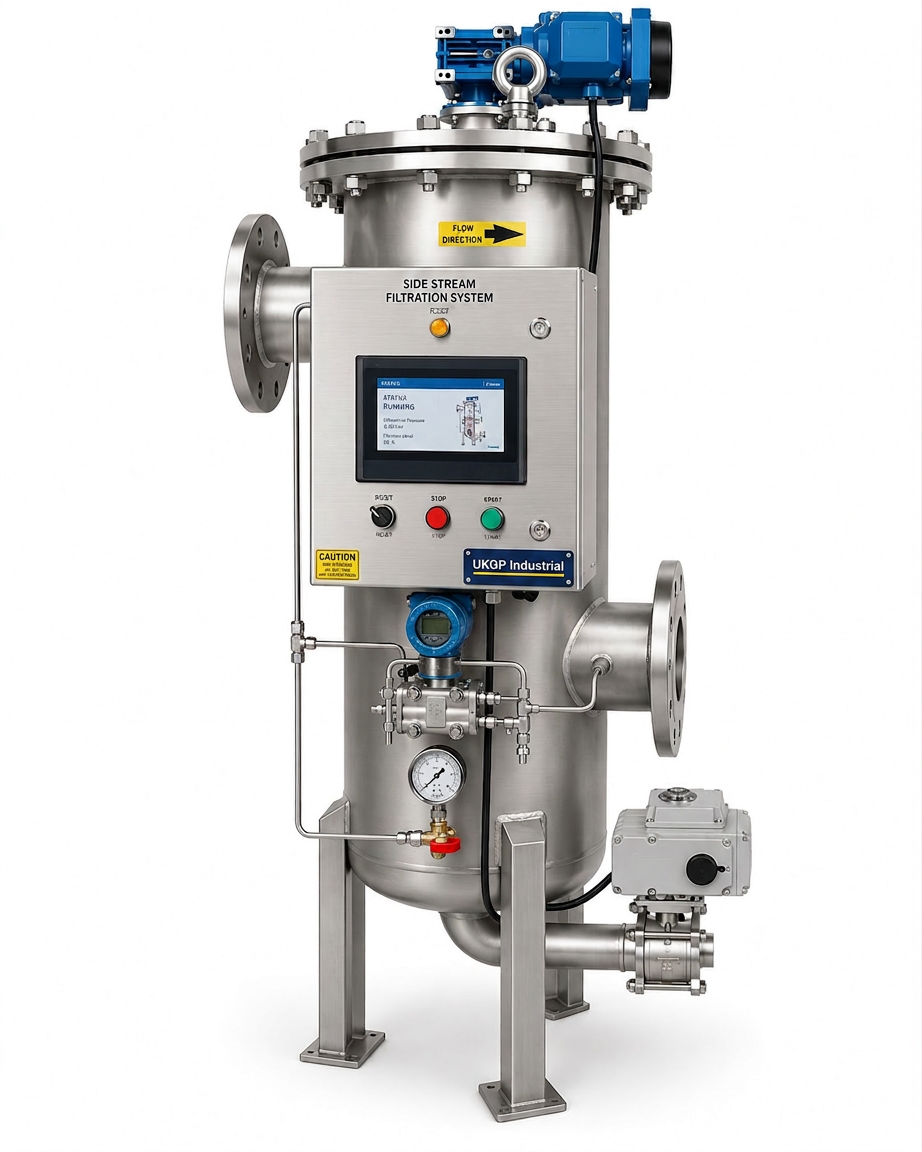
At UKGP Industrial, we manufacture robust side stream filtration skids specifically designed for the UK market. Our units range from DN50 to DN100 and are made to order with a typical lead time of 6 to 8 weeks. Starting from £6,800 +VAT, our skids include integrated pumps and high-efficiency filter housings that can be serviced without interrupting the main system flow. By investing in this hardware alongside your cleaning service, you transition from reactive fire-fighting to a proactive maintenance strategy. Each skid is backed by a 2-year warranty, providing commercial confidence for M&E contractors and consultants who specify our equipment for high-value projects.
For plant room engineers, the business case for side stream filtration is clear: it reduces the frequency of required cleaning interventions. Without high-specification filtration, a heat exchanger might require a deep clean every 12 months. With a UKGP skid installed, that interval can often be extended to 36 or 48 months, significantly reducing long-term maintenance budgets. Our skids are engineered in Surrey and can be customized to include PLC integration for remote monitoring of pressure differentials. This level of technical oversight ensures that your heat transfer surfaces remain at 100% capacity, protecting your boilers and plate heat exchangers from the abrasive and insulating effects of magnetite.
- UKGP skids from £6,800+VAT, available in sizes DN50 to DN100 for all commercial flows.
- Made-to-order in the UK with a 6-8 week lead time and a comprehensive 2-year warranty.
- Equipped with 20-micron or 5-micron filters to capture fine magnetite and scale particles.
- Essential for compliance with BSRIA water quality standards in modern closed-loop systems.
Technical Execution: CIP vs. Manual Strip-and-Clean
When specifying a heat exchanger cleaning service UK contractors must choose between two primary methods. Clean In Place (CIP) involves circulating a mild acid or specialized descaling chemical through the unit using a portable pump. This is the preferred method for light fouling as it does not require the dismantling of the plate pack, which minimizes the risk of gasket disturbance. It is a cost-effective, fast, and highly efficient way to dissolve calcium deposits. However, CIP is less effective against heavy sludge or large debris that may have become physically trapped in the plate ports, where manual intervention is the only viable path to restoration.
The manual 'Strip and Clean' is a more labor-intensive process where the frame is opened, and each individual plate is removed for pressure washing and chemical soaking. This method allows for a 100% visual inspection of every plate, enabling the technician to check for 'pinholing'—tiny holes caused by corrosion that can lead to cross-contamination between circuits. While more expensive, this service is often necessary for older units that have not been maintained for several years. It also provides the opportunity to replace the gaskets entirely, which is recommended if the unit is more than five to seven years old or if it has been subjected to extreme thermal cycling.
Regardless of the method chosen, the disposal of cleaning fluids must be handled in accordance with UK environmental regulations. Professional service providers will neutralize the acidic cleaning solutions before disposal or arrange for off-site treatment. Following the cleaning, a thorough flush with conditioned water is required to ensure no residual chemicals remain, which could otherwise damage the system metals. At UKGP, we provide a full service report upon completion, documenting the before-and-after pressure drops and temperatures, which serves as a valuable record for your building's health and safety file and BSRIA compliance audits.
- CIP is ideal for annual maintenance and units with primarily mineral scale issues.
- Manual cleaning is necessary for units with high levels of magnetite or biological fouling.
- Plate crack detection (dye penetrant testing) can be added to a manual strip-out service.
- Post-service validation ensures the unit is returned to its design operating parameters.
BSRIA BG50 and Water Quality Compliance
Compliance with BSRIA BG50 is not optional for responsible facility managers; it is the industry standard for the maintenance of closed-loop water systems. This document emphasizes that heat exchangers act as 'filters' for system debris because of their narrow plate channels and low-velocity zones. Consequently, a heat exchanger cleaning service UK based must be viewed as part of a wider water treatment strategy. If the water quality parameters—such as iron levels, hardness, and conductivity—are not kept within specified limits, the heat exchanger will foul again within weeks of being cleaned. This cycle of neglect leads to spiraling energy costs and premature plant failure.
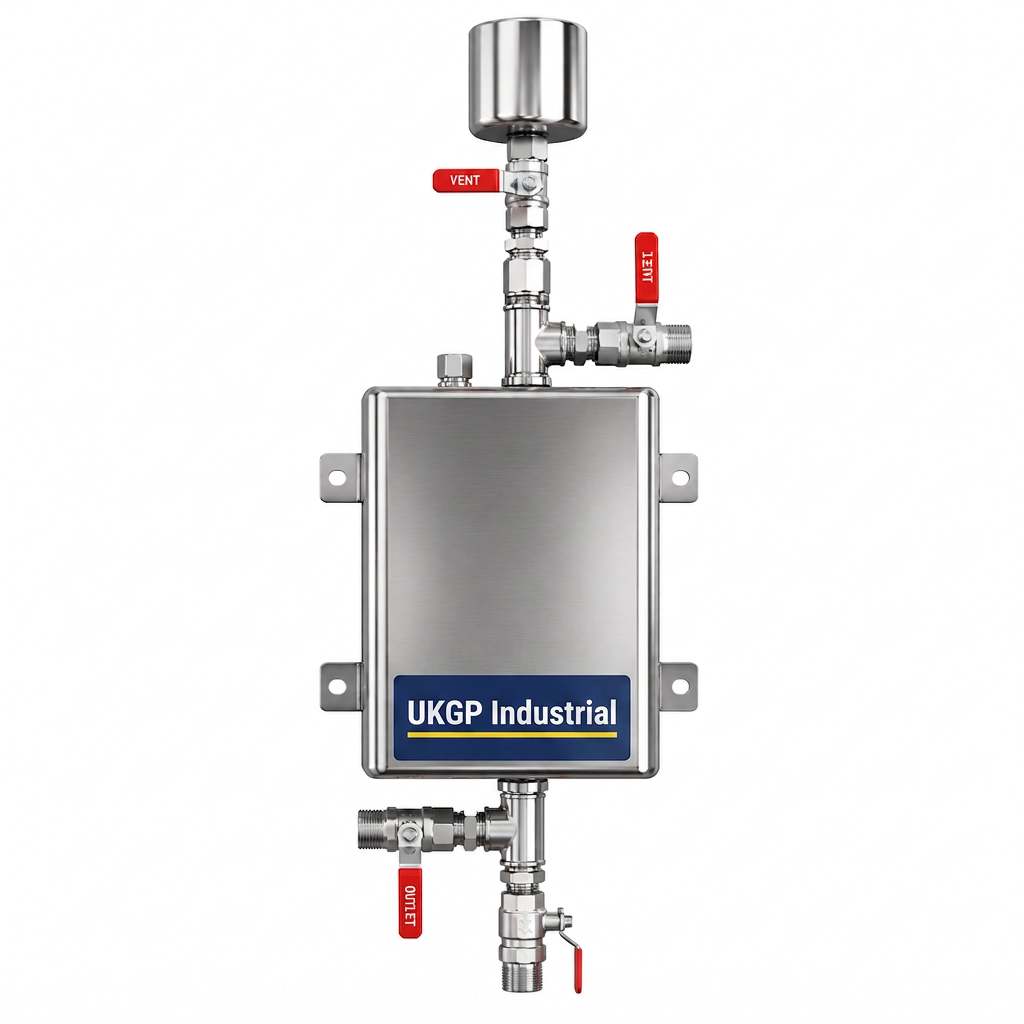
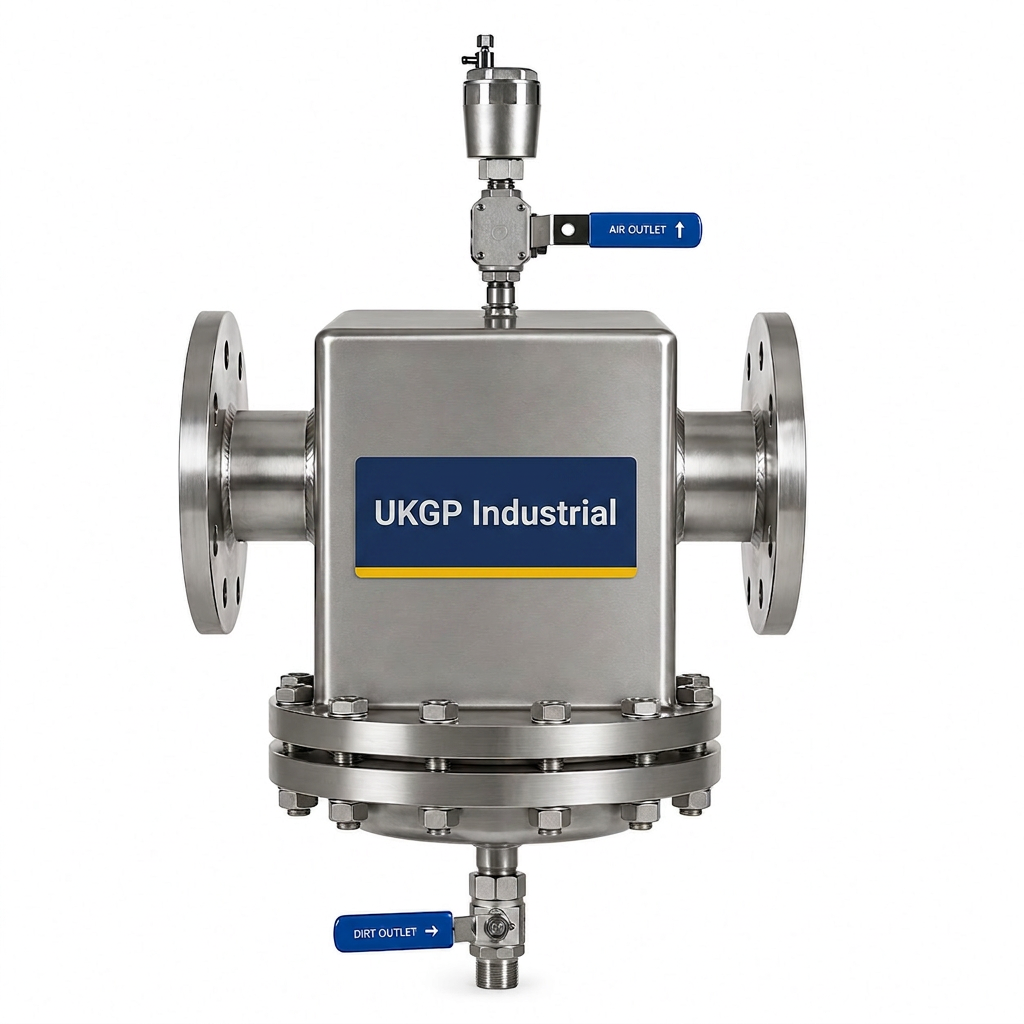
Effective water treatment relies on three pillars: chemical dosing, mechanical filtration, and regular testing. BS 8552 provides the framework for sampling and monitoring these systems. When UKGP technicians perform a cleaning service, we often recommend an audit of the current chemical dosing setup. Are the dosing pots being used correctly? Is the inhibitor at the correct concentration? By addressing these questions, we help our clients move towards a 'prevention over cure' model. Our technical team can advise on the best combination of equipment, from dosing pots to air and dirt separators, ensuring that the system environment is as clean as possible.
Furthermore, BSRIA BG50 highlights the importance of keeping records of all maintenance activities. A professional heat exchanger cleaning service UK provider will provide a certificate of service that contributes to the 'logbook' of the building. This documentation is vital during property transactions or insurance audits, as it proves that the mechanical assets are being managed correctly. By adhering to these standards, you not only protect the physical hardware but also the commercial value of the building assets, ensuring that the HVAC system is robust, efficient, and compliant with all current UK industry benchmarks.
- Mandatory adherence to BSRIA BG50 prevents litigation and long-term asset damage.
- Reduces the risk of microbial growth, including anaerobic bacteria that cause gas buildup.
- Supports the requirements of BS 8552 for regular water sampling and monitoring.
- Improves the accuracy of Building Management System (BMS) data by clearing sensor probes.
The ROI of Regular Heat Exchanger Cleaning
The Return on Investment (ROI) for a professional heat exchanger cleaning service UK wide is often realized in under twelve months for high-usage systems. A mere 1mm of scale on a heat transfer surface can reduce efficiency by up to 10%, leading to thousands of pounds in wasted energy costs for commercial buildings. For a typical office block or leisure centre, the cost of the cleaning service is dwarfed by the savings achieved through reduced gas consumption. When you factor in the avoided cost of emergency repairs and the extension of the plant's operational life, the financial case for scheduled maintenance becomes undeniable and essential.
Beyond energy savings, there is a significant reduction in operational risk. Heat exchangers are critical components for providing hot water and space heating. In a healthcare or hospitality setting, a failure in heat transfer can lead to the loss of service, resulting in refund claims or health and safety violations. By partnering with a UK manufacturer like UKGP Industrial, you gain access to engineers who understand the pressure of these environments. We provide the technical expertise to ensure your cleaning is done right the first time, using high-grade chemicals and high-specification replacement parts that meet the rigorous demands of UK commercial plant rooms.
To maximize your ROI, we recommend a holistic approach. Start with a professional cleaning service to reset your system to its baseline, then install a UKGP side stream filtration skid to maintain that cleanliness. Our skids, starting from £6,800 +VAT, are a one-time investment that pays for itself by dramatically lowering the ongoing cost of heat exchanger cleaning service UK providers would otherwise charge for frequent interventions. With our 2-year warranty and made-to-order UK manufacturing quality, you are investing in a future-proof solution that keeps your facility running at peak performance while meeting all environmental and budgetary targets.
- Immediate reduction in carbon emissions and monthly utility expenditure.
- Protects expensive downstream components like modulating valves and heat pumps.
- Reduces 'pump hunting' by stabilizing pressure drops across the heat exchanger.
- Increases the resale value of the building by demonstrating an elite maintenance history.
Frequently asked questions
How much does a commercial heat exchanger cleaning service UK cost?
- Prices typically range from £800 for a small CIP service to over £3,000 for a large-scale manual strip-and-clean on major industrial units. Costs depend on plate count, accessibility, and the need for new gaskets.
How often should I clean my plate heat exchanger?
- BSRIA BG50 recommends baseline monitoring. Most commercial systems require a professional clean every 12-24 months, though systems with high-quality side stream filtration can often extend this to every 3-5 years.
What is the lead time for UKGP side stream filtration skids?
- Our filtration skids are made to order in our UK facility with a current lead time of 6-8 weeks. They are designed for DN50 to DN100 connections and start from £6,800 +VAT.
Can I perform the heat exchanger cleaning myself?
- While possible, it is not recommended for commercial systems. Professional services ensure correct chemical handling, neutralize waste according to UK laws, and provide the technical diagnostic reports required for BSRIA compliance.
What are the signs that my heat exchanger needs cleaning?
- Key indicators include a decreasing temperature difference (Delta T) between the primary and secondary sides, a rising pressure drop across the unit, and the inability of the system to meet peak heating or cooling demands.