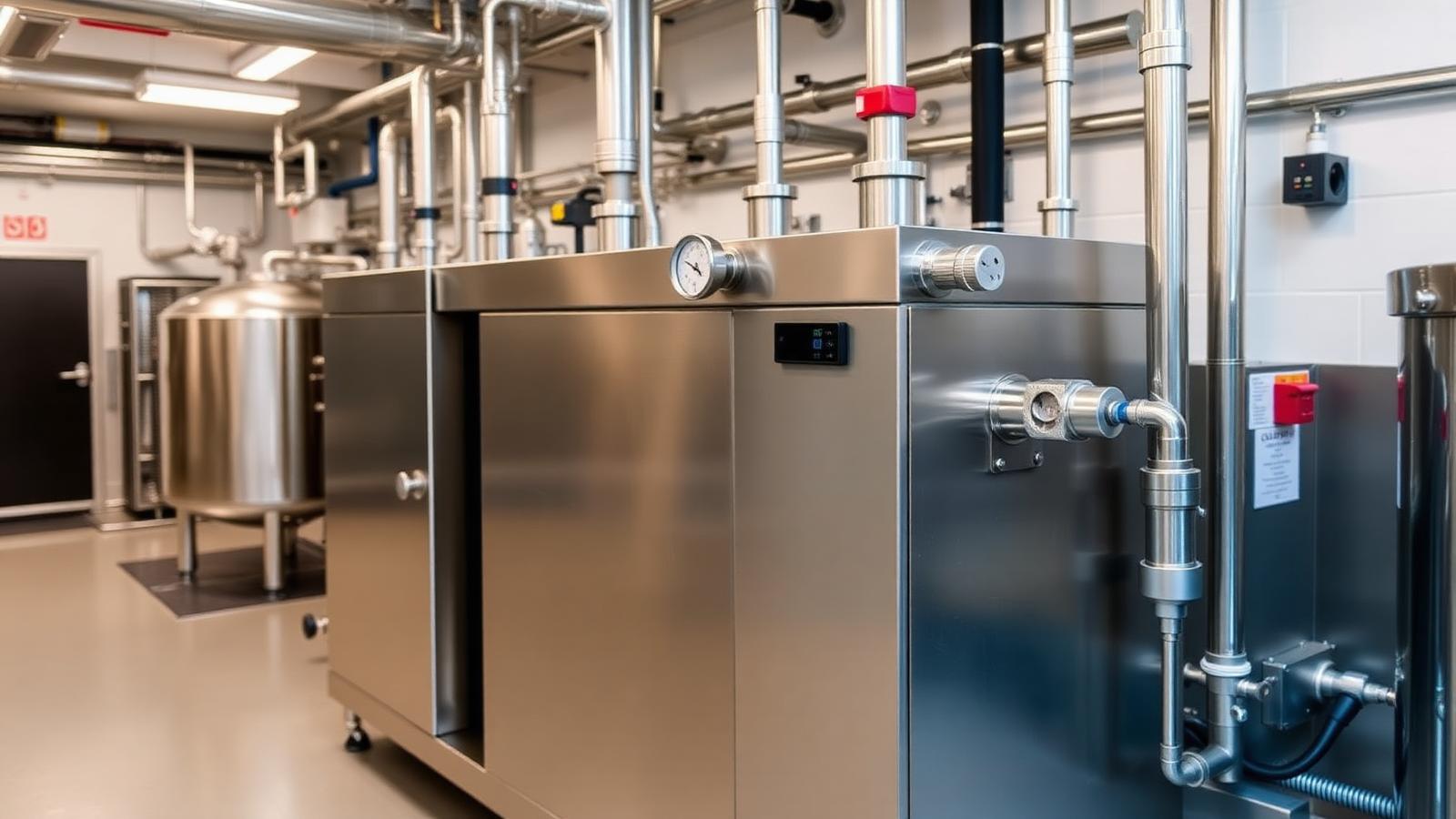
The Impact of Limescale on Hard Water Commercial Boiler Systems
In many regions across the UK, specifically the South and East of England, the water supply is classified as hard or very hard due to high concentrations of calcium and magnesium carbonates. When this water is heated within a hard water commercial boiler, these minerals precipitate to form a hard, insulating layer of limescale on the heat transfer surfaces. This layer acts as a thermal barrier, significantly reducing the heat transfer coefficient and forcing the boiler to work harder to achieve the desired output, which leads to increased carbon emissions and fuel consumption. For every millimetre of scale buildup, energy efficiency can drop by as much as 7% to 10%, representing a massive financial burden for facility managers overseeing large-scale commercial estates and district heating schemes.
Beyond the immediate impact on fuel bills, the physical integrity of the boiler is at risk when scale is allowed to accumulate unchecked. Localised overheating on fouled boiler tubes or plate heat exchangers can lead to thermal stress cracking and eventual vessel failure. In high-pressure commercial environments, this isn't just a maintenance issue; it's a critical operational risk that can take a plant offline for weeks. Recognising these risks is the first step toward implementing a comprehensive water treatment and filtration strategy that aligns with CIBSE CP1 and BSRIA guidance. Ensuring that the secondary circuit is protected from these contaminants is essential for any modern plant room design looking to achieve a 20-plus year service life.
To mitigate these issues, designers must consider the full lifecycle of the primary and secondary heating circuits. While water softening at the fill point is a standard procedure, it does not account for the suspended solids and minerals that can bypass or be introduced during commissioning or system repairs. Therefore, integrated protection that focuses on both the chemical balance and the physical removal of debris is the only way to safeguard a hard water commercial boiler properly. By investing in resilient, UK-manufactured filtration equipment, contractors can reduce the frequency of emergency call-outs and ensure that the systems they install remain compliant with the strictest energy performance certificates and environmental regulations in the UK building sector.
- Significant reduction in heat transfer efficiency leading to higher utility costs.
- Increased risk of heat exchanger fatigue and localised overheating failures.
- Non-compliance with BSRIA BG50 guidelines for closed-loop water systems.
- Increased carbon footprint due to poor thermal performance in hard water areas.
BSRIA BG29 and BG50 Compliance for Water Quality
Compliance with BSRIA BG29 (Pre-commission cleaning) and BG50 (Water treatment for closed heating and cooling systems) is no longer an optional luxury for UK building services; it is a fundamental requirement for warranty protection and operational safety. When installing a hard water commercial boiler, the initial cleaning and ongoing monitoring of the system water are paramount. These standards specify precise limits for suspended solids, iron, and dissolved oxygen, which all play a role in how scale and corrosion interact within the system. Without a documented water treatment programme, manufacturers of commercial boilers may void warranties, leaving the end-user with a significant financial liability should the heat exchanger fail prematurely due to poor water quality or debris accumulation.
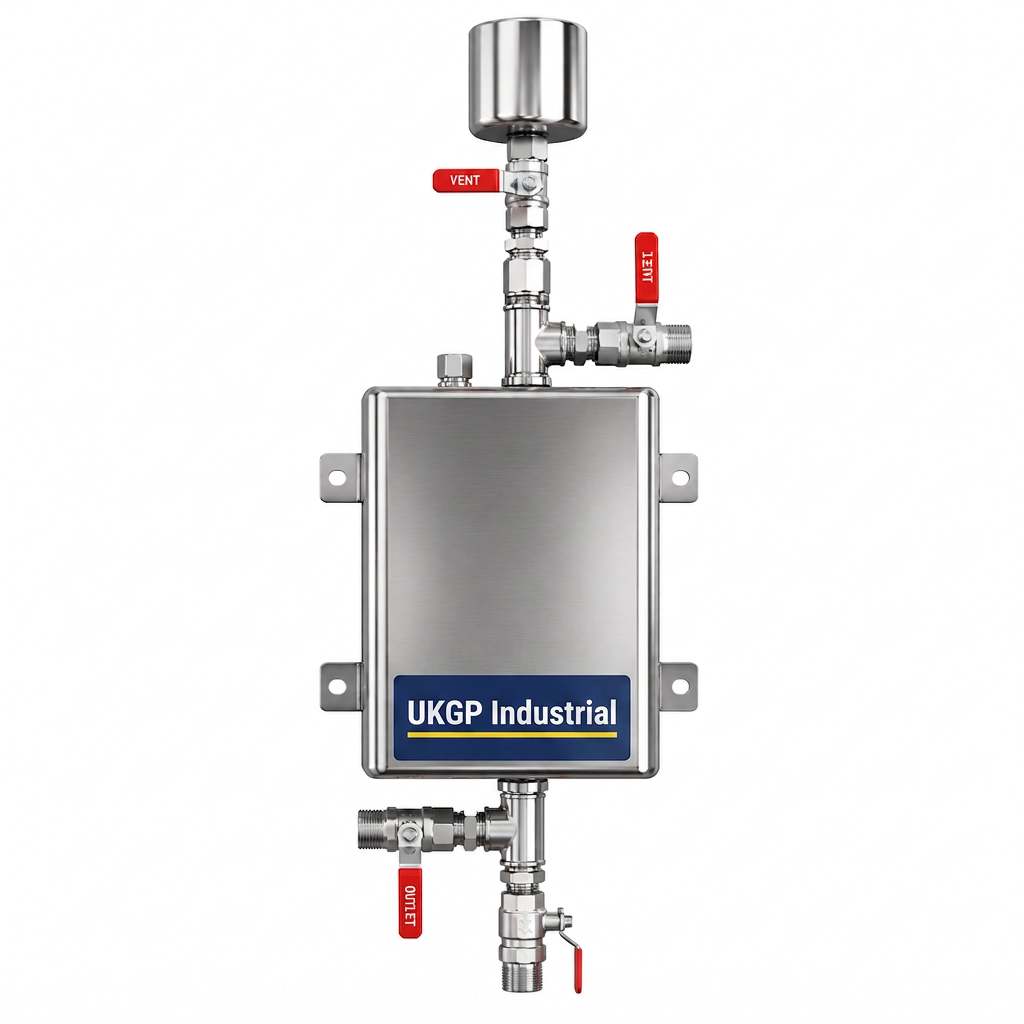
A key component of meeting these standards is the continuous removal of suspended solids and the maintainance of the correct chemical inhibitor levels. Our dosing pots are designed to provide a safe and controlled method for introducing these essential chemicals into the system without the need to shut down the main circulation pumps. By ensuring that the water chemistry is kept at the optimal level, engineers can passivate metallic surfaces and prevent the chemical reactions that lead to sludge formation. This proactive approach to system health is what separates a high-performing M&E project from one that suffers from persistent flow issues and cold spots in the heat distribution network, especially when dealing with the high mineral content of UK hard water.
Furthermore, modern monitoring techniques often require the installation of sample points and bypass loops to test the system water effectively. This is where British-made engineering excels, providing robust hardware that can withstand the rigours of a busy commercial plant room. UKGP Industrial supports consultants by providing equipment that adheres to these rigorous standards, ensuring that when a system is handed over to the FM team, it is in peak condition. Whether you are dealing with a new build or a refurbishment, the integration of chemical dosing and air/dirt separation is the baseline for any project involving a hard water commercial boiler hoping to achieve long-term reliability and compliance in the UK market.
- Strict adherence to BSRIA BG29 for pre-commissioning cleanliness.
- Continuous monitoring and maintenance schedules as per BG50 requirements.
- Warranty preservation for high-value commercial boiler assets.
- Reduction in the formation of magnetite and calcium-based sludge.
The Role of Side Stream Filtration in Scale Management
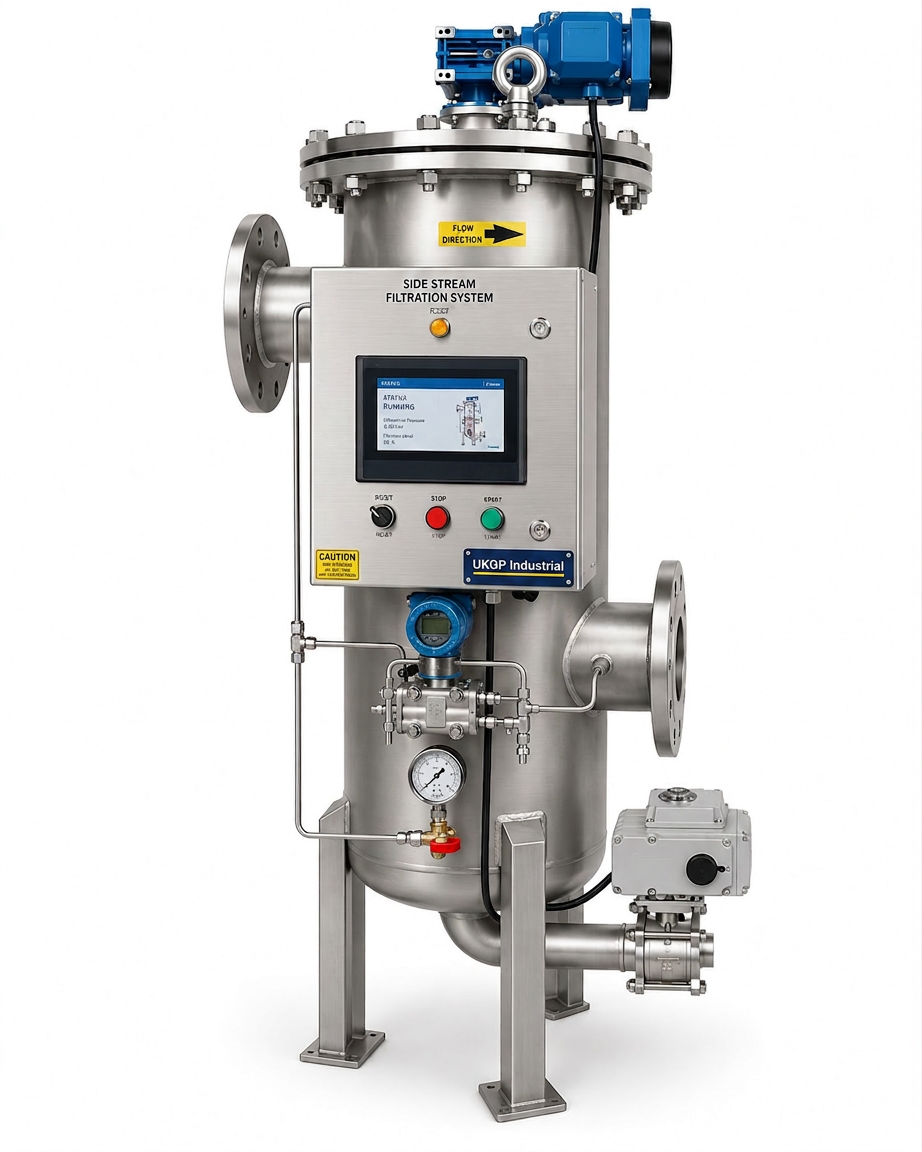
Side stream filtration is perhaps the most critical component for the long-term protection of a hard water commercial boiler. Unlike full-flow filters which can create significant pressure drops, a side stream filtration skid continuously diverts a portion of the system water (typically around 5-15% of the total flow) through a high-efficiency filter medium and a magnetic separator. This process ensures that even the smallest particles of scale and magnetite are trapped before they can settle on sensitive heating surfaces. UKGP Industrial’s side stream filtration skids are engineered to meet these precise demands, offering a robust solution that is manufactured right here in Surrey to meet the specific challenges of the UK's hard water regions.
Our side stream filtration units are available from DN50 to DN100 sizes, making them suitable for a wide range of commercial applications from schools to large industrial estates. Starting from £6,800 + VAT and manufactured to order with a typical lead time of 6 to 8 weeks, these units represent a high-value investment in plant longevity. Each skid comes with a 2-year warranty, reflecting our confidence in the British engineering and materials used. When protecting a hard water commercial boiler, the integration of 20-micron filtration (or finer) ensures that the water remains clear of the particulate matter that would otherwise act as a catalyst for further scale formation and abrasive wear on pump seals and valves.
For M&E contractors, specifying a UKGP side stream filtration skid simplifies the installation process. The units are supplied as a complete, skid-mounted package, reducing on-site labour and ensuring that the filtration performance is optimised for the specific requirements of the project. By removing the debris that naturally accumulates in a hard water system, you not only protect the boiler but also maintain the high efficiency of the entire thermal network. Request a quote today to see how our bespoke skids can be tailored to your specific plant room dimensions and flow rates, providing peace of mind for both the installation team and the client's facilities management department.
- Continuous removal of suspended solids and magnetic debris down to 20 microns.
- DN50 to DN100 sizes available to suit various commercial plant capacities.
- Pricing from £6,800 + VAT with a 2-year manufacturer warranty.
- Made to order in the UK with a standard 6-8 week lead time for assembly.
Integration of Plate Heat Exchangers for System Separation
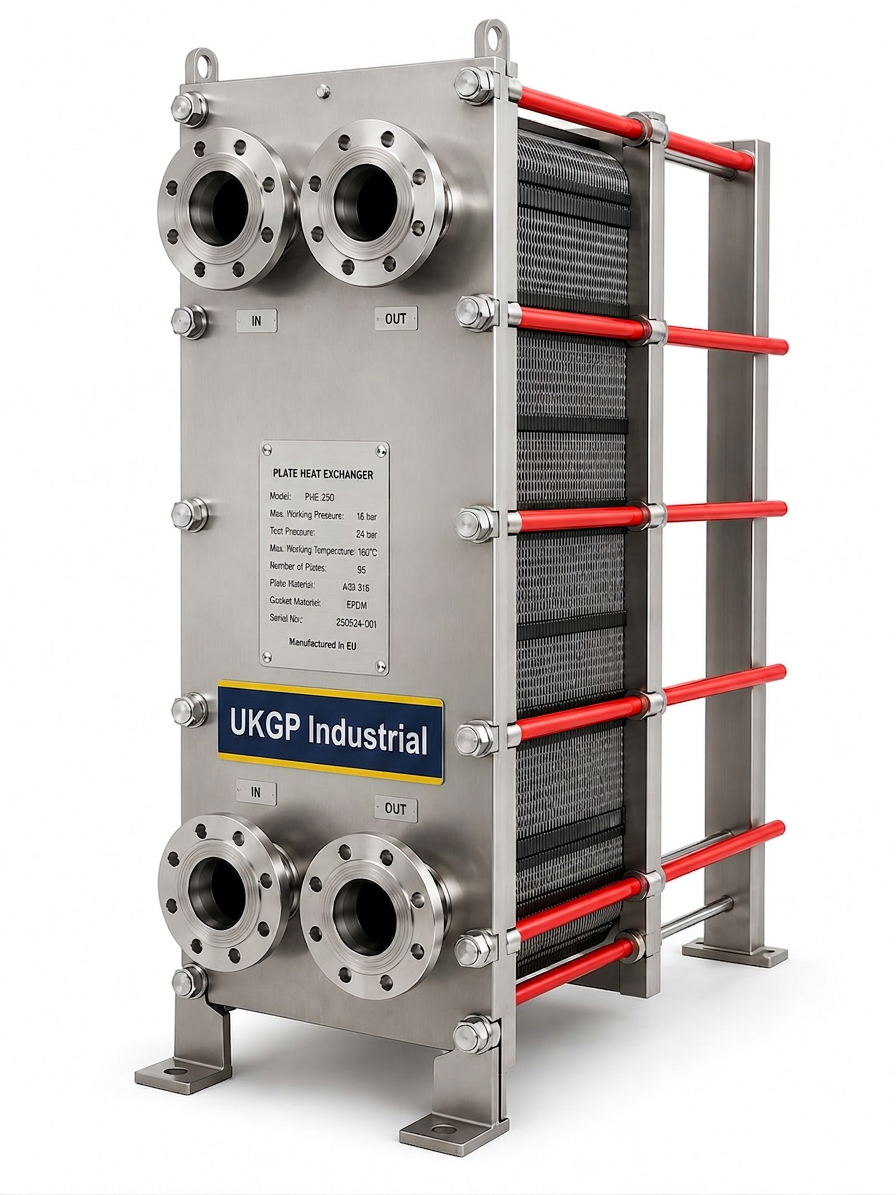
In many retrofit scenarios involving a hard water commercial boiler, it is advisable to thermally decouple the primary boiler circuit from the secondary heating circuit using a high-efficiency plate heat exchanger (PHE). System separation protects the new boiler from the legacy debris and poor water quality often found in older radiator or AHU circuits. By using a PHE, the hard water commercial boiler can operate within a clean, tightly controlled primary loop, while the secondary side handles the wider building distribution. This architecture is particularly useful in hard water areas where the secondary circuit may be prone to constant fresh-water ingress or minor leaks that introduce fresh calcium into the system.
Selecting the correct plate material and gasket type is crucial for the longevity of the heat exchanger, especially when the water chemistry is aggressive. UKGP Industrial offers a range of plate heat exchangers that are designed for high thermal efficiency and easy maintenance. In the context of a hard water commercial boiler, having a PHE that can be easily opened and cleaned is a significant advantage over integrated boiler heat exchangers that may be difficult or impossible to descale. This modular approach to plant room design ensures that even if scaling does occur on the secondary side, it can be managed without risking the primary heat source or the entire building's heating availability.
A well-designed system separation strategy also allows for different water treatment regimes on either side of the heat exchanger. The primary side can be treated to high standards with premium inhibitors, while the secondary side can be more robustly filtered with larger side stream units. This tiered approach is a hallmark of professional engineering in the South East and London, where hard water and old infrastructure often collide. By specifying UKGP components, you ensure that every part of the thermal chain—from the boiler to the heat exchanger—is backed by UK-based technical support and a commitment to quality that meets the highest standards of the British building services industry.
- Protects the primary boiler circuit from secondary circuit contaminants.
- Enables different water treatment protocols for primary and secondary loops.
- Facilitates easier descaling and maintenance of heat transfer surfaces.
- Provides a robust barrier against pressure fluctuations in large systems.
The Importance of Air and Dirt Separators in Scale Prevention
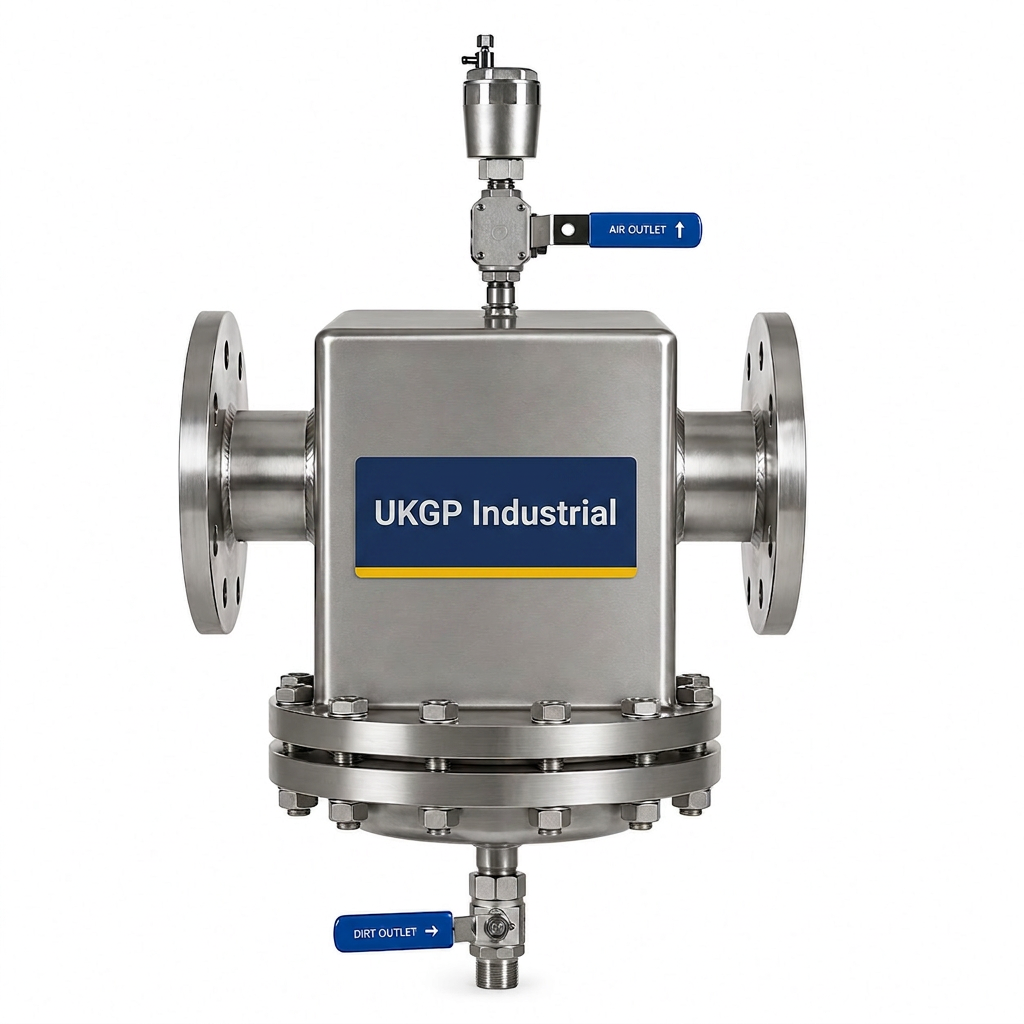
Air and dirt separators are the unsung heroes of plant room protection, particularly where a hard water commercial boiler is installed. The presence of dissolved air (oxygen and nitrogen) in the system water accelerates the oxidation of metallic components, creating the magnetite sludge that often binds with hard water scale to form a stubborn, sludge-like deposit. By removing micro-bubbles and air pockets at the point of highest temperature and lowest pressure—typically the boiler outlet—air separators drastically reduce the potential for internal corrosion. This is essential for maintaining the laminar flow required for efficient heat transfer and for preventing the 'kettling' noises often associated with scaled-up boilers.
Dirt separation works in tandem with air removal by using internal coalescing media to slow the water flow, allowing particulates to drop out of suspension. While side stream filtration handles the finer, microscopic particles, an inline dirt separator captures the larger debris before it can reach the hard water commercial boiler's sensitive internal pipes. Integrating both technologies creates a multi-stage defense system that is significantly more effective than relying on a single capture point. This is especially relevant in systems that utilise bellows and expansion vessels, as trapped air and sediment can migrate to these dead-legs and cause premature fatigue or failure of the flexible membranes.
Regular blow-down of these separators allows facility managers to remove accumulated sludge easily during routine maintenance intervals. For contractors and designers, incorporating high-quality British-made separators is a low-cost, high-impact way to improve system resilience. When paired with a UKGP side stream skid, the level of protection afforded to the hard water commercial boiler is unsurpassed, ensuring that the system remains efficient and the building's occupants remain comfortable. Our engineering team can provide technical data for our separator range to assist with the pressure drop calculations required for your CIBSE-compliant system designs.
- Removes microscopic air bubbles that facilitate internal system corrosion.
- Captures larger debris and grit before it enters the boiler heat exchanger.
- Slashes the risk of noise and 'kettling' in high-temperature applications.
- Essential for protecting modern, high-efficiency circulating pumps and valves.
Long-term Maintenance and Lifecycle Costs
The financial case for investing in superior protection for a hard water commercial boiler is compelling. Initial savings achieved by omitting side stream filtration or high-quality separators are quickly eclipsed by the costs of increased fuel consumption, chemical cleaning, and the eventual early replacement of the boiler itself. For a typical commercial plant room, the return on investment (ROI) for a side stream filtration system, priced from approximately £6,800 + VAT, is often realised within the first two to three years of operation through energy savings alone. This does not take into account the intangible benefits of avoiding system downtime and the labour costs associated with frequent filter changes on inferior, non-commercial grade equipment.
Professional maintenance teams prefer working with systems that include dedicated dosing pots and clear filtration bypasses, as it simplifies the process of adhering to BS 8552 and BSRIA BG50 sampling requirements. UKGP Industrial’s equipment is designed with this 'service-first' mindset, ensuring that valves are accessible and filtration media can be replaced with minimal mess and no system shutdown. This reliability is why we offer a 2-year warranty across our core products, providing contractors and end-users with the confidence that their hard water commercial boiler is protected by hardware that is built to last. Our 6-8 week lead time for bespoke skids allows for precise project planning, ensuring the right equipment is on-site exactly when needed.
Ultimately, the goal for any FM or building owner in a hard water area is the preservation of capital assets. By specifying UKGP Industrial solutions, you are choosing a partner that understands the specific chemistry and engineering challenges of the UK market. Our products are not just off-the-shelf components; they are engineered solutions designed to mitigate the risks inherent in operating a hard water commercial boiler. Whether you are looking for a standalone DN50 filtration skid or a complete plant room package including heat exchangers and separators, our team is ready to provide the technical expertise and high-quality manufacturing your project deserves to ensure long-term, scale-free performance.
- Rapid ROI through maintained energy efficiency and reduced fuel bills.
- Simplified adherence to BS 8552 water sampling and testing protocols.
- Reduced labour costs for FM teams through better system design.
- Peace of mind with a 2-year warranty on British-manufactured skids.
Frequently asked questions
What is the primary cause of efficiency loss in a hard water commercial boiler?
- The primary cause is the precipitation of calcium and magnesium carbonates onto the heat exchanger surfaces. This 'limescale' acts as an insulator, significantly reducing the efficiency of heat transfer and forcing the boiler to consume more fuel to achieve the set temperature.
How does side stream filtration help with hard water issues?
- While it doesn't 'soften' the water, side stream filtration continuously removes the suspended solids and minerals that precipitate out of the water as it is heated. This prevents these particles from settling and bonding to the boiler's internal surfaces, keeping the heat exchanger clean.
Why is BSRIA BG50 important for my commercial boiler?
- BSRIA BG50 provides the industry-standard guidance for water treatment in closed-loop systems. Following these guidelines ensures your system water is within parameters that prevent corrosion and scale, which is essential for maintaining your boiler's manufacturer warranty.
What is the typical lead time for a UKGP side stream filtration skid?
- Our side stream filtration skids are made to order at our Surrey facility. The typical lead time is 6 to 8 weeks from order to delivery, ensuring you receive a high-quality, bespoke unit designed for your specific plant room requirements.
Can I retrofit side stream filtration to an existing hard water commercial boiler?
- Yes, side stream filtration is ideal for retrofitting. Because it only diverts a portion of the flow, it can be installed with minimal disruption to the main system, providing immediate improvements to water quality and boiler protection.