Technical Specifications and EN 161 Compliance
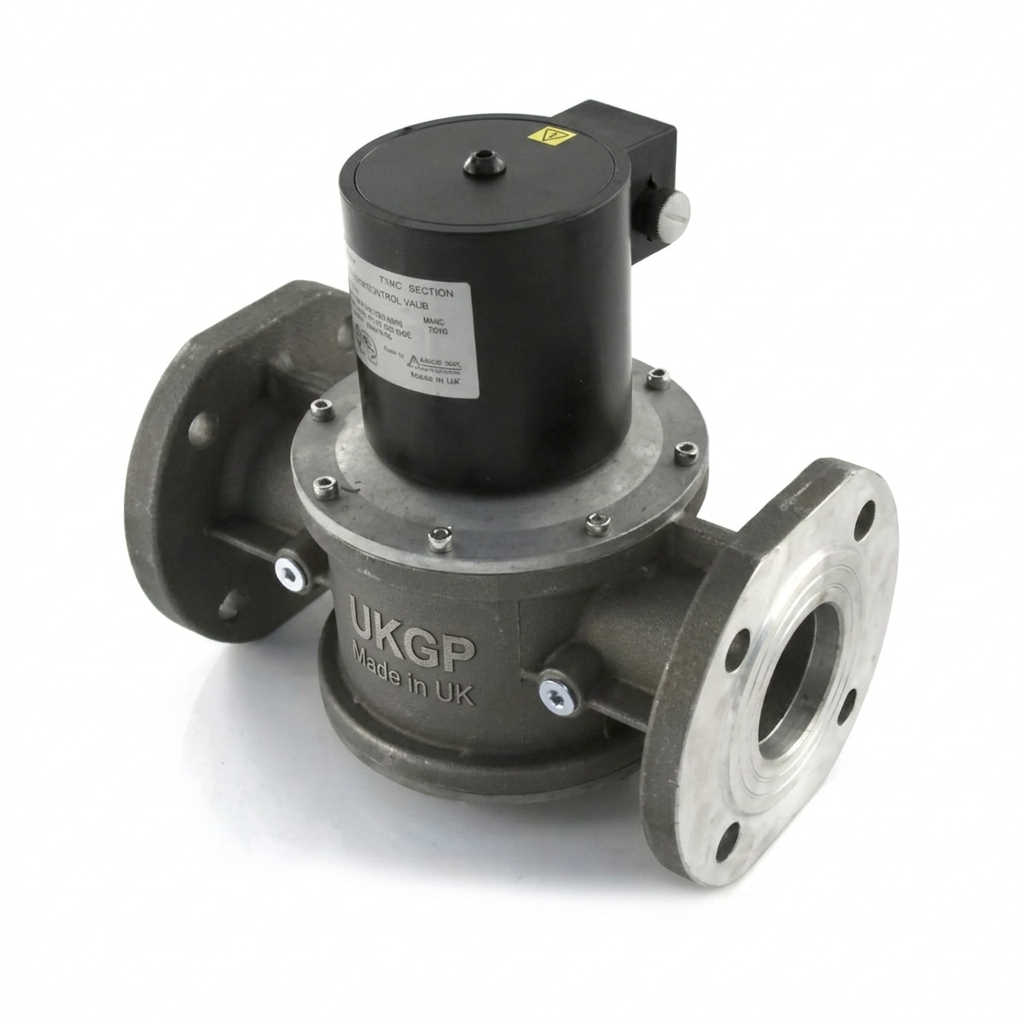
Gas solenoid valves intended for laboratory use must comply with BS EN 161, which governs automatic shut-off valves for gas burners and gas appliances. For commercial and educational labs, engineers should specify Class A Group 2 valves. Class A indicates the highest level of shut-off tightness, ensuring that when the valve is de-energised, there is no permissible leakage through the valve seat under standard operating pressures.
In lab environments, the 'Normally Closed' configuration is non-negotiable. The valve relies on constant electrical excitation of the copper coil to maintain an open state against the force of a return spring. Upon loss of power—whether via an emergency stop button, a fire alarm signal, or a gas detection trip—the spring instantly drives the disc or piston onto the valve seat. This failsafe mechanism ensures that gas flow is arrested immediately during any safety breach.
UK engineers must also consider the pressure rating of the valve. Standard low-pressure commercial supplies typically operate under 100 mbar, but the valve itself should usually be rated for a maximum working pressure (MWP) of at least 360 mbar to 500 mbar to accommodate supply fluctuations and pressure testing requirements. Quality valves feature die-cast aluminium bodies for durability and weight reduction on the pipework.
- Classification: Class A Group 2 according to EN 161.
- Function: Normally Closed (N.C.) - power to open, failsafe shut.
- Reset Type: Automatic reset, suitable for use with gas proving systems.
- Media Compatibility: Natural Gas, Methane, LPG, Town Gas.
Frequently asked questions
Why use automatic-reset rather than manual-reset solenoid valves in a laboratory?
- In laboratories, automatic reset valves are standard as they are usually controlled by a gas proving system or emergency stop circuit. Manual reset valves require a person to physically visit the plant room or valve location to reset the gas flow after a trip, which may not be practical for rapid re-commissioning of a teaching space.
How does the valve behave during a building power failure?
- Standard solenoid valves are 'Normally Closed,' meaning they require continuous power to stay open. In a power cut, the magnetic field collapses and a heavy-duty spring forces the valve shut, ensuring safety by default.
Which IGEM standard covers laboratory gas installations?
- IGEM/UP/2 Edition 3 provides specific guidance on the installation of gas services in educational and commercial research facilities, including requirements for isolation and emergency controls.
Can the same solenoid valve be used for Natural Gas and LPG?
- Yes, provided the valve seals are compatible and the pressure rating is appropriate. Laboratory valves used for LPG often require Viton or NBR seals, and engineers must ensure the valve is appropriately sized for the higher energy density of LPG compared to natural gas.
What are the maintenance requirements for laboratory gas solenoids?
- Valves should be inspected annually as part of the gas safety check. This includes checking for tight shut-off (leakage testing), electrical terminal tightness, and ensuring the emergency knock-off button correctly de-energises the coil.