Operational Characteristics and EN 161 Compliance
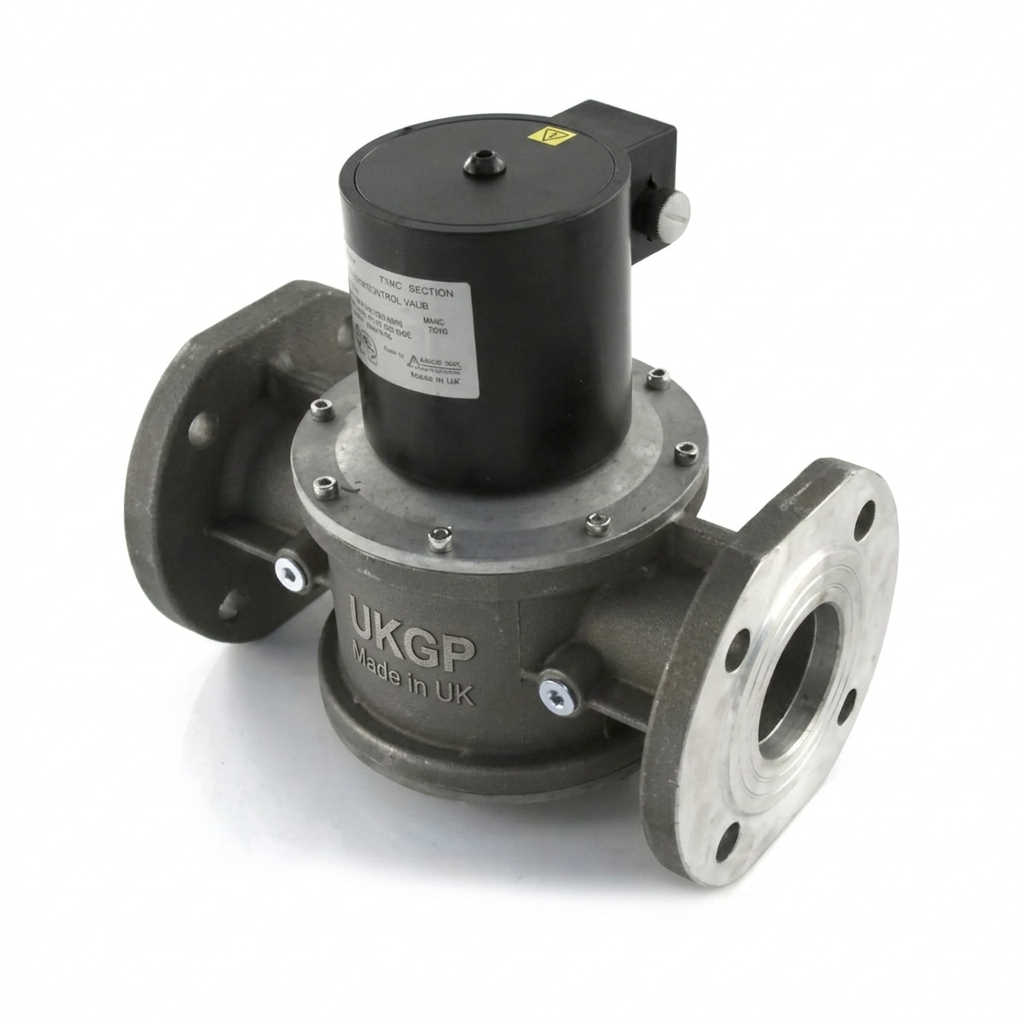
The primary function of an automatic-reset gas solenoid valve is to provide an immediate shut-off of gas flow when de-energised. In the UK, these components must comply with BS EN 161, which categorises valves based on their closing time and pressure ratings. Most commercial applications require a Class A, Group 2 valve. This ensures the valve closes in less than one second, providing the high-speed response necessary for safety-critical systems.
These valves operate on a normally-closed (NC) principle. The internal spring holds the valve disc against the seat until an electrical current creates an electromagnetic field in the copper coil, lifting the plunger. This design is inherently fail-safe; if the building loses power or a safety circuit is broken, the valve automatically isolates the gas supply. For engineers, selecting the correct voltage—typically 230V AC for plant rooms or 24V DC for certain BMS controls—is essential for compatibility with site infrastructure.
- Visual inspection of the valve body for external corrosion.
- Functional testing of the 'fail-safe' by interrupting the power supply.
- Checking the tightness of electrical connections within the coil housing.
- Verification of the strainer/filter upstream of the valve.
Regulatory Standards and Emergency Shut-Off
In commercial kitchens, BS 6173 dictates that gas supplies must be interlocked with the ventilation system. If the extract fan fails, the gas solenoid must close to prevent the buildup of combustion by-products. Similarly, in plant rooms, the valve is tied into the fire alarm system and gas detection panels. Under IGEM/UP/2, the positioning of the valve is critical; it must be accessible for maintenance but protected from mechanical damage and excessive heat.
When specifying valves for natural gas or LPG, material compatibility is non-negotiable. UKGP Industrial products are designed to handle non-aggressive gases, utilizing NBR-based seals that withstand the chemical composition of standard fuel gases. Furthermore, the valve must be sized according to the maximum flow rate (m³/h) and the allowable pressure drop across the seat to ensure downstream burners receive the required dynamic pressure.
- BS 6173: Selection and installation of gas-fired catering appliances.
- IGEM/UP/2: Gas installation pipework, boosters and compressors in industrial and commercial premises.
- Gas Safety (Installation and Use) Regulations 1998.
Frequently asked questions
Do gas solenoid valves need to be Class A?
- Yes, EN 161 classifies valves into classes. Class A is the highest standard, requiring the valve to close in less than one second and maintain a high degree of tightness against backpressure. For commercial boiler rooms and kitchens in the UK, Class A is the industry standard.
What happens to an automatic-reset valve during a power failure?
- Normally-closed valves require constant power to stay open. In the event of a power cut, fire alarm activation, or gas detection trigger, the solenoid de-energises and the internal spring forces the valve shut instantly, ensuring a fail-safe condition.
Can I install a gas solenoid valve on a vertical pipe?
- While horizontal installation is preferred, many high-quality valves can be installed on vertical risers. However, the actuator/coil must never point downwards, as this allows debris and moisture to settle in the tube, leading to premature failure and sticking.
What is the difference between automatic and manual reset?
- An automatic-reset valve opens as soon as power is applied. A manual-reset valve remains closed even after power is restored, requiring a technician to physically pull a lever or press a button. Manual-reset is often preferred for high-risk industrial processes to ensure the cause of the trip is investigated.