Regulatory Framework and Valve Classification
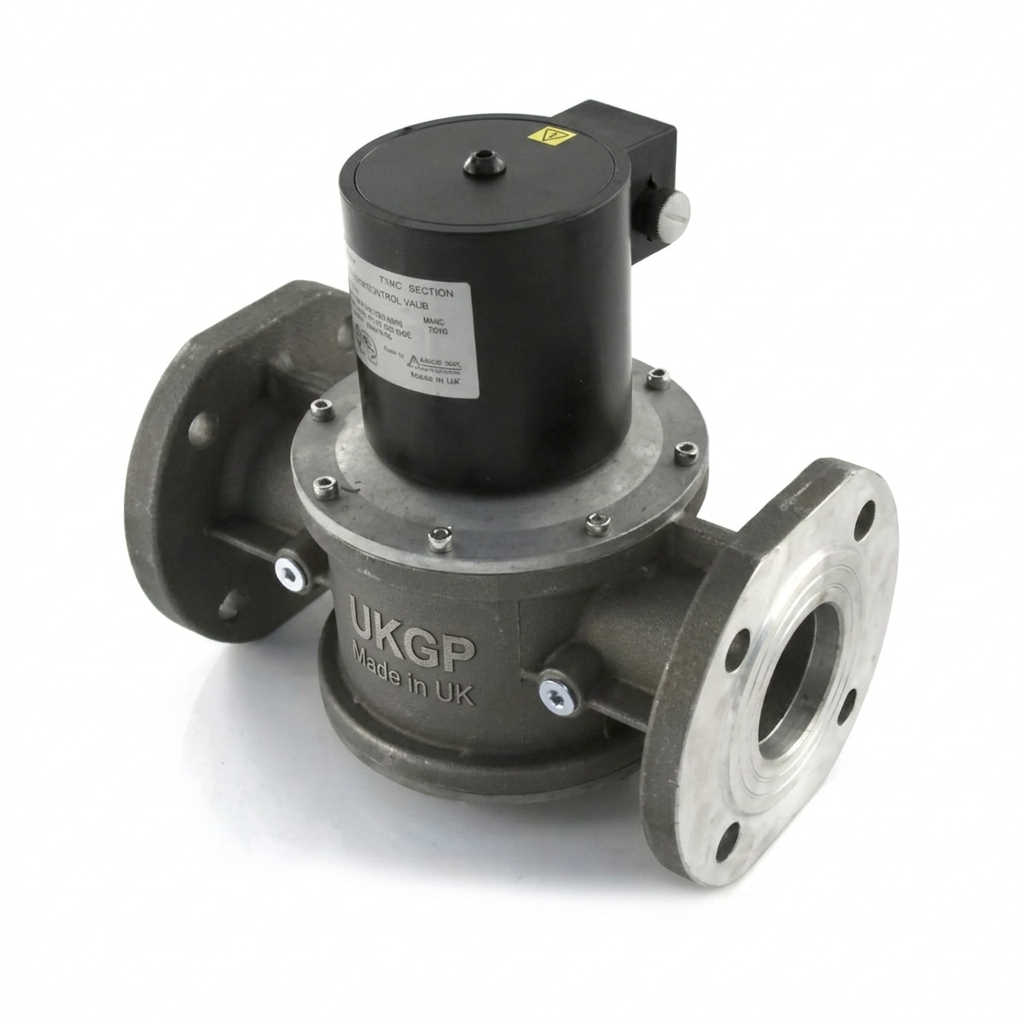
The selection of a gas solenoid valve for BMS integration is governed by BS EN 161. For most commercial applications, a Class A valve is required, meaning the valve must close in less than one second upon loss of power. These valves are 'normally closed', ensuring that in the event of a total site power failure or a BMS controller fault, the gas supply is immediately isolated.
Under the Gas Safety (Installation and Use) Regulations 1998, any automated system must not compromise the fundamental safety of the installation. Engineers must ensure that the solenoid valve is rated for the specific gas type—natural gas (methane), LPG, or town gas. Usually, these valves are constructed from die-cast aluminium or brass with NBR-based seals to ensure longevity and chemical resistance against gas odorants.
- BS EN 161: Automatic shut-off valves for gas burners.
- IGEM/UP/2: Installation of gas piping, boosters, and compressors in industrial and commercial premises.
- BS 6173: Specification for installation and maintenance of gas-fired catering appliances.
- Building Regulations Part L: Metering and sub-metering requirements.
Technical Specification for Automated Systems
When integrating with a BMS, the solenoid valve must be sized based on the maximum flow rate (m³/h) and the allowable pressure drop across the valve. A common error is selecting a valve based solely on pipe size. A valve that is too small will cause an excessive pressure drop, potentially starving the burners and causing combustion instability. Conversely, an oversized valve may result in slower response times or 'chatter' in high-pressure systems.
Modern industrial gas solenoid valves are often 'fast-opening' or 'slow-opening'. For BMS-controlled boiler plant, fast-opening valves are standard. However, slow-opening valves are sometimes specified to prevent pressure surges (gas hammer) in larger pipework systems. The BMS designer must also account for the 'holding' current; while a valve may require a high inrush current to open, the holding current is lower but generates heat, requiring adequate ventilation around the solenoid coil.
- Thermal overload protection within the coil.
- IP65 ingress protection for damp plant room environments.
- Visual 'open/closed' indicators and CPI (Closed Position Indicator) switches.
- Maximum operating pressure (MOP) ratings—typically 200mbar, 360mbar, or 6bar.
Frequently asked questions
What is the difference between automatic reset and manual reset gas valves?
- Automatic reset valves (Class A) open immediately when power is applied via the BMS or safety circuit. Manual reset valves require a human operator to physically interact with the valve lever or button after a trip event. Automatic reset is preferred for remote plant rooms where the BMS manages the sequencing.
Which BS EN standards apply to these valves?
- Gas solenoid valves must comply with EN 161 (Automatic shut-off valves for gas burners and gas appliances). For BMS integration, they should typically be Class A, Group 2 rated to ensure they close reliably against the maximum inlet pressure.
Is it mandatory to interlock the gas valve with the ventilation system?
- Yes. IGEM/UP/2 and BS 6173 (for kitchens) mandate that gas supply should be interlocked with ventilation. If the BMS detects a fan failure or high CO2/CO levels, the gas solenoid valve must be de-energised via the safety interlock.
Why is cable sizing important for 230V solenoid valves?
- Voltage drop can occur over long cable runs between the BMS controller and the plant room. If the voltage at the solenoid coil falls below 85% of the rated voltage, the valve may hum, overheat, or fail to pull in, leading to intermittent gas supply issues.