Technical Anatomy of a Finned Plate Heat Exchanger
In the context of industrial and commercial HVAC design, the finned plate heat exchanger represents an advanced evolution of standard plate technology, specifically engineered to manage fluids with differing heat transfer coefficients. Unlike standard flat-plate designs, the introduction of fins or extended surfaces significantly increases the total heat transfer area within the same physical footprint. This is essential in UK plant rooms where space is at a premium and energy density requirements are high. By incorporating these extended surfaces, the unit can effectively bridge the thermal gap between a high-viscosity or low-thermal-conductivity medium and a standard hydronic circuit. This allows for more precise temperature control and reduced approach temperatures, which is a key driver for overall system COP in modern heat pump or commercial boiler installations.
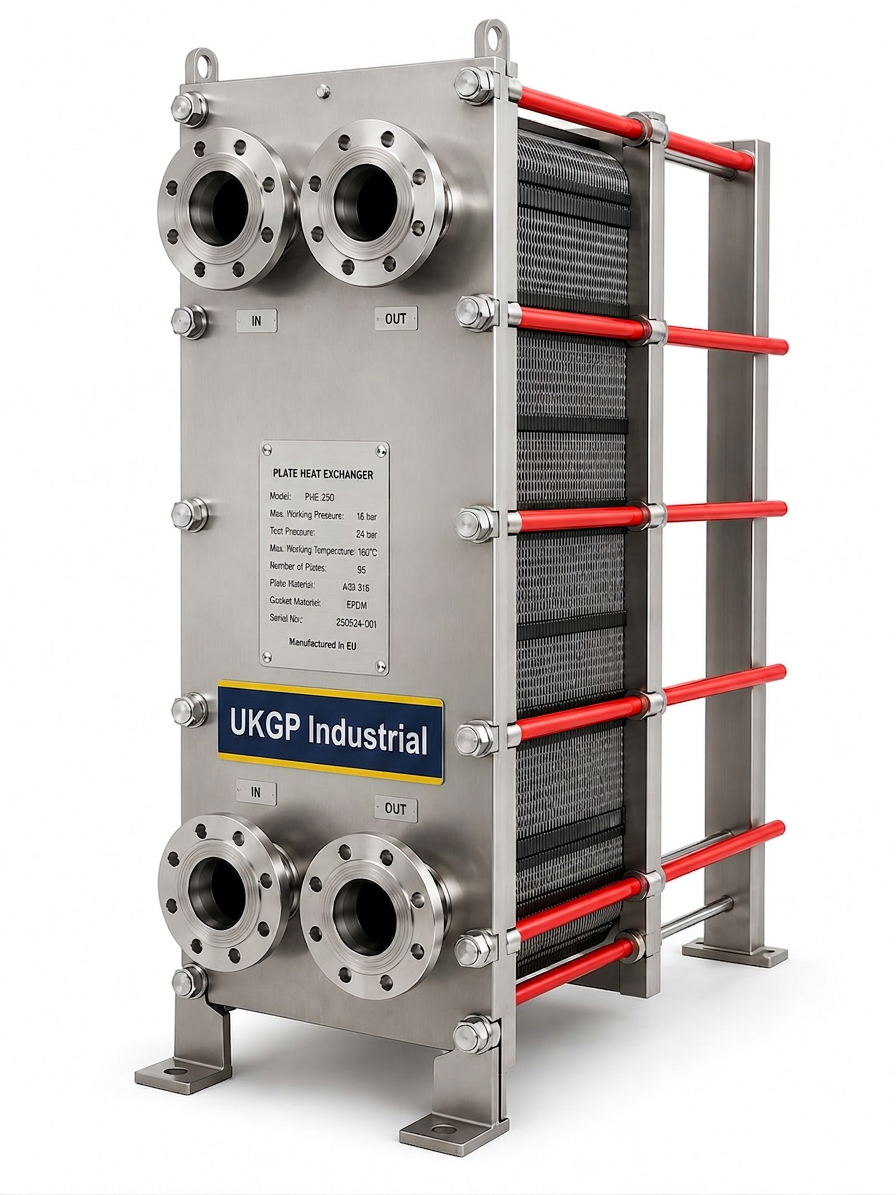
The construction of a finned plate heat exchanger typically involves high-grade stainless steel plates, often Grade 316L, which are either gasketed or brazed depending on the pressure rating and maintenance accessibility required. The fins are meticulously positioned between the plates to promote turbulent flow even at lower velocities, which is critical for preventing stagnation and reducing the accumulation of bio-film or mineral deposits. For UK building services consultants, selecting a unit that aligns with CIBSE CP1 Heat Networks Code of Practice ensures that the heat exchanger does not become a bottleneck in the system. The mechanical design must also account for differential thermal expansion, particularly in systems where high-temperature primary circuits interact with lower-temperature secondary loops, requiring robust plate geometry and high-quality seals to prevent cross-contamination.
Understanding the pressure drop characteristics is equally vital when specifying a finned plate heat exchanger for a commercial project. While the extended surface area improves thermal performance, it can also lead to higher resistance if the unit is not correctly sized. At UKGP, we provide comprehensive thermal sizing from a full thermal specification, ensuring that the selected unit maintains an optimal balance between heat transfer efficiency and pumping power requirements. Our range includes units from DN20 to DN300, providing the flexibility needed for everything from domestic hot water (DHW) production to large-scale district heating interfaces. With a lead time of just 4-6 weeks and a 2-year warranty, our plate heat exchangers are designed to meet the rigorous demands of UK M&E contractors and facilities managers seeking reliable, high-performance equipment.
- High-grade 316L stainless steel construction for maximum corrosion resistance.
- Available in both gasketed and brazed configurations to suit diverse application needs.
- Sized from DN20 to DN300 to accommodate wide-ranging flow rate requirements.
- Optimised fin geometry to promote turbulent flow and enhance thermal conductivity.
Compliance with BSRIA BG50 and Water Quality
Water quality is the single most important factor in maintaining the operational lifespan of a finned plate heat exchanger within a UK plant room. Guidance provided in BSRIA BG50 'Water Treatment for Closed Heating and Cooling Systems' highlights the risks of corrosion and scale formation if the system chemistry is not strictly managed. A finned plate heat exchanger is particularly sensitive to suspended solids because the narrow channels created by the internal fins can act as a trap for debris. This build-up not only reduces the heat transfer coefficient but also creates sites for under-deposit corrosion, which can lead to premature plate failure. It is therefore vital for M&E contractors to ensure that the primary and secondary fluids are treated according to BS 8552 and monitored regularly.
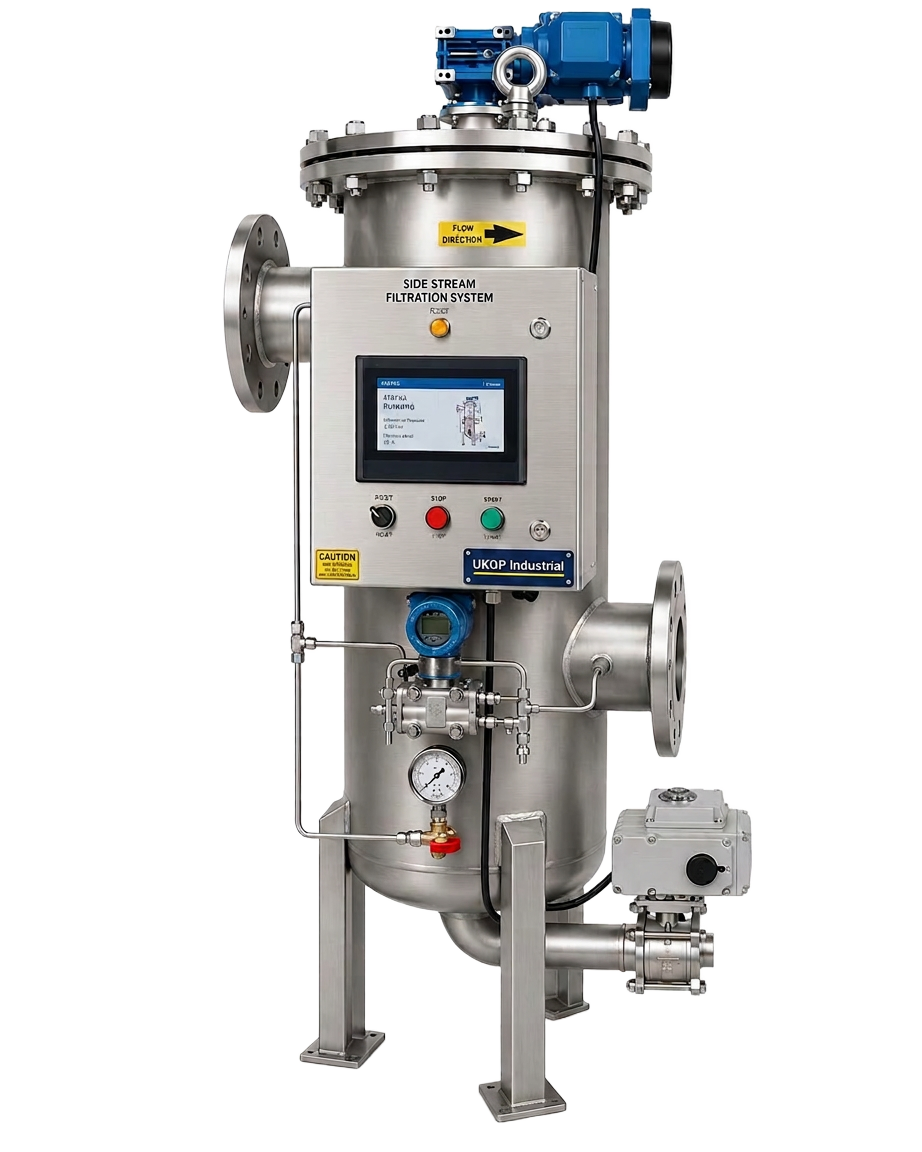
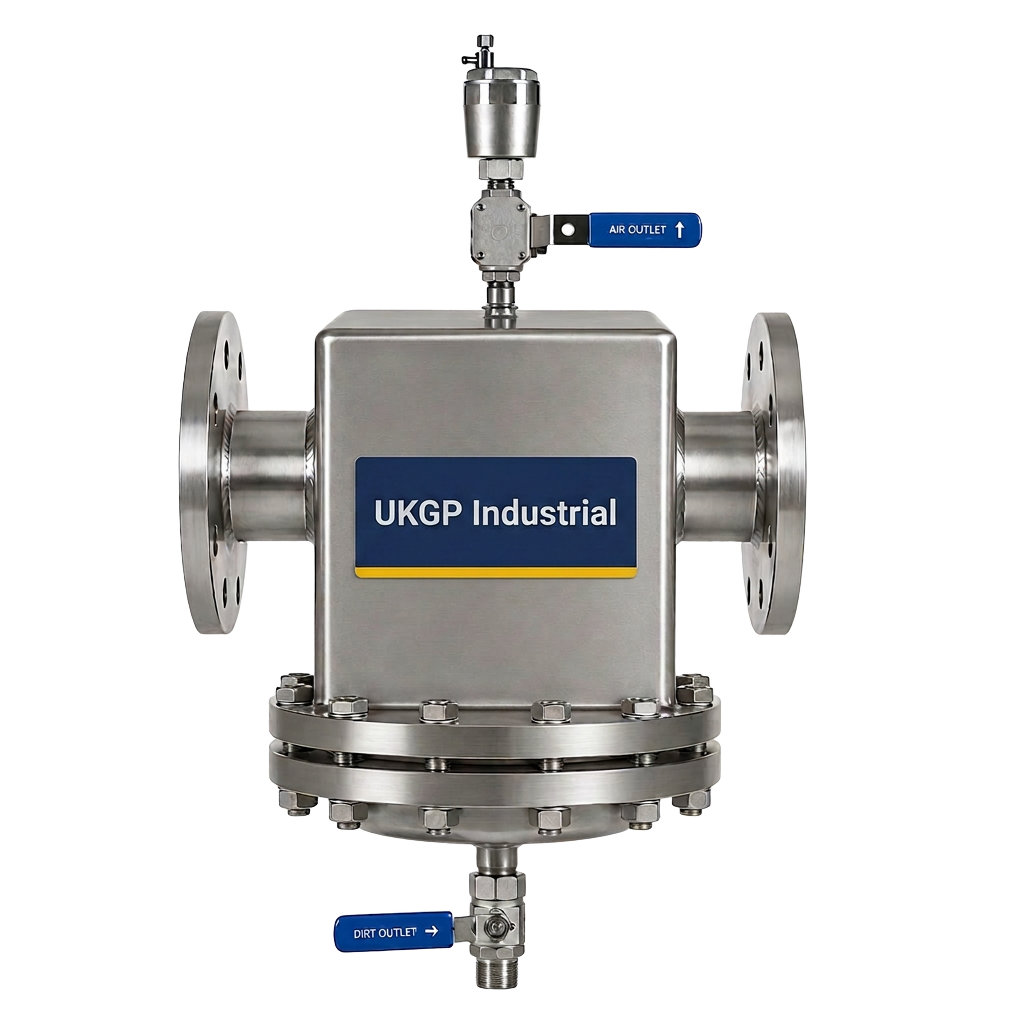
To mitigate these risks, the integration of high-performance filtration and separation equipment is mandatory. Without adequate side stream filtration, the fine passages within the finned plate heat exchanger will eventually clog, resulting in increased pressure drops and decreased thermal efficiency. Consultants should specify units that are easy to flush or, in the case of gasketed versions, easy to dismantle for manual cleaning. Furthermore, the role of air and dirt separators cannot be overstated. By removing both micro-bubbles and magnetite from the circulating fluid, these devices protect the delicate internal surfaces of the heat exchanger. This systemic approach to water quality management ensures that the plant room follows BSRIA BG29 pre-commission cleaning standards and continues to operate efficiently throughout its lifecycle.
Monitoring the condition of the system fluid should be an automated process wherever possible. By employing advanced sensors alongside the finned plate heat exchanger, FM teams can receive real-time alerts regarding changes in pH or conductivity that might indicate a leak or a failure in the chemical dosing regime. This proactive maintenance strategy is essential for protecting the investment made in high-efficiency thermal equipment. When the system is properly protected, the 2-year warranty offered on our plate heat exchangers provides total peace of mind, knowing that the equipment is resilient against the typical stresses of commercial hydronic operation. It is always recommended to consult with a technical specialist during the design phase to ensure all protective measures are correctly specified for the local water conditions.
- Direct alignment with BSRIA BG50 guidelines for closed-loop thermal systems.
- Requirement for side stream filtration to prevent debris accumulation in fin channels.
- Regular monitoring of pH and conductivity via integrated sensor technology.
- Simplified maintenance protocols for gasketed units in high-fouling applications.
Integrating the Finned Plate Heat Exchanger into Modern HVAC
The modern UK plant room is increasingly moving toward low-carbon heat sources, which necessitates a more nuanced approach to heat exchanger selection. A finned plate heat exchanger is often the ideal interface between a high-efficiency heat pump and the rest of the building's emitters. Because heat pumps operate at lower delta T than traditional boilers, the heat exchanger must have a larger surface area to transfer the same amount of energy. The finned design excels here by providing that extra area without requiring a massive increase in the unit's overall dimensions. This makes it possible to retrofit high-efficiency equipment into existing plant rooms where space is severely limited, a common challenge for UK refurbishment projects.
When integrating a finned plate heat exchanger into a system powered by leading commercial boiler manufacturers, performance stability is paramount. The exchanger acts as a hydraulic break, protecting the boiler's primary circuit from potential contaminants in the secondary building circuit. This separation is also beneficial for maintaining pressure differentials and ensuring that flow rates in each circuit can be independently controlled to meet load demands. Modern building management systems (BMS) can monitor the performance of the heat exchanger by tracking temperature differentials across the plates, allowing for predictive maintenance scheduling. This level of control is essential for achieving the energy performance targets set out in the latest Building Regulations Part L.
To ensure the system remains balanced and efficient, the use of low loss headers and expansion bellows is frequently required alongside the finned plate heat exchanger. Low loss headers help to maintain hydraulic separation and manage varying flow rates between the primary heat source and the secondary distribution loops. Meanwhile, expansion bellows are necessary to absorb the mechanical stresses caused by thermal expansion within the pipework, preventing damage to the heat exchanger's connection ports (DN20-DN300). By considering the entire plant room ecosystem, engineers can ensure that the heat exchanger performs at its peak efficiency. Requesting a quote for a custom-sized plate heat exchanger ensures that every aspect of the thermal specification is met, providing a robust solution for any commercial heating or cooling application.
- Optimised for low-carbon heat sources such as air-source and ground-source heat pumps.
- Acts as a hydraulic break to protect primary heat sources from secondary contaminants.
- Compatible with DN20 to DN300 pipework via standard flanged or threaded connections.
- Enables precise energy monitoring and thermal tracking via BMS integration.
Operational Maintenance and Longevity Standards
Longevity in the plant room is achieved through a combination of superior material selection and rigorous adherence to British Standards. For any finned plate heat exchanger, the primary cause of failure is usually related to neglected water chemistry or mechanical overstress. BS EN 14917 provides guidance on expansion joints which often work in tandem with heat exchangers to manage the physical expansion of the system. If the heat exchanger is not properly isolated from pipework stresses, the gaskets or brazed joints may fail prematurely. Therefore, a correct installation and maintenance schedule is not just a recommendation; it is a requirement for long-term reliability. We ensure that our units are built to withstand these pressures, backed by a comprehensive 2-year warranty for all gasketed and brazed models.
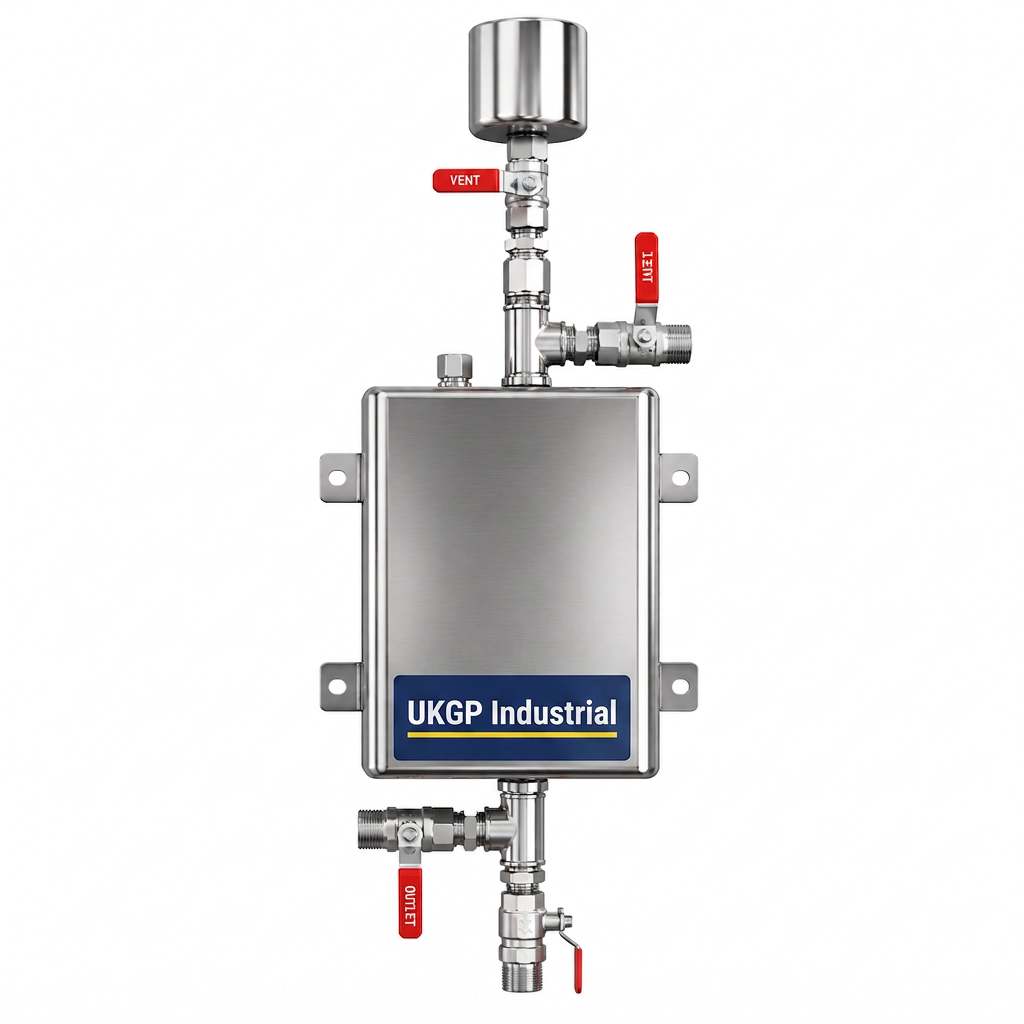
Mechanical maintenance of a finned plate heat exchanger involves periodic inspection of the gaskets and the plate surfaces for signs of pitting or erosion. In gasketed models, the plates can be separated and cleaned using non-abrasive methods to restore original thermal performance. Brazed models, while more compact and cost-effective, require chemical cleaning in situ. This further emphasizes the need for chemical dosing pots to be included in the system design, allowing for the easy introduction of cleaning agents and corrosion inhibitors. By maintaining the fluid chemistry within the parameters specified by CIBSE, the risk of fouling within the finned plate surfaces is significantly reduced, ensuring the system operates at the efficiency levels intended during the design phase.
Procurement leads and FMs should also consider the lead time and availability of spare parts when selecting a finned plate heat exchanger. At UKGP, we understand that plant room downtime is costly for any commercial facility. That is why we offer a 4-6 week lead time on our plate heat exchangers, ensuring that replacement units or components are available when needed. Our expert team can provide a full sizing based on your specific thermal spec, guaranteeing that the heat exchanger is perfectly matched to the system it serves. By choosing a manufacturer that understands the complexities of UK hydronic systems, you can be sure that your heating and cooling infrastructure is built on a foundation of technical excellence and commercial awareness.
- Compliance with BS EN 14917 to ensure mechanical stress is managed correctly.
- Regular chemical cleaning protocols to maintain the high thermal efficiency of fins.
- 2-year warranty provided as standard on all gasketed and brazed plate heat exchangers.
- Rapid 4-6 week lead times to minimize operational downtime in commercial facilities.
Thermal Sizing and Specification Precision
Getting the specification right at the tender stage is the only way to ensure the finned plate heat exchanger delivers on its performance promises. A full thermal spec must include the primary and secondary inlet and outlet temperatures, the desired flow rates, and the maximum allowable pressure drop. Without this data, there is a risk of oversizing, which leads to unnecessary capital expenditure and potential flow issues, or undersizing, which results in the secondary system never reaching its design temperature. Our technical team uses advanced software to model the performance of the heat exchanger under various load conditions, ensuring that the final product (available in DN20-DN300 sizes) is fit for purpose and provides the required thermal duty.
The inclusion of fins changes the calculation for the Log Mean Temperature Difference (LMTD), as the extended surface area improves the heat transfer rate even when the temperature difference between the two fluids is small. This is particularly useful in district heating applications or when using waste heat recovery where every degree of temperature transfer is valuable. Furthermore, the finned plate heat exchanger can be configured to handle different materials; for example, if one side of the system uses a glycol mix for frost protection, the plate geometry can be adjusted to account for the different viscosity and thermal properties of the heat transfer fluid. This level of technical tailoring is what separates a generic component from a high-quality UKGP industrial solution.
Contractors should also consider the physical accessibility of the heat exchanger within the plant room layout. A gasketed finned plate heat exchanger requires clearance for the tightening bolts and the removal of the plates, whereas a brazed unit is much more compact but provides no internal access. By providing us with your full thermal spec, we can advise on the most suitable configuration for your space and budget. Our goal is to provide a thermal solution that is not only efficient but also practical to install and maintain. With lead times of 4-6 weeks, we can support tight project schedules, ensuring that your commercial HVAC project stays on track and meets all relevant UK standards and energy targets.
- Advanced LMTD modelling to ensure precision in low Delta T applications.
- Custom plate configurations for systems using water-glycol mixtures.
- Comprehensive sizing service from DN20 to DN300 to match any thermal spec.
- Strategic advice on choosing between gasketed and brazed units for site-specific needs.
Critical Component Synergy in Plant Rooms
A finned plate heat exchanger does not operate in isolation; it is the heart of a complex network of valves, pumps, and sensors. To ensure the heat exchanger's longevity, it is often paired with a low loss header which prevents flow rate conflicts between the primary boiler or heat pump circuit and the secondary distribution circuits. This is especially important in buildings with variable heating loads, such as schools or office blocks. The low loss header acts as a hydraulic buffer, ensuring that the finned plate heat exchanger always receives a consistent flow rate, which is required to maintain the turbulent flow across the plates and prevent the settling of any remaining fine particles.
Beyond flow management, the protection of the heat exchanger plates from chemical degradation is vital. This is where pH sensors and transmitters become invaluable. By providing a continuous reading of the system's pH levels, these sensors allow FM teams to detect issues like oxygen ingress or the degradation of corrosion inhibitors before they cause irreversible damage to the finned plate heat exchanger surfaces. Integrating these sensors with the building's BMS creates a 'smart' plant room that monitors its own health, reducing the need for manual sampling and improving the accuracy of water treatment regimes. This holistic approach is recommended by CIBSE and aligns with the best practices found in BS 8552 for water quality testing.
Ultimately, the goal for any procurement lead or M&E contractor is to deliver a system that is reliable, efficient, and cost-effective over its entire life. By selecting a heat exchanger from UKGP, you are choosing a product backed by years of engineering expertise and a commitment to quality. Our plate heat exchangers (DN20-DN300) are designed specifically for the UK market, with a 2-year warranty and sized from your full thermal spec. Whether you are repairing an existing plant room or designing a new district heating network, our 4-6 week lead time and technical support ensure your project is a success. Contact us today to request a quote and see how our heat transfer solutions can improve your system performance.
- Synergy with low loss headers for hydraulic stability and consistent flow.
- Integration of pH sensors to provide real-time water quality monitoring.
- Reduced maintenance costs through proactive chemical management.
- Comprehensive 2-year warranty for peace of mind in high-value installations.
Frequently asked questions
What is the primary benefit of a finned plate heat exchanger over a standard one?
- A finned plate heat exchanger provides a significantly larger heat transfer surface area within the same physical footprint. This allows for greater thermal efficiency, making it ideal for low-temperature heat sources or applications where plant room space is limited.
What sizes are available for UKGP plate heat exchangers?
- Our range covers connection sizes from DN20 to DN300. Every unit is sized based on a full thermal specification provided by the client to ensures optimal performance for the specific heating or cooling application.
What is the typical lead time for an industrial plate heat exchanger?
- In the UK, our standard lead time for both gasketed and brazed plate heat exchangers is 4-6 weeks, allowing for efficient project planning and timely installation for M&E contractors.
Why is side stream filtration important for these heat exchangers?
- Finned plate heat exchangers have narrow internal channels that can easily become blocked by magnetite and debris. Following BSRIA BG50, side stream filtration is essential to remove these contaminants and maintain high thermal efficiency.
Do your heat exchangers come with a warranty?
- Yes, all our plate heat exchangers are supplied with a 2-year warranty as standard, reflecting our confidence in the build quality and material selection of our units for commercial and industrial use.