HVAC & CALORIFIER DESIGN

Fabric Expansion Bellows for Flue Gas Ducts

In commercial and industrial boiler plant applications, managing the thermal expansion of flue gas ductwork is a critical safety and performance requirement. As flue gas temperatures can fluctuate significantly between firing cycles, the resulting linear expansion and vibration can lead to duct fatigue, joint failure, and hazardous leaks. Fabric expansion bellows offer a versatile, high-temperature solution that accommodates multi-axial movements in low-pressure systems where traditional metal or rubber joints may be unsuitable. This guide examines the technical requirements for specifying, installing, and maintaining fabric expansion joints in accordance with UK engineering standards.

10 June 2026 6 min readExpansion bellows
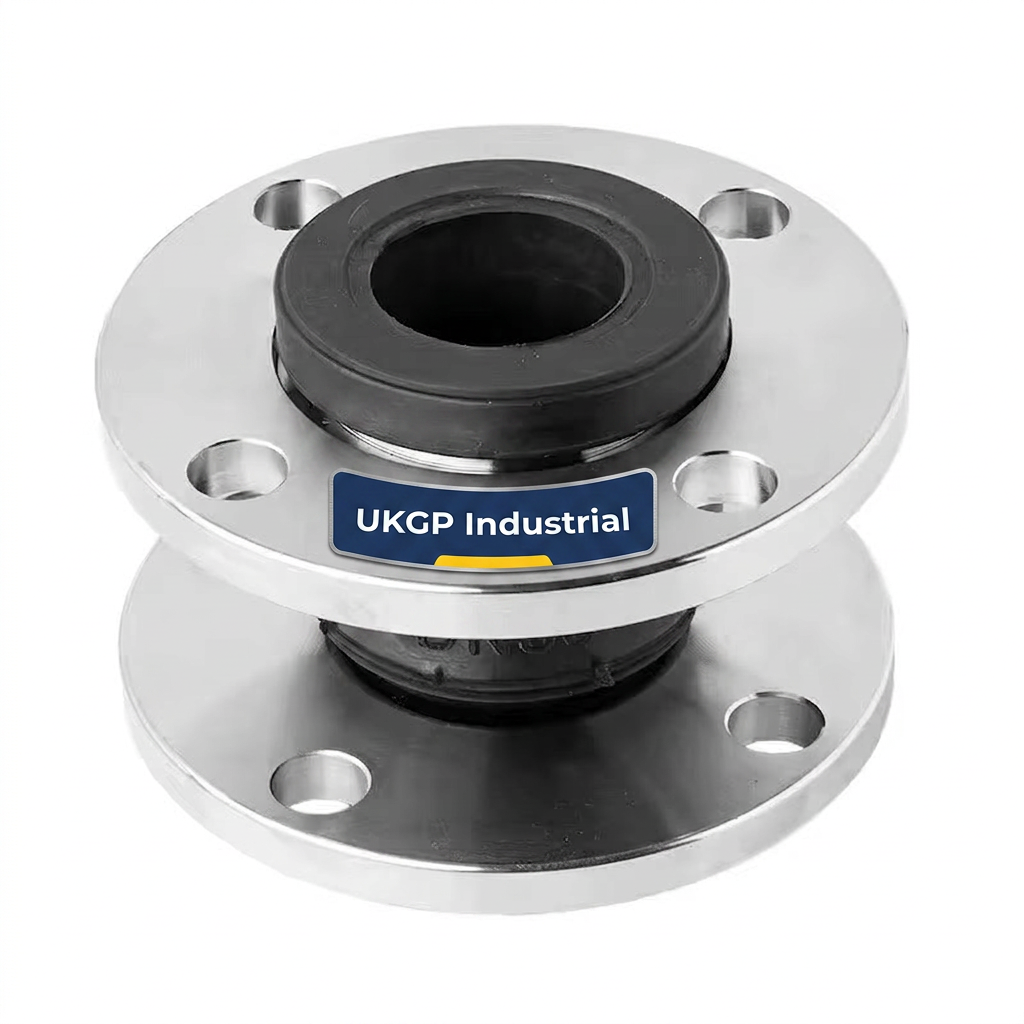
Fabric Expansion Bellows for Flue Gas Ducts — UKGP rubber expansion bellows for pipework movement and vibration
UKGP rubber expansion bellows for pipework movement and vibration

Layered Construction and Material Properties

Unlike metal bellows which rely on the flexibility of thin-gauge stainless steel convolutions, fabric expansion joints are composite structures. In a flue gas environment, the bellows must withstand the 'acid dew point'—the temperature at which sulphuric or nitric acids condense out of the exhaust stream. Consequently, the core of a high-performance fabric joint typically features a PTFE (Polytetrafluoroethylene) foil or coated fabric. This chemical barrier ensures that the structural glass-cloth layers are protected from corrosive attack.

The thermal insulation layer, often comprised of ceramic or mineral wool, reduces the temperature reaching the outer 'weather' layer. This allows the external surface of the joint to remain relatively cool, protecting personnel and ensuring the outer layer maintains its structural integrity. For biomass or coal-fired applications, an additional abrasion-resistant layer may be required to prevent erosion from particulate matter moving at high velocities through the ducting.

  • Single-layer: Suitable for clean air and low temperatures where chemical resistance is not primary.
  • Multi-layer: The industry standard for flue gas, incorporating an outer cover, thermal insulation layer, and a chemical barrier (usually PTFE).
  • Reinforcement: Steel mesh or high-tensile fabrics to maintain the joint's profile under pressure or vacuum.

Frequently asked questions

Why use fabric expansion joints instead of rubber bellows for flue gas?

Fabric bellows use layers of PTFE and technical glass fabrics to withstand up to 1000°C, whereas rubber bellows are typically limited to 90°C-115°C. Fabric joints also handle much larger lateral offsets in shorter face-to-face lengths.

Can fabric joints be used in condensing boiler flues?

Yes, provided a high-grade PTFE chemical barrier is integrated into the multi-layer construction to prevent acid dew point corrosion of the structural fabric layers.

When is an internal sleeve required for a duct expansion joint?

Internal stainless steel sleeves (baffles) should be specified if gas velocities exceed 10m/s or if the medium contains abrasive particulate matter (e.g., biomass combustion).

How do I identify a failure in a multi-layer fabric joint?

A drop in flue draught or visible 'ballooning' often indicates a failure of the internal pressure-bearing layer. Immediate inspection is required to prevent heat damage to adjacent plant room equipment.
Keep reading

Related articles

Expansion bellows

What are expansion bellows?

In modern building services and industrial process piping, thermal expansion is an physical inevitability that, if unmanaged, leads to catastrophic mechanical failure. Expansion bellows (or expansion joints) are the primary engineering solution used to absorb movement, isolate vibration, and compensate for subsidence in pressurised systems. For UK consultants and contractors, the correct specification of these components requires a deep understanding of metallurgy, elastomer properties, and the mechanics of pressure thrust. This guide explores the technical parameters of axial, lateral, and angular movement, governed by standards such as EN 14917 and EJMA guidelines.

Read
Expansion bellows

How do expansion bellows work?

In any rigid piping system, thermal expansion and contraction are inevitable. Without a mechanism to absorb this movement, the resulting stresses would lead to catastrophic failure of welds, flanges, and equipment nozzles. Expansion bellows—whether manufactured from elastomers or stainless steel—serve as the flexible 'lung' of the plant room. This guide explores the engineering principles of axial, lateral, and angular movement, focusing on correct selection and installation according to UK industry standards including EJMA and BS EN 14917.

Read
Expansion bellows

Types of expansion bellows for building services

In modern building services and industrial plant rooms, thermal expansion and vibration are significant drivers of system failure. As temperatures fluctuate in LTHW, steam, or chilled water circuits, the resulting linear growth can exert forces capable of buckling pipework, shearing bracketry, or damaging expensive plant like chillers and boilers. Selection of the correct expansion joint—whether rubber or stainless steel—is not merely a matter of pipe diameter; it requires a rigorous assessment of pressure thrust, movement vectors, and media compatibility. This guide outlines the engineering principles behind axial, lateral, and angular bellows, grounded in UK standards such as BSRIA BG29/21 and EN 14917.

Read
Request Quote