Defining the Mechanical Function
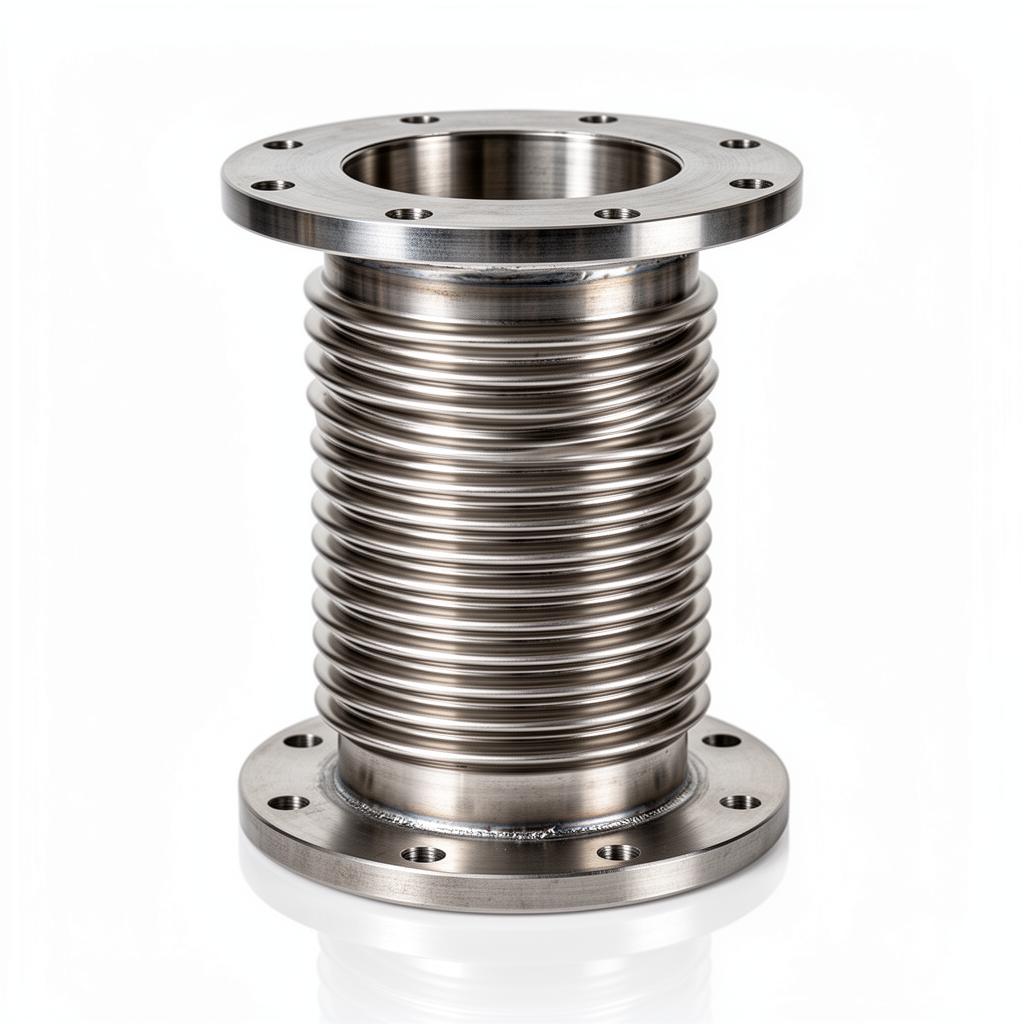
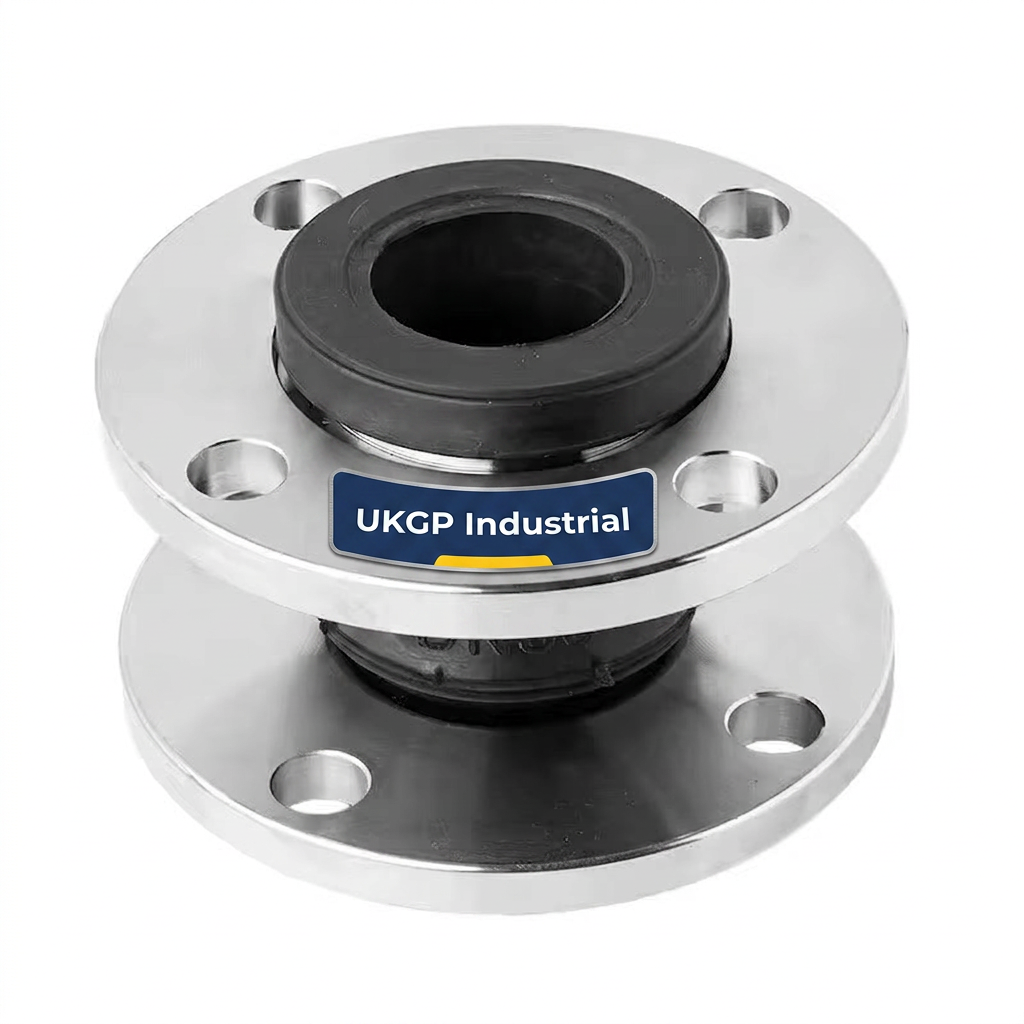
The fundamental difference between an expansion bellows and a flexible hose lies in their intended movement profile. Bellows are engineered pressure vessels designed specifically to absorb thermal expansion and contraction within a piping system. Available as axial, lateral, or angular units, they utilize a thin-walled, convoluted membrane—either synthetic rubber or stainless steel—to compress or extend. In UK commercial heating systems, axial bellows are the most common, installed between fixed points to manage the linear growth of copper or steel risers.
Flexible hoses, typically consisting of a corrugated inner core with a stainless steel wire overbraid, are primarily designed for vibration isolation or to facilitate equipment connection in confined spaces (such as FCU or HIU connections). While they are 'flexible', they are not designed to absorb significant axial expansion. When a braided hose is subjected to axial compression, the braid slackens, losing its ability to restrain the internal pressure, which can lead to 'squirm' or the bursting of the inner core. Any engineer specifying a hose to solve a thermal expansion problem is inviting a mechanical failure.
- Axial movement: Compression and extension along the longitudinal axis.
- Lateral movement: Offset movement where the flanges remain parallel but move out of alignment.
- Angular movement: Bending or 'hinging' around a pivot point.
Material Composition and Fluid Compatibility
UK building services usually dictate the use of EPDM (Ethylene Propylene Diene Monomer) for rubber bellows. This material is excellent for water-based systems but must be kept free from oils and hydrocarbons. For higher temperature regimes such as MTHW or steam, stainless steel expansion joints are mandatory. According to EJMA (Expansion Joint Manufacturers Association) guidelines, the selection of the ply thickness and the number of convolutions is a delicate balance between pressure retention and flexibility.
Flexible hoses are almost exclusively manufactured with a 304 or 316 stainless steel core and braid. While this offers excellent chemical resistance, they are susceptible to chloride-induced stress corrosion cracking (CSCC) if external contaminants or aggressive water treatments are present. Engineers must ensure compatibility with BSRIA BG50 (Water Treatment for Closed Heating and Cooling Systems) to ensure that the chemical dosing will not prematurely degrade the thin-walled convolutions of either hoses or bellows.
- EPDM: Standard for LTHW and CHW (up to 100°C).
- Nitrile: Often used for oil-contaminated fluids or gas applications.
- Stainless Steel (316L/321): Required for MTHW, HTHW, and steam (ref EN 14917).
Pressure Thrust and Anchoring Requirements
One of the most overlooked aspects of bellows installation is the management of pressure thrust. When a bellows is internalised into a pipe run, the internal pressure acts on the effective cross-sectional area of the bellows, creating a force that attempts to blow the pipework apart. This force, often measuring several kilonewtons in larger diameter pipes (e.g., DN100 at 10 bar), must be restrained by heavy-duty main anchors. If a flexible hose is used instead, the braid acts as a continuous tension member, essentially 'self-restraining' the pressure thrust, which is why hoses are often preferred for pump connections where anchoring may be difficult.
However, the lack of axial movement capability in braided hoses means they cannot replace the expansion function of a bellows. For applications where main anchors cannot be sufficiently reinforced, 'tied' lateral expansion joints or pressure-balanced bellows are specified. These units use a system of rods to contain the pressure thrust, allowing only lateral or angular movement without transferring the thrust load onto the boiler or chiller headers. Specification of these units must comply with BS EN 1092-1 for flange dimensions and pressure ratings.
- Limit rods: To prevent over-extension of the bellows beyond its design limit.
- Internal sleeves: To reduce turbulence and prevent erosion of convolutions in high-velocity flows.
- External shrouds: To protect the bellows from external damage or insulation ingress.
Installation Best Practices and Standards
Proper installation of expansion bellows is governed by strict positioning rules. Axial bellows must be installed between two main anchors, with the pipework guided according to the 'first and second guide' rule. The first guide should be positioned at a distance of 4 pipe diameters from the bellows, and the second at 14 diameters. This prevents 'pipe bowing'—where the pipe deflects laterally under compressive load—which would otherwise apply an unintended lateral force on the axial bellows, leading to premature fatigue failure.
Flexible hoses require different handling. They should never be twisted or installed with a sharp bend radius that exceeds the manufacturer’s 'minimum dynamic bend radius'. In UK plant rooms, it is common to see hoses installed in a 'U' loop to accommodate movements, but this requires significant space. For high-occupancy buildings and life-safety systems, the selection of both bellows and hoses must account for the Fatigue Life (typically 2,000 to 10,000 cycles) to ensure the component lasts the design life of the plant, typically 25 years.
- BS EN 14917: Metal bellows expansion joints for pressure applications.
- EN 1092-1: Flange standards for PN16/PN25 systems.
- BSRIA BG29/21: Ensuring bellows are considered during system flushing.
Lifecycle, Maintenance, and Fatigue Retention
The lifecycle of an expansion joint is determined by its fatigue resistance. Expansion bellows, particularly stainless steel variants, are designed for a specific number of full-amplitude cycles. If the system experiences frequent micro-cycling due to poor boiler staging or bypass control, the bellows may reach its fatigue limit earlier than expected. Maintenance regimes should include a visual check for 'set' in rubber bellows, which can harden over time in high-temperature environments, losing its ability to absorb vibration.
Flexible hoses often fail at the weld point between the hose, braid, and the end fitting (the ferrule). High-frequency vibration, such as that produced by high-speed pumps, can cause work-hardening of the stainless steel braid, eventually leading to individual wire failures. Once the braid begins to fail, the internal core can no longer withstand the system pressure. In contrast, rubber bellows offer superior vibration dampening due to the inherent damping properties of the elastomer, making them the preferred choice for noise-sensitive installations in commercial UK offices or hospitals.
- Rubber Bellows: Visual inspection for cracking (UV damage), bulging, or flange leakage.
- Metal Bellows: Inspection for 'bottoming out' of convolutions or signs of nesting.
- Flexible Hoses: Inspection for 'fraying' of the braid or kinking at the ferrule.
Frequently asked questions
What is the primary difference between a bellows and a flexible hose?
- Bellows are primary pressure vessels designed for axial, lateral, or angular movement. Flexible hoses (braided) are typically for vibration isolation or equipment connection and cannot handle significant axial compression without standard failure risks.
Can rubber bellows be used on high-temperature heating systems?
- EPDM rubber bellows are generally rated to 100°C or 110°C. For LTHW and CHW they are ideal, but for MTHW, steam, or high-pressure HTHW, mandated use of stainless steel bellows (EN 14917) is required.
How does BSRIA BG29/21 impact expansion joint selection?
- BSRIA BG29/21 focuses on water treatment and pre-commission cleaning. It is vital that bellows are not 'dead-legs' during flushing and that internal sleeves are specified if high-velocity flushing could cause resonance in the convolutions.
Can bellows be used to correct pipework misalignment?
- Ideally, no. Bellows should be installed in a relaxed state. Using them to take up piping misalignment puts an 'initial stress' on the convolutions, significantly reducing the cycle life and fatigue resistance.
What flange standard should be used for expansion joints in the UK?
- BS EN 1092-1 is the standard for circular flanges for pipes, valves, and fittings. It is essential that bellows flanges match the PN rating (PN10, PN16, PN25) of the mating pipework to ensure a pressure-tight seal.