TECHNICAL ENGINEERING & MAINTENANCE

Expansion Bellows Troubleshooting

Thermal expansion and contraction are inevitable forces in any UK heating or chilled water system. While expansion bellows—both rubber and metallic—are designed to manage these stresses, they remain one of the most common points of failure in the plant room. Understanding why a bellows has failed, or why it is behaving unexpectedly, requires a forensic look at system pressure, temperature, anchoring, and alignment. This technical guide examines the primary failure modes for axial, lateral, and angular expansion joints, referencing EN 14917 and EJMA standards to ensure your installations remain compliant and reliable.

10 June 2026 6 min readExpansion bellows
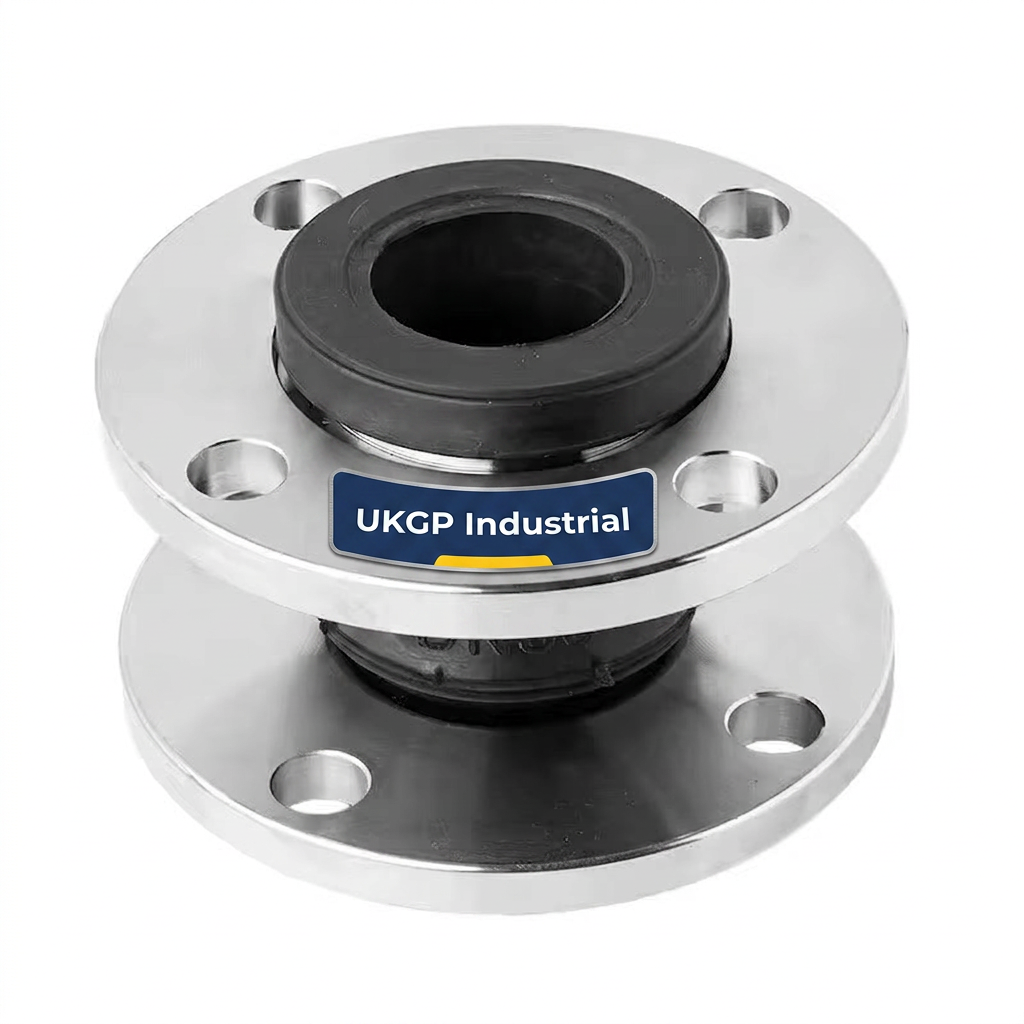
Expansion Bellows Troubleshooting — UKGP rubber expansion bellows for pipework movement and vibration
UKGP rubber expansion bellows for pipework movement and vibration

Identifying Convolution Deformation and Squirm

One of the most frequent issues encountered during site inspections is 'squirm'—a gross instability of the bellows convolutions. This typically manifests as a permanent deformation where the bellows appears to buckle or tilt. Under EN 14917 standards, bellows are rated for a specific pressure-to-stability ratio. If the system pressure exceeds the internal stability limit, the convolutions will no longer remain coaxial. This is often a symptom of inadequate guiding; if the pipework is not supported by a minimum of two primary guides on either side of the expansion joint (as per EJMA guidelines), the bellows cannot move in a purely axial fashion.

Deformation is also frequently caused by the failure of main anchors. In a pressurized system, an expansion joint creates a 'pressure thrust' force equal to the internal pressure multiplied by the mean area of the bellows. If a main anchor fails or moves even slightly, this force will drive the bellows to its fully extended position, often tearing the convolutions or bending the tie-bars. When troubleshooting a distorted bellows, the first point of inspection must always be the integrity of the nearest fixed points and the spacing of the intermediate guides.

  • Excessive main anchor movement or failure.
  • System pressure exceeding the design limit (surge/water hammer).
  • Lack of effective guiding, allowing the pipe to 'squirm'.
  • Incorrect installation length (pre-stretching or over-compressing beyond design).

Frequently asked questions

Can expansion bellows be used to compensate for poor pipework alignment?

No. While they can absorb minor misalignments, their primary function is to manage thermal expansion. Using them to bridge significant gaps introduces torsional stress and pre-loading that will lead to premature failure. Piping must be accurately aligned before installation.

How can I tell if a bellows has reached its design limit in situ?

Check for 'shiny' spots on the convolution peaks, which indicates contact with the internal liner or external shroud. Check the tie-bar nuts; if they are tight against the lugs during operation, the bellows has reached its limit and the pipework is likely under-expanded.

Does chemical flushing affect the lifespan of rubber bellows?

Under BSRIA BG29/21, chemical cleaning (flushing) is essential. However, high concentrations of biocides or acids can attack EPDM or stainless steel if not correctly neutralised. Always ensure bellows are rated for the flushing velocity and chemical composition.

What causes pinhole leaks in stainless steel bellows?

Stainless steel bellows are susceptible to Stress Corrosion Cracking (SCC) if chlorides are present in the fluid or the external environment. In coastal areas or certain industrial sites, Grade 316L is preferred over 304, or specialist alloys may be required.
Keep reading

Related articles

Expansion bellows

What are expansion bellows?

In modern building services and industrial process piping, thermal expansion is an physical inevitability that, if unmanaged, leads to catastrophic mechanical failure. Expansion bellows (or expansion joints) are the primary engineering solution used to absorb movement, isolate vibration, and compensate for subsidence in pressurised systems. For UK consultants and contractors, the correct specification of these components requires a deep understanding of metallurgy, elastomer properties, and the mechanics of pressure thrust. This guide explores the technical parameters of axial, lateral, and angular movement, governed by standards such as EN 14917 and EJMA guidelines.

Read
Expansion bellows

How do expansion bellows work?

In any rigid piping system, thermal expansion and contraction are inevitable. Without a mechanism to absorb this movement, the resulting stresses would lead to catastrophic failure of welds, flanges, and equipment nozzles. Expansion bellows—whether manufactured from elastomers or stainless steel—serve as the flexible 'lung' of the plant room. This guide explores the engineering principles of axial, lateral, and angular movement, focusing on correct selection and installation according to UK industry standards including EJMA and BS EN 14917.

Read
Expansion bellows

Types of expansion bellows for building services

In modern building services and industrial plant rooms, thermal expansion and vibration are significant drivers of system failure. As temperatures fluctuate in LTHW, steam, or chilled water circuits, the resulting linear growth can exert forces capable of buckling pipework, shearing bracketry, or damaging expensive plant like chillers and boilers. Selection of the correct expansion joint—whether rubber or stainless steel—is not merely a matter of pipe diameter; it requires a rigorous assessment of pressure thrust, movement vectors, and media compatibility. This guide outlines the engineering principles behind axial, lateral, and angular bellows, grounded in UK standards such as BSRIA BG29/21 and EN 14917.

Read
Request Quote