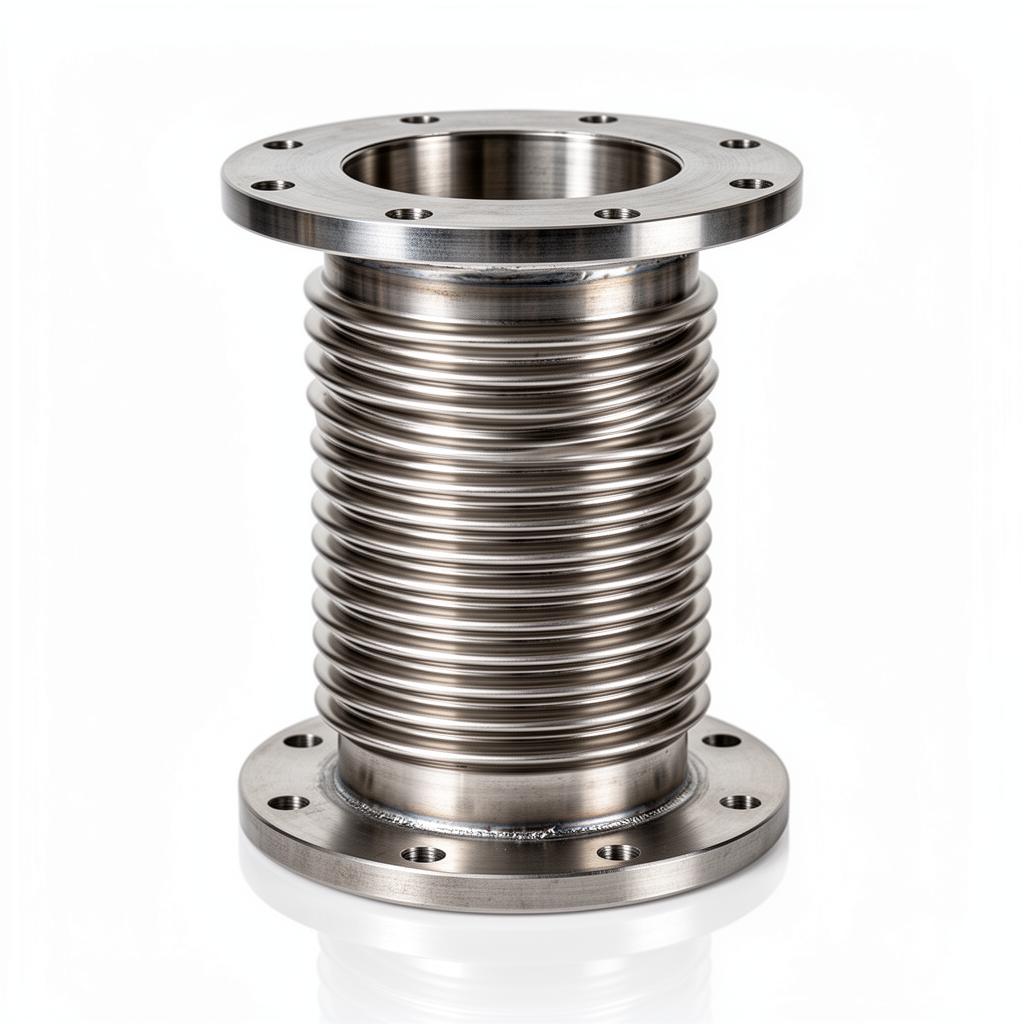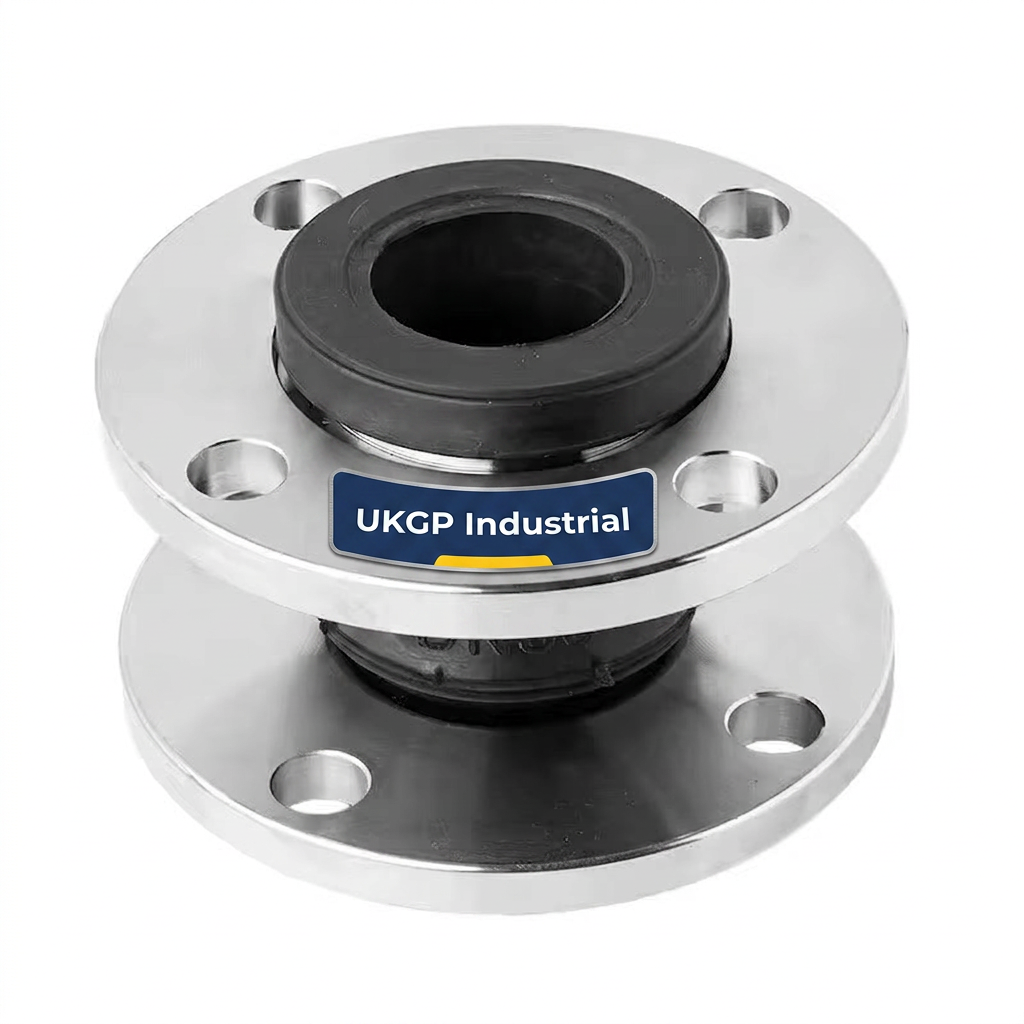
Defining the Terminology: Pre-set vs Cold Spring
To the site operative, 'pre-set' and 'cold spring' are often used interchangeably, but in engineering terms, they serve distinct purposes. Pre-setting refers specifically to the expansion joint itself. It involves installing the bellows in a partially compressed or extended state so that its total movement range is better aligned with the system's thermal cycle. For instance, if a bellows has a total axial movement of 50mm (±25mm) and the system only expands, pre-setting it by extending it by 25mm allows it to utilise its full 50mm capability for compression.
Cold springing is a system-wide approach. It involves pulling the pipework into a state of stress during installation so that when the system reaches its mean operating temperature, the pipework and its components—including the bellows—are in a neutral, stress-free condition. This is particularly relevant in high-pressure steam or district heating applications where minimizing the load on fixed anchors is paramount. In UK commercial HVAC, pre-setting is the more common requirement for axial expansion joints in riser loops and plant room headers.
- Neutral position: The bellows' length as manufactured, with no internal stress.
- Operating temperature: The maximum or minimum fluid temperature during service.
- Installation temperature: The ambient temperature of the pipework at the moment of commissioning.
- Maximum extension: The limit of the bellows' ability to be pulled apart.
- Maximum compression: The limit of the bellows' ability to be pushed together.
The Physics of Thermal Expansion and Bellows Limits
Linear expansion is calculated using the formula: ΔL = L × α × ΔT. For carbon steel pipework, α is typically 0.012 mm/m°C. In a 50-metre run with a temperature rise of 70°C (from a 10°C installation to an 80°C flow), the expansion is approximately 42mm. If an axial bellows with a ±25mm capability is installed at its free length, it will fail, as it cannot accommodate the 42mm of compression required.
By pre-setting (extending) the bellows by 25mm during installation, the joint effectively gains a compression capacity of 50mm. However, this must be balanced against the minimum installation temperature. If the system is drained and the building drops to 0°C, the pipe will contract, potentially exceeding the bellows' extension limit if the pre-set was too aggressive. Therefore, the ‘cold’ position must be calculated based on the lowest possible ambient temperature, not just the mean.
Calculating the Required Pre-set Length
The calculation for pre-set is usually provided by the bellows manufacturer or the consulting engineer, based on the formula: Pre-set = R × [ (Ti - Tmin) / (Tmax - Tmin) ], where R is the total rated movement, Ti is installation temperature, and Tmax/Tmin are the temperature extremes. In the UK, we typically assume an installation temperature of 10°C or 15°C, but variations in site conditions can lead to significant errors if not adjusted.
When working with UKGP Industrial expansion bellows, the technical data sheets provide the maximum allowable compression and extension. Engineers must ensure that after the calculated pre-set is applied, the bellows still maintains a safety margin. Over-extending a bellows during pre-set to compensate for poor pipework design can lead to 'squirming'—a column instability where the bellows deforms laterally under pressure, leading to catastrophic failure.
It is also critical to consider the pressure thrust. A pre-set bellows is under mechanical tension; once the system is pressurised, the internal force will attempt to extend the bellows further. This thrust must be absorbed by the primary anchors. If anchors are not designed to BS EN 1993 standards for the combined load of the pre-set tension and the pressure thrust, they will shift, nullifying the pre-set and damaging the bellows.
Installation Practicalities and Shipping Bolts
Most metal expansion joints are supplied with shipping bolts or 'pull bars'. These are factory-fitted to maintain the bellows at its free length or a specified pre-set length during transit. A common site error is the removal of these bolts before the pipework is fully anchored. Without the anchors in place, the bellows may act like a spring, pulling the pipework out of alignment or extending beyond its design limits.
The correct sequence is: 1. Install the main anchors. 2. Install the pipe guides according to the 4D/14D rule (first guide within 4 pipe diameters, second within 14). 3. Fit the bellows into the gap. 4. If the gap is larger than the bellows' free length (to accommodate a pre-set), use a pull-tool to extend the bellows until the flanges match. 5. Torque the BS EN 1092-1 flanges. 6. ONLY then, remove the shipping bolts or paint-marked tie bars. In ‘cold spring’ scenarios, the gap in the pipework is intentionally wider than the bellows, requiring the bellows to be 'stretched' into place to achieve the pre-set.
Rubber vs. Metal Bellows: Pre-set Differences
While stainless steel bellows are highly predictable in their spring rates, rubber expansion joints (such as EPDM or Nitrile) behave differently. Rubber bellows have a degree of inherent flexibility but are more susceptible to permanent 'set' if kept in a stressed state for long periods. For UK HVAC systems involving chilled water, rubber bellows are often used to bridge the gap between the pump and the header. Pre-setting rubber bellows is less common than for metal ones, but still necessary when used as axial compensators in PVC or ABS plastic pipework.
For flanged expansion bellows made of rubber, the pre-set is usually limited to 5-10mm. Exceeding this can cause the rubber carcass to pull away from the steel backing flanges, leading to weeping at the seal or premature aging of the elastomer. In contrast, metal bellows can be pre-set to 50% or even 100% of their total movement range, provided the fatigue life (cycles) is accounted for in the design. Always verify the material compatibility with the medium (e.g., LTHW vs MTHW) as thermal expansion rates of the bellows material itself vary slightly.
Verification and Commissioning Procedures
Following installation, the pre-set must be verified before the system is lagged or insulated. The 'installed length' should be recorded in the site log and compared against the design 'free length'. For example, if a 200mm free-length bellows was pre-set by 20mm extension, the recorded length must be 220mm. This documentation is vital for FM teams under BG50/2013 (Water Treatment for Closed Heating and Cooling Systems) and general asset management, as it allows for the monitoring of anchor creep over time.
During the first heat cycle, the bellows must be observed to ensure it is compressing as expected. If the bellows is not moving, or if lateral deflection is noticed, the system must be powered down immediately. This usually indicates that a guide has bound or an anchor has failed. In UK district heating schemes, where bellows are often buried or in restricted pits, acoustic monitoring or visual inspection of the 'cold' vs 'hot' positions of the tie-bar nuts is a standard method of verifying that the pre-set is working as intended.
Frequently asked questions
What is the difference between pre-setting and cold springing?
- Pre-setting involves mechanically compressing or extending a bellows before installation to increase its effective movement range. Cold springing is the broader practice of stressing the entire pipework system during installation so that it reaches a neutral, stress-free state at operating temperature.
What happens if a bellows is not pre-set correctly?
- Failure to pre-set often results in the bellows reaching its extension limit prematurely during thermal contraction (e.g., in chilled water systems) or compression limit during expansion, leading to squirm, bellows anchors failure or fatigue cracking.
Are bellows supplied pre-set from the factory?
- Standard bellows are usually supplied at their 'free length'. If a bellows is supplied factory pre-set, it will be fitted with shipping bolts or bars. These must never be removed until the anchors and guides are fully secured.
Which standards govern the calculation of expansion joint pre-sets?
- EJMA (Expansion Joint Manufacturers Association) standards and BS EN 14917 provide the governing equations for calculating movement. For UK district heating, specific guidance from IGEM or CIBSE CP1 should also be consulted.