The Primary Functions of Discharge Bellows
Pump discharge bellows serve two divergent roles: they must be flexible enough to isolate vibration yet robust enough to withstand the maximum head pressure of the pump. In any centrifugal pump arrangement, the bellows acts as a decoupling point. Without this flexible interface, the constant micro-vibrations from the pump would be transmitted directly into the rigid pipework, leading to loosened hangers, flange leaks, and potential fatigue cracks in weldments.
Beyond vibration, the bellows must account for the thermal expansion of the discharge manifold. In LTHW (Low Temperature Hot Water) or MTHW (Medium Temperature Hot Water) systems, the temperature differential from ambient to operational can be significant. If the pipework is anchored too rigidly near the pump, the resulting stress will be transferred back to the pump casing, potentially causing shaft misalignment or seal failure. Engineering the bellows to accommodate these axial movements is essential for protecting the rotating equipment.
- Vibration isolation: Absorbing high-frequency oscillations from the pump motor and impeller.
- Thermal expansion: Accommodating the linear growth of discharge headers in heating or secondary hot water systems.
- Noise attenuation: Reducing the transmission of structure-borne noise through the pipework.
- Pressure thrust management: Managing the forces generated by internal pressure on the bellows area.
Rubber Bellows vs. Stainless Steel Alternatives
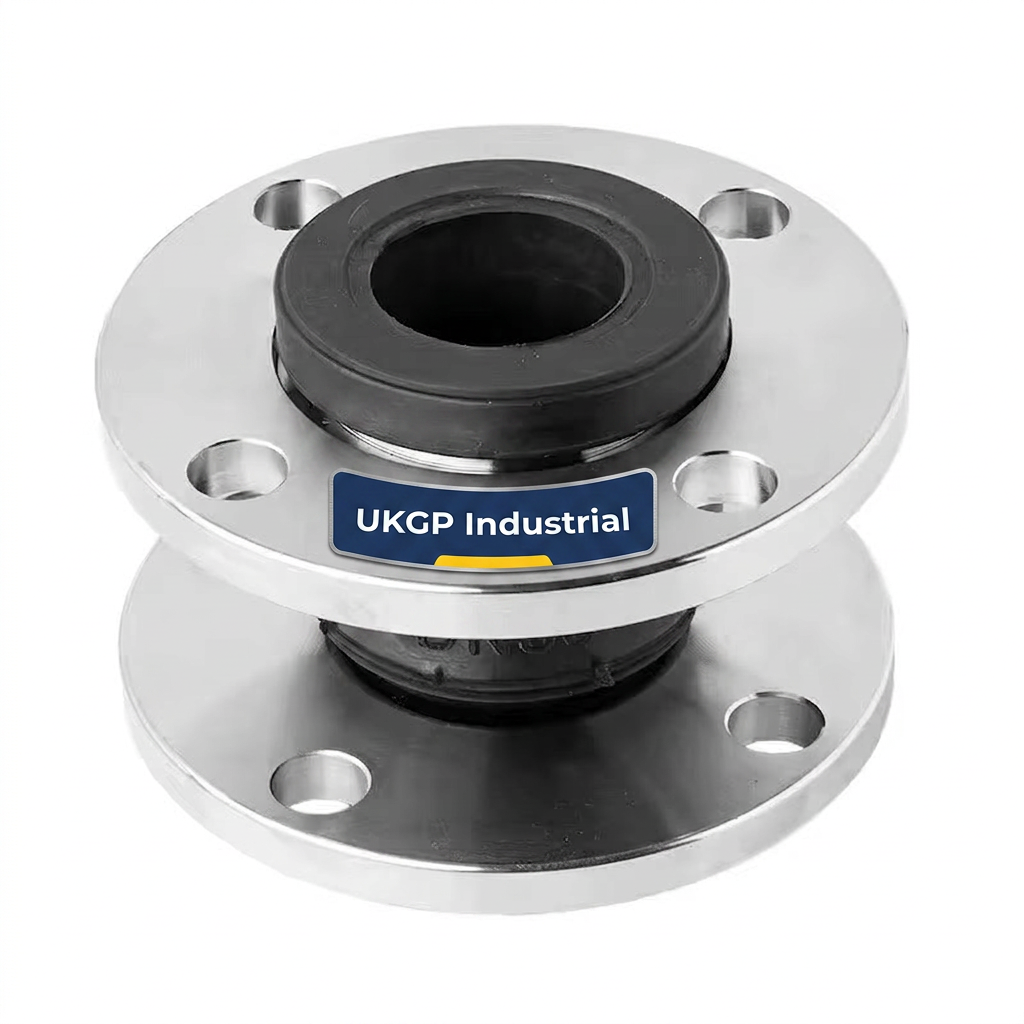
The choice between rubber (elastomeric) and stainless steel (metallic) bellows is primarily driven by the system's operating parameters. Rubber bellows, often manufactured from EPDM or Nitrile with nylon reinforcement, are the industry standard for vibration isolation in HVAC systems. They offer superior multi-directional movement and excellent noise damping properties. However, their use is limited by temperature (typically up to 110°C) and pressure (standard PN16 ratings).
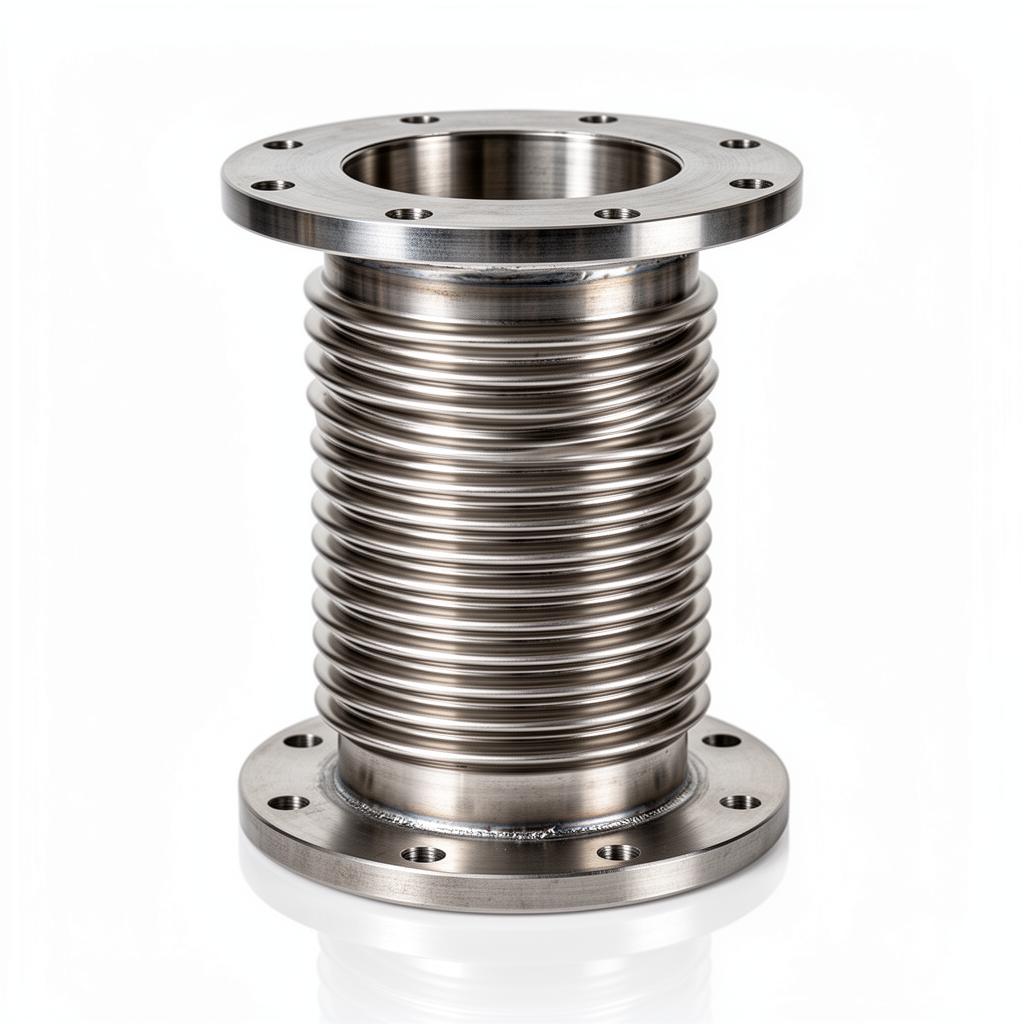
Stainless steel bellows, designed in accordance with EN 14917, are specified for high-temperature applications, high-pressure process steam, or where the fluid medium is chemically incompatible with elastomers. While metal bellows are highly durable, they are stiffer than rubber units and transmit more high-frequency noise. In district heating applications or primary boiler circuits where temperatures exceed 120°C, stainless steel is the only viable option, often furnished with internal liners to prevent flow-induced vibration at high velocities.
Installation Standards and BSRIA Compliance
Correct installation is critical to the longevity of the expansion joint. Following BSRIA BG29/21 and BG50 guidelines, it is imperative that the pipework is correctly anchored and guided. A bellows cannot function as an anchor itself; its purpose is to move. On a pump discharge, the first pipe guide should typically be located within four pipe diameters of the bellows, with the second guide within fourteen diameters. This ensures that the bellows only moves in its intended plane and prevents ‘squirm’ or buckling.
Furthermore, BSRIA standards emphasise the importance of system cleanliness. For metal bellows, particularly those with thin-walled convolutions, the presence of abrasive debris or poorly treated water can lead to rapid erosion or stress corrosion cracking. During the flushing process, bypasses should be used where possible, or bellows should be temporary replaced with ‘spool pieces’ to prevent damage from construction-phase contaminants.
Understanding Pressure Thrust and Tie Bars
Pressure thrust is often the most misunderstood force in pump room design. When a bellows is internalised into a pressurised system, it attempts to extend. This force is calculated as the internal pressure multiplied by the effective cross-sectional area of the bellows (not the pipe ID). On large diameter discharge lines, this force can be several tonnes. If the pipework is not anchored to resist this force, the bellows will over-extend and fail.
Tie bars (or control units) are used to limit this extension. By connecting the flanges of the bellows with threaded rods and rubber washers, the maximum extension is physically capped. In most pump discharge applications, tied rubber bellows are preferred because they essentially ‘lock’ the axial length while still allowing for lateral offset and vibration absorption. This protects both the pump volute and the downstream pipework from excessive thrust loads.
Design Considerations for District Heating and High-Rise
In modern district heating schemes, expansion joints must meet rigorous durability standards. Designers should reference EJMA (Expansion Joint Manufacturers Association) standards for cycle life calculations. Because these systems often operate at higher pressures and undergo significant thermal cycling, the fatigue life of the bellows convolution is a primary design constraint. Multi-ply bellows construction is often employed here to provide a balance of flexibility and high-pressure resistance.
For high-rise commercial developments, the static head of the system must be added to the pump's dynamic head when specifying the bellows' pressure rating. A PN16 bellows may be insufficient for the lower levels of a 20-storey building where the static head alone might exceed 10 bar. In these instances, PN25 or PN40 rated stainless steel joints, with flanges drilled to BS EN 1092-1, are required to ensure a sufficient safety margin against burst pressure.
Maintenance and Lifecycle Procedures for Facilities Managers
Expansion bellows are 'wear items' and should be included in the annual plant room inspection regime. Facilities managers should look for signs of 'ballooning' in rubber bellows, which indicates a breakdown of the internal fabric reinforcement. For metal bellows, visual inspections should check for any signs of weeping at the convolutions or corrosion under insulation. If a bellows has been covered with thermal lagging, it should ideally be of the removable 'jacket' type to facilitate these inspections.
Finally, the alignment of the tie bars should be checked. If the rubber washers on the tie bars are heavily compressed on one side, it indicates that the pipework has shifted or that the anchors have moved. Addressing these underlying structural issues is vital; simply replacing a failed bellows without correcting the pipework geometry will only lead to a repeat failure within a short timeframe.
Frequently asked questions
What temperature limits apply to rubber bellows?
- Standard EPDM rubber bellows for LTHW are typically rated to 100°C or 110°C. For temperatures exceeding this, or for steam applications, stainless steel bellows (conforming to EN 14917) must be used. Always verify the PT rating (pressure-temperature) as allowable pressure drops as temperature rises.
When should I use tie bars on a pump discharge bellows?
- Control units (tie bar sets) are required when the pressure thrust of the system exceeds the capability of the pipe anchors or when the bellows is used for vibration isolation. In pump discharge scenarios, they prevent the bellows from over-extending under high pressure.
Can I use a bellows to correct pipework misalignment?
- No. Expansion bellows are designed for specific movements (axial, lateral, or angular). Forcing a bellows to compensate for poor pipework alignment introduces pre-stress, which significantly reduces the fatigue life of the convolution and can lead to premature failure.
Are bellows suitable for vertical pump discharge lines?
- Vertical installations are common in high-rise plant rooms. However, ensure that the pipework weight is supported independently and that any condensate or debris cannot settle in the convolutions (in the case of metal bellows), which could lead to pitting corrosion.