PIPING SYSTEMS & THERMAL MOVEMENT

Expansion Bellows for Chilled Water Systems

Thermal expansion in chilled water (CHW) systems is often underestimated compared to LTHW or steam. While the temperature delta is lower, the rigidity of modern thick-walled steel and the precision required for chiller plant headers necessitate robust movement compensation. This guide examines the application of rubber and metallic bellows in accordance with EN 14917 and EJMA standards, focusing on UK building services requirements.

10 June 2026 6 min readExpansion bellows
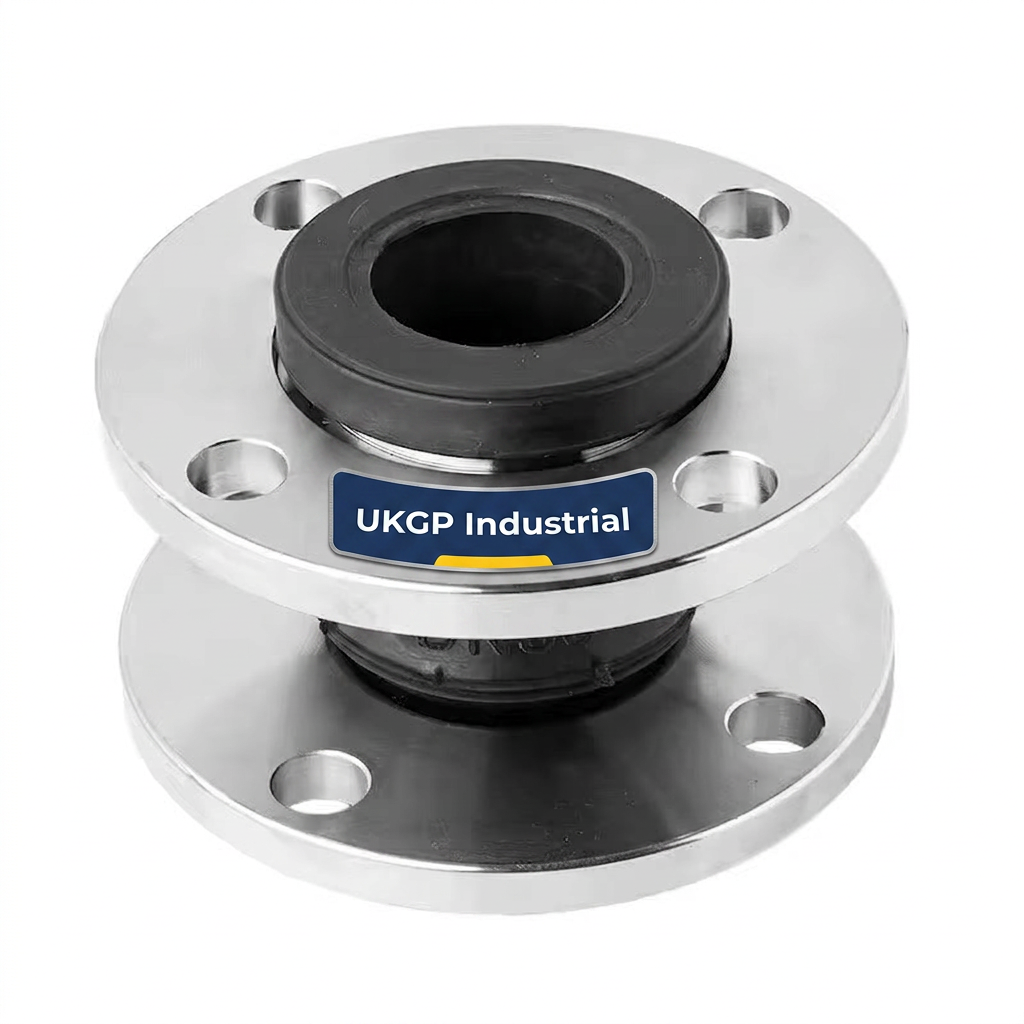
Expansion Bellows for Chilled Water Systems — UKGP rubber expansion bellows for pipework movement and vibration
UKGP rubber expansion bellows for pipework movement and vibration

Material Selection: EPDM vs Stainless Steel Bellows

For the majority of UK commercial chilled water applications, EPDM (Ethylene Propylene Diene Monomer) rubber bellows are the preferred solution. Their primary advantage is the ability to absorb multi-directional movement while simultaneously providing acoustic isolation—a critical factor when pipework is connected to high-frequency vibratory loads like centrifugal chillers or primary pumps. UKGP Industrial rubber bellows are commonly specified with high-tensile synthetic cord reinforcement to maintain structural integrity under pressure.

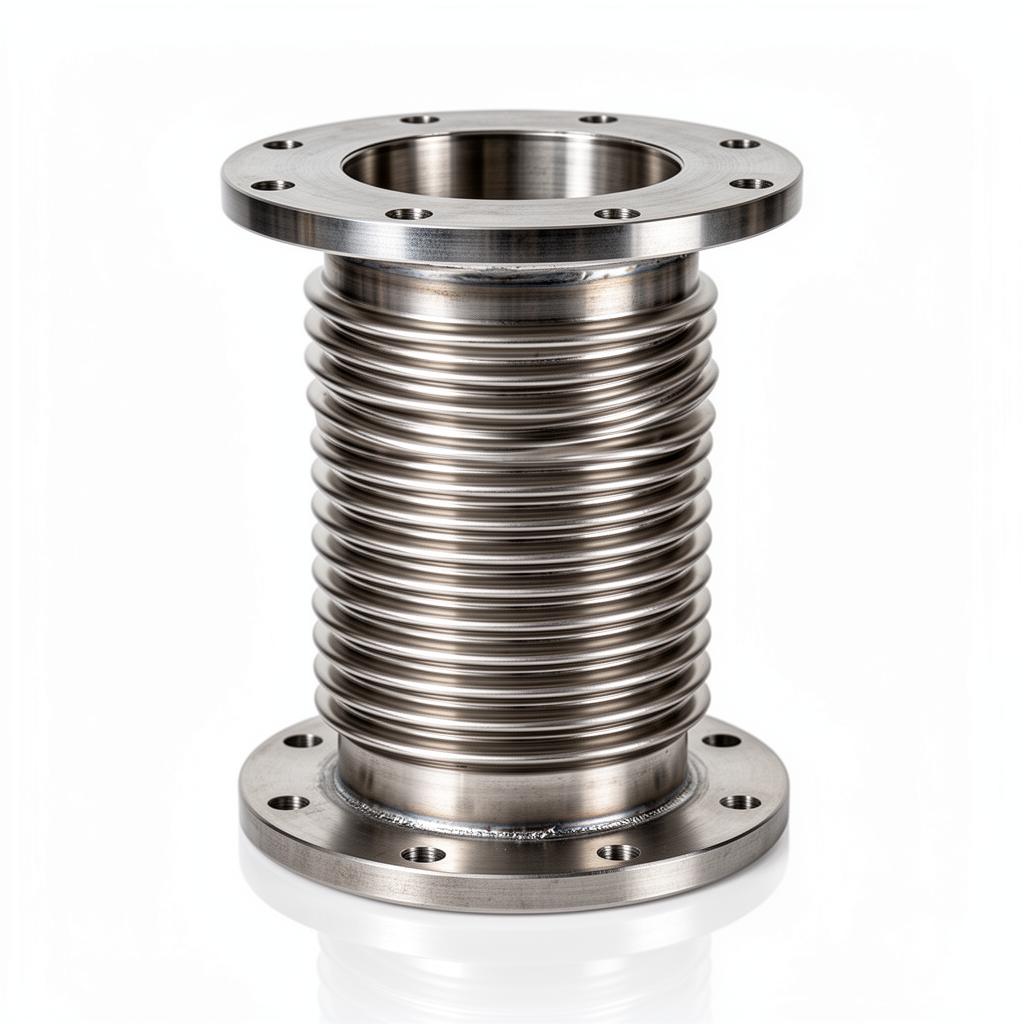
Stainless steel bellows, designed to BS EN 14917, are reserved for applications where temperature extremes or chemical compatibility exceed rubber limits, or where ultra-high pressure ratings are required. While metallic bellows offer superior longevity in outdoor environments subject to high UV exposure, they lack the inherent damping qualities of elastomer joints. In CHW systems with high glycol concentrations or specific corrosion inhibitors, material compatibility with the bellows liner must be verified to prevent premature embrittlement.

  • Standard operating range: -10°C to +90°C.
  • Inherent vibration attenuation properties.
  • Resistance to common CHW additives (Ethylene/Propylene Glycol).
  • Maximum working pressure typically 16 bar (PN16).

Frequently asked questions

What is the difference between axial and lateral expansion?

In CHW systems, axial bellows are used for straight runs, lateral for offset movements (often at building joints), and angular for rotation. Universal joints combine these to handle complex multi-planar movements.

Why are anchors critical for expansion bellows?

Primary anchors must be sized to withstand the full pressure thrust (area x pressure) plus the stiffness force of the bellows, often reaching several tonnes of force even in DN100 pipework.

Can I use EPDM bellows with glycol additives?

EPDM is the standard for CHW due to its resistance to glycol and temperature stability, but NBR (Nitrile) should be considered if there is any risk of oil contamination in the system.

What is the expected lifespan of a rubber expansion joint?

Standard EPDM bellows typically have a shelf life of 5-10 years depending on UV exposure and ozone levels. In operation, fatigue life is determined by the number of thermal cycles, usually rated for 5,000 to 10,000 full cycles.

When are internal liners required?

Internal liners (sleeves) should be used in high-velocity systems (typically >5m/s for water) to prevent flow-induced vibration and erosion of the bellows convolutions.
Keep reading

Related articles

Expansion bellows

What are expansion bellows?

In modern building services and industrial process piping, thermal expansion is an physical inevitability that, if unmanaged, leads to catastrophic mechanical failure. Expansion bellows (or expansion joints) are the primary engineering solution used to absorb movement, isolate vibration, and compensate for subsidence in pressurised systems. For UK consultants and contractors, the correct specification of these components requires a deep understanding of metallurgy, elastomer properties, and the mechanics of pressure thrust. This guide explores the technical parameters of axial, lateral, and angular movement, governed by standards such as EN 14917 and EJMA guidelines.

Read
Expansion bellows

How do expansion bellows work?

In any rigid piping system, thermal expansion and contraction are inevitable. Without a mechanism to absorb this movement, the resulting stresses would lead to catastrophic failure of welds, flanges, and equipment nozzles. Expansion bellows—whether manufactured from elastomers or stainless steel—serve as the flexible 'lung' of the plant room. This guide explores the engineering principles of axial, lateral, and angular movement, focusing on correct selection and installation according to UK industry standards including EJMA and BS EN 14917.

Read
Expansion bellows

Types of expansion bellows for building services

In modern building services and industrial plant rooms, thermal expansion and vibration are significant drivers of system failure. As temperatures fluctuate in LTHW, steam, or chilled water circuits, the resulting linear growth can exert forces capable of buckling pipework, shearing bracketry, or damaging expensive plant like chillers and boilers. Selection of the correct expansion joint—whether rubber or stainless steel—is not merely a matter of pipe diameter; it requires a rigorous assessment of pressure thrust, movement vectors, and media compatibility. This guide outlines the engineering principles behind axial, lateral, and angular bellows, grounded in UK standards such as BSRIA BG29/21 and EN 14917.

Read
Request Quote