Maintaining BSRIA BG50 Design Compliance
In the UK's commercial HVAC sector, adhering to BSRIA BG50 'Water Treatment for Closed Heating and Cooling Systems' is the gold standard for operational excellence. A primary requirement for maintaining water quality involves the continuous removal of suspended solids and microbubbles, which is best achieved through a dedicated dirt and air separator. Without these components, circulating water carries abrasive particles that erode pump impellers and settle in low-flow areas of the circuit, leading to cold spots and reduced thermal transfer. Engineers must ensure that the chosen equipment is capable of capturing both magnetic and non-magnetic debris to satisfy the stringent requirements of modern insurance providers and building owners.
The presence of dissolved oxygen and microbubbles in a heating circuit creates a highly corrosive environment, leading to the rapid formation of magnetite. Using a dirt and air separator helps to interrupt this oxidation cycle by stripping gases from the fluid while simultaneously trapping particulate matter. When these units are omitted during the design phase, the resulting sludge buildup often leads to a failure in satisfying BSRIA BG29 pre-commissioning cleaning standards. By specifying a combined unit, contractors provide a comprehensive solution that addresses the two most common causes of commercial boiler failure: air-induced corrosion and debris-related blockages in the primary heat exchanger.
Furthermore, ensuring a dirt and air separator is correctly sized for the system flow rate is vital for effectiveness. These units rely on specific internal velocities to allow particles to fall out of suspension while helping microbubbles rise through the coalescing media. UKGP provides technical support to help M&E contractors select the correct DN size for their specific pressure drop requirements. Investing in quality UK-manufactured components ensures that the plant room remains compliant with CIBSE guidelines for sustainable building services, ultimately lowering the total cost of ownership for the end-user by extending the life of the entire mechanical installation.
- Mandatory for BSRIA BG50 water quality compliance
- Reduces risks of magnetite buildup in heat exchangers
- Minimises microbubble-induced pitting and corrosion
- Supports BS 8552 water sampling and testing protocols
Technical Advantages of Integrated Coalescing Media
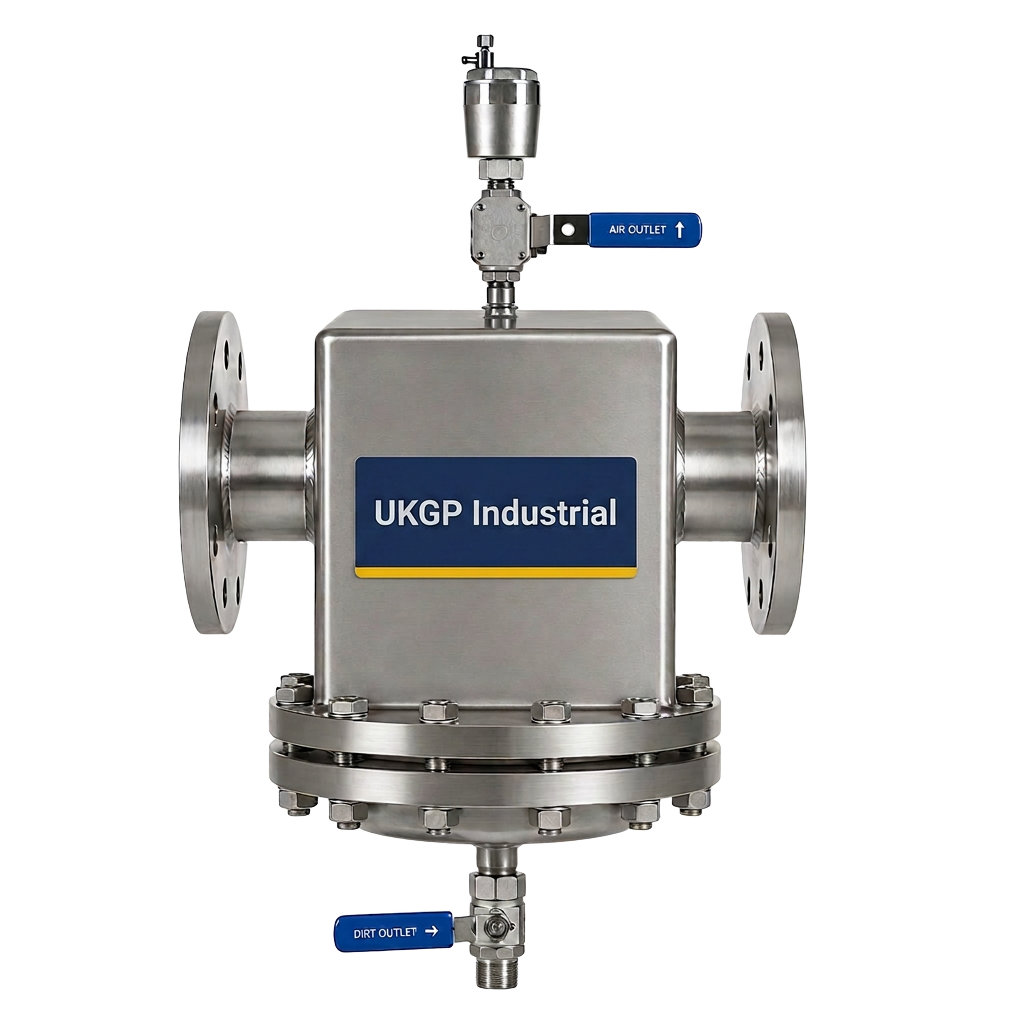
A high-quality dirt and air separator utilizes internal coalescing media, typically a stainless steel or specialized nylon mesh, designed to create a low-velocity zone within the main flow. This structural design encourages air bubbles to attach to the media surface, where they merge into larger bubbles that eventually rise to the automatic air release valve. Unlike simple centrifugal separators, this method is highly effective at capturing microbubbles that would otherwise remain in suspension. For commercial engineers, this means a significantly quieter system and improved heat transfer efficiency across all terminal units, including fan coil units and radiant panels.
On the particulate side, the internal baffles facilitate the settling of heavy sediment into a calm collection chamber at the base of the unit. This sediment can then be flushed out during routine maintenance without needing to isolate or drain the entire system. When a dirt and air separator is equipped with a powerful magnetic insert, it gains the ability to capture sub-micron magnetite particles that might bypass standard strainers. This dual-action approach is particularly critical in systems featuring high-efficiency pumps with permanent magnet motors, which are notoriously sensitive to magnetic sludge that can seize the rotor and cause catastrophic motor failure.
From a procurement perspective, a combined dirt and air separator offers a smaller footprint than installing separate air separators and dirt pockets. This is a major advantage in compact Surrey plant rooms where space is at a premium. UKGP offers units ranging from DN25 to DN300, ensuring that even large-scale district heating schemes can benefit from this advanced filtration. By requesting a quote for a unit with PN16 flanged connections and an included isolation kit, contractors can streamline their installation process while providing a 2-year warranty that guarantees performance and peace of mind for the facility management team.
- Advanced coalescing media for microbubble removal
- Magnetic catch specifically for sub-micron magnetite
- Easier flushing via dedicated drain valve
- Compact footprint saves valuable plant room space
Protecting Low Loss Headers and Heat Exchangers
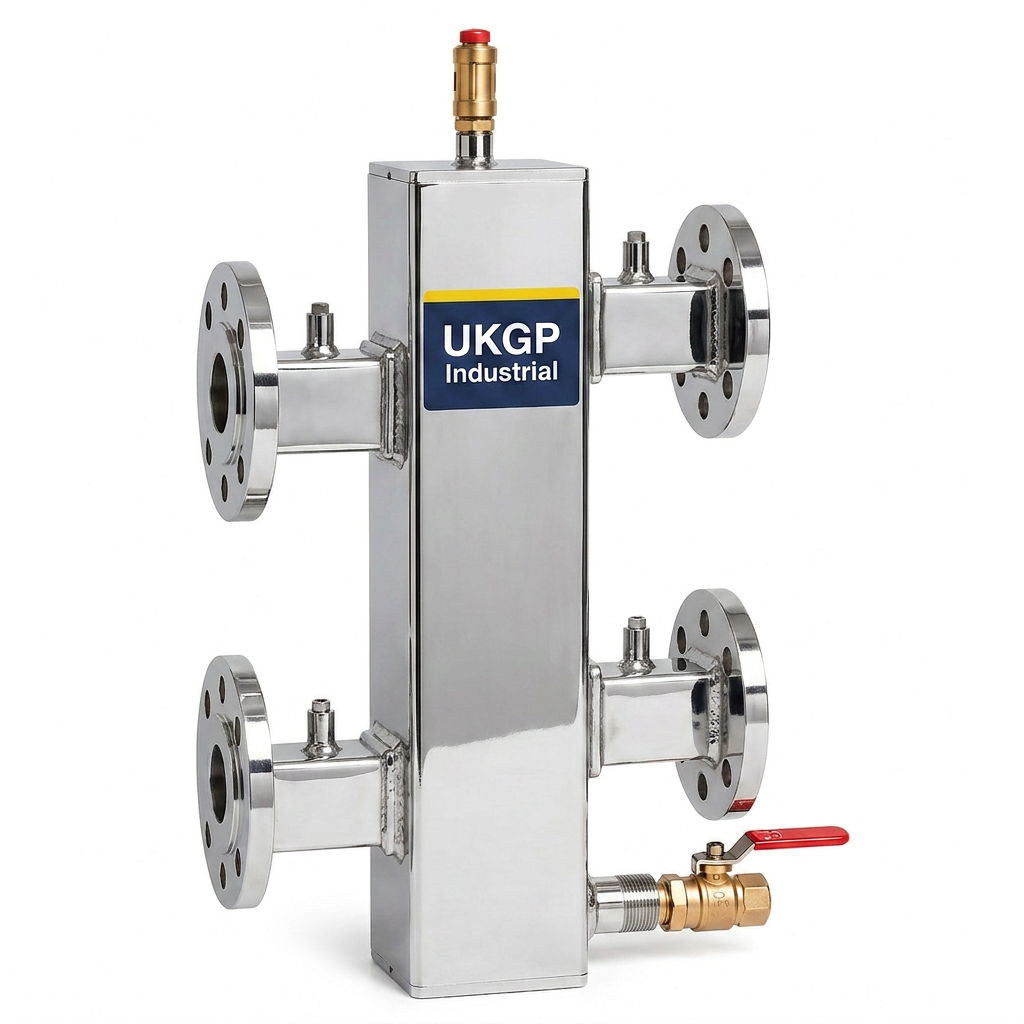
The interaction between the primary and secondary circuits in a commercial system often centers around a low loss header. To protect this critical hydraulic interface, installing a dirt and air separator upstream is a recognised best practice among leading UK building services consultants. This ensures that any debris circulating from the secondary circuits is captured before it enters the primary boiler loop. Similarly, when a plate heat exchanger is used for system separation, protecting the small plate gaps from debris is essential to maintain thermal efficiency and prevent clogging, which can lead to high pressure drops and reduced flow rates.
Low loss headers perform their best when the fluid passing through them is free of trapped gases. Air pockets within a header can cause turbulence and interfere with the temperature sensors required for accurate boiler modulation. By utilizing a dirt and air separator, the system ensures that the thermal stratification required within the header is not disrupted by air-locks. This leads to more accurate control of the flow and return temperatures, which is essential for ensuring that condensing commercial boilers operate within their most efficient range. The cost of a separator is a fraction of the cost of replacing a fouled heat exchanger or a failing header assembly.
UKGP manufactures a wide range of plant room components that work in harmony with our filtration range. For example, pairing our secondary circuit equipment with a DN-rated low loss header and an appropriately sized expansion bellows ensures the system can handle both thermal expansion and fluid impurities. When M&E contractors specify UKGP products, they are choosing components designed to handle the rigors of PN10 and PN16 pressure ratings found in modern UK commercial buildings. Our technical team can advise on the ideal placement for these units to maximize the protection of your high-value assets and ensure long-term hydraulic balance.
- Protects low loss header sensors from air interference
- Prevents clogging in narrow plate heat exchanger channels
- Maintains design flow rates across primary loops
- Essential for high-efficiency condensing boiler operation
Installation Best Practices for the Dirt and Air Separator
Proper placement of the dirt and air separator is fundamental to its performance. For air removal, the unit should ideally be installed at the point of highest temperature and lowest pressure in the system, which is typically on the flow pipework immediately after the boilers. At this point, air is most likely to be released from the water in the form of microbubbles. Conversely, for dirt removal, the unit is most effective on the return pipework before the water enters the boilers or heat exchangers. In many commercial designs, a combined unit is placed on the common return to ensure all system debris is captured before it reaches the plant, providing a balanced solution.
Maintenance access is another critical consideration for engineering teams. Every dirt and air separator should be installed with sufficient clearance below the drain valve to allow for a flushing hose or bucket. Furthermore, the inclusion of an isolation kit allows for the magnetic rod to be removed and cleaned without needing to depressurise the system. Regular blow-down of the unit, usually scheduled during monthly FM checks, ensures that the collection chamber does not become over-full, which would reduce the unit's effectiveness. UKGP units feature flanged connections as standard for DN50 sizes and above, simplifying the removal and inspection process during major service intervals.
Contractors should also consider the orientation of the unit during the installation phase. Vertical variants are available, but horizontal flow is the industry standard for large flanged units. It is imperative to check that the flow direction matches the arrow on the body of the separator to ensure the internal coalescing media functions as intended. Incorrect installation can lead to increased pressure drops and decreased air venting capacity. When choosing UKGP, you receive a robust product with a 2-year warranty, designed specifically for the UK market and compliant with all relevant British Standards for pressure equipment including BS EN 14917 for related expansion components.
- Install on the return to protect boilers from debris
- Ensure easy access for magnetic rod cleaning
- Verify flow direction matches the manufacturer housing markings
- Include isolation valves for safe maintenance procedures
The Engineering Logic Behind Magnetic Catch Technology
Magnetite is a black iron oxide that forms when water reacts with the carbon steel pipework commonly found in commercial heating systems. Because these particles are often smaller than the mesh found in traditional Y-strainers, they remain in suspension, creating a sludge that is highly conductive and abrasive. A modern dirt and air separator overcomes this by incorporating a high-gauss magnetic sleeve. As water passes through the low-velocity chamber of the separator, the magnetic field pulls these metallic particles out of the flow and holds them against the internal sleeve, preventing them from circulating through sensitive control valves and heat meters.
The commercial case for magnetic filtration is backed by significant energy savings. Magnetite buildup on the surface of boiler heat exchangers acts as an insulator, requiring more energy to transfer the same amount of heat to the water. Some studies suggest that even a thin layer of magnetite can reduce heat transfer efficiency by up to 10%. By utilizing a dirt and air separator with a magnetic catch, facility managers can ensure that the system operates at peak thermal performance throughout its life. This reduction in energy consumption is a key factor in achieving LEED or BREEAM certifications for sustainable building operations in the UK.
At UKGP, we provide standard and bespoke solutions for various industrial pressures. Our units are available with PN10 or PN16 ratings, catering to both standard and high-rise commercial developments. The magnetic rod is easily removable, meaning the collected sludge can be discharged quickly during a service visit. This proactive approach to debris management is far more cost-effective than reactive chemical cleaning or power flushing, which can be disruptive and expensive across a large commercial estate. Contact our Surrey office today to discuss how our magnetic separation technology can be integrated into your next mechanical design or plant room refurbishment project.
- High-gauss magnets capture sub-micron iron oxide particles
- Prevents insulating sludge blankets on heat exchangers
- Improves system energy efficiency by up to 10%
- Easy-clean design requires no system downtime
Sizing and Selection for Commercial Pipework
Selecting the correct dirt and air separator involves more than just matching the existing pipe diameter. It is essential to calculate the maximum flow rate $(\text{m}^3/\text{h})$ to ensure that the velocity within the unit does not exceed the manufacturer's recommendations. If the velocity is too high, the coalescing media will not be able to effectively trap microbubbles, and debris will be carried straight through the unit. UKGP offers a range from DN25 for small commercial applications up to DN300 for massive industrial installations, providing a solution for every branch of the mechanical engineering sector from schools to hospitals and residential towers.
Pressure drop is another critical metric. Every component added to a circuit adds resistance, and a dirt and air separator is no exception. However, because these units are designed with a larger internal body than the connecting pipework, the pressure drop is typically minimal (often less than 5 kPa at design flow). This ensures that pump energy consumption is not significantly increased. Our technical data sheets provide clear pressure drop curves to assist consultants in their hydraulic calculations, ensuring that the total dynamic head of the system remains within the chosen pump's capabilities while maintaining the necessary protection for the boiler plant.
Finally, consideration must be given to the connection types and material compatibility. For most UK commercial systems, flanged PN16 connections are preferred for their durability and ease of installation in rigid steel pipework. UKGP units are finished with a high-quality powder coating to resist the humid environments often found in subterranean plant rooms. By choosing a UK-based supplier, you benefit from rapid lead times and localized technical support that understands the nuances of the British heating industry. Our separators are the reliable choice for engineers seeking a 2-year warranty and a product that comfortably exceeds the requirements of BS 8552 for water quality.
- Sizes available from DN25 up to DN300
- Minimal pressure drop to maintain pump efficiency
- PN10 and PN16 flanged options for modern commercial specs
- 2-year warranty provided as standard on all units
Frequently asked questions
Why is a dirt and air separator better than a standard Y-strainer?
- A standard Y-strainer only captures large debris and does nothing to remove air or microbubbles. A dirt and air separator uses coalescing media to remove entrained air and a low-velocity chamber with magnets to capture sub-micron magnetite which easily passes through mesh strainers.
Where should the separator be located in the heating system?
- For maximum protection, it is ideally placed on the return header before the boilers to catch debris. However, for air removal, it is most effective on the flow pipe after the boiler where temperatures are highest. Combined units are typically installed on the common return in commercial plant rooms.
How often should I clean the magnetic rod and flush the unit?
- Under BSRIA BG50 guidelines, we recommend checking the unit during monthly maintenance. Flushing the sediment chamber and cleaning the magnetic sleeve can be done under pressure, usually taking less than five minutes per unit.
What flange ratings are available for UKGP separators?
- We provide flanged connections as standard for DN50 sizes and above, typically in PN16 or PN10 ratings. This ensures compatibility with the majority of commercial boiler and pump sets used in the UK market.
Can these units handle high-temperature district heating systems?
- Yes, our dirt and air separator range is designed to withstand standard commercial heating temperatures up to 110°C. For higher temperature or pressure requirements, bespoke units can be manufactured to suit specific project site conditions.