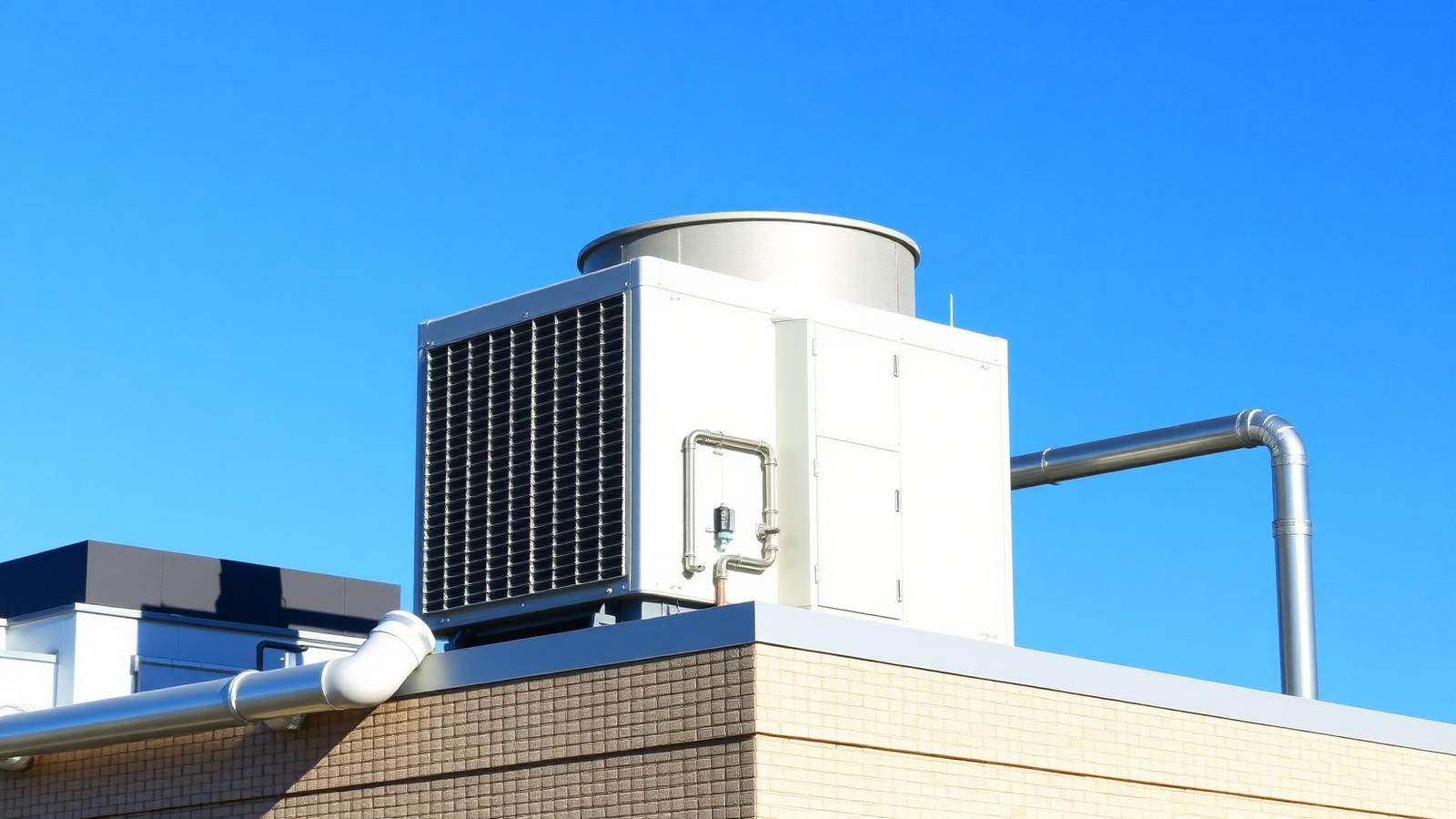
Understanding the Fundamentals of Cooling Tower Filtration
In the UK's industrial and commercial sectors, managing the water quality of open-circuit cooling towers presents a unique set of challenges compared to closed-loop hydronic systems. Cooling towers naturally act as high-efficiency air scrubbers, pulling in atmospheric dust, pollen, and debris which then settle in the basin as sludge. Without robust cooling tower filtration, these particulate contaminants circulate through the primary pipework, leading to increased pressure drops and reduced thermal conductivity in primary heat exchangers. For facilities managers, the objective is not just to maintain water clarity but to ensure the entire system operates within the strict parameters defined by BSRIA BG50 and CIBSE guidelines for cooling water management and Legionella control.
The presence of suspended solids acts as a catalyst for under-deposit corrosion and microbial proliferation, including the risk of Legionella pneumophila. When particles settle in low-flow areas of the cooling circuit, they create an anaerobic environment where bacteria can flourish, shielded from the efficacy of chemical biocides. By implementing a dedicated cooling tower filtration strategy, specifically utilising side stream technology, engineers can continuously remove these solids. This proactive approach ensures that the total suspended solids (TSS) remain at levels that do not compromise the integrity of the metallic components or the effectiveness of the chemical dosing regime, ultimately extending the operational lifecycle of the core plant and reducing the frequency of manual basin cleaning.
From a commercial perspective, the cost of neglect is substantial. Foulants on heat transfer surfaces as thin as 0.1mm can reduce heat transfer efficiency by up to 10%, leading to a direct surge in energy consumption for the chillers. Furthermore, excessive particulate matter increases the wear on pump seals and valves, leading to premature component failure and emergency downtime. UKGP Industrial provides technical consultation to help M&E contractors select the correct filtration microns rating and flow rates to mitigate these risks. Our bespoke solutions are designed to integrate seamlessly into existing plant room footprints, providing a reliable barrier against the ingress of environmental contaminants that otherwise degrade system performance over time.
- Continuous removal of atmospheric pollutants and pipe scale
- Reduction in chemical consumption by increasing biocide efficacy
- Compliance with BSRIA BG50 and CIBSE TM13 water quality standards
- Protection of high-value downstream assets like plate heat exchangers
- Lowering the total cost of ownership through reduced maintenance intervals
The Role of Side Stream Filtration in Open Systems
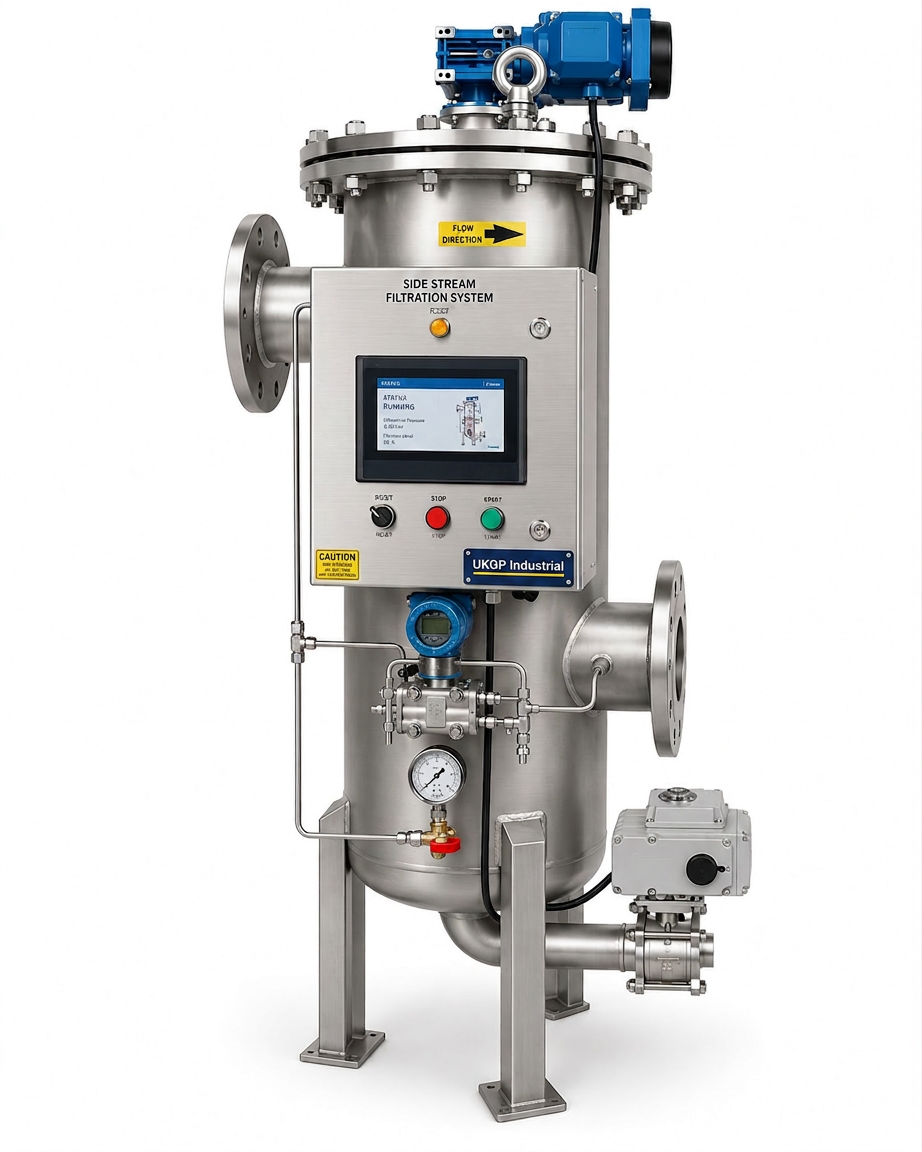
Side stream filtration is the industry-standard method for maintaining water quality in large-scale cooling applications. Rather than attempting to filter the entire high-volume primary flow, which would require massive, prohibitively expensive equipment, we divert a specific percentage—typically 5% to 15%—of the circulating water through a dedicated filter skid. This continuous loop ensures that the entire volume of the cooling tower basin is turned over and cleaned multiple times per day. For UK-based consultants, specifying a side stream system is the most cost-effective way to achieve high-clarity water without the massive capital expenditure and pressure loss associated with full-flow filtration units.
UKGP Industrial specialises in the manufacture of side stream filtration skids specifically engineered for the rigours of UK industrial environments. Our skids are often specified from DN50 to DN100 sizes, providing the flexibility needed for various cooling capacities. These units are made to order at our Surrey facility, with lead times typically ranging from 6-8 weeks. Starting from approximately £6,800 + VAT, these systems represent a strategic investment in plant longevity. Each skid is designed for ease of installation by M&E contractors, featuring intuitive controls and a 2-year warranty to provide peace of mind to the end-user. By choosing a UK-manufactured solution, procurement leads can avoid the uncertainties of international shipping and ensure local technical support is always available.
In terms of technical specification, a cooling tower filtration unit must be sized correctly to handle the specific solid loading of the site. Whether the facility is located in a dusty industrial zone or a suburban office park, the filtration rate must exceed the rate of particle ingress. Our side stream skids utilise advanced media or centrifugal separation techniques to capture particles down to 5-10 microns. This level of filtration is critical for preventing the 'sanding' of mechanical seals in circulating pumps. When you request a quote for a UKGP side stream filtration skid, our engineers work with your flow data to ensure the unit provided is perfectly matched to your site's specific cooling load and environmental conditions.
- Typical skid flow rates tailored for DN50 to DN100 pipework
- UK-designed and manufactured with a standard 6-8 week lead time
- Integrated pump and controls for fully autonomous operation
- Standard pricing starting at £6,800+VAT for industrial-grade units
- Rugged construction with a comprehensive 2-year manufacturer warranty
Technical Compliance: BSRIA BG50 and BS 8552
Compliance with UK industry standards is not optional for modern building services; it is a fundamental requirement for safety and efficiency. BSRIA BG50 (Water Treatment for Closed Heating and Cooling Systems) and BS 8552 (Sampling and Monitoring of Water from Building Services Systems) provide the framework for professional water management. While BG50 focuses on closed systems, its principles regarding the removal of suspended solids are highly applicable to the primary loops of cooling systems. Implementing high-efficiency cooling tower filtration allows site operators to stay within the recommended limits for turbidity and iron content, which are the primary indicators of system health and potential corrosion issues.
For plant room engineers, the focus is often on the 'Pre-Commission Cleaning' requirements detailed in BSRIA BG29. However, the ongoing maintenance of water quality is what prevents the system from reverting to a fouled state post-handover. Side stream filtration acts as the permanent guardian of the water's chemistry. If the filtration system is undersized or poorly maintained, even the most expensive chemical treatment programme will fail. This is because particulate matter buffers the effects of corrosion inhibitors and biocides, requiring higher dosages to achieve the same result. By maintaining low TSS levels, cooling tower filtration allows for more conservative and environmentally friendly chemical use, aligning with corporate sustainability goals.
Documentation and monitoring are also key components of these standards. A modern filtration skid should allow for easy monitoring of pressure differentials, indicating when the filter media requires cleaning or replacement. At UKGP Industrial, we ensure that our cooling tower filtration systems are equipped with the necessary gauges and ports to facilitate the sampling required by BS 8552. This enables facility managers to provide empirical evidence of water quality during audits or inspections. Investing in a quality UK-made filtration skid ensures that your building remains compliant with the evolving landscape of UK H&S and environmental regulations, avoiding the heavy penalties associated with poor Legionella management.
- Aligns system operation with BSRIA BG50 best practices
- Facilitates easier water sampling and compliance with BS 8552
- Reduces the biological load, aiding in ACoP L8 Legionella compliance
- Maintains lower turbidity levels to improve UV sterilisation efficacy
- Provides a verifiable audit trail for water quality management
Protecting Plate Heat Exchangers from Fouling
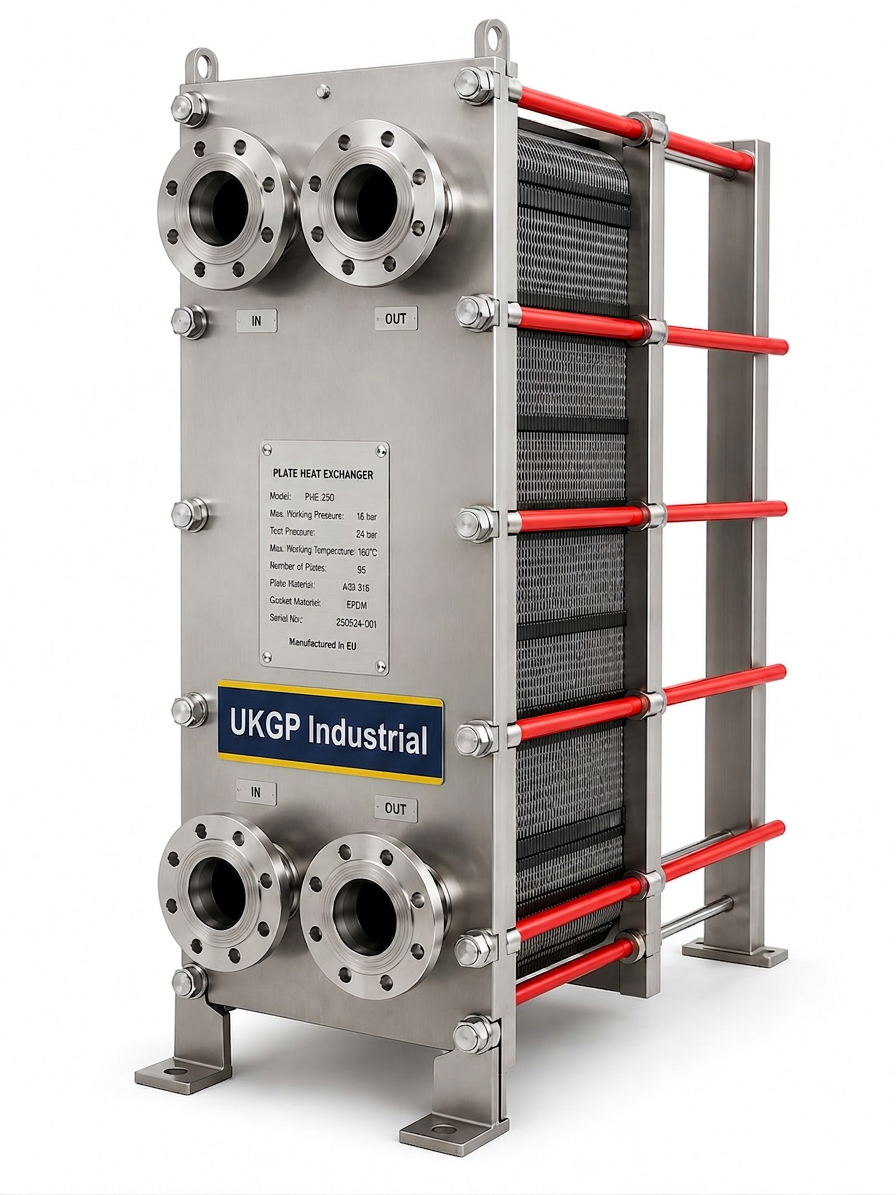
In many UK HVAC layouts, the cooling tower water passes through a plate heat exchanger (PHE) to isolate the open-circuit water from the internal building chillers. Because the gaps between the plates in a high-efficiency PHE are extremely narrow—often only a few millimetres—they act as unintended filters for any debris in the water. Without effective cooling tower filtration, these plate heat exchangers become rapidly clogged with scale and sludge. This not only chokes the flow and increases the pumping head but also creates localised hotspots that can lead to thermal stress and plate failure. Once a PHE is fouled, the only solution is often a costly and time-consuming manual strip-down and acid wash.
By installing a UKGP side stream filtration system, you create a protective barrier for your plate heat exchangers. The filtration unit removes the bulk of the abrasive and sticky solids before they can reach the narrow channels of the PHE. This significantly extends the interval between scheduled services and ensures that the heat transfer coefficient remains at the design level. For M&E contractors, specifying a package that includes both the cooling tower filtration and the subsequent heat exchangers ensures a balanced system where both components are designed to work in tandem. Our technical team can assist in sizing these components together to ensure the pressure drop across the entire circuit is optimised for energy efficiency.
UKGP Industrial offers a range of high-efficiency plate heat exchangers to complement our filtration range. When these two technologies are combined, the risk of unplanned system shutdowns is virtually eliminated. Our PHEs are designed for easy maintenance and maximum thermal performance, and when supplied alongside our made-to-order filtration skids, they provide a complete solution for thermal management. If you are currently experiencing high approach temperatures or frequent PHE clogging, it is a clear sign that your cooling tower filtration is either absent or inadequate. Upgrading to a DN50-DN100 filtration skid is a proven method for restoring and maintaining the peak performance of your cooling infrastructure.
- Prevents narrow channels in PHEs from becoming blocked
- Maintains design approach temperatures for better chiller efficiency
- Reduces the frequency of expensive heat exchanger strip-downs
- Optimises the lifespan of Gaskets and Plates in the PHE unit
- Ideal for both retrofit and new-build UK plant room applications
Economic Analysis: ROI of Cooling Tower Filtration
The financial justification for installing cooling tower filtration is compelling when considering the long-term operational expenditure (OPEX). The initial capital outlay for a UKGP side stream skid, starting at £6,800 + VAT, is often recouped within the first 12 to 18 months through energy savings alone. As mentioned previously, the reduction in scale and biofilm on heat transfer surfaces allows the chillers to run at their intended efficiency. For a large commercial building in London or Manchester, a 5% saving in chiller electricity costs can equate to thousands of pounds per annum. When you add the savings from reduced water consumption (due to lower blowdown requirements) and lower chemical costs, the ROI becomes even more attractive.
Maintenance labour is another area where cooling tower filtration provides significant cost relief. Manually cleaning a cooling tower basin is a hazardous, labour-intensive task that requires the system to be offline. By continuously removing the solids, our skids reduce the accumulation of 'muck' in the basin, allowing for longer intervals between deep cleans and reducing the risks associated with confined space entry for maintenance staff. Furthermore, by protecting the mechanical seals of the primary pumps from abrasive wear, facilities managers can avoid the high costs of emergency pump repairs and the associated disruption to the building's occupants. Our 2-year warranty on all filtration skids further reduces the financial risk for the end-user.
When procurement leads evaluate filtration options, they must consider the total life-cycle cost. Cheaper, imported plastic filtration units often fail within 2-3 years due to UV degradation or poor build quality. UKGP Industrial’s skids are built to industrial specifications, ensuring they withstand the harsh conditions of a UK rooftop or plant room. With a typical lead time of 6-8 weeks for a custom-built unit, we provide a solution that is both timely and durable. Investing in a robust DN50-DN100 filtration system today prevents the catastrophic costs of a complete system flush or the premature replacement of expensive chillers and boilers in the future. Requesting a technical quote is the first step toward securing your facility's operational budget.
- Payback periods often under 18 months via energy and water savings
- Eliminates the need for frequent, hazardous manual basin cleaning
- Reduces blowdown frequency, saving significantly on metered water bills
- Avoids the high cost of emergency 'break-fix' maintenance for pumps
- Increased asset value through professional-grade plant room equipment
Specifying the Right Skid for UK Plant Rooms
Selecting the correct cooling tower filtration system requires a detailed understanding of the system's hydraulic characteristics and the expected solid loading. For most UK commercial applications, selecting a skid between DN50 and DN100 pipe sizes is sufficient to handle the side stream flow for towers ranging from 500kW to 5MW of cooling. The skid must be positioned correctly in the plant room—ideally taking water from the hot return line before it hits the tower, or directly from the basin, and returning it to the cool side. This 'kidney loop' configuration ensures that the cleanest possible water is consistently sent through the building's cooling circuit.
Materials of construction are also a critical consideration. Given the aerated and often corrosive nature of cooling tower water, the filtration skid must be manufactured from materials that can withstand these conditions. Our units are built for longevity, utilizing high-grade components that resist corrosion and mechanical fatigue. When you contact UKGP Industrial, we provide a comprehensive technical specification that includes the footprint, electrical requirements, and dry/wet weights of the unit. This level of detail is essential for consultants who need to incorporate the equipment into their BIM models or plant room layouts. Our made-to-order approach means we can often accommodate specific spatial constraints that off-the-shelf imports cannot meet.
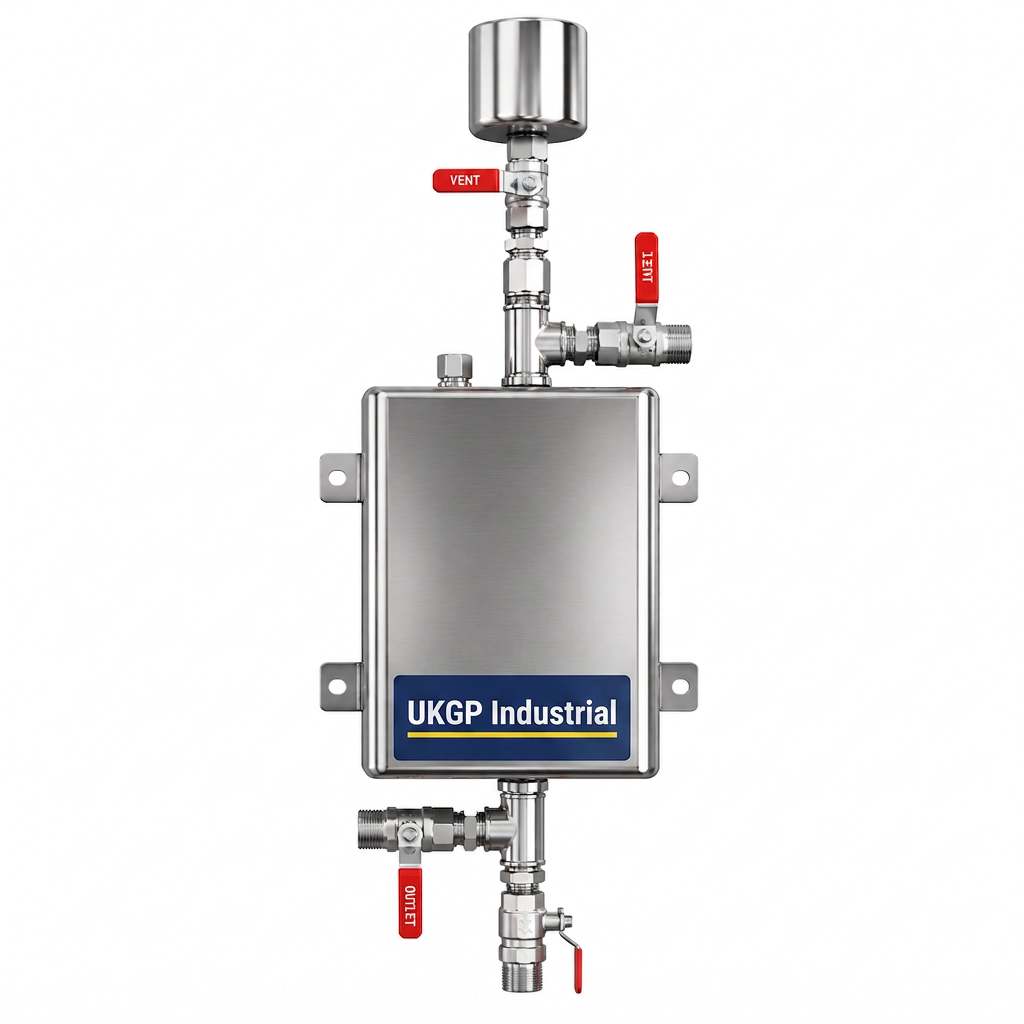
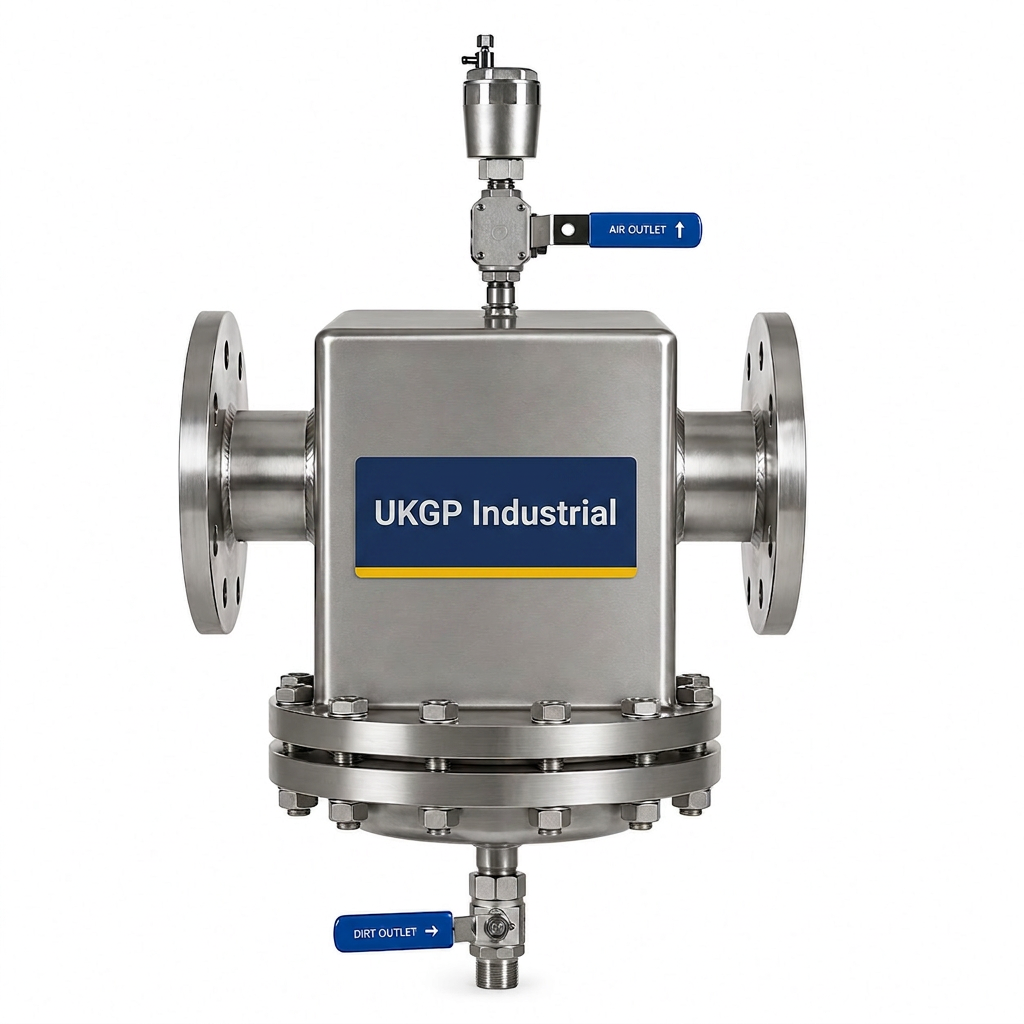
Installation should always be carried out by qualified M&E contractors to ensure that the skid is integrated correctly with the existing BMS (Building Management System). Our filtration units can be supplied with volt-free contacts for remote fault monitoring, ensuring that any issues are identified immediately by the FM team. With a 6-8 week lead time, UKGP can support tight project schedules, ensuring that water treatment is not the bottleneck in your commissioning process. Whether you are looking for a standalone unit or a complete packaged solution including dosing pots and separators, our Surrey-based team is ready to provide the expertise and hardware required for a world-class cooling water treatment regime.
- Sized for UK standard pipework from DN50 to DN100
- Compact footprint designed to fit through standard plant room doors
- BMS integration capabilities for real-time status monitoring
- Comprehensive documentation provided for O&M manuals
- Direct access to UK technical support for installation queries
Frequently asked questions
What is the typical lead time for a UKGP filtration skid?
- Our side stream filtration skids are made to order at our Surrey facility, with a typical lead time of 6-8 weeks, ensuring you receive a unit tailored to your specific system requirements.
How much does a commercial cooling tower filtration system cost?
- Prices for our industrial-grade side stream filtration skids start from approximately £6,800 + VAT, depending on the pipe size (DN50 to DN100) and the specific filtration media required.
Does your equipment come with a warranty?
- Yes, all UKGP Industrial filtration skids come with a comprehensive 2-year manufacturer warranty, providing long-term reliability for your building services assets.
Is side stream filtration necessary if we already use chemical dosing?
- Yes. Chemicals treat the water's biological and corrosive properties, but they do not remove physical particles. Filtration removes the solids that chemicals cannot, making the overall water treatment much more effective.
What standards do your filtration systems help us meet?
- Our systems are designed to help UK facilities comply with BSRIA BG50 and BG29, CIBSE guides, and BS 8552, ensuring best practices in water quality and Legionella risk management.