Understanding the compressed air water separator
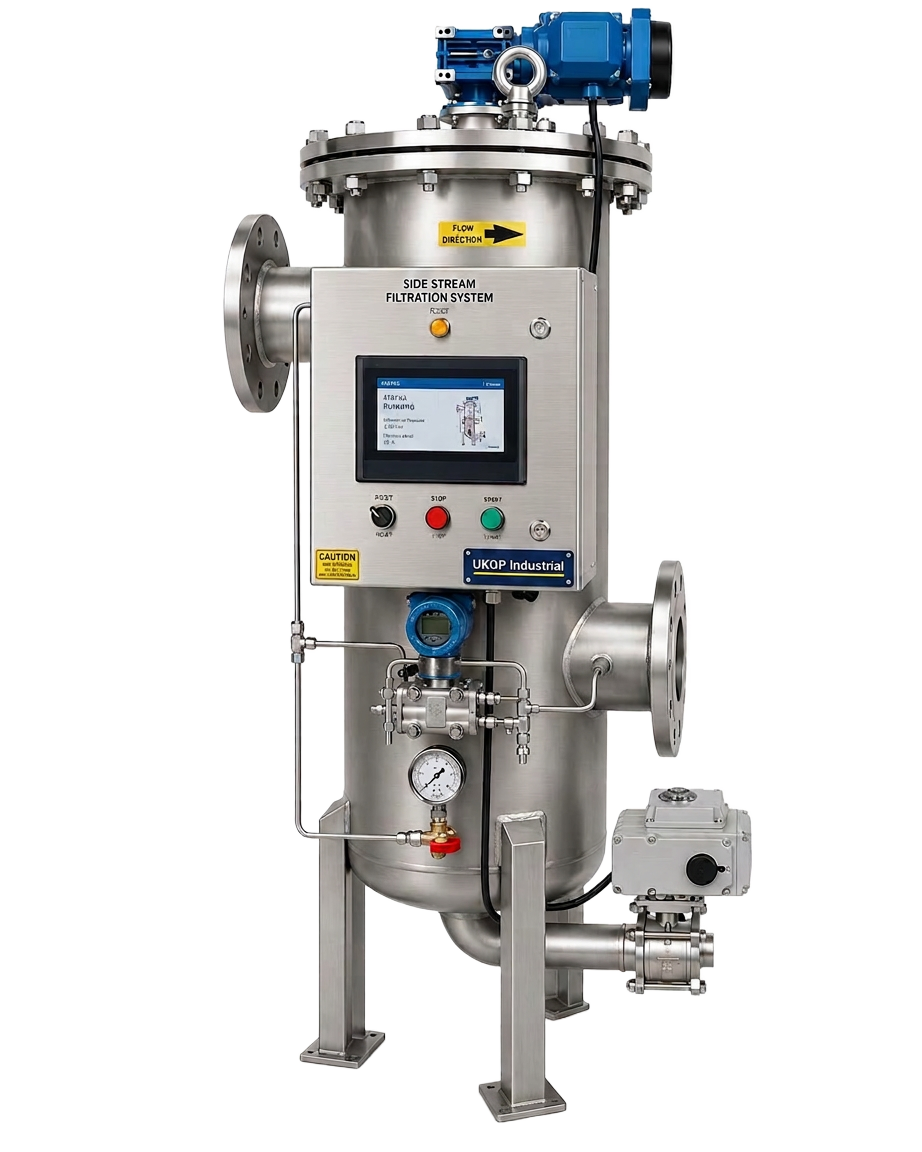
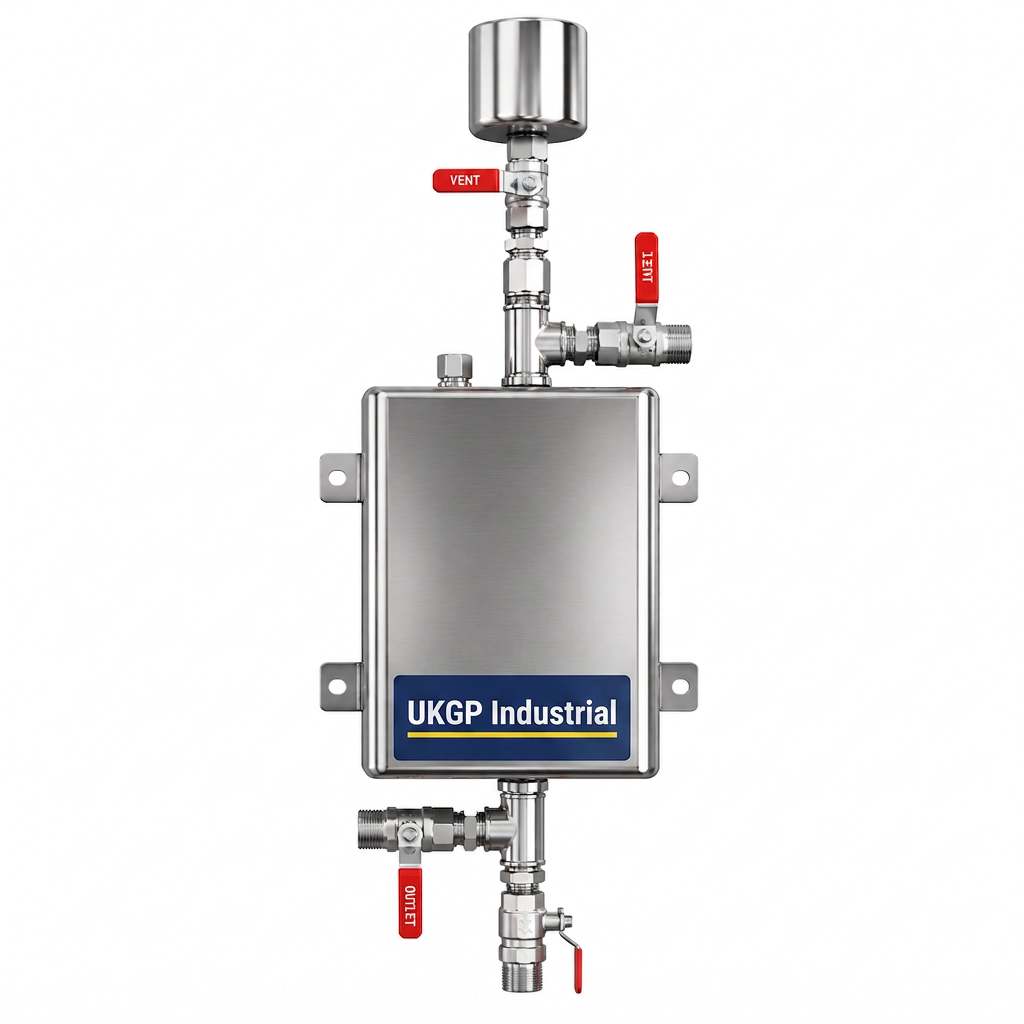
In modern UK plant rooms, the presence of entrained moisture and microbubbles is a primary catalyst for corrosion and component failure. A compressed air water separator serves as the first line of defence, utilizing centrifugal force or coalescing media to remove bulk liquid and aerosols from the air stream. Without this critical intervention, moisture travels downstream where it can emulsify with lubricating oils, cause rust in steel pipework, and freeze in external pneumatic lines. Building services consultants often specify these units to ensure that the air quality meets the stringent requirements of sensitive control systems and industrial processes.
Choosing the correct compressed air water separator requires a deep understanding of the operating pressure and the flow rate required by the facility. For instance, in applications where air is used for instrumentation or pneumatic actuation, any water bypass can lead to erratic performance and costly downtime. By installing a high-efficiency separator, engineers can significantly reduce the load on refrigerated or desiccant dryers, thereby extending the service life of more expensive filtration assets. This proactive approach to air quality is becoming increasingly vital as plant room spaces become more compact and efficiency standards more demanding.
When evaluating options, M&E contractors must look beyond simple moisture removal and consider the impact of the separator on total system pressure drop. A poorly designed compressed air water separator may create significant resistance, forcing compressors to work harder and consuming more energy. High-performance models are engineered to provide maximum water extraction with minimal drag, ensuring that the facility remains compliant with energy efficiency goals while maintaining the dry, clean air necessary for industrial operations. UKGP Industrial provides technical guidance to ensure your selection matches the specific hydraulic and pneumatic demands of your Surrey-based or national projects.
- Centrifugal separation for high-velocity bulk liquid removal.
- Coalescing media options for removing fine mist and aerosols.
- Automatic drain compatibility to prevent condensate carry-over.
- Compliance with ISO 8573-1 air quality standards for industrial use.
Integrating Air and Dirt Separators in HVAC Systems
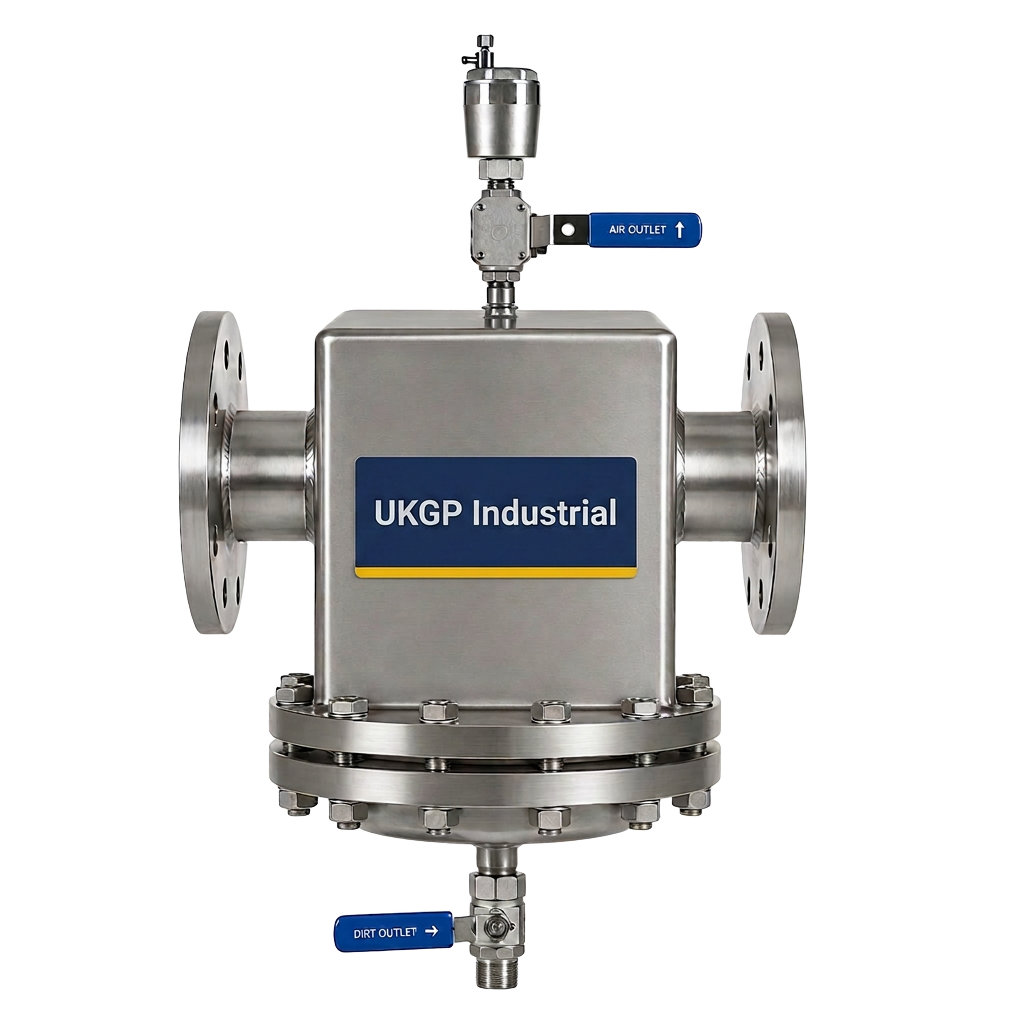
While compressed air systems focus on moisture, hydronic heating and cooling circuits face the twin threats of microbubbles and magnetite. Integrating a UKGP air and dirt separator is essential for any plant room adhering to BSRIA BG50 and BG29 water treatment guidelines. Our combined units feature a sophisticated coalescing media and a powerful magnetic catch to capture both non-magnetic debris and the fine iron oxide particles that plague modern high-efficiency pumps. This dual-action protection ensures that the heat transfer surfaces remain clean and that the system operates at the design efficiency intended by the OEM.
The UKGP air and dirt separator range is designed for versatility and ease of installation, catering to pipe sizes from DN25 up to DN300. These units are flanged to PN10 or PN16 standards, making them suitable for the majority of UK commercial boiler rooms and district heating substations. By removing both circulating air and suspended solids, these separators prevent noisy operation and the dreaded ‘cold spots’ in radiator circuits. Each unit is supplied with a comprehensive isolation kit, facilitating easy maintenance and blow-down procedures without the need to drain the entire system, thus saving valuable time for FM teams.
Specifying a UKGP air and dirt separator provides peace of mind through a robust 2-year warranty and a build quality that withstands the rigours of continuous industrial use. Whether you are retrofitting an old plant room or designing a new build energy centre, the inclusion of our magnetic separation technology is a commercially aware decision. We recommend contacting our technical team for a quote to see how our separators can be tailored to your specific flow rates and pressure requirements, ensuring your installation meets the highest UK engineering standards.
- Combined coalescing media and magnetic catch for 2-in-1 protection.
- Available in sizes DN25 to DN300 with flanged PN10/16 connections.
- Supplied with a full isolation kit for simplified maintenance cycles.
- Supported by a 2-year manufacturer warranty for commercial reliability.
Maintaining Efficiency and BSRIA Compliance
Maintaining a compressed air water separator is not merely a matter of peak performance but is often a requirement for regulatory compliance and insurance validity. BSRIA guidelines suggest that air and moisture management are fundamental to preventing internal corrosion within building services. For systems where air is used to drive actuators or control valves, a failure in the separator can lead to catastrophic air leaks or mechanical seizures. Regular inspection of the internal elements and the functionality of the auto-drain mechanism is essential to ensure that the water removed does not re-enter the air stream during surges.
In larger industrial settings, the compressed air water separator should be monitored for pressure differential across the housing. A rising pressure drop is a clear indicator of particulate build-up or element saturation, suggesting that maintenance is overdue. By logging these metrics, Facility Managers can move from reactive repairs to a more cost-effective planned preventative maintenance (PPM) schedule. This data-driven approach aligns with CIBSE recommendations for the lifecycle management of plant room equipment, ensuring that energy consumption is kept to a minimum while protecting the integrity of the downstream distribution network.
Furthermore, the environmental impact of condensate disposal cannot be overlooked. The liquid collected by a compressed air water separator often contains traces of compressor lubricant and must be treated as hazardous waste under UK environmental law. It is recommended to install an oil-water separator downstream of the water separator's drain to ensure that only clean water is discharged into the sewerage system. UKGP Industrial supports engineers in selecting the right ancillary equipment to accompany their primary separation assets, ensuring a fully compliant and socially responsible plant room operation.
- Aligns with BSRIA BG50 standards for system moisture control.
- Requires periodic checking of auto-drain valves for functionality.
- Pressure drop monitoring helps schedule filter element replacements.
- Envronmentally responsible condensate management is commercially essential.
Thermal Management and Expansion Control
Efficient water separation is only one part of the plant room puzzle; managing thermal expansion and heat transfer is equally critical. For systems handling high-temperature fluids, the integration of expansion bellows is necessary to accommodate the linear growth of pipework and prevent stress on the compressed air water separator or boiler connections. Expansion bellows from UKGP are designed to withstand high pressure and temperature cycles, ensuring that the entire hydronic or pneumatic infrastructure remains flexible and leak-free. This holistic view of the system's mechanical stresses is what differentiates an elite M&E installation from a standard one.
Where the compressed air water separator protects the air lines, our plate heat exchangers ensure efficient heat transfer in the primary heating circuits. By separating the primary boiler loop from the secondary building load, these exchangers protect the most expensive plant assets from the debris and potential contaminants found in older radiator networks. This thermal decoupling, when used alongside magnetic separation, creates a highly resilient system that requires less frequent intervention. It allows for the use of smaller, more concentrated chemical dosing pots for water treatment, further driving down operational costs for the FM team.
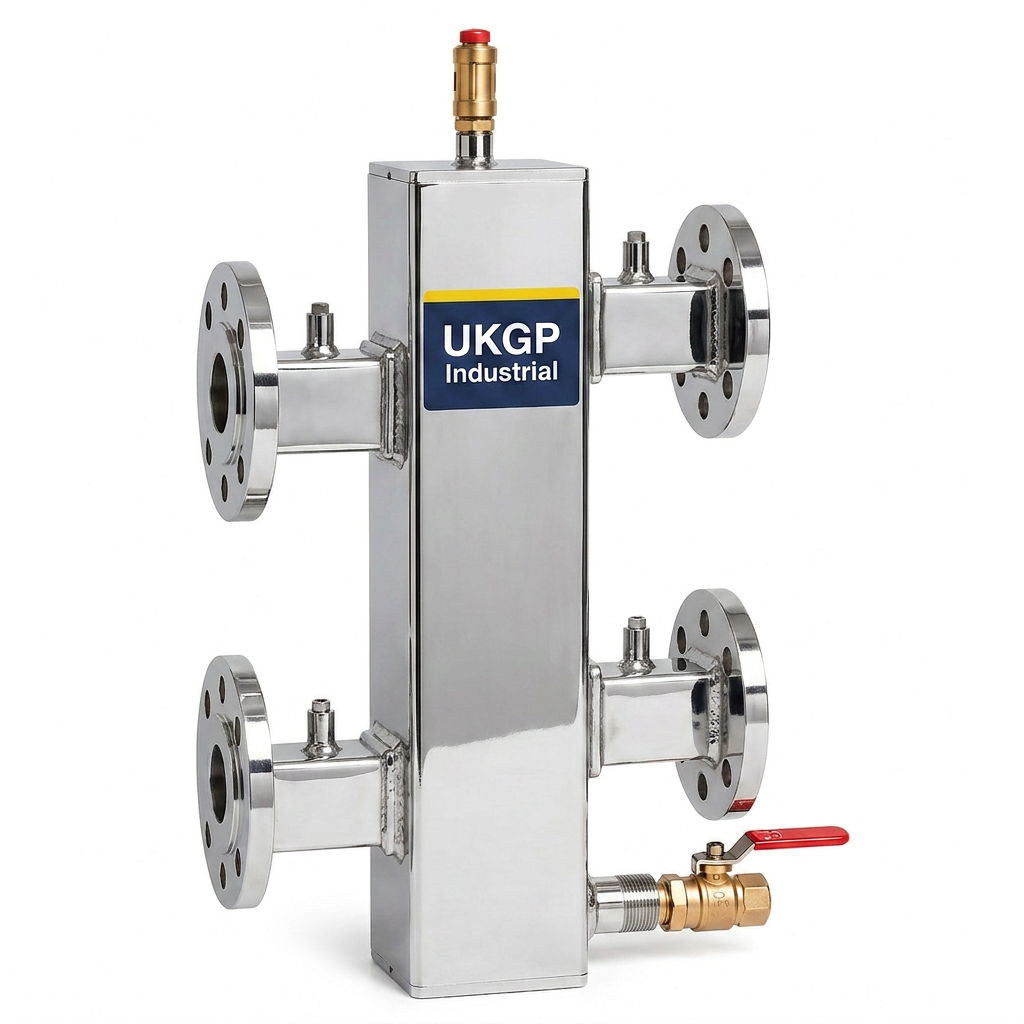
The commercial logic of investing in high-quality mechanical components is undeniable when considering the cost of thermal fatigue and corrosion-related failures. By sourcing components like UKGP low loss headers and expansion bellows together, procurement leads can ensure technical compatibility and streamline the supply chain. Our technical team is available to assist in calculating the exact thermal expansion requirements and separation needs for your facility, providing a bespoke quote that reflects the complexity and scale of your industrial plant room project.
- UKGP expansion bellows prevent stress on rigid pipework junctions.
- Plate heat exchangers provide crucial thermal decoupling for system protection.
- Low loss headers assist in hydraulic balancing for multi-boiler setups.
- Sourcing compatible components minimizes installation errors and delays.
Design Considerations for compressed air water separator Installation
The effectiveness of a compressed air water separator is heavily influenced by its position within the system architecture. Ideally, the separator should be installed directly after the aftercooler, where the air temperature has dropped sufficiently for moisture to condense into droplets. Placing it too far downstream may allow some moisture to remain in a gaseous state, bypassing the unit entirely and condensing later in the distribution lines. Engineering professionals must ensure that the pipework leading to the separator is sloped correctly to encourage condensate flow toward the drainage point, preventing liquid from pooling in low spots.
In addition to placement, the sizing of the compressed air water separator must account for peak flow conditions rather than just average demand. During periods of high air consumption, the velocity through the separator can increase, potentially reducing the dwell time necessary for efficient water extraction. Designers should consult the flow curves provided by UKGP Industrial to ensure that the chosen unit maintains its separation efficiency even at the upper end of the compressor's output. Over-sizing a separator slightly is often a safer commercial bet than under-sizing, which can lead to moisture carry-over and downstream damage.
Finally, accessibility for maintenance is a key design criterion that is often overlooked in congested plant rooms. The compressed air water separator must be mounted with sufficient clearance below the drain valve to allow for the installation of an oil-water separator or for manual testing of the drain function. By considering the practicalities of the FMs daily tasks during the design phase, consultants can create a plant room that is both efficient and easy to manage throughout its operational lifespan. UKGP provides detailed CAD drawings and technical data sheets to assist in these critical planning stages.
- Post-aftercooler installation maximizes water droplet capture.
- Sizing based on peak flow prevents moisture bypass during surges.
- Adequate clearance for drainage maintenance is a design priority.
- Sloped inlet pipework prevents condensate stagnation in the system.
The Role of Water Treatment in Plant Protection
In any system where water is the primary heat transfer medium, chemical management is just as important as mechanical separation. While the compressed air water separator keeps pneumatic lines dry, chemical dosing pots are used to introduce inhibitors and biocides into hydronic circuits. These chemicals work in tandem with magnetic air and dirt separators to create a passivated layer on the internal surfaces of pipework, further inhibiting the formation of magnetite. This dual protection strategy is essential for meeting BS 8552 water quality standards and ensuring the long-term health of the building's infrastructure.
Monitoring this water quality requires precise instrumentation, such as our range of pH sensors and transmitters. By providing real-time data on the alkalinity and conductivity of the water, these sensors allow FM teams to adjust the dosing levels accurately, avoiding the waste of expensive chemicals. When the data suggests a rise in particulate matter, it provides a signal to inspect the magnetic catch in the air and dirt separator. This integrated approach to plant room management ensures that every component, from the compressor to the boiler, operates in an environment that minimizes wear and maximizes energy efficiency.
Ultimately, the goal of any building services engineer is to create a reliable, low-maintenance environment. By combining robust mechanical assets like the UKGP compressed air water separator with intelligent water treatment sensors, you can achieve a level of system stability that meets both BSRIA and CIBSE best practices. We invite procurement leads and engineers to explore our full range of plant room products and request a competitive quote for their upcoming projects. Our Surrey-based technical experts are ready to provide the commercial and technical support needed to ensure your facility's success.
- Chemical dosing pots enable precise inhibitor delivery for corrosion control.
- pH sensors and transmitters provide real-time water quality monitoring.
- Complies with BS 8552 for sampling and monitoring of building services.
- Inhibitor efficacy is enhanced when combined with magnetic dirt separation.
Frequently asked questions
Why is a compressed air water separator necessary if I have a dryer?
- A compressed air water separator removes bulk liquid and aerosols before they reach the air dryer. This prevents the dryer from being overwhelmed by liquid water, which can damage desiccant beads or freeze in a refrigerated dryer, significantly reducing maintenance costs and energy use.
How does magnetic separation differ from standard dirt separation?
- While standard separators use coalescing media to catch non-magnetic debris, the UKGP magnetic catch specifically targets magnetite (black iron oxide). Magnetite is highly abrasive and is a leading cause of failure in modern variable speed pumps and heat exchangers.
Is the UKGP air and dirt separator suitable for high-pressure industrial systems?
- Yes, our air and dirt separators are flanged to PN10/PN16 standards and are available in sizes up to DN300, making them suitable for a wide range of commercial and industrial applications across the UK.
What is the warranty period for UKGP separation products?
- All our standard air and dirt separators come with a 2-year manufacturer warranty, providing plant room engineers and facility managers with long-term peace of mind regarding equipment reliability.
Does a compressed air water separator require frequent maintenance?
- The main maintenance requirement is ensuring the automatic drain valve is clear of debris. Regular inspection of the internal housing for particulate build-up is also recommended to maintain low pressure drops and high separation efficiency.