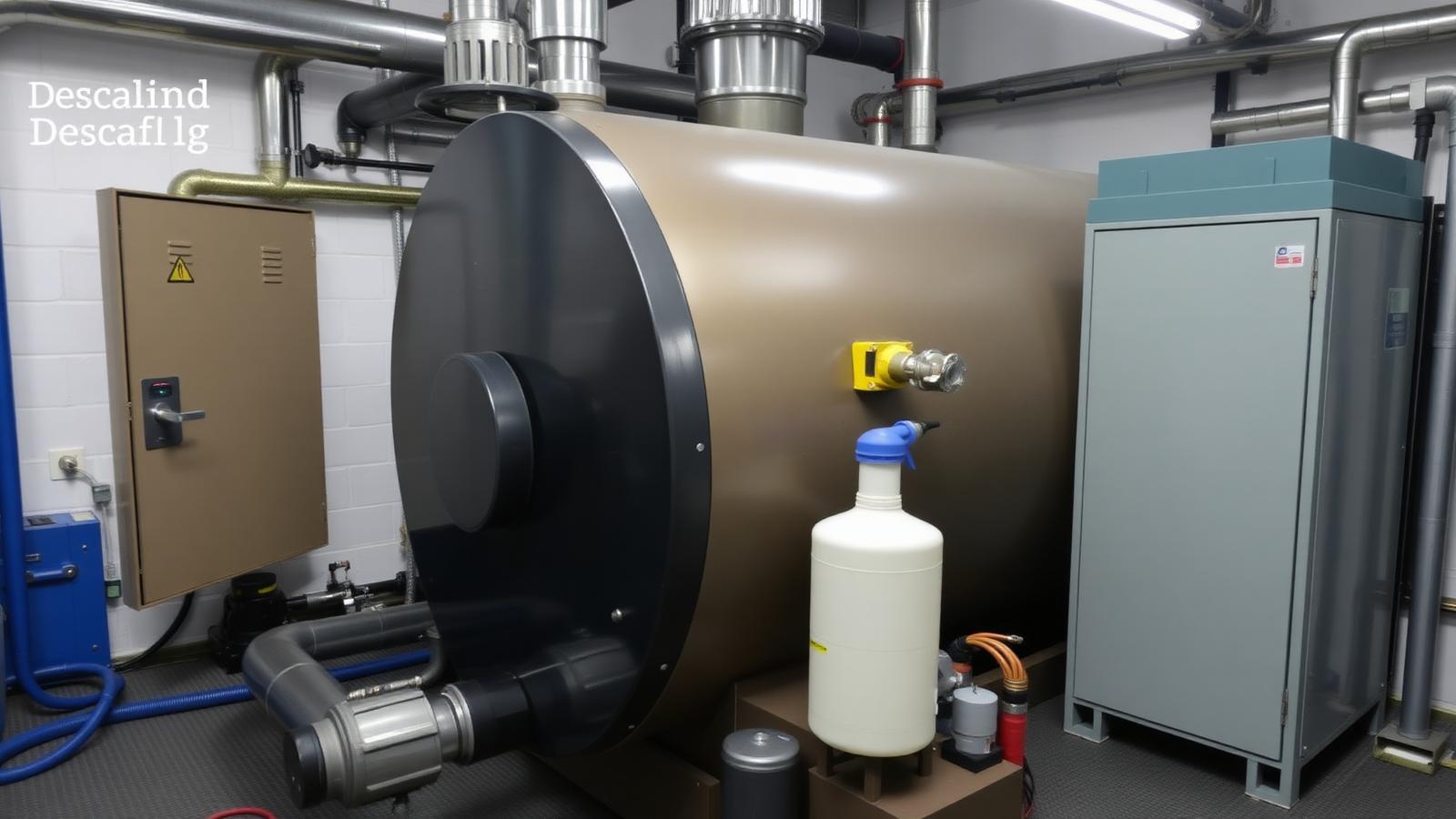
The Engineering Case for Commercial Calorifier Descaling
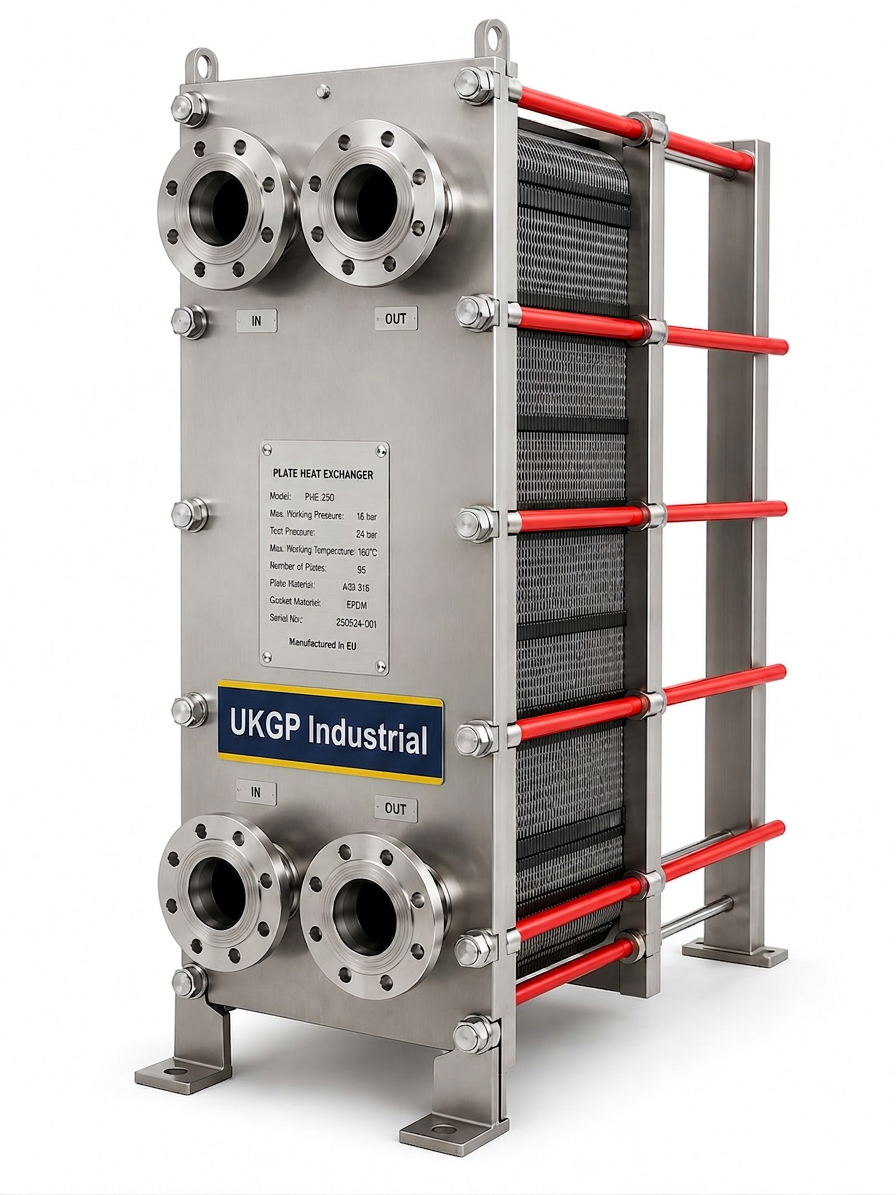
In the UK's high-demand commercial environments, from hospitals to large-scale residential blocks, the accumulation of calcium carbonate on heat transfer surfaces is a silent profit killer. Commercial calorifier descaling becomes necessary when the thermal barrier created by scale reduces heat transfer efficiency, forcing burners or primary heat sources to work significantly harder to reach the required DHW setpoints. According to various industry benchmarks, even a few millimetres of scale can increase energy costs by over 10%, a figure that quickly escalates into thousands of pounds for facilities managers overseeing large plant rooms. Regular descaling is therefore not just a maintenance chore but a strategic financial necessity for modern buildings.
Beyond the immediate energy penalty, the structural integrity of the calorifier itself is at risk. Scale acts as an insulator, creating hot spots on the heater's internal lining or copper coils which can lead to stress fractures and premature vessel failure. When scale flakes off, it enters the secondary circulation system, potentially clogging thermostatic mixing valves (TMVs) and reducing flow rates at the tap. This leads to increased complaints from tenants and higher labour costs for plumbing repairs. By implementing a proactive commercial calorifier descaling schedule, building services engineers can extend the operational life of their vessels, delaying the significant capital expenditure required for a full replacement while ensuring consistent hot water delivery.
Furthermore, the presence of scale provides the perfect porous environment for biofilm growth and Legionella proliferation. The roughened surface of a scaled calorifier is far harder to disinfect than a smooth, clean surface, making it nearly impossible to maintain the hygiene standards mandated by ACoP L8 and HSG274. For UK mechanical contractors, offering a comprehensive descaling and chemical cleaning service is the first line of defence in water safety management. It is often more cost-effective to prevent this accumulation through the use of high-quality equipment, but for existing systems, a rigorous descaling process remains the baseline for operational safety and efficiency in any commercial DHW infrastructure.
- Reduction in energy consumption and gas bills
- Mitigation of Legionella and biofilm risks
- Extended life expectancy of expensive heat exchange coils
- Prevention of TMV and peripheral component blockage
- Compliance with HSG274 Part 2 water safety guidelines
Maintaining BSRIA BG50 and BG29 Compliance
Adherence to BSRIA BG50 (Water Treatment for Closed Heating and Cooling Systems) and BG29 (Pre-commission Cleaning of Pipework Systems) is essential for any modern UK plant room. While calorifiers are part of the DHW system rather than closed loops, the primary circuits feeding them must be strictly maintained to prevent indirect scaling and sludge transfer. Commercial calorifier descaling falls under the broader umbrella of water quality management, where the presence of suspended solids and high mineral content must be addressed. BSRIA guidelines emphasise that clean water is the foundation of energy-efficient heat transfer, and any deviations can lead to rapid system degradation and the loss of manufacturer warranties on high-end boiler plant.
For consultants and M&E contractors, the goal is to install systems that naturally resist the need for frequent commercial calorifier descaling. This involves a multi-staged approach to water treatment, including chemical dosing and physical separation. BS 8552 provides the framework for sampling and monitoring water quality, ensuring that the chemical levels within the primary system do not contribute to corrosion that could eventually breach the heat exchanger within the calorifier. When the primary side is clean, the focus shifts entirely to the secondary DHW side, where the hardness of the incoming mains water determines the rate of scaling. Managing these two distinct but interacting systems requires a high degree of technical expertise and the right UK-manufactured equipment.
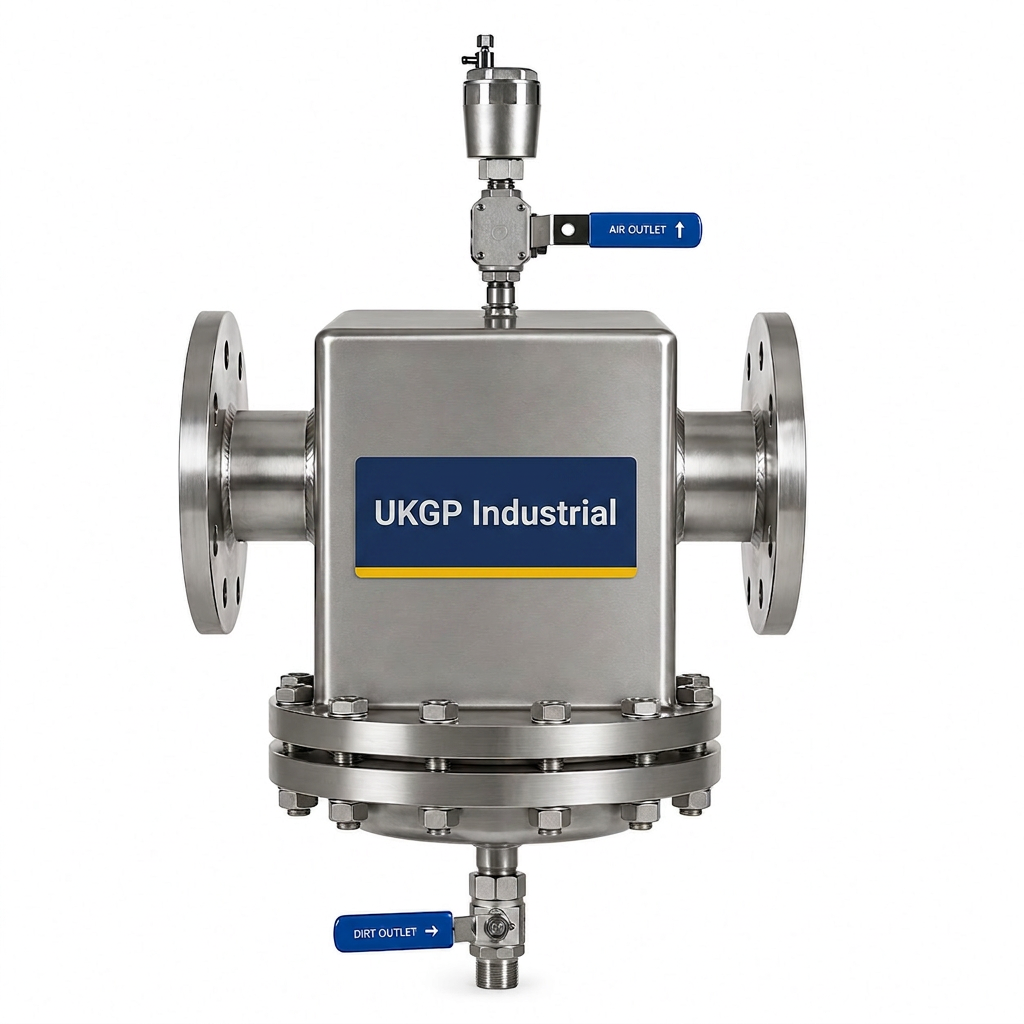
Incorporating UKGP Industrial's range of UK-made plant room gear ensures that your project aligns with the best practices laid out by CIBSE and BSRIA. We understand that UK building services consultants require reliable data and high-build quality to specify products with confidence. Our air and dirt separators, for instance, play a vital role in protecting the primary circuits that feed large calorifiers. By removing micro-bubbles and magnetite, you ensure that the heat transfer at the calorifier remains at peak design performance, reducing the thermal stress that can exacerbate scale formation on the secondary side during heavy use periods.
- Alignment with BSRIA BG50 for closed-loop protection
- Ensuring secondary DHW compliance with BS EN 806
- System sampling in accordance with BS 8552 protocols
- Protecting heat pump and boiler efficiency in hybrid systems
- Maintaining manufacturer warranty validity for major assets
The Role of Side Stream Filtration in Protecting Systems
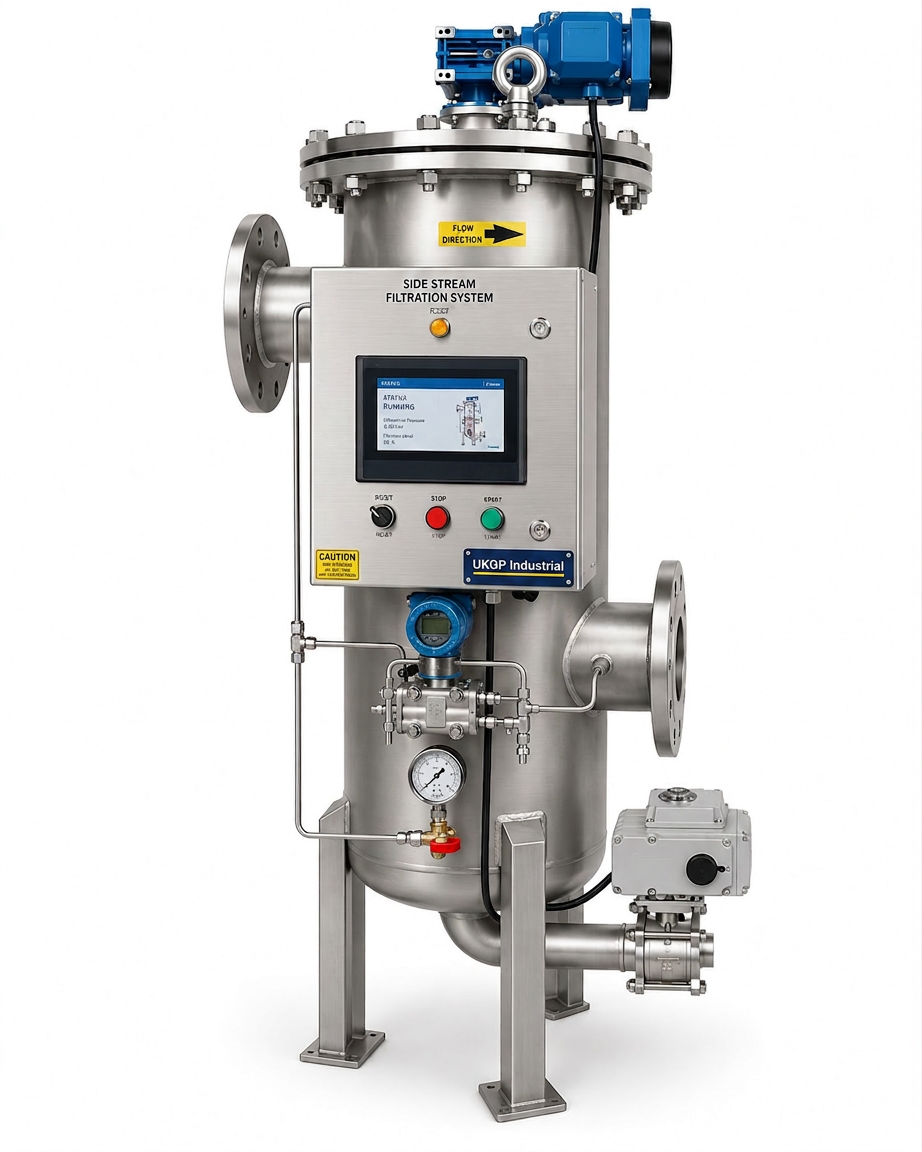
While descaling focuses on the removal of existing mineral deposits, the most efficient way to manage a facility is to prevent the circulation of the particulates that contribute to fouling. This is where side stream filtration becomes an indispensable asset for the UK plant room. Our bespoke side stream filtration skids are engineered to process a percentage of the total water volume, continuously removing debris down to a microscopic level. This prevents the accumulation of sludge and scale precursors that would otherwise settle in the low-velocity areas of a calorifier. For any facility prone to high mineral content, installing a filtration skid is a proven method to reduce the frequency of required commercial calorifier descaling interventions.
Choosing the right filtration solution involves understanding the specific flow rates and pressure requirements of your site. UKGP Industrial offers side stream filtration skids from DN50 to DN100 sizes, ensuring that whether you are managing a small office or a sprawling hospital complex, we have the capacity to protect your heat transfer surfaces. These units are made to order with a standard lead time of 6 to 8 weeks, providing a custom-engineered solution that fits perfectly within your specific layout. Starting from £6,800 + VAT, these skids represent a high-value investment that pays for itself through reduced maintenance downtime and lower chemical treatment costs over the life of the building.
Our skids come with a comprehensive 2-year warranty, reflecting our confidence in Surrey-based manufacturing and British engineering standards. They are designed for ease of use by facility managers, featuring clear pressure gauges to indicate when filter changes are required. By maintaining a clean primary circuit, you directly protect the calorifier's internal heat exchanger from the pitting and scale that often lead to the need for aggressive commercial calorifier descaling. If you are currently designing a mechanical room or upgrading an existing DHW system, request a quote for a UKGP side stream filtration skid to ensure your plant operates at peak efficiency from day one.
- UK-manufactured in Surrey for superior build quality
- Standard range from DN50 up to DN100 pipe sizes
- Priced from £6,800 + VAT with made-to-order flexibility
- 6-8 week lead time for fast-track construction projects
- Inclusive 2-year warranty for long-term peace of mind
Secondary Protection with Chemical Dosing Pots
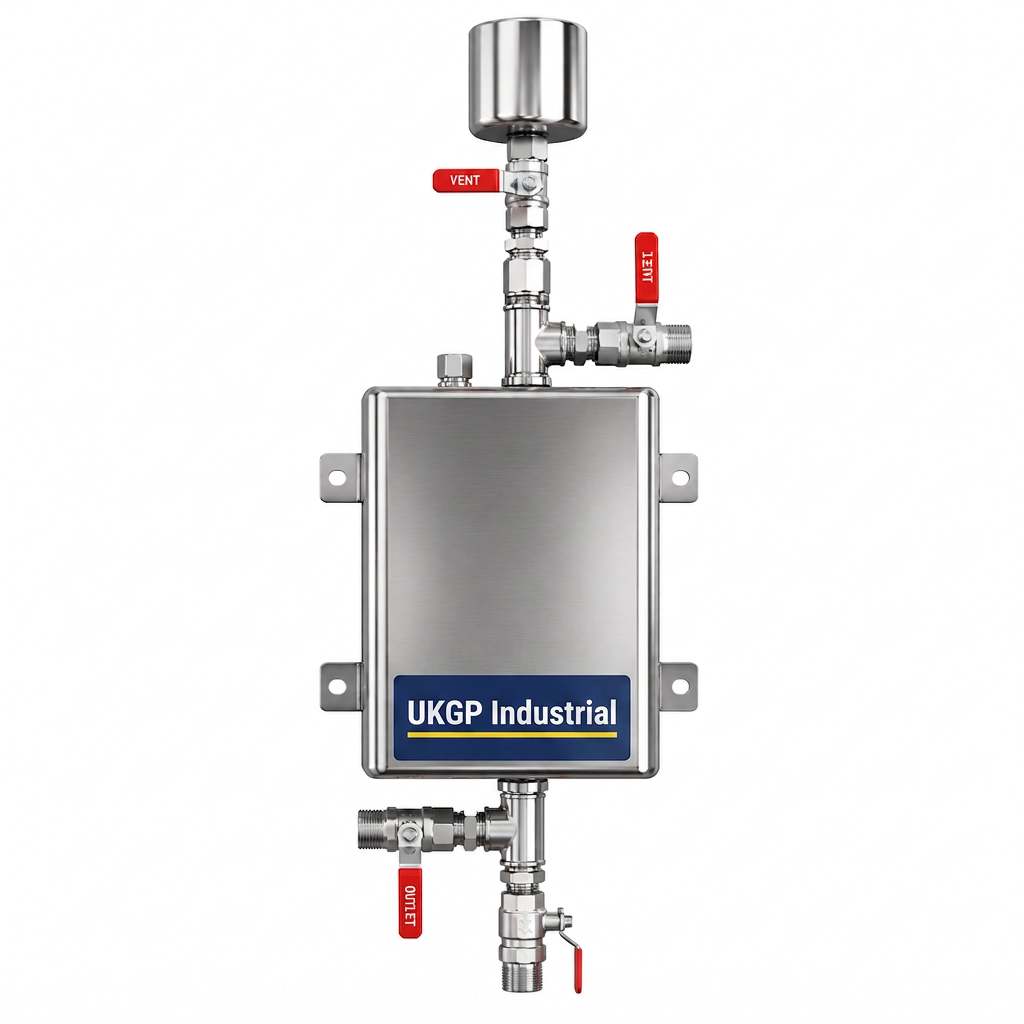
To compliment physical filtration, chemical treatment remains a cornerstone of DHW and primary system health. In many commercial calorifier descaling scenarios, the use of chemical inhibitors is the only way to keep minerals in suspension and prevent them from bonding to the metallic surfaces of the vessel. UKGP chemical dosing pots provide the most reliable method for introducing these essential treatments into the system flow without interrupting service. For building services engineers, having a rugged, easy-to-operate dosing pot ensures that the precise levels of scale inhibitors and biocides are maintained in accordance with the site's water management plan and BSRIA recommendations.
The integration of a dosing pot should be standard in any refurbishment where commercial calorifier descaling has recently taken place. Once the vessel is clean, the priority is to keep it that way. Adding a scale inhibitor immediately after a descale creates a protective layer that repels calcium ions, significantly extending the interval between service visits. Our dosing pots are UK-sourced and built to withstand the rigours of commercial plant room environments, providing a simple yet effective interface for chemical maintenance teams. This proactive stance on water chemistry is the most effective way to avoid the 'descale and repeat' cycle that plagues neglected systems in hard-water regions like London and the South East.
When specifying heat exchange equipment, contractors should consider the synergy between dosing, filtration, and separation. A well-designed system includes a UKGP dosing pot to handle the chemistry, a side stream skid to handle the physics of debris, and a high-quality calorifier to handle the heat. This holistic approach satisfies the requirements of procurement leads who are looking for long-term value and reduced operational risk. By investing in quality UK-made components, you are securing the infrastructure against the most common causes of plant room failure while ensuring that the DHW supply remains safe and compliant for all building users.
- Reliable introduction of scale inhibitors and biocides
- Essential for post-descaling maintenance programmes
- Robust UK construction with user-friendly valve sets
- Available in various capacities to suit plant volume
- Minimises risk of scale bonding to new heat exchangers
Thermal Stress and Expansion Bellows in DHW Systems
One often overlooked aspect of calorifier health is the impact of thermal expansion and contraction on scale formation. As the vessels and associated pipework heat up and cool down, constant movement occurs. If this stress is not managed with high-quality expansion bellows, it can result in the cracking of existing scale layers, which then fall to the bottom of the tank and form a thick, hardened 'cake' that is incredibly difficult to remove during commercial calorifier descaling. Furthermore, uncontrolled mechanical stress can damage the lining of the calorifier, exposing the base metal to rapid corrosion. Expansion bellows act as a buffer, ensuring the system can expand freely without transferring load to the vessel connections.
For M&E contractors, the selection of the correct bellows material is vital for DHW applications. Stainless steel bellows are often required for potable water to prevent contamination and ensure longevity. When installed alongside a freshly descaled calorifier, these components ensure that the pipework remains stable and the integrity of the heat exchanger is not compromised by vibration or thermal movement. This level of detail in the design phase differentiates a standard installation from an expert-level plant room that prioritises durability. UKGP Industrial stocks a wide range of expansion solutions that complement our primary filtration and dosing products, providing a one-stop source for critical plant room hardware.
The commercial calorifier descaling process itself can sometimes put strain on pipework joints if the system has to be dismantled or if aggressive pumping is used. Ensuring that the system was built with the correct expansion allowance makes these maintenance tasks significantly easier and safer for the engineers on the ground. By specifying UKGP expansion bellows, consultants can ensure that their designs accommodate the real-world operational temperature swings of a commercial DHW system, protecting both the pipework and the high-value calorifiers from the mechanical fatigue that leads to expensive leaks and emergency repairs.
- Absorption of thermal expansion in DHW pipework
- Protects calorifier nozzles from excessive mechanical stress
- Potable water-safe stainless steel options available
- Reduces vibration transfer throughout the plant room
- Essential for maintaining system integrity during temperature spikes
Strategic Procurement: Why UKGP Quality Matters
For procurement leads and facility managers, the decision to invest in high-quality side stream filtration and separators is a decision to protect the building's bottom line. The cost of a single emergency commercial calorifier descaling, including the associated downtime and potential for business interruption, can often exceed the initial price of proper protective equipment. By opting for UKGP Industrial's side stream filtration, starting at £6,800 + VAT, you are choosing a made-to-order British product designed specifically for the unique water conditions found across the UK. With a 2-year warranty and a 6-8 week lead time, we provide a predictable and high-quality solution for both new builds and retrofits.
Quality in the plant room also translates to ease of maintenance. Our products are designed by engineers for engineers, ensuring that when it comes time for routine checks or the eventual commercial calorifier descaling, the system is accessible and manageable. A well-laid-out plant room featuring UKGP separators and dosing pots is a sign of a facility that prioritises operational excellence. For contractors, installing UKGP gear means fewer callbacks and a reputation for delivering robust, high-performance systems that exceed client expectations. In an industry where reliability is everything, the 'fit and forget' quality of Surrey-manufactured goods provides a significant competitive advantage.
In conclusion, protecting your DHW assets requires a multi-faceted approach. While commercial calorifier descaling is a necessary part of the maintenance lifecycle for many existing buildings, the goal of any modern facility should be to minimise the need for such interventions through superior filtration and water treatment. By contacting UKGP Industrial for a quote on our DN50 to DN100 side stream filtration skids, you are taking the first step toward a more efficient, compliant, and cost-effective plant room. Let our technical team help you specify the right equipment to ensure your heat exchangers and calorifiers remain in peak condition for years to come.
- British-made quality supports local engineering and reduces lead times
- Predictable 6-8 week delivery schedules for better project planning
- Competitive pricing from £6,800 + VAT for industrial-grade skids
- Technically superior components that align with CIBSE and BSRIA
- Dedicated UK support and a robust 2-year manufacturer warranty
Frequently asked questions
How often should commercial calorifier descaling be performed?
- The frequency depends on water hardness and DHW usage. Typically, an annual inspection is recommended under HSG274, with a full commercial calorifier descaling every 2-3 years in hard water areas if no proactive filtration like a UKGP side stream skid is installed.
What are the signs that a calorifier needs descaling?
- Key indicators include a noticeable drop in hot water temperature, increased recovery times, higher energy bills, and unusual noises (kettling) from the vessel or primary heat exchanger as scale creates hotspots.
Can side stream filtration prevent scale in a calorifier?
- While primarily used for the heating loop, side stream filtration removes the suspended solids and debris that act as 'seeds' for scale formation. Combined with chemical dosing, it significantly reduces the rate of scale build-up on calorifier surfaces.
Does BSRIA BG50 apply to domestic hot water systems?
- BSRIA BG50 focuses on closed heating and cooling loops (the primary side), but the principles of water quality are essential for protecting the heat exchangers that heat the DHW (secondary side), ensuring efficient heat transfer without fouling.
What is the lead time for a UKGP side stream filtration skid?
- Our skids are made to order in Surrey with a typical lead time of 6 to 8 weeks. They are available in sizes DN50 to DN100 and come with a 2-year warranty, starting from £6,800 + VAT.