The Primary Function of the Chemical Dosing Pot
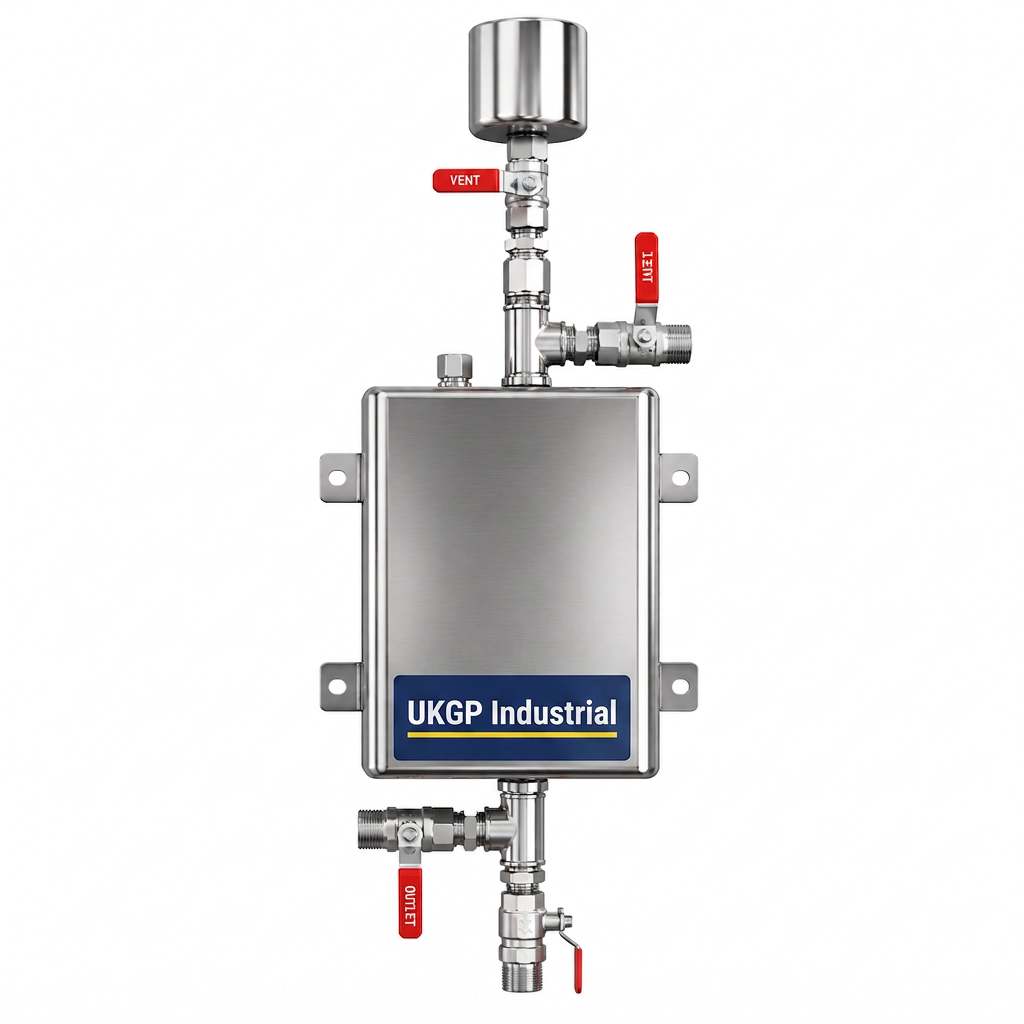
The chemical dosing pot remains an essential, albeit simple, component of any commercial boiler room or chilled water plant. Its primary purpose is to provide a safe and controlled method for introducing liquid chemicals into a closed-loop system without the need to depressurise or drain down the circuit. Constructed typically from stainless steel or carbon steel, these vessels are high-pressure cylinders designed to withstand the full operating pressure of the system.
Under BSRIA BG29/21 (Pre-commission cleaning) and BG50 (Water treatment for closed systems), the dosing pot is the gateway for initial passivating agents and ongoing inhibitor maintenance. Without a correctly installed dosing pot, facilities managers are often forced to use makeshift pumping arrangements which risk the introduction of oxygen—the primary driver of metallic corrosion in sealed systems.
Mechanically, the dosing pot operates on the principle of differential pressure. By connecting the pot across the flow and return headers, or across a circulating pump, a small portion of the system flow is diverted through the vessel. This ensures that the concentrated chemical charge is thoroughly diluted and distributed throughout the entire pipework network.
- Introduction of corrosion inhibitors (Molybdate/Nitrite based).
- System sterilisation via biocides in low-temperature circuits.
- Glycol top-ups for anti-freeze protection in external circuits.
- pH buffering agents to protect aluminium heat exchangers.
Side-Stream Filtration: The Proactive Alternative to Flushing
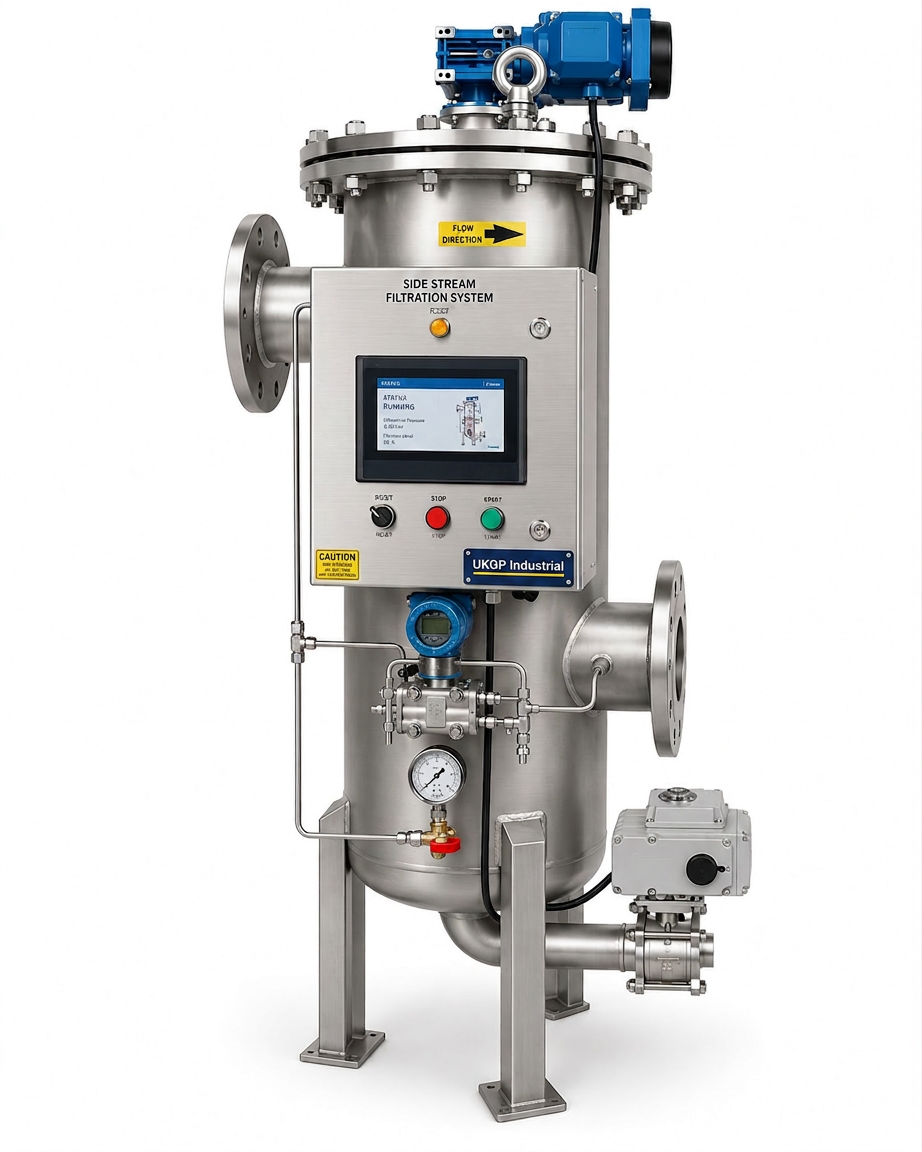
While a dosing pot adds substances to the water, a side-stream filter (SSF) is designed to remove contaminants. In modern thin-walled heat exchangers and high-efficiency variable speed pumps, the presence of even minor particulates can lead to catastrophic failure. Magnetite, a byproduct of corrosion, is particularly destructive to pump bearings and control valves. Side-stream filtration provides a mechanism to remove these particles during normal system operation.
BSRIA BG50 highlights that traditional 'drain and fill' flushing is often counterproductive as it introduces fresh, oxygen-saturated water into the system, which can trigger new cycles of corrosion. Side-stream filtration offers a 'polishing' effect. By diverting approximately 5% to 15% of the total system volume through a high-efficiency filter housing, the water quality is progressively improved without the thermal shock or chemical waste associated with total water replacement.
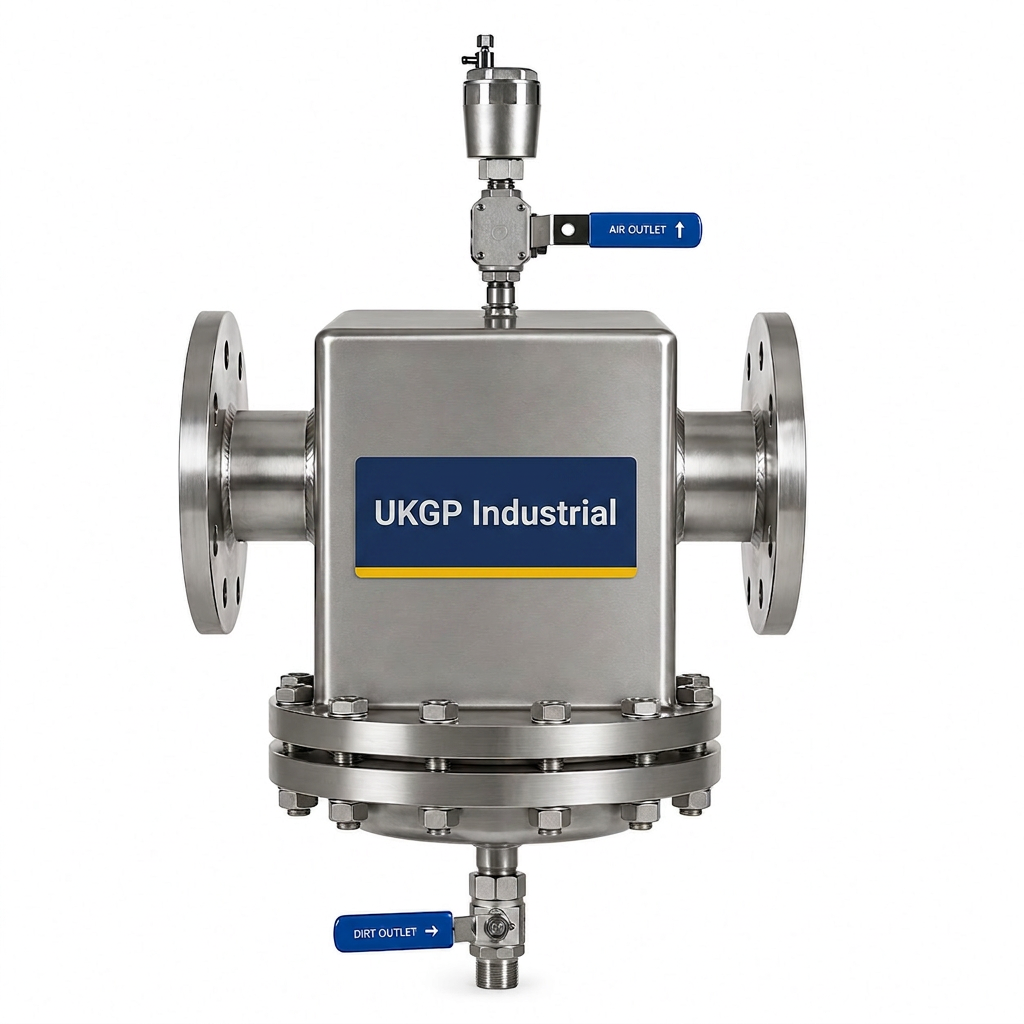
Side-stream units often combine multiple technologies, including stainless steel mesh bags down to 5 microns, cyclonic separators, and rare-earth magnetic rods. Unlike a simple Y-strainer, which only catches large debris that might otherwise 'slug' a pump, an SSF targets the microscopic particles that settle in low-flow areas of the building, such as underfloor heating manifolds or radiator tails.
- Continuous removal of suspended solids (Total Suspended Solids - TSS).
- Capture of magnetite (black iron oxide) through magnetic assemblies.
- Reduction of turbidity to improve heat transfer efficiency.
- Polishing of the system water following a pre-commission clean.
Dosing Pot Specifications and Installation Best Practice
When specifying a chemical dosing pot for a UK plant room, the engineer must consider the system volume and the desired chemical concentration. Standard sizes typically range from 3.5 litres to 25 litres. For very large district heating schemes, larger bespoke vessels may be required, though most commercial applications are served by units in the 6-litre to 15-litre range. Quality units should be manufactured to comply with the Pressure Equipment Directive (PED) and should include a clear identification plate.
Installation must include a tundish to provide a visible air gap when filling, preventing the possibility of backflow into the mains water supply. Furthermore, the pot should be fitted with high-quality isolating valves (often 15mm or 20mm), a non-return valve on the return line, and a drain-off cock. UKGP Industrial dosing pots are typically supplied as a complete kit to ensure all necessary safety components are present and match the pressure rating of the vessel.
Material choice is also critical. While carbon steel is common, stainless steel dosing pots offer superior resistance to the aggressive concentrated chemicals used in initial system cleans. In chilled water systems, 'sweating' can occur on the exterior of the pot; therefore, high-quality thermal insulation jackets should be fitted to prevent external corrosion of the vessel walls and to maintain system energy efficiency.
- Manual operation requiring site attendance.
- Minimal mechanical wear with no moving parts.
- Low capital cost for entry-level 3.5L to 25L units.
- Essential for any system where glycol or inhibitors are used.
Comparative Analysis: Removal vs Neutralisation
The debate between a dosing pot and a side-stream filter is not an 'either/or' scenario, but rather a functional comparison of their roles. A dosing pot is a chemical delivery tool. It manages the chemistry of the water—pH levels, conductivity, and corrosion inhibition. However, chemicals alone cannot remove solid particles that are already present in the system. Even the best inhibitor will not prevent a 50-micron piece of weld slag from damaging a plate heat exchanger.
Side-stream filtration acts as a mechanical safeguard. It physically extracts the materials that the chemicals help to mobilise. For example, a dispersant chemical might be added via the dosing pot to prevent sludge from settling. This dispersant keeps the particles in suspension, which then allows the side-stream filter to capture them. Without the filter, the dispersant simply moves the problem around the circuit until the chemical weakens and the sludge drops out in a different location.
From a maintenance perspective, the dosing pot is used intermittently—perhaps once or twice a year during water analysis checks. The side-stream filter, conversely, is an active component that requires periodic monitoring. Differential pressure gauges on the filter housing will indicate when the internal bag or cartridge is saturated and requires replacement. In new builds, filters may require cleaning weekly during the first three months of operation.
- Micro-bubbles and dissolved gases.
- Iron oxides (Magnetite).
- Limescale and calcium deposits.
- Construction debris (solder, flux, swarf).
Sizing and Selecting Side-Stream Filtration Units
Selecting a side-stream filter requires a detailed understanding of the system's total water volume and the anticipated 'dirt load.' BSRIA BG50 provides the framework for this, suggesting that the filtration rate should be sufficient to process the entire system volume several times over a 24-hour period. For a typical commercial office block with a 10,000-litre system, a filter capable of handling 0.5 to 1.5 m³/h is generally sufficient.
The location of the SSF is just as critical as its size. It should be installed in a location with high differential pressure, typically across the main pumps, but can also be installed as a standalone skid with its own dedicated pump. Dedicated pump units are increasingly popular because they maintain a constant flow through the filter regardless of the main system's variable speed pump modulation. This ensures continuous cleaning even when the building's heat demand is low.
Engineers should also consider the 'consumable' aspect of filtration. Bag filters are cost-effective and easy to dispose of, making them ideal for the heavy-duty removal tasks associated with old system retrofits. Cartridge filters offer finer filtration for high-spec systems but can become blinded quickly if the water quality is poor. Modern UKGP Industrial filtration skids often incorporate a magnetic pre-filter to remove 90% of the magnetite before it ever reaches the filter bag, significantly extending the life of the consumables.
- Cartridge-style for fine polishing (down to 1 micron).
- Bag-style for high-capacity debris removal.
- Automatic backwash systems for reduced maintenance.
- Magnetic separators for high-density magnetite capture.
Glycol Management and Dosing Pots
In the UK, many HVAC systems require protection against freezing, particularly for roof-mounted air handling units (AHUs) or dry air coolers. Glycol (Ethylene or Propylene) is the standard additive for this purpose. Because glycol is required in significant volumes—often 20% to 30% of the total system—a standard 25-litre dosing pot is not used for the initial fill. Instead, a dedicated glycol break tank and pump set are used.
However, the dosing pot remains crucial for 'top-ups' and for adding glycol-specific inhibitors. Over time, glycol can degrade into organic acids, which lowers the pH of the system and increases the rate of corrosion. Testing the glycol concentration and pH monthly is a requirement of BG50. If the concentration has dropped due to minor leaks or water make-up, the dosing pot provides the most efficient way to inject concentrated glycol to bring the system back into specification.
It is vital to ensure that the materials used in the dosing pot construction—specifically the seals and valve seats—are compatible with the type of glycol being used. Standard EPDM or Nitrile seals are usually sufficient, but high-temperature applications or solar thermal circuits may require Viton seals to ensure long-term integrity.
- Initial passivating chemicals.
- Secondary inhibitors.
- Manual biocides for chilled water.
BSRIA Compliance and Engineering Standards
Compliance with BSRIA standards is often a contractual requirement for UK M&E contractors. BG50/21, 'Water treatment for closed heating and cooling systems,' is the definitive guide. It explicitly states that water treatment is not just about chemicals but about 'system management.' This management includes mechanical filtration, air removal, and chemical conditioning. A plant room designed without both a dosing pot and a side-stream filter is likely to be non-compliant with these best-practice guidelines.
The standard emphasizes that water quality must be maintained from the moment the system is filled. This means the side-stream filter should be operational during the pre-commissioning phase and remain in service for the life of the building. The dosing pot must be used to ensure the initial 'slug' of inhibitor is at the correct concentration before the system is handed over to the client. Failure to do so can lead to 'under-deposit corrosion,' where bacteria grow underneath layers of silt, protected from the biocides in the bulk water.
Furthermore, the installation of these components supports the Energy Hierarchy. Clean water has a lower viscosity and higher heat transfer coefficient than sludge-laden water. By maintaining water quality through the combined use of dosing and filtration, the building's energy consumption is reduced, and the lifespan of expensive capital plant such as boilers and chillers is significantly extended.
- BG29/21: Pre-commission cleaning requirements.
- BG50/21: Ongoing water treatment for closed systems.
- BS 8552: Sampling and monitoring of water quality.
- Pressure Equipment Directive (PED) compliance.
Life-Cycle Costs and Maintenance Requirements
The total cost of ownership (TCO) for a plant room includes not just the initial purchase price of the equipment but the ongoing maintenance and chemical costs. Dosing pots have a very low TCO; they are static vessels with almost no moving parts. The main cost associated with them is the chemicals themselves and the labour to administer them. Providing high-quality valves and a robust vessel upfront prevents the common issue of leaking glands and corrosion of the pot itself.
Side-stream filters have a higher TCO because they require consumable media (bags or cartridges) and more frequent technician time. However, the ROI is found in the protection of the wider system. A single pump failure or the need to chemically clean a blocked heat exchanger can cost five times the price of a high-quality SSF unit. In the current UK market, facilities managers are increasingly looking for 'smart' SSF units that include pressure sensors to alert the Building Management System (BMS) when a filter change is required.
In conclusion, the chemical dosing pot and the side-stream filter are complementary technologies. The dosing pot allows for the chemical conditioning of the water to prevent corrosion and scale, while the side-stream filter provides the mechanical means to remove existing and newly formed particulates. For any commercial heating or cooling system to meet modern UK standards of efficiency and reliability, both components must be correctly specified, installed, and maintained.
- Dosing Pots: Annual pressure test and seal inspection.
- Side-Stream Filters: Monthly bag/cartridge checks.
- Water Sampling: Quarterly laboratory analysis (BS 8552).
- Record Keeping: Maintenance logs for BG50 compliance.
Frequently asked questions
Can I use a dosing pot instead of a side-stream filter?
- A dosing pot is used strictly for the manual introduction of liquid chemicals (inhibitors, biocides, glycol). It does not remove existing debris. A side-stream filter is designed to continuously remove suspended solids and magnetite. You typically need both for a compliant system.
What is the recommended flow rate for a side-stream filter?
- BSRIA BG50/2021 recommends that side-stream filtration units provide a minimum flow rate of 5% to 15% of the total system volume per hour to maintain water quality targets.
What pressure rating do I need for my dosing pot?
- Standard UK dosing pots are usually rated to 10 bar or 14 bar. Always verify that the pot's pressure rating exceeds the system's safety valve setting. For high-rise developments, high-pressure 20 bar+ versions may be required.
Where should a dosing pot be installed in the plant room?
- Chemical dosing pots should be installed across the main flow and return headers to utilise the differential pressure (dp) for circulation. They must be fitted with non-return valves and isolating valves to prevent backflow into the mains water supply if integrated with a filling loop.