Pre-Test Inspection and Safety Requirements
Before applying pressure to any vessel, a visual inspection of the installation is mandatory. In accordance with the Pressure Equipment Directive (PED) and UKCA marking requirements, the dosing pot must be securely mounted on suitable wall brackets or a floor-mounted plinth. Ensure that the vessel is not supporting the weight of the connecting pipework; 25mm or 35mm steel pipework should be independently supported within 500mm of the pot connections.
Safety is paramount during hydrostatic testing. All personnel not involved in the test should be cleared from the immediate plant room area. Use calibrated gauges with a full-scale range approximately double the intended test pressure to ensure accuracy. For a standard 10 bar rated system, a 0-20 bar gauge is appropriate. Ensure the gauge has a valid calibration certificate as per BSRIA BG29/21 requirements for commissioning.
- Verify the design pressure of the closed-loop system (e.g., 6 bar).
- Check the Maximum Working Pressure (MWP) on the dosing pot nameplate.
- Ensure all isolation valves (Inlet, Outlet, Drain, and Fill) are functional and of the correct rating.
- Inspect the T-handle or swing-bolt lid mechanism for thread wear or gasket degradation.
Hydrostatic Testing Methodology
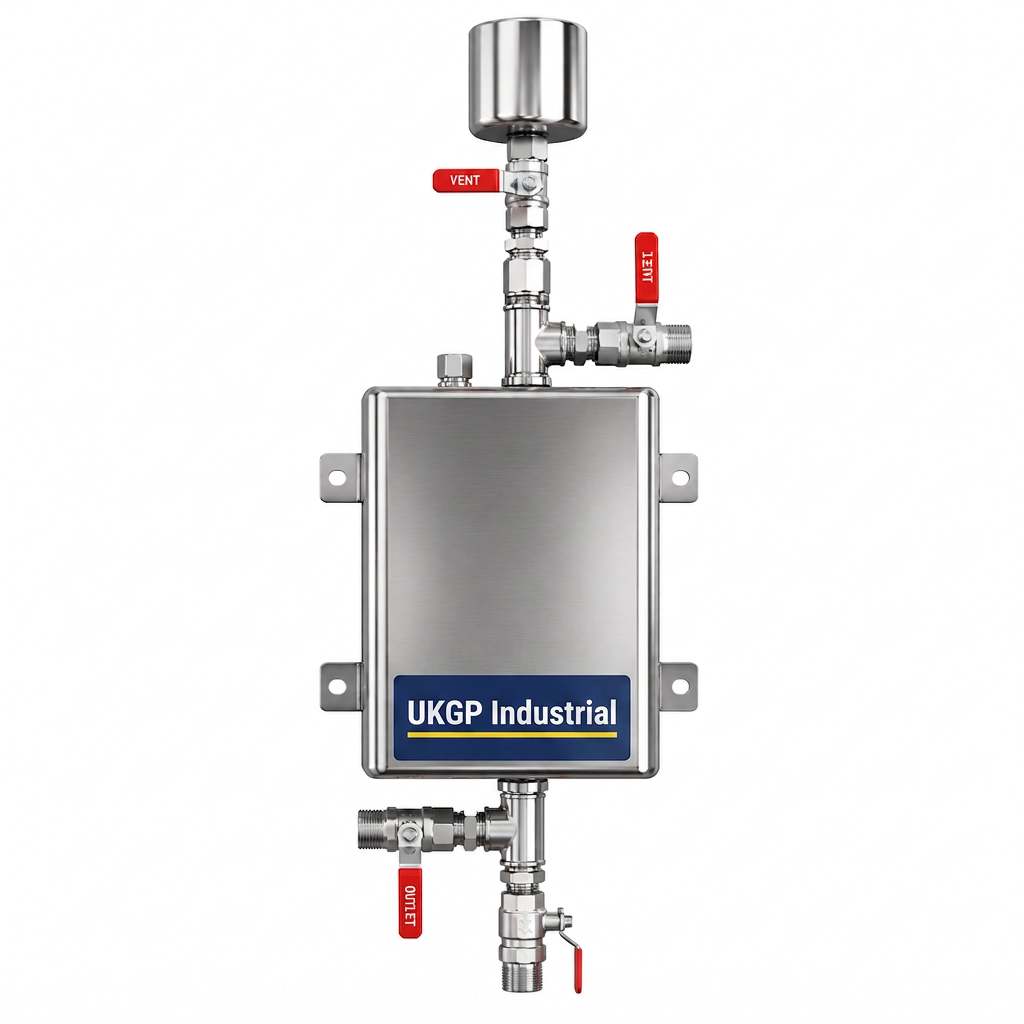
The hydrostatic test should be performed using clean mains water. Begin by closing the isolation valves that connect the dosing pot to the main flow and return headers. Open the top fill valve and the air vent (if fitted) to fill the vessel completely. Once water emerges from the vent, close all valves to create a sealed chamber. Using a manual hydraulic test pump connected to the fill point, slowly increase the internal pressure.
The test pressure should typically be 1.5 times the system design pressure or the maximum working pressure of the vessel, whichever is lower, unless otherwise specified by the project consultant. Monitor the gauge for a minimum of 30 minutes. A 'tight' system will show no drop in pressure. Any fluctuation must be investigated; small drops often indicate minor leaks at the compression fittings or the lid seal, while rapid drops suggest a failure of the isolation valves or a structural weld.
During the test, inspect the longitudinal and circumferential welds of the UKGP Industrial dosing pot. Although these are factory-tested, site-applied stresses during installation can occasionally affect integrity. Pay close attention to the gland packing on the inlet and outlet valves, as these are common points of weeping under elevated pressures.
The Role of Air Venting and Seal Integrity
Entrained air is the primary cause of inaccurate pressure test results and 'spongy' gauge readings. Because air is compressible and water is not, any pockets of air within the dosing pot will mask small leaks and create a potential safety hazard if the vessel fails. Always fill the pot from the lowest point if possible, or vent thoroughly from the top until a steady stream of water is achieved.
The lid seal is the most frequent failure point during a pressure test. In industrial environments, grit or chemical residue can contaminate the EPDM or Nitrile O-ring. Before commencing the test, the seal should be removed, cleaned, and inspected for nicks or flat spots. If the dosing pot is being tested as part of a BSRIA BG50 water treatment regime, ensure the seal material is compatible with the intended inhibitors or glycol concentrations.
- Bleed air from the highest point of the pot (usually the fill tundish or a dedicated air vent).
- Check for 'pitting' or corrosion on the vessel's internal neck before sealing.
- Apply a light coating of silicone grease to the lid O-ring to ensure a vacuum-tight seal.
Integration with Side-Stream Filtration
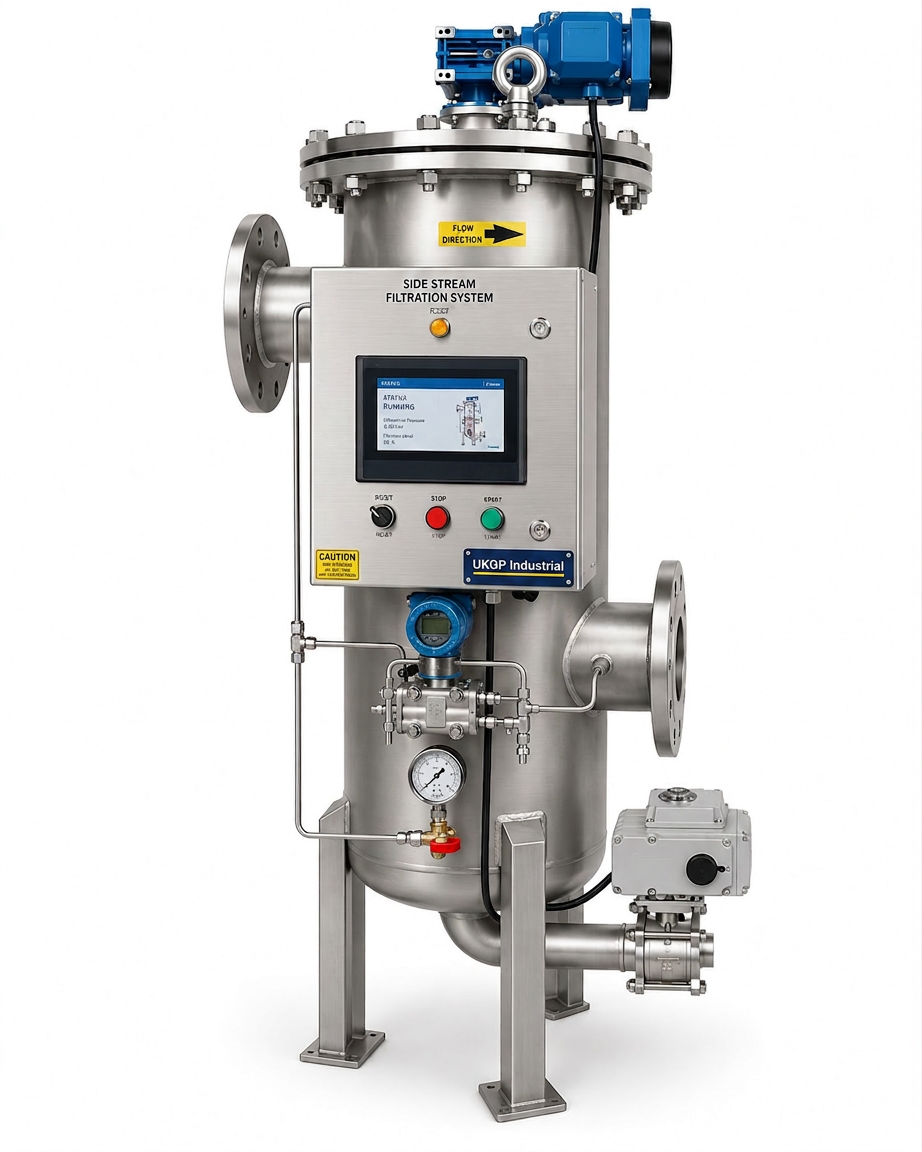
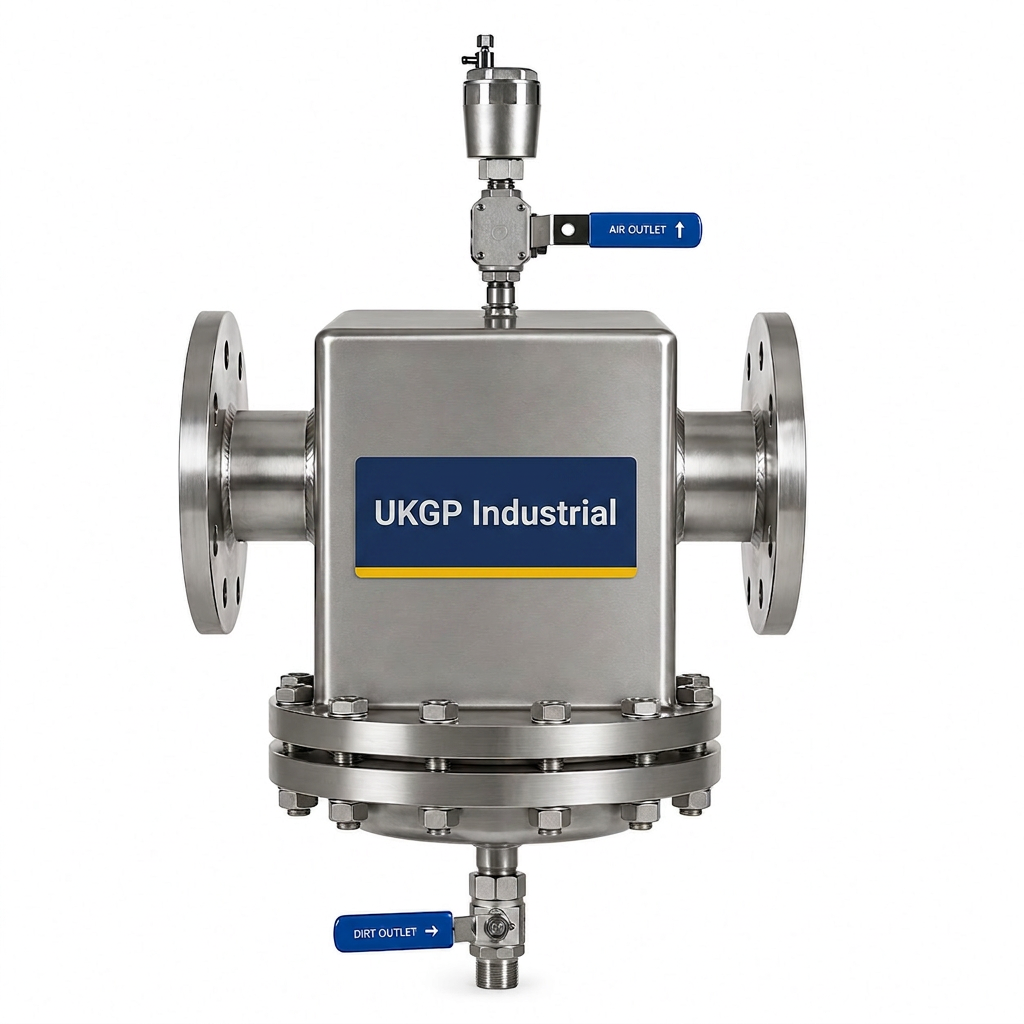
In modern plant room design, the dosing pot is frequently installed in parallel with a side-stream filter. When pressure testing the dosing station, it is often efficient to test the filtration housing and associated bypass pipework simultaneously. However, engineers must ensure that the filter media (such as fine bag filters or magnetic rods) is removed or bypassed if the test pressure exceeds the filter element's collapse rating.
The transition between the dosing pot and side-stream filter must be checked for 'cross-talk' where pressure might bypass an internal valve. Following the hydrostatic test, the system should be flushed in accordance with BSRIA BG29 to remove any debris introduced during the installation of the test equipment. Proper integration ensures that chemical additives, such as biocides for chilled water or inhibitors for LTHW, are distributed effectively without compromising the pressure boundary of the plant.
Documentation and BSRIA Compliance
Under BSRIA BG50 (Water Treatment for Closed Heating and Cooling Systems), maintaining a comprehensive logbook is essential for the ongoing management of the building's assets. The pressure test certificate for the dosing pot forms the baseline for the system's integrity. This documentation is critical for Facilities Managers during insurance audits and health and safety inspections, particularly in systems operating at high temperatures or pressures.
Once the test is successfully completed, the pressure must be decayed slowly. Rapid depressurisation can cause 'water hammer' within the small-bore pipework of the dosing loop, potentially damaging the internal components of the isolation valves. After the water is drained to a safe height, the system can be commissioned for chemical injection. Ensure that the 'As-Built' drawings reflect the final position of the dosing station and that all test points are capped and sealed.
- The date and time of the test.
- The specific vessel identification/serial number.
- The test pressure applied (in bar).
- Duration of the test and the start/end gauge readings.
- Signature of the commissioning engineer and a witness (if required).
Frequently asked questions
What is the standard pressure rating for a commercial dosing pot?
- Standard UKGP Industrial dosing pots are typically rated to 10 bar or 14 bar. Always verify the maximum working pressure (MWP) on the manufacturer's data plate before commencing a test. Your test pressure should be 1.5x the design pressure, not exceeding the MWP unless specified for a shell test.
Can I use compressed air for the pressure test?
- No. While air is used for some initial tightness tests, hydrostatic testing is the industry standard for dosing pots. Compressed air stores significant energy and presents a high safety risk if a component fails under pressure.
Is a non-return valve required on the dosing pot circuit?
- Non-return valves (NRVs) should be installed on the bypass line to prevent backflow, particularly when the system is operational. During a static pressure test of the pot itself, the NRV position must be accounted for to ensure pressure is equalised across the vessel.
How often should a dosing pot be pressure tested?
- BSRIA BG50 recommends that water quality be monitored constantly, but the physical integrity of the dosing station should be inspected during every planned preventative maintenance (PPM) visit, typically every 6 months.