Routine Inspection and Mechanical Integrity
The initial step in any maintenance regime is a thorough visual inspection of the vessel body. Most commercial dosing pots are fabricated from mild steel or stainless steel; in older systems, internal corrosion of the pot itself can lead to thinning of the vessel wall. Engineers should check for signs of external weeping around the circumferential welds and the pressure gauge tapping points. If the unit is insulated, the cladding must be periodically removed to check for 'corrosion under insulation' (CUI), a common failure point in chilled water systems.
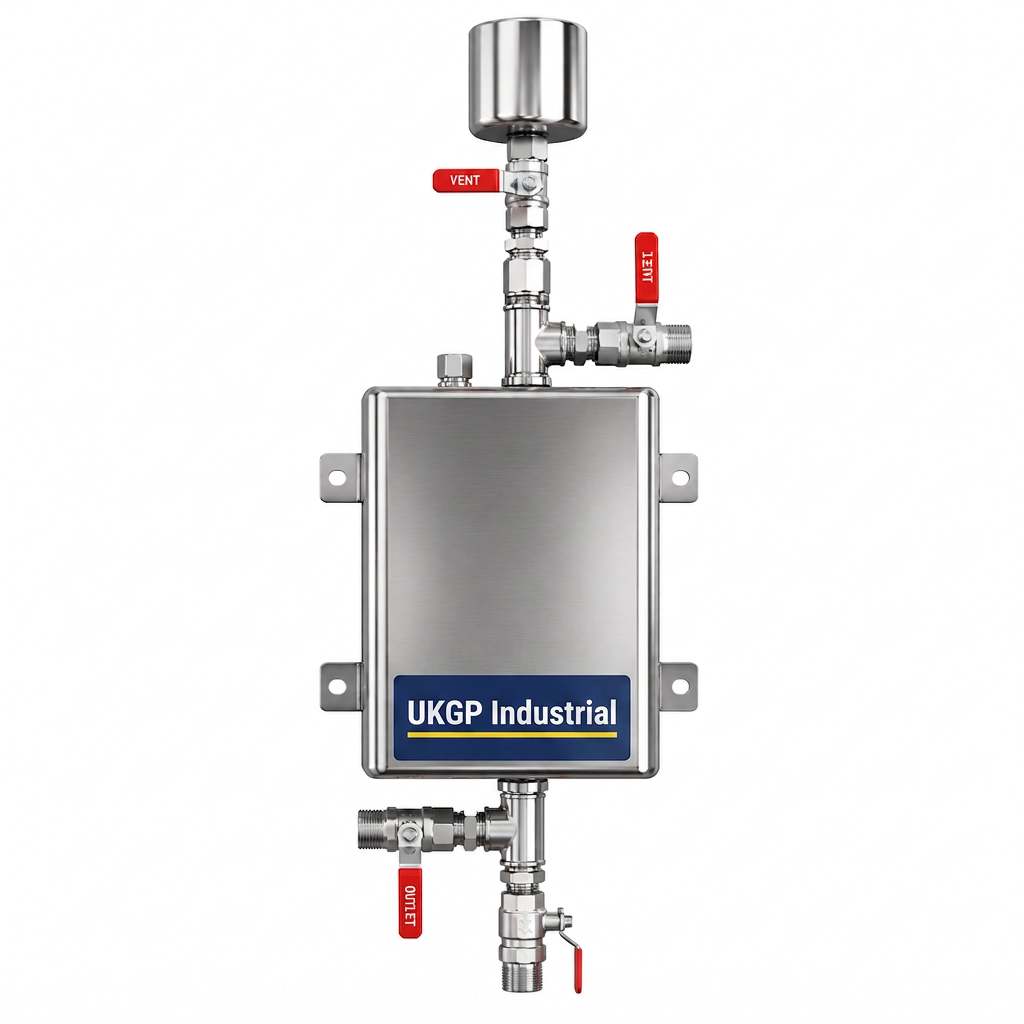
The isolation valves—typically two 15mm or 20mm heavy-duty ball valves—require testing to ensure they achieve a bubble-tight seal. If these valves leak across the seat, the pot cannot be safely depressurised for chemical addition. Furthermore, the drain valve at the base must be checked for blockages. In systems with high levels of magnetite, the bottom of the dosing pot often acts as a secondary settlement zone, which can clog the drain port and prevent the unit from being emptied effectively.
- Verification of vessel integrity and weld condition.
- Inspection of inlet and outlet isolation valves for tightness (ISO 5208).
- Checking the security of the top-entry funnel and non-return valves.
- Testing the air vent (manual or automatic) specifically for blockage.
Safe Operational Procedures and Dosing Protocol
Incorrect operation during the chemistry introduction phase is the leading cause of air ingress in closed-loop systems. When the dosing pot is empty, it is full of air. If the engineer fails to purge this air via the manual air vent before opening the isolation valves to the main circuit, a 'slug' of oxygen-rich air is introduced. This directly counters the purpose of the corrosion inhibitors being added, as oxygen is a primary driver of aerobic corrosion.
Maintaining the dosing pot involves ensuring the sequence of operation is posted clearly near the plant. For biocidal 'shock' treatments, particularly in low-temperature chilled water circuits, the dosing pot must be fully flushed after use. Residual biocides left in the pot can be highly corrosive in concentrated forms if allowed to sit stagnant for extended periods between maintenance visits. Control of these procedures is a core tenet of BS 8552:2012 regarding the sampling and monitoring of water in buildings.
- Closing the inlet and outlet valves to isolate the vessel.
- Opening the drain valve and the manual air vent simultaneously.
- Filling the pot via the funnel with the prescribed chemical volume.
- Slowly opening the inlet valve to purge air through the vent before fully reinstating flow.
The Role of BG50 Compliance in Water Treatment
BSRIA BG50 (Water Treatment for Closed Heating and Cooling Systems) emphasises the importance of maintaining stable chemical concentrations. The dosing pot is the tool for achieving this stability. During maintenance, water samples should be taken from the pot's drain valve (after flushing the dead leg) to compare the local chemistry against the system-wide chemistry. This comparison can highlight whether the pot is actually being utilised or if it has become a stagnant bypass.
Chemical dosing is not a 'set and forget' task. For systems using glycol or antifreeze, the dosing pot is often used for top-ups. However, maintenance engineers must ensure that the glycol added is compatible with the existing brand. Mixing different chemistries (e.g., ethylene and propylene) or different inhibitor packages can lead to a drop in pH and subsequent 'sludging' or precipitation of solids. Proper maintenance implies logging every dose: date, volume, and chemical type, in the system logbook to track chemical consumption.
Component Replacement and Gasket Maintenance
Over time, the frequent cycling of the top fill-valve and the bottom drain-valve leads to degradation of the seat seals. If a dosing pot is used for glycol, the gaskets and valve seals must be checked for compatibility; standard EPDM may not be suitable for high concentrations of certain heat transfer fluids. During the annual maintenance shutdown, it is advisable to replace the high-pressure seals on the funnel assembly to prevent 'slow leaks' that manifest as white crystalline deposits around the top of the pot.
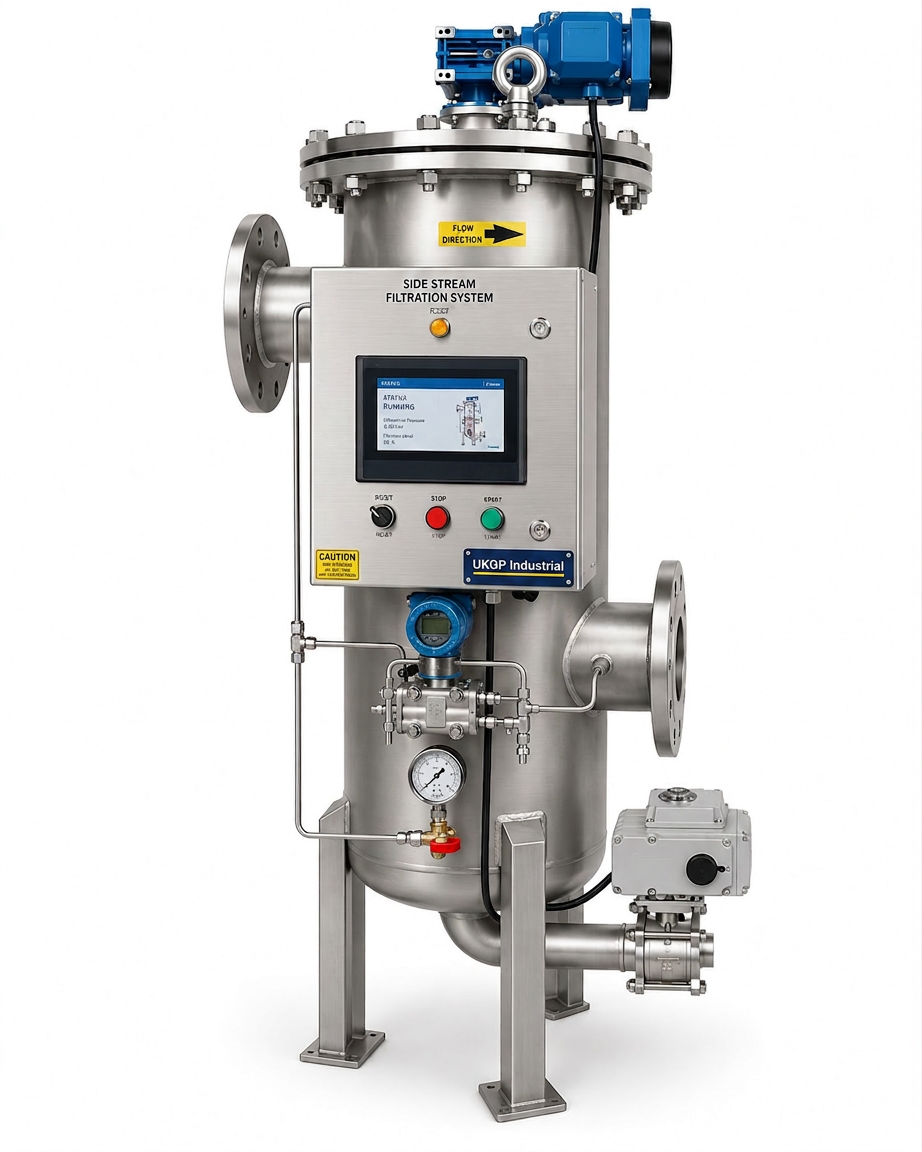
If the dosing pot is integrated into a wider water quality strategy involving side-stream filtration or deaeration, the maintenance of the pot must be synchronised. For instance, if a side-stream filter is being serviced, it is the ideal time to add any required system-wide inhibitors via the dosing pot. Engineers should also verify that the non-return valve (NRV) on the dosing pot inlet (if installed) is functioning correctly. A failed NRV can allow backflow into the funnel if the isolation sequence is performed incorrectly, creating a health and safety risk from splashing chemicals.
- Replacement of PTFE or EPDM seals in isolation and drain valves.
- Calibration of the pressure gauge if fitted to the pot.
- Cleaning the fill funnel mesh to remove debris.
- Checking the integrity of the non-return valve on the inlet line.
Managing Air Ingress and Vacuum Risks
A common oversight in dosing pot maintenance is the manual air vent. In many plant rooms, these vents become seized or painted over, making it impossible to bleed the air from the vessel after filling. This leads to the vessel being 'air-bound,' where water cannot circulate through it effectively. Worse, in tall buildings, opening a dosing pot at a low point without proper vent management could theoretically create a localized vacuum if the head pressure isn't managed, leading to air being sucked in through higher-level vents or AAVs.
The final step of any maintenance visit should be a pressure test of the vessel at system operating pressure. This involves drying the pot completely and using a leak detection spray on all joints and gland nuts. Even a microscopic leak allows the entry of oxygen through molecular diffusion, even while the system is at positive pressure. Maintaining a gas-tight dosing pot is as important as maintaining the pumps or boilers for the overall life expectancy of the building's infrastructure.
Frequently asked questions
How often should chemical dosing pots be inspected?
- In accordance with BSRIA BG50/2021, visual inspections should occur monthly, with full chemical analysis of the system water every 3-6 months depending on the system's criticality and history.
What are the most common causes of dosing pot failure?
- Leaking valves are usually caused by scale build-up or debris on the EPDM or PTFE seats. If cleaning doesn't resolve it, the valve must be replaced to prevent air ingress. Always ensure the tundish is clear to observe any 'weeping' from the drain valve.
Are there specific legal requirements for dosing pot installations?
- Yes, specifically regarding the pressure rating. Dosing pots are pressure vessels and must be rated for the system's Maximum Allowable Working Pressure (MAWP). They must also comply with the Pressure Equipment Directive (PED) where applicable.
Can a dosing pot be used for glycol top-ups?
- While dosing pots are excellent for one-off shots of inhibitor or biocide, they are not suited for maintaining precise glycol concentrations in large systems with high leak rates. In those cases, a dedicated glycol feed station or pressurisation unit with a spill tank is required.