The Role of Dosing Pots in Water Treatment Strategy
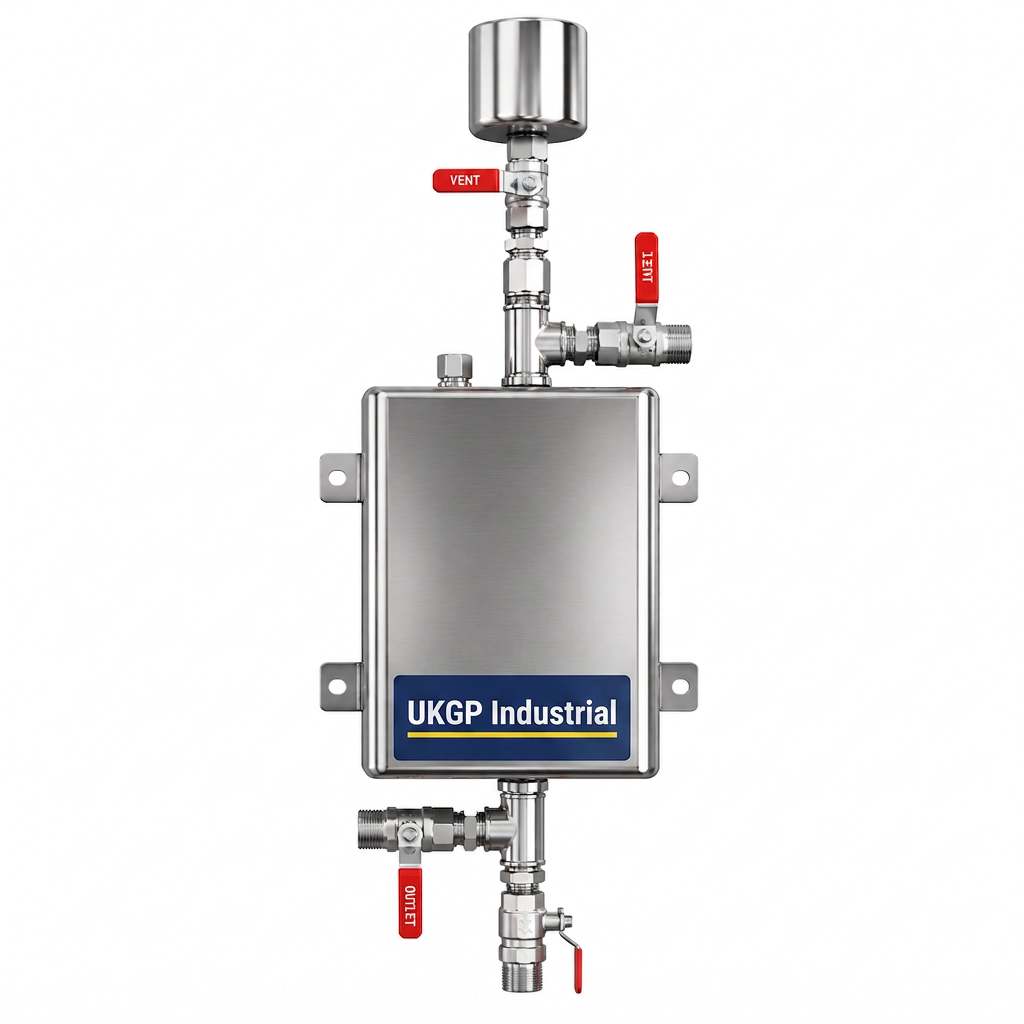
A chemical dosing pot is a stainless steel or carbon steel pressure vessel designed to allow the safe introduction of water treatment chemicals into a closed-loop system without the need to shut down or depressurise the circuit. These units operate on a bypass principle, utilising the differential pressure between the flow and return headers—or across a pump set—to circulate system water through the vessel and carry the concentrated chemicals into the main distribution pipework.
The primary objective of using a dosing pot is to adhere to the guidelines set out in BSRIA BG50 'Water Treatment for Closed Heating and Cooling Systems'. By maintaining correct levels of corrosion inhibitors (such as molybdate or nitrite-based formulas), engineers can prevent the formation of magnetite (black iron oxide) and scale, which otherwise leads to reduced heat transfer efficiency and premature failure of heat exchangers and circulators.
Technical Specifications and Material Selection
UKGP Industrial chemical dosing pots are typically manufactured from stainless steel to ensure high resistance to the aggressive nature of concentrated chemicals. Standard units are rated to 10 bar or 16 bar working pressure, though bespoke high-pressure variants are often specified for high-rise plant rooms or district heating applications. For most UK commercial installations, a Grade 304 or 316 stainless steel construction is preferred over carbon steel to eliminate the risk of internal corrosion within the vessel itself.
When specifying a dosing pot, the configuration of the valve set is paramount. A standard kit must include an inlet valve, an outlet valve, a drain valve, and a filling valve (often accompanied by a stainless steel tundish). An air vent is essential at the top of the vessel to ensure that the pot can be fully charged with fluid, preventing the introduction of oxygen into the system—a critical factor in preventing aerobic microbial growth and oxidative corrosion.
Installation Requirements and BG50 Compliance
Successful integration of a dosing pot depends on its placement within the system. It must be installed across a point of high differential pressure. If the pressure across the inlet and outlet is equal, there will be no motive force to flush the chemicals out of the pot. Ideally, the inlet should be taken from the discharge side of a pump and the outlet returned to the suction side. This ensures a rapid and complete dispersal of the chemical 'shot' into the system volume.
BSRIA BG50 highlights the importance of keeping the dosing pot isolated when not in use. Constant flow through the pot can lead to stagnant zones if the vessel is not fully integrated into the main flow, or it can lead to 'trickle' dosing which makes it difficult to calculate the precise chemical concentration within the system. Therefore, all dosing pot installations must include high-quality isolation valves and check valves where appropriate to prevent backflow or unwanted cross-contamination.
Addressing Microbiological Risks and Biocide Dosing
In low-temperature heating systems or chilled water circuits, microbiological fouling is a significant risk. Pseudomonads, Sulphate-Reducing Bacteria (SRB), and Nitrite-Reducing Bacteria (NRB) can proliferate in systems operating below 60°C. These organisms form biofilms that insulate heat transfer surfaces and cause MIC (Microbiologically Influenced Corrosion), leading to localized pitting and rapid pipework failure.
The dosing pot is the primary tool for 'shock dosing' biocides to remediate these issues. Unlike inhibitors, biocides must often be introduced in high concentrations over short periods to penetrate biofilms. In these scenarios, the engineer must ensure the pot is sized correctly to deliver the required volume of biocide based on the total system water content. Regular testing, as per BG50 monitoring protocols, will dictate the frequency of these dosing intervals.
Glycol Top-ups and Closed Loop Maintenance
While dosing pots are frequently used for glycol introduction, engineers must be cautious of the volumes involved. For large chilled water systems where glycol concentrations may reach 25-30% v/v, the dosing pot may only be suitable for minor top-ups. For the initial fill or large-scale replenishment, a dedicated pressurisation unit with a spill-back facility or a glycol mixing tank is often more efficient. However, for maintenance of existing levels, a 15-litre or 25-litre dosing pot provides a controlled method for adjustment.
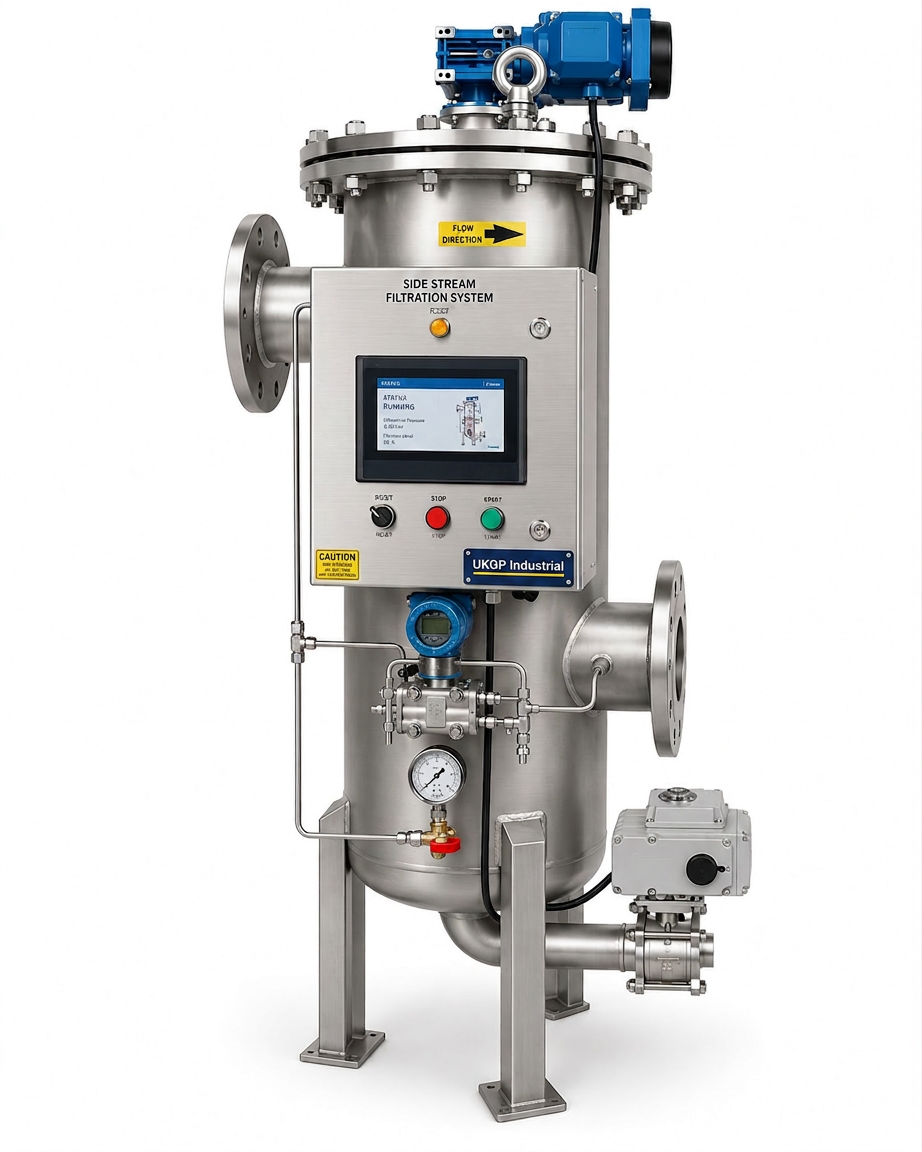
It is also vital to consider the synergy between chemical dosing and physical filtration. While the dosing pot manages the chemical balance, side-stream filtration is necessary to remove the suspended solids and magnetite that the chemicals have loosened or kept in suspension. Integrating a dosing pot alongside a side-stream filter ensures that the water remains both chemically passivated and physically clean, satisfying the stringent water quality requirements of modern high-efficiency condensing boilers and plate heat exchangers.
Operational Best Practices for Facilities Managers
To ensure the longevity of the heating or cooling asset, facilities managers should implement a rigourous water treatment logbook. Every time a dosing pot is utilised, the date, chemical type, and volume added should be recorded. This is not only a requirement for compliance but also an essential diagnostic tool if the system begins to exhibit signs of pressure loss or reduced thermal output. If a system requires frequent inhibitor top-ups, it often indicates an underlying leak which must be addressed to prevent the constant introduction of fresh, oxygenated water.
Before any dosing operation, the engineer should confirm that the pot is completely drained of its previous contents. Cross-contamination between different chemical formulations (e.g., mixing an oxidizing biocide with a molybdate inhibitor) can lead to chemical neutralisation or the formation of precipitates. Regular inspection of the dosing pot's valves and the integrity of the tundish seal is also recommended to prevent minor leaks that can lead to corrosive damage in the plant room environment.
Frequently asked questions
Where should a chemical dosing pot be installed?
- According to BSRIA BG50 and BG29/21, dosing pots should be installed in a bypass arrangement across the main flow and return pipework, typically near the primary pumps where a sufficient differential pressure exists to drive the flow through the vessel.
How do I size a dosing pot for a large commercial system?
- The pot should be sized to accommodate the required volume of chemical in a single shot. In large commercial systems, multiple shots may be necessary. Common sizes range from 3.5 litres to 25 litres. For glycol applications, larger pots are often preferred to reduce the number of refill cycles.
Can a dosing pot be used for continuous chemical injection?
- While dosing pots are excellent for 'shot' dosing, they are less precise for continuous proportional dosing. For systems requiring constant chemical level maintenance (like large cooling towers or complex process loops), automated pump-based dosing stations may be required alongside the manual pot.
What is the correct procedure for charging a dosing pot?
- Isolate the pot using the inlet and outlet valves. Open the drain valve and the air vent to empty the vessel. Close the drain valve, fill the pot with the chemical, close the fill valve/tundish, and slowly open the inlet and outlet valves to introduce the chemical into the system. Finally, vent any trapped air.
Can I use a standard dosing pot for glycol top-ups?
- Yes, provided it is rated for the system's operating pressure (typically 10 bar or 16 bar) and the materials/seals are compatible with the glycol concentration. Stainless steel pots are recommended for longevity in glycol-heavy circuits.