The Engineering Role of Dosing Pots
The primary function of a chemical dosing pot is to facilitate the manual induction of liquid chemicals into a sealed hydronic system. In systems containing glycol, such as chilled water circuits or heat pump loops, the chemical balance is delicate. Unlike open systems, closed-loop circuits require specific concentrations of inhibitors to prevent galvanic corrosion and scale formation, alongside biocides to mitigate Microbiological Influenced Corrosion (MIC).
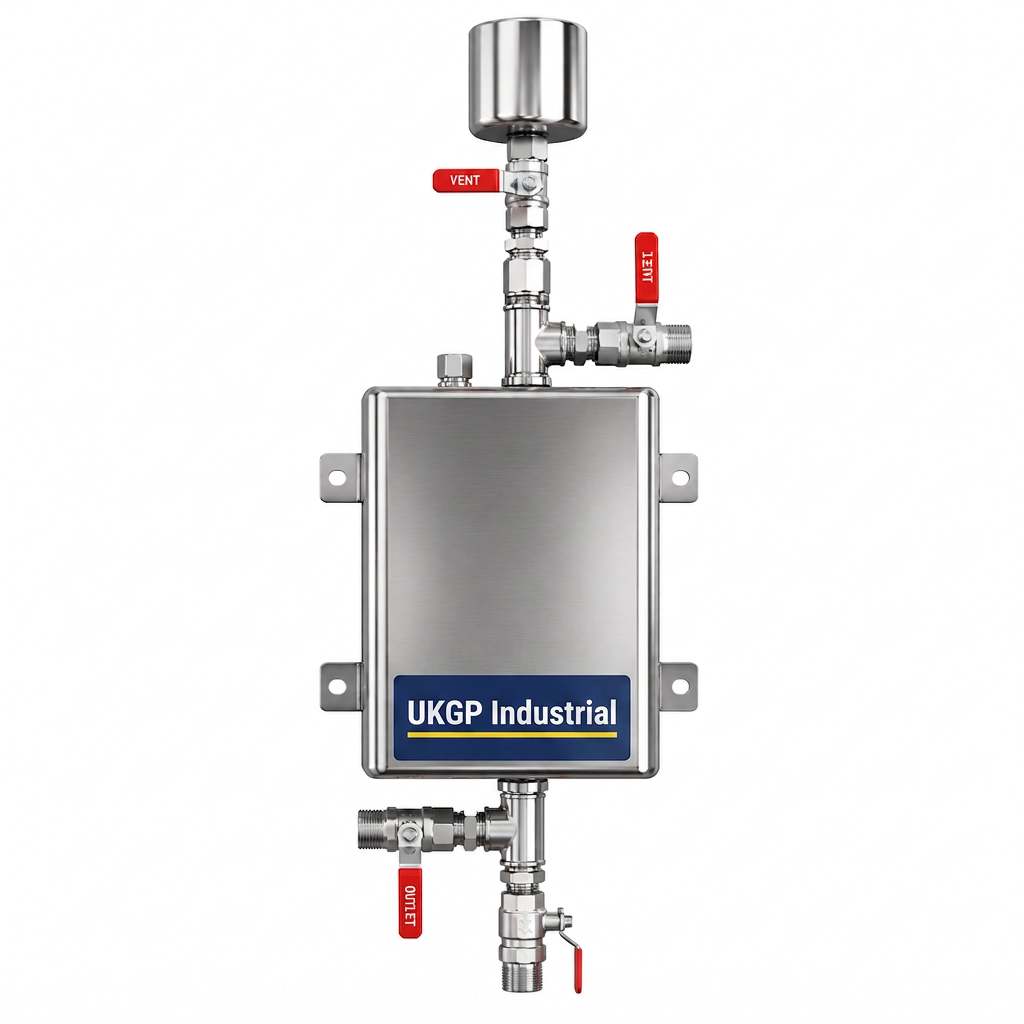
The dosing pot acts as a pressure-rated bypass vessel. By leveraging the differential pressure across a circulating pump or a purposeful restriction in the main pipework, engineers can divert a portion of the flow through the pot, picking up the concentrated chemical and distributing it throughout the loop. In the context of glycol, these units are often used to 'top up' concentration levels that have drifted below the required freeze-protection or burst-protection threshold.
- BSRIA BG50: Water treatment for closed heating and cooling systems.
- BSRIA BG29: Pre-commission cleaning of pipework systems.
- Pressure Equipment Directive (PED) compliance for high-pressure installations.
- BS 8552: Sampling and monitoring of water quality in buildings.
Hydraulic Integration and Installation Principles
For a dosing pot to function efficiently, it must be installed as a bypass across the primary flow and return or across the system pump headers. The inlet (top) of the pot should be connected to the high-pressure side (pump discharge), and the outlet (bottom) to the low-pressure side (pump suction). This ensures the maximum available pressure drop is utilised to flush the vessel.
A critical design flaw often seen in plant rooms is the lack of adequate isolation and drainage. Every installation must include high-quality isolation valves and a tundish-ready drain valve. Because glycol is a controlled substance under various UK environmental regulations, the drainage path during the 'filling' phase of the dosing cycle must be managed to prevent accidental discharge into surface water drains. Proper labelling of the dosing pot with its volume (e.g., 6 litres, 10 litres) is also essential for accurate chemical calculations.
Managing Glycol Concentrations and Biocides
Glycol is inherently more viscous than pure water, which affects the Reynolds number and heat transfer coefficient of the system. More importantly, glycol can degrade over time into organic acids if the system is subjected to high thermal stress or oxygen ingress. When using a dosing pot to correct glycol levels, it is vital to ensure the glycol being added contains the appropriate inhibited package to maintain the pH level of the system water between 8.2 and 9.5.
Biocide dosing is equally critical in chilled water systems where temperatures are conducive to pseudomonas and other biofilm-forming bacteria. BG50 highlights that slug-dosing biocides via a dosing pot is an effective strategy for controlling microbial growth. Engineers should ensure that the biocide is compatible with the glycol type (Ethylene or Propylene) to avoid chemical fallout or unintended reactions that could foul heat exchangers.
- Manual check of antifreeze concentration using a refractometer.
- Calculation of the required glycol volume to reach the target percentage.
- Isolation and safe drainage of the dosing pot vessel.
- Introduction of glycol via the top-mounted funnel.
- Slow venting of air through the needle valve to ensure the pot is liquid-full.
Safety protocols and Pressure Management
Dosing pots are pressure vessels and must be treated as such. In the UK, they are typically rated to 10 bar or 16 bar working pressure. Before opening any valves on the funnel, the operator must be certain that the internal pressure has been fully dissipated through the drain valve. Failure to do so can result in high-pressure chemical spray, posing a significant risk to the engineer.
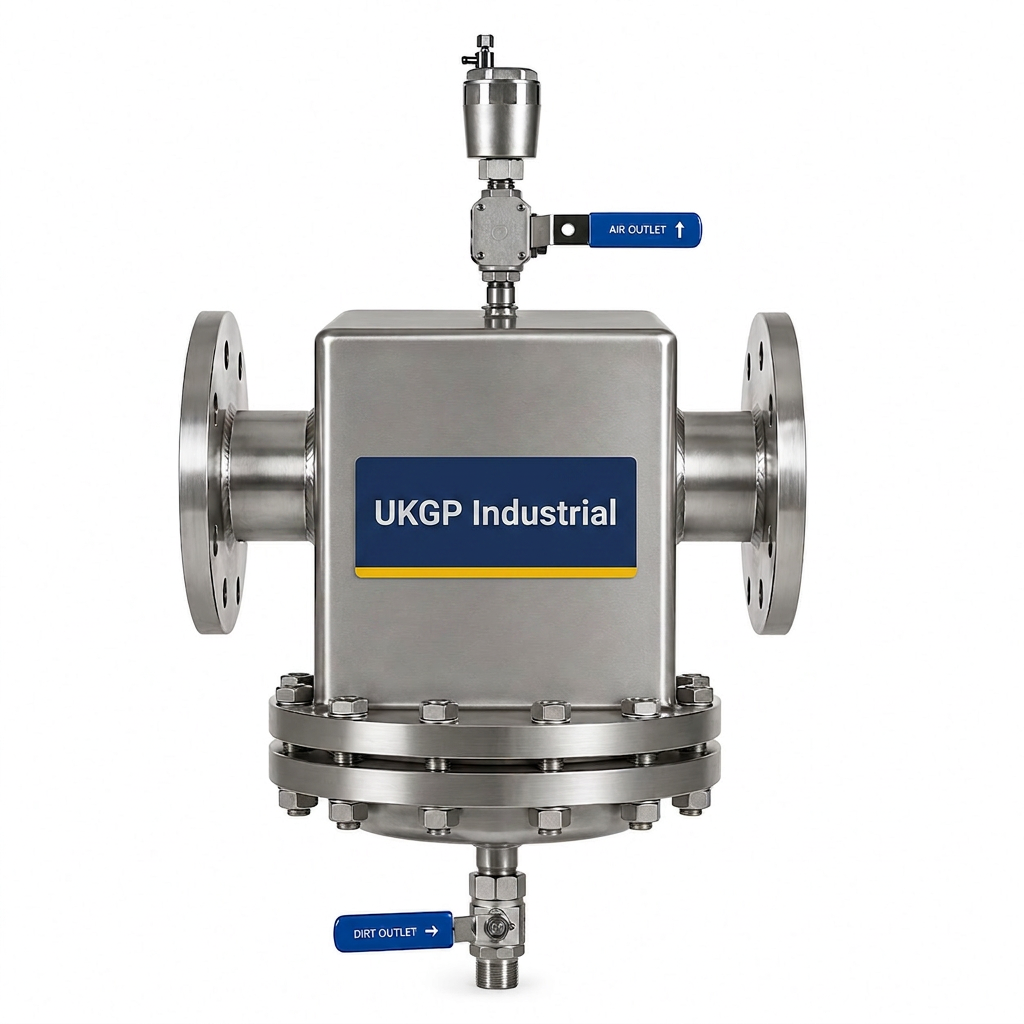
Furthermore, whenever chemicals or glycol are introduced, air is inevitably introduced into the pot. This air must be vented through the manual air vent (MAV) at the top of the unit before it is put 'online'. If this step is bypassed, air pockets are introduced into the system, which can lead to cavitation in pumps and air-locking in terminal units. Combining dosing pots with high-efficiency air and dirt separators elsewhere in the system is considered best practice to capture any micro-bubbles introduced during maintenance.
Maintenance and Long-term System Health
The dosing pot itself requires minimal maintenance, yet the 'dead-leg' it creates can be a source of stagnation. When not in active use for dosing, the isolation valves should remain closed. However, regular water quality testing—at least quarterly for most commercial systems—is required to determine when the pot needs to be utilised. Samples should be taken from the main loop, not the dosing pot itself, to get a representative reading of the system's chemistry.
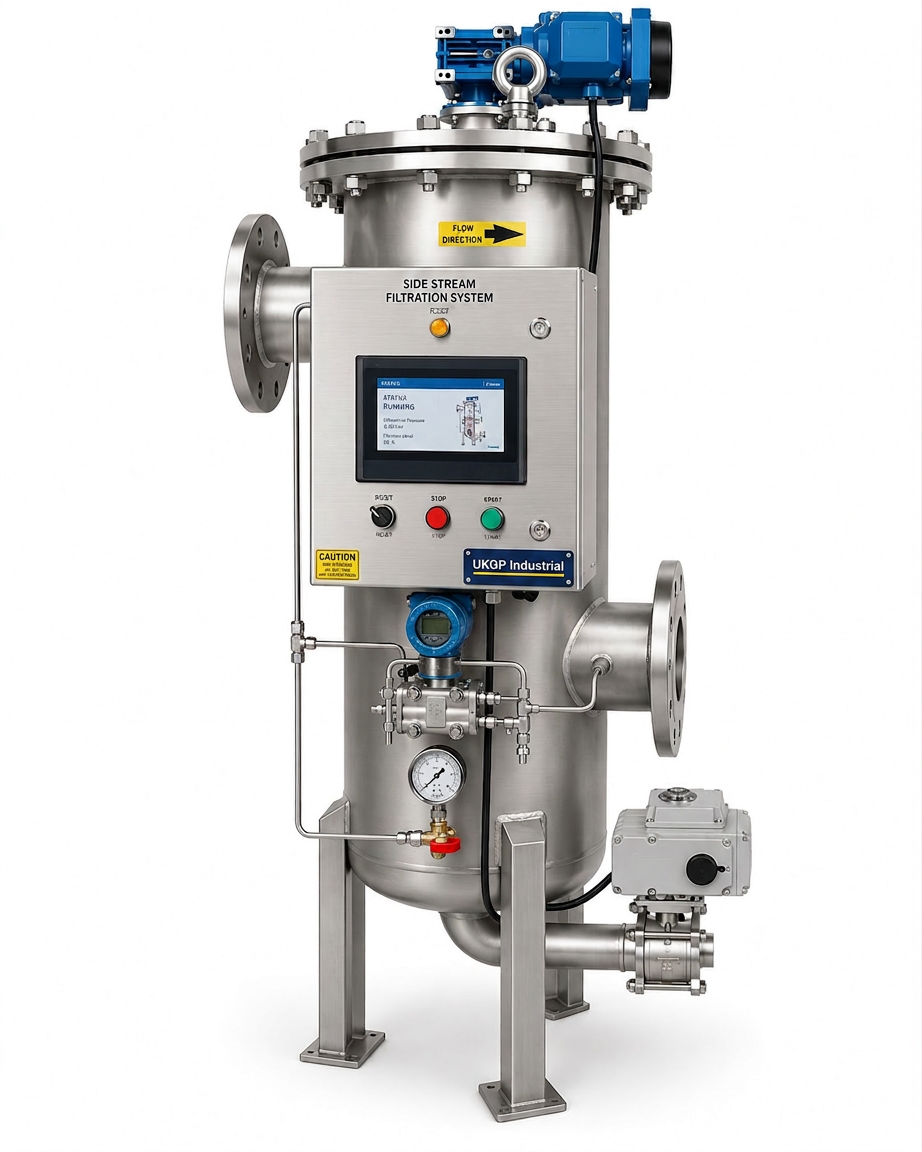
For FM teams, the dosing pot serves as the primary gateway for system remediation. If testing reveals high levels of suspended solids or iron oxides, the dosing pot can be used to introduce 'on-line' cleaning chemicals. However, if the system is heavily fouled, a dosing pot is no substitute for side-stream filtration. High-quality filtration and chemical management via the dosing pot work in tandem to ensure the longevity of high-value plant like boilers and chillers. Always ensure that the pot's non-return valves (if fitted) and the funnel mesh are inspected periodically for debris.
Frequently asked questions
What material should a dosing pot be constructed from?
- Dosing pots are generally manufactured from stainless steel or carbon steel. For glycol-heavy or aggressive process waters, stainless steel is preferred to prevent internal corrosion of the pot itself. UKGP Industrial units are designed to withstand PN16 pressures as standard.
Where is the best location to install a dosing pot?
- BSRIA BG50 recommends that dosing pots be installed across the pump headers (suction and discharge pipes) to utilise the differential pressure for effective chemical induction. Standard sizes range from 3.5 litres to 25 litres depending on the total system volume.
Can a dosing pot be used for air removal?
- While an air vent is essential, a dosing pot is not an air separator. It is a 'dead leg' when not in use. Regular checks must ensure the unit is fully bled of air before opening the bypass valves to prevent air ingress into the main circuit.
Can I use a dosing pot to fill a large system with 30% glycol?
- No. Glycol is significantly more viscous than water. If a system requires significant glycol replenishment, a dedicated pressurisation unit with a glycol break tank (pumped) is the correct solution. Dosing pots are for minor corrections and initial inhibitor dosing.