The Role of Dosing Pots in Closed-Loop Systems
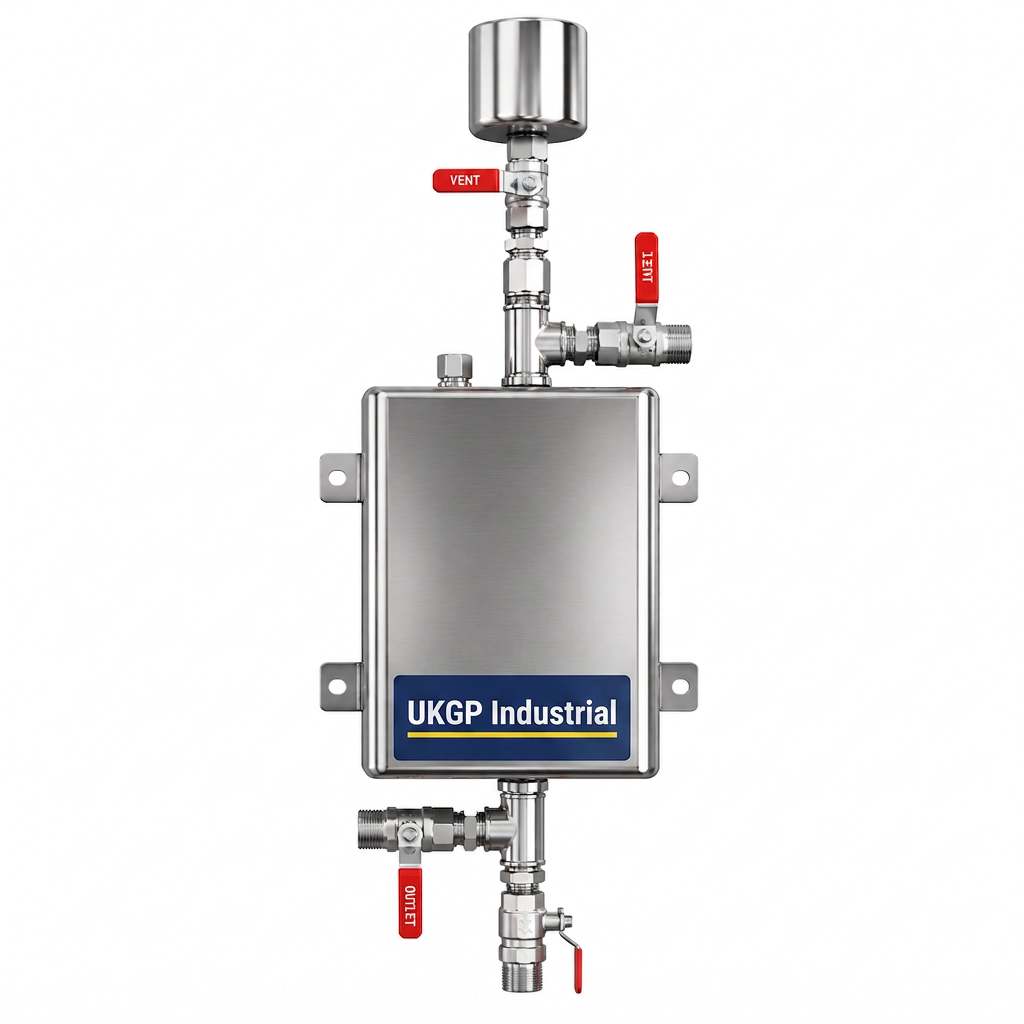
In commercial and industrial HVAC systems, maintaining water quality is paramount to protecting heat exchangers, pumps, and pipework. A chemical dosing pot serves as a manual bypass feeder. By creating a temporary parallel circuit across the main flow and return headers, the pot allows the introduction of chemicals into the system using the differential pressure created by the main circulating pumps. In accordance with BSRIA BG50 'Water Treatment for Closed Heating and Cooling Systems', regular chemical monitoring and dosing are mandatory to prevent corrosion and scale.
Beyond simple corrosion inhibition, dosing pots are frequently used to introduce biocides into chilled water systems where low temperatures can foster the growth of biofilm and pseudomonads. They are also the primary point of entry for antifreeze solutions like mono-ethylene glycol. UKGP Industrial dosing pots are designed to withstand the typical pressures and temperatures found in LTHW (Low Temperature Hot Water) and CHW (Chilled Water) circuits, ensuring that the chemical introduction process does not introduce air or cause pressure drops that could trigger system alarms.
Sizing and Capacity Specification
Specifying the correct size of a dosing pot is largely a matter of plant room logistics and chemical volume requirements. Common sizes range from 3.5 litres to 25 litres, though larger bespoke units are available for massive industrial circuits. A larger pot reduces the number of 'shots' required to reach the target concentration of inhibitor, which is particularly beneficial during initial commissioning under BSRIA BG29/21.
When determining the appropriate model, engineers must consider the total system volume. If a system requires 50 litres of inhibitor, using a 3.5-litre pot would be labour-intensive. Ideally, the pot should be sized to handle 10-20% of the required chemical volume in a single fill to balance physical footprint with operational efficiency. All UKGP Industrial dosing pots are rated to a standard 10 bar or 16 bar working pressure, and it is vital that the pot’s pressure rating matches or exceeds the system's safety valve setting.
Frequently asked questions
Where should a dosing pot be located in a plant room?
- While there is no fixed legal distance, they must be installed across the main flow and return headers to utilise the differential pressure. Typically, they are located in the plant room near the circulating pumps. Isolation valves must be reachable for safe manual operation.
What is the difference between a dosing pot and a pressurisation unit?
- A dosing pot is a manual bypass feeder, whereas a pressurisation unit manages system pressure and often includes automated glycol recovery or top-up. Dosing pots are used for shot-dosing chemicals rather than continuous volume maintenance.
When should I specify a stainless steel dosing pot?
- Carbon steel is standard for most LTHW and CHW systems. However, for systems using demineralised water or where high levels of aggressive chemicals are present, stainless steel variants (316L) are recommended to prevent localised corrosion.
Should the dosing pot be left full or empty when not in use?
- BSRIA BG50 recommends that dosing pots should be drained and left ‘dry’ when not in use to prevents stagnant water pockets, which can encourage microbiologically influenced corrosion (MIC).