Identifying the Need to Backflush Plate Heat Exchanger Systems
In a typical UK commercial plant room, the performance of a plate heat exchanger (PHE) is fundamental to the delivery of heating or cooling loads. Over time, particulate matter such as magnetite, lime scale, and biological films can accumulate on the narrow corrugated channels of the plates. This buildup increases the pressure drop across the unit while simultaneously reducing the heat transfer coefficient. Facilities managers often notice this through a gradual rise in pump energy consumption or a failure to meet set-point temperatures in secondary circuits. Monitoring these parameters is essential for proactive maintenance, ensuring that your system adheres to the efficiency benchmarking suggested by CIBSE and BSRIA standards. Identifying these symptoms early allows for a scheduled intervention rather than an emergency shutdown.
The primary technique to combat this without immediate mechanical disassembly is to backflush plate heat exchanger sets. Backflushing involves reversing the flow of the primary or secondary media to dislodge loosely adhered debris from the plate surfaces. This is particularly effective in high-velocity systems where the turbulent flow can effectively scrub the stainless steel surfaces. However, for backflushing to be truly successful, it must be integrated into a wider water treatment strategy. Without addressing the root cause of the fouling, such as poor filtration or incorrect chemical dosing, the heat exchanger will inevitably return to a fouled state within a short timeframe. Therefore, backflushing should be viewed as a restorative remedial action rather than a permanent cure for systemic water quality issues in closed loops.
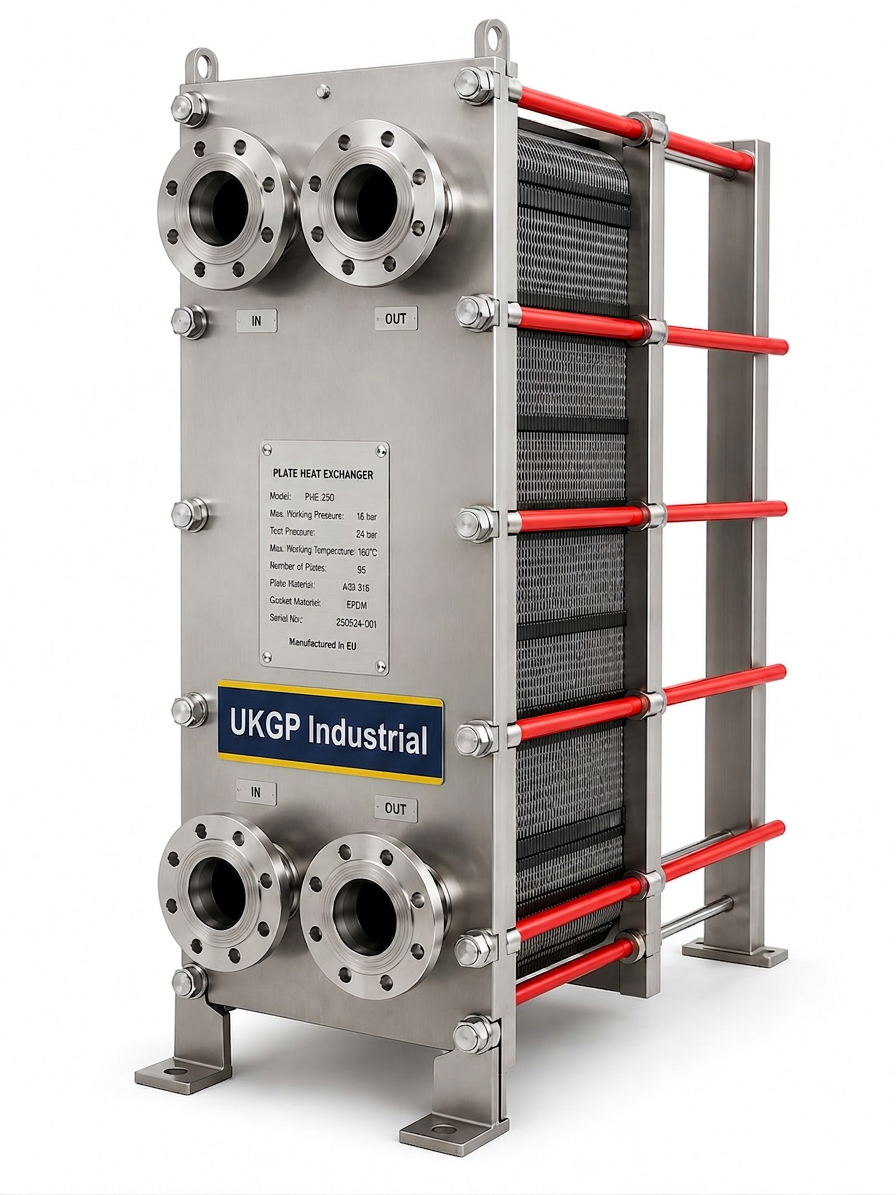
Before proceeding with a backflush, it is vital to consult the original equipment manufacturer (OEM) documentation. Different gasket materials and plate configurations may have specific pressure limitations that must not be exceeded during the reverse flow process. UKGP Industrial recommends checking the design pressure ratings on the PHE nameplate before connecting any high-pressure flushing rigs. If the fouling has progressed to the point of complete blockage, backflushing alone may prove insufficient, requiring a full 'Clean-in-Place' (CIP) procedure or a manual strip-down. Nevertheless, for routine maintenance of units experiencing minor performance dips, a well-executed backflush is the most cost-effective and least invasive method to regain thermal efficiency and ensure your building services remain compliant with BS 8552 monitoring requirements.
- Monitor pressure drop (dP) across the primary and secondary ports daily.
- Observe secondary return temperatures to identify loss of heat transfer.
- Ensure all isolation valves are fully functional prior to attempting a backflush.
- Review BSRIA BG50 guidelines for water quality management in closed systems.
- Check nameplate data for maximum allowable working pressure (MAWP).
Steps to Effectively Backflush Your Fouled Heat Exchanger
The process to backflush plate heat exchanger units begins with complete isolation of the unit from the rest of the hydronic circuit. This prevents the dislodged contaminants from being pushed further into the building's pipework, which could protect downstream sensitive components like control valves and small-bore headers. Once isolated, the unit should be drained cautiously. It is important to remember that the fluid within the PHE may still be at a high temperature or pressure. After draining, flushing connections are typically made to the secondary side of the PHE, as this is where domestic hot water scaling or cooling tower debris most frequently occurs. By pumping clean water or a mild cleaning solution in the opposite direction of the normal flow, the mechanical agitation works to lift the 'filter cake' that has built up on the plates.
During the backflushing operation, it is beneficial to use a high-flow, low-pressure pump to ensure sufficient velocity for debris removal without risking gasket displacement. Engineers should continue the process until the discharge water runs clear, which indicates that the majority of mobile solids have been purged. For more stubborn deposits, some UK contractors employ a pulsating flow technique, which creates alternating pressure waves to help break the bond between the foulant and the plate material. If the heat exchanger is heavily scaled with calcium carbonate, a food-grade phosphoric or citric acid solution may be introduced during the backflush, provided that the plate metallurgy (usually 316L stainless steel) and gasket materials (EPDM or Nitrile) are compatible with the chemical agent.
Once the backflushing cycle is complete, the unit must be thoroughly rinsed with fresh water to remove any residual cleaning chemicals or loosened particulates. High-quality UKGP Industrial exchangers are designed for durability, but even the best units can suffer if acidic residues are left to sit in stagnant pockets. After rinsing, the unit can be slowly refilled and vented to remove any trapped air, which is a common cause of ‘cold spots’ and noise post-maintenance. Finally, return the unit to service by opening the valves slowly to avoid thermal shock or hydraulic hammer. Documenting the pressure drop post-flush is a critical step for your maintenance logs, as it provides a baseline for future performance tracking and proves the efficacy of the intervention to stakeholders.
- Use a dedicated flushing rig with a built-in filter to capture removed solids.
- Double-check chemical compatibility with EPDM or NBR gaskets before use.
- Maintain a flow rate at least 1.5 times the design flow for effective scouring.
- Collect discharge samples to verify the nature of the fouling (e.g., magnetite or scale).
- Slowly re-introduce heat to avoid sudden expansion of the plate pack.
Preventing Future Fouling with Side Stream Filtration
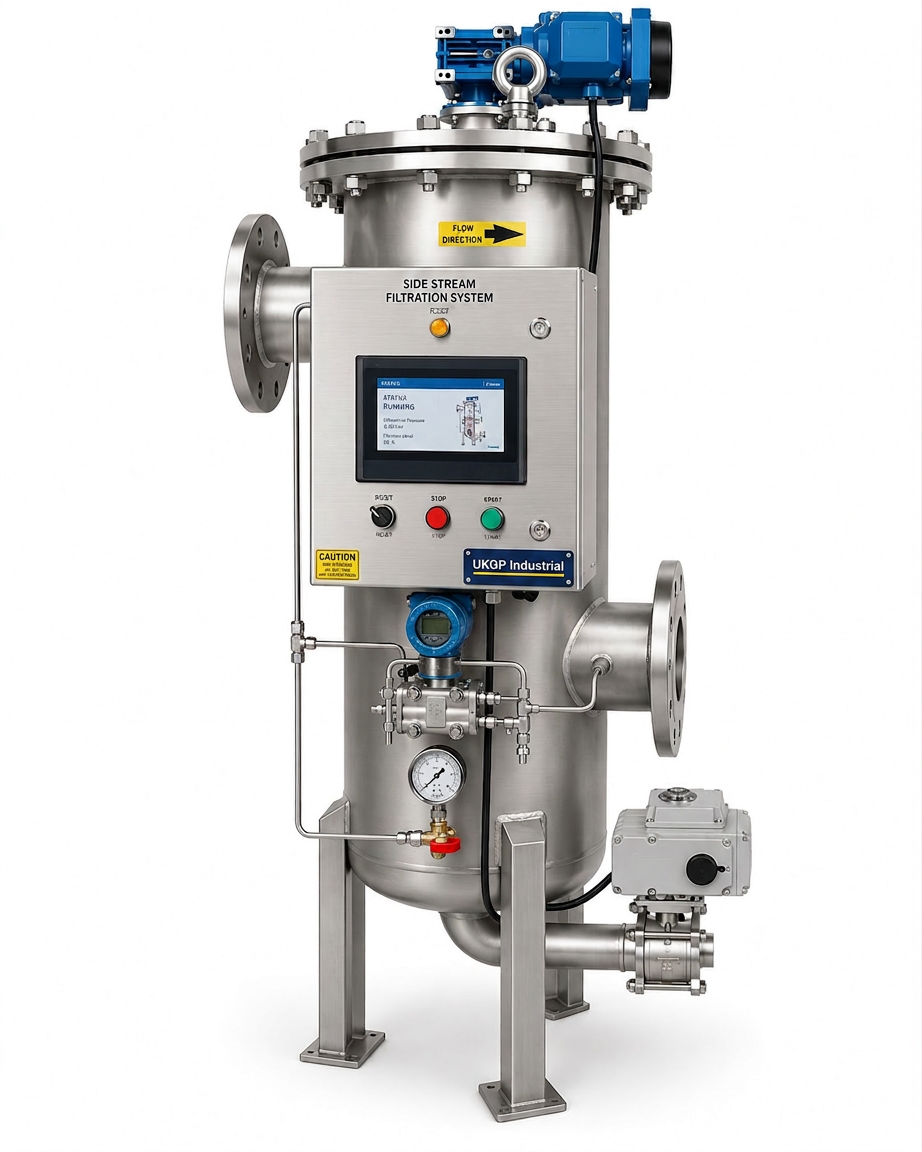
While knowing how to backflush plate heat exchanger sets is a vital skill, the long-term goal for any UK plant room should be the prevention of fouling altogether. BSRIA BG29 and BG50 highlight the importance of continuous water treatment and filtration to protect high-value assets. This is where the installation of a high-performance side stream filtration skid becomes indispensable. By continuously diverting a percentage of the system flow through a high-efficiency filter, you can remove the suspended solids and magnetite that would otherwise settle in the low-velocity areas of your heat exchanger. This drastically reduces the frequency of required backflushing and extends the intervals between major services, ultimately lowering the total cost of ownership for the facility.
UKGP Industrial provides bespoke side stream filtration skids designed specifically for the rigorous demands of UK commercial and industrial systems. Our units are made to order with a typical lead time of 6 to 8 weeks and are available in sizes from DN50 up to DN100 to suit varying system volumes. Starting from £6,800+VAT, these skids are a commercially sound investment that protects your primary plant, including plate heat exchangers and boilers. Each unit comes with a 2-year warranty, giving facilities managers peace of mind that their water quality is being managed by robust, British-engineered equipment. By removing particles down to sub-micron levels, these skids ensure that the turbulent flow within your PHE remains unobstructed and thermally efficient.
Investing in quality filtration is a proactive bridge between initial commissioning and long-term operational excellence. Rather than reacting to a fouled heat exchanger with emergency backflushing, a side stream system maintains the cleanliness of the closed loop in real-time. This is particularly relevant in retrofit projects where old iron pipework may be shedding significant amounts of rust and debris into a new, high-efficiency system. For a tailored quote on a side stream filtration skid that matches your specific site flow rates and particulate challenges, contact the UKGP Industrial technical team today. Our experts can help you select the correct micron rating and pump configuration to ensure your plate heat exchangers remain foul-free for years to come.
- Continuous removal of magnetite and suspended solids to prevent PHE blockages.
- Reduced chemical consumption by maintaining a cleaner base fluid.
- Compliance with BSRIA BG50 requirements for closed-circuit water quality.
- Standard UKGP units available from DN50 up to DN100 for large-scale systems.
- British-made quality with a 2-year warranty and expert technical support.
The Role of Chemical Dosing in Heat Exchanger Longevity
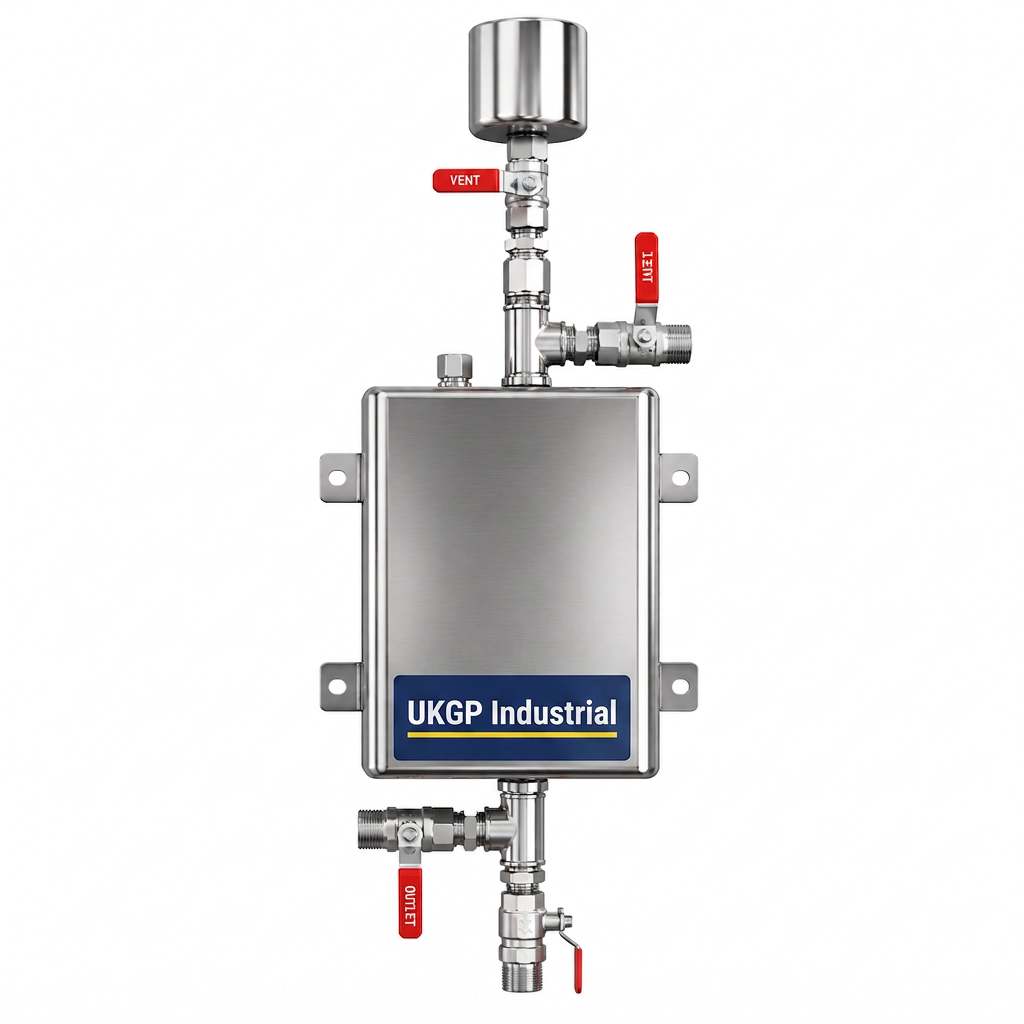
Beyond physical filtration, the chemical balance of the system water plays a pivotal role in preventing the types of fouling that necessitate a backflush. In the UK, hard water areas are particularly prone to calcium carbonate scaling, which acts as an insulator on heat exchanger plates. To combat this, a robust chemical dosing regime must be established. Using a dedicated dosing pot allows maintenance engineers to easily introduce inhibitors and biocides into the system. These chemicals work by either sequestering scale-forming minerals or creating a protective film on the metal surfaces. Consistent monitoring and dosing ensure that the internal environment remains non-corrosive, protecting both the stainless steel plates and the wider pipework infrastructure from premature failure.
When you backflush plate heat exchanger units and find significant biological growth or 'sludge,' it is often a sign of failed chemical treatment or aeration in the system. CIBSE guidelines recommend regular water analysis to ensure that inhibitor levels remain within the effective range. If the system is frequently topped up with fresh, untreated water due to leaks, the chemistry is quickly diluted, leading to rapid fouling. A dosing pot should be installed in a bypass configuration to allow for safe chemical introduction without interrupting the main system flow. This simple addition to the plant room is one of the most cost-effective ways to maintain the 'as-commissioned' performance of the building's thermal plant and reduce the need for aggressive cleaning in the future.
At UKGP Industrial, we provide high-durability dosing pots that complement our filtration and heat exchange ranges. Integrating these into your maintenance schedule ensures that after you backflush a unit, it stays clean for longer. We recommend that all M&E contractors and FMs review their dosing protocols whenever a heat exchanger shows signs of fouling. By combining mechanical filtration via our side stream skids with precise chemical control, you create a dual-layered defence against the inefficiency and damage caused by system debris. Contact us for advice on sizing your dosing equipment to match your total system volume and specific water treatment requirements.
- Install dosing pots in an accessible bypass loop for easy maintenance.
- Regularly test water for inhibitor concentration and microbial activity.
- Prevent scale formation in hard water areas to maintain PHE 'U' values.
- Ensure all chemicals used are compatible with plate and gasket materials.
- Combine chemical dosing with physical filtration for the best results.
Technical Considerations for M&E Contractors
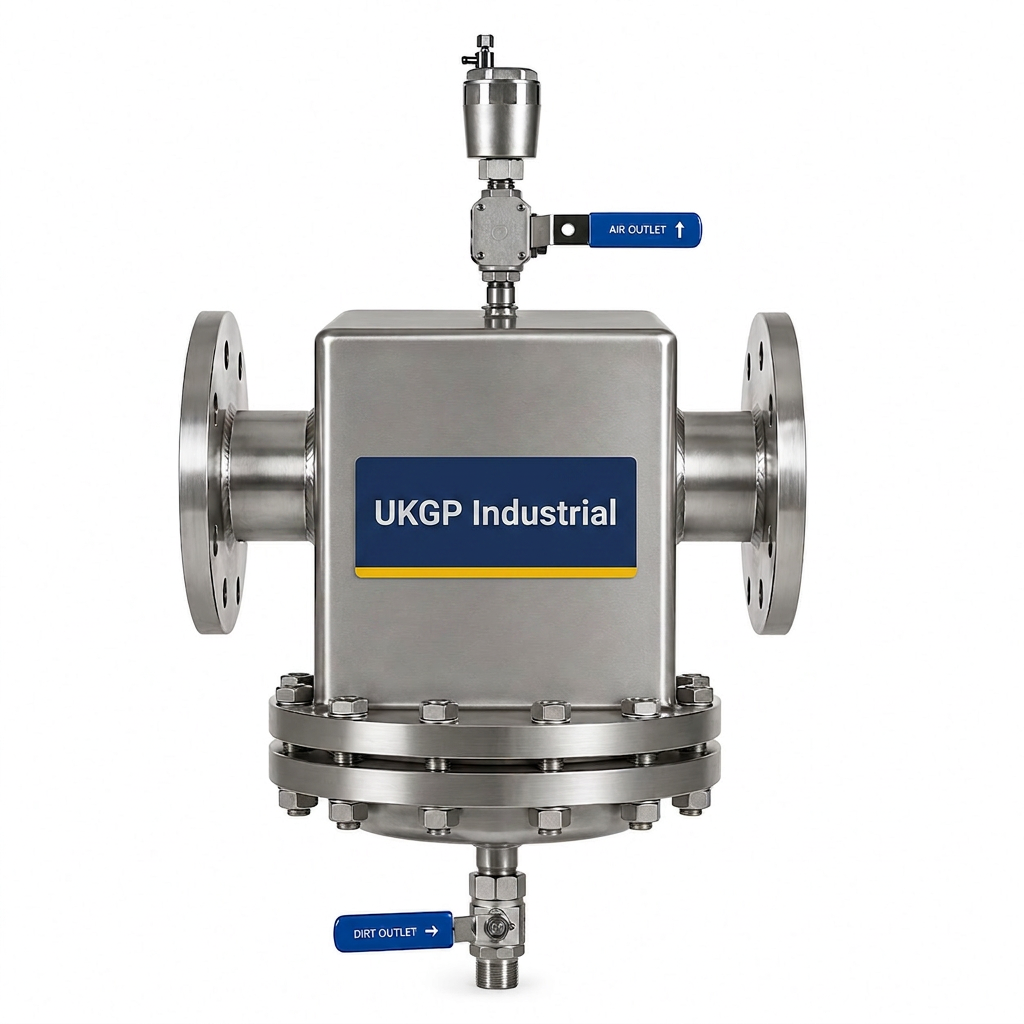
For M&E contractors tasked with the maintenance of large heating and cooling networks, the decision to backflush plate heat exchanger units often boils down to time and accessibility. When a PHE is designed with its ports in a 'U' configuration (all four ports on the fixed frame), backflushing is simplified as the pipework does not need to be disturbed. However, contractors must ensure that the pump used for flushing has a sufficient head to overcome both the internal resistance of the fouled unit and the height of the flushing rig. It is also imperative to check for the presence of air and dirt separators within the system. If these components are also fouled or incorrectly sized, they may be bypasses, allowing contaminants to recirculate and settle directly into the heat exchanger.
The financial implications of a fouled heat exchanger are significant for commercial clients. Increased pumping costs and the loss of process cooling or space heating can result in operational downtime that far exceeds the cost of preventive maintenance. When quoting for a backflush service, contractors should include a thorough inspection of the gaskets. Periodic backflushing, while useful, involves pressure changes that can stress older, brittle gaskets. If a unit is over 5 to 10 years old, it may be more prudent to suggest a full refurbishment including new gaskets and crack detection for the plates. Providing a comprehensive report post-flush, including 'before and after' flow and temperature data, demonstrates professional value and alignment with BSRIA best practices.
Lastly, contractors should consider the lead times for replacement parts. While UKGP Industrial offers made-to-order side stream filtration skids with a 6-8 week lead time, having a plan in place for heat exchanger maintenance can prevent the need for rapid, expensive logistics. If backflushing fails to restore the required performance, the unit may need to be replaced or expanded. UKGP’s range of plate heat exchangers is engineered for the highest efficiency, ensuring that any replacement unit provides a significant upgrade in thermal performance. We encourage contractors to engage with our technical team during the design or remedial phase to ensure the selected equipment is perfectly matched to the system’s hydraulic and thermal profile.
- Ensure the flushing pump can provide adequate turbulent flow (Reynolds number > 4000).
- Inspect air and dirt separators to ensure they are not contributing to the fouling issue.
- Document all work in accordance with the site's asset management plan.
- Advise clients on the energy-saving benefits of a professionally cleaned PHE.
- Consider the age of gaskets before applying high-velocity backflush pressures.
Summary of Best Practices for PHE Maintenance
In conclusion, the ability to backflush plate heat exchanger equipment is an essential tool for maintaining UK building services. By reversing the flow and using appropriate cleaning agents, engineers can effectively remove the debris and scale that rob systems of their efficiency. However, this remedial action should always be part of a larger, more strategic approach to water quality. Adhering to BSRIA BG50 and CIBSE guidelines ensures that the system is managed holistically, balancing mechanical filtration, chemical treatment, and regular monitoring to prevent fouling from occurring in the first place. This proactive stance saves money, reduces carbon emissions through better energy efficiency, and extends the life of critical plant-room assets.
UKGP Industrial stands ready to support your facility with high-quality, British-made components designed to endure the toughest environments. From our robust plate heat exchangers to our advanced side stream filtration skids (DN50-DN100, starting from £6,800+VAT), we provide the hardware necessary for operational excellence. Our 2-year warranty and commitment to made-to-order precision ensure that every product we supply meets the exact needs of your site. Whether you are currently dealing with a fouled unit or planning a new installation, our engineers are available to provide technical guidance and commercial quotes that reflect the realities of the UK market.
To maintain your system in peak condition, remember the golden rule of heat exchange: a clean surface is an efficient surface. Regular backflushing, combined with continuous side stream filtration and correct chemical dosing, will keep your facility running smoothly. For more information on how our products can help you avoid the pitfalls of heat exchanger fouling, or to request a quote for our bespoke filtration solutions, please reach out to the UKGP Industrial sales office. We are dedicated to providing the technical expertise and high-performance equipment that UK building services consultants and facilities managers rely on for dependable, long-term HVAC performance.
- Integrate backflushing into a bi-annual or annual maintenance schedule.
- Utilize side stream filtration to continuously maintain water clarity.
- Never ignore rising pressure drops across heat exchange interfaces.
- Trust UK-made products for guaranteed quality and technical backup.
- Keep detailed logs of all maintenance actions for future troubleshooting.
Frequently asked questions
How often should I backflush my plate heat exchanger?
- The frequency depends on your water quality and the effectiveness of your filtration. As a rule of thumb, if the pressure drop increases by 10-15% above the design level, or if you note a drop in thermal performance, a backflush is recommended. With a UKGP side stream filtration skid, this interval can often be extended significantly.
Can backflushing damage the heat exchanger gaskets?
- If done correctly within the design pressure limits, backflushing is safe. However, using excessive pressure or incompatible cleaning chemicals can degrade gaskets. Always check the nameplate for the Maximum Allowable Working Pressure (MAWP) and use chemicals compatible with EPDM or Nitrile.
What is the difference between backflushing and CIP?
- Backflushing is the simple reversal of flow to remove loose debris. Clean-in-Place (CIP) involves circulating specific chemical cleaning agents through the unit for an extended period to dissolve stubborn scale or biological growth. Backflushing is usually the first, less invasive step.
Is side stream filtration better than a full backflush?
- They serve different purposes. Side stream filtration is a preventive measure that keeps the water clean constantly, whereas backflushing is a remedial action once fouling has already occurred. Implementing filtration (starting from £6,800+VAT) reduces the need for frequent backflushing.
What pressure should I use when I backflush plate heat exchanger units?
- You should never exceed the design pressure listed on the PHE nameplate. Ideally, use a high-flow, low-pressure pump that provides enough velocity (approx. 1.5x design flow) to dislodge particles without creating hydraulic shock.