Defining the Modes of Thermal Movement
Thermal expansion in steel pipework is predictable yet powerful. For every 100 metres of steel pipe subjected to a 60°C temperature rise (typical for LTHW systems), the linear expansion is approximately 72mm. If this movement is constrained without flexible elements, the resulting forces can easily exceed several tonnes, threatening the structural integrity of the plant room or district heating trench. Expansion bellows are engineered to absorb this energy by diverting the stress into a multi-layered convolution.
Selecting between axial, lateral, and angular movement depends entirely on the piping geometry and the available space for anchoring. Axial compensators are the most common in long, straight runs where space for offsets is limited. However, they impose the highest loads on main anchors due to pressure thrust. Lateral and angular joints, often used in 'Z' or 'L' bends, provide a more flexible solution and can significantly reduce the required anchor strength by containing pressure thrust within tie bars.
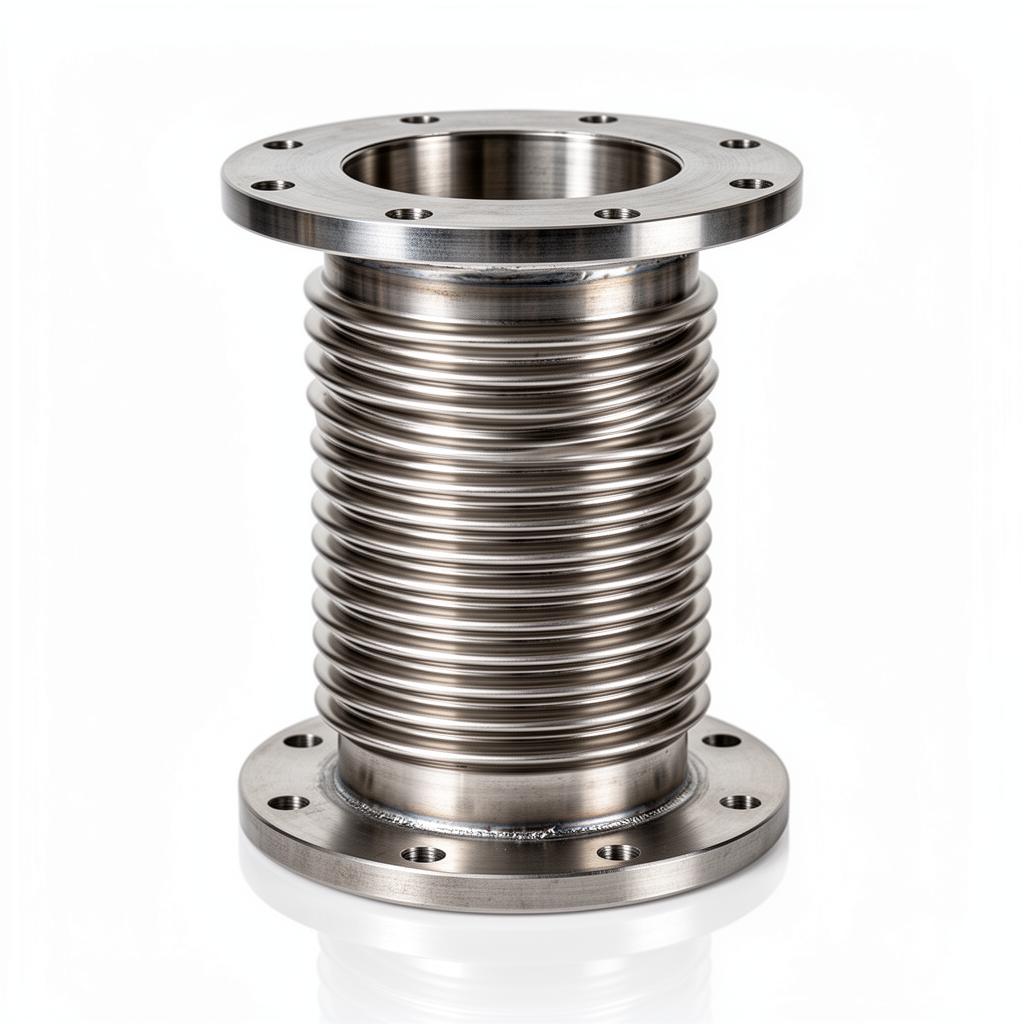
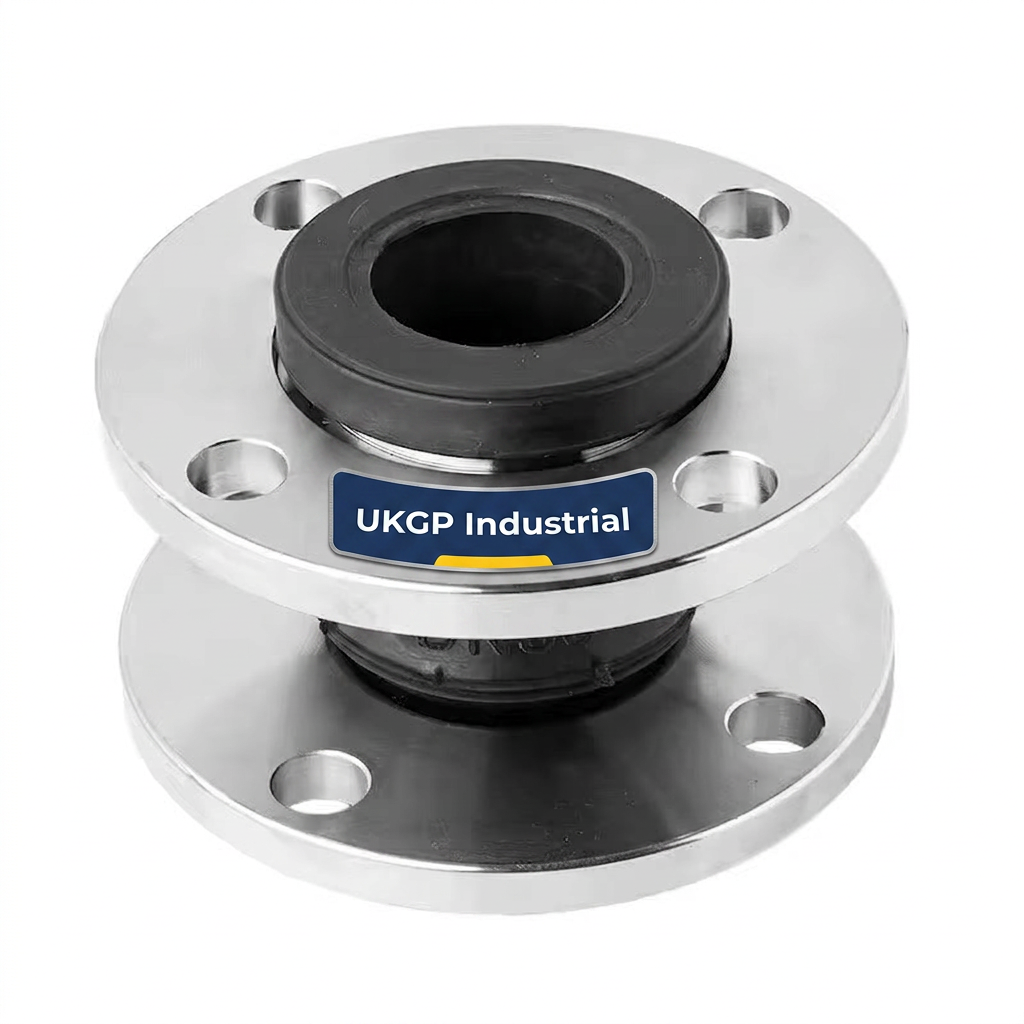
Building services engineers must also stay cognisant of the material differences. While stainless steel bellows (Grade 304 or 316L) are the industry standard for high-temperature and high-pressure steam or HTHW, EPDM rubber expansion joints are frequently utilised in chilled water and LTHW applications for their superior vibration isolation and noise attenuation, provided the pressure and temperature remain within the 10-16 bar and 100°C limits.
- Axial: Compression and extension along the longitudinal axis.
- Lateral: Shear movement perpendicular to the piping axis.
- Angular: Rotation around the centre of the bellows convolution.
- Universal: Combined movements using dual-bellows configurations.
Axial Expansion Bellows: The Straight-Line Standard
Axial expansion bellows are designed to compress and extend along the longitudinal axis of the pipework. These are typically 'unrestrained' units, meaning they do not feature tie bars. Consequently, the internal pressure of the medium acts upon the bellows, creating a 'pressure thrust' force. This force, calculated as the internal pressure multiplied by the effective cross-sectional area of the bellows, must be resisted by substantial main anchors at each end of the straight run.
A common pitfall in UK plant room design is the lack of adequate pipe guiding. Axial bellows are inherently flexible and, under pressure, can lead to 'squirm'—a buckling failure of the convolutions. BSRIA guidelines and EN 14917 stipulate that the first guide must be placed at a distance of 4 pipe diameters (4D) from the bellows, and the second guide at 14D. Without this precision, the bellows will seek to relieve the pressure thrust by bowing outward, leading to immediate system failure.
UKGP Industrial axial bellows are often supplied with internal sleeves (liners) and external shrouds. The liner prevents flow-induced vibration and erosion of the convolutions in high-velocity systems, while the shroud protects the delicate stainless steel membranes from external mechanical damage or site debris during the construction phase. For systems exceeding DN50, flanged connections to BS EN 1092-1 are standard to ensure leak-free integration.
Frequently asked questions
When should I choose rubber over metal expansion joints?
- It depends on the movement. For high-pressure heating sub-stations, stainless steel axial or lateral compensators are standard. For cooling towers or plant with high vibration, reinforced EPDM rubber bellows are often preferred for their noise attenuation properties.
Do I always need internal sleeves in metal bellows?
- While internal sleeves protect the bellows from high-velocity erosion and turbulence, they limit the joint's ability to handle lateral or angular movement. They are primarily used in axial-only configurations or specific low-deflection lateral designs.
What is the temperature limit for EPDM expansion bellows?
- Standard EPDM rubber bellows are typically rated to 100°C. For DHW or LTHW systems exceeding this, or for high-pressure steam, stainless steel bellows are required. Always check the pressure-temperature de-rating charts.
Can expansion joints be used to correct pipework misalignment?
- No. Bellows are designed to compensate for thermal expansion, not to correct for poor pipe alignment. Installing a bellows in a pre-stressed state to bridge a gap reduces its working stroke and significantly increases the risk of fatigue failure.