Core Functionality and EN 161 Classification
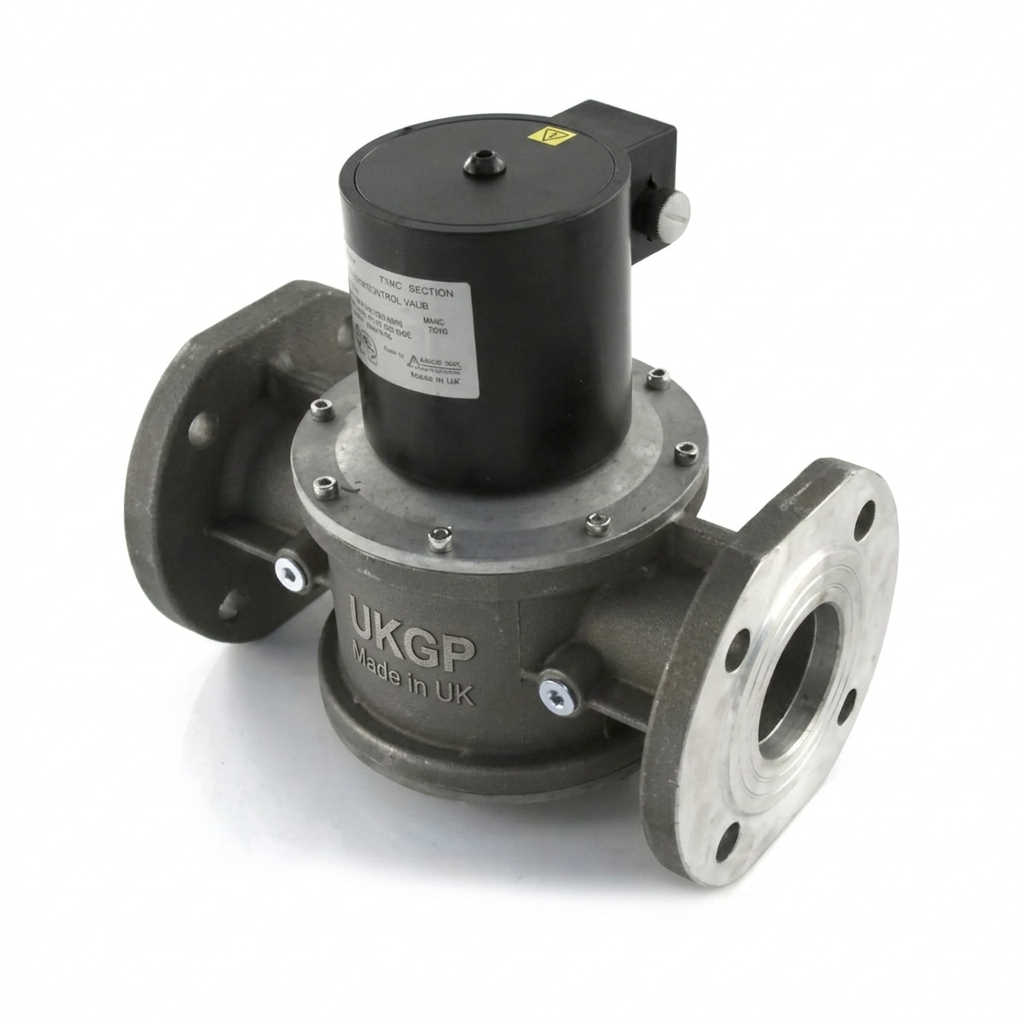
Automatic-reset gas solenoid valves are electromagnetic valves designed to open as soon as the electrical coil is energised and close immediately when power is removed. These are defined as 'Normally Closed' (NC). Under BS EN 161, these valves must meet Class A specifications, meaning they must operate reliably across a specified temperature range and close in less than one second. The 'auto-reset' terminology refers to the valve's ability to return to the open position without manual intervention once the signal (from a BMS or gas detection head) is restored.
Manual-reset valves, by contrast, require a human operator to physically pull a lever or push a reset button once the electrical circuit is energised. Even if power is restored to the coil, the valve remains closed until the manual action is performed. This provides an additional layer of safety, ensuring that a professional assesses the plant room or kitchen environment before gas flow resumes. Both types utilize a spring-return mechanism to ensure fail-safe closure during power loss or emergency stop activation.
- Normally-closed (NC) safety shut-off action.
- Compliant with EN 161 Class A standards.
- Typically constructed from die-cast aluminium or brass.
- IP65 protection rating for plant room environments.
Regulatory Framework and IGEM Compliance
The application of these valves is strictly governed by the Institution of Gas Engineers and Managers (IGEM) standards. IGEM/UP/2 (Edition 3) mandates that where an automatic reset valve is used, a gas proving system (typically involving an upstream pressure transducer and a small bypass) must be in place. This ensures that the downstream pipework is sound before the main valve opens. If no gas proving system is present, many engineers opt for manual-reset valves to ensure a 'competent person' is present when gas is reintroduced to the system.
In education settings, IGEM/UP/11 is the governing standard. Here, the use of automatic isolation valves is standard, often linked to 'panic buttons' and gas detection systems. The choice between manual and auto-reset often hinges on the level of supervision in the building. In a fully managed BOC (Building Operating Centre) via a BMS, auto-reset valves are preferred for their ability to be managed remotely, whereas in independent commercial units, manual-reset valves are the de-facto safety standard to prevent 'unattended' gas restoration.
- IGEM/UP/1: Strength testing and tightness testing.
- IGEM/UP/2: Installation of gas pipework, boosters and compressors.
- IGEM/UP/11: Gas safety in educational establishments.
- BS 6173: Specification for installation of gas-fired catering appliances.
The Case for Manual-Reset Solenoids
Manual-reset valves are the workhorses of the commercial catering and process industry. Their primary advantage is the 'human-in-the-loop' safety factor. If a fire alarm triggers a gas shut-off, a manual-reset valve prevents gas from flowing back into a kitchen where burners may have been left in the 'on' position. This is a critical requirement of BS 6173, as it prevents the risk of unignited gas accumulation once the alarm is cleared.
From a maintenance perspective, manual-reset valves are often more robust. Because the solenoid coil is not required to overcome the initial static friction and spring tension required to 'lift' the plunger from a dead stop (the operator provides the force), these valves often exhibit longer coil life in high-temperature environments. UKGP Industrial manual reset valves are frequently specified in boiler houses where the risk of nuisance tripping from power surges is high, as the manual reset prevents equipment from cycling on and off repeatedly during electrical instability.
- Zero-voltage release safety.
- Visual confirmation of gas restoration.
- Simplified control circuitry (no gas proving logic required).
- Ideal for high-outlay industrial burners.
The Case for Auto-Reset Solenoids
Automatic-reset valves are indispensable in modern, automated building services. When interfaced with a BMS, these valves allow for scheduled shut-downs and remote emergency isolation. For example, a facility manager can isolate gas supplies to specific wings of a building during unoccupied hours to reduce risk. Upon the start of the next business day, the valve opens automatically, provided all safety interlocks (ventilation, fire, gas detection) are healthy.
The 'Normally Closed' nature of the UKGP Industrial auto-reset range ensures that any break in the safety loop—whether it is a triggered smoke detector, a seismic switch, or a simple cable fault—results in an immediate shut-off. While the requirement for gas proving adds complexity to the installation, the benefits of 24/7 monitoring and the ability to reset the system from a central control desk often outweigh the hardware costs in large-scale commercial developments or district heating schemes.
- Direct integration with Building Management Systems (BMS).
- Essential for 24/7 automated plant operation.
- Reduced site-visit requirements for remote assets.
- Rapid response to gas leak or CO detection.
Technical Considerations for M&E Contractors
When specifying between these two types, contractors must consider the electrical load and 'holding' current. Standard solenoid valves can become hot during continuous operation; therefore, high-quality Class H insulated coils are a prerequisite. It is also vital to verify the 'opening time'—while Class A valves must close in <1s, the opening time can be varied. 'Slow-opening' auto-reset valves are often used to prevent pressure shocks in large-diameter pipework.
Installation orientation is another critical factor. Most EN 161 valves are designed for horizontal pipe runs with the coil in the upright position (vertical). Installing these valves upside down or on vertical risers often voids the manufacturer's warranty and can lead to premature failure of the internal springs. Always refer to the specific UKGP Industrial installation manual to confirm the allowed tilt angle, which is typically no more than 90 degrees from the vertical.
- Valve Body: Minimum 2-stage (Slow Open/Fast Close) where required by burner.
- BMS Interface: Voltage-free contacts for status monitoring.
- Operating Pressure: Ensure rating exceeds maximum inlet pressure (typically 200mbar to 6bar).
- Filtration: Upstream gas filters are mandatory to prevent debris from fouling the valve seat.
Maintenance and Lifecycle Management
Gas solenoid valves are safety-critical components and should be treated as such under BSRIA BG50 and relevant Gas Safe regulations. A valve that hums or buzzes is often a sign of dirt on the armature or a failing coil; this should be investigated immediately as it can lead to the valve failing to open or, worse, failing to close fully. Annual tightness testing or 'let-by' testing is essential to ensure that the internal seals are not degraded by contaminants in the gas stream.
Replacing the coil is a common maintenance task that can often be performed without breaking the gas seal, provided the valve design allows for it. However, if the valve body itself shows signs of corrosion or if the manual-reset lever becomes stiff, the entire unit should be replaced. In industrial environments with high cycle rates, it is recommended to replace safety shut-off valves every 10 years or 100,000 cycles to ensure compliance with the original EN 161 design parameters.
- BSRIA BG29/21 guidelines for system cleanliness.
- Annual 'Let-by' testing (Tightness Testing).
- Solvent-free cleaning of the valve seat.
- Checking for 'Solenoid Hum' indicating coil or plunger alignment issues.
Frequently asked questions
Is it legal to use an auto-reset valve without gas proving?
- Under IGEM/UP/2 Edition 3, an automatic reset valve must be used in conjunction with a gas proving system to ensure no downstream leaks or open burner taps are present before the gas supply is re-established.
What does 'normally-closed' mean in the context of gas solenoids?
- Normally-closed (NC) means the valve requires electrical power to stay open. In the event of a power failure or a signal from the gas detection panel, the spring-return mechanism forces the valve shut, isolating the supply.
Which valve type is preferred for commercial catering?
- BS 6173 requires an interlocking system that ensures the ventilation is operational before gas is supplied to the appliances. Manual-reset valves are common here to ensure a human operator confirms the kitchen is ready for service.
What is the maintenance frequency for EN 161 valves?
- UKGP Industrial recommends 6-monthly visual inspections and annual functional tests to ensure the plunger is not sticking and the electrical coil is operating within thermal limits.