Primary Drivers of Air Separator Price in the UK
The primary drivers of air separator price in the UK commercial sector are predominantly related to the body material, flange rating, and the sophistication of the internal coalescing components. For most M&E contractors and consultants, the choice between PN16 or PN25 flanged connections will significantly impact the unit cost. Beyond the shell, the internal design—specifically the use of high-efficiency stainless steel internal concentric rings or mesh—dictates the price point. These components are essential for creating the micro-bubble coalescence and turbulence required to release dissolved gasses from the system water, directly impacting the longevity of the plant room assets.
Furthermore, the integration of magnetic technology is a major factor in the final air separator price. In a post-BSRIA BG50 landscape, magnetic filtration is no longer considered an optional add-on but a fundamental requirement for protecting modern, high-efficiency commercial boilers from magnetite buildup. Premium units that include a dedicated magnetic sleeve or removable rod will naturally sit at a higher price point than standard de-aerators. However, when procurement leads factor in the cost of heat exchanger failure or pump blockage in large-scale residential developments or schools, the initial investment in a high-quality combined unit becomes much more attractive and justifiable.
Finally, the manufacturing location and lead times play a subtle but important role in price volatility. Surrey-based manufacturing allows for more stable pricing models compared to units sourced from the Eurozone or further afield, where shipping and currency fluctuations can cause unexpected budget overruns. When calculating a project-specific air separator price, engineers must also consider the inclusion of isolation kits and blow-down valves. A complete package that arrives ready-to-fit often provides better value for money than sourcing components individually, as it reduces onsite labour costs and ensures full compatibility with the main filtration unit.
- Body construction material (Carbon Steel vs Stainless Steel)
- Pressure rating requirements (PN10/PN16/PN25 variants)
- Integration of high-strength neodymium magnetic catch sleeves
- Pipeline connection sizing from DN25 up to DN300
Technical Specifications and Water Quality Compliance
In the UK building services industry, compliance with BSRIA BG29 (Pre-commission cleaning) and BG50 (Water treatment for closed systems) is the gold standard for operational excellence. These guidelines emphasize the critical need for effective de-aeration and particle removal. Consequently, the air separator price is often a reflection of the unit's ability to maintain these standards over a 20-year lifecycle. Units that feature low-pressure-drop designs are particularly valued by CIBSE-certified engineers, as they minimize the parasitic energy load on circulation pumps, leading to lower operational costs that quickly offset any marginal increase in the initial procurement cost.
When assessing different manufacturers, it is vital to look at the maximum flow rates and temperature thresholds. Standard commercial units are often rated up to 110 degrees Celsius, which is sufficient for most LTHW (Low Temperature Hot Water) systems. However, for specialized heat networks or industrial process cooling, more robust specifications may be required, which will naturally influence the air separator price. The inclusion of a 2-year warranty as standard provides peace of mind for facilities managers (FMs) who are responsible for the long-term risk management of the building's thermal infrastructure, ensuring that any manufacturing defects are covered during the critical early years of operation.
The efficiency of micro-bubble removal is dictated by the velocity of the fluid passing through the vessel. High-quality vessels are designed to slow the flow, allowing for the maximum amount of air to rise and be purged via the automatic air vent. This mechanical reliability is what sets premium UK-supplied units apart. While a lower air separator price might indicate a simpler internal baffle system, this can lead to inadequate de-aeration, resulting in nuisance noise, radiator cold spots, and accelerated pitting corrosion in pipework. Investing in a unit with a proven coalescing media design is essential for meeting modern BS 8552 monitoring requirements for water samples.
- Strict adherence to BSRIA BG29 and BG50 water quality guidelines
- Minimised pressure drop to preserve pump energy efficiency
- High-temperature tolerance for LTHW and industrial applications
- Durable automatic air vent mechanisms to prevent system air-locking
The Value of Combined Air and Dirt Filtration
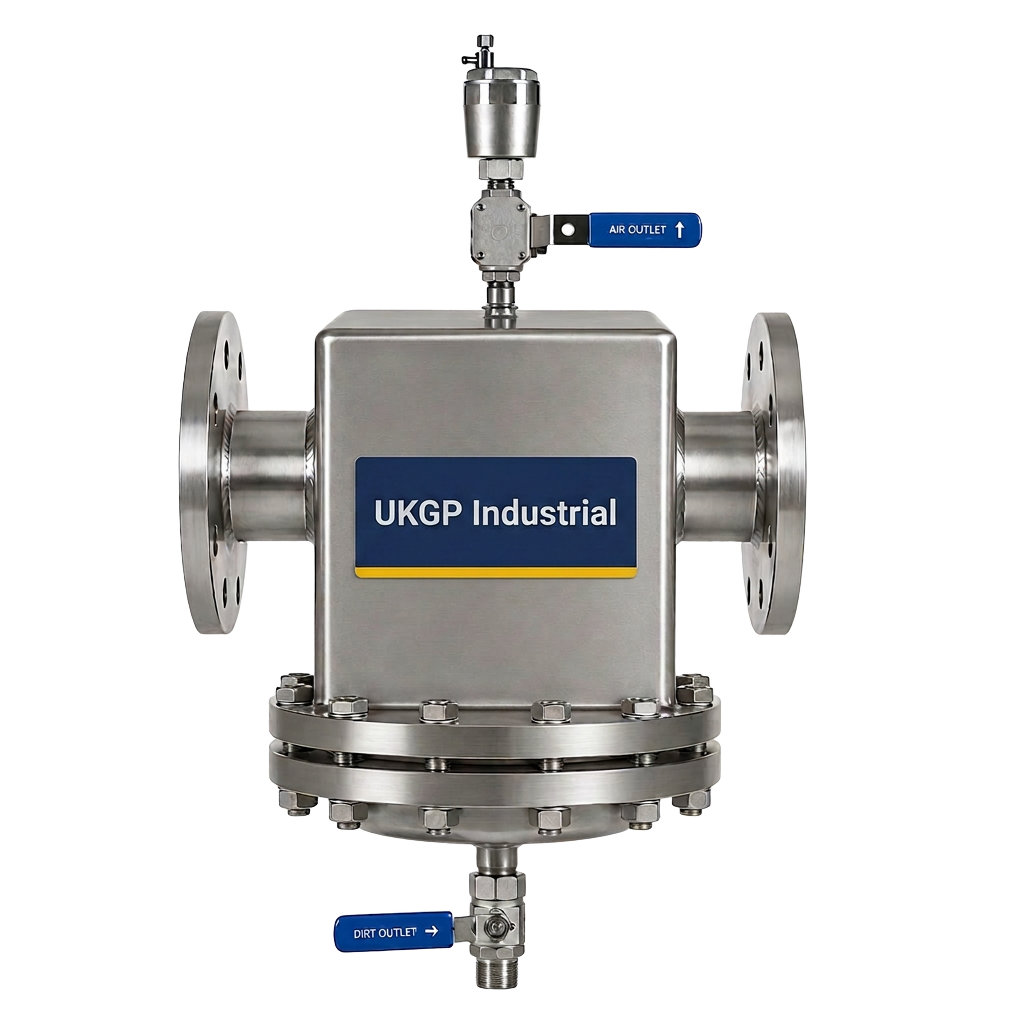
Selecting a combined unit is often the most cost-effective strategy for M&E contractors. By integrating de-aeration and dirt separation into a single vessel, the total air separator price and installation footprint are reduced. This is particularly beneficial in cramped urban plant rooms across London and the South East where space is at a premium. These combined units utilize the same coalescing principles to trap microscopic debris, while the magnetic catch effectively neutralizes black iron oxide. This dual-action approach is far superior to installing separate units, both in terms of hydraulic performance and overall capital expenditure for the project.
The magnetic catch component is particularly crucial in systems using major UK commercial boiler OEMs' equipment. Modern boilers feature compact, high-efficiency heat exchangers with narrow waterways that are highly susceptible to blockage from magnetite. By specifying a combined separator with a high-strength magnetic rod, you are effectively buying insurance for the boiler's warranty. While the air separator price for a magnetic version is slightly higher than an air-only variant, the reduction in emergency call-outs and chemical dosing requirements provides a significant return on investment. It also helps in maintaining the heat transfer efficiency of plate heat exchangers within the secondary circuit.
Maintenance considerations are another area where quality impacts the long-term air separator price. Units equipped with a dedicated isolation kit and a bottom-mounted blow-down valve allow for rapid servicing without the need to drain the entire system. This is a critical feature for Facilities Managers overseeing high-occupancy buildings where downtime is not an option. For large-scale systems (DN200 to DN300), the ease of cleaning the magnetic element while the system is under pressure is a top-tier feature that justifies a higher initial quote, as it slashes labour time during annual maintenance shutdowns.
- Dual-action removal of micro-bubbles and magnetite particles
- Significant space savings in congested commercial plant rooms
- Protection for sensitive plate heat exchangers and boiler components
- Simplified maintenance via integrated blow-down and magnetic isolation
Installation Best Practices for Maximum ROI
To ensure the air separator price you pay translates into real-world performance, correct installation is paramount. These units should typically be installed on the hottest part of the system—usually the flow pipework just after the boiler or heat source—where air is most likely to be released from the solution. For chilled water systems, the opposite applies; the unit should be located in the return line before the chiller. Neglecting these placement rules can render even the most expensive separator ineffective. Following CIBSE guidance on plant room layout ensures that the air and dirt separator operates within its optimal velocity window, maximizing particle strike rates against the coalescing media.
Flanged connections (PN16 as standard) offer the most robust and leak-proof solution for commercial applications. When evaluating your air separator price quote, ensure that the flange dimensions comply with BS EN 1092-1 to avoid compatibility issues with existing pipe-runs. The use of an isolation kit during installation is highly recommended by UKGP engineers, as it allows for the air vent or magnetic sleeve to be inspected without shutting down the entire heating loop. This design philosophy focuses on 'serviceability by design', which is a hallmark of high-quality British engineering and supply chains for the built environment.
Proper commission cleaning, as outlined in BSRIA BG29, should always be performed alongside the installation of a new separator. The unit is designed to work in conjunction with chemical water treatment, not as a replacement for it. However, a high-performance separator will significantly reduce the frequency of chemical top-ups required. When engineers look at the total life cycle costs, the air separator price is balanced by the reduction in chemical dosing pot usage and the lower frequency of flushing required to keep the system clean. This holistic view of system health is what separates a standard M&E project from a high-efficiency building transition.
- Strategic placement on the flow pipe after the heat source
- Standardised PN10/16 flanged connections for easy integration
- Facilitates easier BSRIA BG29 pre-commissioning cleaning protocols
- Reduced reliance on ongoing heavy chemical water treatments
Comparing Long-term Costs and System Longevity
A common mistake in procurement is focusing solely on the lowest air separator price without considering the cost of premature component failure. Cheap, poorly manufactured separators often suffer from leaking automatic air vents or inefficient magnetic catches that allow sludge to bypass the filtration media. Over time, this results in the degradation of the system's efficiency, leading to higher fuel bills for the end-user and potential litigation for the contractor. By choosing a UKGP air and dirt separator, you are investing in a unit that is backed by a 2-year warranty and a robust supply chain that understands the specific demands of UK building regulations.
Beyond the separator itself, its presence extends the life of other critical components like expansion bellows and low loss headers. Air and dirt are the primary causes of premature wear in flexible expansion joints and can cause localized corrosion in headers where velocities are lower. By effectively removing these contaminants at the source, the air separator price is spread across the entire asset list of the plant room. In this context, the separator is not just an accessory; it is a foundational piece of the hydraulic system that ensures all other components reach their maximum design life, providing an unbeatable 'price-to-performance' ratio over decades.
For procurement leads, requesting a detailed technical submittal is the best way to verify what is included in the air separator price. This should include the vessel's pressure test certificate, the magnetic pull strength of the catch, and the specific material grade of the coalescing media. Transparency in these specs allows for a fair 'apples-to-apples' comparison between suppliers. In the UK market, UKGP stands out by providing comprehensive data sheets that empower consultants to make informed decisions that align with both the project budget and the technical requirements of modern, high-intensity commercial heating networks.
- Lower total cost of ownership through reduced system downtime
- Extends the operational life of boilers, pumps, and valves
- Backed by a 2-year warranty for commercial peace of mind
- Technical transparency with full submittals for M&E consultants
Summary of Procurement Factors for Air Separators
In summary, the air separator price should be viewed as a strategic investment in building health. From the initial DN size selection to the choice of flanged connections and magnetic features, every decision impacts the long-term reliability of the HVAC system. By adhering to BSRIA and CIBSE guidelines and choosing a UK-based supplier like UKGP, engineers can ensure they are receiving a product that is perfectly suited to the rigours of the British climate and our specific heating infrastructure. The focus should always remain on high-efficiency removal of both air and magnetic debris to protect the integrity of the primary heat source and secondary distribution loops.
For those currently managing a commercial retrofit or a new build project, we recommend looking beyond the sticker price. Evaluate the ease of installation, the maintenance requirements, and the level of technical support offered. A unit that includes an isolation kit and a 2-year warranty from a Surrey-based manufacturer provides a level of security that imported alternatives often lack. We invite you to contact our technical team for a project-specific quote that reflects your exact requirements for DN25 to DN300 sizing and PN10/16 pressure ratings, ensuring your plant room is fully protected against the twin threats of air and magnetite.
Ultimately, the goal of any building services professional is to deliver a system that is efficient, quiet, and reliable. An effective air and dirt separator is the linchpin of that goal. By choosing a unit with high-quality coalescing media and a magnetic catch, you are meeting the highest industry standards for water quality. Don't let a marginal difference in the initial air separator price compromise the performance of your entire project; choose a solution that offers the best balance of engineering excellence and commercial value for the UK market.
- UK-based engineering and support for rapid project delivery
- Comprehensive sizing options from DN25 up to DN300
- Combined magnetic dirt and air removal for maximum protection
- Proven ROI through energy savings and reduced maintenance calls
Frequently asked questions
What is the typical air separator price for a DN50 commercial unit?
- A DN50 commercial air separator price varies based on the pressure rating and magnetic features, typically ranging from £400 to £800. Units with high-efficiency coalescing media and magnetic catches represent the higher end of the range but offer superior protection for commercial boilers.
Does the air separator price include an isolation kit?
- At UKGP, our air and dirt separators come with an integrated isolation kit as part of the package. This ensures that the air separator price is transparent and includes everything needed for a compliant, professional installation without hidden extras.
How does magnetic filtration affect the air separator price?
- The addition of a neodymium magnetic catch typically increases the air separator price by approximately 15-25%. However, this is essential for BSRIA BG50 compliance and is a fraction of the cost of repairing a magnetite-damaged heat exchanger.
Are flanged connections more expensive than threaded ones?
- Yes, flanged PN10 or PN16 connections generally increase the price compared to smaller threaded units. However, for commercial systems above DN50, flanges are necessary for structural integrity and are the industry standard for plant room specifications.
Does a 2-year warranty influence the price of the unit?
- A 2-year warranty is included as standard with UKGP units. While some low-cost competitors only offer the bare minimum, our price reflects the high manufacturing standards and the reliability we guarantee for UK building services.