The Role of an Air Oil Separator in Modern Hydronics
In contemporary UK building services, the demand for high-efficiency thermal exchange means that system water must be free from both gaseous and particulate contaminants. An air oil separator serves a critical dual function in closed-loop circuits by addressing the presence of trapped air and the emulsified oils often used during the manufacturing or assembly of pipework. Without effective separation, these contaminants create an insulating layer on heat exchanger plates, reducing the Delta T and forcing pumps to work harder to maintain setpoints. By installing a robust separation solution, engineers can ensure that the system operates within its designed performance envelope from day one, reducing long-term energy consumption.
Building services consultants often specify an air oil separator to mitigate the risk of air-locked terminal units and the corrosive effects of dissolved oxygen. When oil residues from cutting fluids or protective coatings enter the circulating water, they can react with metallic components or foster bacterial growth, particularly in lower-temperature chilled water systems. The primary mechanism of a high-grade separator involves slowing the fluid velocity to allow air bubbles to rise and coalesce, while simultaneously trapping heavier debris and separating oily films that could otherwise circulate through sensitive sensors and control valves. This proactive approach to fluid hygiene is a foundational element of professional plant room design and operational stability.
Commercially, the inclusion of an air oil separator is an investment in the longevity of the entire HVAC infrastructure. While the initial capital expenditure is modest compared to the total project cost, the return on investment is realised through reduced reactive maintenance and the prevention of catastrophic pump seal failures. Leading commercial boiler manufacturers often stipulate specific water quality parameters to maintain warranties, and integrated separation is frequently the most reliable way to meet these criteria. UKGP units are designed to handle the high flow rates typical of UK industrial applications, providing a robust barrier against the most common causes of hydronic system decline and ensuring that the internal surfaces remain clean for maximum heat transfer efficiency.
- Eliminates micro-bubbles that cause cavitation and noise in centrifugal pumps.
- Prevents the formation of oily films on high-efficiency plate heat exchangers.
- Reduces the risk of microbial corrosion caused by organic residues in the water.
- Supports compliance with major UK commercial boiler OEM warranty requirements.
Maintaining BSRIA BG29 and BG50 Compliance
Compliance with BSRIA BG29 for pre-commission cleaning and BG50 for water treatment in closed heating and cooling systems is non-negotiable for UK facilities management. An air oil separator is a key component in achieving these standards, as it continuously removes the contaminants that BG29 aims to clear during the initial flush. If oil and air are not managed effectively after the system is handed over, the chemical inhibitors added to the system may not provide full coverage, leading to localised corrosion cells. Integrating these units ensures that the water remains 'clean and clear' as defined by industry benchmarks, protecting the asset for its full intended lifecycle.
During the commissioning phase, the air oil separator acts as a secondary line of defence against residual debris that might have bypassed initial flushing strainers. Experience shows that even the most rigorous flush can leave behind microscopic particles and thin films of lubricant. By utilising a combined coalescing media and magnetic catch, UKGP separators provide a continuous cleaning action that exceeds the capabilities of standard Y-strainers. This is particularly important for M&E contractors who are liable for system performance during the defects notification period. Ensuring clear fluid not only satisfies the BSRIA requirements but also provides documented evidence of due diligence to the end client and their insurance providers.
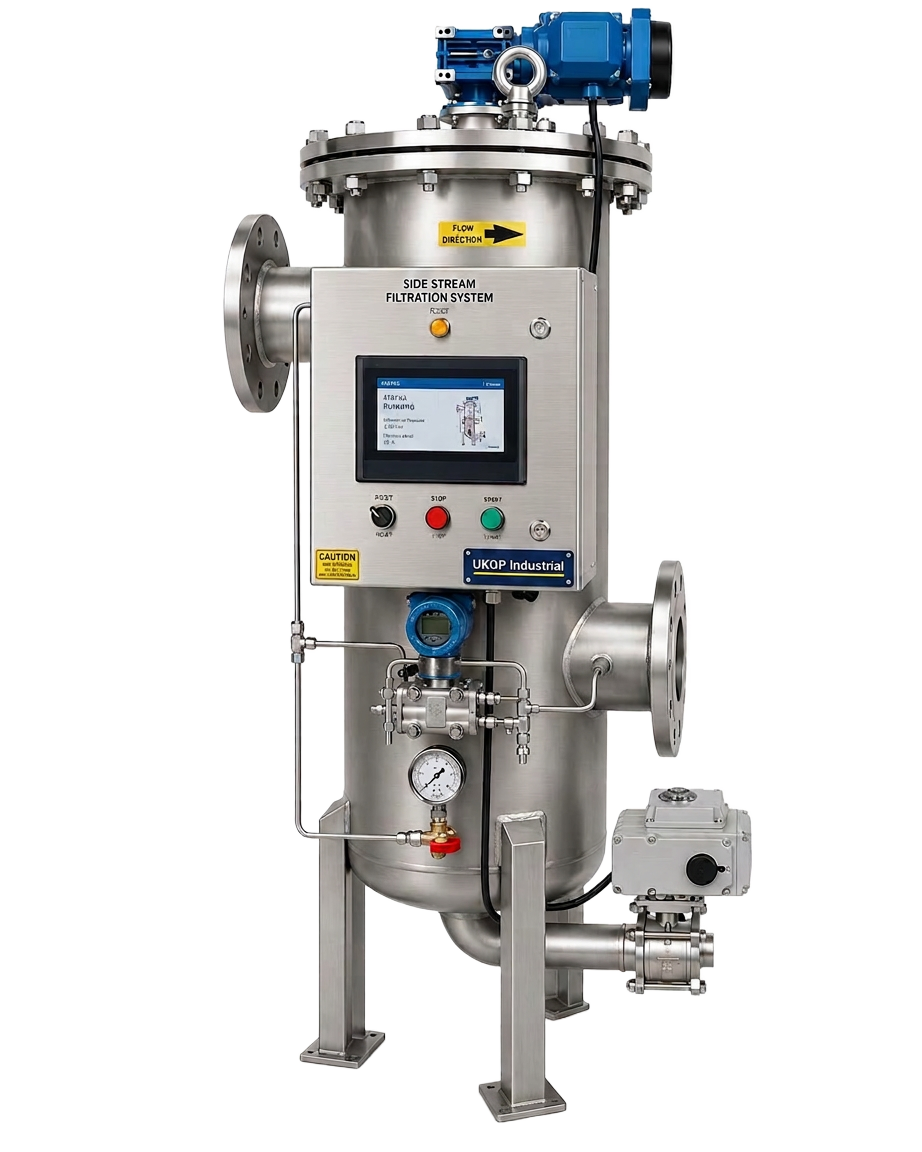
The ongoing monitoring of water quality, as suggested by BS 8552, is significantly easier when an air oil separator is present to manage the load on secondary filtration. While side-stream filtration handles fine suspended solids, the separator manages the primary gas phase and larger particulate batches. This division of labour extends the life of filter cartridges and reduces the frequency of chemical dosing pot interventions. For procurement leads, this translates to lower consumables costs and a more sustainable maintenance regime. UKGP supports these goals by providing flanged PN10/16 units that integrate seamlessly into existing maintenance schedules, requiring minimal downtime for servicing while delivering maximum system protection and reliability.
- Supports BSRIA BG50 requirements for continuous water conditioning.
- Protects chemical inhibitors from degradation caused by excess oxygen and oils.
- Facilitates easier compliance with BS 8552 water sampling and testing protocols.
- Reduces the load on secondary side-stream filtration units by capturing bulk debris.
Technical Specifications and UKGP Product Excellence
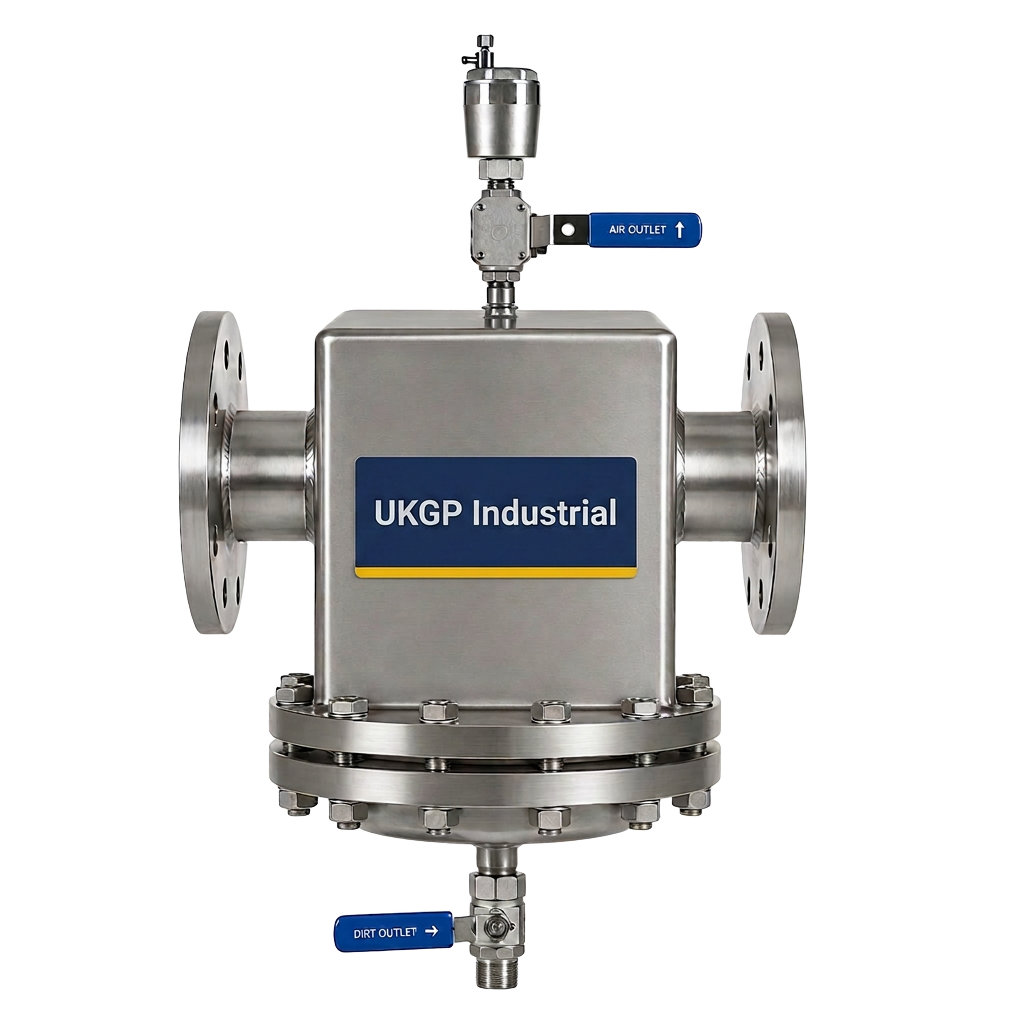
When selecting an air oil separator for a commercial project, the technical specifications must match the peak flow requirements of the primary circuit. UKGP offers a versatile range of separators from DN25 up to DN300, ensuring suitability for everything from boutique office blocks to large-scale industrial warehouses. Each unit features a combined coalescing media and a powerful magnetic catch to address both non-magnetic debris and magnetite. Our units are flanged and rated for PN10/16 environments, making them compatible with the majority of UK plant room specifications and allowing for straightforward retrofitting into existing systems needing improved fluid management.
Reliability is at the core of our design philosophy, which is why UKGP air and dirt separators are supplied with a comprehensive isolation kit as standard. This allows engineers to service the magnetic rod and drain the captured sludge without needing to drain down the entire system, a feature that significantly reduces labour costs during annual shutdowns. The robust construction is backed by a 2-year warranty, providing peace of mind for consultants who need to specify products they can trust. By choosing a UKGP solution, you are selecting a product designed for the realities of the UK M&E sector, where durability and ease of installation are paramount to project success.
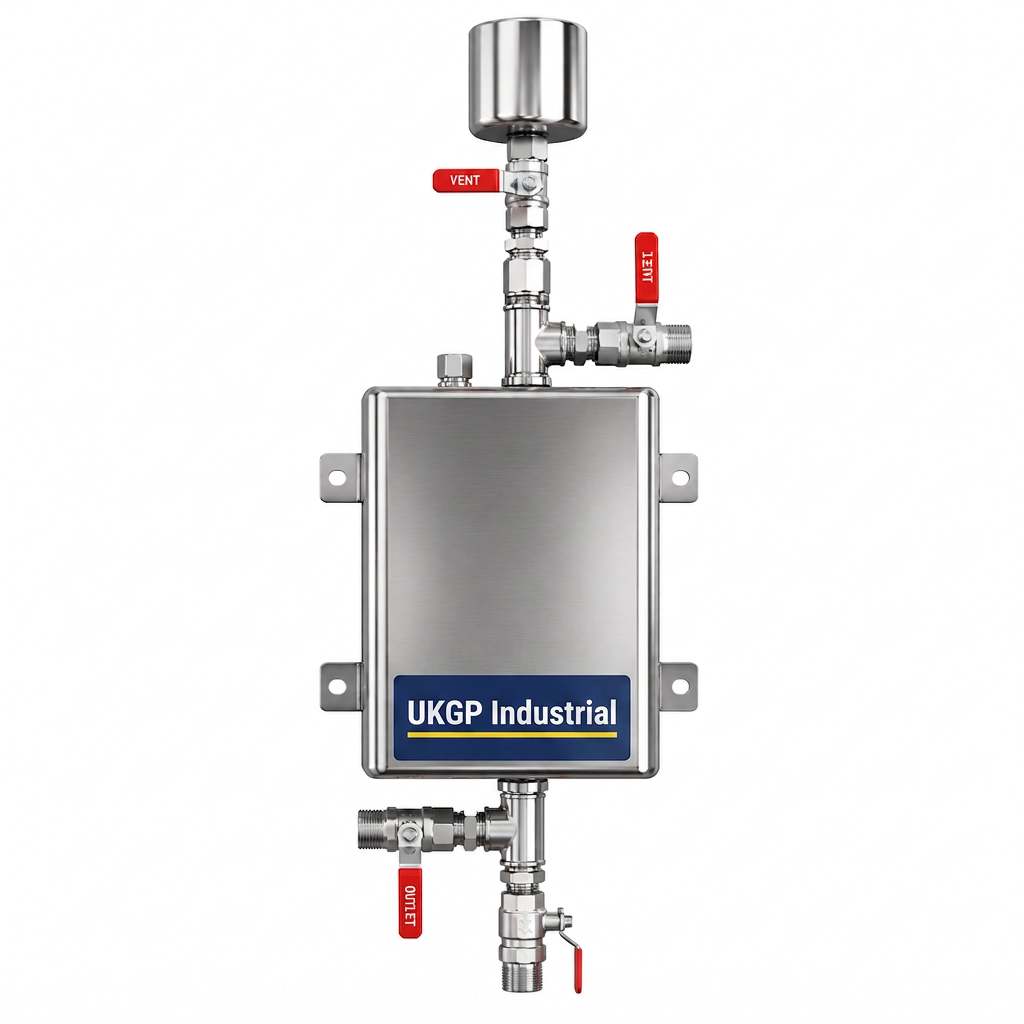
For plant room engineers, the efficacy of the coalescing media is the most important factor in gas removal. Our separators utilise a high-surface-area internal structure that forces micro-bubbles to merge and rise to the automatic air release valve at the top of the unit. Simultaneously, the magnetic element captures fine black iron oxide particles that are small enough to pass through traditional mesh strainers. This dual-action approach ensures that the air oil separator delivers cleaner water to sensitive components like pH sensors and transmitters, prolonging their calibration cycles and ensuring accurate system monitoring. Contact our Surrey-based technical team today to request a quote for your specific DN size and flow rate requirements.
- Available in DN25-DN300 sizes to suit all commercial and industrial flow rates.
- Combined coalescing media and magnetic catch for superior contaminant removal.
- Supplied with isolation kit and flanged PN10/16 connections for rapid installation.
- Backed by a 2-year warranty and expert technical support for peace of mind.
Protecting Industrial Heat Exchangers and Bellows
The interaction between water quality and secondary equipment like a plate heat exchanger or expansion bellows is often overlooked until a failure occurs. An air oil separator is essential for protecting these components from the erosive effects of air bubbles and the corrosive nature of sediment. In a heat exchanger, debris can cause 'bridging' between plates, leading to pressure drops and thermal inefficiencies. Similarly, in stainless steel expansion bellows, the accumulation of sludge in the convolutions can lead to stress corrosion cracking. By removing these contaminants at the source, the separator ensures that the movement and heat transfer components of the system remain in optimal condition.
Consultants specifying large-scale district heating or cooling networks must consider the cumulative effect of poor fluid quality across multiple heat exchange interfaces. The air oil separator acts as the primary guardian of these interfaces, ensuring that the primary side of the plate heat exchanger remains free from scaling and oily deposits. This is particularly important when interfacing with high-efficiency commercial boilers where the internal waterways are precisely engineered and susceptible to blockage. A cleaner system is a more controllable system, allowing the BMS to modulate flow rates more accurately without the interference of air pockets or debris-related sensor drift, leading to improved seasonal performance factors.
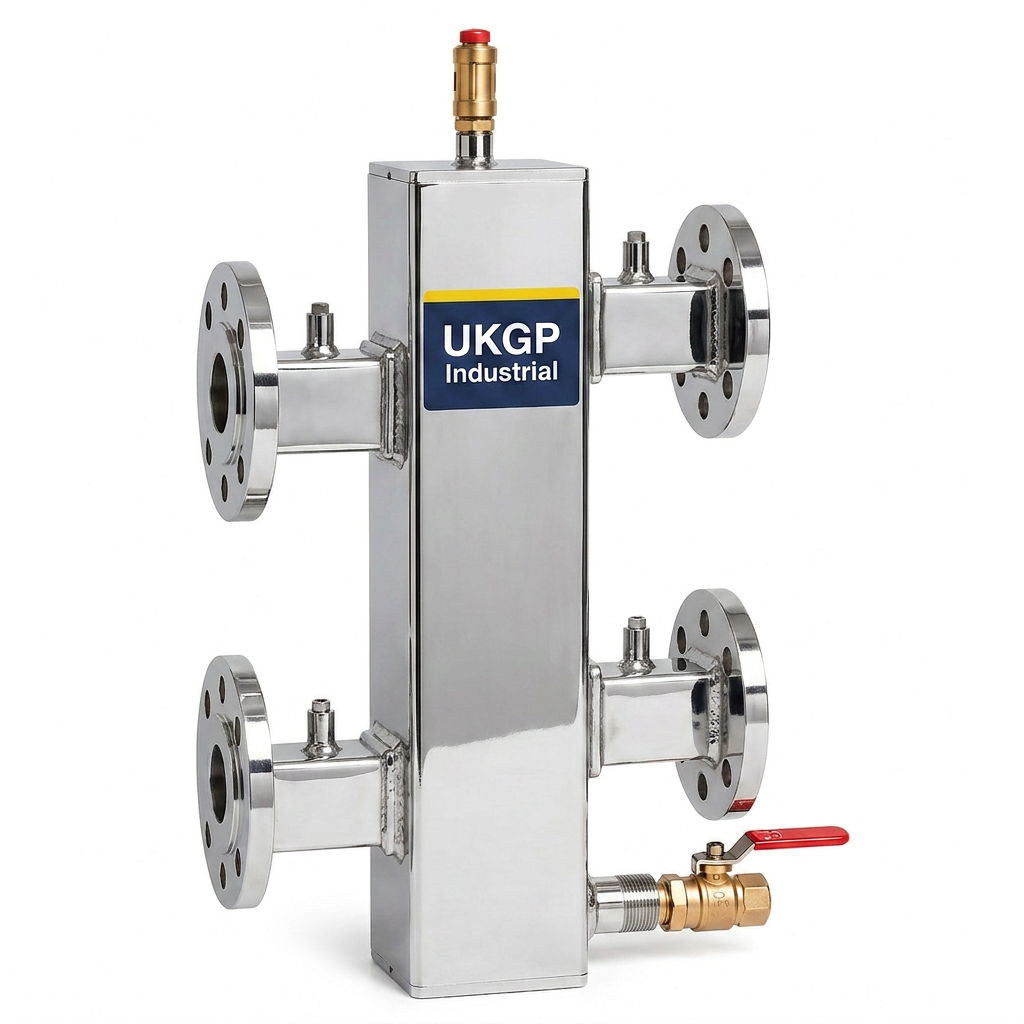
Integration of these units also simplifies the maintenance of low loss headers and chemical dosing pots. When the system fluid is properly managed by an air oil separator, the headers do not become 'dirt traps' that require frequent flushing. This creates a cleaner environment for chemical dosing, ensuring that the inhibitors are not consumed by reacting with high levels of suspended solids. UKGP's range of plant room equipment is designed to work in harmony, creating a cohesive hydronic solution that prioritises ease of maintenance and long-term operational efficiency. Procurement leads can streamline their supply chain by sourcing these interconnected components from a single, reliable UK manufacturer with deep technical expertise in industrial HVAC requirements.
- Shields plate heat exchangers from efficiency-robbing debris and oily films.
- Extends the service life of expansion bellows by preventing sludge build-up.
- Reduces the maintenance frequency for low loss headers and dosing equipment.
- Ensures consistent thermal performance across large-scale hydronic networks.
Key Considerations for Separator Installation
To maximise the effectiveness of an air oil separator, correct placement within the plant room is essential. For heating systems, the unit should ideally be installed on the flow pipe where the temperature is highest and the pressure is lowest, as this is the point where air is most likely to come out of solution. In chilled water systems, the separator is typically placed on the return line. Our technical team advise contractors to ensure there is sufficient clearance for the removal of the magnetic rod and for the operation of the blow-down valve. Using the supplied isolation kit is crucial for ensuring that these routine maintenance tasks can be performed without disrupting the building's thermal services.
Standardisation on flanged PN10/16 connections across our DN25 to DN300 range allows for a consistent installation approach across diverse project types. Whether you are dealing with a compact plant room in a refurbished office or a sprawling industrial complex, the UKGP air oil separator provides the robust connection points required for high-pressure applications. Contractors should also ensure that the purge line from the automatic air vent is piped to a safe visible tundish, allowing for monitoring of gas release. This visibility is helpful for engineers as it provide a clear indication that the system is de-aerating correctly during the initial weeks of operation after a fill or top-up.
Finally, consideration must be given to the total system volume and the expected contaminant load. While the air oil separator is highly effective, it should be part of a holistic water treatment strategy that includes proper chemical dosing and, where necessary, side-stream filtration for very large volumes. UKGP recommends consulting our technical datasheets to ensure the selected DN size comfortably handles the design flow rate without excessive pressure drop. Investing in the correct size today prevents the need for costly corrections later. For bespoke requirements or technical queries regarding BS EN 14917 or CIBSE guidelines, our Surrey office is available to provide tailored advice and competitive quotations for your next project.
- Install at the point of lowest solubility for maximum air removal efficiency.
- Ensure adequate clearance for magnetic rod servicing and debris blow-down.
- Utilise the supplied isolation kit to facilitate maintenance without system drain-down.
- Match the unit size to the peak flow rate to avoid excessive system pressure drops.
The Long-term Benefits of Investing in Quality Separation
The commercial landscape of UK building services is increasingly focused on 'Life Cycle Costing' rather than just initial purchase price. An air oil separator from UKGP offers a compelling value proposition by significantly reducing the frequency of component replacements and emergency call-outs. When air and oil are present, they act as catalysts for corrosion and wear; removing them proportionally increases the mean time between failures for pumps, valves, and heat exchangers. This stability is particularly valued by Facilities Managers (FMs) who are tasked with maintaining high uptime for critical infrastructure in hospitals, data centres, and manufacturing facilities.
Furthermore, the thermal efficiency gains associated with clean system water contribute directly to ESG (Environmental, Social, and Governance) targets and carbon reduction goals. Air and sludge act as insulators, meaning the boiler or chiller must consume more energy to deliver the same amount of heating or cooling. By keeping heat transfer surfaces clean with a high-performance air oil separator, the building's energy performance certificate (EPC) rating is protected. In an era of rising energy costs and strict carbon reporting, the role of simple, mechanical separation technology has never been more relevant for the commercially aware building owner or operator.
Choosing UKGP means partnering with a manufacturer that understands the specific pressures of the UK M&E sector. From our Surrey base, we provide the technical documentation, backup, and rapid delivery schedules required to keep projects on track. Our separators, with their DN25-DN300 range and 2-year warranty, represent the gold standard in plant room protection. Whether you are a consultant drafting a specification or a contractor looking for a reliable, easy-to-install solution, our combined coalescing and magnetic separators deliver the performance required to meet modern standards. Request a quote today to see how our industrial-grade solutions can enhance your next HVAC installation.
- Protects the building's EPC rating by maintaining peak thermal efficiency.
- Reduces emergency call-out costs by preventing air-locks and debris damage.
- Supports long-term ESG goals through improved energy conservation.
- Ensures reliable operation of critical infrastructure in high-demand environments.
Frequently asked questions
What is the difference between a standard strainer and an air oil separator?
- A standard Y-strainer only captures large particles through a mesh, whereas an air oil separator uses coalescing media to remove micro-bubbles and oily films, alongside a magnet to catch fine magnetite, providing far superior fluid cleanliness.
How often does a UKGP air and dirt separator require maintenance?
- Maintenance intervals depend on system cleanliness, but typically the magnetic rod should be cleaned and the bottom valve blown down every 6-12 months. UKGP units include an isolation kit to make this process fast and simple.
Can an air oil separator be retrofitted to an existing commercial system?
- Yes, our units are flanged PN10/16 and available in sizes from DN25 to DN300, making them ideal for retrofitting into existing plant rooms to solve ongoing issues with air, sludge, or oily residues.
Does this separator help with BSRIA BG50 compliance?
- Absolutely. BSRIA BG50 emphasises the importance of continuous water conditioning in closed loops. By removing air, oil, and dirt, the separator is a primary tool for meeting these industry-standard water quality benchmarks.
Is the magnetic catch included as standard on all DN sizes?
- Yes, all UKGP air and dirt separators from DN25 up to DN300 feature a high-power magnetic catch and coalescing media as part of the standard industrial specification.