The Reality of System Restoration After Power Flush
A power flush is a vital invasive procedure designed to remove loose debris, sludge, and magnetite from a commercial HVAC circuit. However, many building services consultants overlook the fact that even the most thorough flush rarely removes 100% of the internal corrosion. Residual particulate matter remains trapped in dead legs, heat exchangers, and radiator corners. Immediately after power flush completion, the water might appear clear, but as soon as the system returns to full operating temperature and flow, remaining contaminants are mobilised. This can lead to rapid fouling of sensitive components, such as high-efficiency boiler heat exchangers and control valves, if a permanent filtration strategy is not in place from day one.
To ensure the investment in a power flush is not wasted, UK building managers must shift from a 'fix and forget' mindset to a proactive maintenance cycle. According to BSRIA BG50, the continuous monitoring and treatment of water is essential for the longevity of closed-loop systems. Without active intervention, the dissolved oxygen introduced during the flushing process can react with internal metal surfaces, sparking a new cycle of corrosion. This secondary corrosion can be even more aggressive than the original baseline fouling. Consequently, the period immediately following a system clean is the highest risk window for component failure, requiring precise chemical balancing and physical filtration to stabilise the internal environment.
When specifying the post-wash treatment plan, engineers should look beyond simple chemical inhibitors. While inhibitors are necessary to passivate metal surfaces, they cannot remove physical suspension. In large-scale commercial plant rooms, manual flushing of strainers is often insufficient to catch the sub-micron particles that cause the most damage to modern, tight-tolerance pumps and valves. The objective after power flush is to create a 'polishing' effect where the water quality actually improves over the first few months of operation. This is achieved by integrating high-performance filtration technology that can handle the increased debris load typically seen in the wake of a major system restoration project.
- Immediate mobilisation of residual magnetite and scale
- Introduction of fresh oxygen during the flushing process
- Risk of fouling high-efficiency boiler heat exchangers
- Requirement for BSRIA BG50 compliant water chemistry
- The difference between clear water and chemically stable water
Integrating Side Stream Filtration for Long-Term Protection
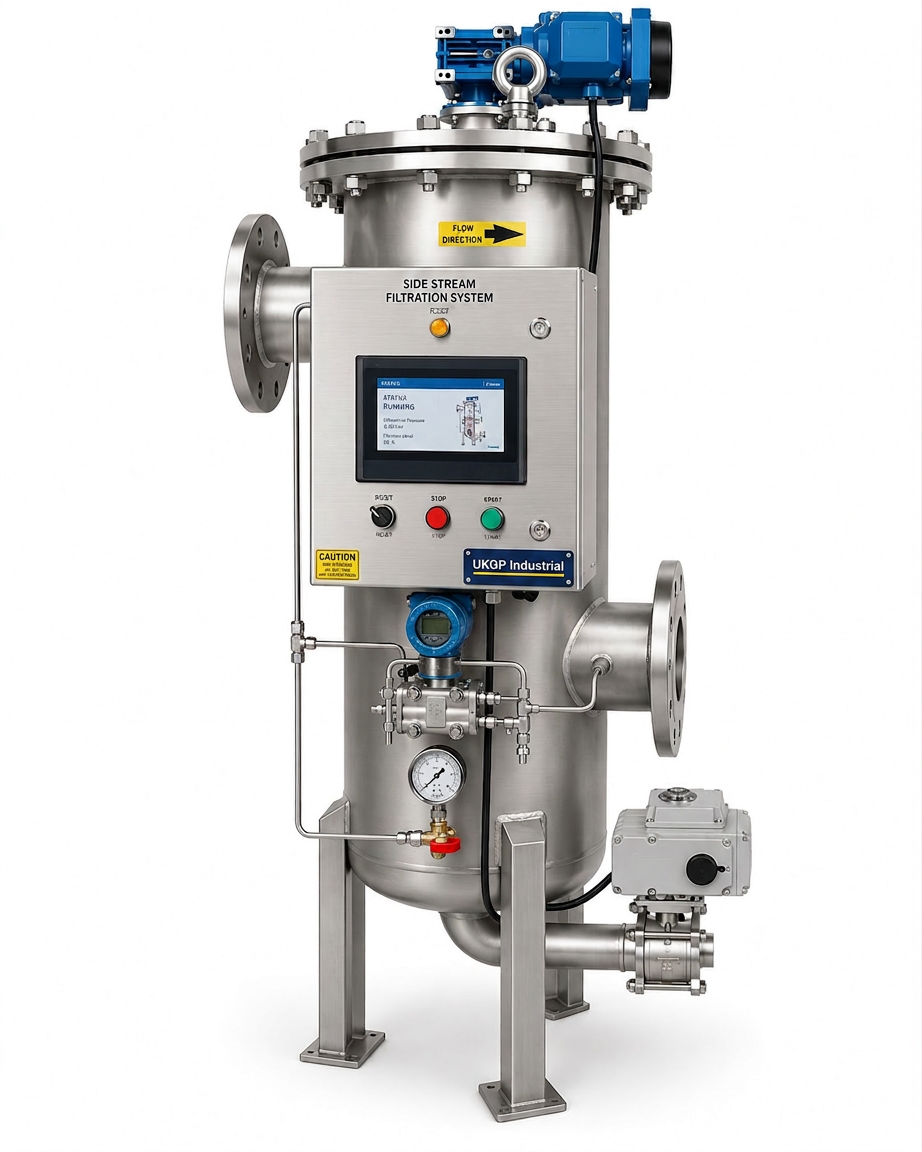
The most effective way to maintain cleanliness after power flush is the installation of a dedicated side stream filtration skid. Unlike standard full-flow strainers which can only catch large debris, a side stream system continuously diverts a portion of the system flow—typically 5% to 15%—through a high-efficiency filter media and magnetic separator. At UKGP Industrial, our side stream filtration skids are engineered to capture particles down to 5 microns, ensuring that the 'fine' magnetite that often escapes a power flush is permanently removed from the circuit. These units are made to order in our Surrey facility with a standard lead time of 6-8 weeks, providing a robust solution for both new builds and retrofit projects.
Choosing the right size for your filtration unit is paramount for system health. Our range covers DN50 to DN100 connections, ensuring suitability for a wide variety of commercial plant room configurations. Starting from £6,800 + VAT, these skids represent a high-value investment compared to the cost of repeated power flushing or catastrophic plant failure. Every UKGP side stream unit comes with a 2-year warranty, giving M&E contractors and procurement leads confidence in the durability of the hardware. By installing this equipment after power flush, you ensure that the system remains within the turbidity limits specified by BSRIA BG29 and BG50, significantly extending the life of your plate heat exchangers and pumps.
Operational efficiency is another key benefit of side stream technology. Because these units operate on a bypass loop, they can be serviced and the filter bags replaced without shutting down the entire heating or cooling system. This is a critical feature for Facilities Managers overseeing 24/7 operations like hospitals or data centres. Integrating a side stream skid immediately after power flush ensures that any oxygen-ingested corrosion products are filtered out before they can settle in the low-velocity areas of the plant. If you are looking to secure your system's future, we recommend requesting a quote for a bespoke UKGP skid early in your project planning phase to align with our bespoke manufacturing timelines.
- Captures fine magnetite and non-magnetic debris down to 5 microns
- Prices starting from £6,800 + VAT for UK-made skids
- Available in DN50 to DN100 sizes to suit various flow rates
- Reduces the frequency and necessity of future power flushes
- Compliant with CIBSE and BSRIA maintenance guidelines
Chemical Dosing: The Second Pillar of Post-Flush Stability
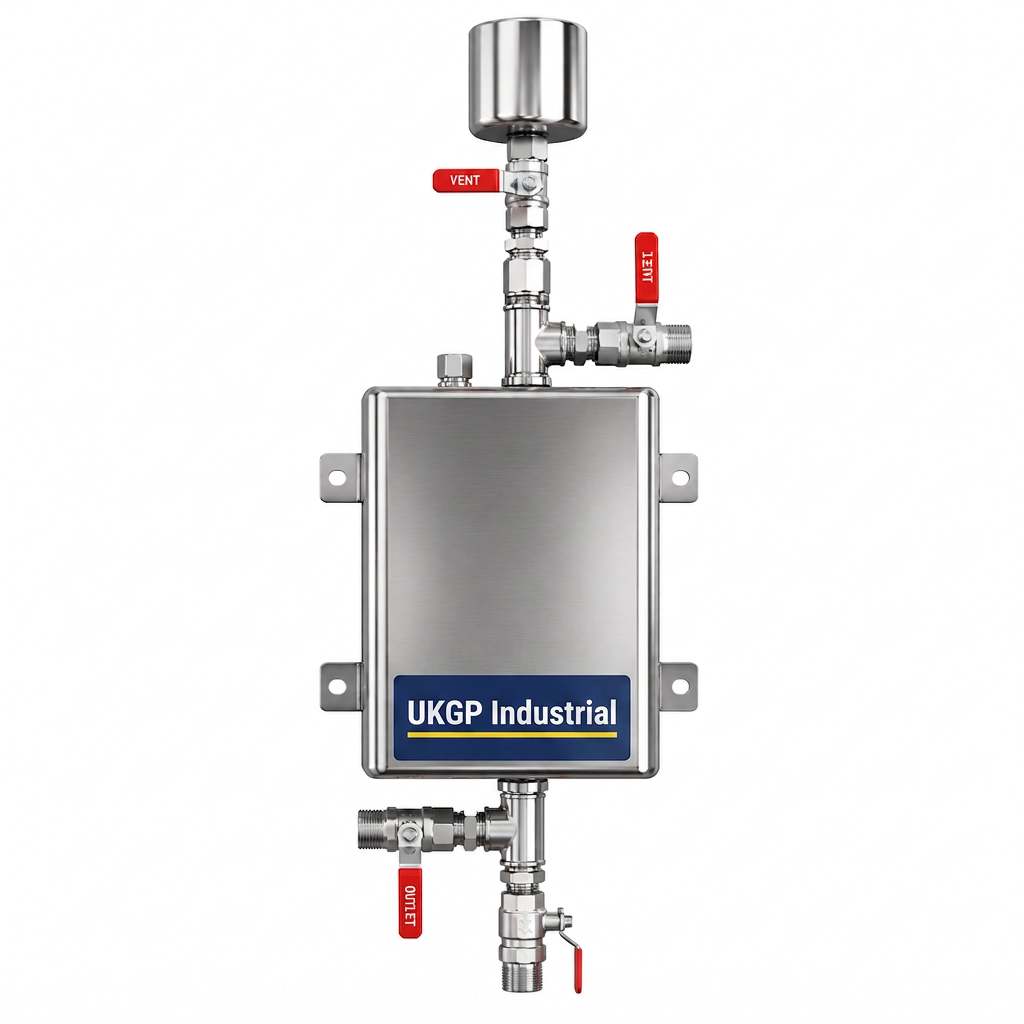
Chemical treatment is the traditional partner to physical filtration in the maintenance of closed-loop systems. A major risk after power flush is the dilution or complete absence of corrosion inhibitors, which leaves the fresh metal surfaces vulnerable to flash rusting. To combat this, a high-quality chemical dosing pot should be installed to allow for the safe and controlled introduction of inhibitors and biocides. These pots are essential for maintaining the chemical levels required by BS 8552, ensuring that the water chemistry does not fluctuate and inadvertently trigger a microbial outbreak or accelerated galvanic corrosion between different system metals.
Applying chemicals without adequate filtration is a common mistake in the UK B2B sector. Inhibitors work by forming a protective film on the metal, but if the surface is covered in residual sludge left over after power flush, the chemicals cannot reach the metal to protect it. Therefore, the dosing pot and the filtration skid must work in tandem. The dosing pot allows engineers to maintain the correct pH levels and molybdate or nitrite concentrations, while the filtration system removes the suspended solids that the chemicals have loosened. This dual approach is the only way to satisfy the stringent requirements set out in the BSRIA BG50 framework for older systems.
When selecting a dosing pot for your plant room, ease of use and safety are the primary considerations. UKGP Industrial provides robust, stainless steel dosing pots that are designed for high-pressure environments, ensuring that maintenance staff can treat the system without risk. Properly treated water after power flush will show low conductivity and stable iron levels during monthly testing. This documented evidence of water quality is often a requirement for equipment manufacturers to honour their warranties on boilers and chillers. Ensuring you have the right dosing infrastructure in place is as much about commercial risk management as it is about engineering excellence.
- Essential for maintaining inhibitor levels post-cleaning
- Prevents microbial growth and aerobic corrosion
- Required for compliance with BS 8552 testing standards
- Protects heat exchangers from scale and pitting
- Facilitates easy system sampling and water analysis
Monitoring and Sampling According to BS 8552
Regular water analysis is the only way to verify that your maintenance regime after power flush is actually working. BS 8552 provides the UK standard for sampling and monitoring water quality in building services systems. It recommends that samples are taken from representative points across the loop, not just the plant room. In the first three months after a power flush, sampling should be conducted more frequently—often monthly—to monitor for any spike in dissolved iron or suspended solids. These spikes are early warning signs that the existing filtration is being overwhelmed or that the chemical concentration has dropped below the necessary threshold.
Data gathered from these samples allows building services consultants to adjust the maintenance strategy based on real-time conditions. For instance, if turbidity remains high despite a recent power flush, it may indicate that the side stream filtration bags need to be changed to a lower micron rating. Conversely, if copper levels are rising, it suggests that the chemical inhibitor chemistry is not compatible with the system's metallurgy. This evidence-based approach removes the guesswork from FM operations and ensures that the budget is spent on targeted interventions rather than expensive, reactive emergency repairs or repeated system draining and refilling.
Maintaining a log of these results is also vital for the long-term asset management of the building. Should a major component like a plate heat exchanger fail, the first thing a manufacturer will request is the water quality history. Having clear records that show a consistent maintenance schedule after power flush, including the use of side stream filtration and correct dosing, protects the building owner from liability. It demonstrates a commitment to BSRIA standards and proves that the system has been operated within the design parameters. For any procurement lead, investing in this monitoring infrastructure is a proactive step toward reducing the total cost of ownership.
- Provides an early warning system for internal corrosion
- Validates the performance of the side stream filtration skid
- Ensures compliance with equipment manufacturer warranties
- Identifies issues with chemical dosing or oxygen ingress
- Creates a historical record of system health for future audits
Protecting Plate Heat Exchangers from Post-Flush Debris
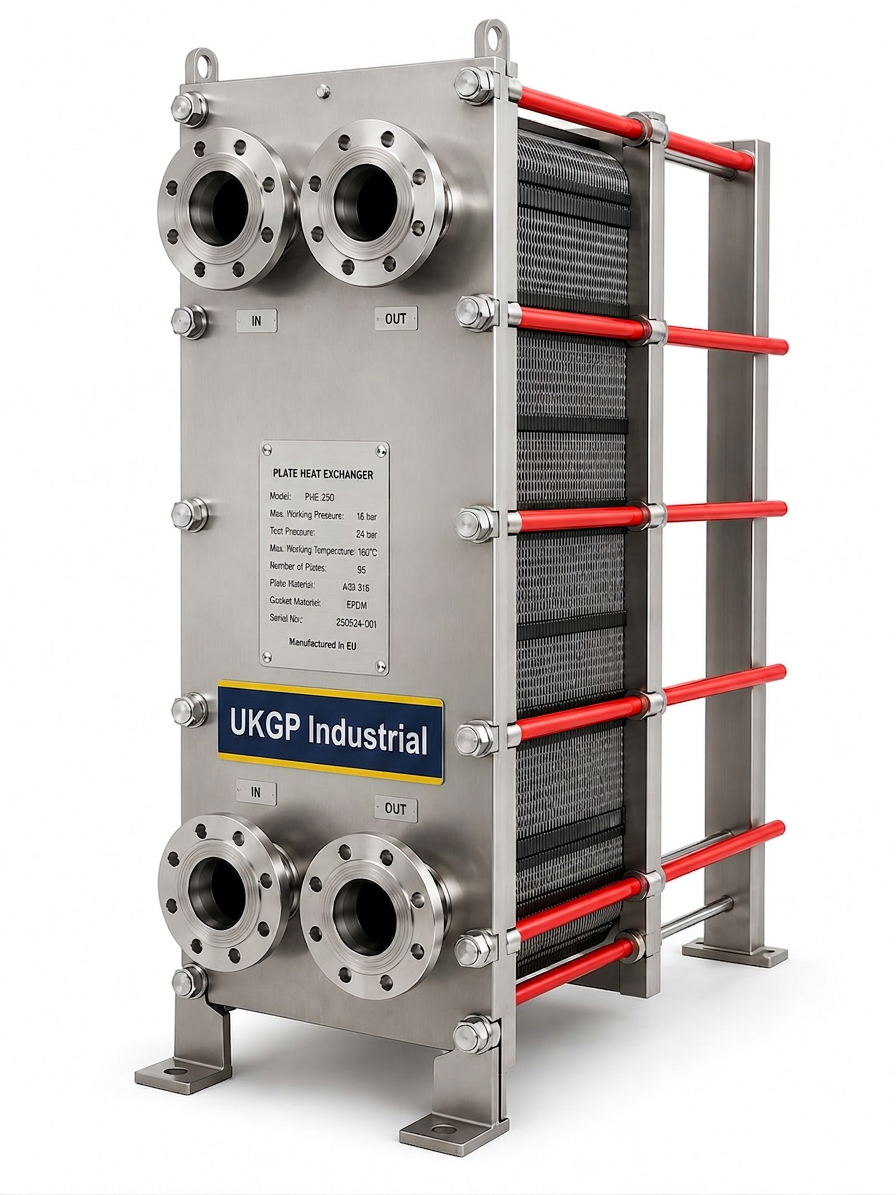
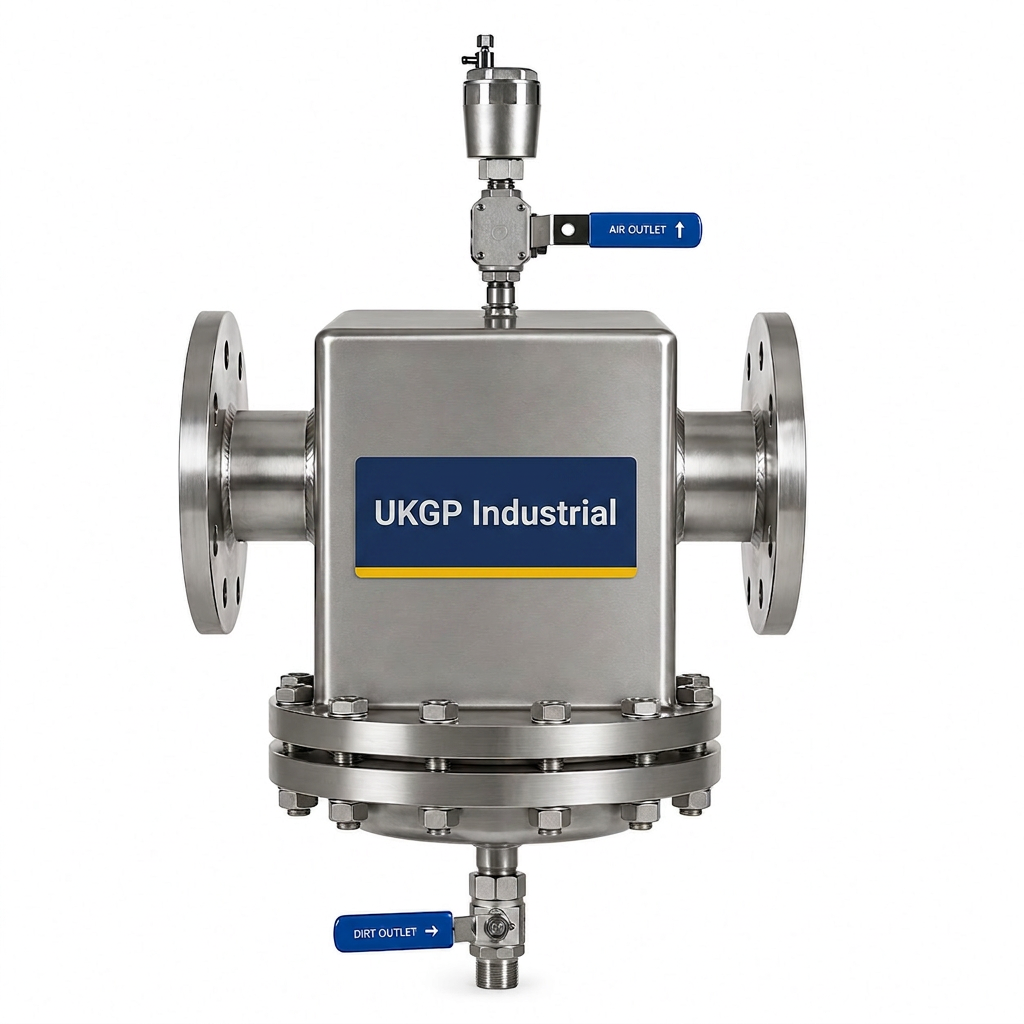
Plate Heat Exchangers (PHEs) are particularly vulnerable to the debris that remains after power flush. Due to their narrow plate gaps and high thermal efficiency, they act as effective 'filters' for any magnetite or scale circulating in the system. When these contaminants settle within the PHE, they create cold spots, reduce heat transfer efficiency, and can eventually lead to plate perforation through localized pitting corrosion. This is why many UK engineers insist on the installation of a high-efficiency air and dirt separator or a dedicated side stream skid upstream of any secondary heat exchange loops to capture debris before it can settle.
The cost of cleaning or replacing a fouled PHE can far exceed the cost of preventative filtration. After a power flush, the sudden increase in flow velocity can dislodge large flakes of scale that were previously dormant. If these flakes reach the heat exchanger, they can cause immediate blockages. By maintaining a clean system using UKGP filtration products, you ensure that the Delta T across your heat exchangers remains within the design specification. This directly impacts the energy consumption of the building, as the pumps and boilers do not have to work harder to overcome the resistance and thermal insulation provided by the settled sludge.
Commercial buildings opting for refurbished systems must be especially cautious. Even after power flush procedures, the underlying pipework in older buildings often remains porous and prone to shedding material. In these scenarios, the PHE is the 'canary in the coal mine.' Protecting it requires a multi-stage approach: a magnetic separator to pull out the black iron oxide and a high-quality filter to remove the non-magnetic grit. UKGP Industrial offers tailored advice for M&E contractors on how to integrate these components effectively, ensuring that the primary and secondary circuits remain isolated from debris contamination for years to many.
- Narrow plate gaps are prone to rapid blockage by magnetite
- Fouling leads to reduced heat transfer and higher energy bills
- Pitting corrosion can cause cross-contamination between circuits
- Essential to protect expensive secondary plant assets
- Improves system response times and temperature control
Summary of Best Practices for Post-Flush Maintenance
To summarise, the period after power flush is a critical window that dictates the future reliability of your HVAC system. UK building services professionals must move away from the idea that a flush is a permanent solution. Instead, it should be viewed as a 'reset' that must be defended through the use of side stream filtration, continuous chemical monitoring, and regular water analysis. Implementing an automated filtration skid, such as those manufactured by UKGP from £6,800 + VAT, provides a high-level of protection that manual maintenance simply cannot match, especially in complex commercial circuits with high flow rates and multiple heat sources.
Investing in the right hardware—including dosing pots, separators, and skids—ensures that the system complies with BSRIA BG50 and BS 8552. This not only protects the hardware but also ensures the energy efficiency of the building remains at an optimum level. For M&E contractors, providing a system that stays clean after power flush is a hallmark of quality workmanship and reduces the risk of costly call-backs and disputes over water quality. UKGP Industrial is proud to support the UK industry with made-to-order, high-quality components designed specifically for these challenging environments, backed by our 2-year manufacturer warranty.
Final considerations when planning your post-flush strategy should include lead times and technical specifications. Our skids are delivered in 6-8 weeks, meaning they should be specified and ordered well in advance of the commissioned flushing date. Whether you are dealing with a DN50 or a DN100 pipework system, ensuring the filtration capacity matches the system volume is the key to success. Contact our Surrey-based technical team today to discuss your specific project requirements and receive a detailed quote for a filtration solution that will keep your system clean, efficient, and compliant for the long term.
- View the power flush as a system reset, not a final fix
- Deploy side stream filtration to manage residual contaminants
- Adhere to BSRIA BG50 for ongoing water quality management
- Schedule regular water testing to verify chemical efficacy
- Choose UKGP for high-quality, made-to-order industrial components
Frequently asked questions
How long after power flush should I install a filtration skid?
- Ideally, the filtration skid should be installed and commissioned immediately after the power flush is completed. This ensures that any residual debris mobilised by the cleaning process is captured before it can settle in the plant or cause damage to new components.
Can chemical inhibitors replace the need for filtration?
- No. While inhibitors are essential for preventing further corrosion, they cannot remove existing physical particles. After power flush, suspended solids like magnetite must be physically removed via side stream filtration to meet BSRIA BG50 standards.
What is the typical lead time for a UKGP side stream skid?
- Our side stream filtration skids are made to order in our Surrey facility with a standard lead time of 6-8 weeks. We recommend specifying these units early in the design or refurbishment phase to ensure they are ready for installation post-flush.
What size filtration skid do I need for my system?
- The size depends on the total system volume and flow rate. UKGP offers units ranging from DN50 to DN100. Our technical team can help you calculate the correct size to ensure 5-15% of your flow is consistently filtered.
Is a warranty provided with UK-made filtration skids?
- Yes, all UKGP side stream filtration skids come with a 2-year warranty as standard, reflecting the high manufacturing quality and reliability required for commercial UK plant rooms.