The Mechanics of Full Flow Filtration
Full flow filtration involves the installation of a filter or more commonly a Y-strainer directly into the main flow of the primary or secondary circuit. This approach ensures that 100% of the medium passes through the filtration element before reaching downstream equipment like boilers, chillers, or heat exchangers. Traditionally, this has been the 'default' method in UK building services, providing a mechanical barrier that prevents large debris from entering sensitive components.
However, the limitations of full flow filtration are inherent in its design. Because the entire system volume must pass through the mesh, the pore size cannot be too fine without creating a significant pressure drop (Delta P). Most commercial Y-strainers are fitted with meshes that only capture particles larger than 1mm. In modern systems with Variable Speed Drives (VSDs), a partially blocked full flow filter can lead to increased pump head and energy waste, or in extreme cases, trigger low-flow alarms that shut down the plant.
Furthermore, full flow filters are notoriously difficult to maintain in a live environment. Cleaning an inline strainer usually requires isolating a section of the main header, which necessitates plant downtime. In many UK plant rooms, the lack of bypass arrangements around full flow strainers means that maintenance is often deferred, leading to the very internal erosion and blockage issues the filters were intended to prevent.
- Prevention of catastrophic debris entry into boilers and chillers.
- Protection of high-value components during the initial commissioning phase.
- Immediate removal of large particles (typically >1000 microns in standard Y-strainers).
The Logic of Side Stream Filtration
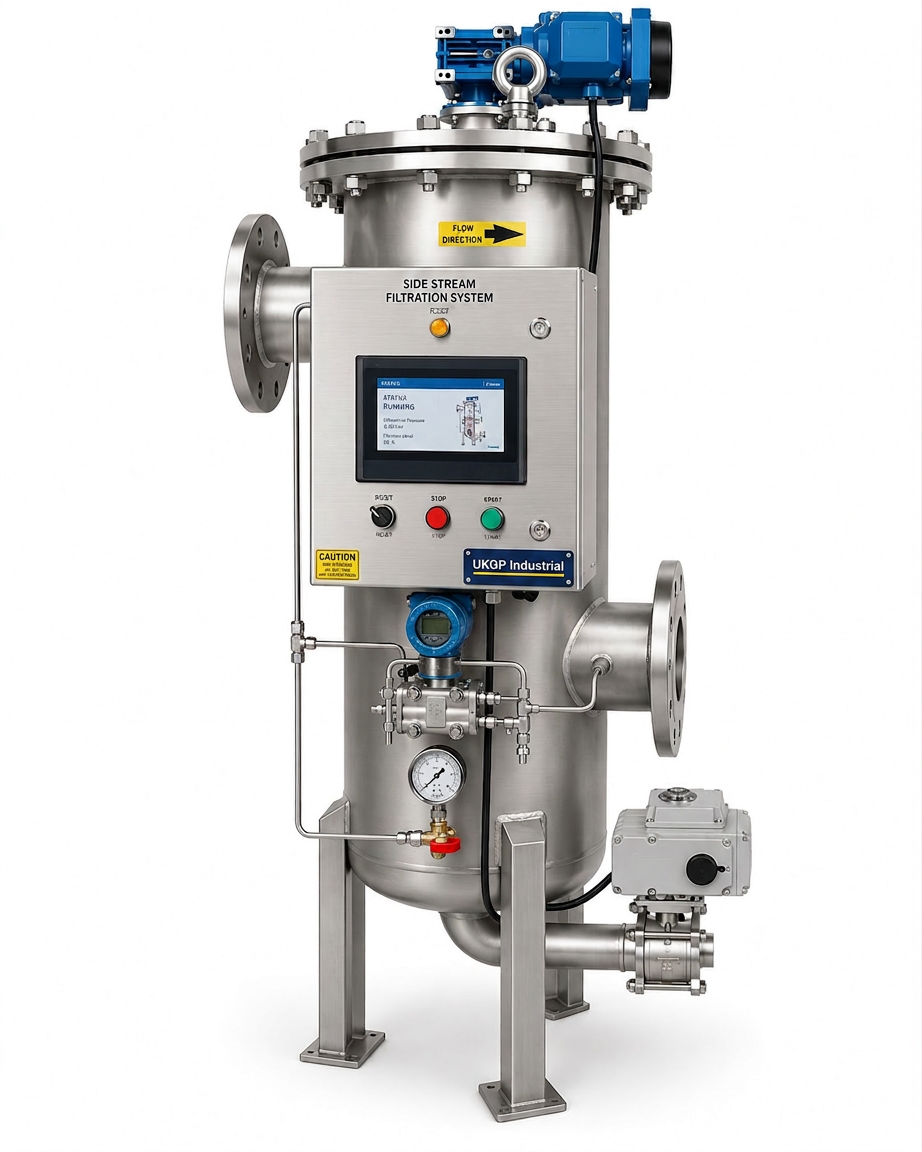
Side stream filtration operates on the principle of continuous 'polishing'. Rather than attempting to filter the entire flow at once through a coarse mesh, a portion of the system water (typically between 5% and 15%) is diverted through a high-efficiency filtration skid before being returned to the main circuit. Over a 24-hour period, the entire volume of the system is turned over multiple times, allowing the use of much finer media, such as 5-micron bags or high-intensity magnetic rods.
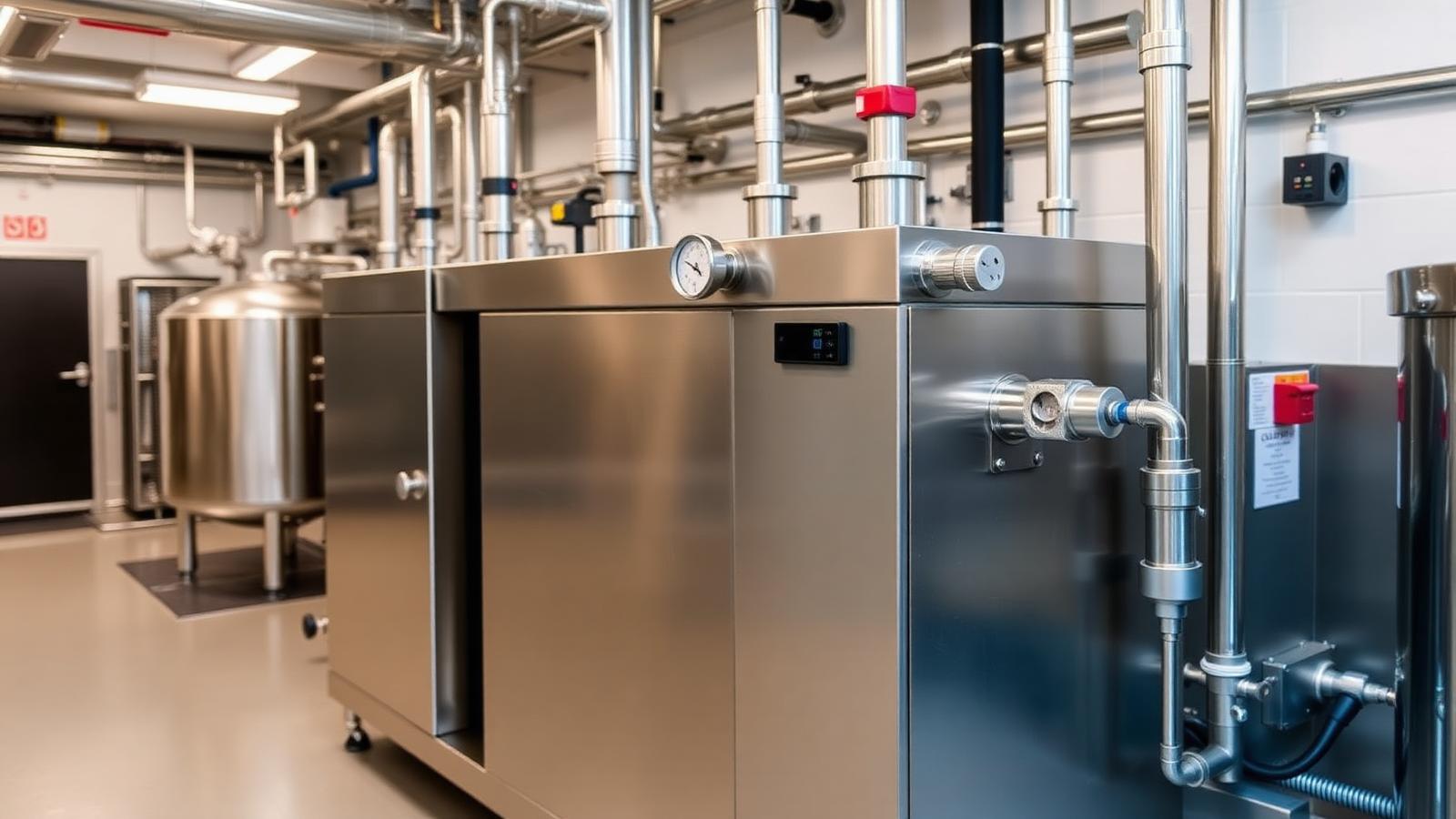
The UKGP side stream filtration skid is a prime example of this technology, designed to house both magnetic and mechanical filtration stages. By pulling water from a low-pressure point and returning it further downstream, or using dedicated integral pumps, these units operate independently of the main system pressure. This means that even as the filter media becomes saturated with debris, there is zero impact on the flow rate to the building's emitters or heat generators.
From a maintenance perspective, side stream units are vastly superior for FM teams. The filtration skid can be isolated and serviced while the main plant remains fully operational. Because these units often include pressure differential gauges, maintenance can be scheduled based on actual dirt loading rather than arbitrary calendar dates, aligning with the proactive maintenance philosophies outlined in BSRIA BG50.
- Continuous removal of fine suspended solids down to sub-micron levels.
- No impact on the primary hydraulic head of the system.
- Simplified maintenance that does not require plant shutdown.
Particle Size and System Fouling Rates
The efficacy of a filtration system is largely measured by the size of the particles it can reliably remove. Full flow strainers are effective at catching 'construction debris'—shavings of copper, welding slag, and PTFE tape—but they are largely ineffective against the microscopic magnetite and haematite particles that form during the lifecycle of a system. These fine particles, often smaller than 10 microns, are the primary cause of premature failure in circulator pump bearings and the fouling of plate heat exchangers.
Side stream systems are engineered to address this fine particulate matter. By utilizing depth-loading cartridge filters or multi-layered bags, side stream units can achieve a level of water clarity that is impossible with inline strainers. In UK commercial systems where high-efficiency condense boilers or heat pumps are used, the narrow waterways of the heat exchangers are highly susceptible to fouling. Reducing the TSS (Total Suspended Solids) via side stream polishing is the most effective way to maintain the design heat transfer coefficient.
A core concept in BSRIA BG29/21 (Pre-commission cleaning of pipework systems) is that even a perfectly flushed system will generate debris post-commissioning. As the system settles and chemical inhibitors form protective films, initial flash corrosion can occur. Side stream filtration captures these secondary solids before they can settle in low-velocity areas, such as underfloor heating manifolds or large-diameter headers, where they would otherwise promote under-deposit corrosion and microbial growth.
- Total suspended solids (TSS) reduction.
- Mitigation of 'dead legs' and low-flow areas.
- Prevention of under-deposit corrosion.
Hydraulic Impact and Energy Efficiency
In the era of Part L of the Building Regulations and the push for Net Zero, the hydraulic efficiency of a plant room is under intense scrutiny. Full flow filters impose a constant parasitic load on the primary pumps. As the filter collects debris, the resistance increases, forcing VSD-controlled pumps to ramp up to maintain the required flow rate. This increase in pump power is often overlooked but can account for a significant percentage of a building's auxiliary energy use.
Side stream filtration skids, particularly those with their own dedicated low-power circulation pump, decouple the filtration process from the primary hydraulic circuit. The main pumps only need to overcome the resistance of the pipework and heat exchangers, not a dirty filter. This decoupling allows for more precise control of the system and ensures that the design delta T is not compromised by reduced flow rates caused by blocked strainers.
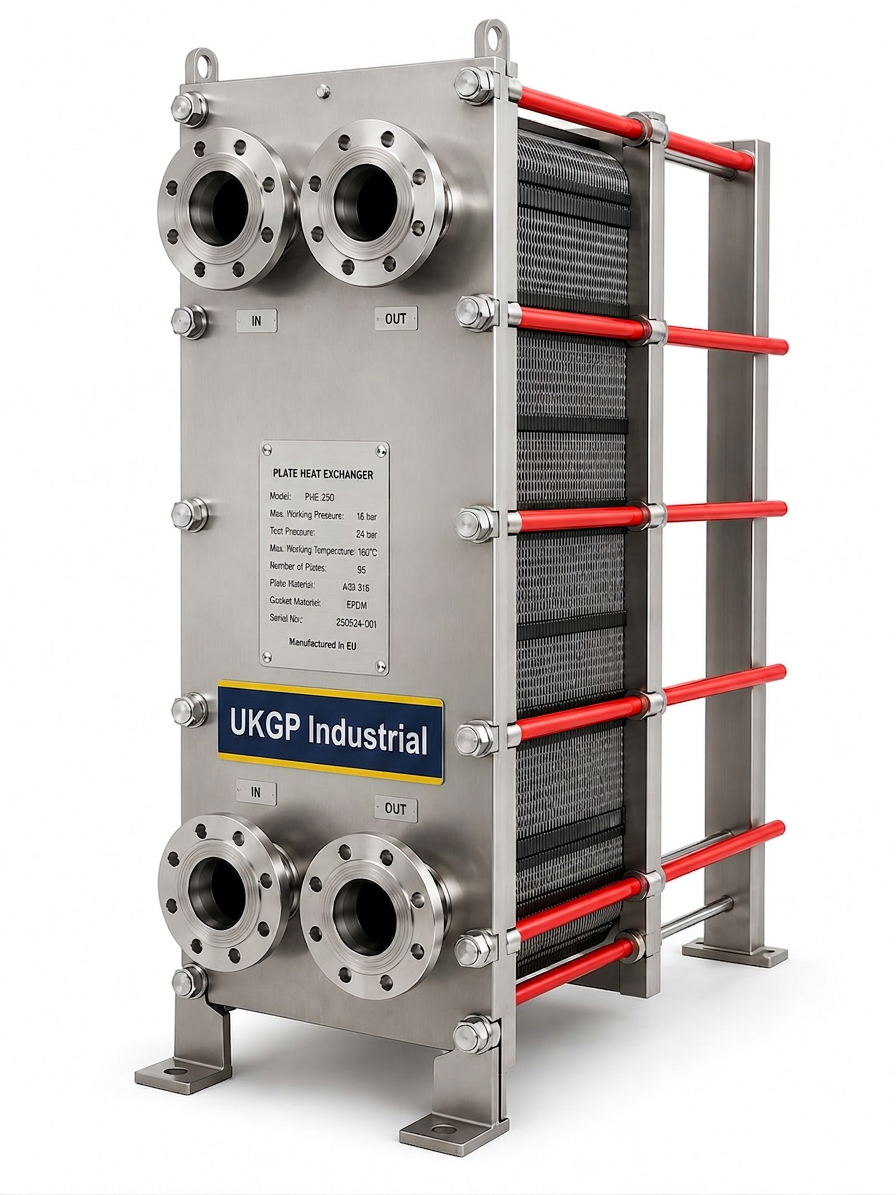
The energy benefits extend to the heat transfer surfaces. Just 1mm of scale or magnetite buildup on a heat exchanger plate can reduce its efficiency by up to 10%. By maintaining ultra-clean water through side stream filtration, engineers ensure that the UKGP plate heat exchanger or the boiler primary circuit operates at peak efficiency throughout its service life, significantly reducing the carbon footprint of the HVAC operation.
- Reduced pump energy consumption by maintaining low system head.
- Optimised Delta T across boilers and chillers.
- Extended lifespan of mechanical seals and control valves.
Compliance with BSRIA BG29/21 and BG50
The Building Services Research and Information Association (BSRIA) provides the definitive guidelines for water quality in the UK. BG29/21 focuses on the pre-commissioning phase, where the primary goal is the removal of debris left over from installation. While full flow flushing is a part of this process, the guidance increasingly points toward the use of side stream filtration to maintain water quality once the system is filled and inhibited.
BG50 (Water Treatment for Closed Heating and Cooling Systems) goes further, emphasizing the importance of continuous monitoring and the removal of suspended solids during the operational life of the building. It notes that traditional strainers are insufficient for the removal of the fine iron oxides that typically plague UK systems. Compliance with BG50 often mandates the installation of side stream units to ensure that the iron levels remain within the recommended limits (typically <0.5 mg/l).
For insurance purposes and to maintain manufacturer warranties on high-value plant like chillers and boilers, following these BSRIA guidelines is non-negotiable. An M&E contractor who fails to specify or install adequate side stream filtration risks being held liable for system failures or poor performance during the defects liability period. Proper documentation of filter changes and water samples from a side stream skid provides a clear audit trail of system health.
- Mandatory for pre-commissioning water quality.
- Ongoing monitoring and 'water polishing' requirements.
- Minimum filtration standards for district heating connections.
The Role of Air and Dirt Separators in Conjunction with Filtration
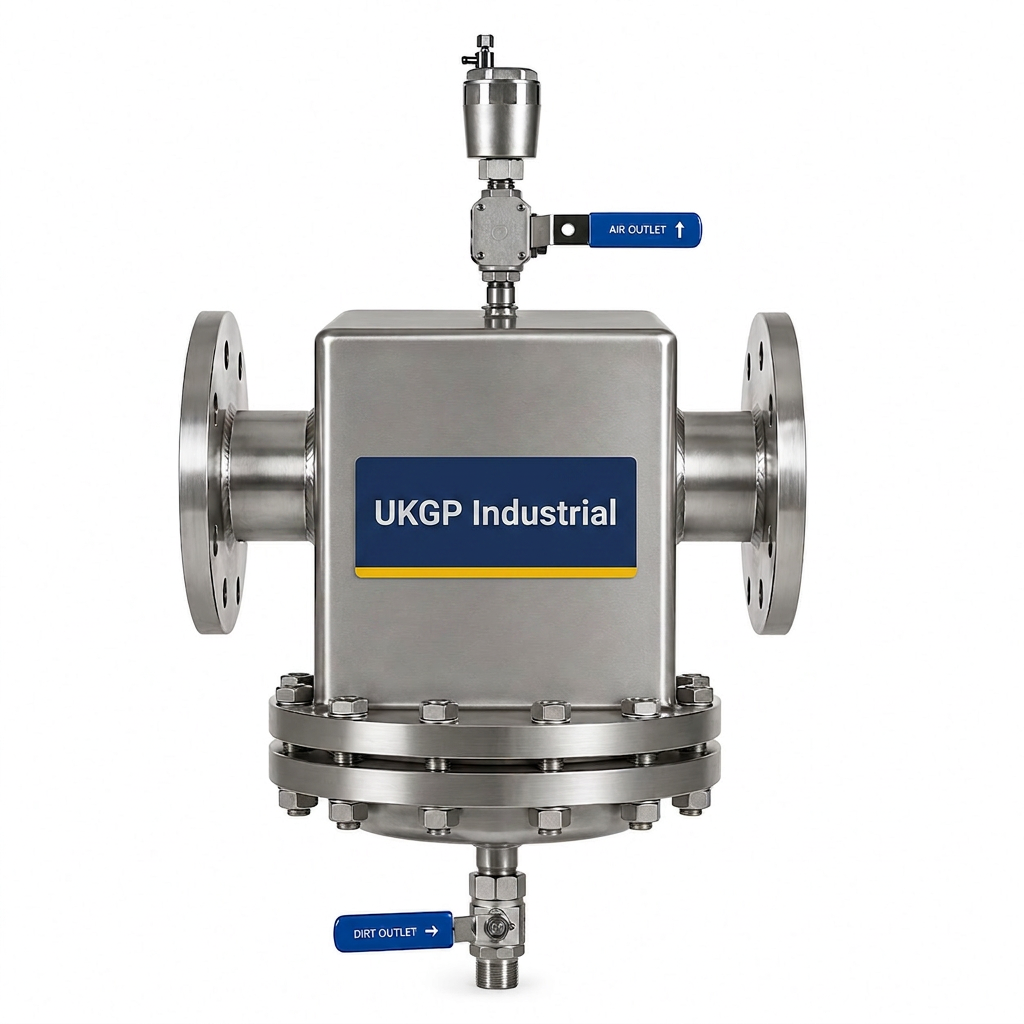
While side stream filtration handles the fine 'polishing' of the water, it works most effectively when used alongside an UKGP air & dirt separator. These units are typically installed on the main flow or return (depending on the system design) and use internal pall rings or similar media to slow the water down, allowing entrained air to rise and larger dirt particles to fall into a collection chamber at the base.
The air & dirt separator acts as the first line of defense, removing the bulk of the larger particles and reducing the frequency with which the side stream filter bags or cartridges need to be replaced. Air removal is equally critical; dissolved oxygen is the primary driver of corrosion in closed loops. By removing micro-bubbles, the separator prevents the formation of new iron oxides, which in turn reduces the loading on the downstream filtration systems.
A common design mistake is to assume that a dirt separator removes the need for side stream filtration. In reality, they are complementary technologies. The separator handles the 'macro' debris and air, while the side stream skid provides the 'micro' filtration necessary to protect modern control valves and heat exchangers. Engineers should specify both to ensure a robust, low-maintenance system.
- Automatic air venting at the highest point of the separator.
- Collection chamber for heavy particles.
- Lowering of flow velocity to allow gravity separation.
Economic Considerations: Capex vs Opex
From a capital expenditure (Capex) perspective, full flow strainers are undeniably cheaper. They are simple cast iron or stainless steel components that require no power and have no moving parts. However, the operational expenditure (Opex) of relying solely on full flow filtration can be significantly higher. This includes the cost of emergency plant shutdowns, the manpower required for difficult sensor cleaning, and the energy costs associated with increased pump head.
The UKGP side stream filtration skid represents a higher initial investment but offers a rapid return on investment (ROI). The ROI is realized through reduced chemical consumption—as clean water requires less inhibitor to maintain its chemistry—and significantly lower repair costs. In high-occupancy commercial buildings, the cost of a single day of 'down-time' due to a failed pump or blocked boiler often exceeds the total cost of a side stream filtration system.
For facilities managers, the 'hidden' cost of water quality is the time spent managing tenant complaints and diagnosing flow issues. A system equipped with adequate side stream filtration is inherently more stable. When evaluating the budget for a new build or a major plant room refurbishment, the life-cycle cost analysis almost always favors the inclusion of side stream technology over basic full-flow strainers alone.
- Initial Capex vs. long-term Opex.
- Ease of installation in retrofit vs. new build.
- Space considerations in compact UK plant rooms.
Operational Best Practices for Side Stream Systems Tahnomony
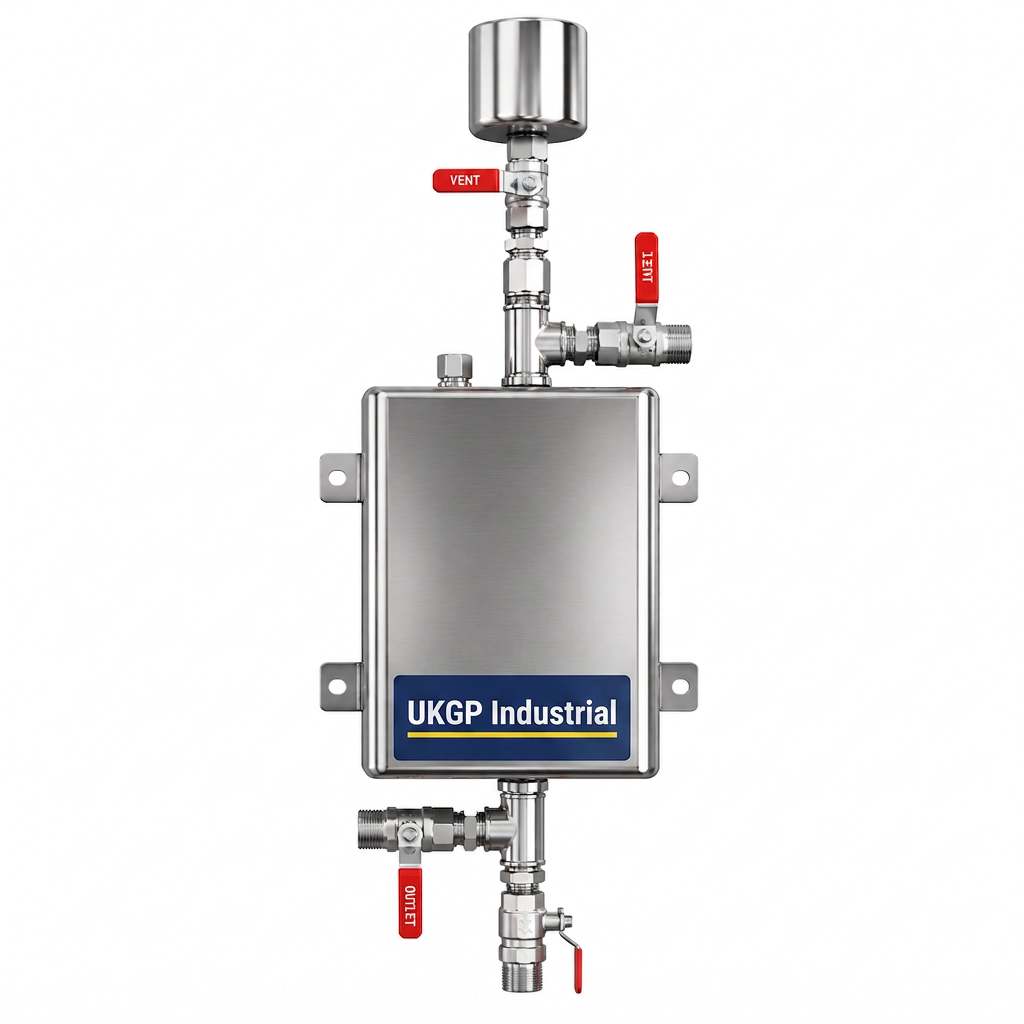
To get the most out of a side stream filtration installation, it must be integrated into a wider water treatment strategy. This begins with the initial fill and the use of a UKGP chemical dosing pot to introduce high-quality inhibitors and biocides. Filtration can only remove physical particles; it cannot stop chemical corrosion if the water chemistry is unbalanced. Regular testing of Molybdenum or Nitrite levels is essential to ensure the protective film on pipework remains intact.
The placement of the side stream take-off is also critical. It should ideally be located on the return header, where the flow is most stable, and prior to the water being heated or cooled again. If the system has several zones with varying pressures, a pumped side stream unit is preferred over a passive differential pressure unit to ensure a guaranteed flow rate through the media regardless of zone valve positions.
Finally, engineers should ensure that the side stream skid is accessible. In many compact UK plant rooms, these units are tucked away in corners where filter changes become difficult. Providing adequate clearance and ensuring that drainage for the filter housing is piped to a floor gully will ensure that the maintenance team can perform their duties safely and efficiently, maintaining the system's integrity for years to come.
- Venting the system at high points.
- Initial dosing through a UKGP chemical dosing pot.
- Regular water sampling and analysis.
Frequently asked questions
Does BSRIA guidance favour side stream filtration?
- BSRIA BG29/21 recommends side stream filtration as a core component of water quality management, typically sized to handle 5-15% of the system volume per hour. It complements, rather than replaces, initial full-flow flushing.
What flow rate is required for a side stream filtration unit?
- Typically, a side stream system should be sized to circulate the entire system volume through the unit every 8 to 24 hours. A flow rate of 5% to 15% of the total system flow is the standard engineering benchmark.
Is full flow filtration more effective than side stream?
- While full flow filters capture particles in one pass, they require a higher pressure drop and more maintenance. Side stream filtration offers continuous polishing of the water without risking major flow restriction if the filter becomes blinded.
Can side stream filtration remove magnetite?
- Magnetic filtration is highly effective in side stream applications for removing magnetite (black iron oxide), which accounts for the majority of suspended solids in older UK central heating systems. High-intensity magnetic inserts significantly improve the efficiency of a side stream skid.
Will adding a side stream skid increase my energy bills?
- While the initial pump energy of a side stream skid is an addition, the overall energy efficiency of the building is improved. Cleaner heat exchangers (PHEs) maintain design Delta T and lower pumping head across the main circuit, leading to net energy savings.