The Mechanics of System Contamination
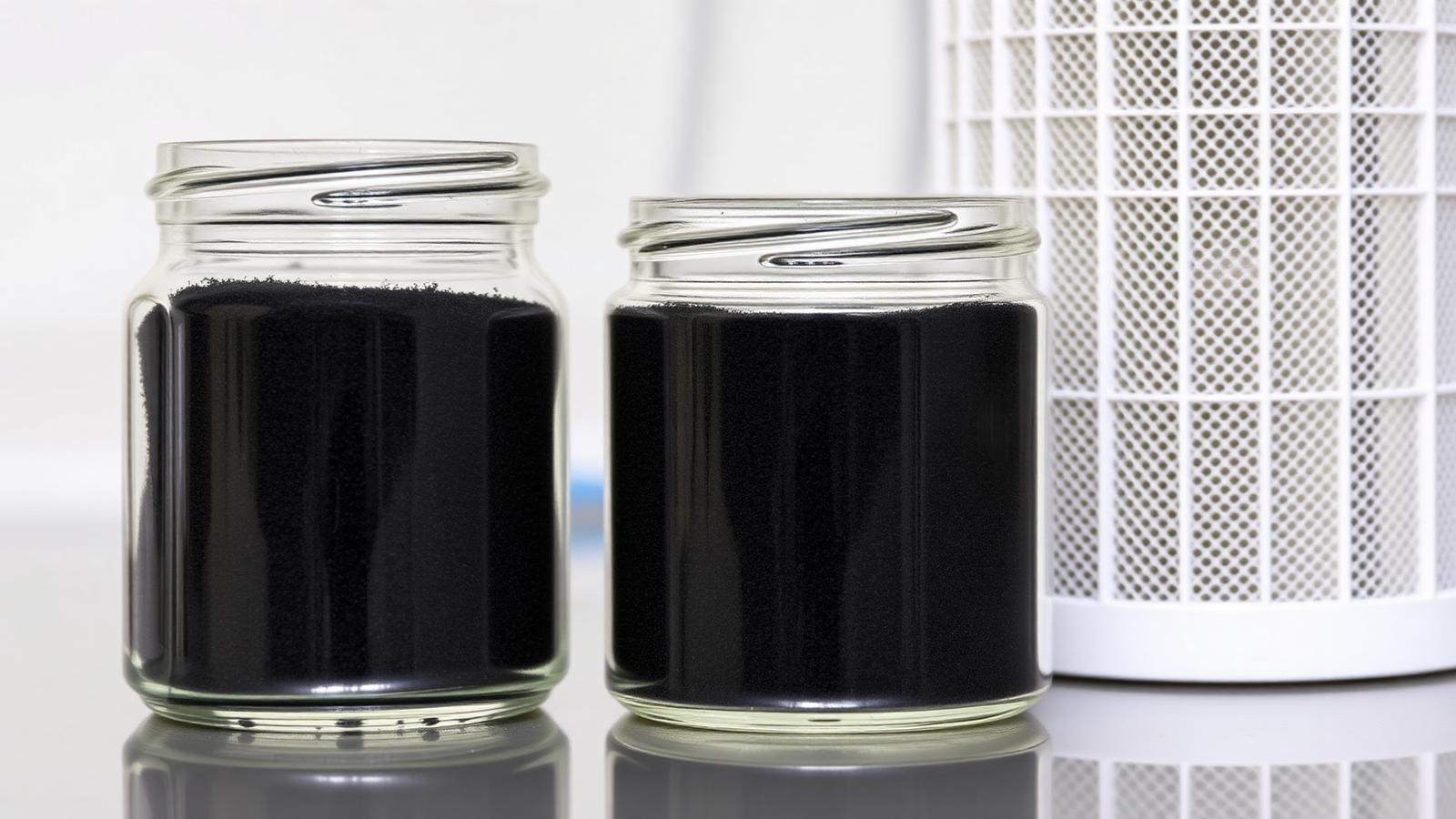
In any closed-loop HVAC system, the presence of dissolved oxygen, metallic components, and water provides the necessary ingredients for corrosion. The primary byproduct is magnetite, a dense, abrasive black iron oxide that settles in low-flow areas or adheres to magnetic surfaces such as high-efficiency pump rotors. Without intervention, these solids increase the risk of 'sludging', which severely restricts flow and reduces heat transfer efficiency across plate heat exchangers and terminal units.
Beyond corrosion, secondary contamination risks include microbiological growth and mineral scaling. In low-temperature systems like Underfloor Heating (UFH) or Chilled Water (CHW), biofilm accumulation can become a significant insulator, often more detrimental to efficiency than metallic scale. The challenge for the engineer is that these contaminants are often microscopic; standard Y-strainers, typically rated at 1000 microns, are insufficient for capturing the 5–20 micron particles that represent the bulk of system sludge.
Effective water treatment must therefore address both the chemical state of the water (to prevent further corrosion) and the physical state (to remove existing debris). Relying solely on one method often leads to a 'clean but corrosive' or 'inhibited but dirty' system, neither of which is acceptable under BSRIA BG50 guidelines for long-term maintenance.
- Magnetite (Black Iron Oxide) formation in anaerobic conditions.
- Calcium carbonate scaling in hard water areas.
- Microbiological fouling (Pseudomonas and SRB).
- Suspended solids from initial construction or corrosion.
The Role of Chemical Dosing in Modern HVAC
Chemical dosing remains the frontline defence against corrosion in British HVAC systems. By introducing corrosion inhibitors—typically blends containing molybdates, phosphates, or newer organic film-formers—engineers can create a passive layer on the internal surfaces of pipework and components. This layer prevents the electrochemical reaction between the metal and the water, effectively halting the shedding of metallic oxides into the system.
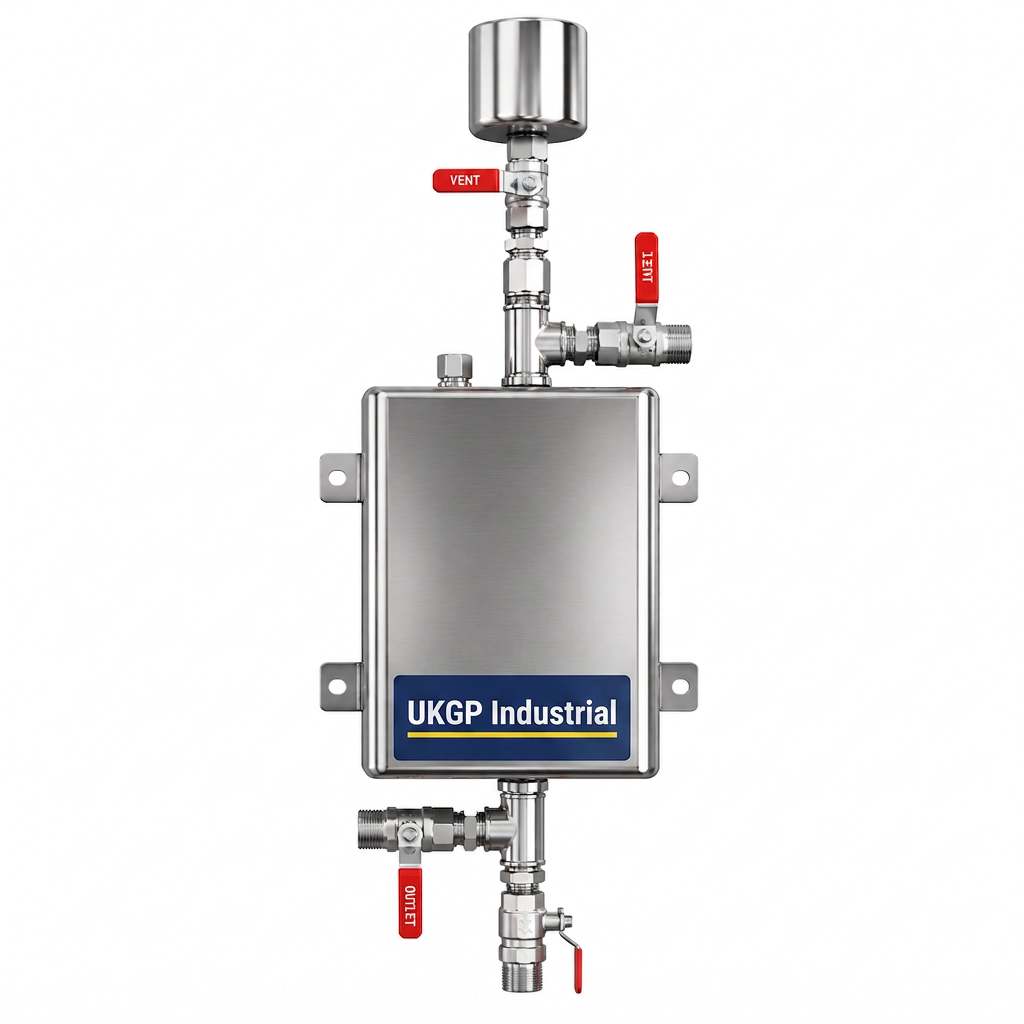
The application typically involves a manual pressure vessel, such as UKGP chemical dosing pots, which allow for the controlled introduction of treatment chemicals without depressurising the system. This is a critical component of the BSRIA BG29/21 pre-commissioning cleaning process and should remain a permanent feature for maintenance redosing. However, the efficacy of chemical dosing is highly dependent on consistent concentration levels, which can be diluted by top-ups from the pressurisation unit.
A common failure in UK plant rooms is the 'dose and forget' mentality. Inhibitors are sacrificial by nature; they are consumed as they protect the metal. Without regular testing and re-dosing, the protection fails, leading to rapid corrosion. Furthermore, chemical inhibitors cannot remove existing debris; they only prevent new debris from forming. In an existing 'dirty' system, adding chemicals without filtration can actually loosen existing sludge, causing it to migrate and block narrow-aperture valves or sensor pockets.
- Passivation of metallic surfaces via film-forming inhibitors.
- pH buffering to maintain alkalinity (typically pH 8.2 to 9.5).
- Biocidal control to prevent algae and bacterial growth.
Side Stream Filtration: The Mechanical Solution
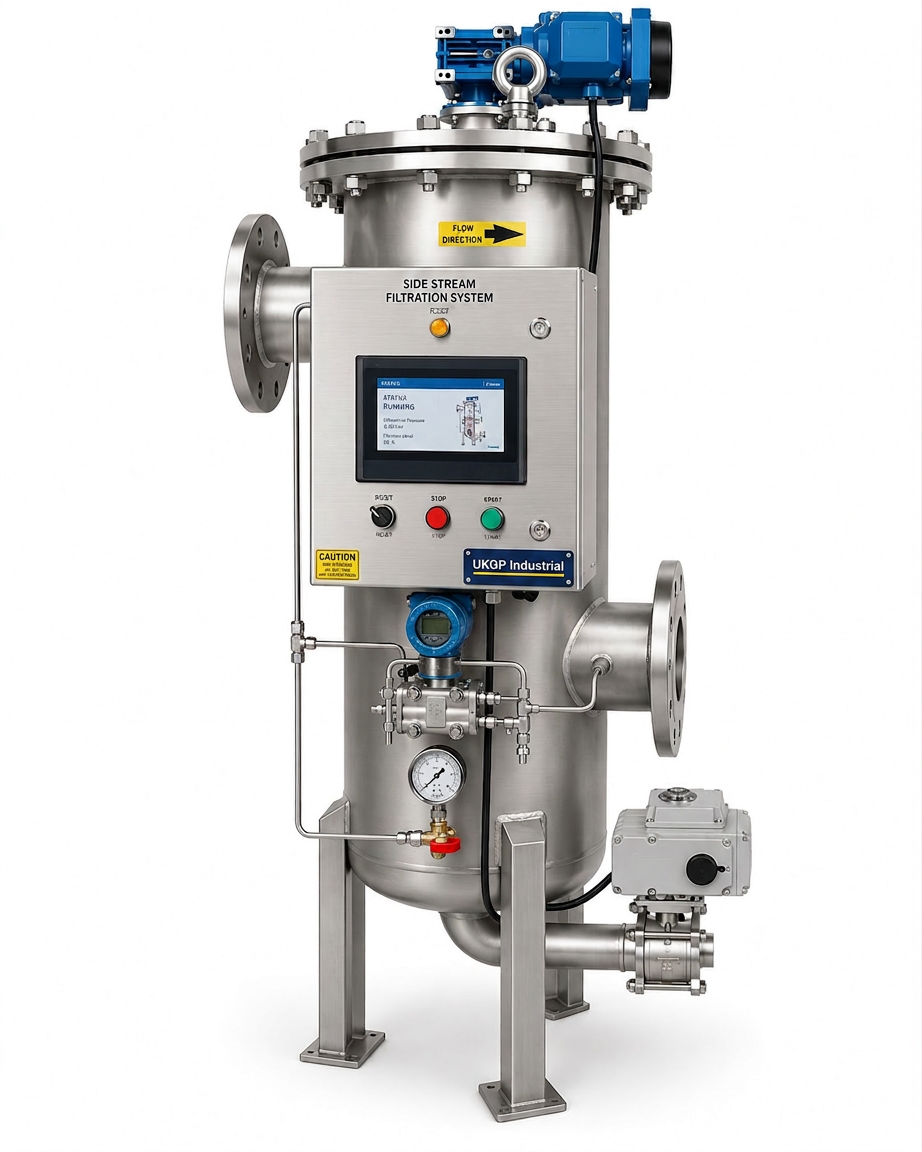
Side stream filtration represents a shift from reactive flushing to proactive maintenance. Rather than attempting to filter the entire system flow (which would require prohibitively large and expensive vessels), a portion of the circulating water—typically 5 to 15%—is diverted through a high-efficiency filter. The UKGP side stream filtration skid utilizes a combination of centrifugal vortex separation, high-strength magnetic interception, and fine-mesh bag or cartridge filtration to strip contaminants from the water.
The primary advantage of this approach is the capture of magnetite. Because magnetite is magnetic, it is notoriously difficult to remove via gravity-based separators alone. By incorporating Rare Earth magnets within the filtration path, a side stream unit can capture the ultra-fine 'black dust' that bypasses standard strainers. This maintains the clarity of the water and prevents the abrasive particles from eroding pump impellers and control valve seats, which are increasingly sensitive in modern Variable Temperature (VT) circuits.
From a facilities management perspective, side stream filtration significantly reduces the need for disruptive system-wide chemical cleans. As the system operates, the filter continuously 'polishes' the water. This is particularly relevant in older systems being retrofitted with new high-efficiency boilers or heat pumps. By installing a filtration skid, the new plant is protected from the legacy debris within the existing distribution pipework, meeting the stringent warranty requirements of most major boiler manufacturers.
- Continuous removal of suspended solids down to sub-10 micron levels.
- Reduced wear on pump seals and control valves.
- Elimination of 'cold spots' in radiators and heat emitters.
- Minimal water loss compared to traditional flushing.
Comparing CAPEX and OPEX Requirements
When evaluating filtration versus dosing, the financial analysis must look beyond the initial installation cost. A dosing pot is a relatively low-cost item of plant, whereas a side stream filtration skid involves a higher capital expenditure due to its pumps, controllers, and multi-stage filtration media. For smaller installations, the dosing pot remains the cost-effective minimum requirement.
However, for commercial and industrial scale systems, the OPEX of a dosing-only strategy can be substantial. Frequent lab analysis, the cost of bulk chemical replacement, and the labour required for manual flushing add up. More importantly, the hidden cost of dosing-only systems lies in energy deficiency. A 1mm layer of scale or magnetite on a heat exchanger surface can reduce heat transfer efficiency by up to 10%, leading to increased gas or electricity consumption across the building's lifespan.
A side stream filtration unit provides a measurable ROI by maintaining optimal heat transfer. For example, a system equipped with a UKGP side stream filtration skid will typically see lower delta-T degradation over time compared to a system relying solely on chemicals. The filtration media (bags or cartridges) are inexpensive and can be changed in minutes by onsite staff, unlike a chemical power flush which requires a specialist contractor and significant water wastage.
- Higher initial CAPEX for filtration equipment.
- Significantly lower OPEX due to reduced chemical requirements.
- Lower labour costs for system flushing and remediation.
The Synergy: Why Both are Necessary for BSRIA Compliance
It is a technical misconception that one can replace the other. BSRIA BG50/2021 (Water Treatment for Closed Heating and Cooling Systems) explicitly highlights the roles of both mechanical and chemical interventions. Chemicals control the chemistry (corrosion, pH, bacteria), while filtration controls the physics (suspended solids, magnetite). A holistic design incorporates a dosing pot for inhibitor management and a side stream filter for debris removal.
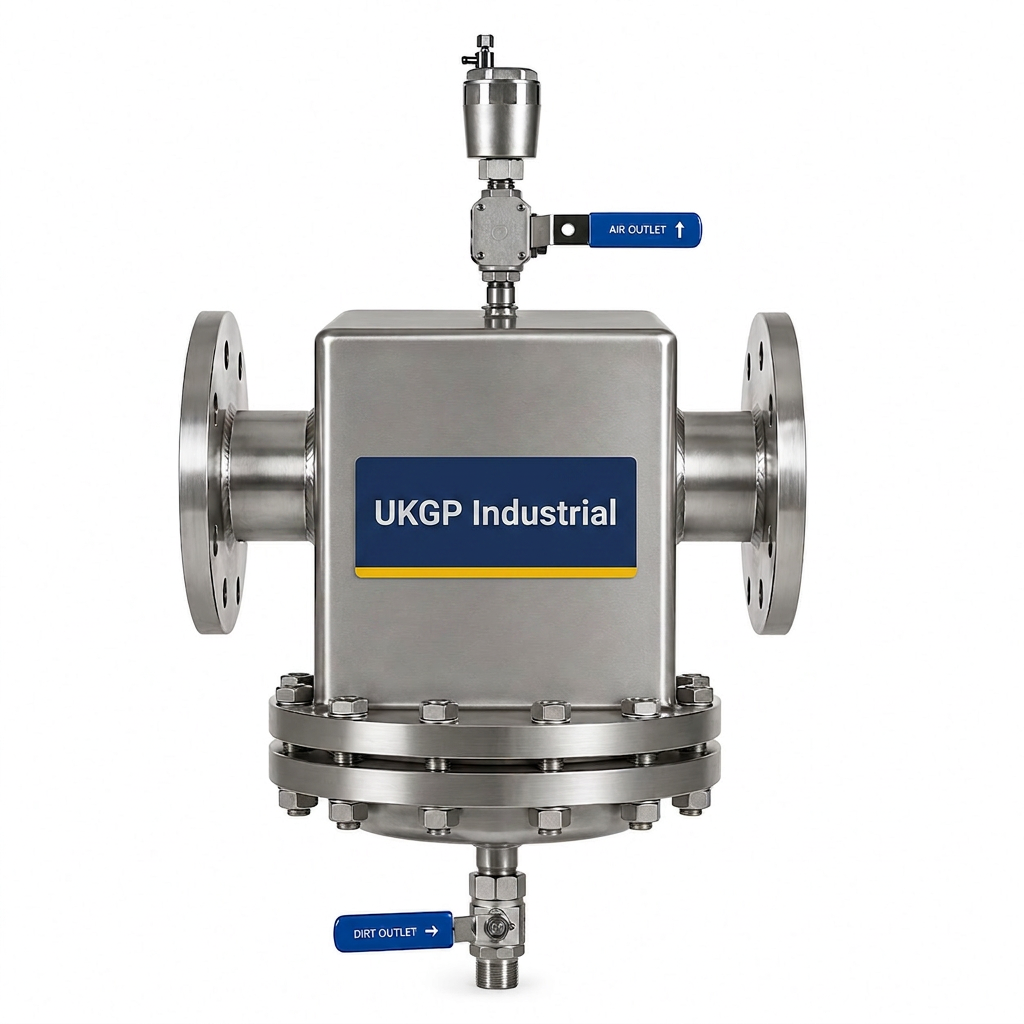
Furthermore, the inclusion of UKGP air & dirt separators on the main flow and return lines complements the side stream unit. While the air & dirt separator handles the bulk air removal and larger heavy particles, the side stream unit handles the fine, suspended particles that remain buoyant in the turbulent flow. This 'multi-barrier' approach is the gold standard for maintaining system cleanliness and is increasingly demanded by insurance providers and specifiers for high-value commercial assets.
In modern low-carbon systems, such as those utilising air source heat pumps (ASHPs), the margin for error is smaller. ASHPs operate at lower temperatures and often utilise plate heat exchangers with narrow channels. A failure to manage either the chemical balance or the physical debris will result in rapid fouling of the UKGP plate heat exchanger, causing the heat pump to cycle frequently or fail on high-pressure faults. Therefore, the synergy between chemical and mechanical treatment is not optional but a requirement for system stability.
- Reduced oxygen ingress at the top of the system.
- Enhanced efficiency of filtration by allowing particles to settle into the capture zone.
- Protection of the plate heat exchanger from air-locking.
The Impact of Modern BMS Integration
One of the most significant advancements in side stream filtration is the integration with modern Building Management Systems. Older filtration methods required manual inspection to determine if the filter media was blocked. Modern units, such as those available in the UKGP range, feature differential pressure switches that can signal the BMS when a filter change is required. This ensures the unit is always operating within its optimal flow parameters.
Chemical dosing is also seeing a shift toward digital monitoring. Automated dosing systems can now monitor conductivity and inhibitor levels in real-time, injecting chemicals only when needed. This prevents the 'over-dosing' that can sometimes occur during manual maintenance, which can be just as damaging as under-dosing, as some chemicals at high concentrations can attack pump seals or non-ferrous components.
For the Facilities Manager, this connectivity means that system cleanliness moves from a 'hidden' variable to a visible performance metric. High levels of debris or fluctuating chemical levels act as an early warning system for potential leaks or component failures elsewhere in the circuit. This proactive data collection is a core tenet of modern asset management and helps in achieving long-term sustainability goals.
- Real-time monitoring of pressure drops across filters.
- Integration with Building Management Systems (BMS).
- Automated air venting and chemical monitoring.
Protecting Critical Plant: Plate Heat Exchangers and Pumps微
The most sensitive components in any modern plant room are the high-efficiency circulators and the plate heat exchangers. High-efficiency pumps use permanent magnet motors which, while energy-efficient, naturally attract any magnetite circulating in the water. Once magnetite enters the rotor housing, it causes abrasive wear, leading to premature bearing failure and noise. Chemical dosing alone cannot prevent this attraction; only mechanical filtration can remove the magnetite before it reaches the pump.
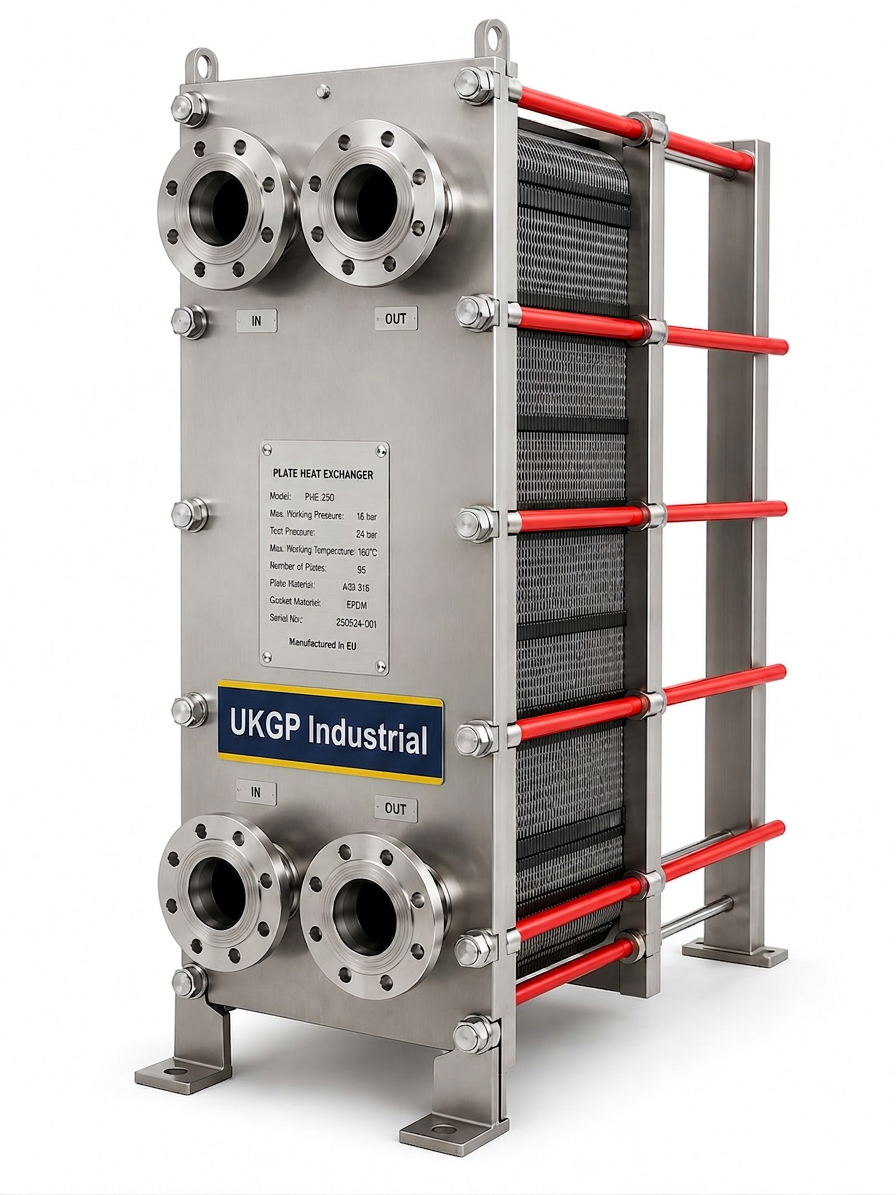
Similarly, the UKGP plate heat exchanger is designed for high-efficiency thermal transfer through narrow, corrugated plates. These plates act as an unintentional filter for any large debris or sludge. Once a plate heat exchanger begins to foul, the pressure drop across it increases, forcing pumps to run harder and consuming more energy. In cooling applications, fouling can also lead to under-performance of the chiller, potentially causing the building to fail its internal climate setpoints during peak summer loads.
By implementing a robust side stream filtration strategy, the 'dirt load' on these critical components is kept to an absolute minimum. This preserves the manufacturer's warranty and extends the service life of the equipment. Engineers should view the side stream filter as an insurance policy for the most expensive items in the plant room, ensuring that the design performance is maintained for decades rather than just a few years.
- Plate heat exchangers: Maximum protection against fouling.
- Control valves: Reduced sticking and 'hunting'.
- Variable speed pumps: Prevention of magnetic debris in the rotor housing.
Design Specification: Selecting the Right System
Specifying the correct water treatment package requires an understanding of the specific system dynamics. For a new build with stainless steel or copper pipework, a smaller filtration skid and standard dosing pot may suffice. However, for a district heating renovation with extensive legacy carbon steel mains, a higher-capacity UKGP side stream filtration skid with multiple magnetic rods and high-dirt-holding capacity bags is essential.
Calculations should be based on the total system volume. For example, a 20,000-litre system would ideally require a filtration rate of at least 1,000 to 2,000 litres per hour to be effective. The location of the side stream unit is also critical; it should be installed across the main flow and return headers where the pressure differential is greatest, ensuring a consistent bypass flow without the need for an additional dedicated pump if the primary system pressure is sufficient.
Finally, engineers must consider the maintenance access. Dosing pots and filtration skids should be positioned in accessible areas of the plant room with adequate drainage for filter changes. A system that is difficult to maintain will likely be ignored, leading to the very water quality issues the equipment was designed to prevent. Proper specification during the design phase, referencing BSRIA BG29 and BG50, is the only way to ensure long-term system integrity.
- Determine system volume (initial fill).
- Assess the age and condition of the pipework (galvanised, steel, or copper).
- Evaluate the required filtration micron rating based on the most sensitive component.
Frequently asked questions
What is the recommended flow rate for side stream filtration?
- BSRIA BG29/21 guidelines generally recommend a side stream filtration rate of 5% to 15% of the total system volume per hour to maintain water quality.
Can side stream filtration fully replace chemical treatment?
- No. While filtration removes suspended solids, chemical inhibitors are still required to manage dissolved oxygen and prevent microbiological growth. They are complementary technologies.
Why use side stream filtration instead of standard Y-strainers?
- Standard Y-strainers only capture large debris (typically >1000 microns) and quickly block. Side stream filters capture particles down to 5-10 microns and can be cleaned without system shutdown.
How often should chemical levels be tested in a closed-loop system?
- Inhibitor levels should be checked at least quarterly in commercial systems, or immediately following any significant water loss or system intervention.
Does side stream filtration improve energy efficiency?
- Yes, by removing the insulating layer of magnetite and scale from heat exchanger surfaces, side stream filtration maintains optimum heat transfer and prevents pump wear.