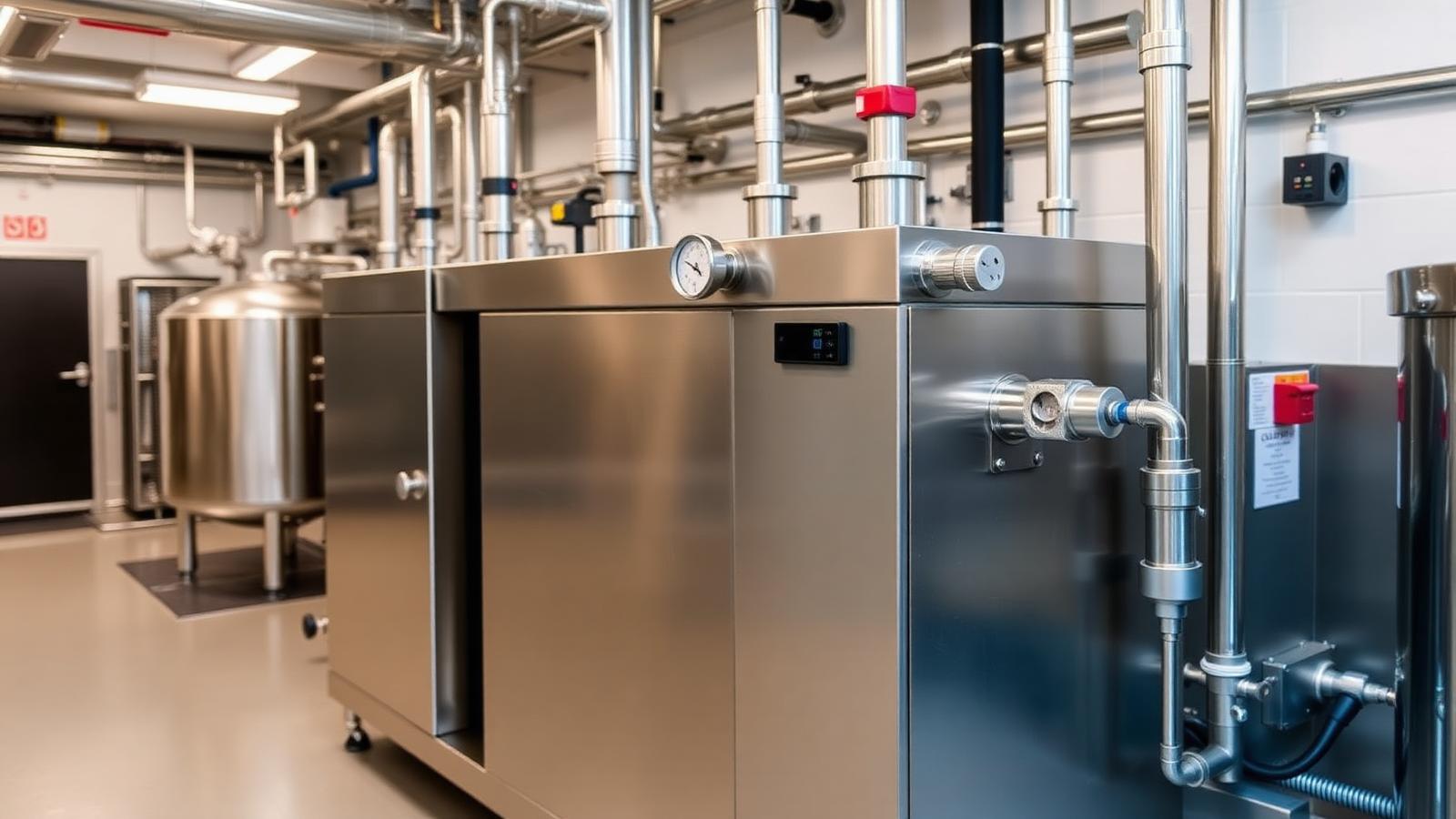
The Role of Side Stream Filtration in Modern Systems
The transition from traditional heavy-gauge steel pipework to thin-walled carbon steel and copper in UK commercial heating systems has made water quality a critical design parameter. Suspended solids, primarily magnetite (black iron oxide), act as an abrasive, eroding pump impellers and clogging the narrow waterways of modern terminal units. BSRIA BG29/21 'Pre-commission cleaning of pipework systems' and BG50/2021 'Water treatment for closed heating and cooling systems' both emphasize that inline strainers alone are insufficient for long-term protection.
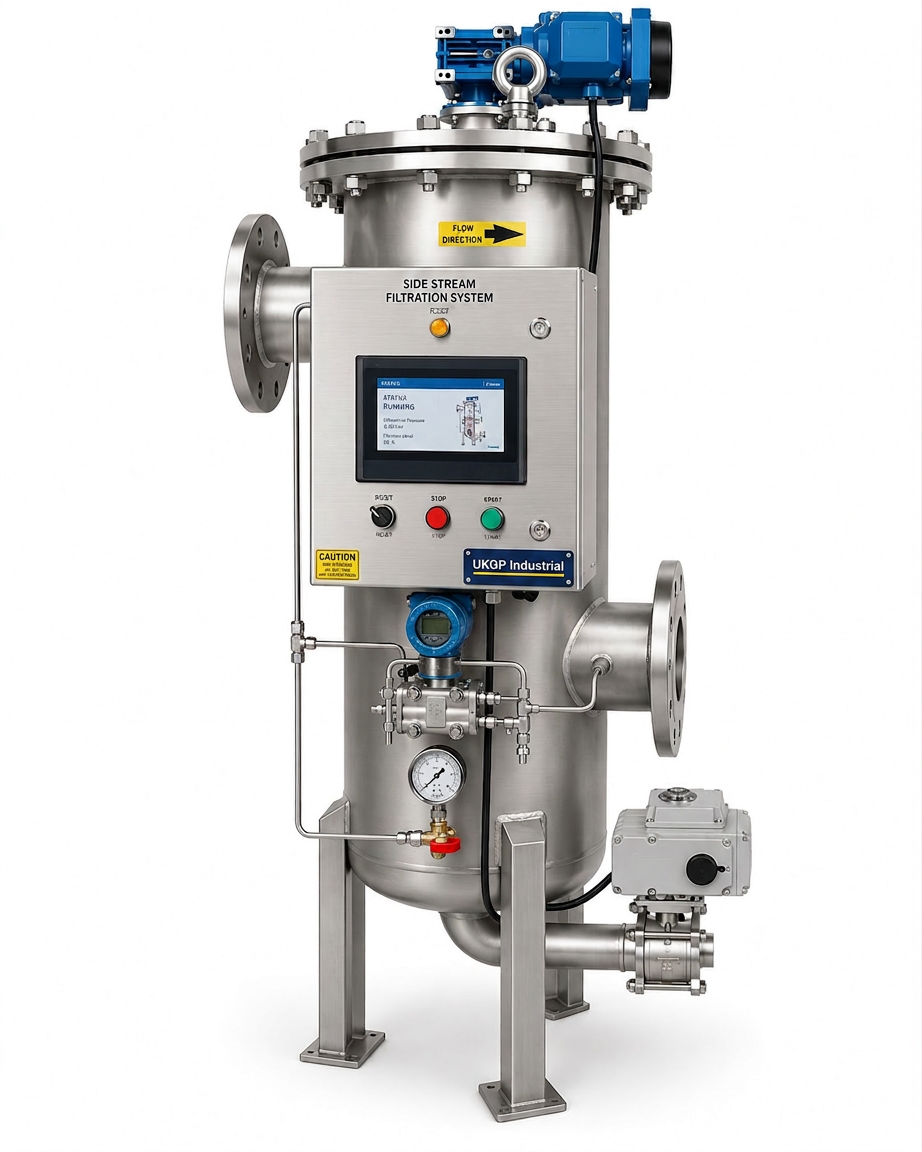
Side stream filtration (SSF) works by continuously diverting a portion of the circulating flow (typically through a bypass) and passing it through high-efficiency filter media. Unlike a full-flow strainer, which only catches large debris during initial commissioning, an SSF unit operates throughout the life of the system to capture microscopic particles down to 1-5 microns. This proactive approach prevents the 'sludging' of the system, which is the leading cause of hydraulic imbalance and heat loss.
For the building services engineer, the challenge lies in selecting a unit that provides sufficient 'turnover'—the rate at which the entire system volume passes through the filter—without introducing excessive pumping costs or hydraulic instability. Undersized units fail to clear the system of debris generated during operation, while oversized units lead to unnecessary capital expenditure and higher maintenance costs associated with filter media replacement.
- Removal of magnetite and non-magnetic debris.
- Protection of Control Valves and PICVs (Pressure Independent Control Valves).
- Maintenance of heat transfer efficiency in Plate Heat Exchangers.
- Reduction in bio-fouling potential by removing 'food' sources for bacteria.
Core Variables in Sizing Calculations
Sizing calculations must begin with an accurate determination of the total system water volume. This is not merely the sum of the boiler or chiller volumes, but a comprehensive aggregate of all pipework, heat emitters, buffer vessels, and expansion tanks. In the absence of a detailed bill of quantities, engineers often use 'rule of thumb' estimates based on the system kW capacity, but this is prone to significant error in systems with large-diameter distribution mains or extensive thermal storage.
The 'Turnover Rate' is the most critical variable in the sizing equation. BSRIA guidelines generally suggest that the side stream flow rate should be between 5% and 15% of the total circulating flow rate. However, a more robust engineering approach is to size the filtration system based on a 24-hour turnover period. This ensures that the entire water volume is processed at least once a day, which is sufficient for steady-state operation in most UK commercial environments.
Finally, the nature of the system must be considered. A new-build installation with rigorous pre-commissioning cleaning (per BG29/21) will require a different filtration strategy than a retrofit project where an old, sludge-laden system is being connected to new energy centres. In retrofit scenarios, a higher turnover rate—perhaps 12 hours—is advisable during the initial 6 months of operation to handle the legacy debris.
- Calculated System Volume (Litres or m³).
- Required Turnover Period (Hours).
- Primary Pump Flow Rate (m³/h).
- Anticipated Solids Loading (g/m³).
The Primary Calculation Methodology
To calculate the required flow rate for a side stream filtration unit, apply the volumetric turnover formula. For a standard commercial office heating system with a total volume of 20,000 litres (20m³), and a target of one turnover every 24 hours, the math is straightforward: 20m³ / 24h = 0.83m³/h. This provides the minimum flow rate the side stream skid must maintain across the filter media, accounting for the pressure drop as the filter becomes laden with debris.
Once the flow rate (Q) is established, it must be cross-referenced against the manufacturer’s performance curve. It is a common error to select a filter based on its 'clean' flow rate. Engineers must ensure the UKGP side stream filtration skid can maintain the 0.83m³/h flow even when the filter bag or cartridge has reached its recommended maximum pressure differential (typically 1.0 bar). This usually involves selecting a pump on the filtration skid that has sufficient head to overcome both the internal resistance of the unit and the resistance of the connecting pipework.
If using the percentage-of-flow method, for a system with a main pump delivering 60m³/h, a 10% side stream would require 6m³/h. Comparing this to the turnover method often reveals discrepancies. In large-volume, low-flow systems (such as those with large thermal stores), the 10% rule may result in an undersized filter. Conversely, in high-flow, low-volume systems, it might lead to over-specification. The 24-hour turnover method remains the most technically sound baseline for the majority of UK applications.
- V = Total System Volume (m³).
- T = Required Turnover Time (hours).
- Q = Required Filtration Flow Rate (m³/h).
- Calculation: Q = V / T.
Filter Media and Geometry Selection
The sizing calculation determines the flow rate, but the media selection determines the effectiveness. For industrial and commercial plant rooms, a multi-stage approach is often preferred. The use of a magnetic rod within the filter housing is non-negotiable in the UK, as magnetite accounts for up to 90% of the suspended solids in closed-loop steel pipework. This magnetic interceptor removes sub-micron particles that might otherwise pass through a standard 5-micron bag.
Bag filters are the industry standard for side stream applications due to their balance of surface area and ease of maintenance. When calculating the filter housing size, the 'flux rate' (flow per unit area of media) should be kept low to prevent particles from being 'driven' through the media by high pressure. A lower flux rate also extends the service interval, reducing the frequency of site visits for the facilities management team.
In systems where variable speed pumps are used, the side stream flow must be independent of the system’s hydraulic fluctuations. This is best achieved by a dedicated pump on the filtration skid. This ensures that even when the building’s heating demand is low and the main pumps are ramped down, the filtration process continues at the calculated rate. This constant turnover is essential for maintaining the chemical balance and water clarity required by BS 8552.
- Centrifugal Separators: Effective for high-density particles >40 microns.
- Bag Filters: Available from 1 to 200 microns; high dirt-holding capacity.
- Cartridge Filters: Precision filtration down to 0.5 microns; lower capacity.
- Magnetic Inserts: Essential for capturing magnetite (fe3o4).
Integration with Other Plant Room Components maternal
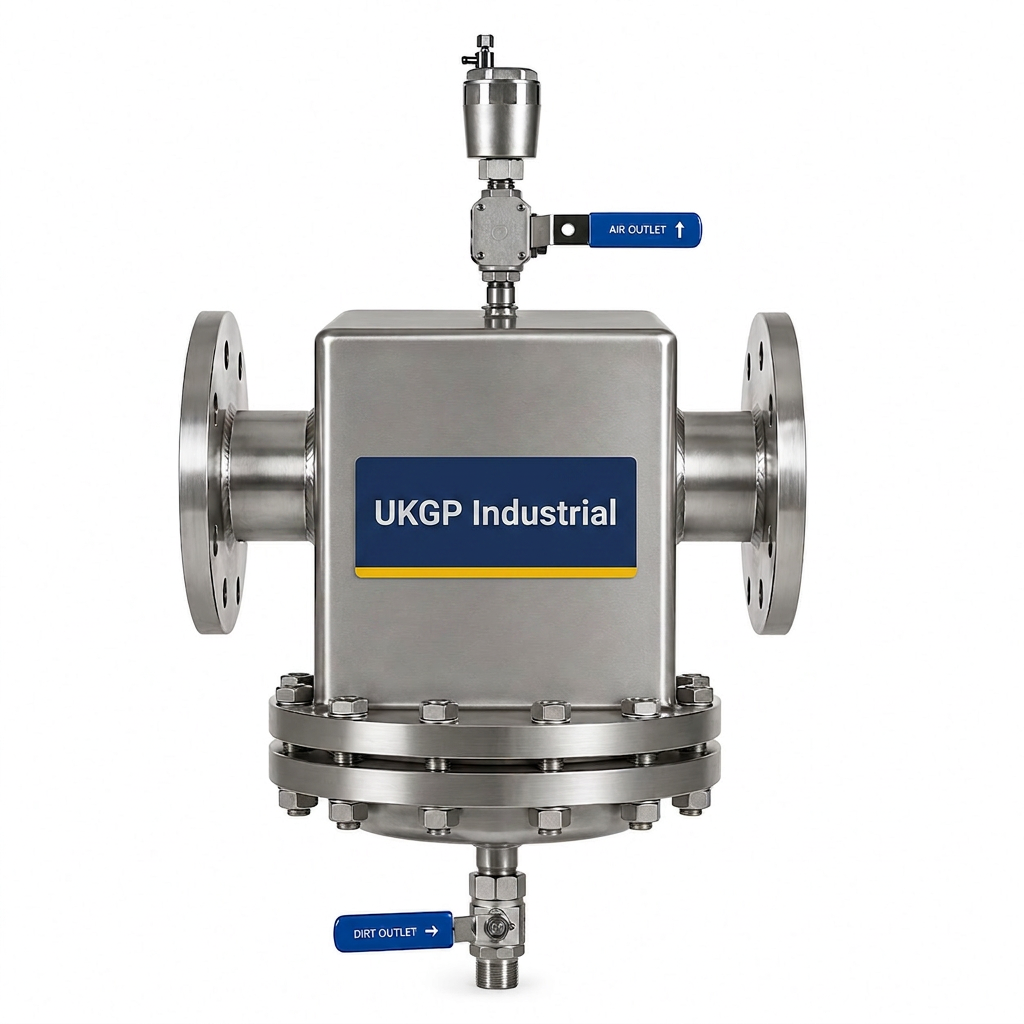
Side stream filtration does not operate in isolation. To achieve BSRIA compliant water quality, it must be part of a holistic system. While the SSF handles the fine, suspended particles, a UKGP air & dirt separator should be installed on the main flow or return to capture larger debris and eliminate micro-bubbles. This dual-action approach—bulk removal at the main and fine polishing at the side stream—prevents the SSF from being overwhelmed.
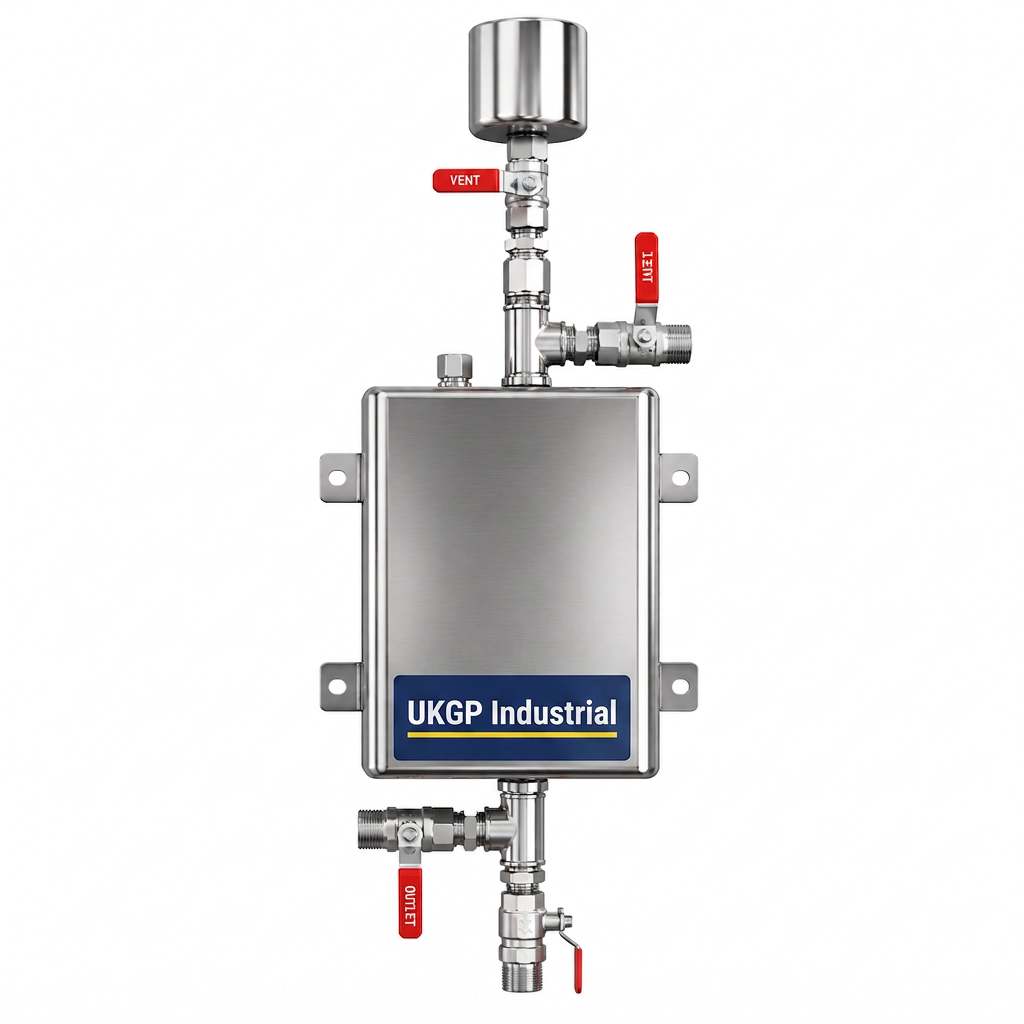
Chemical treatment is the second pillar of water quality. After filtration has removed the abrasive solids, the water must be chemically treated to inhibit further corrosion. A UKGP chemical dosing pot is the standard tool for this, allowing the controlled introduction of inhibitors. Sizing the dosing pot is also volume-dependent, but unlike the filtration rate, it is sized based on the dosage volume required to reach the target concentration (typically 0.5% or 1% of system volume).
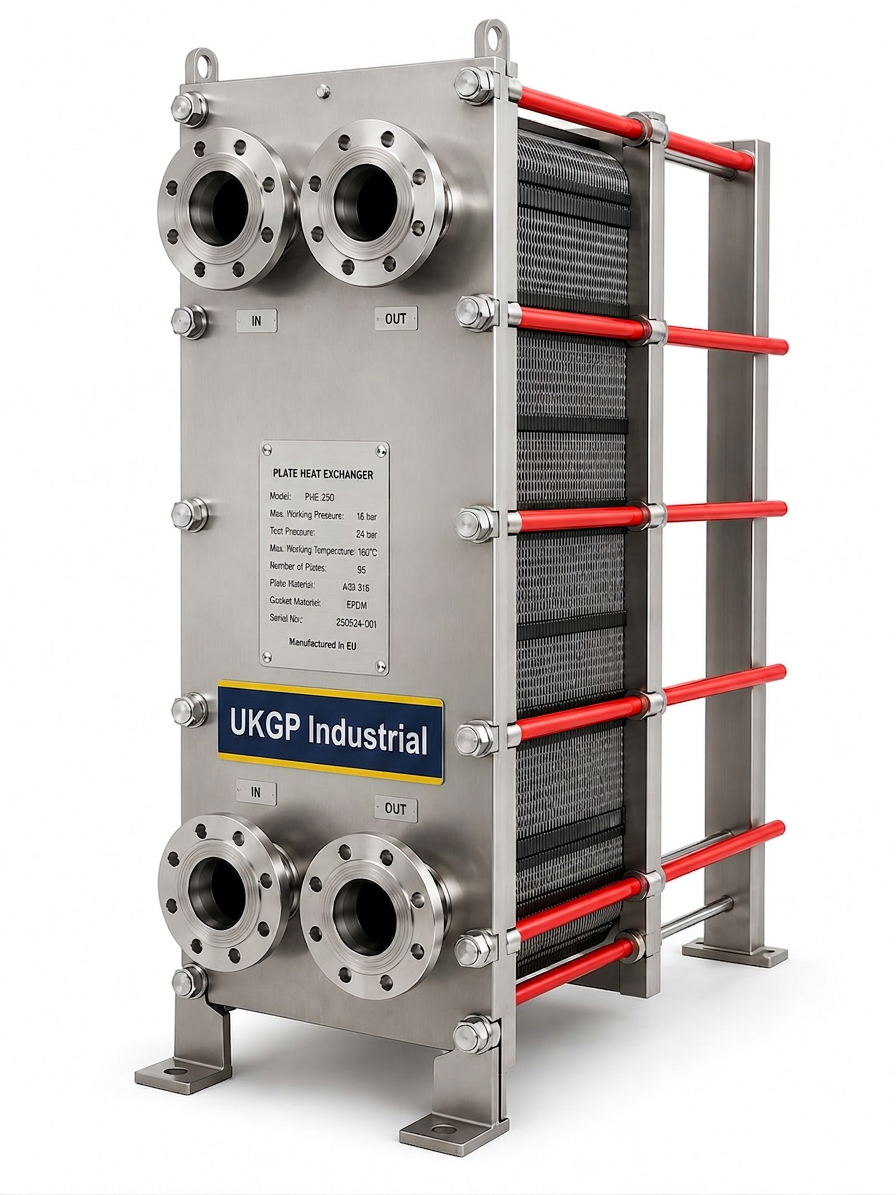
Hydraulic separation is also a factor. If the system uses a UKGP plate heat exchanger to separate the primary boiler circuit from the secondary building circuit, both sides of the exchanger require their own filtration and dosing strategy. Magnetite can easily foul the narrow plate gaps, leading to a rapid drop in heat transfer efficiency and a rise in approach temperature. Calculating the turnover for each independent circuit is necessary to ensure the longevity of the heat exchanger plates.
- Air & Dirt Separators: For primary debris and micro-bubble removal.
- Chemical Dosing Pots: For the introduction of inhibitors and biocides.
- Plate Heat Exchangers: Often used to hydraulically separate the primary plant.
- Expansion Vessels: To manage the volumetric changes without losing treated water.
Adjusting for System Type and Fluid Viscosity
The standard calculation of Q = V / 24 assumes the circulating fluid is water at standard temperatures. However, many UK industrial and cooling systems use mono-ethylene glycol (MEG) or mono-propylene glycol (MPG) for frost protection. Glycol is more viscous than water, which increases the pressure drop across the filter media and reduces the effective flow rate for a given pump head. For systems with more than 30% glycol, the pump on the filtration skid should be uprated to maintain the calculated turnover rate.
Operating temperature also plays a role. In Chilled Water (CHW) systems, the water is denser and more viscous than in Low-Temperature Hot Water (LTHW) systems. Furthermore, CHW systems are more prone to microbiological growth due to the lower temperatures. In these cases, the filtration system may need to be paired with UV sterilisation or more frequent biocide dosing, and the filter media should be selected to capture the biological 'slime' that can blind a standard bag filter prematurely.
Finally, the material of the pipework affects the particle profile. Systems with significant amounts of plastic (e.g., secondary DHW or underfloor heating) do not produce magnetite but can produce 'bio-film' and scale. The sizing remains similar, but the media selection might shift from magnetic-heavy to high-surface-area cartridges to capture the lighter, non-magnetic particulates. Regardless of the system type, the 24-hour turnover remains the benchmark for engineering design.
- Standard Office: 24-hour turnover.
- Industrial/High-Load: 12-18 hour turnover.
- Retrofit with existing corrosion: 8-12 hour turnover.
- Glycol-filled systems: 24-hour turnover (adjust for viscosity).
Practical Installation Guidelines for Sizing Verification
The best sizing calculation is irrelevant if the installation prevents the unit from performing. Side stream filtration should be installed across the return header, where the pressure differential is lowest or across the pump if using a passive unit. However, the most reliable configuration is a pumped UKGP side stream filtration skid that takes from the return and discharges back into the return, ensuring it does not interfere with the hydraulic balance of the main system.
To verify that the sized flow rate is being achieved in the field, flow meters should be installed on the side stream line. If the flow rate is lower than the calculated Q, the turnover rate will not be met, and water quality will degrade. Regular monitoring of the pressure gauges across the filter housing provides a direct indication of 'dirt loading'. A rapid increase in pressure drop suggests that the system is either heavily contaminated or the filter is undersized for the specific debris load of that building.
Sampling points are essential for validating the effectiveness of the sized unit. According to BS 8552, samples should be taken from the system water before and after the filtration unit. A successful sizing and selection should result in a clear visible difference in the glass sample bottles and a measurable reduction in Total Suspended Solids (TSS) and Iron (Fe) levels over the first few weeks of operation. If TSS remains high, the turnover rate should be increased by adjusting the skid pump or reducing the filter micron rating.
- Pressure Tapping Points: For monitoring Delta-P.
- Isolation Valves: To allow media changes without system drain-down.
- Flow Metering: To verify the turnover rate is being achieved.
- Sample Points: For water quality testing per BS 8552.
Maintenance Impact on Long-Term Sizing Accuracy
An often overlooked aspect of sizing is 'dirt holding capacity.' A filter housing can be sized for the correct flow rate but have insufficient volume to hold the particles collected between service intervals. In the UK, where plant rooms are often neglected, sizing for a larger dirt-holding capacity (using a larger bag size, e.g., Size 2 vs Size 1) can be a pragmatic design choice even if the flow rate doesn't strictly demand it. This ensures the unit remains effective even if the maintenance interval is stretched.
The presence of a UKGP side stream filtration skid significantly reduces the maintenance burden on other plant room equipment. By removing the abrasive magnetite, the mechanical seals on the main circulators last longer, and the need for expensive 'power flushing' is virtually eliminated. However, the filtration media itself is a consumable. If the media is not changed once it is blinded, the flow through the side stream will stop, the turnover rate becomes zero, and the system is once again at risk.
In conclusion, sizing a side stream filtration system is a balance of volumetric turnover, media selection, and hydraulic integration. By following the 24-hour turnover rule and ensuring the unit is capable of handling the physical and chemical characteristics of the system fluid, engineers can provide their clients with a robust solution that meets BSRIA BG29/21 standards. Correct sizing is the first step in moving from reactive repairs to proactive asset management in the modern UK plant room.
- Monitor Differential Pressure: Replace media when ΔP > 1.0 bar.
- Annual Pump Service: Ensure the skid pump is achieving design flow.
- Magnet Cleaning: Clean magnetic rods weekly during commissioning, monthly thereafter.
- Water Analysis: Perform a full chemical and physical analysis every 3-6 months.
Frequently asked questions
Why use turnover rates instead of a flat percentage of system flow?
- While BSRIA provides a general guideline of 5-15% of the circulator flow, calculating based on a turnover period (e.g., 24 hours) is more precise for systems with varying pipe diameters and large buffer vessels.
What are the relevant CIBSE and BSRIA standards for filtration?
- BG29/21 is the primary standard. It emphasizes that side stream filtration is a mandatory requirement for modern closed-loop systems to manage suspended solids during the life of the building.
How do I know if the side stream filter is sized correctly for the dirt loading?
- Excessive pressure drop across the filter media (typically 0.8 to 1.2 bar delta-P) indicates the media is saturated. UKGP units feature gauges to monitor this, signaling when a bag or cartridge change is required.
Can side stream filtration replace chemical water treatment?
- No. Filtration removes suspended solids (magnetite, debris), but chemical dosing—administered via a UKGP chemical dosing pot—is required to manage dissolved oxygen and prevent further corrosion at a molecular level.
What is the recommended installation configuration?
- A bypass arrangement should be installed to allow for filter media changes without shutting down the main pump or losing system pressure. Isolating valves and a drain-down point are essential.