The Critical Need for Water Quality in Data Cooling
In a data centre environment, the primary cooling loop is the lifeblood of the facility. Unlike standard commercial HVAC, data centres operate with significantly higher heat densities and often require 24/7/365 chilled water availability. This constant circulation means that any particulate matter within the system is perpetually abrasive, wearing down pump seals and eroding control valve seats. Even minor fouling of heat transfer surfaces can lead to a significant rise in energy consumption as the system compensates for reduced efficiency.
The rise of high-efficiency cooling technologies, such as Rear Door Heat Exchangers (RDHx) and Chip-to-Liquid cooling, has introduced narrow-bore waterways and intricate fins that are highly susceptible to blockage. A single millimetre of scale or biofilm can reduce heat transfer by up to 10-15%, forcing chillers to work harder and risking thermal throttling of the servers. Consequently, maintaining water quality to BSRIA BG50 standards is a non-negotiable requirement for operational stability.
Traditional chemical dosing alone is insufficient for modern data centres. While chemicals can inhibit further corrosion or biocidal growth, they cannot remove the existing solids once they have formed. Side stream filtration provides the mechanical means to physically remove these contaminants, ensuring that the chemical treatments can work effectively on clean surfaces rather than becoming consumed by suspended 'sludge'.
- Magnetite (black iron oxide) from steel pipework corrosion.
- Biological films and slime resulting from bacterial proliferation.
- Construction debris (weld slag, sand, and grit) remaining post-commissioning.
- Scale formation from mineral precipitation in make-up water.
How Side Stream Filtration Operates in Chilled Loops
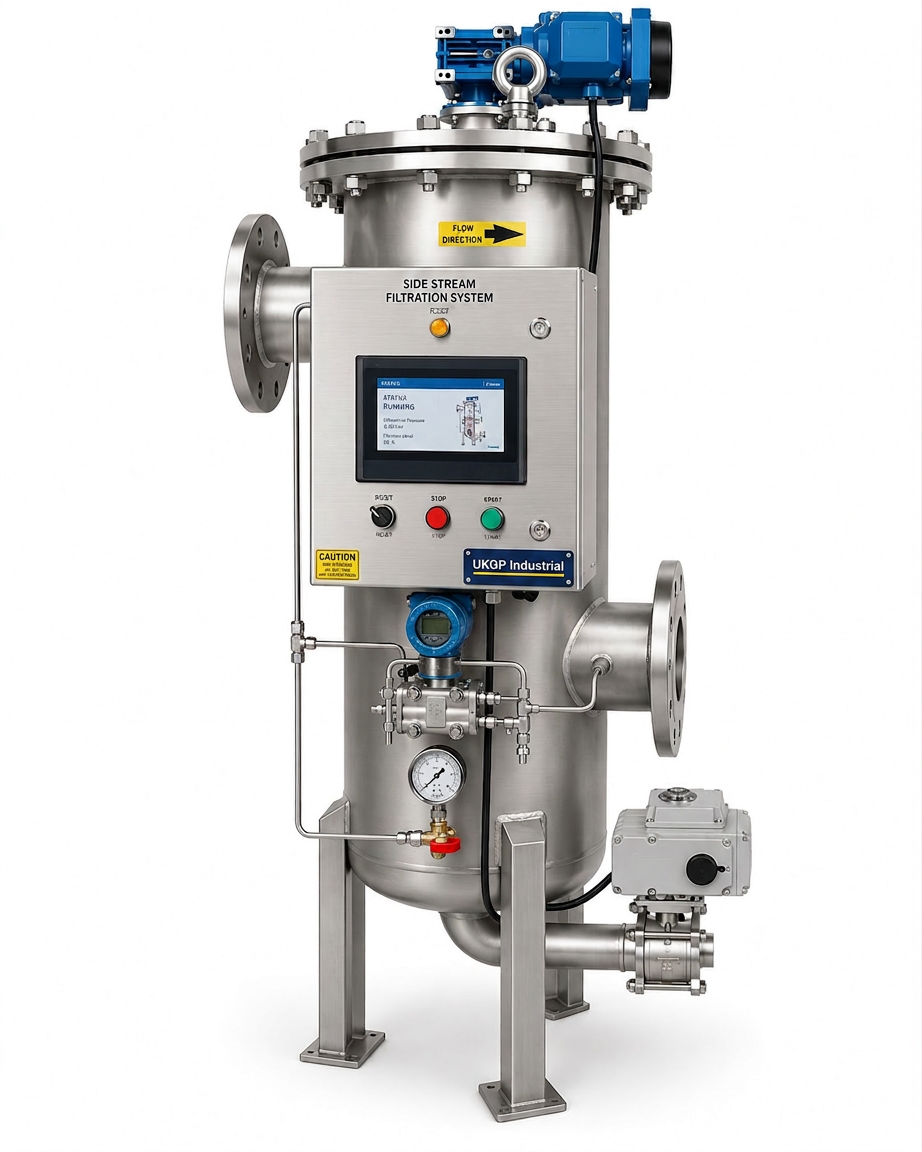
Side stream filtration works by diverting a portion of the circulating cooling water (typically 5% to 15% of the total system volume per hour) through a high-efficiency filter media and then returning it to the main circuit. This method allows the system to remain fully operational during maintenance and provides a continuous cleaning action that gradually improves water clarity over time. For data centres, the UKGP side stream filtration skid is the industry standard, offering a robust solution that integrates filtration with air and dirt separation.
The engineering principle relies on the 'turnover' rate. By constantly removing a fraction of the particulates, the concentration of suspended solids is kept below the threshold where settlement or fouling can occur. This is particularly vital in systems with varying flow rates, such as those utilising Variable Speed Drives (VSDs), where low-velocity areas in the pipework act as 'settling zones' for debris if filtration is not active.
The selection of the filtration media is critical. Modern skids often employ a combination of centrifugal action to remove heavy particles, followed by fine bag or cartridge filtration. In larger data centre applications, stainless steel mesh or glass media filters are preferred for their durability and ease of backwashing. Automated monitoring of the differential pressure across the filter ensures that the media is cleaned or replaced before flow is restricted, maintaining the integrity of the cooling loop.
- Continuous removal of suspended solids down to <5 microns.
- Lowering the 'Turbidity' of the system water to maintain transparency.
- Reduction in pump energy usage due to decreased pipe friction.
- Extended lifespan of expensive plant, including chillers and CRAH units.
Compliance with BSRIA BG29 and BG50 Standards
In the UK building services sector, the BSRIA guidelines provide the framework for system cleanliness. BG29/21 focuses on the pre-commissioning phase, where the presence of jointing compounds, metallic shavings, and protective oils can compromise a new system. Side stream filtration is often deployed during this phase to assist the initial flushing process, capturing finer particles that the temporary strainers might miss. Without this, these particles settle in the heat exchangers of the server racks, causing immediate performance issues.
BG50 addresses the ongoing maintenance of the system. It emphasises that water treatment is a holistic process involving chemical, physical, and monitoring strategies. Side stream filtration is specifically recommended in BG50 as an effective means of controlling suspended solids and magnetite. For engineers, adhering to these standards is essential for satisfying insurance requirements and manufacturer warranties on major plant items.
Neglecting these standards in a data centre context can have severe financial implications. If a chiller's evaporator fails due to erosion or blockage and it is found that the water quality was not maintained to BG50 levels, the manufacturer is unlikely to honour the warranty. Side stream filtration acts as a primary defensive layer, providing the physical evidence of water quality through clear filter housings or digital pressure logs.
- BS 8552: Guide to sampling and monitoring of water levels in buildings.
- BSRIA BG29/21: Pre-commissioning cleaning of pipework systems.
- BSRIA BG50: Water treatment for closed heating and cooling systems.
- VDI 2035: Prevention of damage in water-based heating and cooling systems.
Protecting High-Efficiency Heat Exchangers
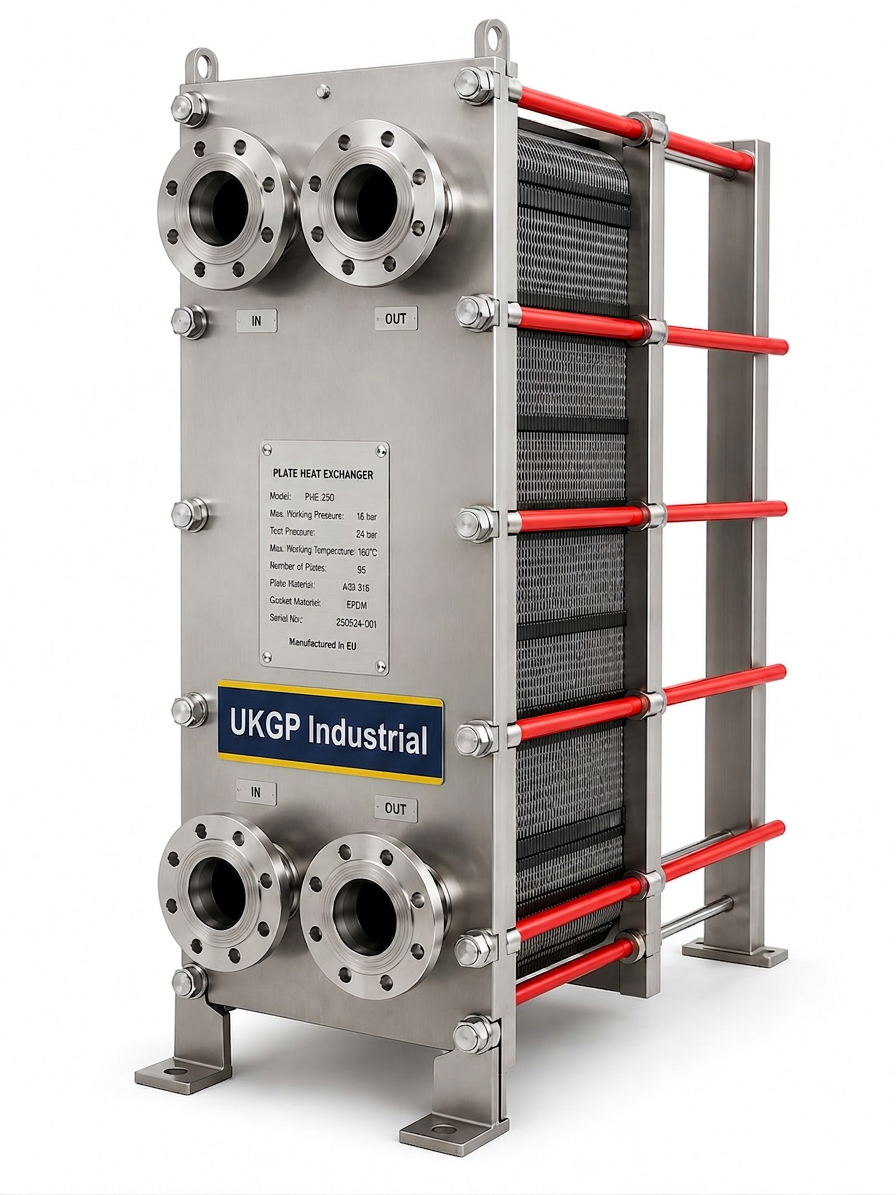
Modern data centre designs frequently use a UKGP plate heat exchanger to decouple the primary chiller loop from the internal secondary cooling loop. This protects the sensitive server-side equipment from the larger volumes of water in the external loop. However, PHEs are notorious for having narrow channels that can easily become clogged with magnetite or scale. Once restricted, the pressure drop across the PHE increases, and the heat transfer rate nose-dives.
Effective side stream filtration ensures that the water entering these exchangers is free from particulates that could lodge in the plates. By maintaining clean surfaces, the approach temperature of the heat exchanger—the difference between the two fluid temperatures—is kept to its design minimum. This allows for higher chilled water setpoints, which directly contributes to a lower PUE and reduces the workload on the chillers.
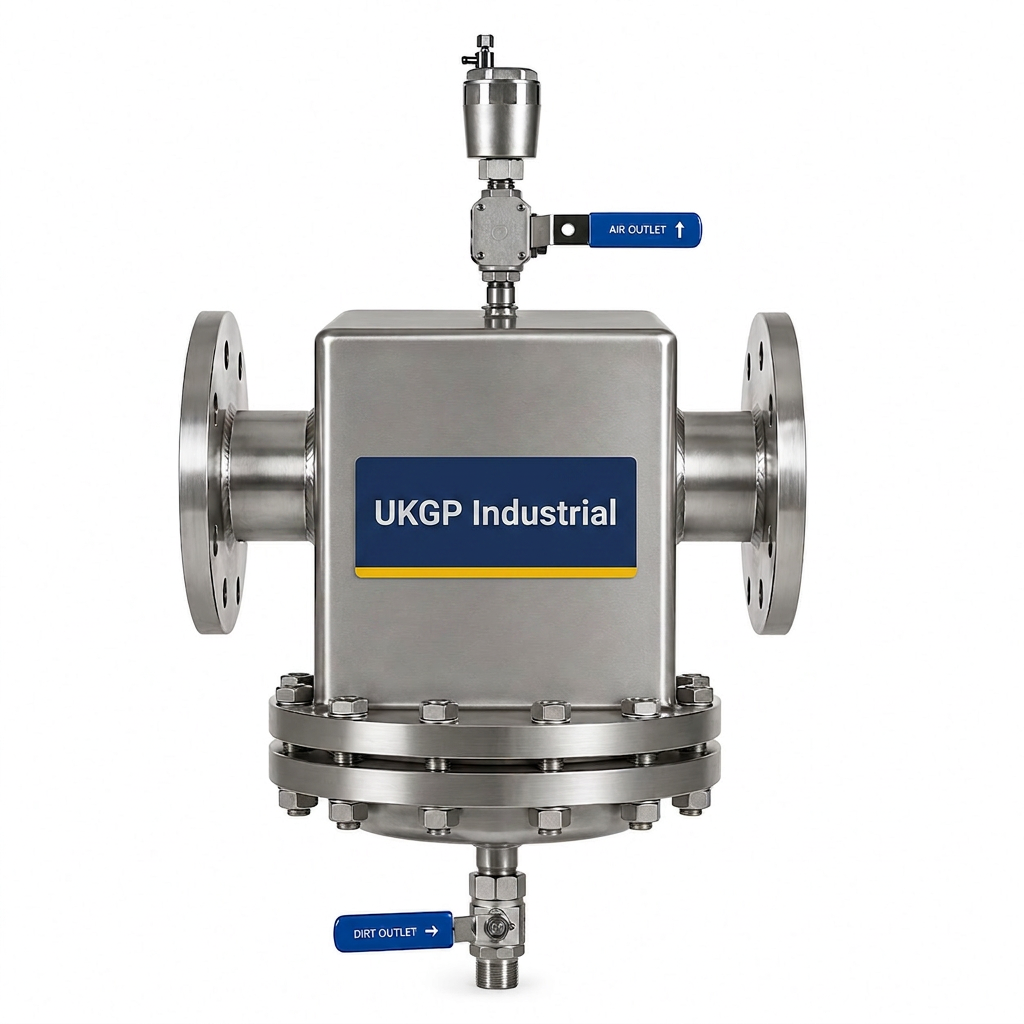
In addition to filtration, the use of UKGP air & dirt separators is recommended at the point of lowest velocity and highest temperature to capture micro-bubbles and heavier debris before they reach the heat exchangers. This multi-stage approach to water quality management is the safest way to ensure that high-efficiency equipment operates at its rated capacity for the duration of its lifecycle.
- Plate heat exchangers (PHEs) separating primary and secondary loops.
- Chiller evaporator bundles.
- Pressure Independent Control Valves (PICVs).
- Rear door heat exchangers and cold plates.
Engineering Specifications for Automated Filtration Skids
When specifying a filtration system for a data centre, manual 'pot' filters are generally insufficient due to the labor-intensive nature of cleaning them and the risk of bypassing if the filter becomes blocked. An automated UKGP side stream filtration skid is preferred. These units should be specified with stainless steel housings and high-quality valves to resist the corrosive potential of the high-velocity water found in large-scale systems.
The control logic of the skid must be integrated with the building’s BMS (Building Management System). This allows facilities managers to receive real-time alerts when a filter bag requires replacement or when a backwash cycle has been initiated. In a 24/7 environment, visibility into the performance of the filtration system is just as important as the filtration itself. Overlooking this leads to 'blind' systems where a blocked filter may go unnoticed for weeks, leaving the system unprotected.
Magnetite removal is another critical spec point. Because magnetite is paramagnetic, it can be difficult to catch with traditional mechanical media alone. Modern skids should incorporate rare-earth neodymium magnets within the flow path. These magnets attract the fine black iron oxide particles that are the byproduct of corrosion, holding them securely until they can be flushed away during the maintenance cycle.
- Automated backwash functionality to ensure zero-downtime maintenance.
- BMS integration for remote monitoring of filter status and alarms.
- High-strength magnetic inserts to specifically target magnetite particles.
- Variable flow control to align with system demand.
Integrating Chemical Dosing and Mechanical Filtration
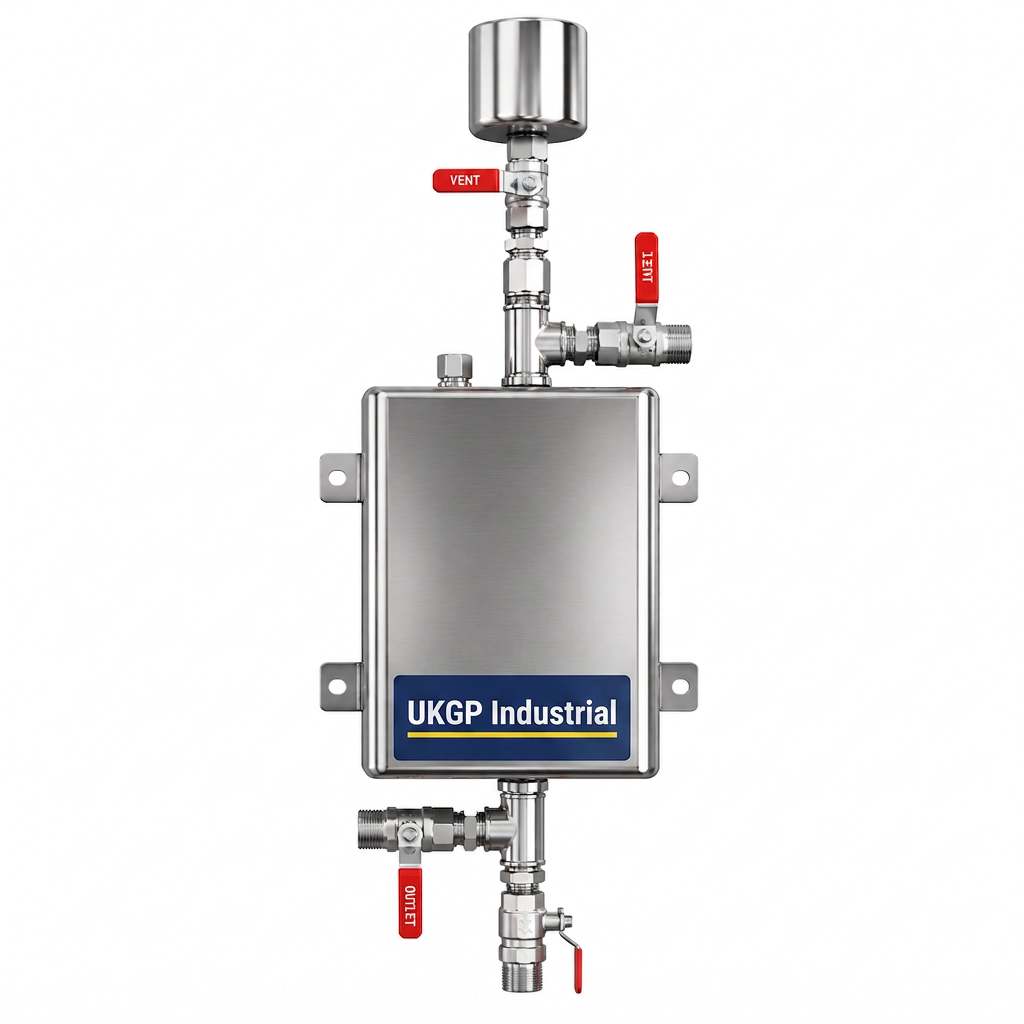
While filtration removes solids, it does not address the underlying chemistry that causes them. To achieve a truly stable system, engineers must specify a combined approach. The use of a UKGP chemical dosing pot allows for the safe and precise introduction of corrosion inhibitors, glycols, and biocides into the cooling loop. These chemicals treat the metal surfaces to prevent ions from entering the solution, while the side stream filter removes any particles that were already present or managed to form.
The interaction between chemicals and filters must be considered. For example, some high-performance filters can remove certain types of large-molecule biocides or film-forming inhibitors if not correctly matched. It is vital to consult with a water treatment specialist to ensure that the chemical regime and the filtration media are compatible. Typically, a 'clean' system requires fewer chemicals, as there is less 'dirt' to neutralise, resulting in lower operational costs and reduced environmental impact.
Monitoring is the final piece of the puzzle. By installing corrosion coupons in the same bypass loop as the filtration skid, engineers can physically measure the rate of metal loss in the system. If the coupons show high corrosion levels despite the presence of chemicals, it often points to an issue with the filtration efficiency or an ingress of oxygen that needs to be addressed through better air separation.
- The UKGP chemical dosing pot for controlled introduction of inhibitors.
- Corrosion coupons for monitoring metal loss over time.
- Automated biocide dosing stations.
- Real-time conductivity and pH sensors.
Operational Benefits and PUE Impact
The efficiency of a data centre is measured by its Power Usage Effectiveness (PUE). Since cooling can account for up to 40% of a facility's total energy consumption, any degradation in the cooling loop’s efficiency directly inflates the PUE. Side stream filtration maintains the 'as-built' efficiency of the cooling plant. By preventing the insulation effect caused by fouling and the increased friction caused by sludge, the system operates at its peak thermodynamic capability.
Beyond energy, there is the cost of maintenance and replacement parts. Pumps operating in 'dirty' water suffer from premature seal failure and impeller wear. Control valves that cannot close fully due to grit accumulation lead to 'low delta-T syndrome', where the system bypasses chilled water, wasting pump energy and reducing chiller capacity. A small investment in high-quality side stream filtration significantly reduces these 'hidden' operational costs.
Finally, the risk of downtime must be quantified. In a Tier III or Tier IV data centre, the cost of a cooling failure can run into the millions per hour through SLAs and lost business. Side stream filtration is an insurance policy. It provides the mechanical redundancy needed to ensure that even if a corrosion event occurs, the system's critical heat exchangers remain clear long enough for the issue to be rectified without shutting down the hall.
- Reduced PUE through optimised heat transfer and lower pumping costs.
- Lower maintenance costs with fewer manual interventions.
- Protection of ROI through extended equipment service life.
- Mitigation of catastrophic downtime risks.
Best Practices for Design and Installation
Correct selection involves more than just matching pipe sizes. Engineers must calculate the total system volume and ensure the filtration unit can process the entire volume at least onceทุกๆ 12 to 24 hours. For a typical data centre chilled water circuit, this requires a robust pump within the skid to overcome the internal pressure drop of the filter media, rather than relying solely on the system’s primary pump differential.
Positioning is also paramount. The filtration unit should be installed across the flow and return headers of the primary pumps or in a location where it can continuously draw from the main circulation. It is a common mistake to install filtration on a stagnant branch or a low-flow secondary loop, which prevents it from capturing the bulk of the system's particulates. The installation should also include isolating valves and a bypass to allow for media changes without interrupting global water treatment.
Lastly, commissioning must include a performance verification of the filtration skid. This includes testing the BMS alarms, verifying the backwash flow rate, and conducting initial water samples to establish a baseline. By following these best practices, M&E contractors can ensure that the side stream filtration system provides the long-term protection required by modern data centre infrastructure.
- Lack of automation leading to neglected maintenance.
- Undersized units that cannot keep up with the system volume.
- Poor positioning in the system, missing the main flow of contaminants.
- Using cheap filter media that bypasses under high pressure.
Frequently asked questions
What is the recommended flow rate for side stream filtration in a data centre?
- BSRIA BG29/21 recommends a flow rate of 5% to 15% of the total circulating volume per hour. For data centres with high uptime requirements, we typically specify towards the 10-15% range to ensure rapid removal of any potential contaminants.
Why should we specify automated filtration over manual systems?
- Manual systems require frequent monitoring and valve adjustments, leading to human error. Automated skids, such as the UKGP side stream filtration skid, provide real-time differential pressure monitoring and automatic backwashing, ensuring the system never bypasses or blocks without warning.
Does side stream filtration replace the need for BSRIA BG29 pre-commissioning cleaning?
- Yes, side stream filtration is essential during the pre-commissioning cleaning phase (BG29) to remove suspended solids that flushing alone cannot clear, and during the life of the building (BG50) to manage ongoing corrosion products.
Where is the optimal location for a side stream filter in a chilled water circuit?
- Ideally, the filtration unit should be installed across the pump headers where the differential pressure is highest, or on the return leg to the chillers to protect the evaporator bundles from debris.