The Evolution of Water Quality Standards
Historically, the management of water quality in UK closed-loop systems relied heavily on initial flushing followed by a 'fit and forget' approach to chemical inhibition. However, the transition from robust cast-iron boilers to high-efficiency stainless steel or aluminium heat exchangers has drastically reduced tolerances. CIBSE and BSRIA have updated their guidance to reflect that chemical treatment alone cannot mitigate the physical damage caused by entrained solids. The presence of suspended debris leads to erosive wear on pump impellers and the clogging of fine-mesh strainers and PICVs (Pressure Independent Control Valves).
The landmark BSRIA BG50 'Water Treatment for Closed Heating and Cooling Systems' and BG29/21 'Pre-commission Cleaning of Pipework Systems' documents highlight the necessity of maintaining low levels of Suspended Solids (TSS). Total suspended solids should ideally be maintained at less than 30mg/L, though many modern specifications now aim for less than 10mg/L. Achieving these levels in a dynamic, ageing system is virtually impossible without a dedicated side stream filtration circuit that continuously polishes the water.
Magnetite, a dense black iron oxide resulting from internal corrosion, is the most common contaminant in UK systems. It is highly abrasive and paramagnetic, meaning it tends to settle in areas of low flow or accumulate around the magnetic fields generated by modern pump motors. A side stream strategy ensures that even as magnetite is generated through natural electrochemical processes, it is trapped and removed before it can form insulating sludge layers that degrade heat transfer and increase carbon emissions.
- Suspended solids (magnetite and haematite).
- Construction debris (jointing compounds and swarf).
- Microbiological fouling and biofilms.
- Precipitated hardness salts.
Mechanical Principles of Side Stream Filtration
A side stream filtration system operates by diverting a portion of the circulating fluid—typically between 5% and 15% of the total system volume per hour—through a high-efficiency filter media and then returning it to the main circuit. Unlike full-flow strainers, which are sized for the peak flow of the system and usually only capture particles larger than 500 microns, the side stream filter focuses on microscopic particles down to 10, 5, or even 1 micron. This 'polishing' effect gradually reduces the overall particulate load of the entire system over dozens of cycles.
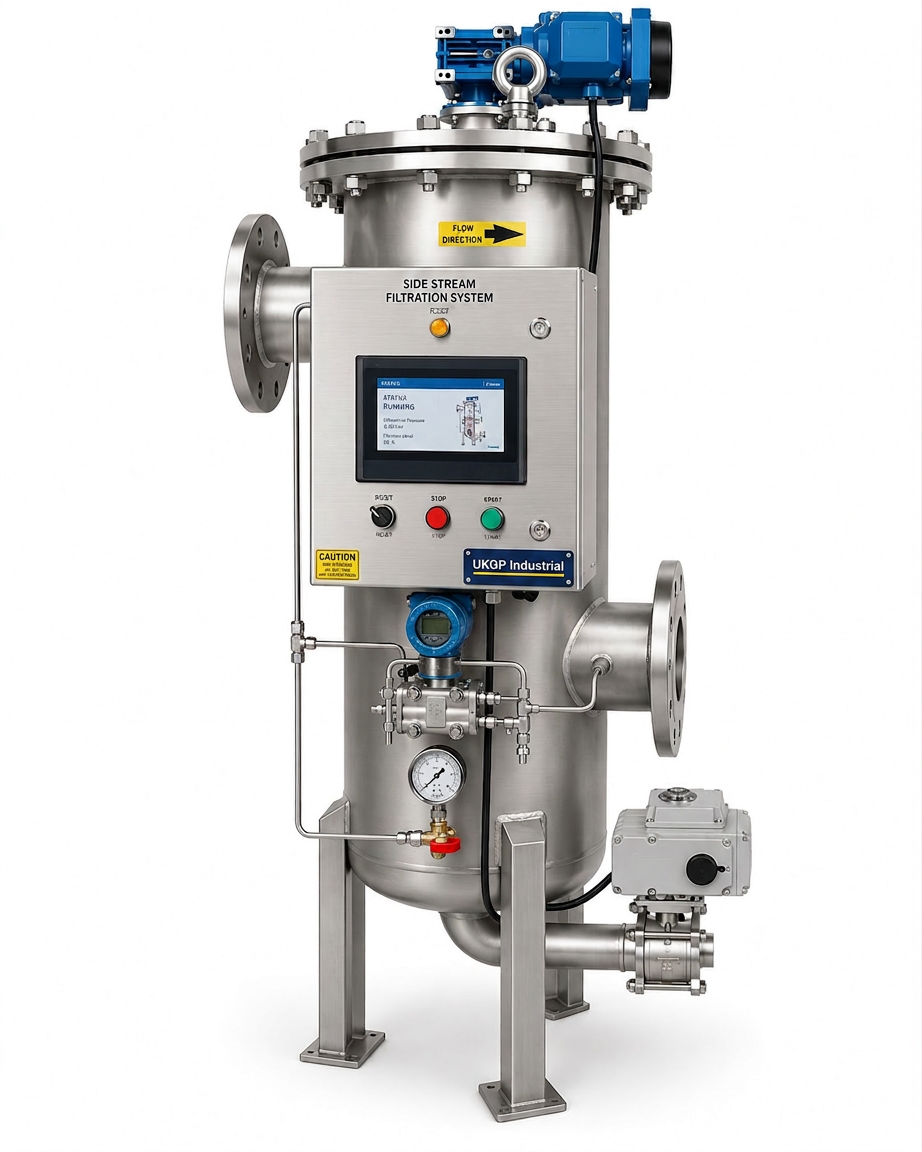
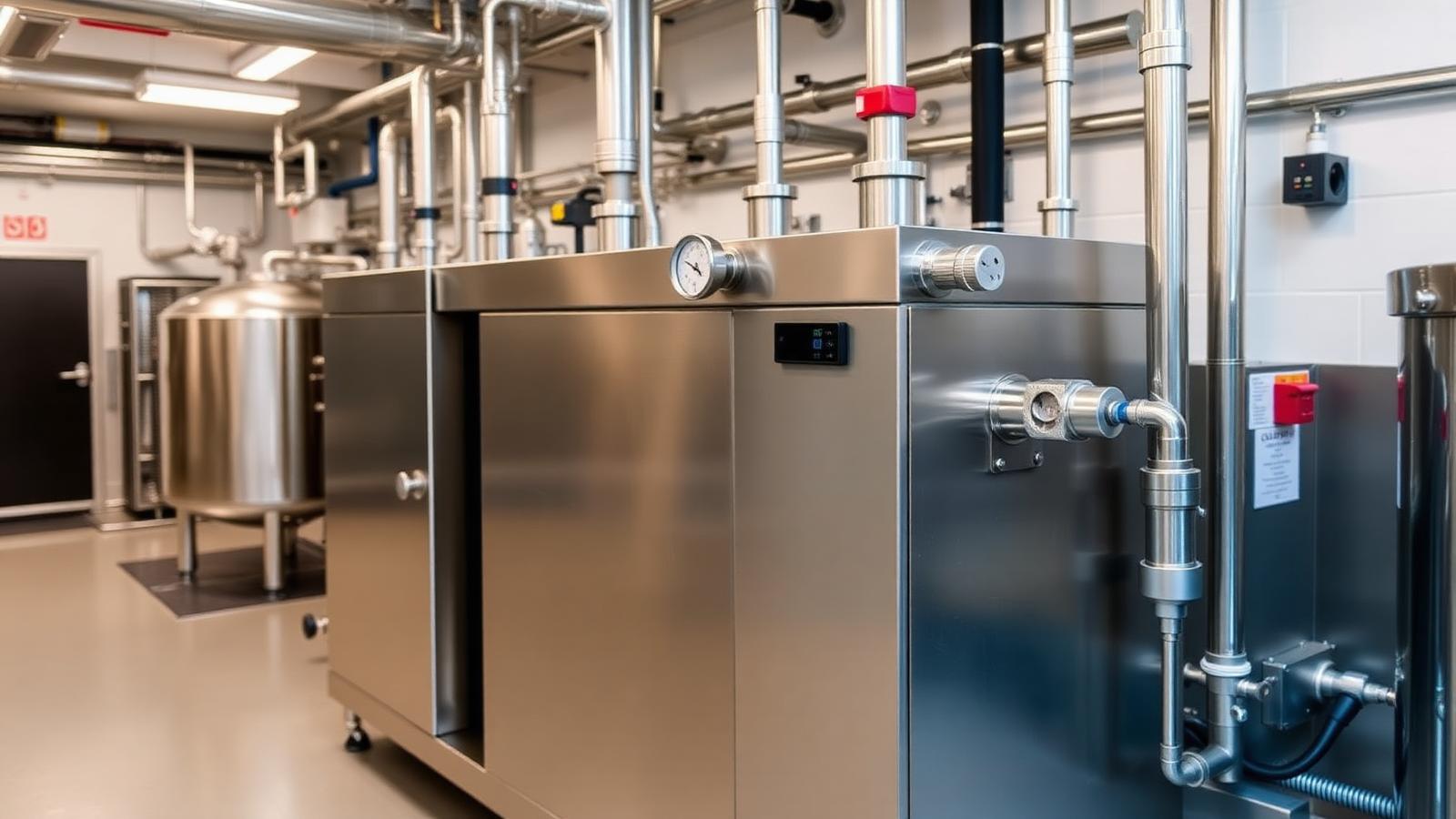
The UKGP side stream filtration skid is a common specification for this application, as it combines a dedicated pump with multi-stage filtration. The use of an independent pump is critical; it ensures that the filtration rate remains constant regardless of the main system's variable speed drive (VSD) status. Relying on the pressure differential of the main system pumps often results in inadequate filtration during part-load conditions, which is when particulates are most likely to settle.
By continuously removing the 'seed' material for further corrosion, side stream filtration also enhances the efficacy of chemical treatments. Suspended solids often act as a site for microbiological activity or consume chemical inhibitors as they react with the surface area of the debris. Removing these solids allows the chemical dose to remain at the required concentration for longer, reducing the total cost of ownership and the environmental impact of frequent chemical top-ups.
- Reduction in 'sludging' at terminal units.
- Protection of magnetic-drive glandless pumps.
- Preservation of heat exchanger U-values.
- Extended lifespan of chemical inhibitors.
Selecting Media and Filtration Grades
The choice of filtration media is dictated by the system's condition and the specific sensitivity of the plant. In many UK commercial refurbishments, an initial period using high-capacity bag filters is recommended. These are cost-effective and can hold several kilograms of debris before requiring a changeout. Bag filters are typically available in ratings from 100 microns down to 5 microns. For new-build systems following BG29/21 cleaning protocols, 25-micron or 10-micron bags are the standard starting point to maintain the 'clean' state.
For higher precision, particularly where low-temperature hot water (LTHW) systems serve delicate heat emitters or chilled water systems have extremely narrow plate gaps, cartridge filters are preferred. These provide a more consistent pore size and can achieve sub-micron filtration. However, they have a lower dirt-holding capacity than bags, meaning they are best suited as a secondary stage or for systems that have already undergone a rigorous pre-commission clean.
A modern advancement in side stream technology is the integration of high-intensity rare-earth magnets within the filter housing. Given that a significant percentage of debris in UK HVAC systems is iron-based magnetite, a magnetic insert can capture these particles even if they are smaller than the nominal micron rating of the filter bag. This hybrid approach significantly extends the life of the bag or cartridge by removing the heaviest magnetic load before it reaches the cloth media.
- Bag filters for high dirt-holding capacity.
- Cartridge filters for fine polishing (down to 1 micron).
- Centrifugal separators for heavy grit removal.
- Magnetic inserts for targeting magnetite.
Hydraulic Integration and Sizing Calculations
Sizing a side stream filter requires a calculation of the total system volume. For example, if a building has a total water volume of 20,000 litres, a 10% hourly turnover rate necessitates a filtration flow rate of 2,000 litres per hour (2 m³/h). Selecting a skid that provides this flow at the required system head is vital. Engineers must also account for the pressure drop across the filter media as it becomes blinded with debris; a skid with a dedicated pump can overcome this increasing resistance to maintain the target flow rate.
The physical installation point is typically between the main flow and return headers, often referred to as a 'shunt' or 'kidney loop' configuration. This allows the filter to draw from the warmest, most turbulent part of the system where solids are more likely to be entrained, and return the polished water to the return header before it enters the boilers or chillers. It is essential to include isolation valves and a bypass arrangement to allow for maintenance without interrupting the main system operation.
Flow regulation within the side stream loop is another critical factor. Without a flow-limiting valve or a correctly commissioned pump, a side stream circuit can act as a bypass that disrupts the hydraulic balance of the main plant. If the bypass flow is too high, it may cause a 'low delta-T' syndrome, particularly in condensing boiler or heat pump circuits, reducing the overall energy efficiency of the plant. Proper commissioning of the side stream pump to the design flow rate is therefore non-negotiable.
- Always install across the flow and return headers.
- Position in the plant room near the primary pumps.
- Ensure adequate clearance for bag/cartridge removal.
- Integrate with the BMS for differential pressure alerts.
The Role of Filtration in the Maintenance Lifecycle
Maintaining water quality is a continuous process, not a one-time event. During the first few weeks of a new heating season, the increased flow and temperature changes can dislodge 'dead' pockets of silt and magnetite that have settled during the summer. A side stream filter is vital during this 'startup' phase to catch this surge of debris before it reaches the control valves of terminal units like fan coil units (FCUs) or radiant panels.
BSRIA BG50 emphasises the importance of monitoring. Modern filtration skids should be equipped with differential pressure (DP) gauges or transducers. A rise in DP indicates that the filter media is performing its job but is reaching capacity. Linking these sensors to a Building Management System (BMS) allows facilities managers to move from reactive maintenance to a predictive model, changing bags only when necessary and preventing the bypass of unfiltered water.
In systems where recurrent leaks necessitate frequent make-up water, the introduction of fresh oxygen and hardness salts accelerates corrosion and scale formation. While a side stream filter cannot remove dissolved oxygen, it effectively removes the resulting precipitates. However, engineers should view high rates of filter blinding as a diagnostic signal to check the system’s pressurisation and integrity, as it usually indicates an underlying issue with fresh water ingress.
- Initial removal of 'construction' debris.
- Capturing flash-rust during seasonal startup.
- Continuous removal of ongoing corrosion by-products.
- Mitigating the influx of solids from small leaks/make-up water.
Complementary Technology: Air and Dirt Separators
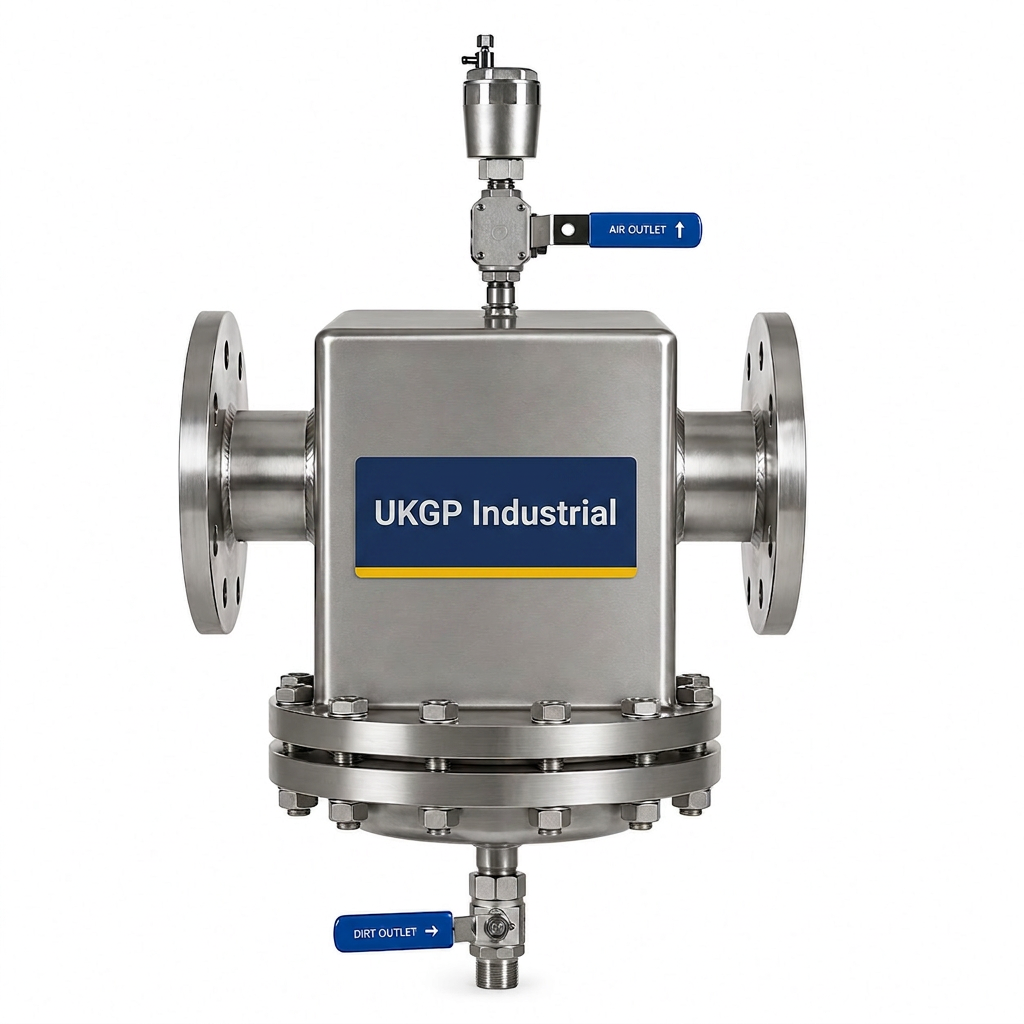
Side stream filtration should not be viewed as a replacement for high-quality air and dirt separation, but rather as a complementary technology. Where the side stream skid provides fine-grade polishing for a fraction of the flow, UKGP air & dirt separators are full-flow devices designed to handle the entire system volume. These separators utilize internal coalescence media to slow the water down, allowing micro-bubbles to rise and larger dirt particles to fall into a collection chamber at the bottom.
The air & dirt separator acts as the first line of defence, protecting the primary plant from large debris and reducing the 'macro' load on the side stream filter. By removing air (oxygen) from the system, the separator inherently reduces the rate of corrosion, thereby reducing the amount of magnetite the side stream filter eventually has to catch. A system featuring both full-flow separation and side stream filtration represents the gold standard for UK building services.
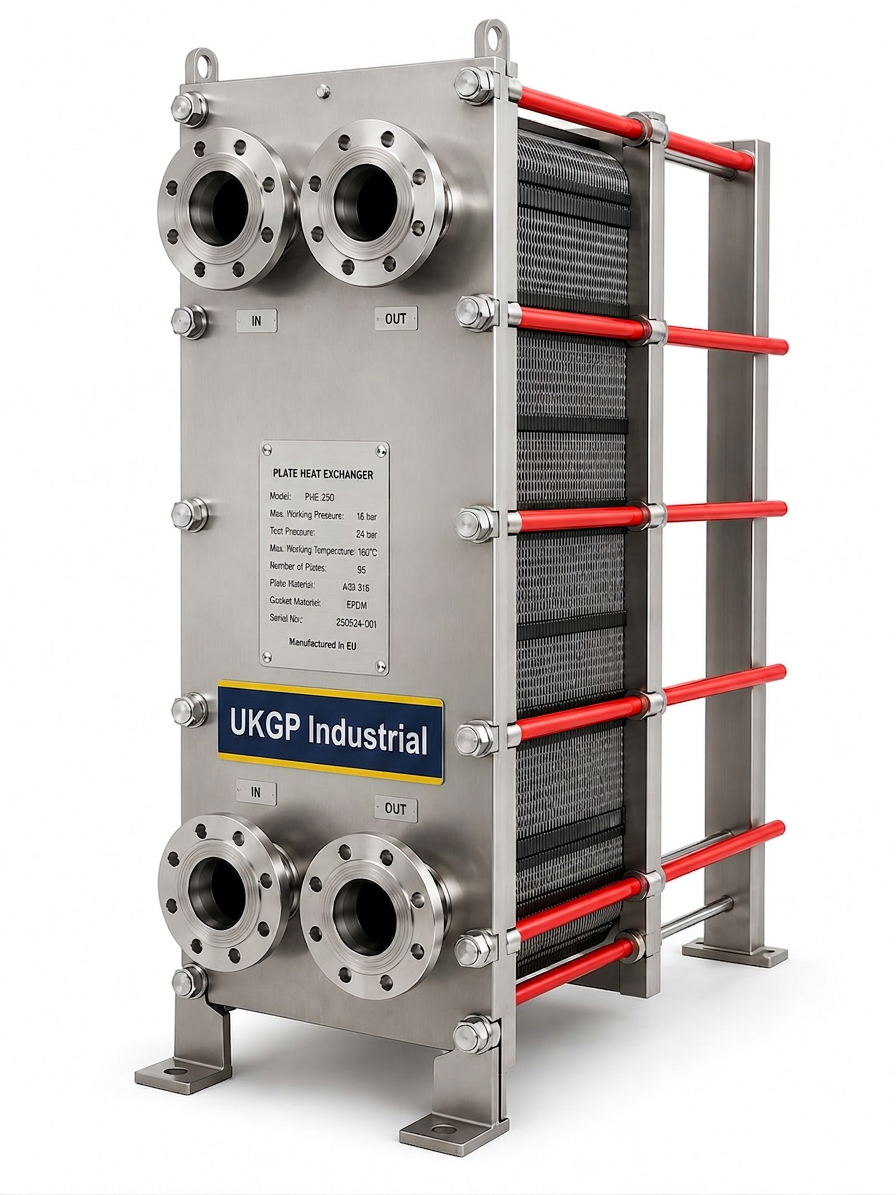
For systems where the primary heat source is a plate heat exchanger (PHE), the protection of these narrow channels is paramount. A UKGP plate heat exchanger offers exceptional heat transfer coefficients, but these are quickly compromised by scaling or fouling. Placing a side stream filter in the secondary loop and a dirt separator on the primary ensures that both sides of the PHE remain clear of debris that could cause turbulent flow issues or thermal bridging.
- Full-flow protection for boilers/chillers.
- Removal of micro-bubbles (deaeration).
- Primary capture of large-scale debris.
- Redundancy in water treatment strategy.
Chemical Dosing and Water Analysis Strategy
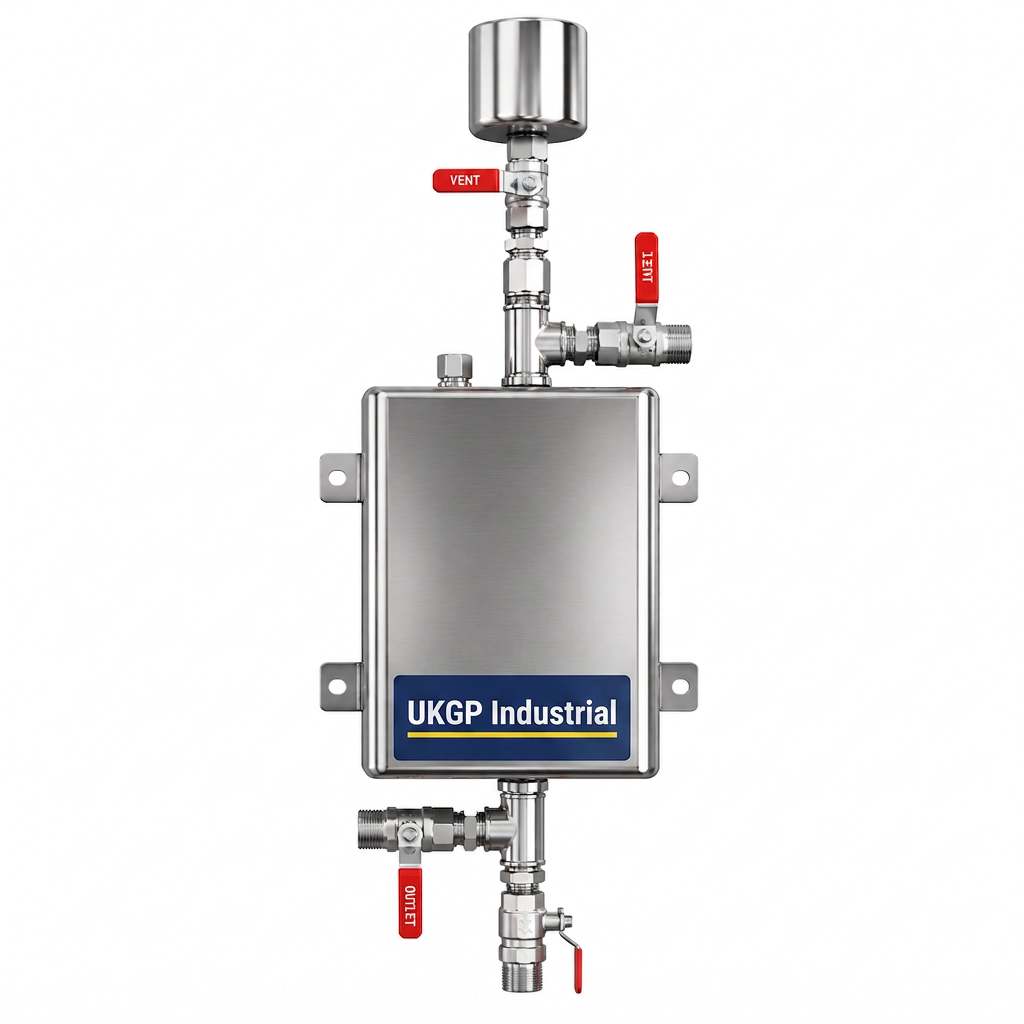
A comprehensive water treatment strategy must integrate mechanical filtration with chemical control. UKGP chemical dosing pots are the industry standard for introducing inhibitors, biocides, and glycol into closed loops. When used in conjunction with side stream filtration, the dosing pot ensures that the system is chemically protected, while the filter ensures the water remains physically clean. This dual approach is required to meet the stringent warranties often provided by modern boiler and chiller manufacturers.
It is a common error to assume that a clean-looking water sample equates to a healthy system. Regular laboratory analysis remains essential. Samples should be taken before and after the filtration skid to verify its effectiveness. If the analysis shows high levels of iron despite filtration, it may indicate that the filter pore size is too large or that the flow rate through the side stream loop is insufficient to catch up with a high rate of active corrosion.
The chemical-mechanical synergy also extends to biocide treatment. In chilled water or low-temperature systems, Pseudomonads and other bacteria can form thick biofilms. Filters help by removing the organic debris that feeds these bacteria and by physically trapping the sloughed-off biofilm. This allows the biocides introduced via the dosing pot to work more effectively on the remaining microscopic populations, preventing the 'shielding' effect that large debris piles can provide for bacterial colonies.
- Dosing pots for initial chemical introduction.
- Sample points for laboratory analysis.
- Conductivity and pH monitoring.
- Corrosion coupons for rate measurement.
Economic and Operational Benefits for FMs
For Facilities Managers (FMs), the business case for side stream filtration is built on the reduction of unplanned downtime. Clogged strainers in terminal units are one of the most frequent causes of 'too hot/too cold' calls in commercial buildings. By removing the fine particulates that pass through standard strainers, side stream filtration drastically reduces the labour costs associated with cleaning hundreds of individual FCU valves and mesh filters.
Energy efficiency is also a major driver. A 1mm layer of magnetite on a heat exchanger surface can reduce thermal efficiency by up to 10%. Over the course of a year in a large-scale LTHW system, this translates to thousands of pounds in wasted gas or electricity. By maintaining 'clear' water, the side stream skid ensures that the heat produces at the boiler is efficiently transferred to the space, keeping the building's carbon footprint as low as possible.
Finally, the longevity of the plant itself is preserved. Major capital expenditures, such as boiler replacements, are often triggered by internal corrosion or heat exchanger failure. A robust water quality regime, centred around BSRIA-compliant filtration and chemical dosing, can double the life expectancy of these assets. When compared to the cost of a catastrophic plant failure and the subsequent emergency repairs, the investment in a high-quality side stream filtration skid provides a clear and rapid return on investment.
- Reduced pump energy consumption (lower head losses).
- Lower maintenance costs for terminal units.
- Extended life of major plant (boilers/chillers).
- Avoidance of costly 'system power-flushing' in the future.
Frequently asked questions
What is the recommended flow rate for a side stream filter?
- BSRIA BG50 recommends a flow rate of 5% to 15% of the total system volume per hour. For high-occupancy or high-risk commercial systems, aiming for a 10% hourly turnover is considered best practice to ensure particulate removal keeps pace with ongoing corrosion processes.
How does side stream filtration differ from a standard air and dirt separator?
- While both remove particulates, a dirt separator is a full-flow passive device primarily for larger debris. A side stream filtration skid is an active, pumped circuit capable of removing fine suspended solids down to 5 or even 1 micron, which is essential for protecting modern high-efficiency heat exchangers and control valves.
How often should filter bags or cartridges be replaced?
- In older systems with significant magnetite buildup, filters may require daily inspections and bag changes during the initial ‘cleanup’ phase. For established, chemically treated systems, monthly inspections are typically sufficient, though differential pressure gauges should be used to trigger maintenance.
Can side stream filtration replace chemical water treatment?
- No. Side stream filtration is a mechanical process designed to work alongside chemical inhibitors. Filters remove the 'fuel' for further erosion and microbial growth, but chemicals are still required to passivate metal surfaces and prevent microbiological fouling.