The Fundamental 5% Rule of Thumb
The prevailing industry benchmark, supported by BSRIA BG29/21 and BG50, suggests that a side stream filtration system should process between 5% and 8% of the total system water volume every hour. This 'turnover rate' ensures that the entire volume of water passes through the filtration media approximately once every 12 to 20 hours. For a typical commercial LTHW system, this balance is sufficient to remove the fine magnetite particles that are generated during normal operation without requiring excessively large pumps or pipework.
To calculate the required flow rate ($Q$) in m³/h, the formula is: $Q = (V \times T) / 1000$, where $V$ is the total system volume in litres and $T$ is the hourly turnover percentage (e.g., 0.05 for 5%). For example, a 20,000-litre system requiring a 6% turnover would necessitate a filtration flow rate of 1.2 m³/h. It is vital for engineers to accurately estimate the system volume, accounting for all buffer vessels, radiators, and pipework runs, as undersizing the filtration skid will lead to insufficient particle capture.
- System volume (litres or m³)
- System turnover requirement (percentage per hour)
- Suspended solids loading (ppm)
- Presence of 'dead legs' or low-flow areas
Accounting for Magnetite and Particle Size
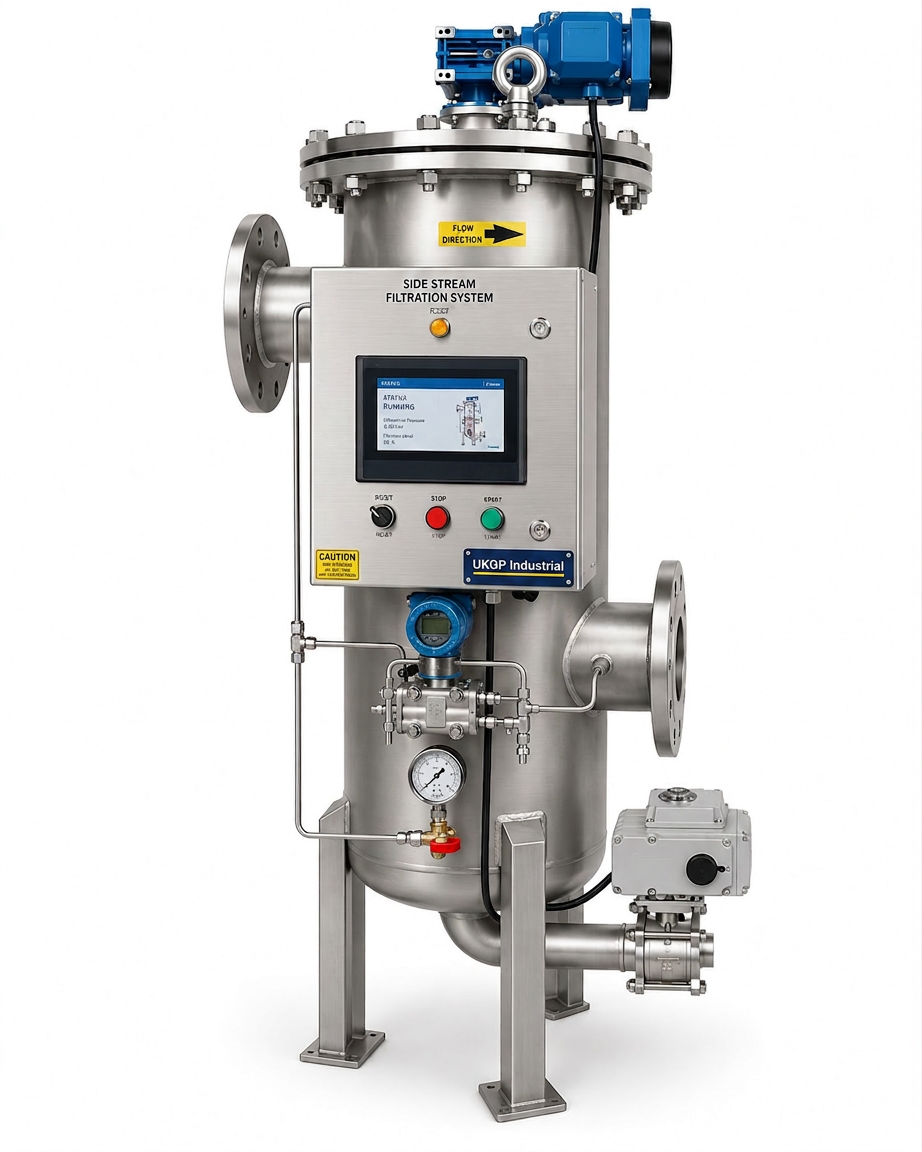
While 5% remains the baseline, the nature of the contaminants dictates the specific filtration technology and the resultant flow dynamics. Most modern systems suffer from magnetite ($Fe_3O_4$), which is often too small for traditional sand or cartridge filters to capture effectively. High-intensity magnetic separation is required. When using a UKGP side stream filtration skid, the flow rate must be controlled to allow sufficient 'dwell time' within the magnetic field for particles to be pulled from the stream.
If the flow rate is too high through the magnetic assembly, the shear forces of the water can overcome the magnetic pull, allowing fine particles to remain in suspension. Therefore, calculating the flow rate is not just about the pump capacity, but also about ensuring the velocity within the filtration vessel does not exceed the manufacturer's maximum rating for optimal particle retention. This is why multi-stage filtration—combining a stainless steel mesh with a magnetic core—is often the preferred specification for UK plant rooms.
- Capturing magnetite down to sub-micron levels.
- Facilitating easy removal of sludge during maintenance intervals.
- Maintaining flow even when the filter media begins to load.
Pressure Loss and Pump Selection
A common error in side stream filtration design is assuming the primary system pumps will drive the flow through the filter. For effective, consistent filtration, an independent pump within the filtration skid is required. When calculating the flow rate, the engineer must account for the increasing pressure drop as the filter media becomes saturated with debris. A system designed for 2 m³/h at a clean pressure drop of 0.2 bar may drop significantly as the bag or mesh blinds.
The pump must be sized to maintain the target flow rate (the calculated 5-8% turnover) even when the filter is 50-60% loaded. This requires a pump with a steep curve or, preferably, an inverter-driven pump that can modulate to maintain a constant flow. Calculating the total dynamic head (TDH) involves summing the pressure drop across the UKGP side stream filtration skid, the suction and discharge pipework, and any isolation or non-return valves included in the installation.
- Differential pressure across the filtration unit.
- Available pressure at the take-off point.
- Distance from the main headers to the filtration skid location.
Integration with Heat Exchangers and Air Separation
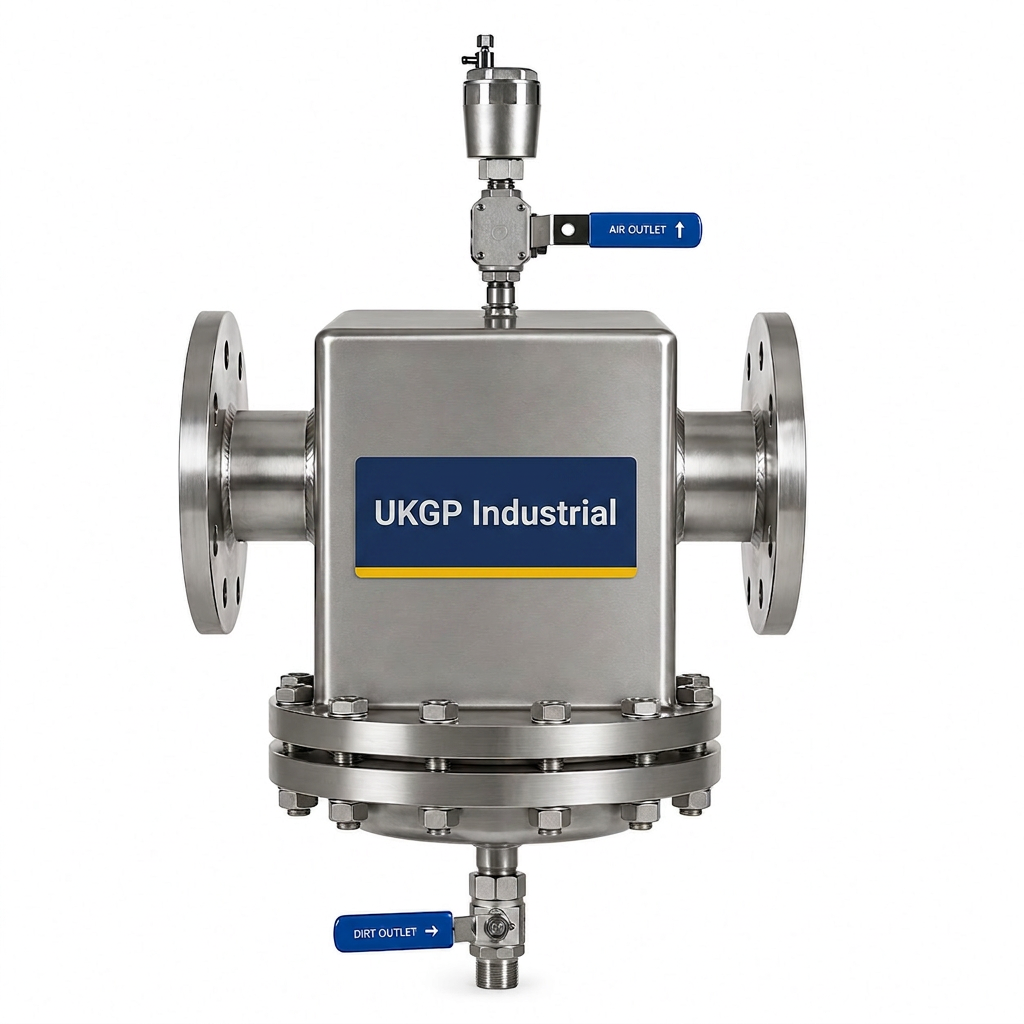
Side stream filtration should never be viewed in isolation. For maximum system protection, it should be installed in conjunction with UKGP air & dirt separators. While the side stream filter handles the fine, suspended particles through continuous turnover, the air and dirt separator removes larger bulk debris and microbubbles at the point of lowest solubility. The flow rate through the side stream filter is a fraction of the main flow, whereas the air and dirt separator must be sized for the full system flow.
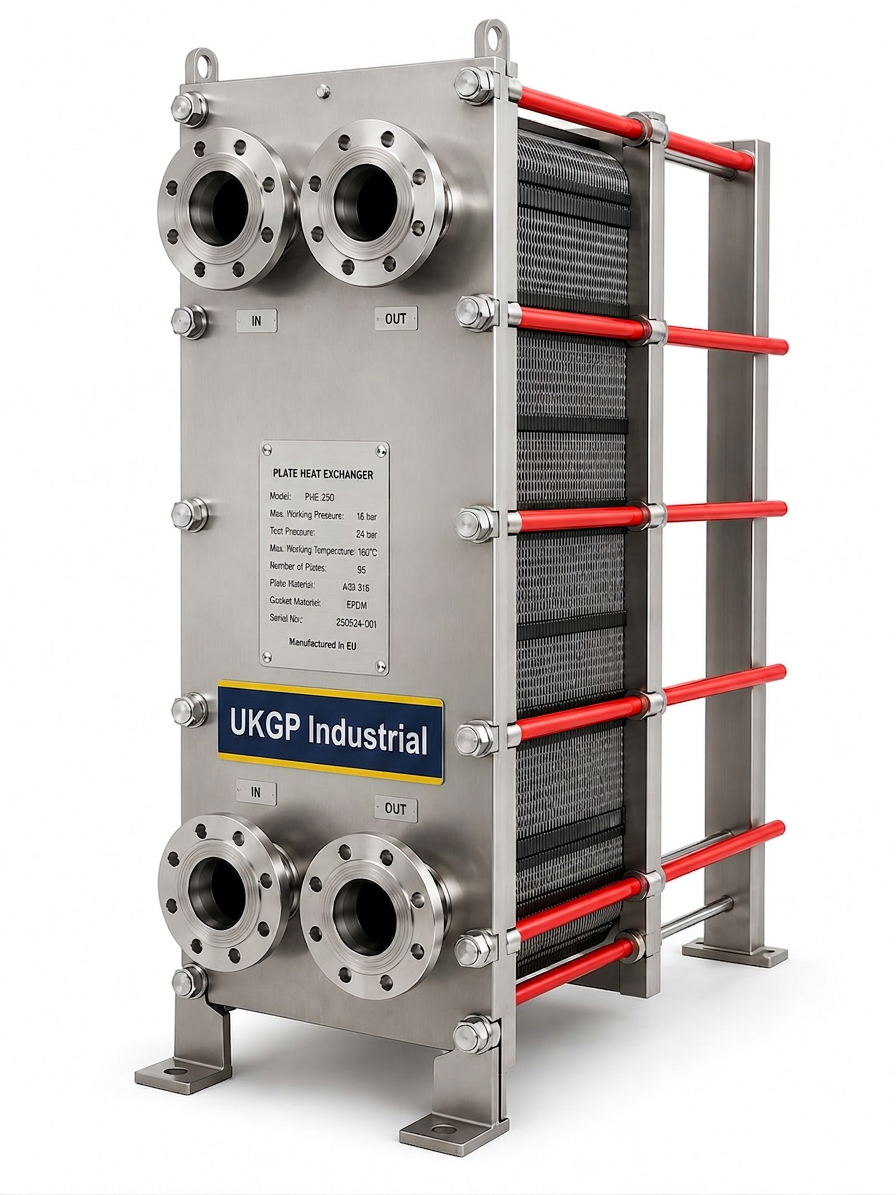
In systems where a UKGP plate heat exchanger provides hydraulic separation between the primary heat source and the secondary circuits, it is standard practice to install side stream filtration on the secondary side. This is where the largest volume of water typically resides and where the risk of corrosion is highest due to the larger surface area of the emitters. The flow rate calculation remains based on the secondary circuit volume, ensuring the heat exchanger plates are protected from fouling and 'scaling' associated with magnetite build-up.
- Install on the main return header, before the boilers or chillers.
- Ensure take-off and return points are at least 1 metre apart to prevent 'short-circuiting'.
- Use 2-port control valves if the system is variable volume.
Verification and Commissioning Procedures
Once the flow rate has been calculated and the equipment installed, commissioning must verify that the design parameters are met. A flow meter specifically for the side stream loop is an invaluable addition for facilities managers. It allows for the real-time monitoring of the turnover rate. If the design called for 5 m³/h but the commissioning data shows only 3 m³/h, the system will not meet the 5% turnover target, and water quality will inevitably degrade.
Finally, engineers should refer to CIBSE CP1 and BSRIA BG29/21 for the specific water quality targets. Successful side stream filtration is evidenced by a steady decrease in suspended solids over the first 4-8 weeks of operation. If the calculated flow rate is correct, the 'cleanliness' of the water should reach an equilibrium where the rate of particle removal equals or exceeds the rate of generation from internal corrosion. Continuous monitoring and adjustment based on site-specific conditions are the hallmarks of a well-maintained UK building services installation.
- Monitor the change in water turbidity (measured in NTU).
- Check iron levels (ppm Fe) during monthly water analysis.
- Record the frequency of bag or magnet cleaning cycles.
Frequently asked questions
Should I use a higher flow rate for older systems?
- For dirty legacy systems being remediated, a higher turnover rate of 10-15% of the total volume per hour is initially recommended until the iron levels stabilise, at which point it can be modulated back to 5-8%.
Can side stream filtration replace chemical water treatment?
- No. BSRIA guidelines emphasise that filtration is a supplement to, not a replacement for, correct chemical dosing. Without inhibitors, even filtered water will remain aggressive to system metals.
What is the difference between bag and magnetic filtration?
- Bag filters are excellent for high-volume solid removal during commissioning or clean-up. However, for ongoing maintenance, high-intensity magnetic filters are essential for capturing sub-micron magnetite.
What is the most common installation error?
- Ensure the pump on the filtration skid can overcome the pressure drop of the unit itself plus the pipework losses back to the main return, without relying on the primary system pressure.