The hydraulic impact of suspended solids
The fundamental relationship between fluid cleanliness and pumping energy is defined by the system curve. As suspended solids like magnetite accumulate, the fluid effectively becomes more viscous and dense. This increases the Reynolds number required for turbulent flow, which in turn increases the friction factor across every metre of pipework. For an M&E contractor, this means the pump must work harder—consuming more Amps—to move the same volume of fluid compared to a clean, treated system.
Furthermore, the settlement of these solids in low-velocity areas or 'dead legs' reduces the effective internal diameter of the pipework. According to the Darcy-Weisbach equation, pressure drop is inversely proportional to the fifth power of the pipe diameter. Even a thin 2mm layer of sediment in a DN100 pipe significantly increases the dynamic head, forcing VSD-controlled pumps to ramp up their RPM to maintain the required flow rate at the furthest terminal unit.
- Direct friction loss from increased fluid viscosity due to high TSS (Total Suspended Solids).
- Reduced cross-sectional area of pipework and heat exchangers due to 'sludging'.
- Increased boundary layer resistance on heat transfer surfaces.
- Premature wear of mechanical seals leading to increased internal shunt or leakage.
Mitigating Magnetite-induced mechanical drag
Magnetite (Fe3O4) is the primary enemy of modern circulating pumps. Being ferrimagnetic, it is attracted to the permanent magnet motors found in the latest high-efficiency circulators. As these particles migrate into the rotor can, they create physical drag and increase friction within the precision-engineered clearances of the pump. This 'braking' effect forces the motor controller to draw more power to maintain the setpoint, negating the energy-saving benefits of the high-efficiency motor.
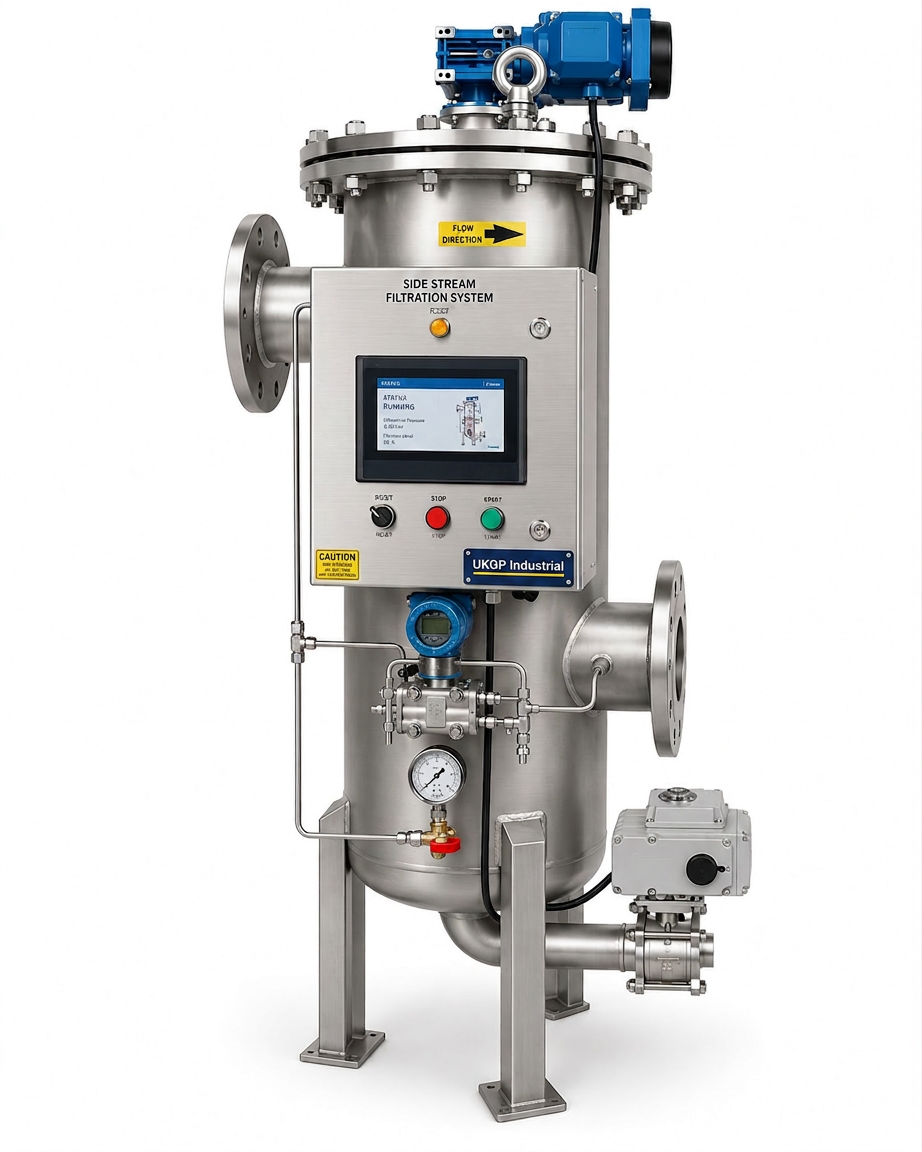
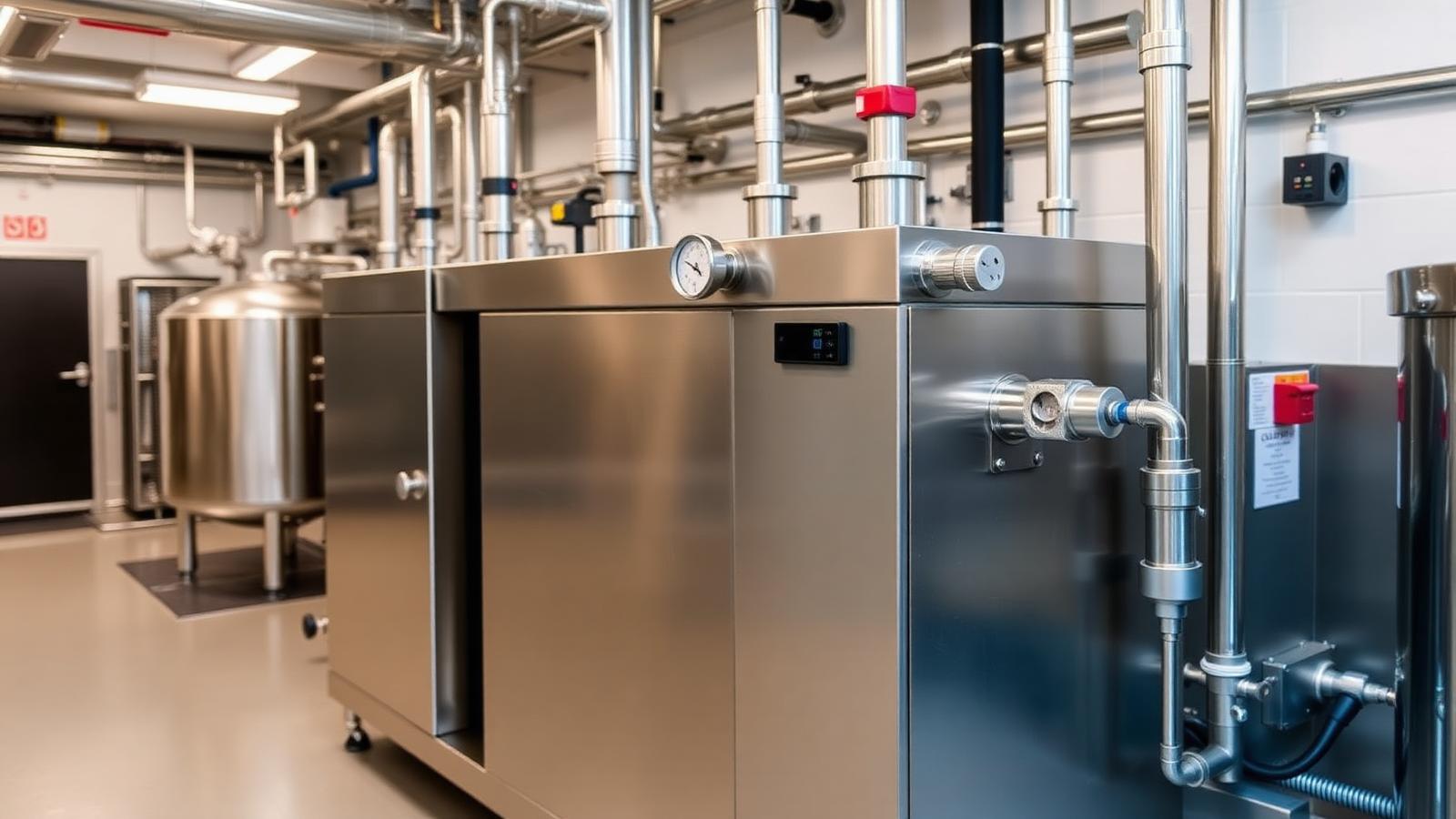
Integrating a UKGP side stream filtration skid allows for the continuous removal of these sub-micron particles. Unlike traditional strainers that only catch 'boulders', a dedicated side stream skid utilises high-intensity magnetic rods and fine glass or bag media to polish the water. By maintaining a low TSS count, engineers ensure that the internal components of the primary and secondary pumps remain free from abrasive grit and magnetic interference, preserving the manufacturer-specified efficiency curves.
Pressure drop and heat exchanger fouling
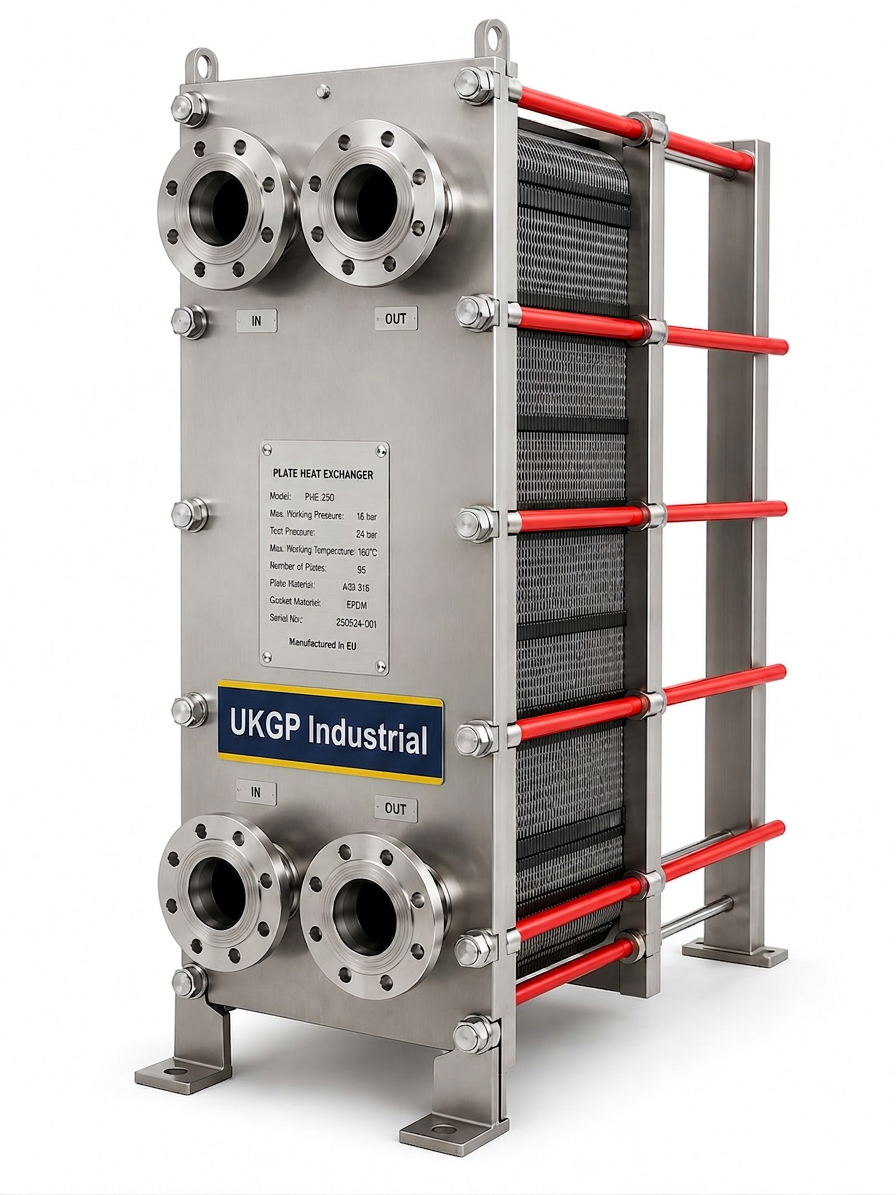
Heat exchangers are the most flow-sensitive components in any HVAC circuit. Whether it is a UKGP plate heat exchanger (PHE) or a boiler's primary cell, narrow passages are prone to fouling. When solids settle on these surfaces, they create a 'skin' that increases the pressure drop across the unit. A fouled PHE might see its pressure drop rise from 30kPa to 60kPa, requiring the pump to compensate for this 100% increase in component resistance.
Beyond the hydraulic loss, fouling creates thermal resistance. In a chilled water system or a LTHW circuit, this means the system must circulate more fluid (at a higher velocity) to achieve the same kW of heat transfer. Side stream filtration prevents this 'thermal drift,' ensuring that the pump can operate at its lowest possible speed to satisfy the building's thermal load, which is where the most significant energy savings are found under Part L of the Building Regulations.
- Lower pump head requirements (mhd).
- Optimised heat transfer at the plate heat exchanger.
- Extended intervals between system flushing and chemical dosing.
The role of Air and Dirt Separators in energy management
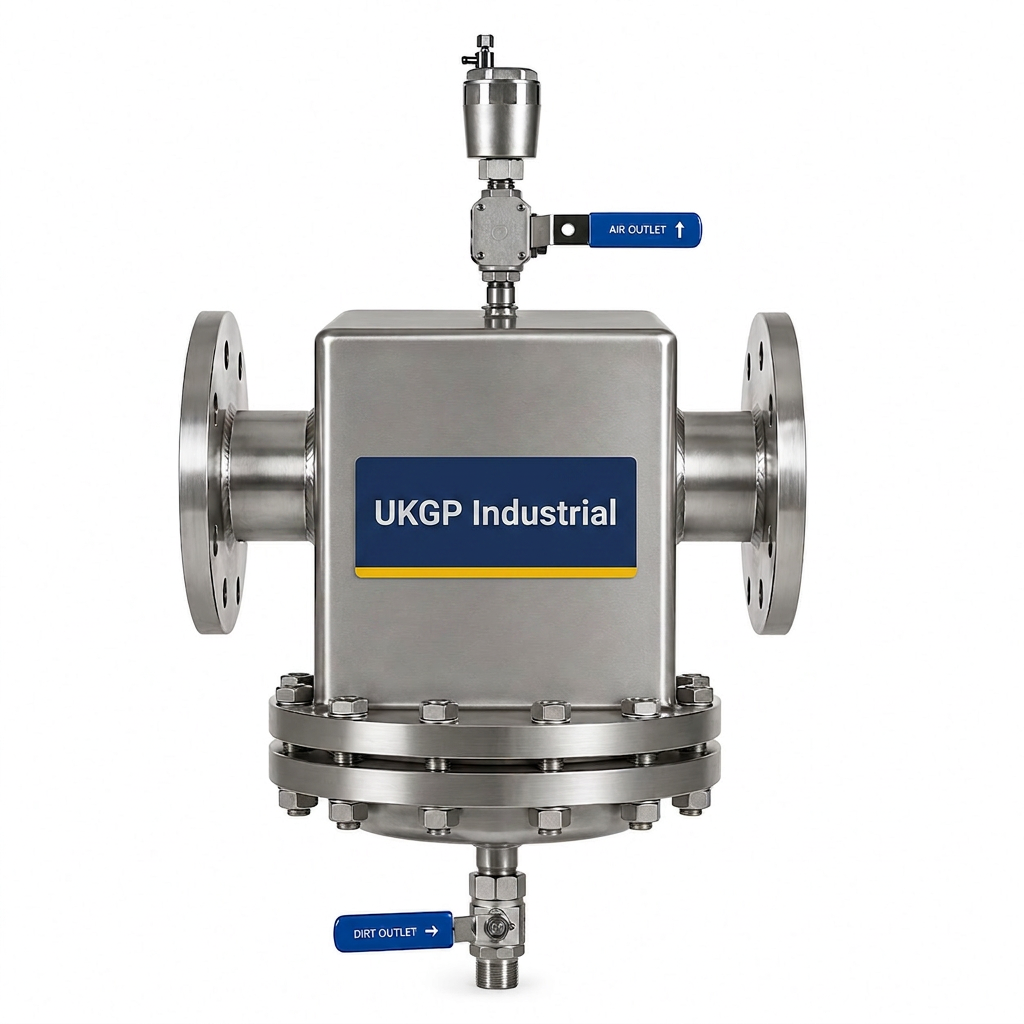
While side stream filtration handles the fine 'polishing' of the system, it works most effectively when used in conjunction with primary separation. The use of UKGP air & dirt separators at the point of lowest solubility (usually the warmest part of the system or the suction side of the pump) removes the bulk of the larger debris and entrained air. Micro-bubbles in the flow increase the compressibility of the fluid and reduce pump efficiency through cavitation-like effects and decreased impeller 'grip'.
By removing air and large dirt particles upstream, the side stream filter can focus on the fine magnetite and non-ferrous debris that otherwise remain in suspension. This multi-stage approach ensures the entire system remains hydraulically 'smooth'. For facilities managers, this reduces the 'hunting' of VSDs and prevents the common issue of pumps running at 100% speed just to overcome the resistance of a dirty, aerated system.
Chemical Dosing Pots and system stability
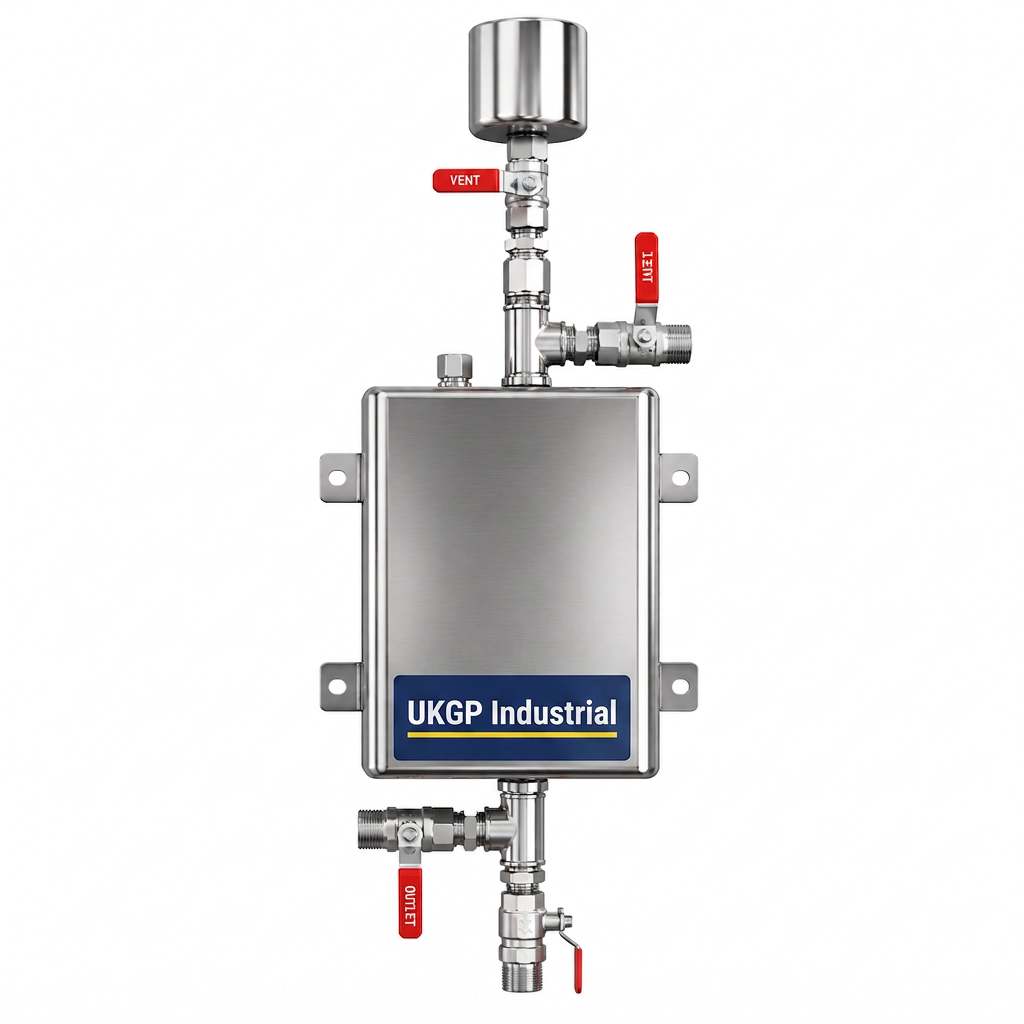
A critical aspect of BSRIA BG50 compliance is maintaining the correct chemical inhibitor levels. While UKGP chemical dosing pots are essential for introducing the initial treatment or top-ups, the efficacy of these chemicals is compromised by the presence of sludge. Suspended solids provide a surface area for bacteria (such as SRB) to colonise and can chemically 'mask' the inhibitor, rendering it ineffective.
A side stream filtration system reduces the 'chemical demand' of the water. By removing the organic and inorganic solids that consume inhibitors, the system stays in a passivated state for longer. This stability prevents the sudden spikes in corrosion that lead to rapid debris build-up, ensuring that the pump energy savings achieved through filtration are sustained over the entire life of the plant, rather than trailing off months after a system flush.
- Manual dosing pots introduce oxygenated water during every cycle.
- Side stream skids can often integrate automated dosing for tighter control.
- Clean systems require fewer chemical 'top-ups', reducing the fluid's chemical load and density.
Conclusion: The engineering case for filtration
In conclusion, the installation of side stream filtration is a capital investment that pays for itself through reduced electrical demand and extended asset life. In an era of rising energy costs and decarbonisation targets, building services engineers cannot afford to ignore the hidden costs of 'dirty' water. By maintaining low turbidity and removing magnetite, we ensure pumps operate on their design curves and VSDs can effectively modulate.
For any new build or major plant-room refurbishment, adhering to BSRIA BG29/21 standards via high-quality filtration and separation is the most effective way to protect the 'heart' of the building. The integration of high-performance skids ensures that the system remains efficient, quiet, and—most importantly—cost-effective to operate.
Frequently asked questions
Why isn't a standard Y-strainer sufficient for energy efficiency?
- While standard inline strainers (typically 0.75mm to 1.5mm mesh) catch large debris, they do not remove the fine suspended solids (magnetite) that cause fouling and increase fluid viscosity. Side stream filtration targets particles down to 5 microns, protecting high-efficiency pump seals and heat exchanger surfaces.
What flow rate should be diverted through a side stream filter?
- BSRIA BG29/21 and BG50 recommend that a side stream filter should typically process 5-15% of the total system volume per hour. This ensures that the entire system volume is 'polished' multiple times a day without impacting the main system pressure.
Does side stream filtration help with condensing boiler efficiency?
- Yes. By removing suspended solids, you maintain the designed thermal conductivity of the fluid and prevent insulating layers of sludge on the heat exchanger. This allows the primary plant to operate at lower return temperatures, further reducing energy consumption.
What is the typical ROI for installing a side stream filtration skid?
- Typical payback periods for commercial systems range from 18 to 36 months, depending on the system's age, the prevalence of variable speed drives, and the existing level of corrosion. This accounts for energy savings, reduced chemical dosing, and lower maintenance labour.