The Role of the Low Loss Header in Commercial Plant Rooms
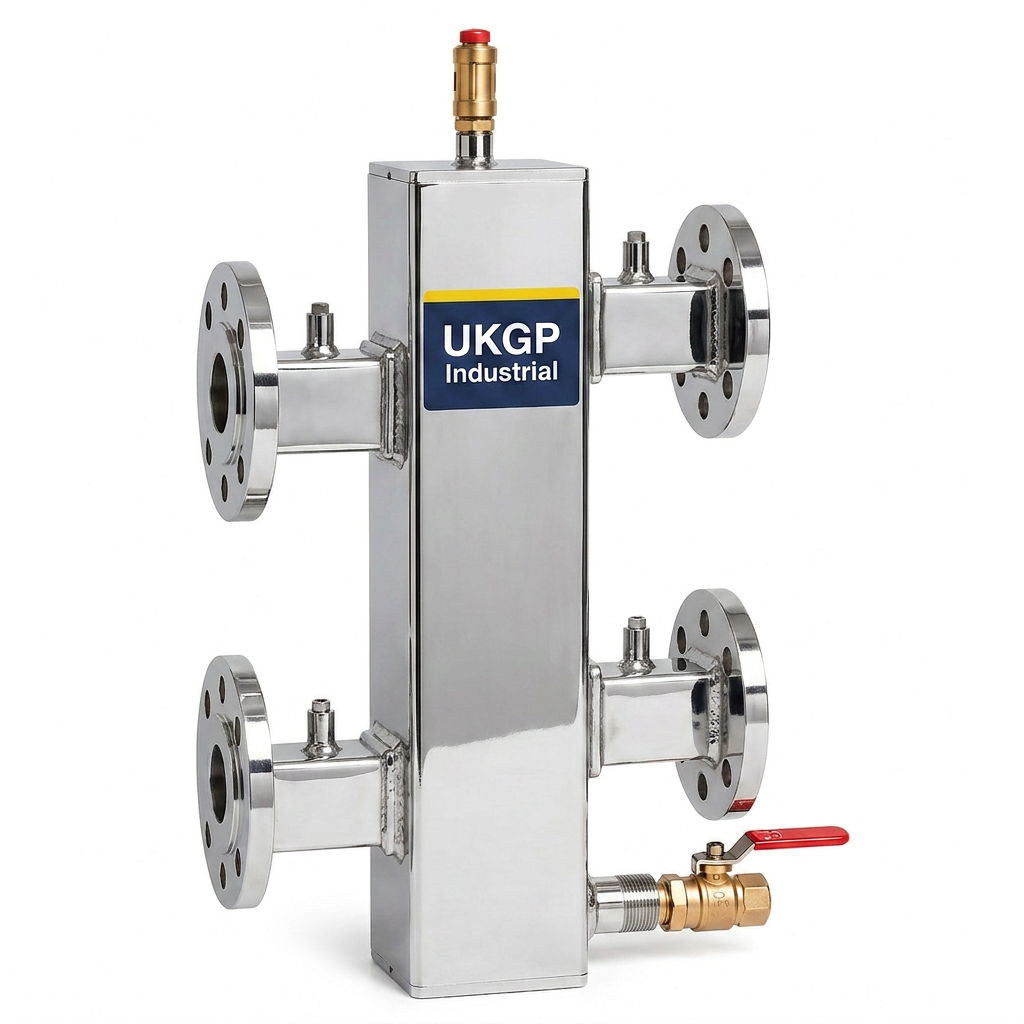
The primary function of a low loss header is to act as a buffer zone where the pressure differential between the flow and return headers is effectively zero. In a typical commercial installation—for example, a multi-boiler cascade involving Vaillant or Viessmann units—the primary circulating pumps are sized purely to overcome the internal resistance of the boilers and the short pipe run to the header. Without this separation, variations in demand from secondary zones (such as UFH, AHUs, or rads) would create fluctuating pressure differentials that interfere with the boiler’s internal control logic.
By utilising an LLH, the system is split into two distinct hydraulic circuits. This allows both the primary and secondary pumps to operate at their respective design flow rates without affecting one another. In accordance with CIBSE AM14, this decoupling is vital for the protection of modern heat exchangers, which often have high internal pressure drops and strictly defined minimum flow requirements. Failure to provide this separation frequently leads to 'nuisance tripping' and premature failure of the heat source.
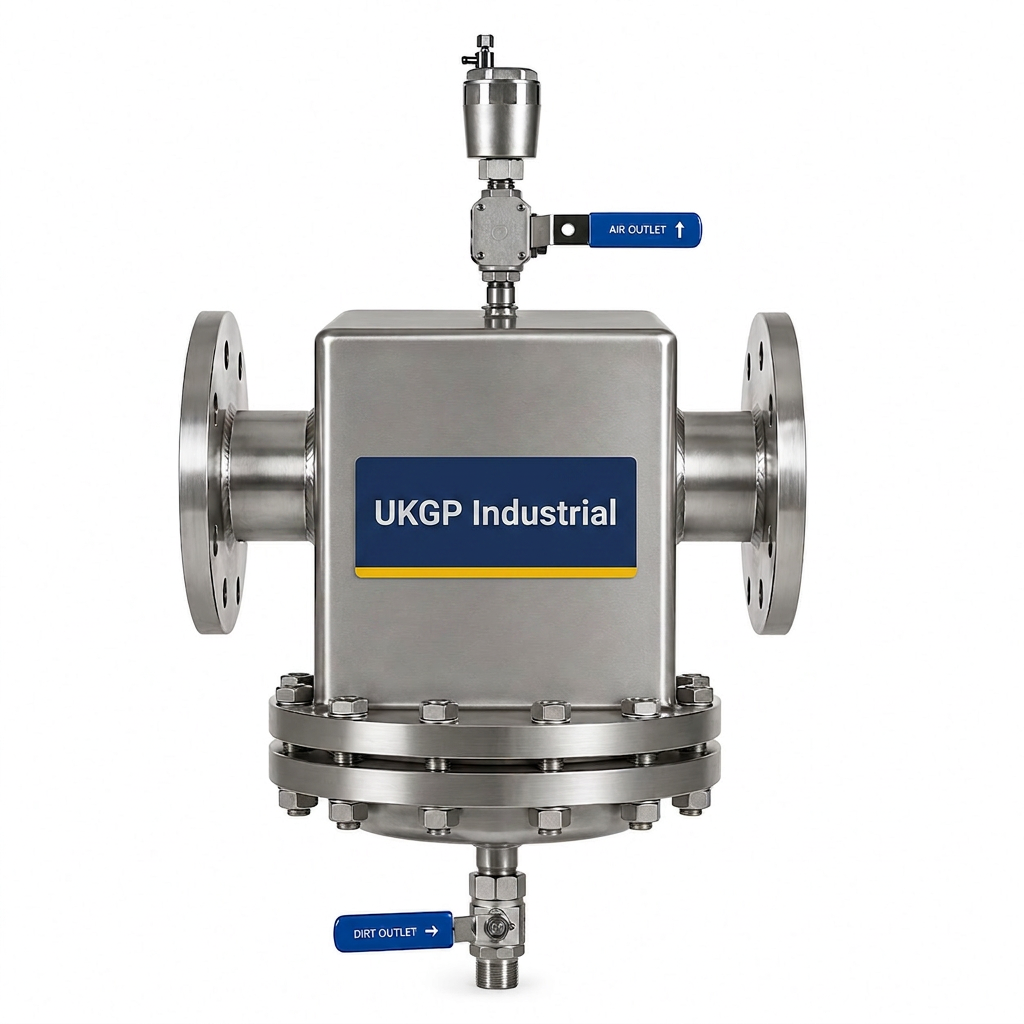
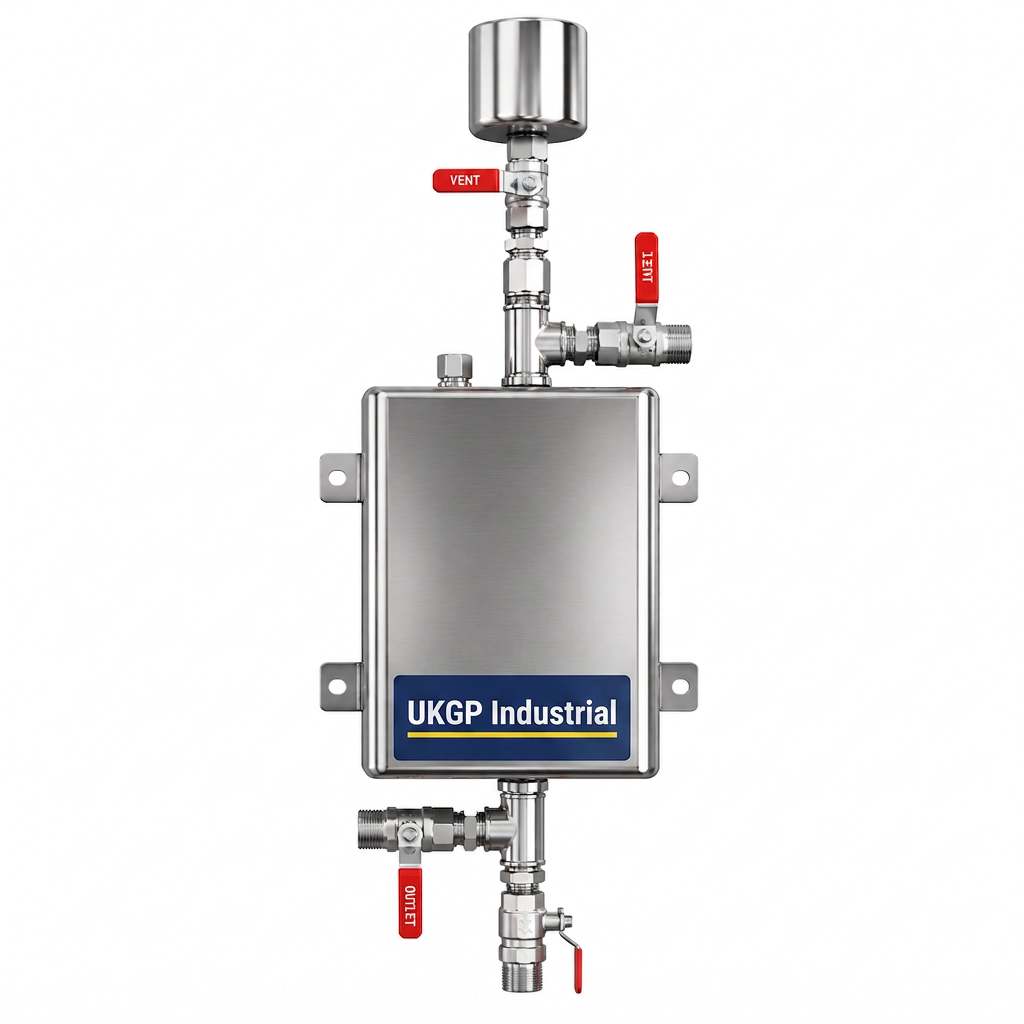
Furthermore, the low loss header facilitates air and dirt removal. Because the diameter of the header is significantly larger than the connecting pipework, the fluid velocity drops sharply as it enters the vessel. Following the laws of physics, this reduction in velocity allows suspended micro-bubbles to rise to the top and heavier particles (magnetite and sludge) to settle at the base, which can then be purged via a manual or automatic blowdown valve.
- Decoupling the primary (boiler) and secondary (emitters) circuits.
- Maintaining constant flow across the heat exchanger, regardless of secondary demand.
- Protecting high-efficiency condensing boilers from variable flow rates.
- Providing a point for air and dirt removal via internal baffles or velocity reduction.
Frequently asked questions
How do I size a low loss header for a 500kW boiler plant?
- The header should be sized for the maximum flow rate of either the primary or secondary circuit—whichever is greater. The horizontal velocity within the header body should typically not exceed 0.2m/s to ensure effective pressure decoupling.
Does a low loss header replace an air and dirt separator?
- Yes, an LLH acts as a point of low velocity where debris can settle and micro-bubbles can escape. However, for full protection according to BSRIA BG29/21, a dedicated magnetised air and dirt separator is recommended upstream of the header.
What happens if the secondary flow exceeds the primary flow?
- If the secondary flow rate is higher than the primary, return water from the secondary circuit mixes with the flow in the header (bypass). This results in a secondary flow temperature lower than the boiler set point, which may necessitate higher boiler flow temperatures.
What are the most common installation errors with LLH piping?
- Incorrect vertical orientation, oversized primary pumps creating excessive turbulence, and failing to install a sensor pocket for the BMS to monitor the actual blended flow temperature. No sensor often leads to 'short cycling' or insufficient heat delivery.