The Role of Hydraulic Separation in Commercial Cascades
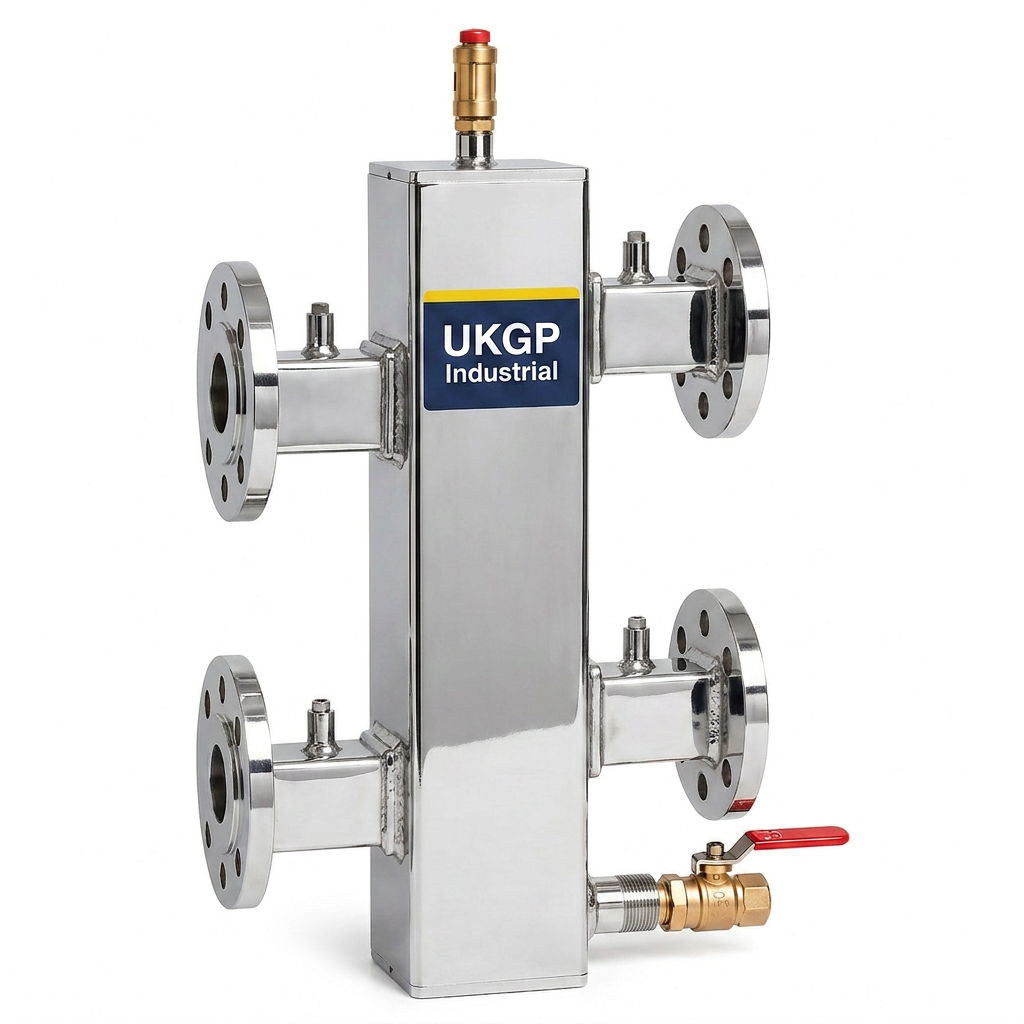
Commercial boiler installations, particularly those utilising high-output wall-hung or floor-standing units like the Vaillant ecoTEC plus range, require a precise flow rate to maintain the designed temperature differential (ΔT). However, secondary circuits—comprising AHUs, underfloor heating, and radiator circuits—rarely operate at a constant volume. A low loss header acts as a bridge of low pressure-loss, effectively decoupling the primary pump's influence from the secondary pumps.
Without a correctly sized LLH or hydraulic separator, the secondary pumps can 'pull' flow through the boiler heat exchangers at rates exceeding their design parameters, or conversely, primary pumps can force flow into the secondary circuits when zones are closed. This leads to erratic control, noise, and potential damage to boiler components. When using Vaillant’s heating controls (such as the VRC 700 or sensoCOMFORT), the header provides a stable location for the VR 10 system sensor, ensuring the NTC thermistor accurately reflects the blended flow temperature supplied to the building.
- Separation of constant primary flow from variable secondary flow.
- Protection of boiler heat exchangers from fluctuating pressure differentials.
- Facilitating air and microbubble dissipation via low-velocity zones.
- Acting as a collection point for system magnetite and debris for blow-down.
Sizing Criteria and the 'Rule of Four'
Effective hydraulic separation relies on the velocity of the water within the header being significantly lower than that of the connecting pipework. The industry standard, often referred to in CIBSE AM14, suggests a maximum vertical velocity within the vessel of 0.1m/s. This reduction in velocity is what allows the header to act as a point of zero pressure (the neutral point), where the primary and secondary circuits can interact without interfering with each other's pump heads.
Sizing must be based on the maximum potential flow rate, not just the boiler output. Engineers should calculate the total kW demand and the required ΔT (typically 20°C for modern condensing boilers) to determine the volumetric flow in m³/h. For example, a 300kW cascade operating at a 20°C ΔT requires approximately 12.9 m³/h. The LLH must be selected with a diameter that accommodates this flow while adhering to the 0.1m/s velocity limit to facilitate the settlement of heavy particles and the rise of air bubbles.
Frequently asked questions
How do I size a low loss header for a commercial boiler cascade?
- A low loss header should be sized based on the maximum flow rate of the secondary circuit or the primary circuit, whichever is greater. It must ensure that the vertical velocity within the vessel stays below 0.1m/s to allow for effective hydraulic decoupling and debris settlement.
What is the ideal temperature differential across a low loss header?
- While many modern boilers allow for Delta T (ΔT) of 20°C, commercial systems often operate more efficiently with a 20°C differential on the primary side while the secondary circuit may vary. A low loss header allows these two circuits to operate at different ΔT values without impacting boiler heat exchanger flow.
Can I maintain condensing efficiency when using a low loss header?
- Yes, provided the primary flow rate is slightly higher than the secondary flow rate. This ensures the return temperature to the boiler remains low enough to facilitate latent heat recovery (condensing mode). Excessive bypass must be avoided.
Is a low loss header a substitute for a dirt separator?
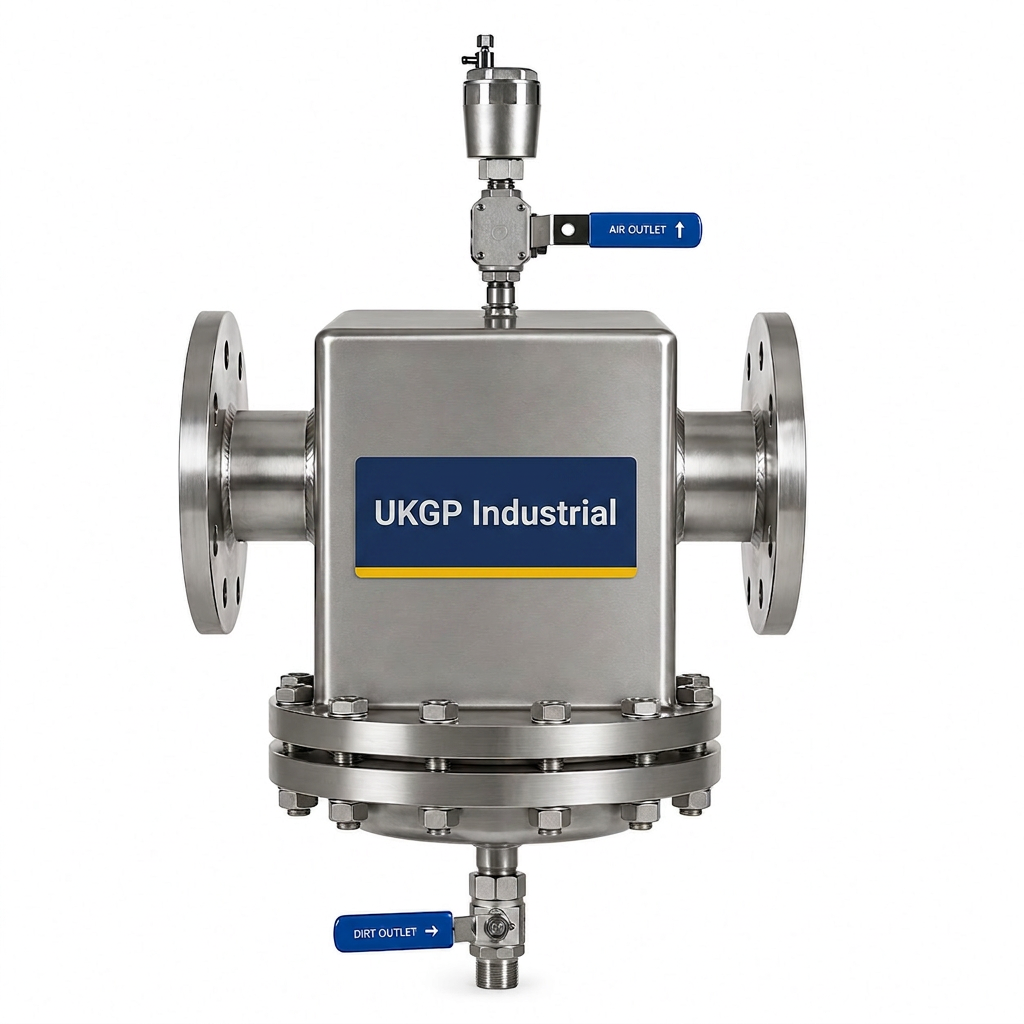
- BSRIA BG29/21 and BG50 advise that while LLHs provide a point of low velocity for settlement, they should be supplemented by dedicated air and dirt separators and side-stream filtration to meet modern water quality standards.