The Engineering Principle of Hydraulic Separation
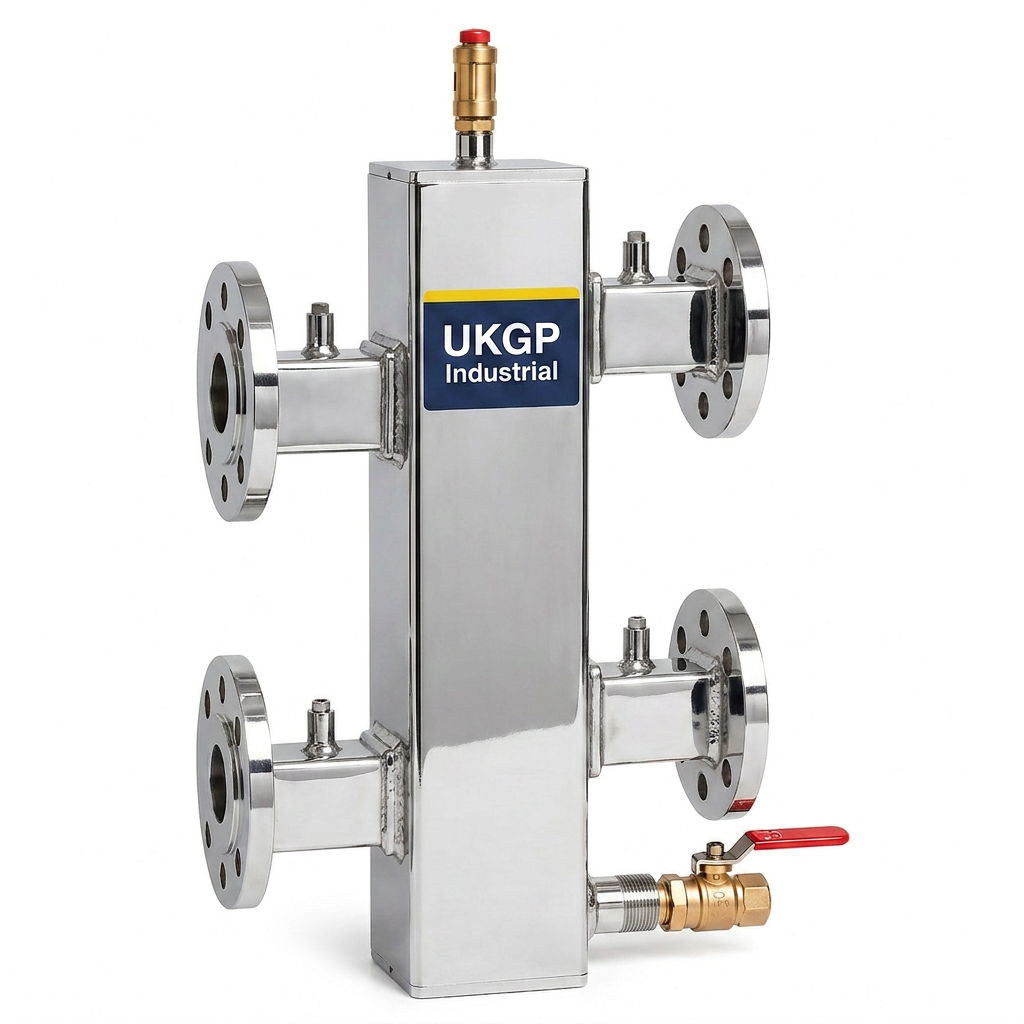
The fundamental purpose of a low loss header is to create a point of negligible pressure drop in the system, effectively decoupling the primary (boiler) circuit from the secondary (load) circuits. Without this separation, the varying flow rates required by secondary zones—controlled by two-port valves or variable speed pumps—would interfere with the constant flow often required by commercial boilers, such as those from Viessmann or Vaillant, to prevent overheating or tripping.
By providing a large common chamber where the velocities of the circulating fluids are significantly reduced, the LLH ensures that the primary pump only has to overcome the resistance of the boiler and primary pipework, while the secondary pumps handle the distribution. This prevents 'tug-of-war' scenarios between pumps, which can lead to cavitation, premature pump failure, and inaccurate sensor readings.
- Velocity reduction to decouple primary and secondary pumps.
- Creation of a 'neutral zone' with minimal pressure drop.
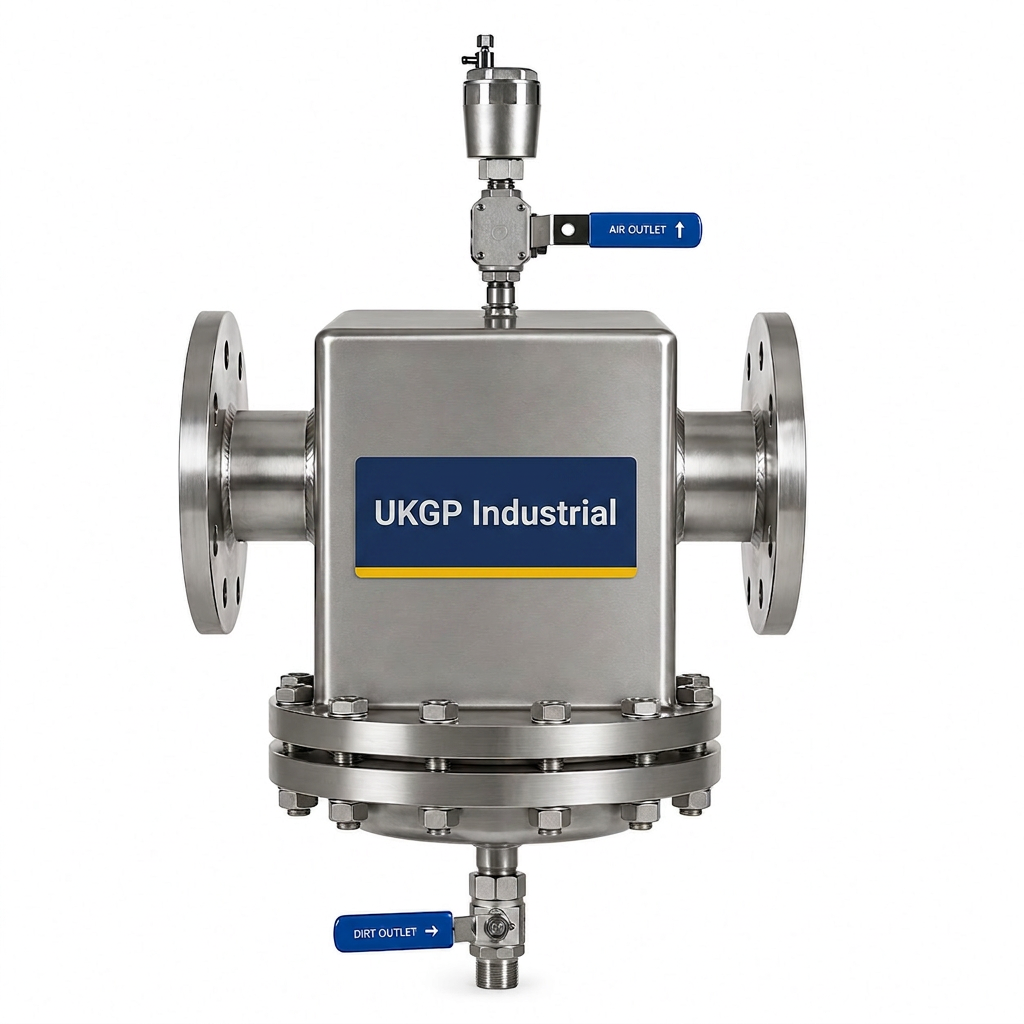
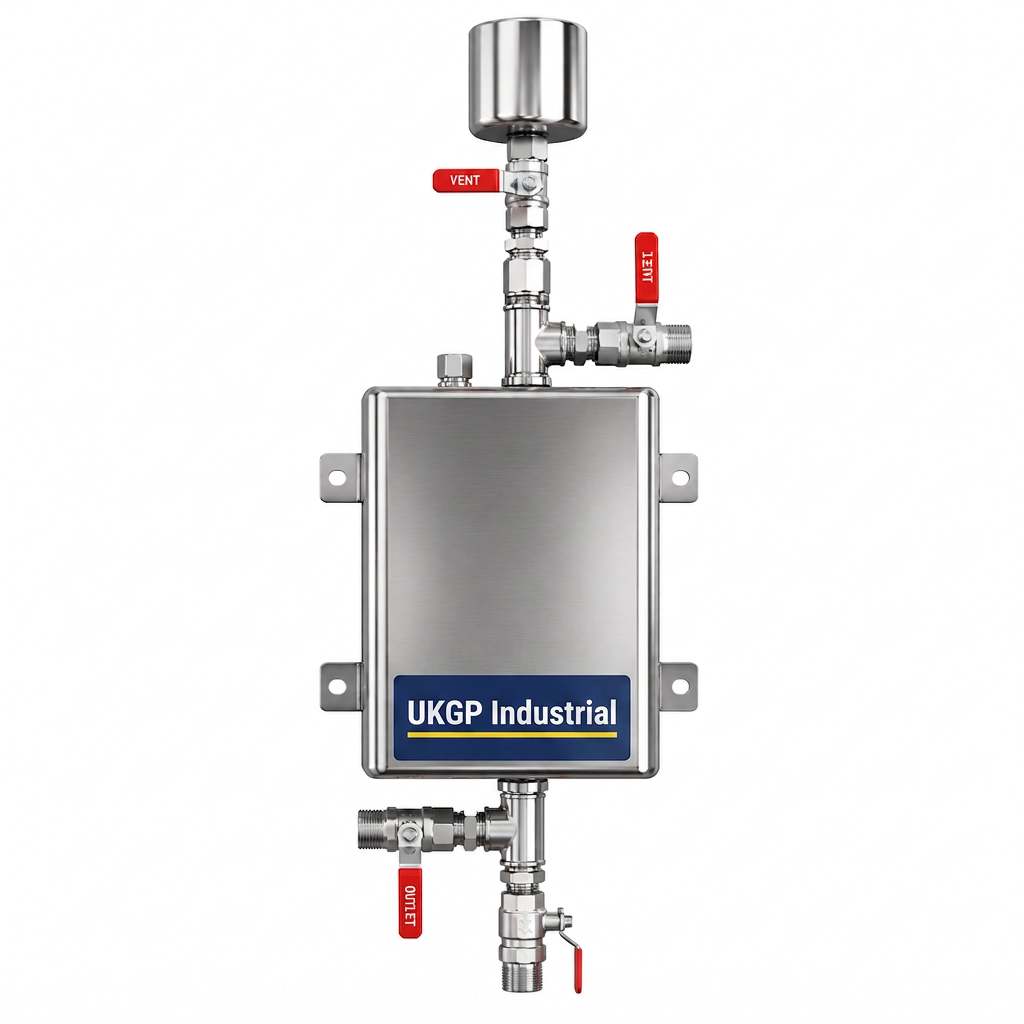
- Provision for air and sediment separation (depending on internal baffles).
- Facilitating temperature mixing for varied return temperatures.
Defining the 3:1 Pipe Sizing Rule
The 3:1 rule refers to the ratio between the cross-sectional diameter of the header body (D) and the diameter of the primary/secondary inlet and outlet nozzles (d). For a header to function correctly as a hydraulic neutral point, the internal diameter of the header body should be at least three times the diameter of the largest connecting pipe. For example, if the primary flow and return pipework is 50mm (DN50), the low loss header body should ideally have a minimum diameter of 150mm (DN150).
This ratio is not arbitrary; it is rooted in fluid dynamics. By increasing the diameter by a factor of three, the cross-sectional area increases by a factor of nine ($A = \pi r^2$). Consequently, the vertical velocity of the water within the header drops significantly—typically below 0.2 m/s. This low velocity is essential for allowing the fluid to 'find its own path' based on the demand of the pumps rather than being forced through by momentum.
Frequently asked questions
Is the 3:1 rule always applicable for modern condensing boilers?
- While the 3:1 rule is a reliable industry benchmark, contemporary high-efficiency systems with very low delta-T may require sizing based specifically on velocity (0.1 to 0.2 m/s) to ensure the neutral zone is maintained.
What happens if I undersize the low loss header?
- If the header is too small, flow velocities increase, causing turbulence. This leads to hydraulic coupling where the primary pump influences the secondary circuit, potentially causing boiler cycling or inadequate heat delivery to the emitters.
Can a buffer vessel replace a low loss header?
- Yes, both serve to decouple the hydraulic circuits. However, a low loss header is typically used for smaller to medium commercial loads, whereas a buffer vessel adds thermal mass to prevent short-cycling in heat pump or biomass applications.
Does a low loss header act as an air and dirt separator?
- Air and dirt separation are best handled by dedicated units or integrated features within the LLH. BSRIA BG29/21 emphasises the importance of removing system debris to protect high-efficiency heat exchangers.