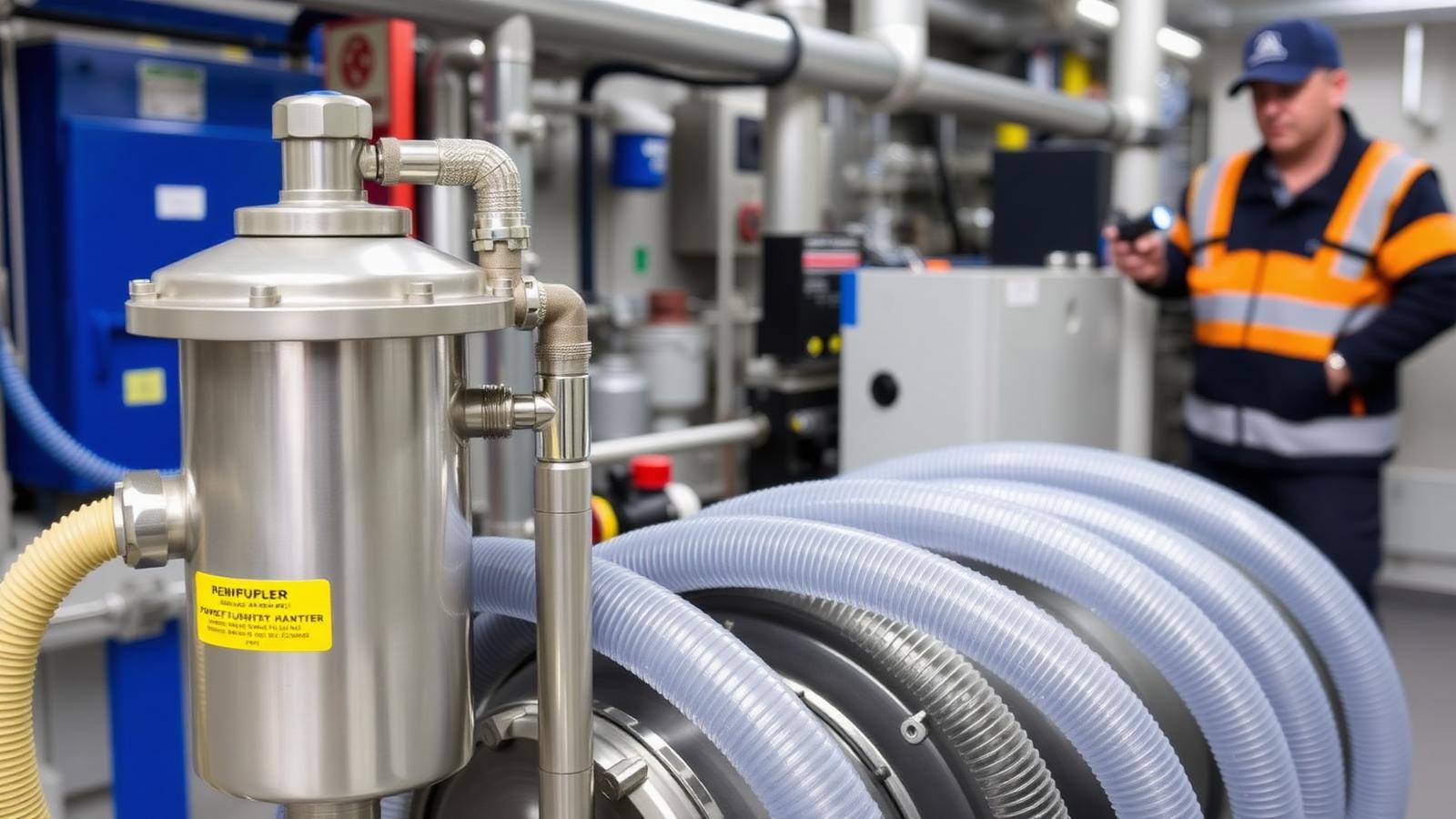
The Mechanics of Commercial Power Flushing
Power flushing is a high-intensity, temporary intervention designed to restore hydraulic efficiency to a fouled system. Unlike domestic flushing, commercial power flushing involves high-volume pumps capable of circulating water at velocities significantly higher than the system's design flow. The objective is to create turbulent flow within the pipework, which provides the kinetic energy necessary to lift heavy magnetite and limescale deposits that have settled in low-velocity zones.
The process relies heavily on chemical assistance. Dispersants and mobilising agents are introduced to break down the molecular bond between the debris and the internal pipe wall. In large-scale systems, this is often performed in sections or 'zones' to ensure that the required velocity is maintained. If the velocity drops below the threshold required to keep particles in suspension, the debris will simply relocate rather than be removed, leading to potential blockages in control valves or plate heat exchangers.
A critical component of a successful commercial flush is the monitoring of Total Dissolved Solids (TDS) and turbidity. The process is only considered complete when the chemistry and clarity of the system water match that of the incoming mains water (or the treated fill water). This provides a 'clean slate' for the system but offers no ongoing protection against the inevitable recurrence of corrosion caused by oxygen ingress or microbiological activity.
- High-velocity turbulent flow (typically >0.5m/s and up to 1.5m/s).
- Chemical mobilisation using acid-based or neutral cleaners.
- Flow reversal to dislodge 'shadow' deposits in radiator headers or heat exchanger corners.
- Final neutralisation and passivation of metal surfaces.
The Role of Side Stream Filtration in Modern HVAC
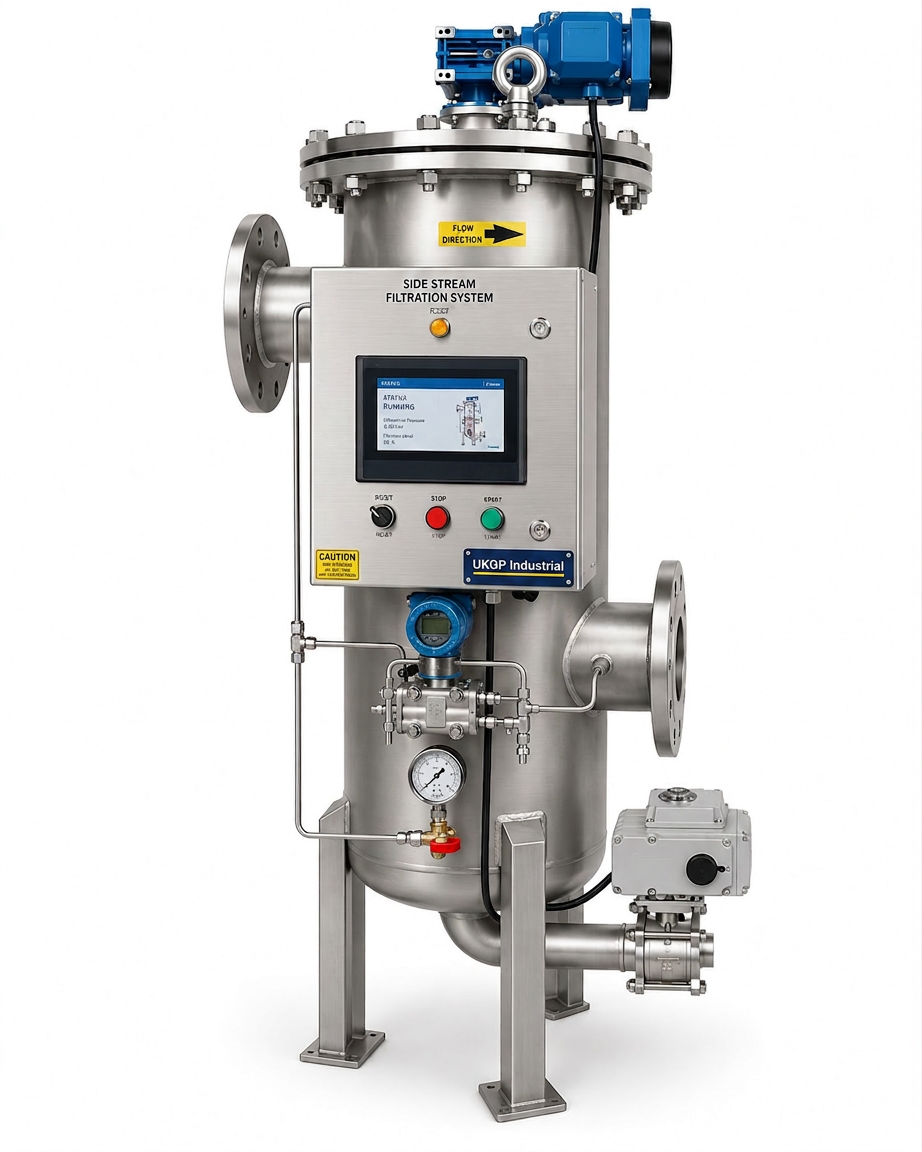
Side stream filtration represents a shift from reactive to proactive water management. Instead of waiting for system performance to degrade, a side stream skid continuously diverted a portion of the circulating water (typically 5-15% of the total flow) through a high-efficiency filtration medium. This ensures that any particles generated during normal operation—such as those resulting from flash corrosion or pump wear—are captured before they can settle or cause erosive damage.
The UKGP side stream filtration skid is a prime example of this technology, designed to handle the rigorous demands of commercial plant rooms. By utilising a dedicated pump, these units operate independently of the main system pressure, ensuring consistent filtration rates even when the main plant is modulating or in bypass. This is particularly important in Variable Volume Systems (VVS) where flow rates can fluctuate significantly, often dropping below the speeds required for traditional dirt separators to function effectively.
Unlike power flushing, which is a labour-intensive event, side stream filtration is an automated or semi-automated process. It focuses on the removal of suspended solids that are too fine for standard 100-mesh strainers. By maintaining low turbidity levels, the filtration skid enhances the effectiveness of chemical inhibitors and biocides, as there is less 'surface area' of debris for these chemicals to be absorbed into, thereby reducing overall chemical consumption costs over the building's lifecycle.
- Constant debris removal without system downtime.
- Filtration down to 5-10 microns, capturing fine particles that bypass separators.
- Minimal impact on system hydraulics (independent pump sets).
- Ease of maintenance via replaceable filter bags or cartridges.
Compliance and Standards: BSRIA BG29 and BG50
In the UK, the standards for water quality are dictated by BSRIA guidelines. BG29/21 is the gold standard for pre-commissioning, emphasizing that a system must be cleaned to a specific standard before it is handed over. Power flushing is often a component of this phase, especially in refurbishments where old pipework is integrated with new boilers or chillers. However, BG29 makes it clear that a one-off clean is insufficient if the system is then left stagnant or poorly managed.
BG50 addresses the operational life of the system. It highlights that the presence of suspended solids is a primary driver of both oxygen-pitting and Microbiologically Influenced Corrosion (MIC). Side stream filtration is explicitly recommended in BG50 as a method for maintaining water quality. It allows FM teams to meet the stringent 'Settlable Solids' and 'Iron' limits defined in the guidelines without needing to drain and refill the system—a process that would introduce fresh oxygen and start the corrosion cycle anew.
For engineers, the choice isn't necessarily one or the other, but rather how to use both to maintain compliance. A system that has been power flushed but lacks a side stream filter will likely fall out of BSRIA compliance within months, as stagnant sections and micro-leaks introduce contaminants. Conversely, installing a side stream filter on a heavily fouled system without an initial flush will lead to rapid filter blinding and will not address large, settled deposits.
- BG29 (Pre-commission Cleaning): Focuses on removal of construction debris.
- BG50 (Water Treatment for Closed Heating and Cooling Systems): Focuses on ongoing maintenance.
- BS 8552: Guidance on sampling and monitoring.
Hydraulic Impact and Equipment Protection
Modern HVAC components are increasingly sensitive to water quality. The transition from high-water-content cast iron boilers to low-water-content stainless steel or aluminium heat exchangers has reduced the tolerance for debris. A bypass or 'plugged' heat exchanger can lead to localized boiling, thermal stress, and premature failure. Side stream filtration provides a 'kidney dialysis' for the system, ensuring these narrow waterways remain clear.
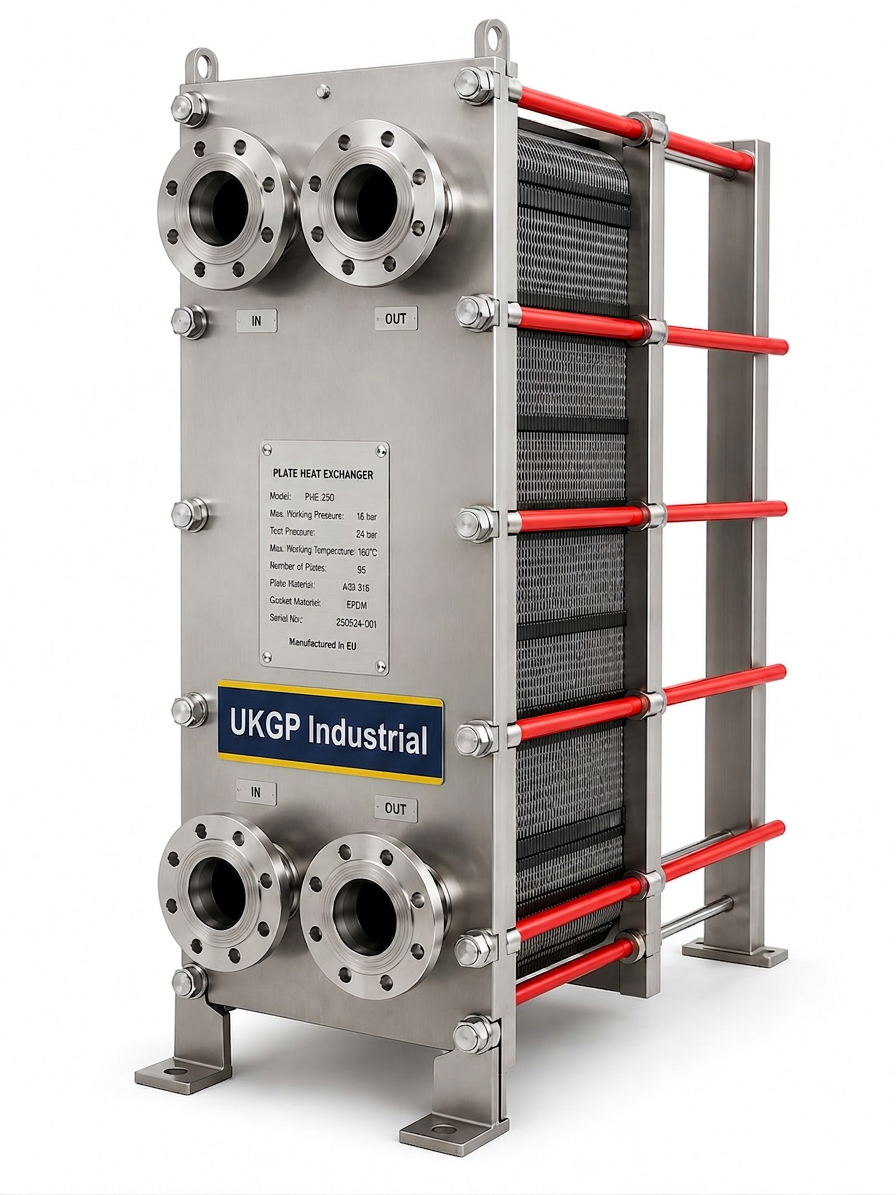
The UKGP plate heat exchanger, often used for hydraulic separation between primary and secondary circuits, is particularly vulnerable to 'plating out' of magnetite. If particles are allowed to circulate, they settle in the low-velocity gaps between the plates, significantly reducing the Heat Transfer Coefficient (U-value). This forces the pumps to run harder to achieve the same temperature delta, increasing carbon emissions and energy costs. Regular side stream filtration prevents this accumulation.
Power flushing can sometimes be aggressive on older systems. The high pressures required to move debris can stress aging joints or thin-walled radiators. In contrast, side stream filtration operates at the system's design pressure or lower. It is a 'gentle' cleaning method that is safer for legacy systems while being more effective at capturing the sub-micron particles that cause the most damage to modern, high-precision control valves.
- Secondary heat exchangers (Plate Heat Exchangers).
- Small-bore control valves and PICVs.
- Submerged pump bearings and mechanical seals.
- Integrated boiler heat cells with narrow waterways.
Life-Cycle Cost Analysis
When evaluating the cost-benefit of these two methods, engineers must look beyond the initial CAPEX. A commercial power flush can be expensive, often requiring two engineers several days of on-site time, plus the cost of chemicals and water disposal. However, it is an essential 'insurance' cost during commissioning or following a major system failure. Without it, the risk of warranty invalidation on new plant is high.
Side stream filtration requires an initial investment in the skid and occasional OPEX for bag changes. However, the ROI is found in the extension of plant life and the reduction in unplanned maintenance. By keeping the water clear, the system's valves and sensors remain accurate, maintaining the building's energy efficiency. A 1mm layer of scale or magnetite on a heat exchanger surface can reduce efficiency by up to 10%, a cost that far outweighs the price of a filter bag.
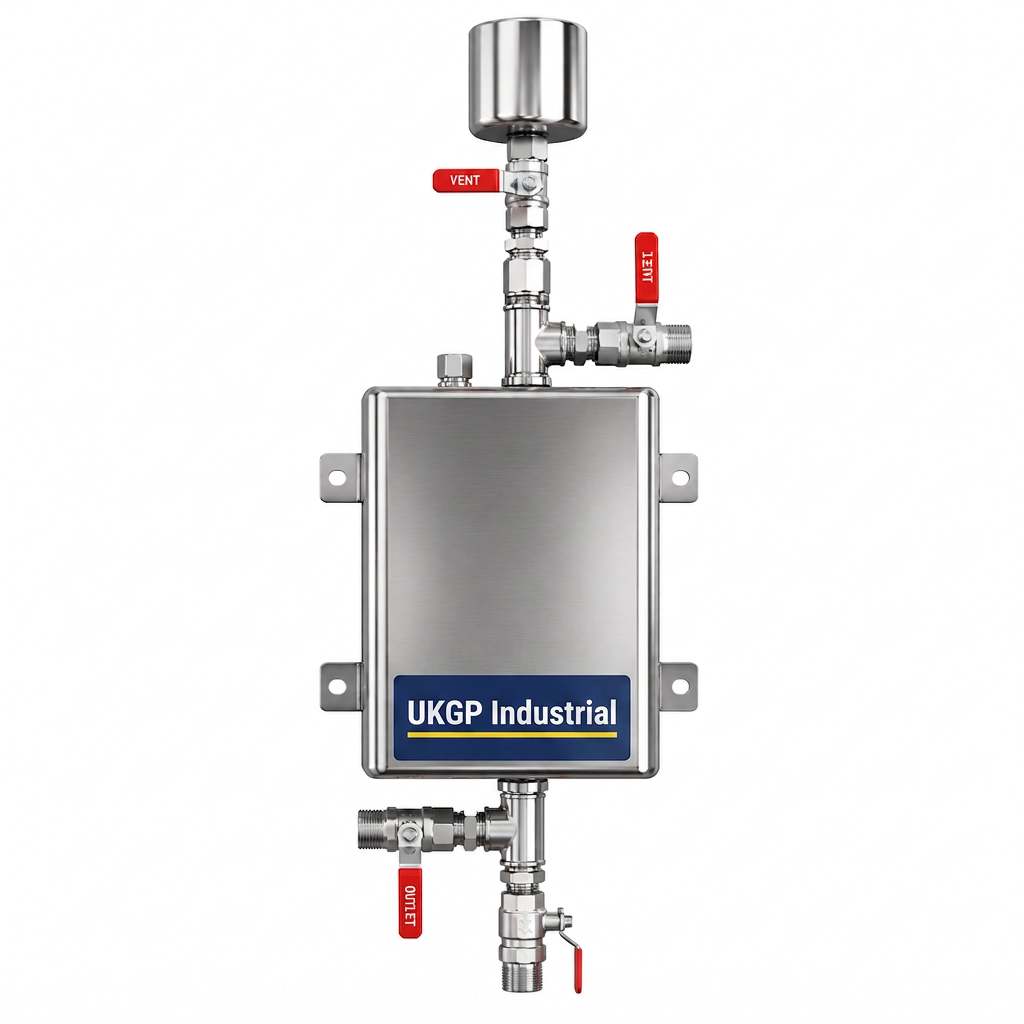
Furthermore, side stream filtration reduces the 'chemical load' required. In a clean system, inhibitors are more stable and stay in solution longer. In a dirty system, chemicals are often 'used up' reacting with suspended solids rather than protecting the metal surfaces. This results in more frequent chemical dosing via UKGP chemical dosing pots, whereas a filtered system requires only minimal 'top-up' treatments.
- Labour and chemical costs of power flushing.
- Filter media replacement frequency.
- Energy consumption of dedicated filtration pumps.
- Avoided costs: Boiler failure, pump replacement, and emergency callouts.
A Hybrid Approach: The Engineering Best Practice
For the majority of UK commercial installations, the most robust engineering solution is a hybrid approach. The process should begin with a thorough cleaning of the system—either through dynamic flushing or power flushing—to remove the bulk of construction or legacy debris. This ensures that the system starts its operational life within the parameters of BSRIA BG29.
Once the system is clean and chemically treated, the side stream filtration skid takes over the role of 'custodian.' It handles the fine particulate matter that is inevitably produced during the first few months of operation as the inhibitors form a protective film on the internal surfaces. This prevents the 'settling' that leads to under-deposit corrosion, which is a major cause of localised pipe thinning.
Integrated monitoring is the final piece of the puzzle. Modern side stream skids can be fitted with differential pressure gauges that alert FM teams via the BMS when a filter change is required. This data-driven approach to maintenance is far more effective than the traditional annual flush, providing continuous verification that the system's 'blood'—its water—is in optimal condition.
- Step 1: System Audit and Water Analysis.
- Step 2: Heavy Cleaning (Power Flush or Dynamic Flush).
- Step 3: Installation of Permanent Filtration (Side Stream).
- Step 4: Continuous Monitoring and Maintenance.
Air and Dirt Separators: The First Line of Defence
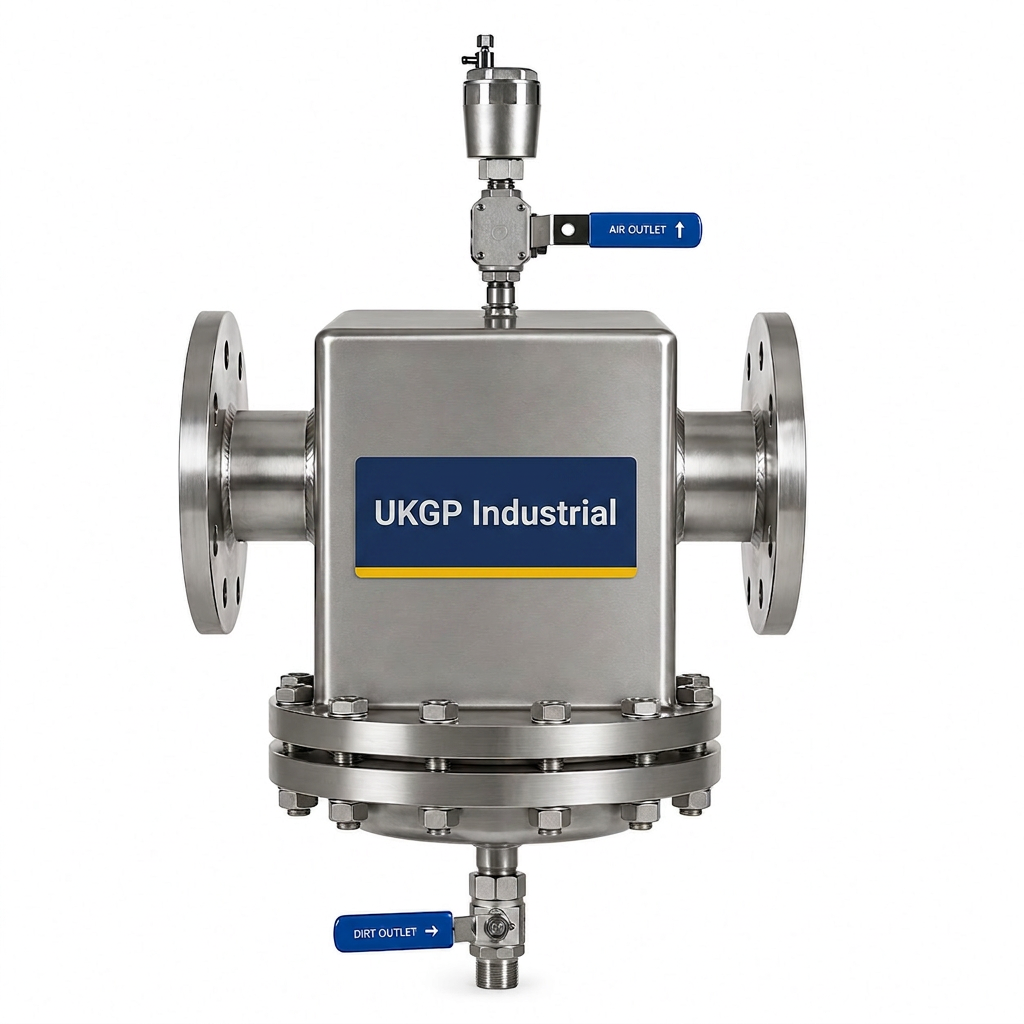
It is important to distinguish between side stream filtration and primary 'inline' air and dirt separators. Units such as UKGP air & dirt separators are typically installed on the main flow or return headers. They use Coalescence or centrifugal force to remove air bubbles and heavier dirt particles. While essential, they are limited by the flow velocity of the main system and generally cannot capture the ultra-fine suspended solids that a side stream filter can.
The air & dirt separator is your first line of defence, handling the 'coarse' debris that could cause immediate damage to pumps. The side stream filter is the 'polishing' unit, dealing with the 10-micron and smaller particles that remain in suspension. Without the separator, the side stream filter would blind too quickly; without the side stream filter, the sub-micron 'black water' will persist despite the separator.
By using these technologies in tandem, engineers create a multi-stage cleaning strategy. The separator handles the high-volume, large-diameter debris, while the side stream skid provides the fine-tuned filtration necessary for long-term component protection and BSRIA BG50 compliance. This combination is particularly effective in large chilled water circuits where the risk of biological growth and fine organic debris is higher.
- Vortex separation vs. mechanical filtration.
- Placement: Return line vs. side-loop.
- Particle size capture capabilities.
Sustainability and Environmental Impact
In the context of Net Zero targets and the London Plan, the environmental impact of water treatment cannot be ignored. Power flushing is inherently water-intensive. Large commercial systems can hold tens of thousands of litres of water, which must be chemically treated, flushed to drain, and then replaced with fresh water. This process puts a strain on local water resources and requires careful management of waste discharge licences.
Side stream filtration is a much more sustainable alternative. Because it cleans the water while it remains in the system, it eliminates the need for massive 'dump and fill' operations. This saves thousands of litres of water and reduces the quantity of chemicals that end up in the wastewater treatment system. Filter bags, once dried, represent a very small volume of solid waste compared to the liquid waste of a flush.
Finally, the energy-saving aspect is the most significant environmental contribution. A clean system is an efficient system. By maintaining clear heat transfer surfaces and preventing the 'sludge' that increases pumping resistance, side stream filtration ensures that the HVAC plant operates as close to its design EER (Energy Efficiency Ratio) as possible. Over a 20-year building life, the carbon savings are substantial.
- Minimising water waste during cleaning.
- Reducing chemical runoff into the sewer system.
- Energy savings through optimised heat transfer.
- Carbon footprint of equipment replacement.
Frequently asked questions
Can I replace side stream filtration with a one-off power flush?
- No. While power flushing is excellent for pre-commissioning or restoring a heavily fouled system, it is a point-in-time intervention. Side stream filtration is required to maintain water quality standards (BSRIA BG29/BG50) throughout the building's operational life.
What is the standard flow rate for a side stream filtration skid?
- For most commercial systems, a side stream flow rate of 5% to 15% of the total system circulation rate is recommended. This ensures the entire system volume is filtered multiple times per 24-hour period.
Does a magnetic separator count as side stream filtration?
- Magnetic filtration is highly effective for magnetite (black sludge), but it cannot capture non-magnetic debris like silica, soldering flux, or biological film. A high-quality side stream skid should ideally combine magnetic separation with mechanical depth filtration.
What are the pressure limitations of commercial power flushing?
- Standard UK power flushing pumps usually operate up to 2.0 or 3.0 bar. In high-rise commercial buildings, this may be insufficient to reach the top of the circuit, necessitating a sectional approach or the use of the system's own pumps in a 'dynamic flush' mode.